





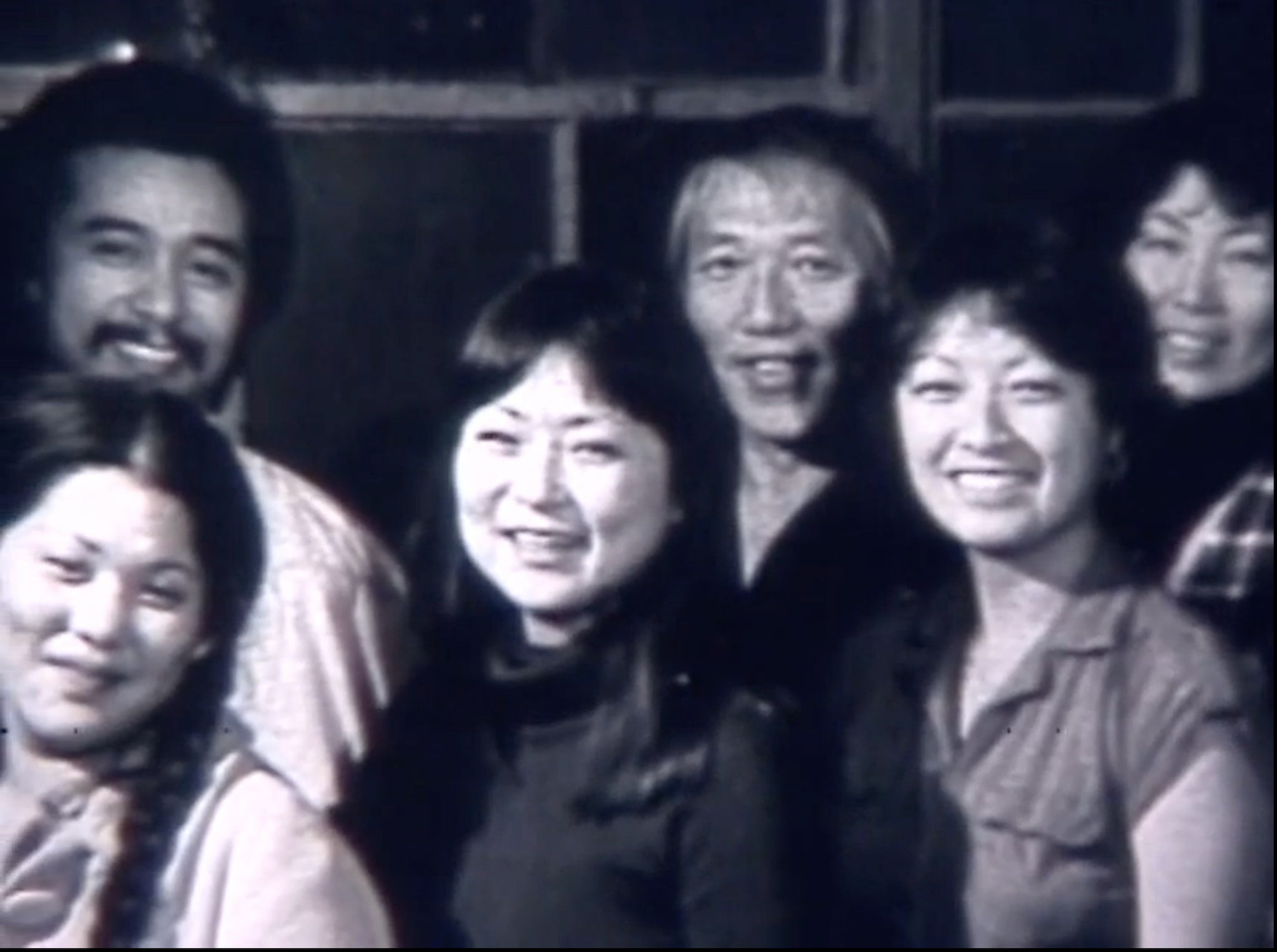
Module 1: Overview
Does Asian American and Pacific Islander participation and activism in the media have the power to eliminate their invisibility?
From movies and television, print journalism and the news, to radio, the music industry, and digital content on social media, various formats of media have come to shape and influence nearly every aspect of our daily lives. Media narratives tell us what is happening in the world, teach us how to navigate it, and suggest how to understand our place in it.
For Asian Americans and Pacific Islanders, media production provides an opportunity to showcase their creativity and community through their success, development, and growth. At the same time, mainstream media have not only misrepresented Asian Americans and Pacific Islanders but also largely excluded them from participating in the creation of their own image. Such factors contribute to their silencing and invisibility in US culture and society.
This module is an overview of the different ways to understand the relationship Asian Americans and Pacific Islanders have with mainstream media.
Why is the study of media important for understanding Asian Americans and Pacific Islanders?
What is the relationship between Asian Americans and mainstream media?
To what extent are Asian Americans and Pacific Islanders represented and misrepresented in mainstream media?
Making Sense of Media Representations
One way to assess media studies and its relationship to Asian American and Pacific Islanders is to examine the content of media. In other words, what is being communicated by reading, viewing, listening, or interacting with cultural production—including movies, newspaper articles, radio programs, social media, music, podcasts, video games, and other cultural and digital content? What kinds of stories are included and what kinds are left out? What patterns can be drawn as responses to these questions?
While Asian Americans and Pacific Islanders make up 7 percent of the US population, a much smaller percentage of mainstream media stories feature Asian American and Pacific Islander actors in leading roles with lines of dialogue or represent them at all. Films and TV shows that do feature these actors and the characters they play often center East Asians, such as Chinese, Korean, and Japanese Americans. Thus, viewers rarely have the opportunity to learn about the experiences of American families with roots in South Asia, Southeast Asia, Central Asia, or the Pacific Islands. Further, cultural production rarely presents characters with disabilities or gender non-conforming Asian actors.
In effect, the diverse Asian American and Pacific American populations and their multiple stories are commonly ignored or overlooked. When these communities are unseen by media representation, they are not acknowledged, their existence is unrecognized, and their identities are marginalized.
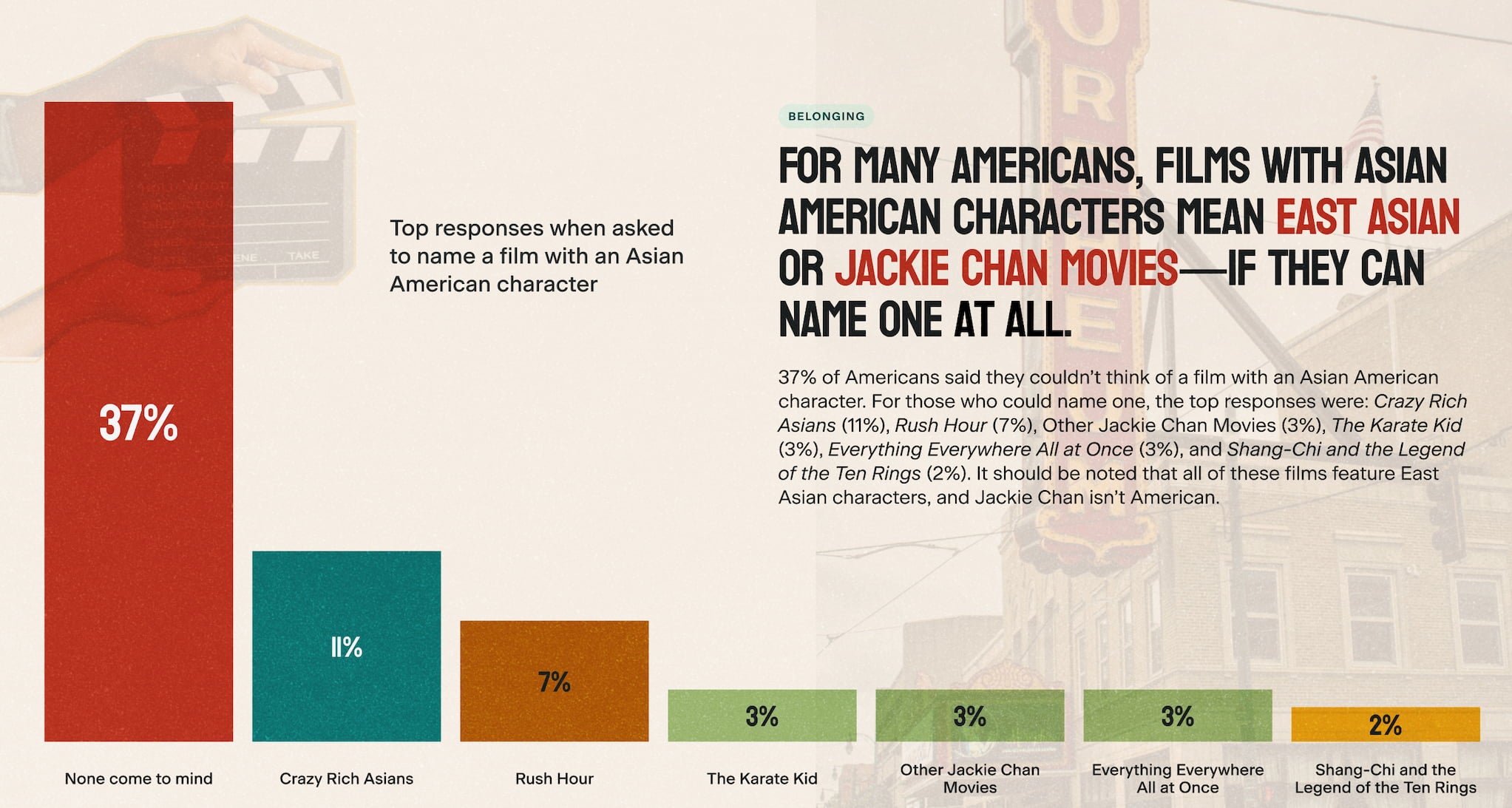
Image 27.01.01 — Thirty-seven percent of 4,909 Americans surveyed said they couldn’t think of a film with an Asian American character, according to the 2025 STAATUS Index (Social Tracking of Asian Americans in the United States) produced by the Asian American Foundation (TAAF).
Another common pattern in mainstream media narratives is the stereotyping of Asian Americans and Pacific Islanders. A stereotype is a generalized belief about an entire group of people based on one characteristic, such as their race, gender, class, ethnicity, or even home place. Think of the “Karate Kid,” the Asian nerd with glasses, the submissive Asian woman, and the “happy-go-lucky-native” as some examples within a large pool of stereotypes. Repetitive media representations of such stereotypical characters lead to dangerous misrepresentation of the broad scale of people’s humanity.
These kinds of stereotypes are also harmful because they put people into restrictive boxes and assume that all people of Asian backgrounds share this identity. In reality, stereotypes rise out of a specific historical context. For instance, Asian parents are often stereotyped as raising hardworking children who work towards upward mobility. This stereotype partially stems from the fact that those who immigrated to the US from Asia in recent decades feel a pressure to secure economic stability.
An example of how the historical context of Asian immigration leads to stereotypes is the construction of the “Tiger Mom.” The “Tiger Mom” is a strict and overly controlling Asian immigrant mother obsessed with raising well-educated, obedient, and successful children. “Tiger Mom” is a term that can be traced back to Amy Chua, a Yale Law professor who wrote a 2011 book called Battle Hymn of the Tiger Mother. Understanding the historical context of these stereotypes helps to explain why some Asian American mothers put pressure on their children to seek a certain level of educational success or worry about the consequences of standing out in a negative way. Yet, other families parent and cultivate children in their own unique, multifaceted ways. In a nutshell, it is inaccurate to assume that all Asian American mothers fit into the “Tiger Mom” stereotype.
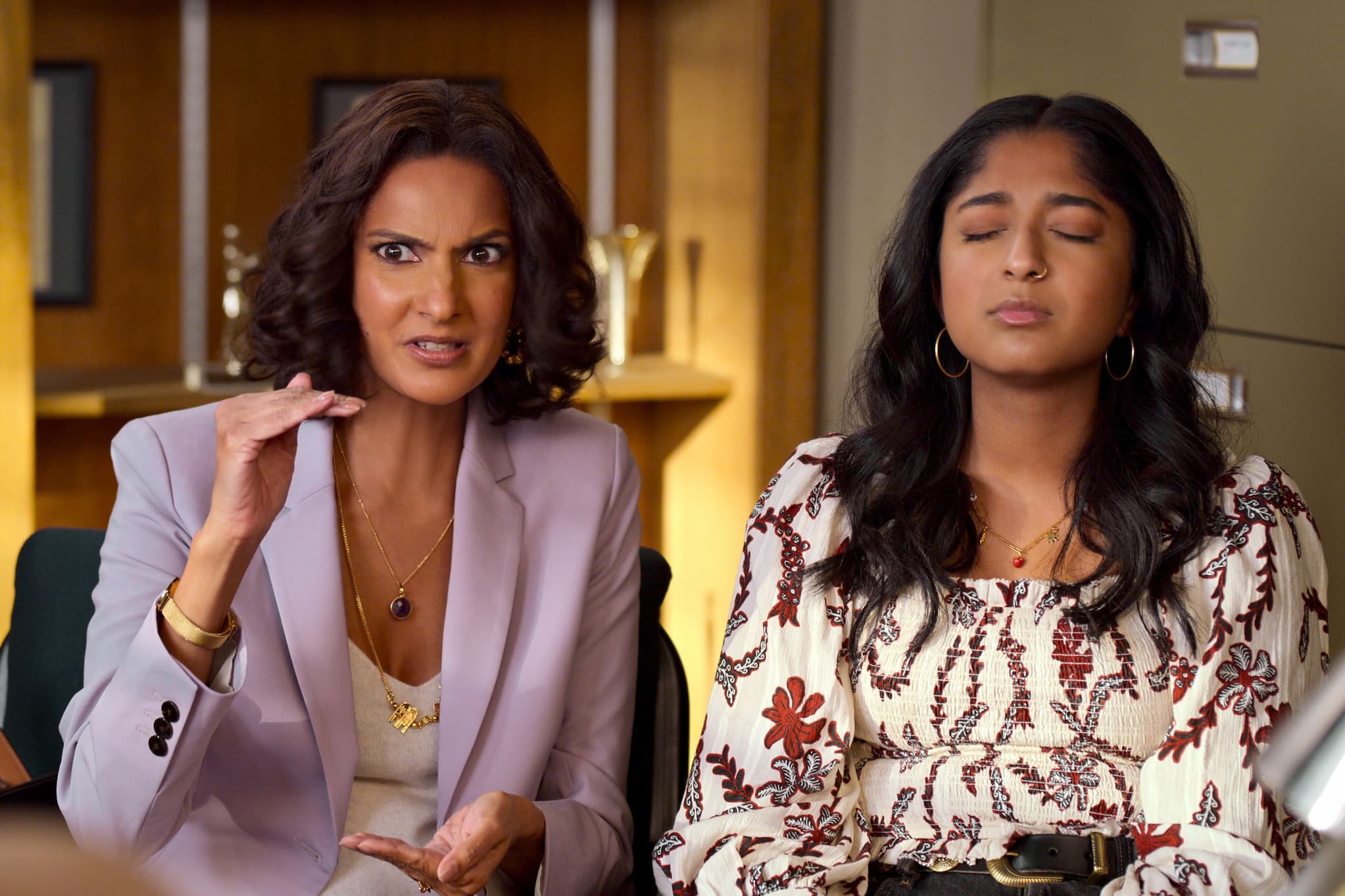
Image 27.01.02 — In the Netflix TV show Never Have I Ever, the character of Nalini Vishwakumar (left) is portrayed as a hard-working dermatologist who is strict with her strong-willed teenage daughter Devi (right). She might be seen as a Tiger Mom.
To interpret the full meaning of media representations, we need to take a deeper look at what is being communicated on screen. Beyond the presence or absence of specific Asian American and Pacific Islander entities, there are multiple layers of meaning surrounding their representations. For instance, when we analyze a scene from film or television, we can consider not just the character but also the lines of dialogue, acting decisions, camera angles, lighting, costuming, soundtrack, set design and location, and editing. All of these decisions affect what meaning is conveyed about a topic or character. When analyzing a news show, as another example, we might consider the order in which stories are reported, the language choices made, and the visual graphics and design components that accompany the story.
Every piece of media contains a zig-zagging array of different components that ultimately shape meaning, and the purpose of this chapter is to help you analyze those interconnected points.
Media Production
Another way of understanding media is to look at the individuals and institutions behind the scenes, asking how they played a role in shaping media. Mainstream media are typically run by large businesses such as movie studios, television networks, news corporations, and digital media or tech companies. In addition to these businesses, creative workers such as directors, writers, editors, designers, and performers are responsible for media production.
Understanding the role of Asian Americans and Pacific Islanders in media industries involves questions about funding and financial backing, who paid for a movie, podcast, or video game, and who profits from them. Ultimately, we should be asking who has the power to make creative decisions and what role individuals play in the production process, if at all. As a result of dominant white culture having long controlled mainstream US media outlets, groups including people of color, women, and LGBTQ+ communities have struggled to gain control over how they are represented in media and cultural production.
In this context, Asian Americans and Pacific Islanders have traditionally not been the decision-makers in mainstream media, and therefore have had to fight to participate in media production on their own terms. The Asian American and Pacific Islander media arts organizations that were formed in the 1970s, for example, provided education and support for filmmakers and continue to do so today. Organizations such as Visual Communications in Los Angeles, California; the Center for Asian American Media in San Francisco, California; and Asian CineVision in New York City share the goal of strengthening Asian American and Pacific Islander media production. Founded in 1991, Pacific Islanders in Communication took up a similar project in Honolulu, Hawaiʻi.
Their activities include annual film festivals that showcase media, preserve and distribute film and video, and cultivate a professional community for Asian American and Pacific Islander media production and the cultural industries. They support the creation, production, and marketing of feature films, television shows, documentaries, short films, and experimental works of art that challenge standard filmmaking conventions. They also function as launchpads for media professionals into Hollywood and mainstream media film and television.
A notable Asian American creative who has excelled in media production is Justin Lin, director of Better Luck Tomorrow (2002), Finishing the Game (2007), as well as Star Trek Beyond (2016) and four films in the Fast & Furious franchise (2006–2013). Some of his projects have centered Asian American stories and performers, while others feature ensemble casts with people from a variety of races and backgrounds. It is important for people of all identities to be able to participate in making media, and to be careful not to limit the kinds of projects they produce, direct, and support.
The numerous examples of Asian American and Pacific Islander creatives working today demonstrate the great success they have had in mainstream media. Mindy Kaling is a talented writer, director, producer and actor who got her start as Kelly Kapoor on The Office (2005–2013). She went on to create TV shows such as The Mindy Project (2012–2017) and Never Have I Ever (2020–2023), as well as the film Late Night (2019). Constance Wu, Dwayne “The Rock” Johnson, Randall Park, Sandra Oh, Jason Momoa, and Awkwafina (Nora Lum) are just a few of the actors who have starred in mainstream film and television. Comedians Bowen Yang, Ali Wong, Kumail Nanjiani, and Hasan Minhaj entertain audiences with their standup, sketch comedy, and comedic roles in film, television, and Netflix specials.
Musicians such as Olivia Rodrigo, Mitski, Iam Tongi, and Bruno Mars; drag performers Sasha Colby and Nymphia Wind; journalists Ann Curry, Lisa Ling, and Farhad Manjoo; and TV hosts Padma Lakshmi and Julie Chen are professionals who bring their own specific experiences and backgrounds to the stage and their onscreen roles. These examples and others help to diversify the media landscape and present new ideas about what it means to be Asian Americans and Pacific Islanders.
Media Reception
The impact of media consumption is multifold. Various media audiences may interpret media in different ways. Some negative stereotypes from media imaging may enter mainstream society. For instance, if television viewers see enough images of Asian American men as nerds, then they may come to believe that these men lack social skills, charisma, or romantic inclinations.
Audience members, however, have the freedom to reject media messages and come to their own conclusions. For instance, one viewer may see the mixed-race Palestinian and Polish American character Abed Nadir, portrayed by Danny Pudi in the TV show Community (2009–2015) as a flat character—a brown man who is introverted, awkward, and struggling to relate to the emotions of his friends. A different viewer may look at the same depiction and see a story about an Asian American man challenging the hyper-masculine norm. In sum, viewers’ responses and receptions vary, and we cannot assume that any character, plot, or dialogue will mean the same thing for viewing audiences.
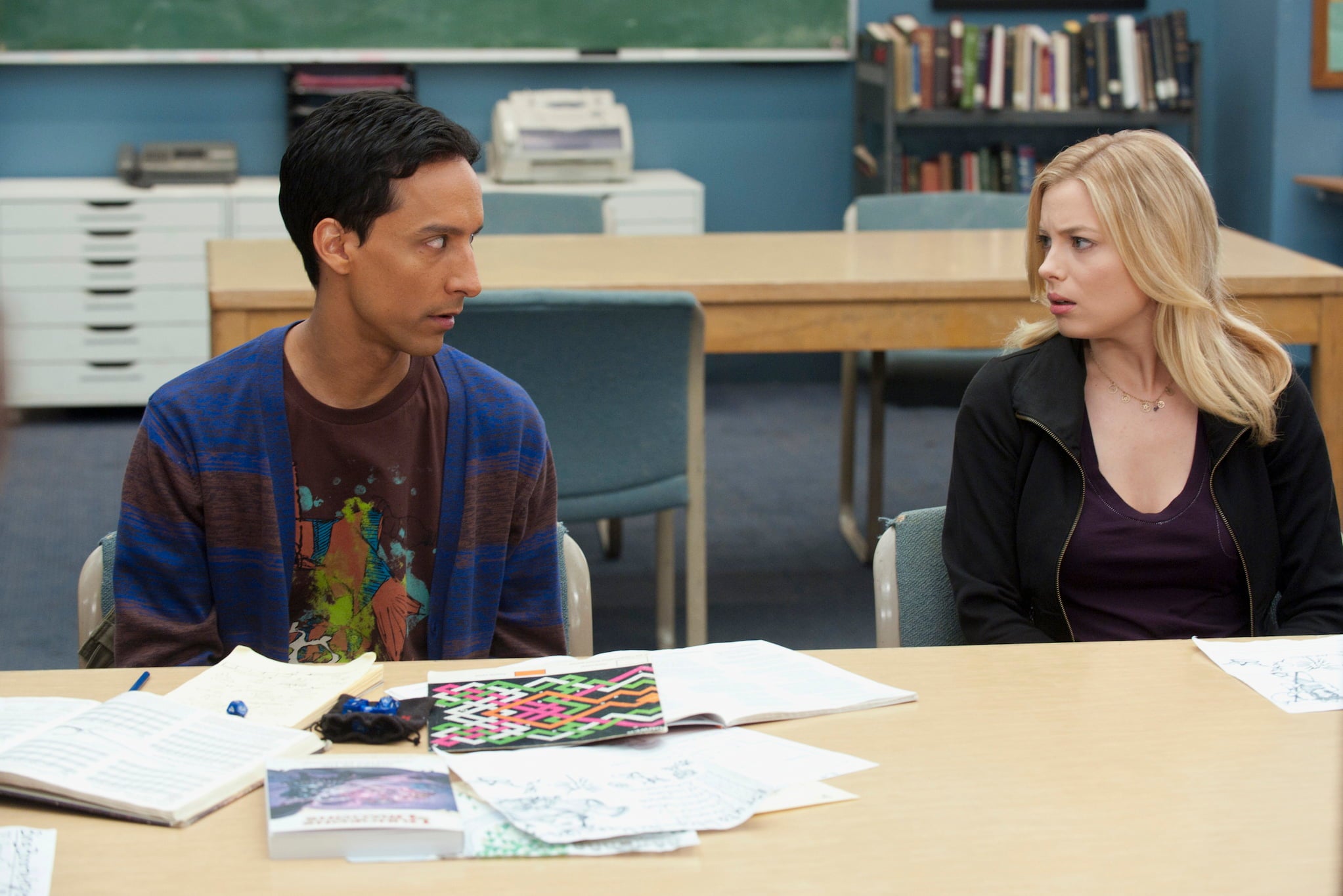
Image 27.01.05 — Community’s Palestinian-Polish American character Abed Nadir—while written as a seemingly archetypical nerd lacking in social skills and a penchant for pop culture and filmmaking—is beloved by and has deep relationships with the rest of the cast.
Beyond acknowledging that media audiences interpret and connect to media in various ways, Asian American and Pacific Islander communities have also engaged in various forms of political activism around media. Decades before Asians in the US were referred to as “Asian American,” Asian ethnic communities highlighted the offensive and harmful media imagery used to portray them.
For example, 1930s Hollywood studios depicted Chinese life and customs through many offensive stereotypes. Chinese women were trafficked as prostitutes, Chinese characters were criminals and villains, and Chinatowns were visualized as dirty and corrupt. In addition, the use of offensive and racist slurs was widespread. Chinese Americans spoke out to condemn these images and to demand positive representation. They wrote articles in newspapers and trade journals condemning Chinese representations and petitioned movie theater managers to cancel screenings of offensive films, though these actions had little effect.
Asian American and Pacific Islander media activism continued throughout the twentieth century to demand more and better representations in media and television. Organizations that focused specifically on monitoring and improving representation in mainstream media included Media Action Network for Asian Americans (MANAA), Gold House, and Coalition of Asian Pacifics in Entertainment (CAPE). Such work to support creatives helped to provide more agency over media production—including financing, funding, and storylines.
Conclusion
This module explored the important connections between Asian American and Pacific Islander communities and media, including representation in media production and audience reception. From the harmful effects of misrepresentation, underrepresentation, and stereotyping to the empowering contributions of creatives and activists, media serves as both a reflection of societal biases and a tool for cultural transformation. By looking at these different components, a better understanding of both the challenges and opportunities for Asian American and Pacific Islander stories is able to emerge.
Glossary terms in this module
digital media Where it’s used
Includes many different forms of technology, including the internet and websites, mobile phones and apps, music files like MP3s, streaming television, online social media, video conferencing platforms, ebooks, digital photographs, and much more.
mainstream media Where it’s used
Media industries that are the most profitable and longstanding, and have the largest audiences. Network television like ABC and NBC, movies produced by powerful movie studios like Twentieth Century Studios and Walt Disney Studios, and newspapers like The New York Times are all considered mainstream media. This contrasts with independent, community, or alternative media, which are all smaller, less financially profitable, and reach fewer audiences.
media arts Where it’s used
Media include a wide range of communication technologies, but the category of media arts usually refers to the more artistic and creative forms of media as opposed to simply informational. This might include film and video, but also can include photography, digital art like creating a webpage, music, and any other form of art that relies on technology.
representation Where it’s used
In the context of media, representation refers to the idea that an image of a person stands in for that person or teaches you something about that person. When you see many representations of a certain thing, you learn more about it, and when something is not represented you are denied the opportunity to learn about it at all.
stereotype Where it’s used
Generalized beliefs about a group of people based on one characteristic. Typically, stereotypes perpetuate harmful discourse about groups of people and are rooted in incorrect, and often racist beliefs.
underrepresentation Where it’s used
When a group of people is rarely seen portrayed in the media and their appearances in media are disproportionate to their representation in the general population.