





Module 2: Asian Americans and Pacific Islanders in Mainstream Media: A History
Does Asian American and Pacific Islander participation and activism in the media have the power to eliminate their invisibility?
This module explores the different ways that Asian Americans and Pacific Islanders have been represented in mainstream media in the US. By focusing on repeated underrepresentations and misrepresentations, it identifies the impact of various stereotypes. This module also highlights movements of resilience and modes of resistance against these persistent and harmful images in media industries and cultural productions, such as movies, social media, music, podcasts, video games, and other digital content.
What stereotypes have dominated representation of Asian Americans and Pacific Islanders in mainstream media?
To what extent has the media community overcome Asian Americans and Pacific Islander media invisibility and the perpetual foreigner treatment of Asian American and Pacific Islander actors today?
How do media representations of Asian Americans and Pacific Islanders contribute to inequality and injustice?
Media Invisibility
The issues of invisibility and underrepresentation have meant that, by and large, Asian American and Pacific Islander stories have not been depicted in US mainstream media. Indeed, the rarity of their representation in the history of media in the US has meant that, in those instances when an Asian American or Pacific Islander person is spotlighted on film or television, they have often been the only representation for decades.
Examples include George Takei who played Hikaru Sulu in Star Trek: The Original Series in the 1960s, Connie Chung on ABC News in the 1970s, and Bruce Lee in films during the 1970s. A 2021 study of Asian Americans and Pacific Islanders in entertainment found that only 3.4 percent of top-grossing movies featured lead or co-lead from these groups—despite the fact that they comprised over 7 percent of the US population.
This kind of underrepresentation is a serious problem because it minimizes the significance of Asian American and Pacific Islander contributions in American society and culture. It creates the feeling that these people do not matter or—worse yet—that they do not exist at all. This invisibility on screen is connected to their underrepresentation behind the scenes, as well. There are very few people of color with decision-making power and creative influence working in mainstream media production companies, studios, networks, and corporations. When people lack agency and control over the media, their stories are silenced, ignored, and forgotten.
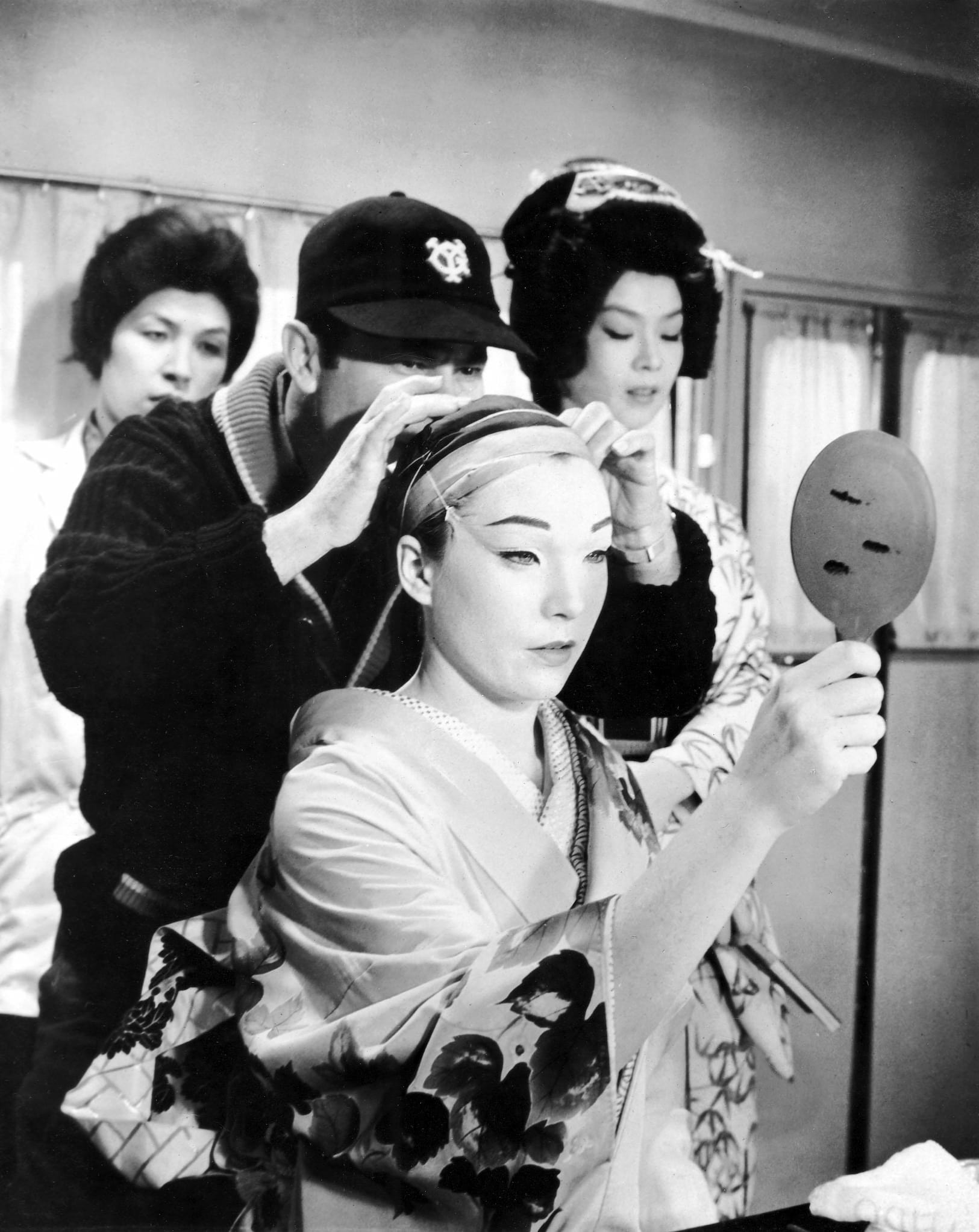
Image 27.02.01 — The troubling practice of yellowface often relies on using makeup and prosthetics to create Asian-looking eye shapes, as seen here with Shirley Maclaine (center, holding mirror) on the set of My Geisha (1962).
In those instances when Asian American or Pacific Islander stories have been included in mainstream media, several problems emerge. One significant issue is the practice of yellowface and brownface, or casting white actors to play Asian or Pacific Islander characters by utilizing makeup, costume, and exaggerated accents. Yellowface typically describes white actors pretending to be East Asian, and brownface is typically used to describe white actors depicted as Asian, South Asian, Southeast Asian, or Pacific Islander. Some famous white actors who have performed yellowface or brownface include Katharine Hepburn, John Wayne, Marlon Brando, David Carradine, Fisher Stevens, Christopher Walken, and Nicolas Cage.
The practices of yellowface and brownface have many negative impacts. First, they often mock appearances through the use of makeup and prosthetics that result in a distorted “Asian” or “Polynesian” appearance. In many cases, the performance of Asianness includes clownish or clueless behavior. However, the greatest offense of casting non-white actors in Asian roles is the failure to hire performers who are themselves Asian Americans or Pacific Islanders—many of whom spend their entire careers struggling to find and land acting roles. Due to such exclusionary practices, in the early twentieth century, these actors struggled to find work, and many became demoralized by their inability to succeed in Hollywood.
In addition to yellowface and brownface, film and television have whitewashed storylines by erasing Asian American and Pacific Islander characters and stories altogether in adaptations of stories and experiences about Asian Americans or Pacific Islanders. For instance, the nonfiction book Bringing Down the House (2002) tells the story of a group of Asian American college students who pulled off a casino heist in Las Vegas. In the 2008 movie adaptation titled 21, however, the lead roles are played by white actors.
In the 2015 film Aloha, Emma Stone was criticized for playing a Native Hawaiian-Asian American protagonist, Allison Ng—a character who is proud of her heritage as a mixed-race Native Hawaiian, Chinese, and white woman. The filmmakers of Aloha defended the casting by saying that the character was not supposed to look like her mixed-race background, since the reality is that mixed-race people are often misrecognized and mislabeled ethnically. What is clear though is that the lead roles in both 21 and Aloha were not played by Asian American or Native Hawaiian actors.

Image 27.02.02 — The 2015 film Aloha caused controversy by casting white actress Emma Stone (lower right) as the role of Allison Ng—a character whose heritage is mixed race Native Hawaiian, Chinese, and white.
Asian Americans, or the Dangerous Other
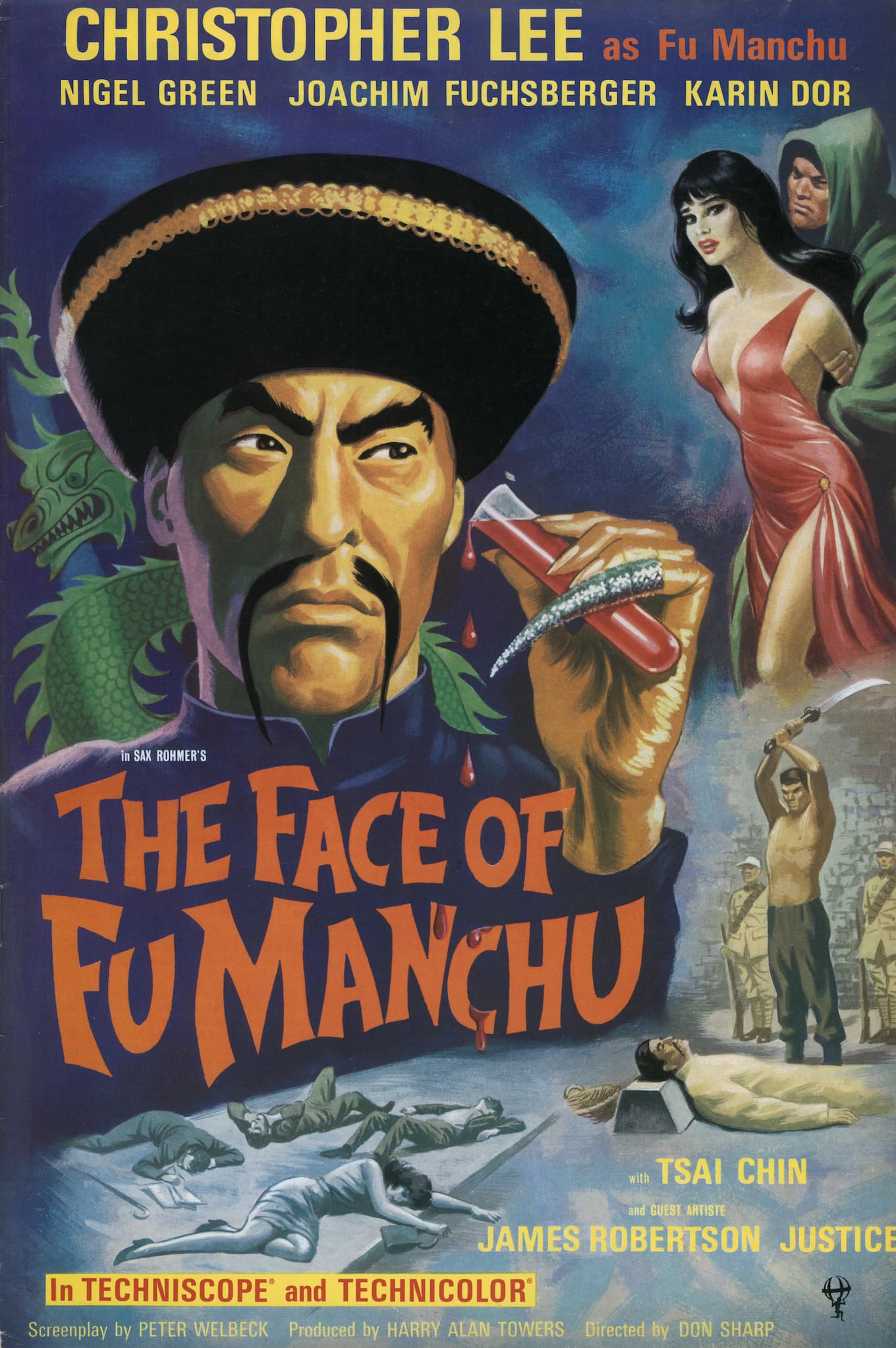
If invisibility is one major issue surrounding Asian Americans in the media, then another problem is typecasting with stereotypes depicting them as evil, malicious, and untrustworthy—also known as the trope of the Yellow Peril. In this persistent trope, Asian characters, due to their villainization, lacked emotions and feelings, as well as substantive character development in fictional narratives.

Image 27.02.03 — Bent on world domination, the fictional supervillain Dr. Fu Manchu perpetuated fear of the Yellow Peril to wide audiences—as seen in various novels, comics, TV shows, and films, such as The Face of Fu Manchu (1965).
While the Yellow Peril tropes of the “dangerous Asian Other” elicited fears of Asians, a contrasting stereotype of Asian Americans is the model minority. This is the representation of them as innately hard-working, diligent, disciplined, and well-behaved. Countless media representations of Asian Americans as doctors, lawyers, and scientists attest to this model minority stereotype of financial and social success. This is because the model minority myth was created in the 1960s to pit Asian immigrants against Black Americans. The model minority myth was a way to delegitimize the Black Power Movement, which sought to fight systemic racism.
Stories in mainstream media reveal the history of US migration policies, such as the 1965 Immigration Act that opened the door to white-collar immigrants from Asia into the US. Such images of success also do not include the full spectrum of Asian Americans in the country. According to a 2022 Pew Research study, 10 percent of Asian Americans live in poverty, while others suffer from trauma and mental health issues. The harmful connection between the Yellow Peril and the model minority tropes, ironically, is that they both demonstrate the fear of Asian empowerment within US society and culture.
Even positive images of the model minority, when deconstructed, show the limiting and harmful effects of its use in US mainstream media. At their root, stereotypes serve to affirm existing power structures. While it may seem odd to say that Asian Americans are harmed by the stereotype that they are good at school and value hard work, a closer examination reveals that the model minority stereotype contributes to divisions and prevents racial solidarity.
In sum, the model minority stereotype creates division between Asian Americans and other people of color, specifically African American, Latinx, and Indigenous communities. In supporting the belief that anyone can be successful in the US if one works hard enough, this stereotype implies that these other communities just have not worked hard enough to earn success. This harmful assumption denies the real impact of institutionalized racism, which affects all people of color in the US through laws, policies, and institutions that perpetuate racism. For many Asian Americans, reality is more complex than the model minority myth allows for. For example, many Asian Americans live in poverty, struggle in school, experience mental illness and depression, or face countless other issues. In these cases, the model minority myth erases the full spectrum of their lived realities.
Asian Americans as Perpetual Foreigners
Asian Americans are also often portrayed as perpetual foreigners, or outsiders who can never fully understand American culture. This is upheld through characters who speak with thick accents, eat strange foods, or have odd customs and silly names. In the media, foreign Asians are juxtaposed with white Americans—who are considered “real Americans.”
In this context, Asian Americans will always remain separate and apart, and thus foreign. This helps to explain why so many Asian Americans often experience being asked, “Where are you from?”—and, if the answer is somewhere in the US, a second question is often added: “Where are you REALLY from?” Both questions assume that they can never fully belong within the US, no matter how many generations their family has resided in the US or have been citizens.
The stereotype of the perpetual foreigner has also led to sensitivity around how Asian American actors portray accents. In general, the English language is spoken in dozens of different dialects that reflect a wide array of identities and experiences. These verbal differences represent the true diversity of the multifold immigrant backgrounds represented in the US. The stereotype of Asians as perpetual foreigners is performed with a heavy accent to connote their newness, low status, and foreignness in this country.
This is particularly common when white performers play Asian roles. For instance, when the white actor Hank Azaria voiced the character of Indian Kwik-E Mart owner Apu Nahasapeemapetilon in The Simpsons (1989–present), he conjured a stereotypical Indian accent, also known as brown voice. In addition to these performances, many young Asian Americans often experience racist mocking and schoolyard taunts of unintelligible gibberish that mimic Asian languages. Such hurtful and harmful practices are so persistent that many Asian American performers refuse to remake any “stereotypical accent” in acting roles and strive to use their natural pattern of speech.
Representing Gender
Gendered stereotypes of Asian Americans and Pacific Islanders are prevalent forces that stem from the history of fetishization of the “Orient” by the West. Women are depicted as either fierce and villainous Dragon Ladies or submissive and docile Lotus Blossoms. Both Dragon Ladies and Lotus Blossoms are beautiful to look at, but exist either to put white men in peril or to entice them. Pacific Islander women in particular have been portrayed as cultural entertainers for a tourist industry that fetishizes and orientalizes the hula girl shaking her hips to the playing of a ukulele. Indeed, the West portrays the Hawaiian Islands as an exotic paradise to be consumed by tourists and exploited by mainland developers. Ultimately, these gendered stereotypes deny Asian Americans and Pacific Islanders the diversity and complexity of their lived realities.
Asian American in Hollywood
Asian American identities are multi-faceted and complex because those identities represent a wide range of experiences. Due to this history, and as a result of the limitations of stereotyping, Asian American performers have long struggled for a place in Hollywood. While more recent stars have been able to carve out careers worthy of celebration, during the days of silent cinema, only a few were able to make their mark. Two of the most prominent Asian American stars of old Hollywood were Chinese American actress Anna May Wong and Japanese American actor Sessue Hayakawa.
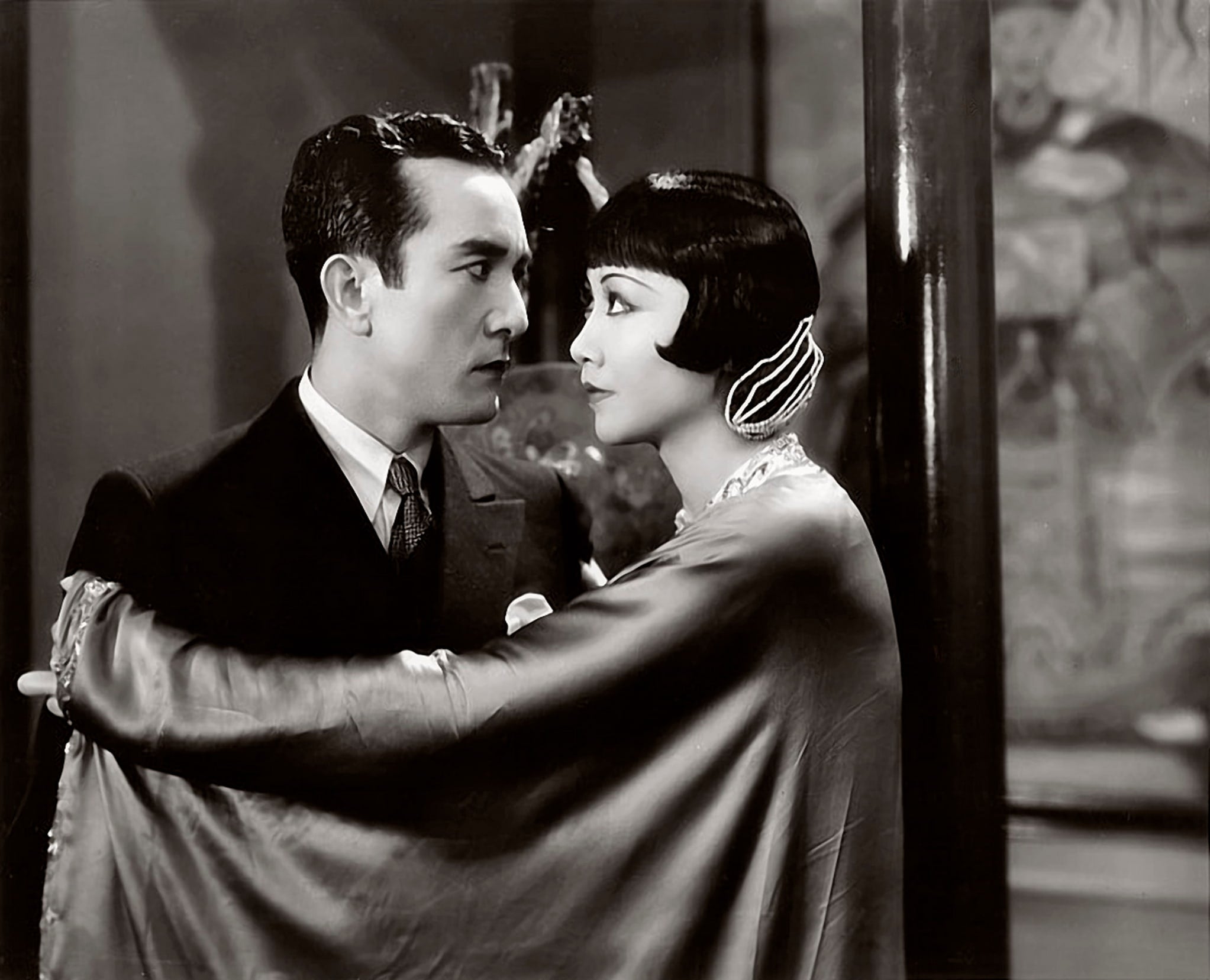
Image 27.02.04 — Sessue Hayakawa (left) and Anna May Wong (right)—two pioneering Asian American performers of the silent film era, a time when Asian Americans and Pacific Islanders were not widely represented—starring alongside each other in Daughter of the Dragon (1931).
Anna May Wong was born in Los Angeles, California, on January 3, 1905, and started acting in silent films in the 1920s. Some of her most memorable roles include playing Fu Manchu’s daughter in Daughter of the Dragon (1931) and acting opposite Marlene Dietrich in Shanghai Express (1932). While she had roles in more than sixty films, Wong also grew frustrated being typecast as the villainous Dragon Lady and losing out on starring roles to white actresses in yellowface.
Wong struggled throughout her career to portray Asian characters in a more positive light, and even traveled to China to make her own movies. She died from a heart attack in 1961 at the age of fifty-six while preparing to appear in the film production of the Broadway musical Flower Drum Song (1961).
Sessue Hayakawa was born in Japan in 1886 and came to the US to attend the University of Chicago for college. After graduating, he moved to Los Angeles to try his hand at acting and quickly became one of the highest-paid actors of his time and the first actor of Asian descent to achieve stardom as a leading man. Yet, Hayakawa still faced discrimination and was typecast as a brooding villain type who embodied the Yellow Peril stereotype.
Once the silent era ended, he was forced to transition to talkies, or movies with matching sound and dialogue. His Japanese accent limited the roles offered to him in talkies. Although he was nominated for Best Supporting Actor at the 1958 Academy Awards for his role as Colonel Saito in The Bridge on the River Kwai (1957), Hayakawa eventually retired from acting, making his final appearance in the animated film The Daydreamer (1966). He died a short while later at the age of eighty-seven in 1971.
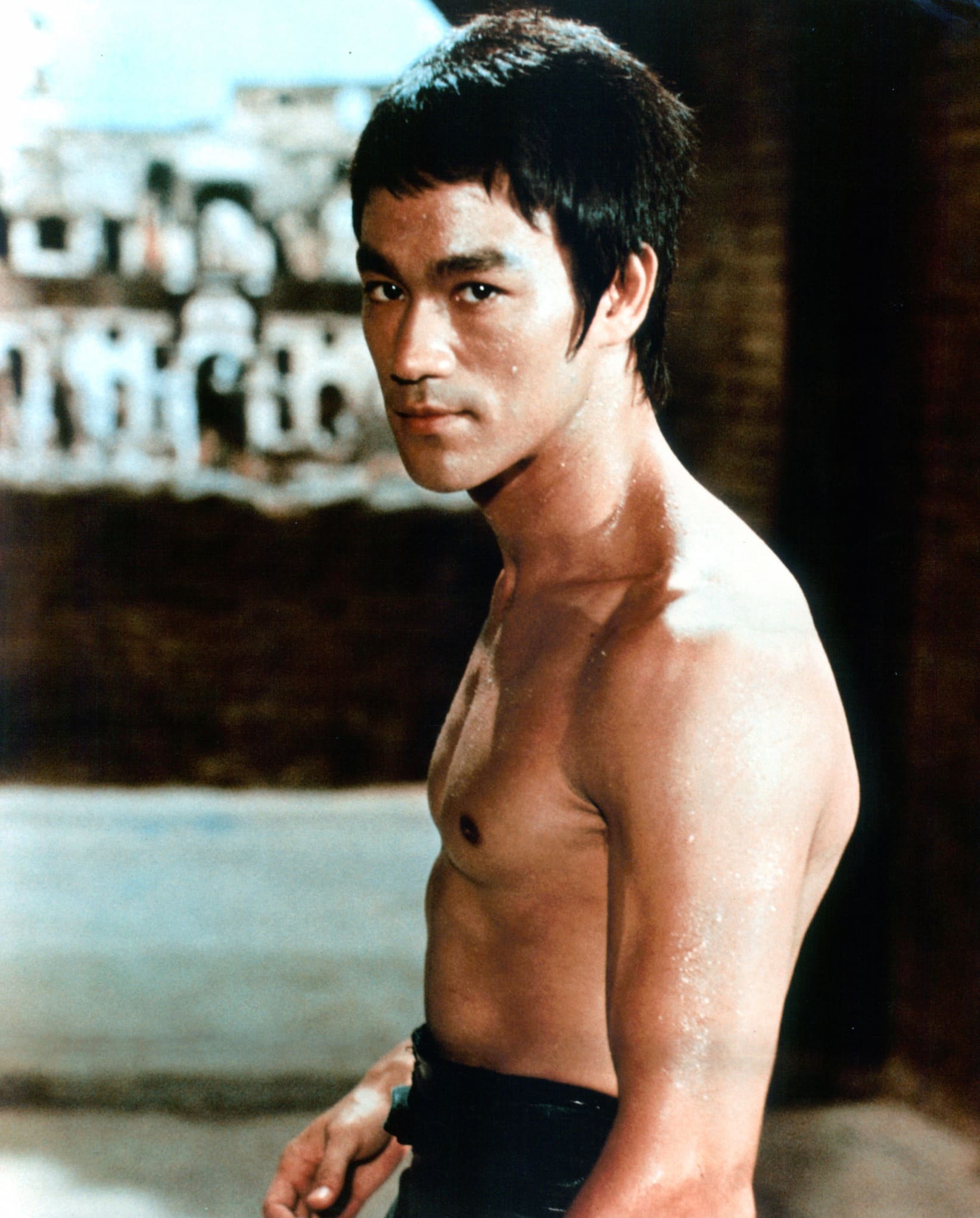
Image 27.02.05 — Hong Kong American martial artist and actor Bruce Lee’s performances had a lasting influence on future generations of martial arts filmmaking.
Compared to the early days of cinema and film, some Asian performers have found success and stardom in Hollywood. During the 1970s, Bruce Lee (1940–1973) starred in a number of martial arts movies in both Hong Kong and the US, including The Big Boss (1971), The Way of the Dragon (1972), and Enter the Dragon (1973).
While he was limited to roles that demanded his specific set of physical talents, he also set a new standard for action heroes as an Asian male. Lee tragically died at the young age of thirty-two, but his impact lives on in the global popularity of kung fu films. His legacy extends beyond the martial arts and into the philosophy and mastery of all arts. His career opened the door for future global martial arts action heroes such as Jackie Chan, Jet Li, and Michelle Yeoh.
Actress Lucy Liu got her breakthrough playing Ling Woo on the TV series Ally McBeal (1997–2002) but also became well known for her roles in blockbuster movies like Charlie’s Angels (2000) and Kill Bill: Volume 1 (2003). Although many of these roles fit into the same stereotypes that Anna May Wong faced, Liu has spoken up about how proud she is of her career accomplishments and for helping Asian Americans see progress in Hollywood. In an opinion piece Liu wrote for the Washington Post in 2021, she said:
I feel fortunate to have ‘moved the needle’ a little with some mainstream success, but it is circumscribed, and there is still much further to go. Progress in advancing perceptions on race in this country is not linear; it’s not easy to shake off nearly 200 years of reductive images and condescension. 1
Conclusion
In the years since early Hollywood, we have seen a diverse array of Asian American and Pacific Islander stars whose careers span every genre and medium, including John Cho, Keanu Reeves, Mindy Kaling, Constance Wu, Awkwafina, Kal Penn, Jason Momoa, Randall Park, Daniel Dae Kim, Auliʻi Cravalho, and Sandra Oh. While these are the names of actors, there have also been talented Asian Americans and Pacific Islanders who are stand-up comedians, musicians, journalists, dancers, and performing artists of every kind. Their path forward has not been easy, but Asian Americans and Pacific Islanders continue striving to be seen and recognized in the media.
Glossary terms in this module
fetishize Where it’s used
Objectifying something or someone in a sexual manner; Viewing something or someone as attractive, important, or fascinating to an irrational degree, often rooted in sexual interest.
mainstream media Where it’s used
Media industries that are the most profitable and longstanding, and have the largest audiences. Network television like ABC and NBC, movies produced by powerful movie studios like Twentieth Century Studios and Walt Disney Studios, and newspapers like The New York Times are all considered mainstream media. This contrasts with independent, community, or alternative media, which are all smaller, less financially profitable, and reach fewer audiences.
model minority Where it’s used
A common image of Asians as being successful in the US because they are good at school, financially well-off, have a strong work ethic, and a system of family values that emphasizes high achievement and respecting authority.
orientalize Where it’s used
Coming from the notion of Orientalism, coined by Edward Said, to orientalize someone is to view them with a fascination stemming from colonial bias and a Western perspective, in which their depictions of Asians and other people of color are inaccurate and riddled with stereotypes.
perpetual foreigner Where it’s used
A common image of AAPIs not fitting in with US culture because they are always viewed as outsiders who are un-American, no matter how many generations their family has been in the US.
representation Where it’s used
In the context of media, representation refers to the idea that an image of a person stands in for that person or teaches you something about that person. When you see many representations of a certain thing, you learn more about it, and when something is not represented you are denied the opportunity to learn about it at all.
solidarity Where it’s used
A political, cultural, and collective stance that recognizes the mutual responsibility and support that is necessary to achieve change. Taps into the power in numbers and considers the collective interests of communities.
stereotype Where it’s used
Generalized beliefs about a group of people based on one characteristic. Typically, stereotypes perpetuate harmful discourse about groups of people and are rooted in incorrect, and often racist beliefs.
typecasting Where it’s used
To always give an actor or actress the same type of part because they physically resemble the characteristics to that role.
underrepresentation Where it’s used
When a group of people is rarely seen portrayed in the media and their appearances in media are disproportionate to their representation in the general population.
Endnotes
1 Lucy Liu, “My success has helped move the needle. But it’ll take more to end 200 years of Asian stereotypes,” The Washington Post, April 29, 2021, https://www.washingtonpost.com/opinions/2021/04/29/lucy-liu-asian-stereotypes-hollywood/.


