



ASIAN AMERICAN COMMUNITIES
Pakistani Americans

Video overview for Chapter Title.
00:00
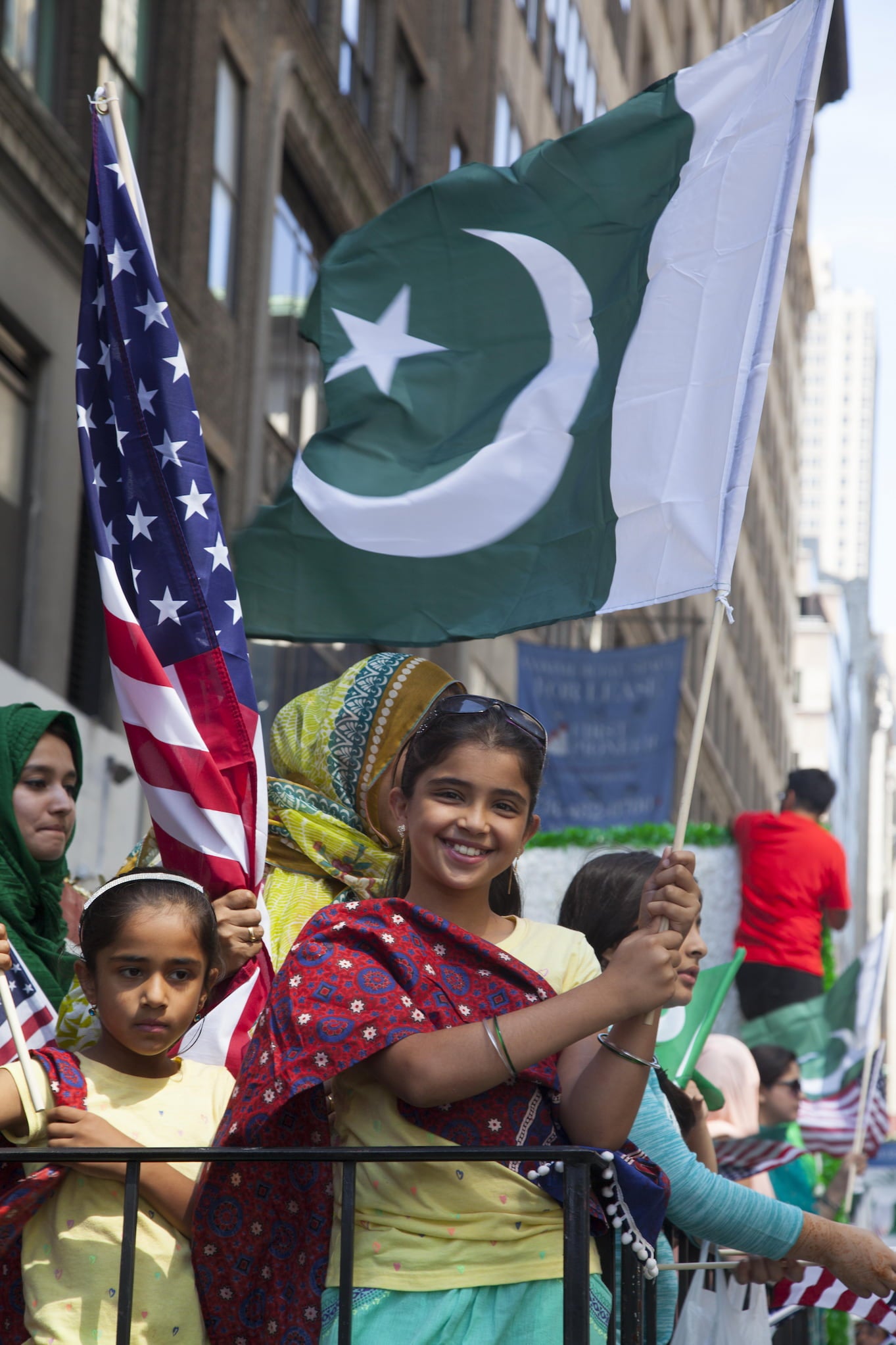
Do Pakistani Americans fit under the broad umbrella of an “Asian American” panethnic identity?
Chapter objectives
- Learn about the formation of Pakistan and Pakistani American migration to the United States
- Understand why ethnicity and identity are important to Pakistani Americans
- Explore the history of colonization and the repercussions of imperialism in South Asia and its connection to Pakistani American culture
This chapter on Pakistani Americans connects the history of Pakistan and South Asia to their overseas communities, including the formation of the Pakistani American ethnic identity. Moreover, this chapter discusses Pakistani Americans migration history, contours of the changing population, formation of ethnicity, impact of the 9/11 attacks, and mutual aid and other advocacy efforts. It especially highlights the importance of panethnicity, transnationalism, colonialism, labor, and intersectionality to the settlement of Pakistanis in the United States.
Modules in this chapter
Roots: History of Pakistan and Early Migrations
Contours: A Profile of the Pakistani American Community
Texture: Building Ethnic Community and Infrastructure
Challenges: Pakistani Americans and the Aftermath of 9/11
Advocacy: Pakistani American Community Power
Roots: History of Pakistan and Early Migrations
Contours: A Profile of the Pakistani American Community
Texture: Building Ethnic Community and Infrastructure
Challenges: Pakistani Americans and the Aftermath of 9/11
Advocacy: Pakistani American Community Power
Chapter Sources
Afzal, Ahmed. Lone Star Muslims: Transnational Lives and the South Asian Experience in Texas. New York University Press, 2014.
Afzal-Khan, Fawzia. First Days Project. South Asian American Digital Archive. https://firstdays.saada.org/story/fawzia-afzal-khan.
Akram, Susan M. and Kevin R. Johnson, “Race, Civil Rights, and Immigration Law after September 11, 2001: The Targeting of Arabs and Muslims,” Immigration and Nationality Law Review 58, no. 3 (2001): 39.
Bald, Vivek. Bengali Harlem and the Lost Histories of South Asian America. Harvard University Press, 2013.
Bose, Neilesh, ed. South Asian Migrations in Global History: Labor, Law, and Wayward Lives, Bloomsbury, 2020.
Gaus, Mischa. “Not Waiting For Permission: The New York Taxi Workers Alliance and Twenty-First-Century Bargaining,” in New Labor in New York: Precarious Workers and the Future of the Labor Movement, edited by Ruth Milkman and Ed Ott, 246–65. Cornell University Press, 2014. http://www.jstor.org/stable/10.7591/j.ctt5hh18v.16
Jalal, Ayesha. The Struggle for Pakistan: A Muslim Homeland and Global Politics. Belknap Press of Harvard University Press, 2014.
Kumar, Deepa. Islamophobia and the Politics of Empire: Twenty Years after 9/11, 2nd ed. Verso, 2021.
Kundnani, Arun. The Muslims Are Coming!: Islamophobia, Extremism, and the Domestic War on Terror. Verso, 2014.
Mathur, Shubh. Surviving the dragnet: ‘special interest’ detainees in the US after 9/11. Race & Class, 47, no. 3 (2006): 31–46. https://doi.org/10.1177/0306396806061085