





The all-Asian female cast of The Joy Luck Club pose in mother-daughter pairs around dining room table.
Module 3: The Empowerment of Asian American and Pacific Islander Independent Media
Does Asian American and Pacific Islander participation and activism in the media have the power to eliminate their invisibility?
Mainstream media industries have underrepresented and misrepresented Asian American and Pacific Islander communities throughout history. One of the main ways that Asian Americans and Pacific Islanders have consistently challenged these inequities is to take control of media production including the making, marketing, and showcasing of content that is meaningful to themselves and their communities.
The rise of a distinct Asian American media production began in the early 1970s in tandem with the rise of the Asian American political movement. The education and political activism that propelled Asian American empowerment in the political struggle for representation aligned with the power and influence of the media. From this point in history, Asian American creators have been able to express themselves through Asian-owned production of independent music, news outlets, poetry and other print media, photography, visual art, filmmaking, and television.
This module explores the different forms and impacts of Asian American and Pacific Islander self-representations.
What role does media production play in Asian American and Pacific Islander empowerment in Hollywood?
To what extent have Asian American and Pacific Islander communities made gains and changes in media creation and content?
Do independent Asian American and Pacific Islander media help or hinder Asian American and Pacific Islander exposure and expansion into mainstream media in the US?
Asian American Independent Media 1.0
Starting in the late 1960s, Asian Americans began developing their own media production organizations in New York City and California (Los Angeles and San Francisco). In 1968, the University of California, Los Angeles (UCLA) began a program called EthnoCommunications that focused on teaching filmmaking to undergraduate and graduate students in the school’s Ethnic Studies courses. Their mission was to support Asian American content after repeated and numerous rejections from Hollywood. This mission built upon the political struggles of people of color on a global scale. Media self-representation for Asian Americans meant that authentic and culturally-specific stories were being told that aligned with the filmmakers’ values. Self-representation gave creators the freedom and agency to control their own narratives and help others to see realistic and genuine Asian American experiences.
By the 1970s, some of the filmmakers from UCLA’s EthnoCommunications program had created a media arts center called Visual Communications (VC). Located in the Little Tokyo neighborhood of Los Angeles, California, VC supported the production of photography, documentary films, educational exhibits, audio records, narrative cinema, and other media focused on documenting and narrating the experiences of Asian Americans. As VC co-founder Bob Nakamura described:
We only came to film school because we realized the importance of media in terms of changing perceptions of Asians, people of color, political statements we could make…We felt we needed to just make films about that so we could see ourselves as kind of everyday human beings. 1
In addition to providing support for community-led media production and exhibition, the center also provided training, workshops, and education to cultivate more robust Asian American media production. One of their first projects was a photography exhibit about the incarceration of Japanese Americans during World War II.
In 1975, a similar organization called Asian CineVision (ACV) was established in New York City’s Chinatown. Some of their initial projects included facilitating training workshops for the production of thirty-minute news and public affairs programs for their own local public access channel, Chinese Cable Television (CCTV). CCTV was one of the first community-based television stations in the US that was focused on Chinese Americans and provided programming in Cantonese Chinese.
Also, starting in 1981, ACV began publishing Bridge Magazine, a quarterly arts journal that gave Asian American writers and artists an outlet for exploring their developing identities and political consciousness.
Asian American and Pacific Islander Film Festivals
Asian CineVision provided an important marketing platform to exhibit and showcase public screenings of Asian American films. In 1978, they held the first Asian American International Film Festival. The event featured forty-six films and videos, including Asian American and Asian international works, such as feature films from Japan and Hong Kong. The goal of the festival was to offer a platform for filmmakers to showcase their works, and thus increase the legitimacy and viability of both the films and their creators.
Starting in 1982, ACV launched a National Festival Tour that brought their annual film festival offerings to cities all across the US, including Los Angeles and San Francisco, California; Philadelphia, Pennsylvania; Chicago, Illinois; Boston, Massachusetts; and Washington, DC. Asian American communities from across the country were able to see new films featuring stories about Asian Americans. Each city’s host group curated their film festival to their local community, offering regionally-specific panel discussions that were meaningful for the local audiences.
These film festivals serve several important functions. First, they feature and celebrate the work of Asian American artists unknown to mainstream media. Second, they provide audiences access to content that may not be widely available. Third, the experience of viewing a movie in community, collectively, builds community. Screening a film in a theater gives the filmmaker time to engage with the audience through Q & A sessions. Finally, film festivals also offer educational panels and workshops that deepen opportunities for learning.
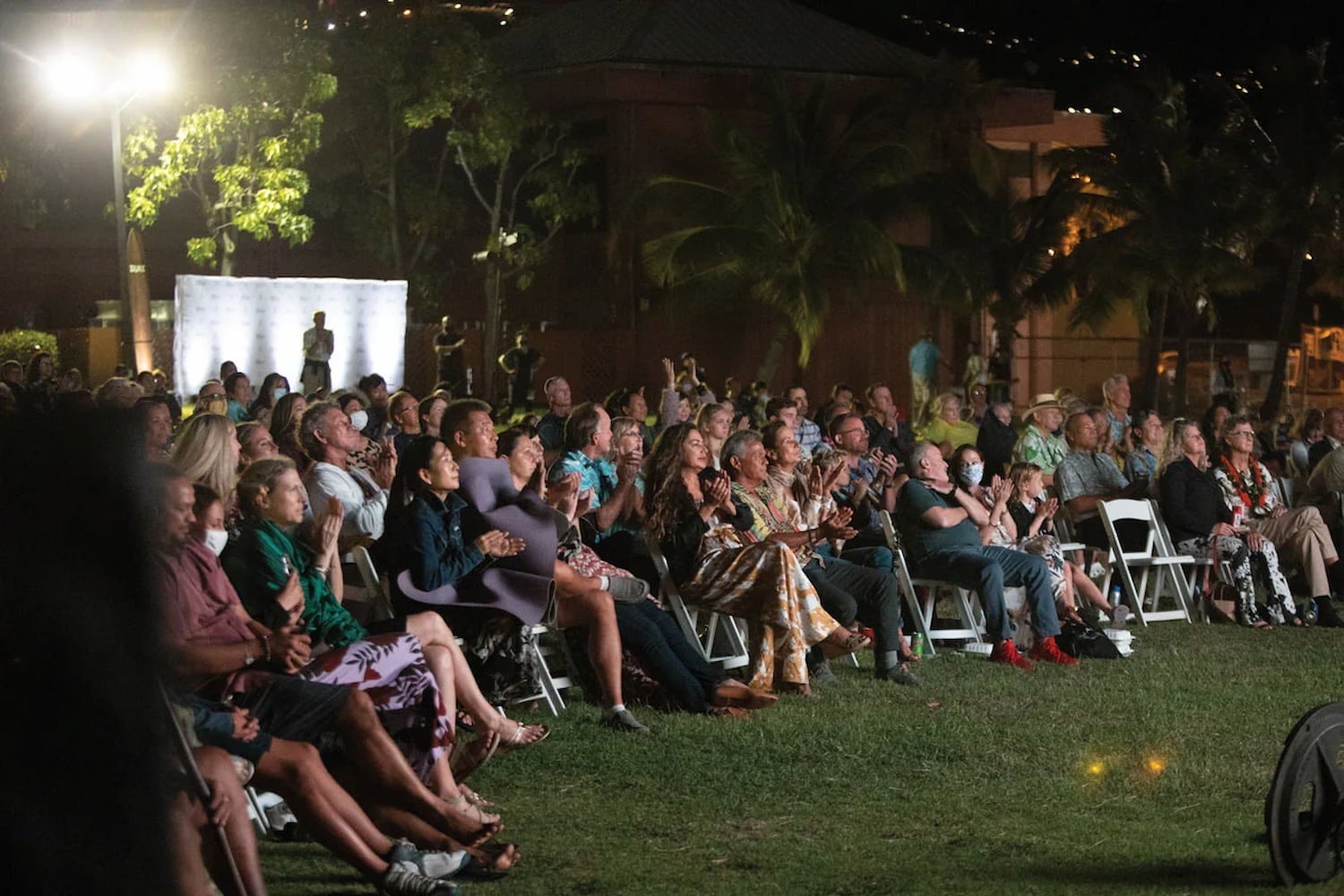
Image 27.03.02 — Since 1981, the Hawaiʻi International Film Festival has been a platform for Asian American and Pacific Islander filmmakers and international cinema across the Asia-Pacific region.
The Hawaiʻi International Film Festival (HIFF) is another one of the earliest Pacific Islander film festivals that lives up to such a vision. Founded in 1981 by Jeannette Paulson Hereniko, HIFF is supported by the University of Hawaiʻi at Mānoa’s East-West Center and serves as the nation’s premiere site for highlighting Native Hawaiian and Pacific Islander films. In addition to presenting brand new feature films and documentaries made by and about people from Asia, the Pacific, and North America, it also curates programs of short films that highlight unique themes each year.
For instance, in 2022 the festival featured Indigenous Lens Shorts, which centered Indigenous voices from around the world; Environmental Shorts addressing themes around water, climate, and wildlife; and a Pacific Showcase featuring voices from Papua New Guinea, the Cook Islands, the Marquesas Islands, and New Zealand (Aotearoa). Short films are rarely viewable outside the context of film festivals, so these programs offer a special opportunity for audiences to see these valuable works.
Defining Asian American and Pacific Islander Media: A Closer Look
Asian American and Pacific Islander film festivals may ask the question: What counts as Asian American and Pacific Islander media? Some possible different definitions take into account who makes decisions surrounding the production, casting, content, and storyline.
In this sense, Asian American and Pacific Islander media are media made by people who identify as such. Since numerous individuals participate in making a movie, TV show, or video game, a focal point of most media may be the director, writer, or actors. Additionally, since multiple perspectives are at play for each medium, a film that centers Asian American and Pacific Islander producers, directors, screenwriters, cinematographers, and cast may be considered Asian American and Pacific Islander media.
Another important attribute of this media may consider the identities of the individuals who are featured including the actors, models, performers, public intellectuals, and other stars. One example is the Asian American hosts of the cooking competition show Top Chef (2006–present), namely Padma Lakshmi and, later, chef Kristen Kish.
What about podcasts like “Decoding TV” hosted by David Chen, or televised esports tournaments in which Asian players dominate? Clearly, placing their participation in the foreground is an important factor that highlights diverse and divergent Asian American and Pacific Islander experiences.
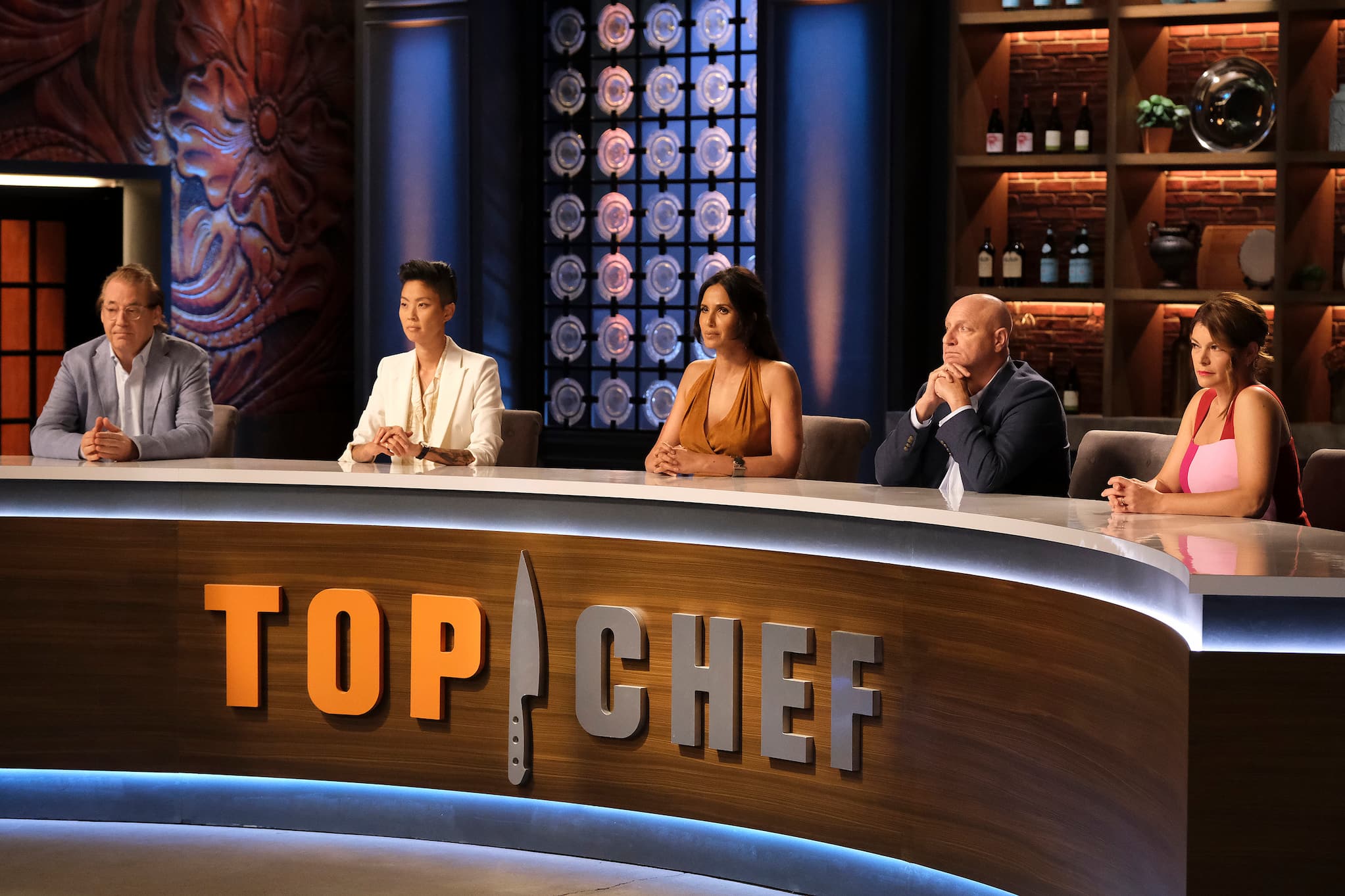
Image 27.03.03 — The cooking competition show Top Chef has featured the expertise of Asian American and Pacific Islander hosts Padma Lakshmi (center, middle) and Kristen Kish (second from left) alongside the talents of emerging Asian American and Pacific Islander chefs.
Finally, the content of Asian American and Pacific Islander media asks how much focus should be given to the specificities of Asian American and Pacific Islander experiences. Many forms of media can have individuals with a particular background behind the scenes or as featured performers, but do not necessarily foreground issues specific to their backgrounds in any obvious way.
For instance, the China-born director Chloé Zhao won an Academy Award for her movie Nomadland (2020), which does not feature a single Asian performer. The Māori director Taika Waititi has also created popular and long-running television programs like What We Do in the Shadows (2019–2024) that do not feature any Pacific Islander storylines. Audiences of this content may never even consider the particular background of the creators.
Actors can also be cast in roles that are considered “colorblind” or “race-blind,” where race is not considered and someone of any race can play a role. For instance, while the actor Keanu Reeves is mixed-race English, Hawaiian, Chinese, and Portuguese, he has played leading roles in movies such as Speed (1994), Point Break (1991), and Bill & Ted’s Excellent Adventure (1989) in which his mix-raced identities are not acknowledged or even addressed.
The different possibilities of Asian American and Pacific Islander media representation in its production, screenplay writing, and casting show the wide range of what may be included within the category. While stories that foreground Asian American and Pacific Islander experiences and identities both behind the scenes and on screen are important, media can also include individuals that do not center their particular Asian American or Pacific Islander communities and their stories. As such, the loose and blurry boundaries around this category allows flexibility in its inclusion of diverse voices and experiences while also being attuned to the experiences of those who have historically been underrepresented in mainstream US media.
Mainstream Participation and Recognition
While Asian American and Pacific Islander media production is rooted in independent and community-based media, many have also found success in the world of mainstream media. One of the earliest big-budget Asian American movies that reached millions in viewership was Wayne Wang’s 1993 film The Joy Luck Club, an adaptation of Amy Tan’s 1989 novel focusing on the stories of Chinese American mothers and daughters. The film was a box-office success.
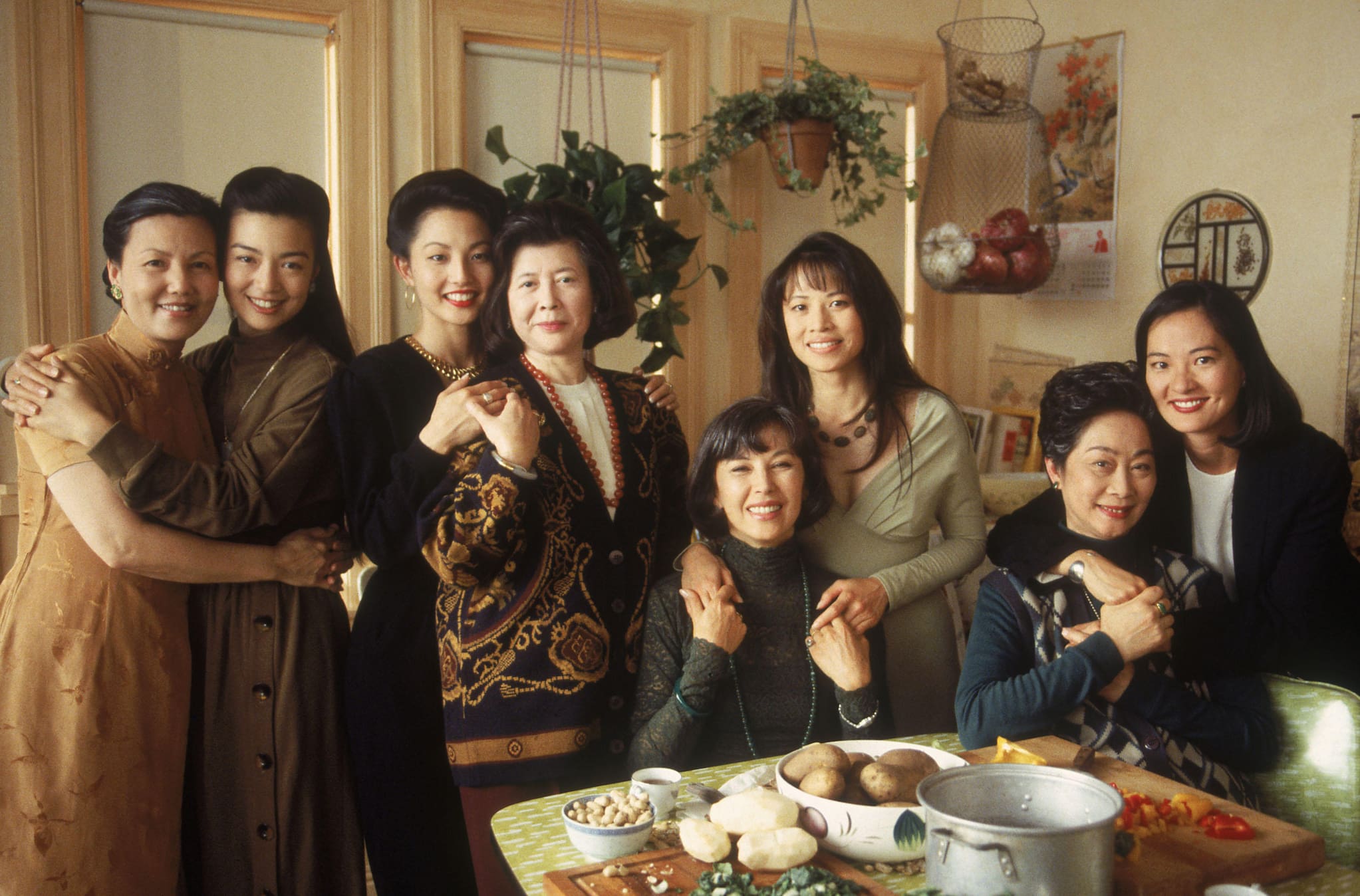
Image 27.03.04 — Joy Luck Club (1993), based on the novel by Amy Tan, was the first major Hollywood studio film to feature an all-Asian cast.
In the world of television, the first sitcom to feature an Asian American family was All-American Girl, premiering on ABC in 1994. Starring the comedian Margaret Cho, the show humorously depicted the generational divide between a rebellious second-generation Korean American young woman and her strict immigrant parents. The show lasted for one season before it was cancelled.
While both of these examples point to breakthrough successes, both were singular standouts due to the fact that no other film or television sitcom with predominantly Asian American casts appeared for decades. After The Joy Luck Club in 1993, the next major Hollywood studio film starring an all-Asian cast was Crazy Rich Asians in 2019. And after All-American Girl in 1994, the Fox TV sitcom Fresh Off the Boat (2015–2020) aired some twenty-years later. These time gaps demonstrate how difficult it is for Asian Americans in the media to hold power in Hollywood.
Another issue that Asian American creators have faced is the burden of representation, or the idea that there is extra pressure faced by communities of color rarely seen on film and television. When communities have experienced long periods of invisibility, the few representations that do exist are held to a higher standard and are often criticized for failing to meet those expectations.
The Joy Luck Club was criticized by many Asian Americans because the male characters in the story were the “bad guys” who served as obstacles to the happiness of the female characters. All-American Girl was criticized by some Korean Americans for its cultural and language inaccuracies and distortions. While such critiques are understandable, the burden of representation must also be recognized as another barrier to Asian American and Pacific Islander success in mainstream media.
Digital Media
Since the 2000s, Asian American and Pacific Islander creators have been able to expand into digital markets. Given the considerable barriers that they have faced in breaking into mainstream media, online platforms such as YouTube, TikTok, Facebook, and Instagram have offered powerful digital vehicles for growing media presence. Not only can individual content creators control their content online, they can also participate in media production with limited professional training or financial resources.
In the early days of the Internet, Asian American blogs flourished. Bloggers posted a wide range of content to platforms such as Blogger and Xanga with breaking news stories, personal opinions, documentary-style vlogs, cooking demos, fashion and makeup beauty tips, celebrity gossip, and political perspectives. As an early form of social media, blogs allowed Asian American creators to connect with their audience through reader/viewer comments. Some of these self-promoting content creators were propelled into stardom.
For example, Phil Yu began the blog Angry Asian Man in 2001, and shared stories about Asian American news, culture, and politics from all around the Internet. He became a leading figure within popular culture, coauthoring (with Jeff Yang and Philip Wang) Rise: A Pop History of Asian America from the Nineties to Now (2022). He also produced the YouTube show Angry Asian America (around the year 2014) and co-hosted the podcast They Call Us Bruce (2017–present) with writer Jeff Yang.

Image 27.03.05 — Phil Yu’s popular blog Angry Asian Man has been an online home for Asian American and Pacific Islander news, culture, and politics since the early days of the internet.
Metadata ↗
Asian American creators have also found particular success on YouTube, an online platform co-founded by Taiwanese American Steven Chen, where they can post their own videos and participate in forming online communities with like-minded fans. Beauty influencer Michelle Phan, who started off on the blogging platform Xanga, began posting makeup tutorial videos on YouTube in 2007 and gained a global following with millions of subscribers. This success allowed her to reach her dreams of becoming an official makeup artist for a well-known beauty brand, which led to launching her own cosmetics line, EM Cosmetics.
While these examples focus on the way that individual users can find success through online media, digital platforms also allow for the creation of powerful collectives and connected communities. For instance, the Facebook group Subtle Asian Traits is focused on memes about being a second-generation Asian living in a predominantly white and English-speaking culture. It was created by a group of Asian Australians who simply wanted a space for sharing jokes about their experiences as the children of Chinese immigrants, but quickly grew globally to over a million members. While users post brief, light, and silly posts, the platform connects community members in serious ways grounded in their specific experiences.
Digital platforms have also provided tools for Asian American communities to connect across the diaspora through diasporic media. The term diaspora refers to the community of peoples who dispersed from their homeland and still maintain a connection to both their homeland and to each other. One way that this can happen is through the media. For instance, members of the Indian diaspora connect to their heritage through media such as Bollywood movies and bhangra music. Hmong Americans keep their culture alive through creating digital forms of radio that promote participation from overseas Hmong living abroad in Laos, Thailand, France, and the United States.
Glossary terms in this module
burden of representation Where it’s used
The extra pressure put onto media depictions of communities that are rarely seen, such as people of color, queer people, or disabled people. When communities have experienced invisibility for so long, the few representations that do emerge are held to an extremely high standard and are often criticized for failing to meet the expectations of those communities.
diasporic media Where it’s used
Diasporic peoples are a community of people who have left their homeland and are spread throughout the world. Diasporic media is media that connects that community from afar, either through connecting them back to the media cultures of their homeland or facilitating new connections across geographic space.
mainstream media Where it’s used
Media industries that are the most profitable and longstanding, and have the largest audiences. Network television like ABC and NBC, movies produced by powerful movie studios like Twentieth Century Studios and Walt Disney Studios, and newspapers like The New York Times are all considered mainstream media. This contrasts with independent, community, or alternative media, which are all smaller, less financially profitable, and reach fewer audiences.
media arts Where it’s used
Media include a wide range of communication technologies, but the category of media arts usually refers to the more artistic and creative forms of media as opposed to simply informational. This might include film and video, but also can include photography, digital art like creating a webpage, music, and any other form of art that relies on technology.
representation Where it’s used
In the context of media, representation refers to the idea that an image of a person stands in for that person or teaches you something about that person. When you see many representations of a certain thing, you learn more about it, and when something is not represented you are denied the opportunity to learn about it at all.
Endnotes
1 Robert A. Nakamura, interview by Sharon Yamato, Densho Visual History Collection, Densho Digital Archive, November 30, 2011.