





Module 4: Media and Asian American and Pacific Islander Activism
Does Asian American and Pacific Islander participation and activism in the media have the power to eliminate their invisibility?
Media play a powerful role in communicating information and shaping perceptions about every aspect of the world—including the Asian Americans and Pacific Islanders in it. In response to seeing offensive or harmful images, Asian American and Pacific Islander advocates have resisted such images and demanded a truer representation of the wide spectrum of their diverse experiences in the United States. Toward this end, they have also organized boycotts and protests. To counter their invisibility, they have fought to hire and create roles centered on Asian American and Pacific Islander cultural production, which includes movies, TV shows, music, and other digital media.
Asian American and Pacific Islander communities have also implemented digital tools and social media to support social justice movements and political activism for immediate impact. Activism supporting healthcare, housing, environmental justice, and anti-racism, as well as voting rights, immigrant rights, and LGBTQ+ rights have benefited from the strategic and immediate use of media. Such skillful deployment of digital media has effectively broadcasted information and built online communities around issues that matter to people and their communities.
In this module, we explore many different forms of Asian American and Pacific Islander activism as they relate to the media.
How have Asian American and Pacific Islander media organizations contributed to uplifting Asian American and Pacific Islander community stories and industry experiences?
What role does fandom and fan activism play in the struggle for authentic portrayal of Asian American and Pacific Islander experiences in the United States?
How have #hashtag activism and online movements contributed to progress for the Asian American and Pacific Islander and other communities?
Organizations for Asian American and Pacific Islander Media Professionals
Organizations that support Asian American and Pacific Islander media professionals have helped to increase the number of Asian Americans and Pacific Islanders funding work for actors, directors, writers, editors, and producers. The Coalition of Asian Pacifics in Entertainment (CAPE) is a Los Angeles-based nonprofit group that nurtures creative talent and media executives with fellowships for writers and creative executives as an entry point into Hollywood and its industries. CAPE’s grants serve as catalysts to develop and nurture the careers of Asian American and Pacific Islander creatives who want to work in media industries. Similarly, organizations like CAPE also collaborate with Hollywood studios and production companies, and network with decision-makers to create more opportunities.
Another advocacy-focused professional organization is the Asian American Journalists Association (AAJA). This organization has worked to advance diversity in newsrooms and improve journalism for and about communities of color. It provides mentoring and professional development for journalists and advocates for their voices when issues arise.
One event where the AAJA took action was in March 2021, when a gunman in Atlanta, Georgia, shot and killed eight people working at Asian American-owned spa businesses. Some of the first news articles that emerged after this horrific incident assumed that the women were sex workers. In a time of pain and trauma, this assumption about the murdered Chinese American and Korean American women exacerbated the community’s outrage and points to the history of imperialism, which has orientalized and sexualized the bodies of Asian women.
Many news stories also failed to name the victims and instead focused more on rationalizing the white male shooter’s motives. In response, the AAJA provided journalistic guidance to help reporters improve their coverage of Asian American-focused stories. For instance, the AAJA suggested providing context about the rise in violence against Asian Americans since 2020 and urged caution about the sexualization of Asian women that led to this violence. They also provided a video pronunciation guide for the victims’ names so that reporters could avoid mispronouncing them.
Asian American Media Strategy and Activism
Asian American organizations that focus specifically on media activism advocate for improvements in media representation. The Media Action Network for Asian Americans (MANAA) is a community organization also in Los Angeles, California, that has been dedicated to advocating for balanced, sensitive, and positive coverage and portrayals of Asian Americans since 1992. Some of their earliest efforts include organizing national protests against the 1993 film Rising Sun, a film that played on anti-Japanese fears that Japanese businesses pose a threat to US-owned businesses. The movie contained numerous offensive portrayals of Japanese characters, and activists were concerned that the film would inflame resentment and incite violence against Asians.
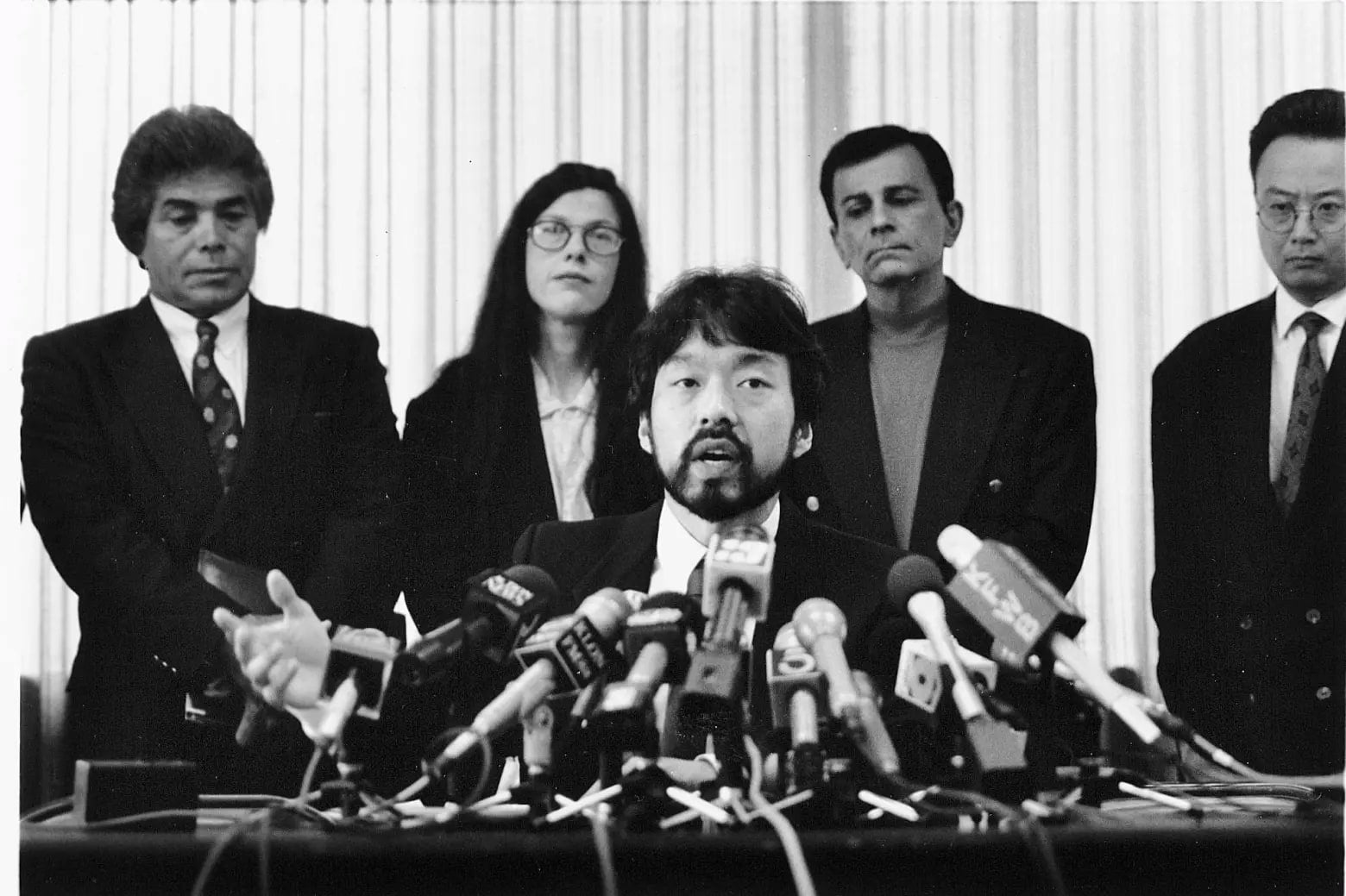
Image 27.04.02 — Guy Aoki, president of the Media Action Network for Asian Americans, addressing the offensive portrayal of Japanese characters in the film Rising Sun at a 1993 press conference.
Members of MANAA initially met with the film’s producers to bring attention to the most egregious issues and to provide an Asian American perspective on the story. Their requests for consultation were eventually turned down, and they were not allowed to view an early screening of the film. In response, MANAA organized protests at the premieres of the film in cities across the country. The protests were covered by national news syndicates across the country; ultimately, these actions helped to amplify MANAA’s message about Asian American criticism of Rising Sun.
This story highlights a set of strategies Asian American media activists have deployed that hit the pockets of the film industry. A great deal of media activism happens behind the scenes, as activists try to help advise and consult media productions while they are in progress. But if these efforts fail, activist strategies must shift toward educating the public about how to understand the problematic content and limit its harm.
Many media activism campaigns also call for a boycott of the media in question. The idea behind a boycott is that Hollywood studios are trying to make a financial profit from selling movie tickets. If the box office is hit by these protests, the message is effectively delivered to the movie studio—which then pays closer attention to activists’ requests and attempts to prevent these problems in the future.
Asian American media activists have also strategized to support representations that they deem important and beneficial. For instance, in 2018 an organization of Asian American leaders called Gold House created a campaign called #GoldOpen aimed to increase ticket sales for the opening weekend of the film Crazy Rich Asians (2018). Given that Crazy Rich Asians was the first major studio film featuring an all-Asian cast since The Joy Luck Club (1993), the group recognized the importance of showing mainstream studios the power of Asian dollars in consuming and supporting this project.
To encourage audience attendance, Gold House used not only social media activity but also larger theater buyouts for economic support. Asian American donors purchased tickets for an entire screening, which then were distributed to community members. They hoped that, if the movie was successful, it would open the door to more opportunities for Asian American actors, directors, producers, and storytellers.
After the stunning success of this campaign, Gold House has gone on to support dozens of “Gold Opens” for other Asian and Pacific Islander-led projects ranging from the independent film Past Lives (2023), the animated feature Abominable (2019), the documentary 38 at the Garden (2022), and the television show Chief of War (2025).
Media Audiences as Readers and Resisters
The scale of consumer activism demonstrates that anyone, from a single viewer to an entire theater buyout, can influence change in media. At the base, audiences interpret, engage, and comment on movies, TV shows, music, online videos, and other campaigns. Media reception offers, again, a reflection of the diversity and differences in Asian American culture and society today.
Let’s consider the example of the HBO Max reality show House of Ho (2020–2022), which features a wealthy, outlandish Vietnamese American family in Houston, Texas. The family’s dramas, such as struggles with divorce and addiction, make transparent the ups and downs of one Asian American family. Some viewers may think the show is offensive because it perpetuates harmful myths about Asian American economic success.
Other viewers may become huge fans of the show because one of the characters reminds them of themselves, and they enjoy the feeling of recognition that comes from seeing someone struggling through issues like theirs on a popular television show. Yet others could hate all of the characters and critique the show, but take pleasure in its melodrama. Countless possibilities for the show’s reception demonstrates that there is no one way to engage with any form of media, again reflecting the diversity of Asian American reception and interpretation.
This example of a reality television program offers insight into how audiences build relationships to media and cultural production. Fans of shows watch and support it, and find community in their fandom. Fans can join with others in their opinions and interpretations. In some cases, fans engage with media in ways that can counter harm. For instance, Asian American fans of the movie Big Trouble in Little China (1986) have celebrated this film’s lead Asian hero, despite the fact that the film itself also contains stereotypical images of an evil Oriental villain and a silent Asian female victim. Passionate audiences can also unite and take action as fans, mobilizing to support worthwhile projects and bring new light to the media.
Fandom and Fan Activism
Fandom and fan activism are terms used to describe the collective efforts of media audiences to mobilize for a collective goal in support of their film, TV show, music, or other media. Such action-oriented fandom provides collective support in various ways. In 2016, a collective of Asian American fandom came together to advocate for the casting of an Asian protagonist in Marvel Studio’s Iron Fist (2017–2018), a Netflix production based on a comic book series.
In the comic, Danny Rand is a white American superhero who uses his mystical martial arts power to fight crime in New York City. Asian American fans of the story were hopeful that the live-action television adaptation would star an Asian or Asian American in the leading role. Not only have Asian superheroes been exceedingly rare, but the story itself is aligned with narratives about struggles with knowing one’s identity and culturally fitting in—both in Asia and in the US—as well as the themes of martial arts and Asian religion.
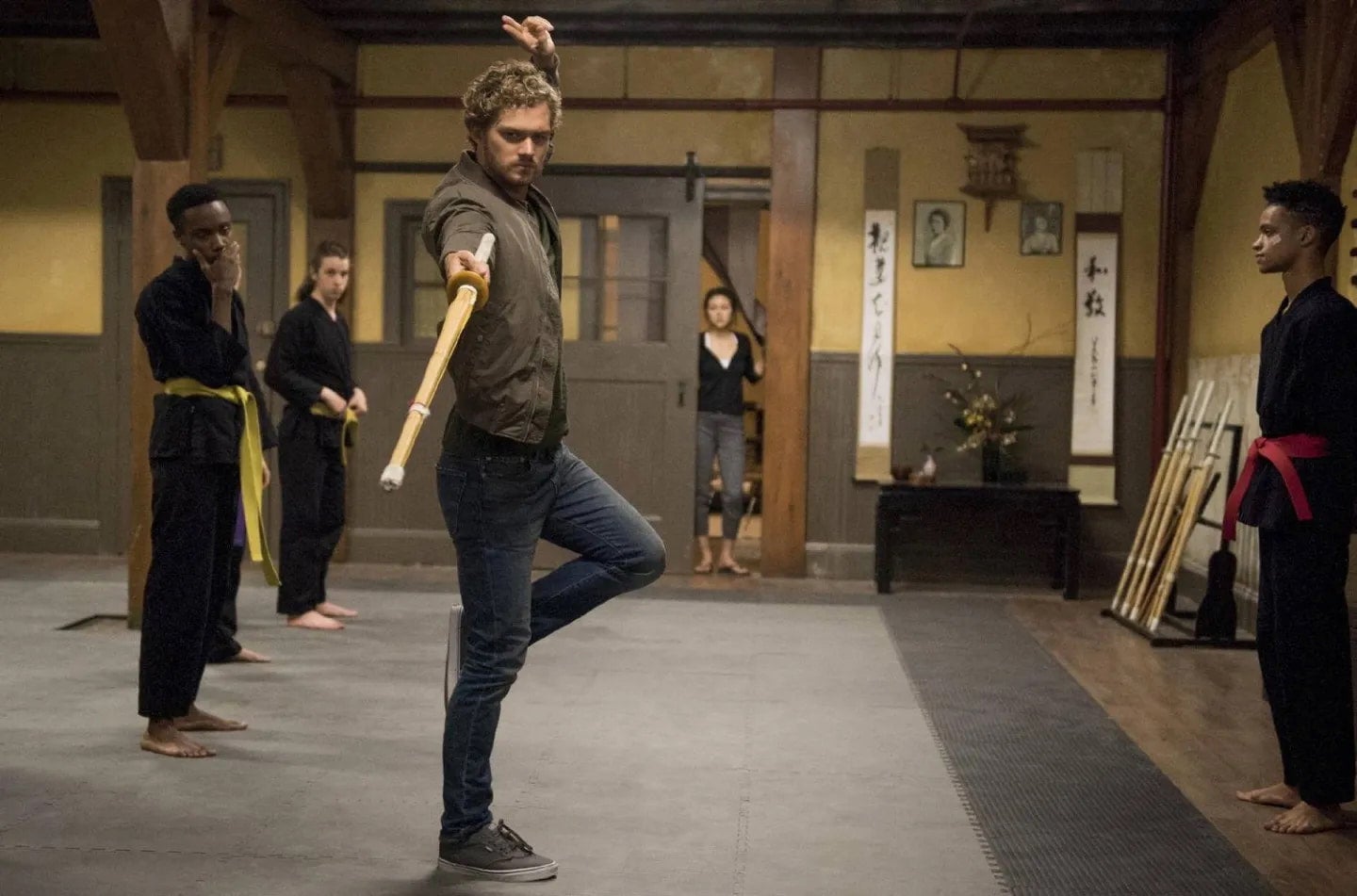
Image 27.04.04a — White actor Finn Jones was cast in Marvel’s TV adaptation of Iron Fist (2017–2018) as protagonist Danny Rand—a martial artist who wields an ancient, mystical force called the Iron Fist that allows him to harness “chi” energy.
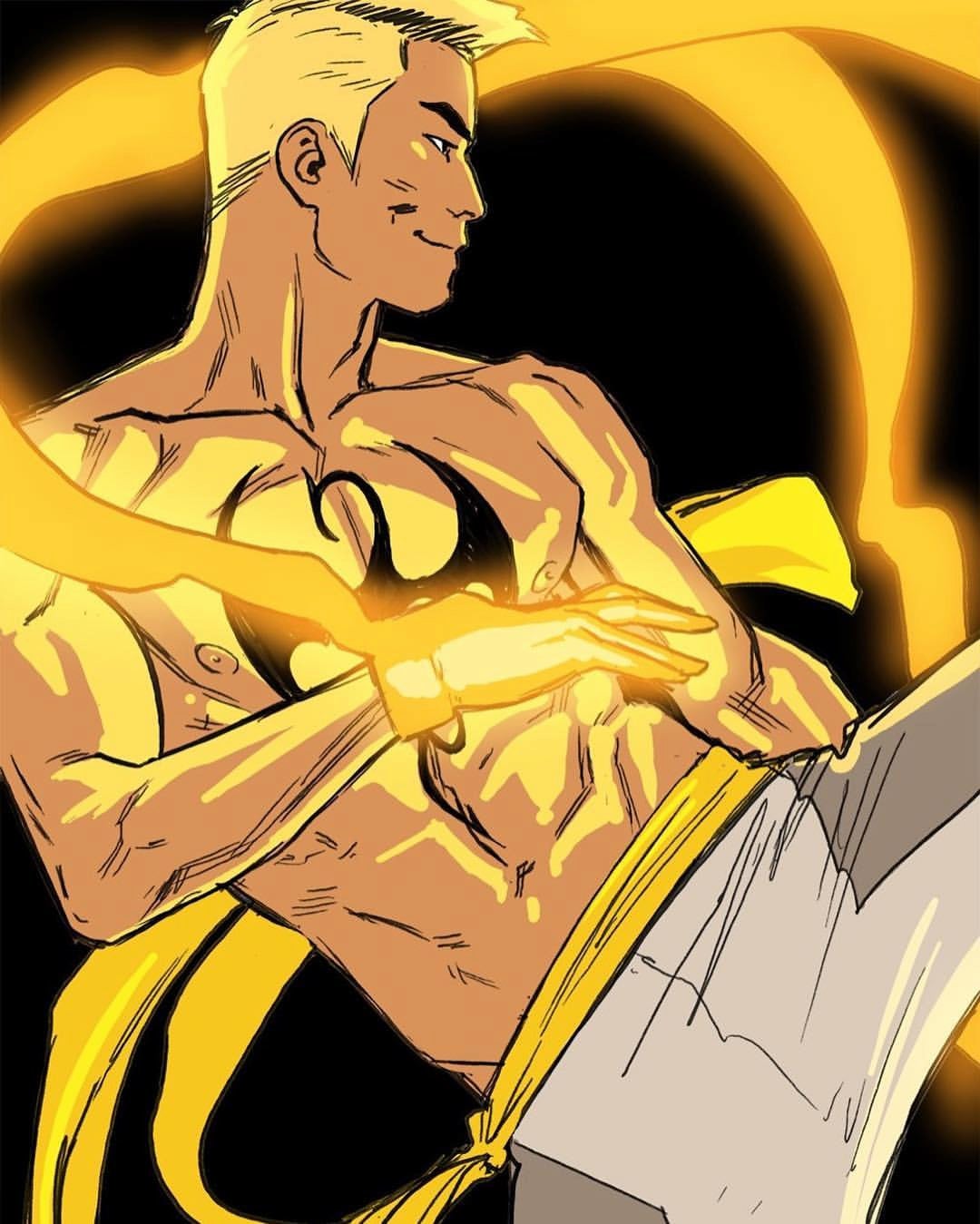
Image 27.04.04b — As a response to Danny Rand’s white casting, comic artists like Kris Anka advocated for an Asian American and Pacific Islander recast, reimagining the character’s racial representation through fan art. Anka’s original design inspired other artists to post their own renditions on Twitter in support.
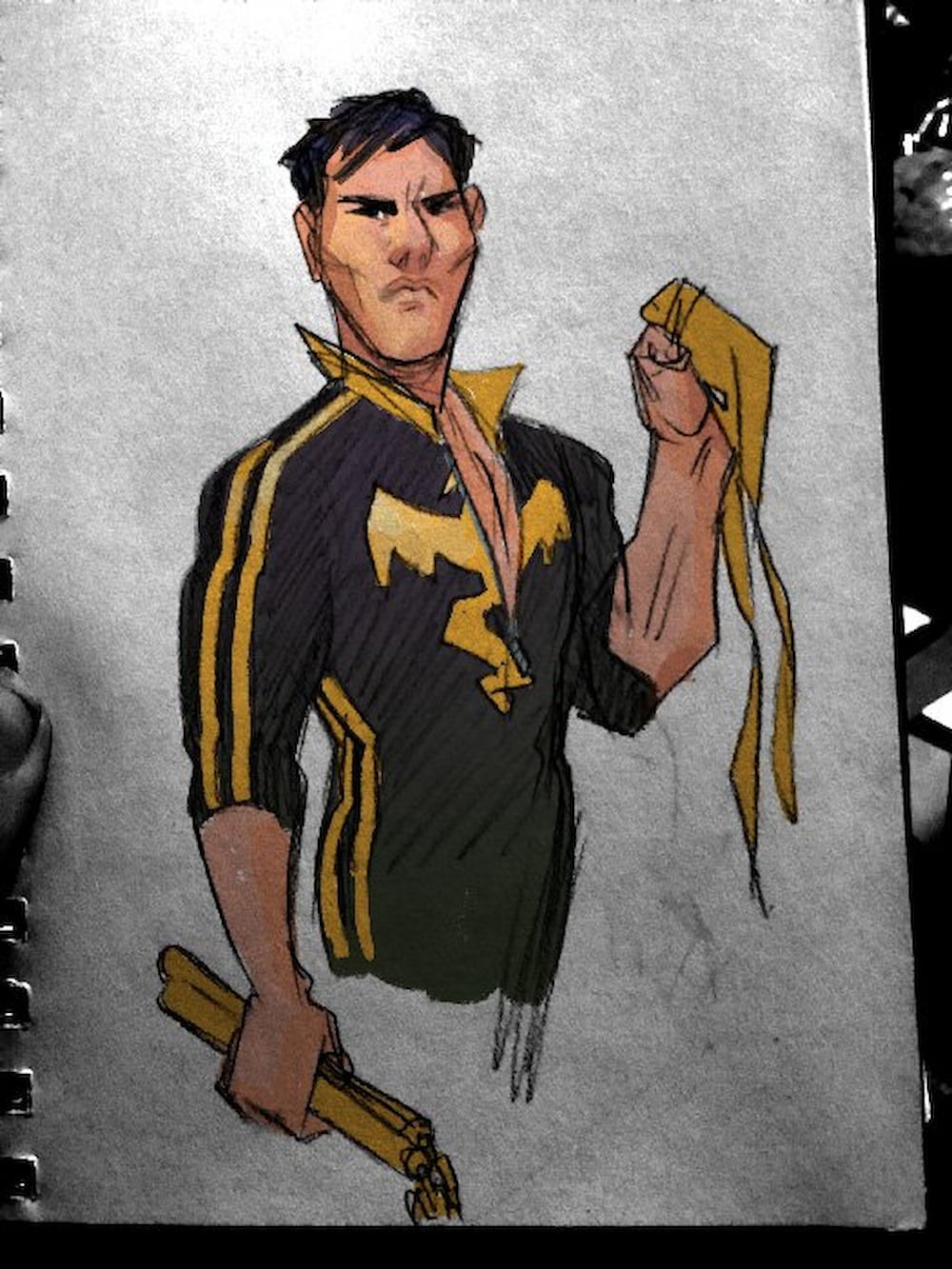
Image 27.04.04c — A popular fan recast of Danny Rand was British Chinese actor and martial artist Lewis Tan. Fans portrayed Tan as the Iron Fist through fan art, as in this sketch by comic artist Erica Henderson.
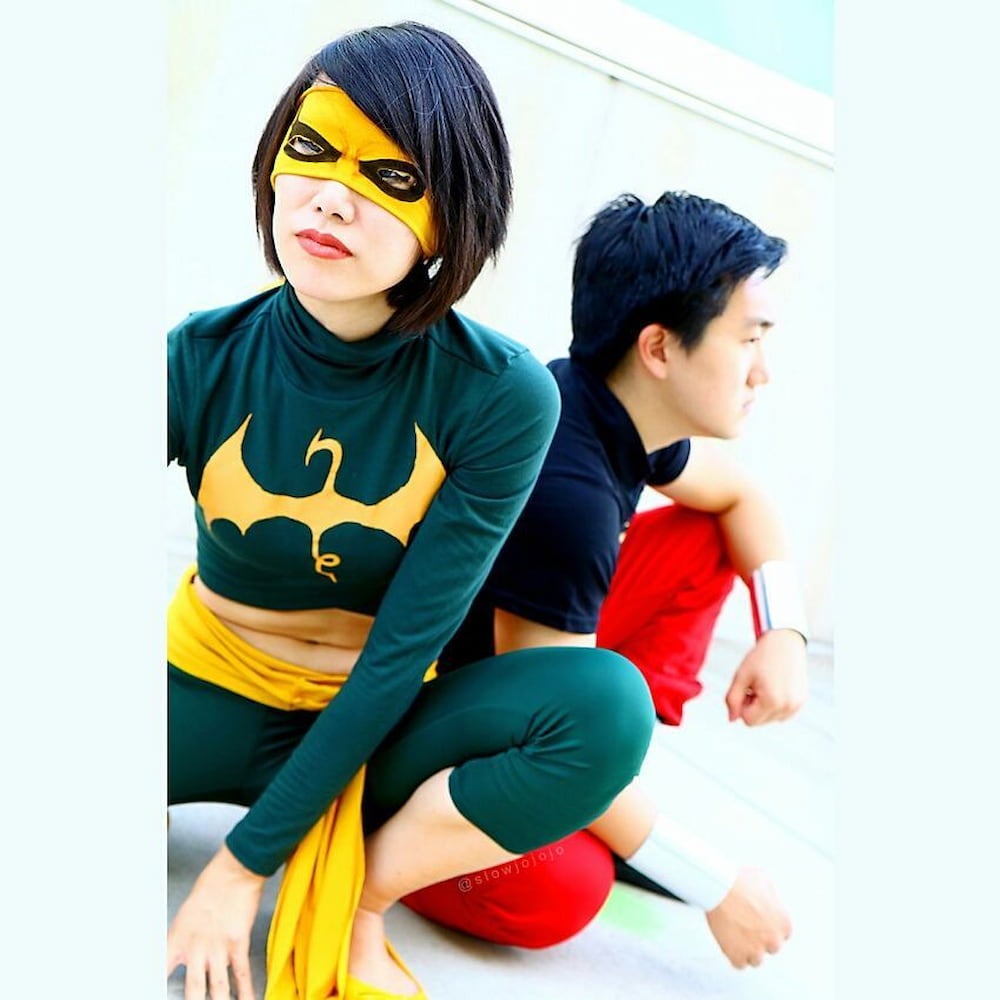
Image 27.04.04d — Other Asian American and Pacific Islander fans, such as Nerds of Color writer Josephine Chang, responded to the character’s whitewashing by suiting up as the superhero themselves, cosplaying at comic conventions and posting photos of themselves online.




A fan community calling themselves “The Nerds of Color” organized hashtag campaigns using phrases such as #AAIronFist and #whitewashedOUT and wrote numerous online articles calling attention to the interconnected issues that were keeping Asian Americans out of Hollywood. They discussed the frustration of only seeing Asians as sidekicks instead of as a main protagonist or hero, and how important it was for Asian youth to see role models that looked like them in mainstream media.
Prominent Asian American performers like comedian Margaret Cho joined the conversation, helping to call attention to the issue. Artists shared their own fan art on Twitter (now X) and Instagram of what an Asian American Iron Fist might look like. Despite their efforts, white actor Finn Jones was cast in the role of Danny Rand and the show ran for two seasons on Netflix before being canceled in 2018.
Hashtag Activism
Digital media and social media have been instrumental in shaping activism in the twenty-first century. Various online platforms have helped participants resist social injustice, including lobbying government officials and lawmakers, taking legal action, organizing public demonstrations, raising awareness through education, and sharing information online. One notable form of digital activism is hashtag activism, a form of protest that has led to many positive outcomes.
Hashtag activism originated on the platform formerly called Twitter in 2009. On the platform, users can click on a hashtagged word and pull up a list of all other posts that contain the same word. Other social media platforms, such as Facebook, Instagram, and TikTok, eventually implemented this function, as it helped users find content related to a particular topic. When a large collective of users post the same hashtag, both that hashtag and its related content become more widely visible in online communities.
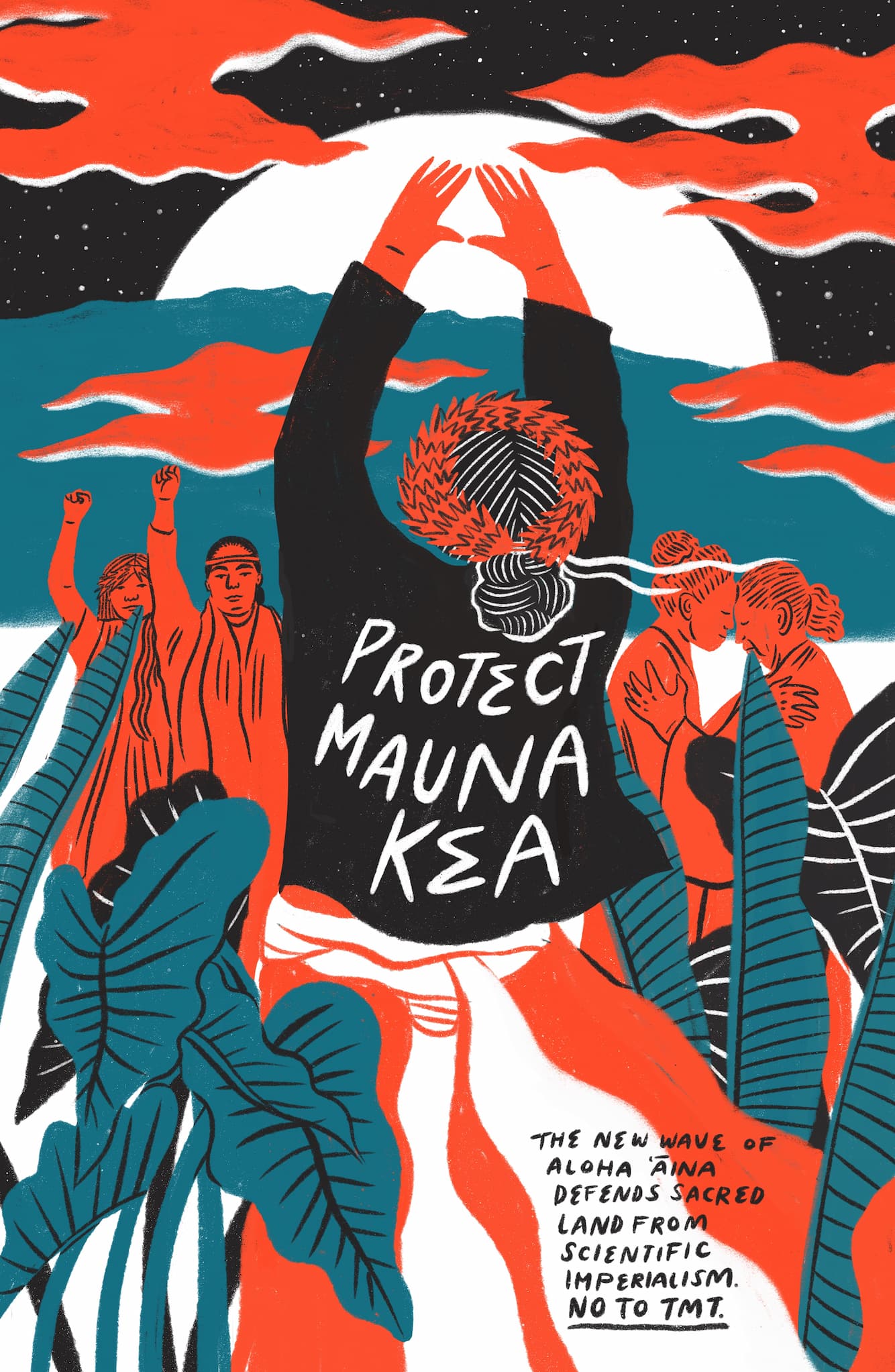
The simple addition of a hashtag can help amplify important political messages, such as the 2015 #WeAreMaunaKea movement calling to stop the construction of a large telescope on Mauna Kea, a sacred site for Native Hawaiians. By using social media, the movement to halt the construction of the TMT, or Thirty Meter Telescope, was able to connect with people fighting for Indigenous communities all over the world.

Image 27.04.05 — Honolulu-based artist Ash Kwak Lukashevsky created this art in support of Native Hawaiians taking part in a global movement supported by hashtags like #WeAreMaunaKea and #ProtectMaunaKea.
This kind of online activism has been criticized as superficial and weak, with many worrying that a participant can feel like they are contributing to social change when the reality is that they are simply clicking a “like” button or sharing a post online. And it is certainly the case that the majority of hashtags do nothing to change the world or produce a meaningful impact. But there are still many strengths to these kinds of online media campaigns that have made them an effective tool in some situations.
First, social media is open to most people, relatively easy to learn, and inexpensive to use, whereas becoming a journalist or creating a television show takes time and can only be done by credentialed media workers. Second, most people can create a social media account for free and start posting messages for viewing on a global scale. Third, access and reception have proven helpful to support activism, particularly if an injustice unfolding in real time needs immediate attention.
In the case of Mauna Kea, hashtag activism helped to amplify and support local protest actions in Hawaiʻi. While on-site protesters physically blocked access to the mountain road and interrupted the groundbreaking ceremony, digital activists helped to create national attention and news coverage on an issue that might otherwise have been ignored.
Online supporters also could become involved with the movement from afar, quickly communicating updates in real time—for instance, sharing the moment in 2019 when dozens of community elders were arrested for peaceful protest actions. When thousands of individuals participate in spreading awareness, calling for action, and activating their own personal networks of followers, an issue can become acute quickly. The protests and digital activism surrounding Mauna Kea played an instrumental role in supporting the growth of new movements for Native Hawaiian sovereignty.
Asian Americans and Pacific Islanders have used many other forms of online activism to promote social justice. The all-online group 18 Million Rising (18MR) uses digital media to advocate for progressive political issues. Founded in 2012, they have taken on campaigns opposing corporate development in Philadelphia’s Chinatown, fighting deportations of undocumented immigrants, allying with the Black Lives Matter movement, and promoting access and participation by Asian American and Pacific Islander voters, among others.
Their accomplishments are based on digital organizing strategies, such as disseminating information through social media, collecting online signatures for petitions, and encouraging digital participants to speak up about issues. This work reveals the important role of digital media in supporting political education and social change for Asian American and Pacific Islander communities.
Glossary terms in this module
boycott Where it’s used
A non-violent tactic involving the withholding of cooperation from purchasing goods or participating in events in order to effect change.
consumer activism Where it’s used
A form of activism focused on consumer goods and businesses, where the primary impact is financial. For instance, boycotting a business is consumer activism, because if customers refuse to buy a product the company might be forced to respond to demands and change their ways.
digital media Where it’s used
Includes many different forms of technology, including the internet and websites, mobile phones and apps, music files like MP3s, streaming television, online social media, video conferencing platforms, ebooks, digital photographs, and much more.
mainstream media Where it’s used
Media industries that are the most profitable and longstanding, and have the largest audiences. Network television like ABC and NBC, movies produced by powerful movie studios like Twentieth Century Studios and Walt Disney Studios, and newspapers like The New York Times are all considered mainstream media. This contrasts with independent, community, or alternative media, which are all smaller, less financially profitable, and reach fewer audiences.
orientalize Where it’s used
Coming from the notion of Orientalism, coined by Edward Said, to orientalize someone is to view them with a fascination stemming from colonial bias and a Western perspective, in which their depictions of Asians and other people of color are inaccurate and riddled with stereotypes.
representation Where it’s used
In the context of media, representation refers to the idea that an image of a person stands in for that person or teaches you something about that person. When you see many representations of a certain thing, you learn more about it, and when something is not represented you are denied the opportunity to learn about it at all.