





LANDMARK MOVEMENTS AND MOMENTS
Asian American and Pacific Islander Workers’ Organizing
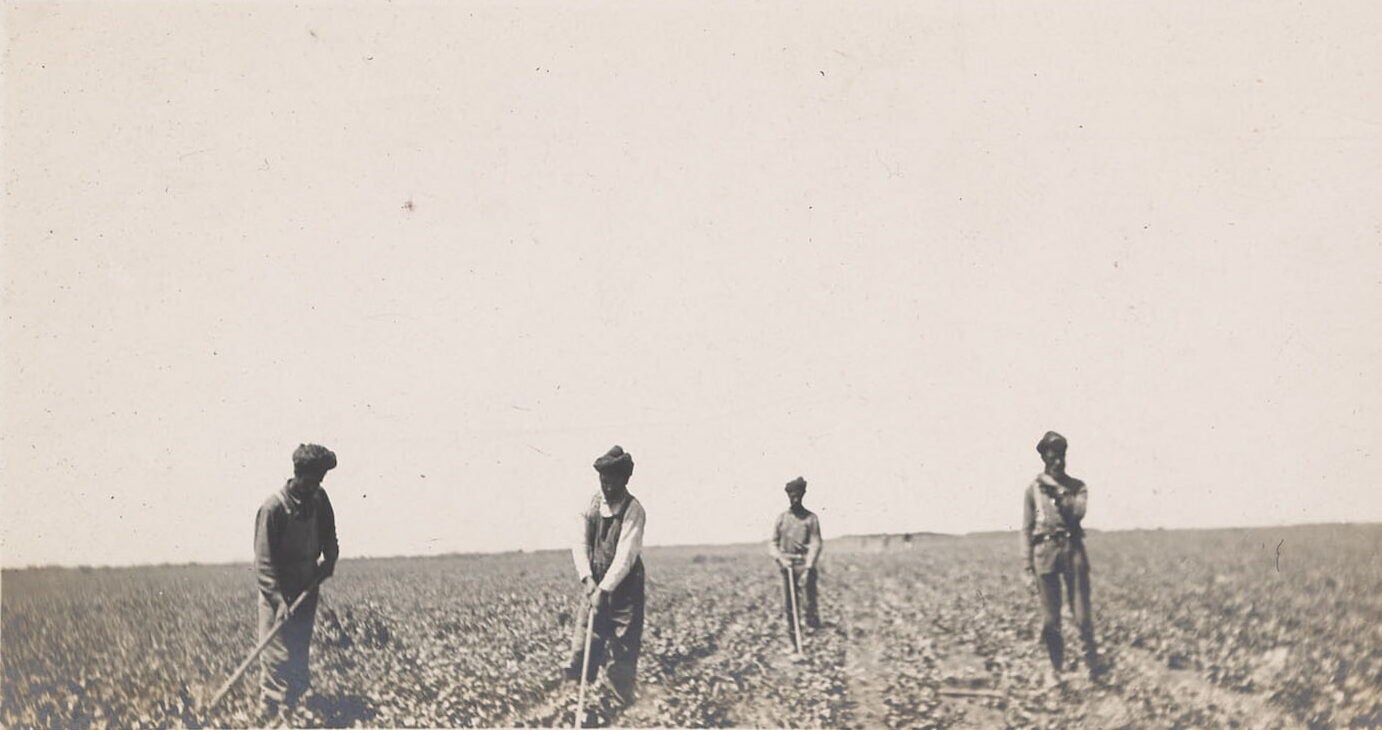
Has Asian American and Pacific Islander labor activism transformed working conditions for all workers?
Chapter objectives
- Learn the history of Asian Americans and Pacific Islanders involved in the labor and workers’ rights movement in the United States.
- Understand how US corporations and foreign policy have created unfair and unsafe working conditions for Asian American workers.
- Explore the power and possibilities of labor organizing for all workers to attain justice in the workplace.
The United States has recruited Asian American and Pacific Islander workers for cheap labor for numerous industries since the nineteenth century. As migrants seeking economic opportunity and safety from violence, these workers had few choices with the jobs they were offered, often taking dangerous and low-paying work. More recently, Asian American and Pacific Islander workers have been able to organize for better working conditions, despite language barriers and cultural differences. The modules in this chapter demonstrate the power of collective action, investigating how plantation, cannery, nail salon, and other workers organized to improve their workplace. By studying these workers’ powerful efforts, this chapter explores how Asian American and Pacific Islander workers have been able to use organizing strategies and introduce possibilities that improve conditions for all workers, no matter their backgrounds.
Modules in this chapter
Overview of Asian American Workers
Hawaiian Plantation Workers Organize for Justice
Alaska Cannery Workers
Nail Salon Workers: Ethnic Labor Migration
Contemporary Asian American Labor Organizing
Overview of Asian American Workers
Hawaiian Plantation Workers Organize for Justice
Alaska Cannery Workers
Nail Salon Workers: Ethnic Labor Migration
Contemporary Asian American Labor Organizing
Chapter Sources
Alarcon, Rafael. “Recruitment Processes Among Foreign-Born Engineers and Scientists in Silicon Valley.” American Behavioral Scientist 42, no. 9 (1999): 1381–1397.
American Immigration Council. “Examining Educational, Workforce, and Earning Divides in the AA and PI Community.” New American Economy Research Fund, May 17, 2021. https://www.americanimmigrationcouncil.org/report/aapi-examine-educational-workforce-earning-divides/.
Banerjee, Asha. “Understanding Economic Disparities within the AAPI Community.” Working Economics Blog. Economic Policy Institute, 2022.
Barman, Jean. Leaving Paradise: Indigenous Hawaiians in the Pacific Northwest, 1787-1898. University of Hawaiʻi Press, 2021.
Bender, Daniel E., and Jana K. Lipman, eds. Making the Empire Work: Labor and United States Imperialism. New York University Press, 2015.
Bernhardt, Annette., Ruth Milkman, Nik Theodore, et al.. “Broken Laws, Unprotected Workers: Violations of Employment and Labor Laws in America’s Cities.” National Employment Law Project, September 21, 2009, www.nelp.org/insights-research/broken-laws-unprotected-workers-violations-of-employment-and-labor-laws-in-americas-cities/.
Bleiweis, Robin. “The Economic Status of Asian American and Pacific Islander Women.” Center for American Progress, April 29, 2021. https://www.americanprogress.org/article/economic-status-asian-american-pacific-islander-women/.
Chang, Gordon H. Ghosts of Gold Mountain. Houghton Mifflin Harcourt, 2019.
Chang, Gordon H., and Shelley Fisher Fishkin, eds. The Chinese and the Iron Road. Stanford University Press, 2019.
Changelab: Strategy, Research & Vision for Racial Justice.“ A Different Asian American Timeline.” https://www.changelabinfo.com/. Accessed July 1, 2024.


