



ASIAN AMERICAN COMMUNITIES
Cambodian Americans

Video overview for Chapter Title.
00:00
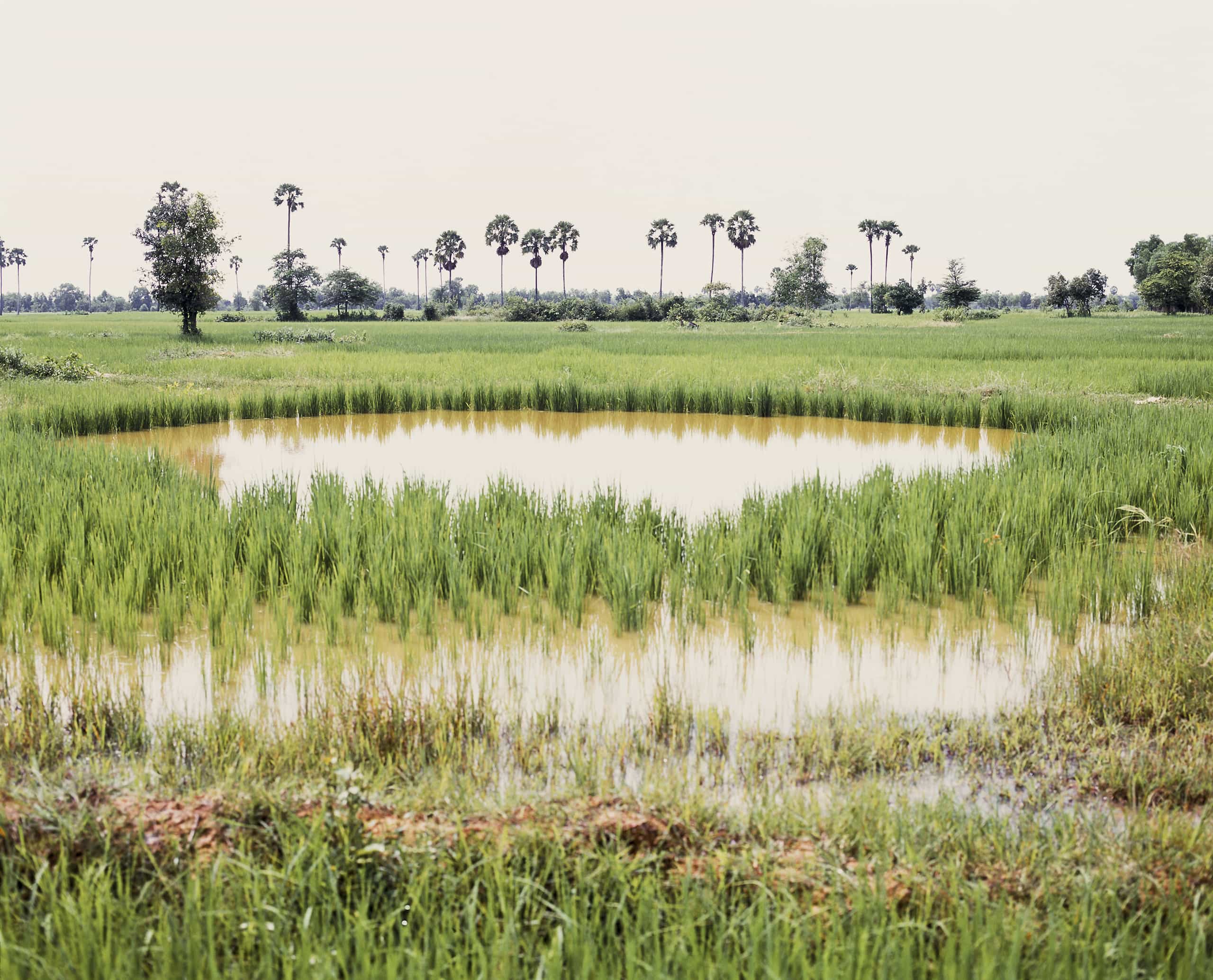
Did Cambodian Americans attain justice for the harms of war and genocide?
Chapter objectives
- Learn about Cambodian Americans and the historical conditions that explain their presence in the United States.
- Understand the transnational relationships of war, militarism, and refugee migrations.
- Explore how Cambodian Americans build diasporic communities in the United States and how they remember, record, and respond to violence and injustice.
This chapter applies a transnational approach to the history and lived experiences of Cambodian Americans in the United States. Moving beyond national borders and boundaries, the chapter challenges us to question our immediate association of Cambodian and Cambodian American history with temples and trauma. The chapter provides an introductory overview and addresses dominant images of Cambodia, from an historical context and examines the topics of decolonization and the Cold War, addressing how geopolitical considerations contributed to both Cambodian independence and the Cambodian Holocaust. It also considers the topics of genocide and state violence, addressing how “genocide” is defined as a war crime under international law. The chapter reviews refugee resettlement and diaspora, detailing Cambodian refugee experiences of displacement and resettlement in the United States. It also addresses intergenerational legacies, describing how Cambodian and Cambodian American communities remember, record, and respond to conditions of violence and injustice, connecting these conditions to larger global histories.
Modules in this chapter
Temples and Trauma
Decolonization and the Cold War
Genocide and State Violence
Refugee Resettlement and Diaspora
Transnational Connections and Intergenerational Legacies
Temples and Trauma
Decolonization and the Cold War
Genocide and State Violence
Refugee Resettlement and Diaspora
Transnational Connections and Intergenerational Legacies
Chapter Sources
Chanda, Nayan. Brother Enemy: The War After the War. Macmillan Publishing Company, 1986.
Chandler, David. The Tragedy of Cambodian History: Politics, War, and Revolution since 1945. Yale University Press, 1991.
Chandler, David. A History of Cambodia. 4th ed. Westview Press, 2008.
Chhun, Lina. “‘Sometime American Can. . . Make Mistake Too. . .’ Contested Memory, Documentary Registers, and Cambodian/American Histories of Violence.” Amerasia Journal 42, no. 2 (2016): 160–188.
Chhun, Lina. “Walking with the Ghost: Silences, Memory, and Cambodian American Histories of Violence.” Unpublished manuscript, June 5, 2024, typescript.
Chomsky, Noam. At War with Asia. AK Press, 2005.
Clymer, Kenton. Troubled Relations: The United States and Cambodia Since 1870. Northern Illinois University Press, 2007.
Edwards, Penny. Cambodge: The Cultivation of a Nation, 1860–1945. University of Hawaiʻi Press, 2007.
Hansen, Anne Ruth. How to Behave: Buddhism and Modernity in Colonial Cambodia, 1860-1930. University of Hawaiʻi Press, 2007.
Hewison, Kevin. “Black Site: The Cold War and the Shaping of Thailand’s Politics.” Journal of Contemporary Asia 50, no. 4 (2020): 551–570.