



ASIAN AMERICAN COMMUNITIES
Japanese Americans
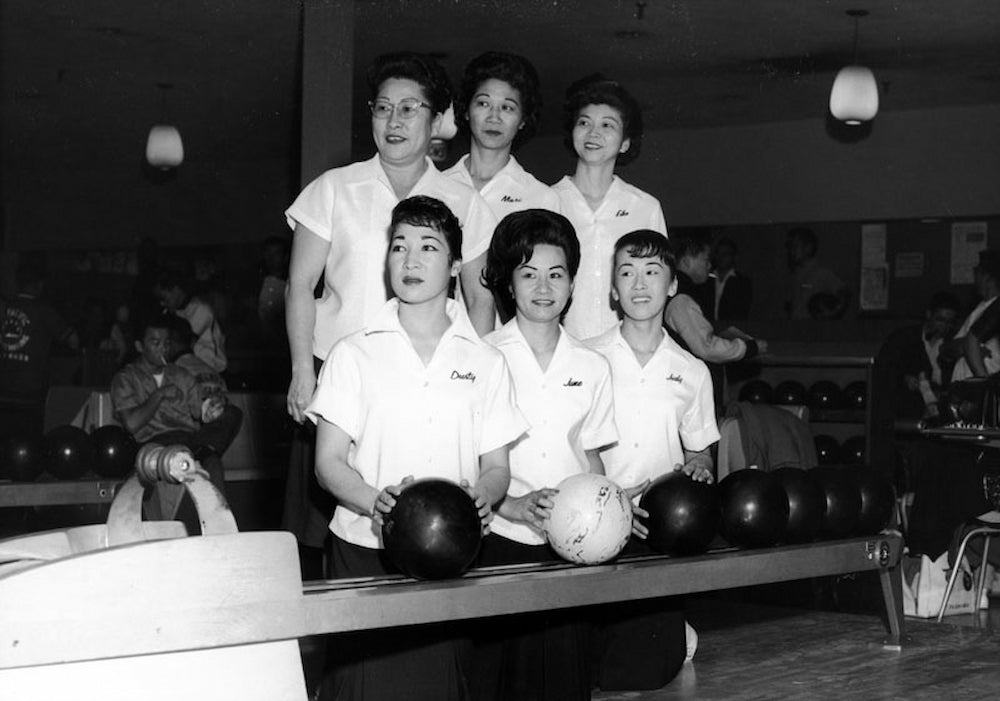
Why did many Japanese Americans retain a strong sense of ethnic identity and community after being in the United States for multiple generations?
Chapter objectives
- Learn about the impact of World War II on Japanese Americans, including the mass incarceration of Japanese Americans living on the West Coast.
- Understand how patterns of migration, shaped by racially based immigration laws, have shaped community formation.
- Explore the power of the past and how it shapes communities who have lived through historical injustice.
Japanese migration to the Kingdom of Hawaiʻi began in 1885 and to the continental United States about a decade later. Most early migrants were young men seeking short-term employment, but, over time, many decided to bring over wives and settle in the United States. Despite discrimination, Japanese American communities grew. During World War II, approximately 125,000 people of Japanese descent, including American citizens, were forcibly removed and incarcerated in American concentration camps. After the war, perceptions of Japanese Americans changed, especially with the rise of the “model minority myth.” About forty years after the war, community activism led the government to issue an apology and monetary reparations for the incarceration. A new wave of Japanese immigrants arrived in the 1980s, often forming limited ties to earlier generations. Looking at the full history of Japanese Americans, this chapter explores the ways Japanese Americans maintain a strong identity rooted in memories of incarceration.
Modules in this chapter
Still Here After Five Generations and Counting
Building Homes and Community in the Shadow of Two Empires (1885-1941)
Looking Like the Enemy (1942-1945)
From Pariahs to “Model Minorities” (1945-1970s)
Balancing Past and Present (1970s to the present)
Still Here After Five Generations and Counting
Building Homes and Community in the Shadow of Two Empires (1885-1941)
Looking Like the Enemy (1942-1945)
From Pariahs to “Model Minorities” (1945-1970s)
Balancing Past and Present (1970s to the present)
Chapter Sources
Allen, Gwenfread. Hawaii’s War Years, 1941–1945. University of Hawaii Press, 1950. Reprint, Greenwood Press, 1971.
Asahina, Robert. Just Americans: How Japanese Americans Won a War at Home and Abroad. Gotham, 2006.
Austin, Allan W. From Concentration Camps to Campus: Japanese American Students and World War II. University of Illinois Press, 2004.
Azuma, Eiichiro. Between Two Empires: Race History, and Transnationalism in Japanese America. Oxford University Press, 2005.
Brown, Daniel James. Facing the Mountain: A True Story of Japanese American Heroes in World War II. Viking, 2021.
Coffman, Tom. Catch a Wave: A Case Study of Hawaii’s New Politics. Foreword by Stuart Gerry Brown. University Press of Hawaii, 1973.
Coffman, Tom. The Island Edge of America: A Political History of Hawai’i. University of Hawai’i Press, 2003.
Collins, Donald E. Native American Aliens: Disloyalty and the Renunciation of Citizenship by Japanese Americans During World War II. Greenwood Press, 1985.
Commission on Wartime Relocation and Internment of Civilians. Personal Justice Denied: Report of the Commission on Wartime Relocation and Internment of Civilians. Washington, DC: Government Printing Office, 1982. Foreword by Tetsuden Kashima. University of Washington Press, 1997.
Daniels, Roger. Concentration Camps, U.S.A.: Japanese Americans and World War II. Holt, Rinehart and Winston, 1971.