



PACIFIC ISLANDER PEOPLES
Micronesians in the United States
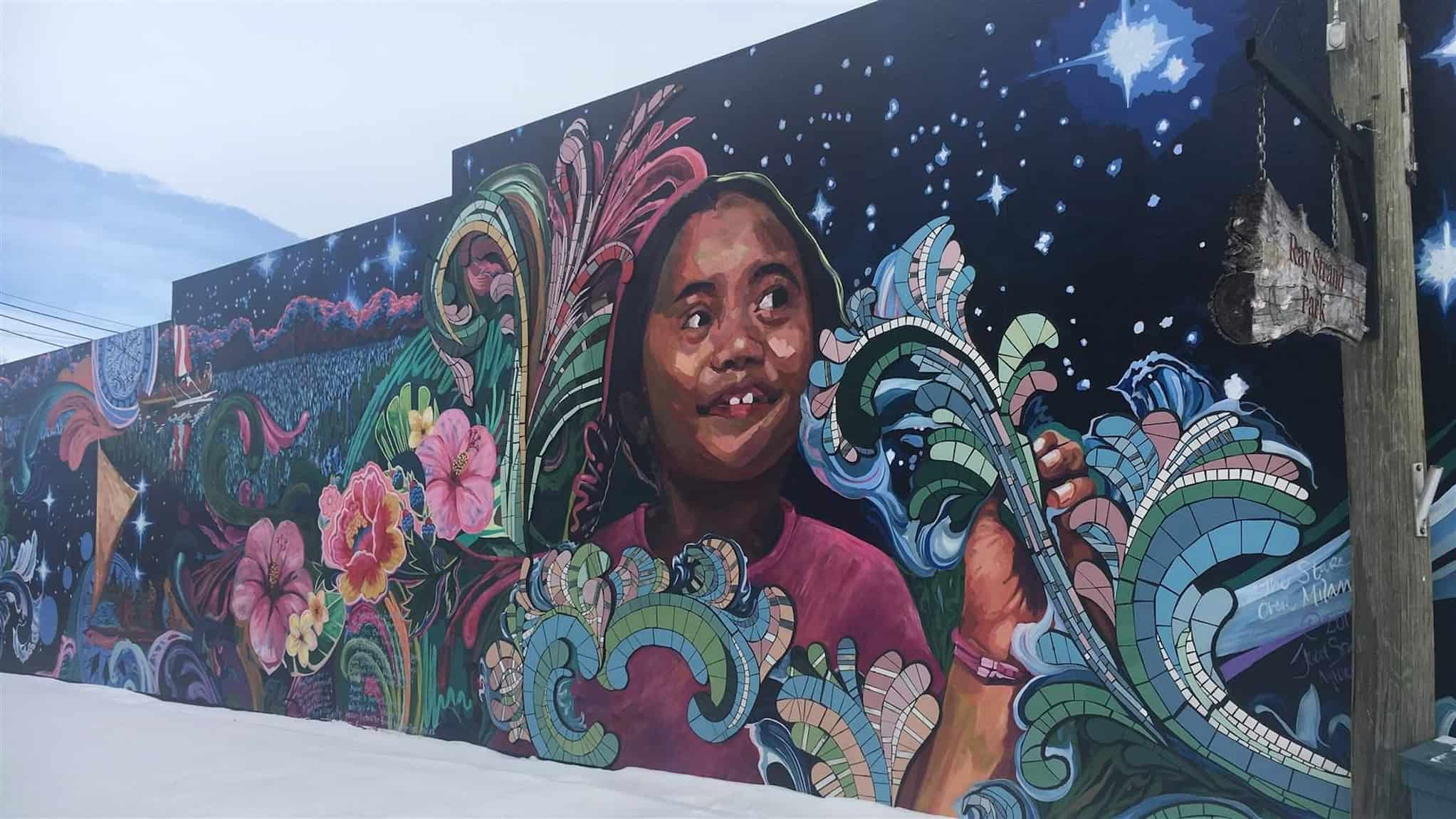
Have colonialism and migration impacted the way Micronesians maintain their various cultures?
Chapter objectives
- Learn the Micronesian people’s history, culture, and inter-relations with Oceania.
- Understand connections and interrelations of struggles for justice among peoples of Micronesia and anti-colonial resistance.
- Explore Micronesian experience with US imperialism, the people’s migration to the US, and their efforts for decolonization.
This chapter examines the relationships that the vast region of Micronesia has with the United States in order to understand the impacts of colonialism. It considers the experiences of Micronesians in the US, especially in relation to the ways that they promote their culture, identity, and environment. At the same time, part of this identity derives from their resistance to militarism and colonial control. The stories of the peoples of Micronesia express the oral history and island culture of the CHamoru peoples, even as the outmigration to the US has influenced their identity formation. This chapter also explores how Micronesian identity is tied to US colonialism and Indigenous movements.
Modules in this chapter
Overview: Emergent Voices and Activism of Micronesians
Cultural Identity, Community Building and Resistance
Land Stewardship and Revitalization
Militarism and Resilience
Pacific Islands and Resistance to US
Overview: Emergent Voices and Activism of Micronesians
Cultural Identity, Community Building and Resistance
Land Stewardship and Revitalization
Militarism and Resilience
Pacific Islands and Resistance to US
Chapter Sources
Berta, Ola Gunhildrud, Elise Berman, and Albious Latior. “COVID-19 and the Marshallese.” Oceania 90 (2020): 53-59. https://doi.org/10.1002/ocea.5266.
Dvorak, Greg. Coral and Concrete: Remembering Kwajalein Atoll between Japan, America, and the Marshall Islands. University of Hawaiʻi Press, 2018.
LaBriola, Monica C. “Planting islands: Marshall Islanders shaping land, power, and history.” The Journal of Pacific History 54, no. (2019): 182–198. https://doi.org/10.1080/00223344.2019.1585233.
Okamura, Jonathan Y. “Micronesians are the most denigrated group in Hawaii. We need to be more concerned.” Honolulu Civil Beat, March 19, 2023. https://www.civilbeat.org/2023/03/jonathan-okamura-micronesians-are-the-most-denigrated-group-in-hawaii-we-need-to-be-more-concerned/.
Stotzer, Rebecca. “Research Brief: Bias Against Micronesians in Hawaiʻi.” University of Hawaiʻi, Myron B. Thompson School of Social Work, February 2019. https://manoa.hawaii.edu/thompson/wp-content/uploads/Research-Report-Stotzer-2019_3.pdf.