


LANDMARK MOVEMENTS AND MOMENTS
Youth Organizing: Building Multiracial Solidarities
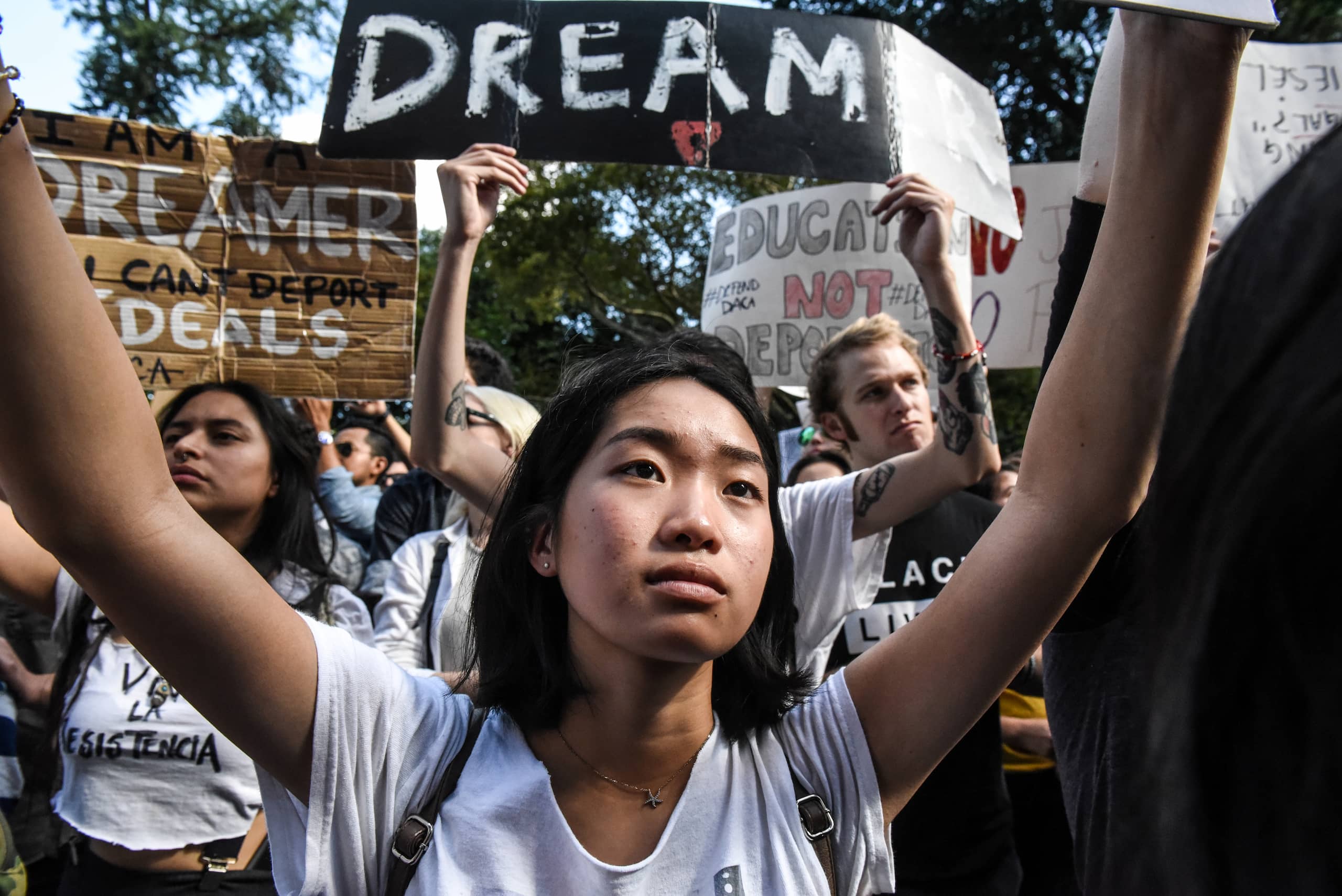
How can young people from different backgrounds and experiences work together to make positive changes in their communities?
Chapter objectives
- Learn about how young people from different backgrounds have worked to promote positive social change in their communities.
- Understand strategies that promote students’ well-being as they work together to address shared concerns.
- Explore strategies for registering voters and contributing to positive social change.
This interactive chapter shows how young people from diverse backgrounds can collaborate for positive social change. Students will explore issues youth organizers have addressed—including education, well-being, immigrant rights, voting—and examine how identity, power, and privilege shape these efforts. Drawing on what they learn about themselves and others, students will better understand how to build alliances and foster multiracial solidarity. They will also engage in activities that support their growth as leaders. The chapter highlights the role of grassroots organizing and illustrates how high-school–aged Asian American and Pacific Islander leaders have influenced policies and encouraged civic participation, even before reaching voting age.
Modules in this chapter
Overview
Identity and Multiracial Alliances
Building Youth Power Through Healing
Youth Voice in Elections
Youth-Led Campaigns
Overview
Identity and Multiracial Alliances
Building Youth Power Through Healing
Youth Voice in Elections
Youth-Led Campaigns
Chapter Sources
“2022 Election: Young Voters Have High Midterm Turnout, Influence Critical Races.” Center for Information and Research on Civic Learning and Engagement, Tufts University, November 15, 2022. https://phennd.org/update/2022-election-young-voters-have-high-midterm-turnout-influence-critical-races/.
Abdoo, Philip. “Personal Identity Wheel.” Equitable Teaching, 2021. https://sites.lsa.umich.edu/equitable-teaching/personal-identity-wheel/.
Chang, Jeff. “‘Solidarity Is Our Future’: May 19th Project Amplifies the Power of Working Together.” PBS SoCal, June 8, 2022. https://www.pbssocal.org/news-community/may-19th-project/may-19th-project-amplifies-the-power-of-working-together.
Chang, Robert. “The Dark History of the Chinese Exclusion Act.” Posted July 21, 2021 by TED-Ed. YouTube, 5 min, 57 sec. https://youtu.be/2K88pWCimZg?si=99NZKSF7a28SD-qn.
Clyde, Don. “Thousands of Bay Area Students Join National Walkout to End Gun Violence.” KQED, May 11, 2018. https://www.kqed.org/news/11655297/thousands-of-bay-area-students-join-national-walkout-to-end-gun-violence.
“CNN: SNCC’S LEGACY: A Civil Rights History.” Posted August 27, 2010, by CNN. Youtube, 5 min., 56 sec. https://www.youtube.com/watch?v=QZE0a5-p9pg.
“Exposing the school to prison to deportation pipeline.” Southeast Asia Resource Action Center, April 15, 2018. https://www.searac.org/wp-content/uploads/2018/04/18877-AAPIs-Behind-Bars_web.pdf.
Garaby, Juan Carlos. “Creating a Positive Classroom Climate for Diversity.” UCLA Office of Diversity and Faculty Development, 2015.
Guinn, Marcus Anthony. “Multicultural Activist Emcee One.” Posted January 10, 2018 by CPN Hownikan. YouTube, 4 min., 41 sec. https://youtu.be/5jGDNijVUpM?si=oEv8bgpOQVsekYQ1.
Nakamura, Tadashi, dir.. “Education Is Solidarity: Third World Liberation Front.” Tadashi Nakamura Director/Editor, May 28, 2021. Video, 1 min., 58 sec. https://tadashinakamura.com/beta/education-is-solidarity-the-third-world-liberation-front/.