
IMAGE
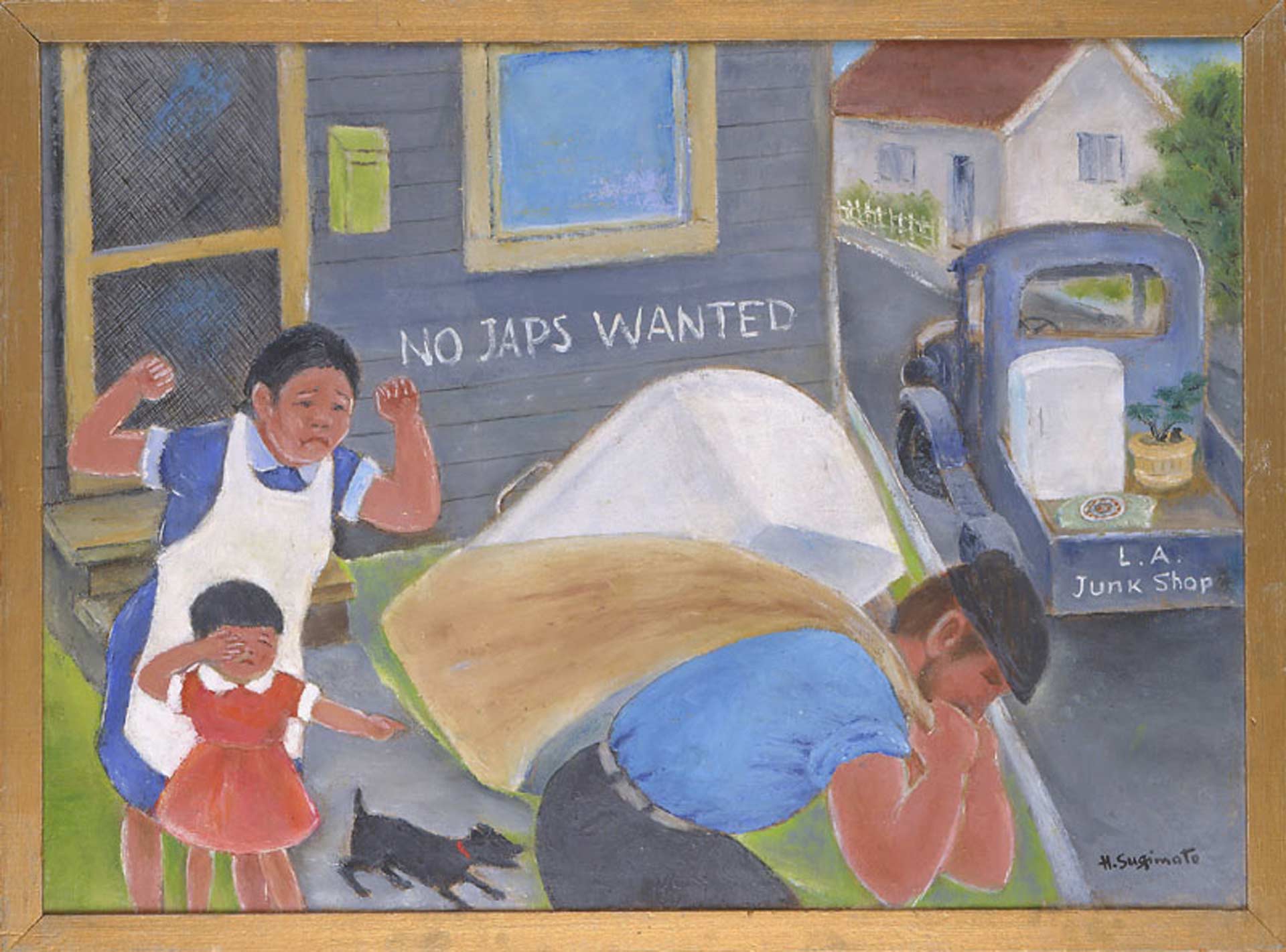
“Junkshop Man Took Our Icebox Away”
Description
Japanese Americans on the West Coast had to sell most of their possessions at rock-bottom prices to unscrupulous buyers. This painting, “Junkshop Man Took Our Icebox Away,” by Henry Sugimoto, captures the emotions of a mother and daughter who must get rid of the family’s belongings.
Object ID
45.01.04b
Citation (Chicago-style 18th Edition)
Sugimoto, Henry
.
“Junkshop Man Took Our Icebox Away”
.
1942
.
Denson, Arkansas, United States
.
https://calisphere.org/item/ark:/13030/tf9489p040/
.
Multimedia details
Creator
Sugimoto, Henry
Publisher
Japanese American National Museum
Date
1942
Location
Denson, Arkansas, United States
Language
en
Type
Image
Format
Painting
File Format
jpg
Source
Japanese American National Museum
Licensor
Japanese American National Museum
MUMI Number
45.03.IMG.093
Creator
Sugimoto, Henry
Publisher
Japanese American National Museum
Date
1942
Location
Denson, Arkansas, United States
Language
en
Type
Image
Format
Painting
File Format
jpg
Source
Japanese American National Museum
Licensor
Japanese American National Museum
MUMI Number
45.03.IMG.093
In Copyright
This Item is protected by copyright and/or related rights. You are free to use this Item in any way that is permitted by the copyright and related rights legislation that applies to your use. For other uses you need to obtain permission from the rights-holder(s).
NOTICES
- Unless expressly stated otherwise, the organization that has made this Item available makes no warranties about the Item and cannot guarantee the accuracy of this Rights Statement. You are responsible for your own use.
- You may find additional information about the copyright status of the Item on the website of the organization that has made the Item available.
- You may need to obtain other permissions for your intended use. For example, other rights such as publicity, privacy or moral rights may limit how you may use the material.
URI for this statement: http://rightsstatements.org/vocab/InC/1.0/