

IMAGE
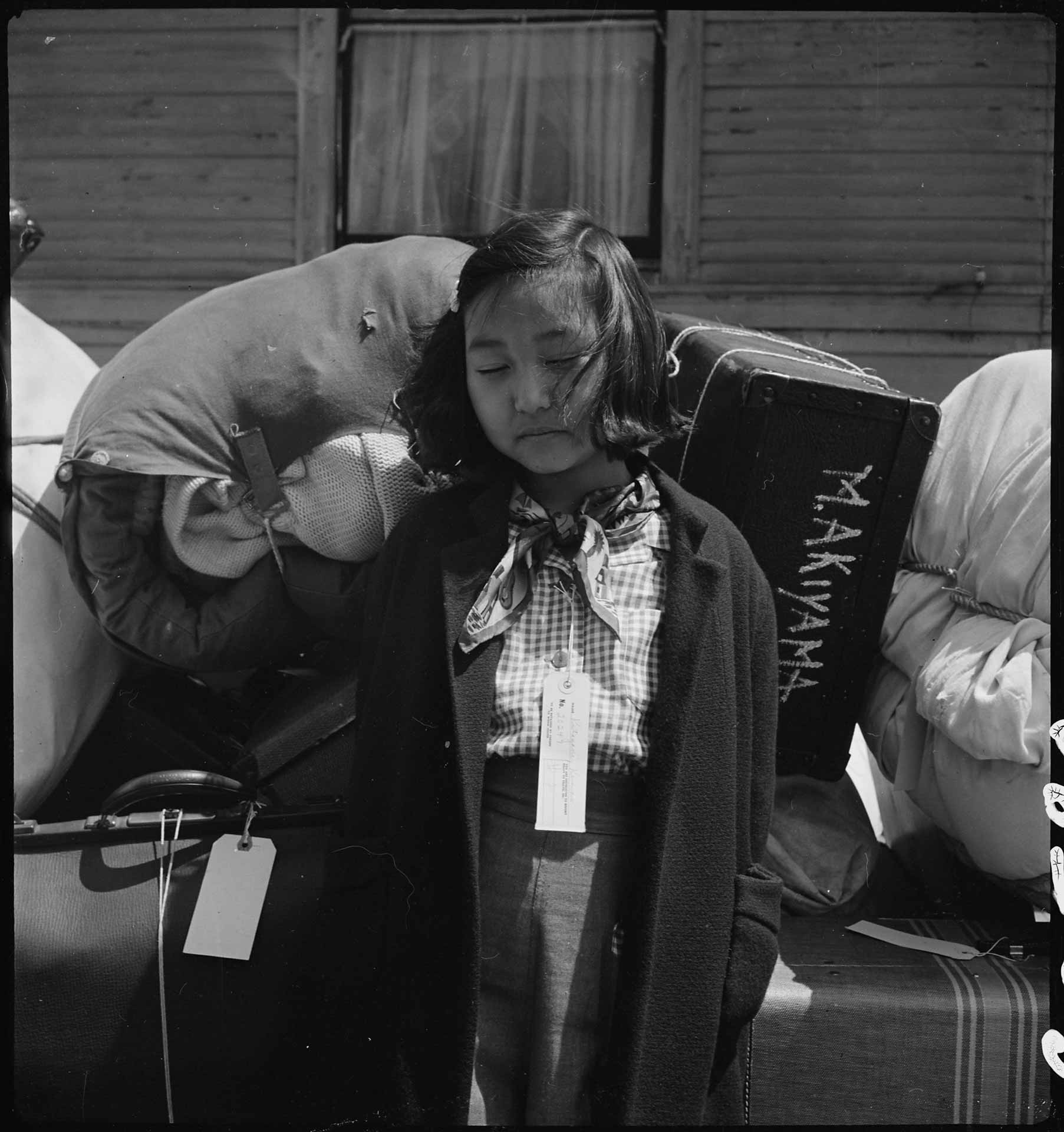
Kimiko Kitagaki waits for an “evacuation” bus.
Object ID
45.01.04b
Citation (Chicago-style 18th Edition)
Lange, Dorothea
.
Kimiko Kitagaki waits for an “evacuation” bus.
.
May 6, 1942
.
Photograph
.
Oakland, California
.
https://artsandculture.google.com/asset/kimiko-kitagaki-waits-for-an-%E2%80%9Cevacuation%E2%80%9D-bus-dorothea-lange/OgH0gsVG-Yr3oQ
.
Multimedia details
Creator
Lange, Dorothea
Date
1942-05-06
Location
Oakland, California
Type
Image
Format
Photograph
File Format
png
Subject
Evacuation Day; Mass removal (“evacuation”); Preparation
Credit Line
Courtesy of U.S. National Archives
Licensor
U.S. National Archives
MUMI Number
45.01.IMG.010
Creator
Lange, Dorothea
Date
1942-05-06
Location
Oakland, California
Type
Image
Format
Photograph
File Format
png
Subject
Evacuation Day; Mass removal (“evacuation”); Preparation
Credit Line
Courtesy of U.S. National Archives
Licensor
U.S. National Archives
MUMI Number
45.01.IMG.010
No Known Copyright
The organization that has made the Item available believes that the Item is in the Public Domain under the laws of the United States, but a determination was not made as to its copyright status under the copyright laws of other countries. The Item may not be in the Public Domain under the laws of other countries. Please refer to the organization that has made the Item available for more information.
NOTICES
- Unless expressly stated otherwise, the organization that has made this Item available makes no warranties about the Item and cannot guarantee the accuracy of this Rights Statement. You are responsible for your own use.
- You may find additional information about the copyright status of the Item on the website of the organization that has made the Item available.
- You may need to obtain other permissions for your intended use. For example, other rights such as publicity, privacy or moral rights may limit how you may use the material.
URI for this statement: http://rightsstatements.org/vocab/NoC-US/1.0/