



Do I need a Foundations and Futures account to access the contents of the textbook?
We do require users to create an account before accessing chapters and modules of our textbook. Currently in our beta period, we have six chapters available for open access to preview some of the content and features of our site.
How do I create a Foundations and Futures account?
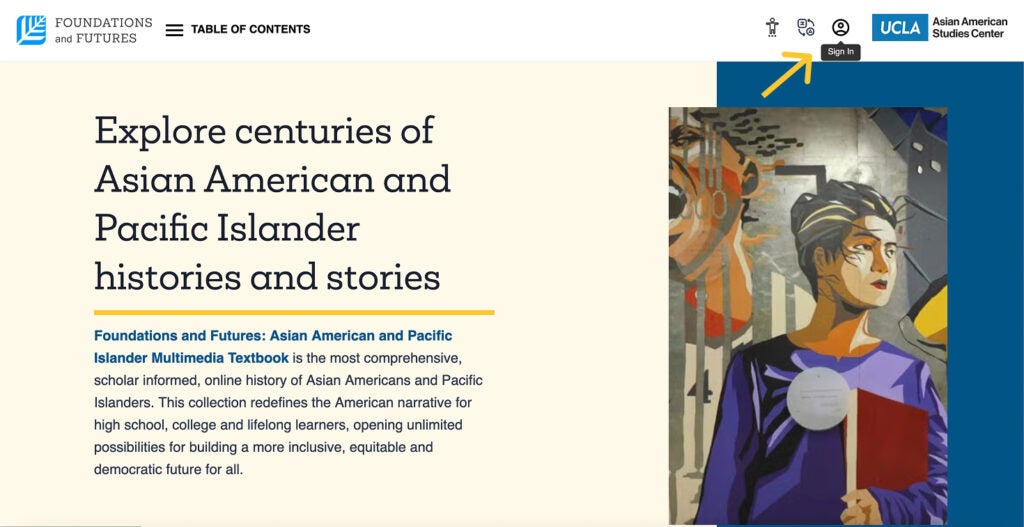
You can create a Foundations and Futures account through the login/registration page linked here, or by locating the Account icon in the top right corner of the navigation bar (pictured below).
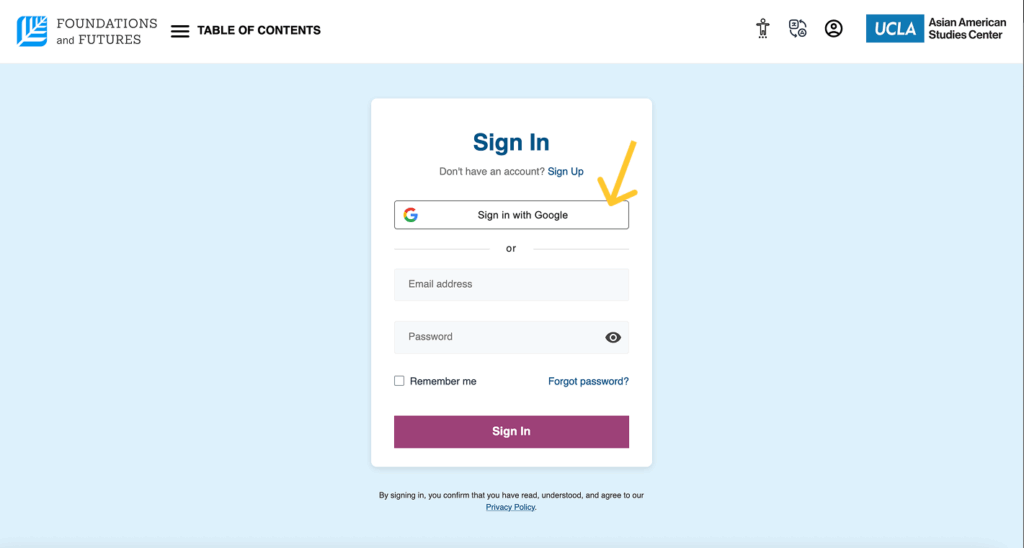
On the login page, you may choose to create a new Foundations and Futures account by using the Google Sign-In option (pictured below) and linking an existing Google Account. After selecting the desired Google Account and granting consent to required account and privacy information, your Foundations and Futures account will be created immediately. The Google Sign-In option should then strictly be used to login going forward.
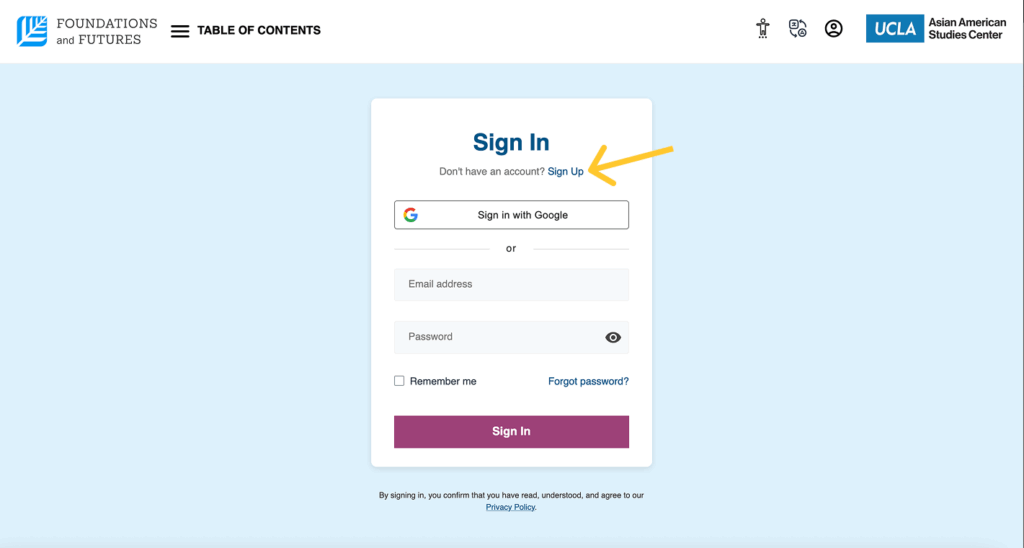
If you do not wish to use the Google Sign-In option, you also have the option to create a Foundations and Futures account using an email and password. You can access this Registration page linked here, or by locating the “Sign Up” link in the Login page.
You must provide your first and last name, email address, and password, as well as select which type of account you would like to make (Learner or Educator). Once submitted, your new Foundations and Futures account will be created and can be used after completing an email verification (an email will be sent to your inbox).

What is the difference between a Learner and Educator account?
A Learner account is… . An Educator account is… .
For Educator accounts, we ask to provide your School Name and School District for outreach and communication purposes as part of the Registration process. We will not share this information with anyone and is for internal purposes only.