



Module 2: Ea Hawaiʻi: Kānaka ʻŌiwi Governance
Can we learn from Kānaka ʻŌiwi and the practice of aloha to understand sovereignty among Indigenous peoples around the world?
ʻO ke au i kahuli wela ka honua
ʻO ke au i kahuli lole ka lani
ʻO ke au i kū kaʻi aka ka lā
E hoʻomālamalama i ka mālama
ʻO ke au o Makaliʻi ka pō
ʻO ka walewale hoʻokumu honua ia
ʻO ke kumu o ka lipo, i lipo ai
ʻO ke kumu o ka Po, i po ai
ʻO ka lipolipo, ʻo ka lipolipo
ʻO ka lipo o ka lā, ʻo ka lipo o ka pō
Pō wale hoʻi
Hānau ka pō
Hānau Kumulipo i ka pō, he kane
Hānau Pōʻele i ka pō, he wahine.
When space turned around, the earth heated
When space turned over, the sky reversed
When the sun appeared standing in shadows
To cause light to make bright the moon,
When the Pleiades are small eyes in the night,
From the source in the slime was the earth formed
From the source in the dark was darkness formed
From the source in the night was night formed
From the depths of the darkness, darkness so deep
Darkness of day, darkness of night
Of night alone
Did night give birth
Born was Kumulipo in the night, a male
Born was Pōʻele in the night, a female. 1
Totaling 2,102 lines, this famous genealogy chant, known as “Kumulipo,” traces the evolution of natural life forces in the Hawaiian Islands out of the depths of darkness. It begins with the creation of corals, seaweeds, and shellfish. These are followed by the plants of the forest, fish, insects, birds, and the various elemental forces of nature personified as akua (deities). It culminates in the succession of chiefs who ruled the islands of Hawaiʻi. All of these stages of life lead up to the birth of the High Chief Ka-ʻi-ʻi-mamao (also known as Lonoikamakahiki), an ancestor of the last two rulers of the Hawaiian Kingdom, King Kalākaua and his sister Queen Liliʻuoklani. This lineage firmly grounds their right to govern Hawaiʻi, the islands from which they descend. This module explores the role of genealogies among Kānaka ʻŌiwi and the nation of Hawaiʻi and the United States’ part in illegally annexing Hawaiʻi.
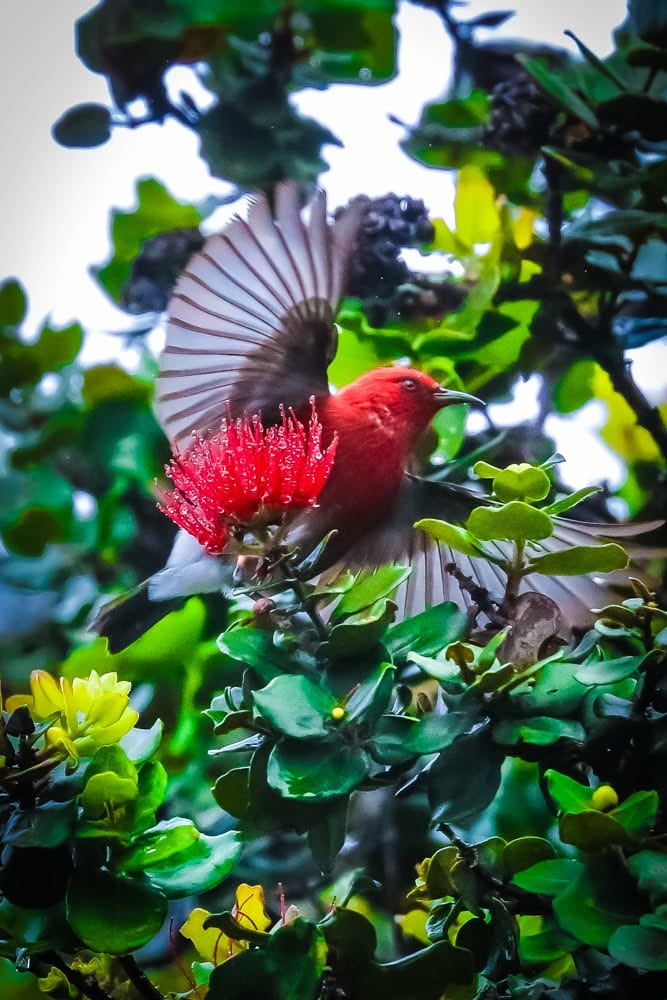
Image 22.02.01 — Multiple species of ʻŌhiʻa trees thrive in native rainforests throughout the islands. With its honeycreeper beak, the ʻIʻiwi feed off ʻŌhiʻa lehua blossoms (pictured). Unfortunately, ʻIʻiwi and other native birds are threatened by avian malaria spread by mosquitoes.
Created date, created by Name, Title Italicized. Credit line indicating where the image is from. Metadata ↗
The Kumulipo is also an excellent example of how Hawaiian scientific knowledge about the natural world of the Hawaiian islands was passed down orally, through mele and oli, from one generation to the next until they were written and translated. According to University of Hawaiʻi-Mānoa Hawaiian Studies professor, Dr. Lilikalā Kameʻeleihiwa, within the Kumulipo we learn about the eight hundred generations of ancestors who lived before the Polynesian chiefs and priests navigated north across the ocean to the Hawaiian Islands from Tahiti and the Marquesas. There are at least one hundred generations of ancestors who lived in Hawaiʻi up through Queen Liliʻuokalani.
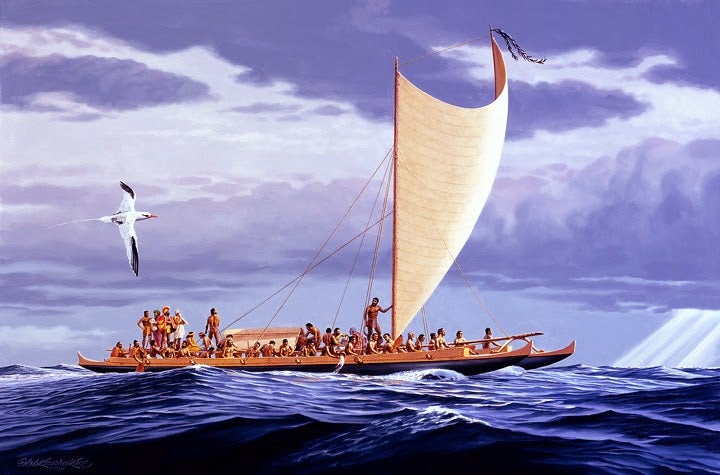
Image 22.02.02 — ʻŌiwi artist Herb Kāne’s rendering of a waʻa kaulua double-hulled voyaging canoe carries chiefly Polynesian families to Hawaiʻi. Kāne famously designed the modern day Hōkūleʻa double-hulled voyaging canoe that has carried Kānaka ʻŌiwi throughout Polynesia and around the world.
Created date, created by Name, Title Italicized. Credit line indicating where the image is from. Metadata ↗
What is the role of genealogies in connecting Kānaka ʻŌiwi identities to each other and to the Hawaiian nation?
How do the stages of Kānaka ʻŌiwi governance, or ea, lay the foundation for ʻŌiwi self-governance?
What evidence and pathways are available to Kānaka ʻŌiwi to show that Hawaiʻi was not legally annexed by the United States?