



Module 3: Kahoʻolawe: Rebirth of the Sacred
Can we learn from Kānaka ʻŌiwi and the practice of aloha to understand sovereignty among indigenous peoples around the world?
Kahoʻolawe: Rebirth of a Sacred Island
Wehewehe mai nei kahi ao
Kū mai nā waʻa kaulua
Pue ke kanaka mai ka waʻa mai
Kūkulu ka iwi o ke ʻāina
ʻAilani Kohemaālamalama
Hoʻohiki kēia moku iā Kanaloa
Dawn is breaking
Two double-hulled canoes are sighted
The men cheer from the canoe
Land is sighted
To your left it is like heaven all lit up
We dedicate this island to Kanaloa 1
Imagine an island from which you can see all the other main Hawaiian islands (except Kauaʻi and Niʻihau) and the channels that run between them! Now, imagine how navigators were trained at its summit to hold in their memory the rising and setting of constellations in relation to the seasonal movement of the sun and where the north star sat over the horizon at night in relation to the Southern Cross. This training enabled navigators to intentionally find their way across the Pacific Ocean to other islands and return home to Hawaiʻi without any modern navigation instruments.
Imagine an island where universal time was observed and shrines and temples were built as structural calendars marking the daily and seasonal back and forth movement of the sun, from the Equinox north to the Tropic of Cancer, and south to the tropic of Capricorn. On this island, the community organized their lifeways in alignment with the cycles of nature.
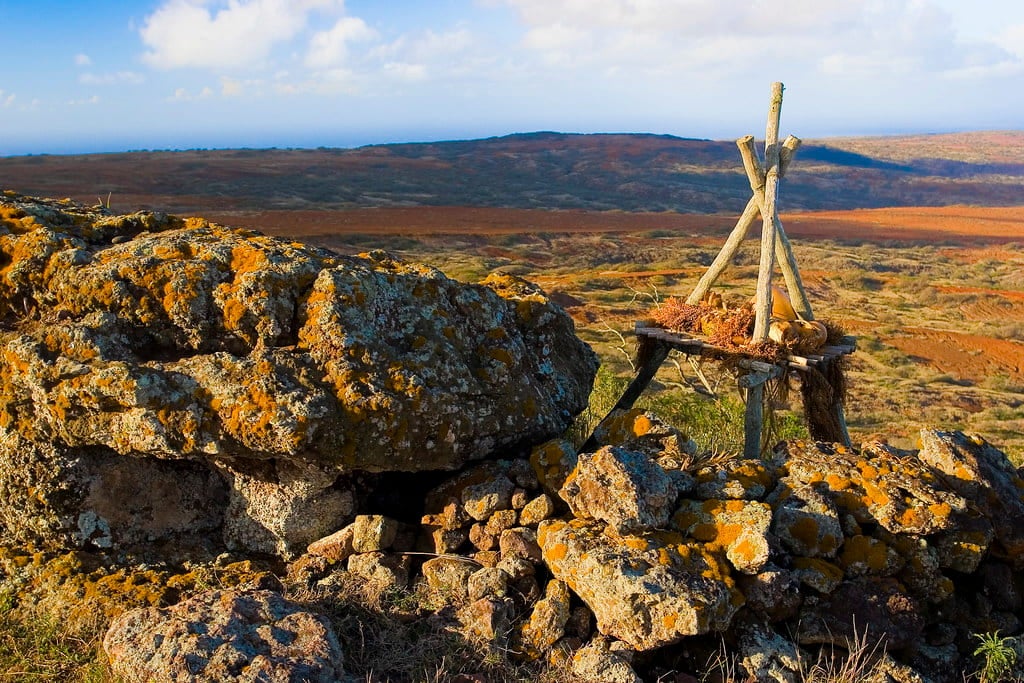
Image 22.03.01 — Facing west from Puʻu Moaʻulaiki, Kahoʻolawe. Right: A lele (offering platform) lashed together to bear hoʻokupu (offerings) to Lono, the Hawaiian god of agriculture, during the annual Makahiki harvest season.
Created date, created by Name, Title Italicized. Credit line indicating where the image is from. Metadata ↗
How did Kahoʻolawe become a symbol of the renaissance of Kānaka ʻŌiwi culture?
How have Kānaka ʻŌiwi survived discrimination and injustices throughout the generations?
How has “aloha ‘aina” been used to empower Kānaka ʻŌiwi?