





Module 4: Women’s Solidarity for Labor Rights
Does the media portrayals of Asian American and Pacific Islander women’s stories change the way they are treated in society?
Working with other racial and ethnic groups is a core theme in the history of Asian American and Pacific Islander women’s organizing. Indigenous Murri activist and artist Lilla Watson said at the United Nations’ Decade for Women Conference in 1985, “If you have come here to help me you are wasting your time, but if you have come because your liberation is bound up with mine, then let us work together.” 1 This often-cited quote emphasizes that while empathy is key to being a strong ally, what is more powerful and motivating is to understand that work on issues of equity and justice across communities is intertwined.
This module examines how activism around Asian American and Pacific Islander women’s issues has helped movements among other communities also move forward. When one group gains more rights and safety, other vulnerable communities also find protection and freedom. More specifically, when Asian American and Pacific Islander women work for labor justice to eliminate gender-based violence or exploitative treatment, positive ramifications spread for other marginalized groups.
To what extent do Asian American and Pacific Islander women’s collective action for labor rights improve their lives?
In what ways do solidarity movements by Asian American and Pacific Islander women create community?
How does the application of solidarity building methods help your own communities to mobilize?
The 1982 Garment Workers Uprising and Its Legacy
In 1982, twenty thousand garment workers in New York City took to the streets to demand fair wages, safer working conditions, and protected benefits. While New York City is no stranger to large-scale protests, there was something markedly different about this action, as the majority of the protesters were immigrant women. Their signs were bilingual, in Chinese and English.
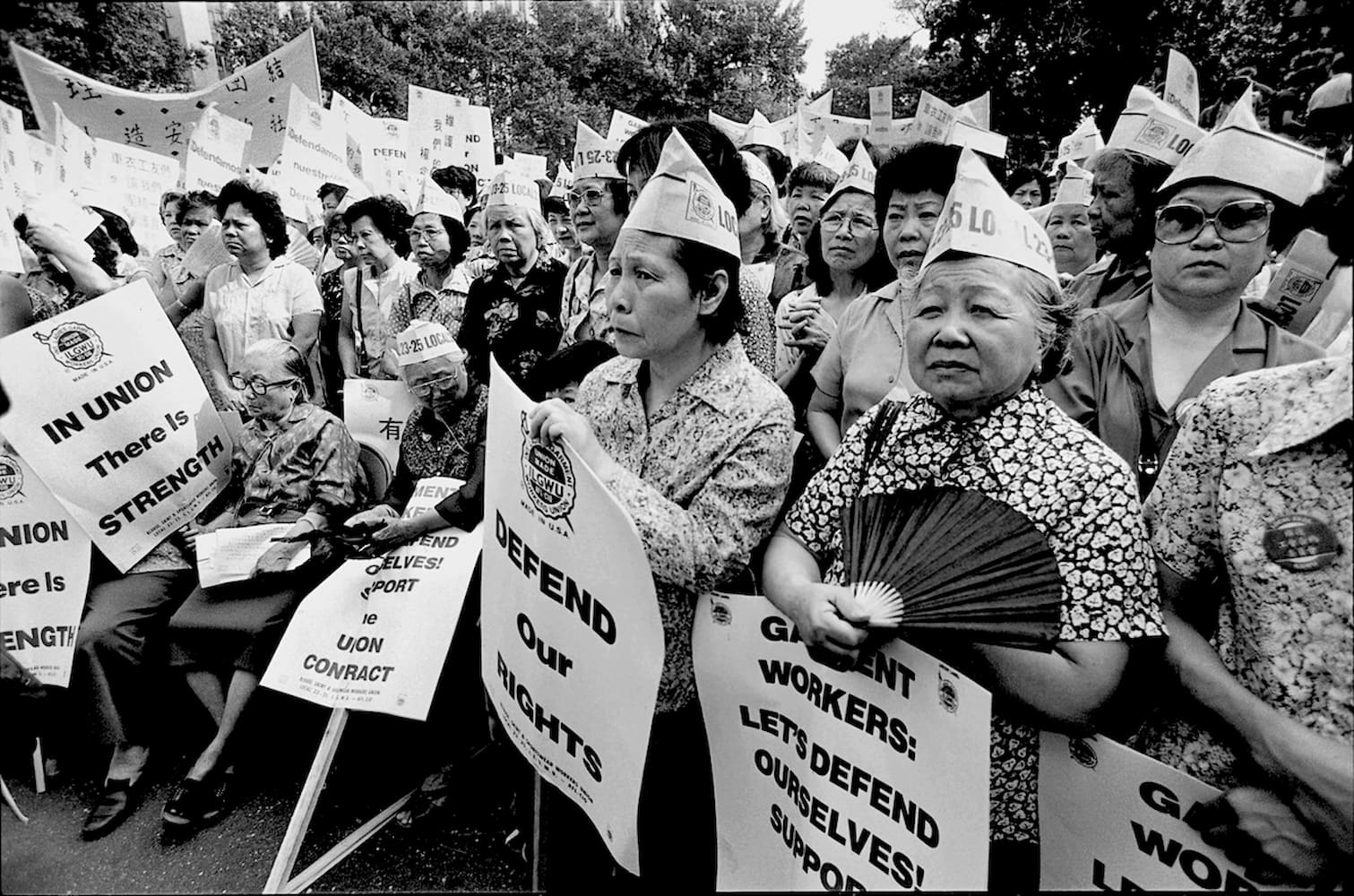
Image 26.04.01 — Unionized garment workers on strike in New York City’s Chinatown, 1982. Comprised of mostly immigrant women, their picket signs were written in both Chinese and English.
These women made up 80 percent of the garment worker workforce, and they were striking against unsafe working conditions and poor wages. Overcrowded factories and poor ventilation had led to the spread of tuberculosis. Stress, lack of breaks, and long hours meant many workers developed kidney and gastric-related illnesses. Instead of being paid a legal minimum wage, they were compensated based on the number of clothing items they completed. This led to working ten or more hours a day for below minimum-wage.
Several workers joined the 1982 walkout, organized by the International Ladies’ Garment Workers Union (ILGWU). One of the founding organizers, Alice Ip, told journalist River Dandelion in 2019 about approaching a factory owner to discuss working conditions prior to the strike:
“I went to garment factories and was advocating for workers to have holiday pay. One owner, who was part of a gang, pulled a gun on me,” Alice said, sitting across from me. Her voice was loud and clear…
I said to him, “You’re trying to harass me now. I gave up everything to work this job. God decides if I live or die. I don’t care. If you want to kill me now, come on…” Then he hurriedly stowed away his gun and told his boys to hurry up and bring me some coffee. He then said, “If there’s a problem, let’s talk about it.” 2
Such bravery led to swift negotiations. Within hours, the employers signed a contract that would protect key benefits and improve working conditions.

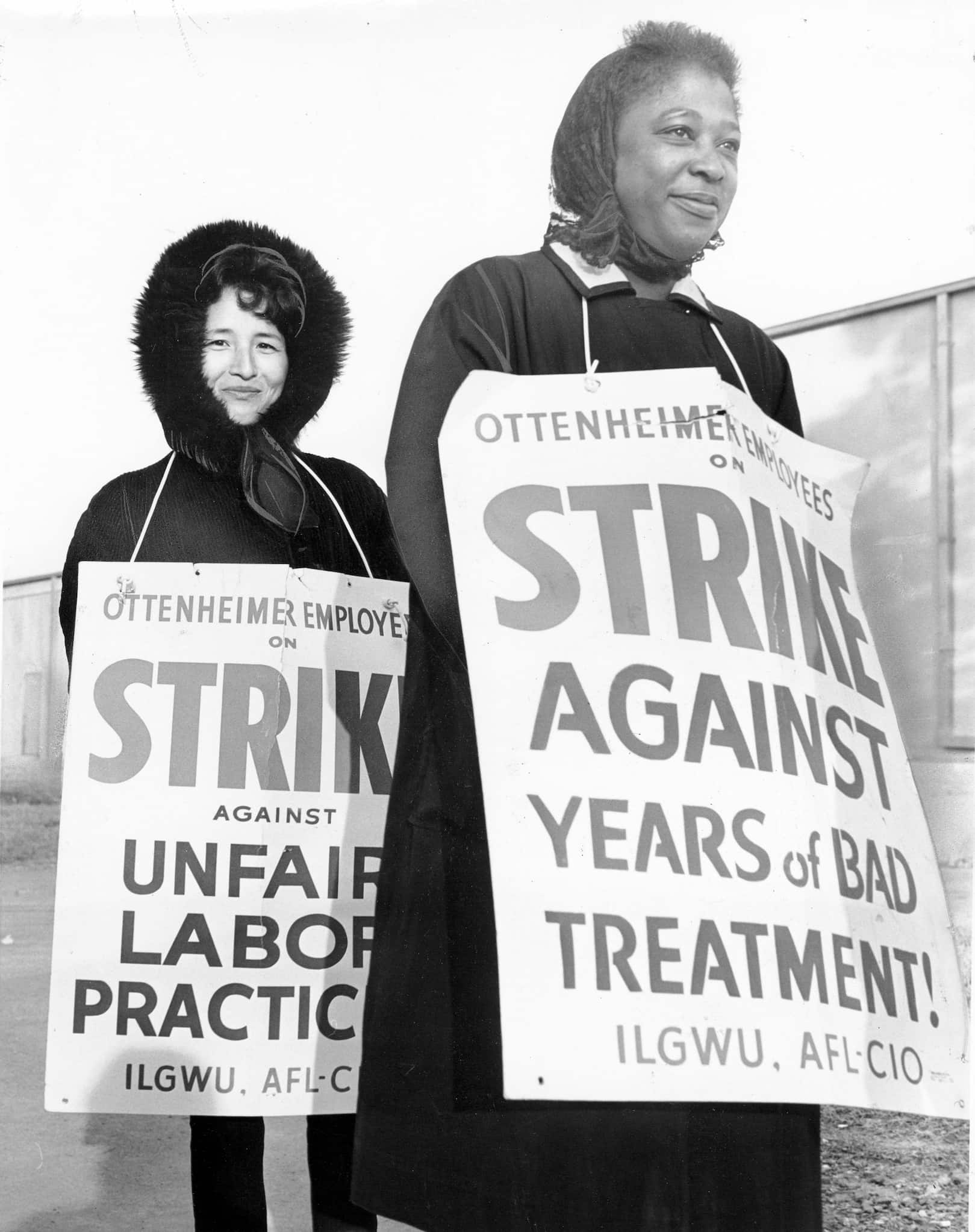
Image 26.04.02 — Founded in 1900, the Ladies’ Garment Workers Union (ILGWU) originally represented South and Eastern European women immigrants. The expansion of the union’s representation allowed for solidarity among its racially diverse members, seen in this 1966 photo of an Asian American and Black worker on strike.
While the garment industry has declined significantly in New York City, the uprising of the women inspired garment workers in other states and encouraged grassroots organizing among immigrant communities. In the early 2000s, the Southern California region was home to forty-five thousand garment workers, largely Asian American, Pacific Islander, and Latinx immigrants, many of whom were more vulnerable to abusive working conditions because they were undocumented. Eighty-five percent of the factories inspected by the Department of Labor in 2016 violated labor laws, including wage theft and unsanitary working conditions.
Organizations like the Garment Worker Center (GWC) modeled their efforts after ILGWU worked to pass the Garment Worker Protections Act in California. GWC was founded in 2001 after a factory investigation uncovered that a company was trafficking garment workers from Thailand into forced labor in El Monte, California. They have since fought for protections for all garment workers seeking labor rights and protections. The Garment Worker Protections Act makes it illegal to pay workers per garment rather than an hourly wage. Since 2022, GWC and their allies have also been advocating for the Fabric Act, a national bill that would protect all garment workers in America from wage theft and unsafe working conditions and would invest in domestic apparel production.
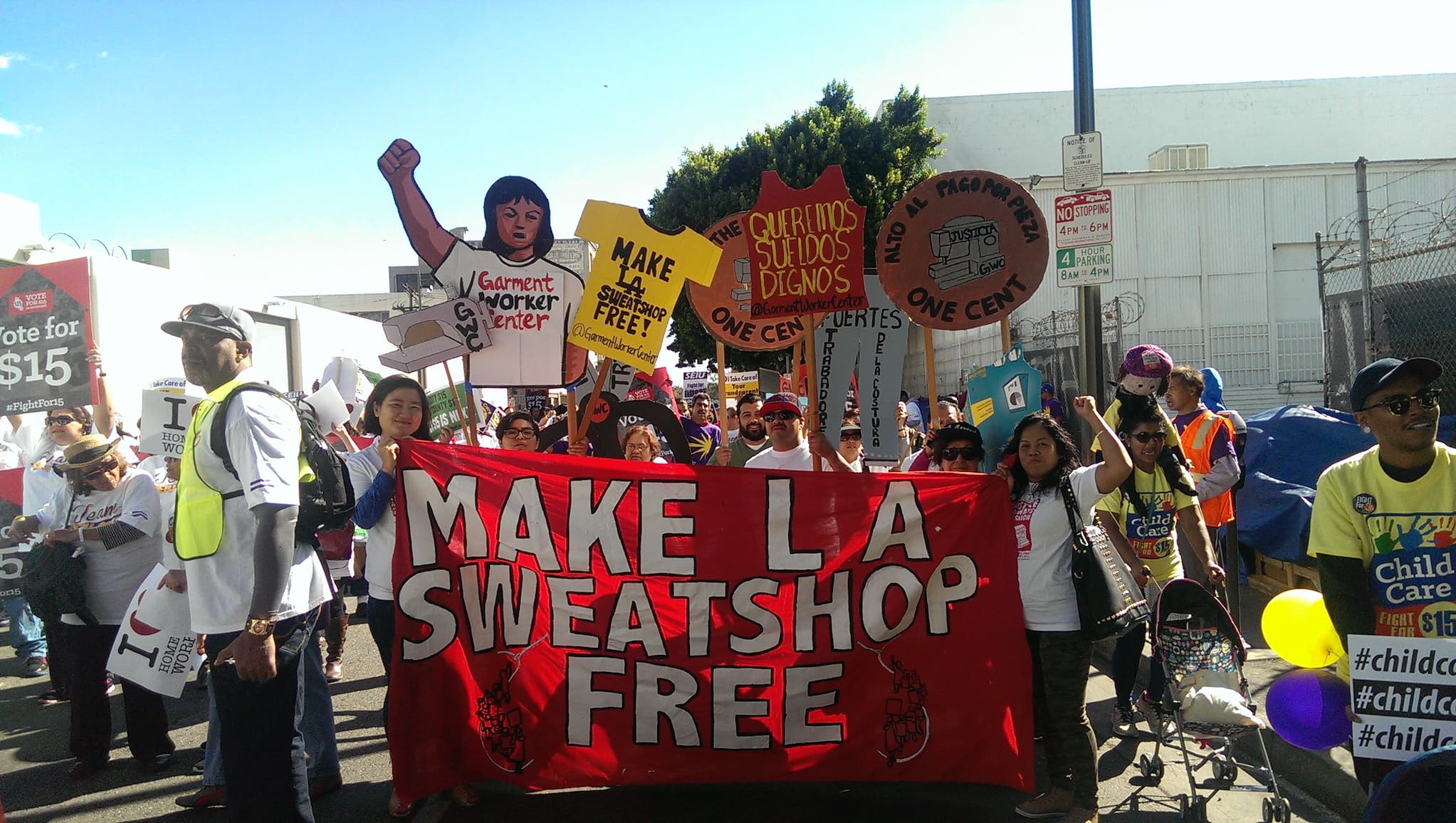
Image 26.04.03 — Members of the Garment Worker Center (GWC) protesting the LA garment industry’s egregious working conditions and wages affecting the region’s largely Latinx and Asian American and Pacific Islander workforce.
Domestic Workers Unite
Domestic workers have also formed coalitions among women of color from different racial backgrounds. These workers include, but are not limited to, in-home caregivers, housekeepers, and nannies. The history of this work in the United States began with enslaved Black people who were forced into domestic labor. Today, it is an undervalued and undercompensated industry that lacks regulation and protections for a population that is largely low-income immigrant women of color.
Many of these women have worked in both garment and domestic work. Nahar Alam is a Bangladeshi immigrant and executive director of Andolan, an organization that advocates for South Asian immigrant workers. She said in an April 2010 interview with the American Civil Liberties Union:
“I had always thought that the United States was a place where anyone could get a job and be safe, but I think that depends on who you are. I am a woman, an immigrant, a Muslim, and when I came to this country, I didn’t speak enough English… and that’s a problem. I worked at a garment factory and then I worked as a domestic worker…. I suffered with both jobs. Not getting paid properly and being abused.” 3
Women from the Philippines also make up a large number of domestic workers in the United States. In the 1970s, the Philippine government incentivized their citizens to go work in the US and remit money back to their families in order to ease high unemployment rates in the Philippines. The US government created systems that would allow Filipinx immigrants to fill work shortages in areas such as nursing and domestic labor. When they arrived, many workers discovered unsafe working conditions, including verbal or sexual abuse, and unreasonable hours. Because these temporary work visas were linked to a specific employer, many Filipina workers had to choose between forgoing income for their families or becoming undocumented if they left the job. Undocumented workers had fewer options except for unregulated work where they were vulnerable to even more exploitative working conditions.
Today, organizations such as the Damayan Migrant Workers Association, Pilipino Workers’ Center, and the Women Workers’ Project of CAAAV: Organizing Asian Communities help Asian American and Pacific Islander domestic workers to advocate for safe, fair, and dignified work. They are a part of a much broader national coalition called the National Domestic Workers Alliance that represents 2.5 million Asian American, Pacific Islander, Latinx, African, and Black women in domestic work. It is the first nationwide union of domestic workers, including nannies, housecleaners, and home care workers.
This collective action helped pass the Domestic Workers Bill of Rights in twelve states, beginning with New York in 2010 and including Hawaiʻi, to provide key protections for domestic workers, including wage protections, the right to breaks, and overtime pay. In addition to changing policies, the National Domestic Workers Alliance also works with production companies and streaming platforms to ensure stories about domestic workers reflect their lived experiences.
Red Canary Song: A Grassroots Response to Injustice
When harmful acts of violence have occurred against Asian American and Pacific Islander women in massage parlors or sex work, grassroots organizations have emerged in response.
Yang Song was a Chinese immigrant who came to Flushing, Queens, in New York in 2013 with her husband after their restaurant business in the US Commonwealth of Saipan failed. She did not speak English and had limited work options. She began working as a massage worker after her husband fell ill and eventually went into sex work in order to care for him. She shared with her family back in China that a police officer pressured her to become an informant so the police could shut down prostitution operations.
According to Song, the same police officer who pressured her also sexually assaulted her at gunpoint and continued to intimidate her after she refused to be an informant. On November 25, 2017, police raided her building, and Song died falling out of a window. Police records stated they were never in the same room as her and implied she committed suicide.
Her family members shared they received several missed calls from her around the time of the raid. They also did not believe she would take her own life, especially because she was due to visit them in China in just a matter of weeks. The trip meant a great deal to her, as she had saved to afford the trip and would be meeting her four-year-old nephew for the first time.
The Flushing community banded together to create a fund that would support her family, funeral expenses, and legal fees to investigate the matter. They also organized to put pressure on the police department to disclose more information and keep Song’s story in the press. Song’s case ignited a passion among this community and a commitment to Song and others like her by formalizing organizing efforts into Red Canary Song.
The objective of this grassroots collective of massage workers and sex workers is to shine a light on cases like Song’s and to advocate for the decriminalization of sex work throughout the state and country. If this had been the case, she may have been connected to support groups and social services and not left vulnerable to possible police misconduct. This organization fights for justice through legal action, grassroots campaigns and protests, and it provides monetary aid to sex workers and massage parlor employees of various backgrounds who are often victims of violence and abuse.
Conclusion
The issues involving Asian American and Pacific Islander women are not theirs alone. Their work to advance labor rights, environment actions, and ending sexual violence has contributed to broader change as a result of solidarity movements in grassroots organizing and policymaking. In so doing, women have created bridges with other communities and groups who want to live in a more equitable world.
Glossary terms in this module
collective action Where it’s used
A group of people coming together to organize and mobilize towards a common goal.
gender-based violence Where it’s used
Violence directed against a person due to their gender. This violence includes emotional, physical, sexual, and/or psychological harm.
solidarity Where it’s used
A political, cultural, and collective stance that recognizes the mutual responsibility and support that is necessary to achieve change. Solidarity taps into the power in numbers and considers the collective interests of communities.
Endnotes
1 M. F. Leonen, “Etiquette for Activists,” YES! Magazine, May 21, 2004, https://www.yesmagazine.org/issue/hope-conspiracy/2004/05/21/etiquette-for-activists.
2 River Dandelion, “How Chinese American Women Changed U.S. Labor History,” Asian American Writers’ Workshop, May 1, 2019, https://aaww.org/chinatown-garment-strike-1982/#:~:text=By%201980%2C%20four%20years%20after,they%20were%20paid%20by%20piece.
3 Aliya Hussain, “Trouble at Home: Domestic Workers Speak Out Against Exploitation and Abuse,” ACLU, April 1, 2010, https://www.aclu.org/news/smart-justice/trouble-home-domestic-workers-speak-out-against-exploitation.


