





Module 2: Misrepresentations of Women in War and Empire
Does the media portrayals of Asian American and Pacific Islander women’s stories change the way they are treated in society?
Imagine that it’s the year 1944. You’re a Chinese American teenager in a dark theater, ready to watch the film Dragon Seed. It has an all-star cast, and you’ve heard that the protagonist is a Chinese heroine who rallies her village to stand up to Japanese invaders. The screen lights up, and the protagonist appears, but it’s not an Asian woman. It’s Katherine Hepburn, the most popular Hollywood actress at this time.
Her eyes are pulled back with tape, and she wears heavy eyeliner to create an exaggerated slant. She opens her mouth to speak, and the audience doesn’t hear her iconic, confident voice. Instead, she speaks like a timid and soft-spoken woman in a jarring interpretation of a thick Chinese accent. With a sense of confusion, you ask yourself, “What does it mean to have an Asian character played by someone who has never lived as an Asian person?”
This module explores different ways to understand the relationship between Asian American and Pacific Islander women and media by examining the history, discrimination, and changes in policies of US laws and media representation.
What historical policies and events have shaped perceptions about Asian American and Pacific Islander women?
How are Asian American and Pacific Islander women misrepresented in the media?
To what extent do these misrepresentations of Asian American and Pacific Islander women denigrate and harm them?
Origins of the Stereotype
The Chinese Exclusion Act of 1882 excluded Chinese people from migrating to the United States. It also denied citizenship status to any Chinese immigrants already in the US, classifying them as permanent aliens with fewer rights. Asian women were actually the subject of discrimination in immigration legislation seven years prior to the Chinese Exclusion Act. The Page Act denied entry to women deemed to be engaged in prostitution from Asia. The government then classified and denied entry to all Asian women, particularly Chinese women, regardless of whether or not they were sex workers.
This exclusionary law depicted Asian women as solely arriving in the US to work as prostitutes. Meanwhile, the US took part in the overthrow of the Kingdom of Hawaiʻi and annexed Guam (Guåhan); media depictions of Pasifika (people of Pacific Islander descent) women reflected the exploits of US colonizers in the region, feminizing island women as exotic symbols of colonial possession. These parallel developments laid the groundwork for stereotypes that remain to this day, though the details of this stereotype have changed over the decades. The Asian American woman is portrayed by mainstream media in one of two extreme and opposing binaries: the conniving villain or the passive damsel-in-distress. To understand why it is one or the other requires an understanding of the historical context.
1910-1920s: Inventing the “Dragon Lady”
Prior to the 1920s, female Asian characters in US films were played by white actors due to “race-blind casting.” These actors would layer cotton and makeup to create high cheekbones and used tape and eyeliner to pull back their eyes. The result was a grotesque caricature of Asian features. This practice is now known as “yellowface,” or the portrayal of Asian characters by white actors, similar to the ways Blackface created demeaning caricatures of Black people. There were two main factors that caused this phenomenon. First, Hollywood was opposed to hiring Asian American and Pacific Islander women and did not want positive portrayals of multi-racial romances between white and Asian people. Second, anti-miscegenation laws banned marriages between white and people of color that would not be overturned until the 1960s. It is within this context that the first Chinese American woman enters into the Hollywood foray in the early twentieth century.
Anna May Wong became the first Asian American woman in film. She is most known for her iconic role in the film Thief of Bagdad (1924) in which she plays a villainous and exotic enslaved Mongol character. Her subsequent roles continued to be conniving, mysterious, and exotic Asian villains. These roles were so similar that it popularized the term “Dragon Lady.” The Dragon Lady was originally a comic book Asian woman character who was beautiful and desirable but also a scheming villain who plots against the protagonists. The “Dragon Lady” has since come to represent the stereotype of any untrustworthy and villainous Asian woman.

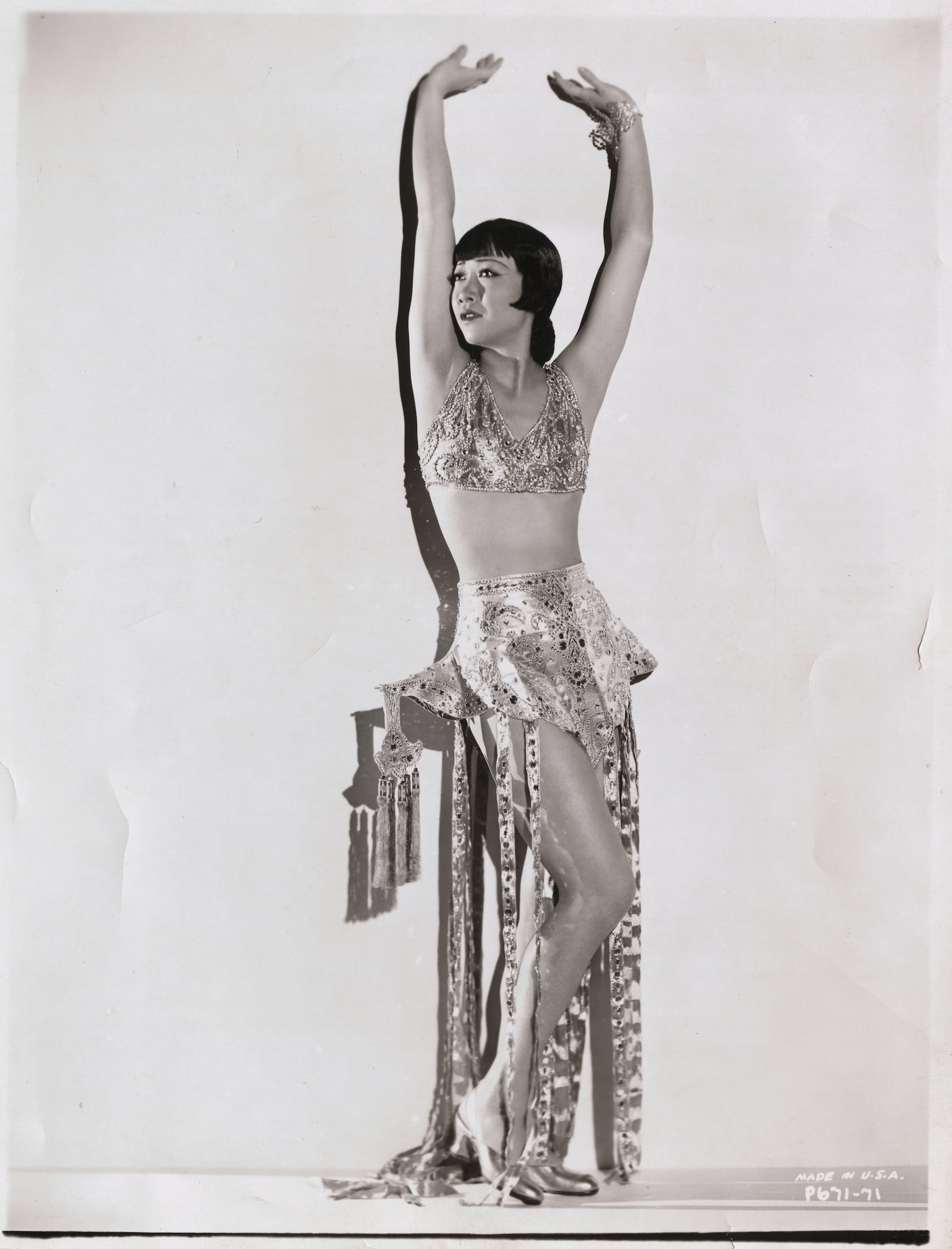
Image 26.02.01 — Anna May Wong in a promotional photograph for the 1931 film Daughter of the Dragon, where she played antagonist Princess Ling Moy, a Dragon Lady. Despite the limited roles she was provided, Wong continued her passion for acting.
Despite being a third-generation American born in San Francisco, California, Wong was always cast as a foreigner. These portrayals followed years of racial tensions and scapegoating of Chinese laborers for allegedly taking jobs of white workers. During this time, as Japan was expanding its empire into Korea and other parts of Asia, it became more common to see Asians depicted as scheming villains.
Wong shared in her 1933 memoir her repulsion for these roles:
How should we be, with a civilization that’s so many times older than that of the West. We have our own virtues. We have our rigid code of behavior, of honor. Why do they never show these on the screen? Why should we always scheme, rob, kill? 1
Yet Hollywood refused to provide her with opportunities unless they were to play roles like the “Dragon Lady.” Despite her attempts, Wong was never able to launch a production studio that would allow her to tell stories about Asian American women that transcended these stereotypes. Nevertheless, her legacy was minted on the US quarter as part of the US Mint’s “American Women Quarters Program” in 2022 when it became the fifth coin in the program.
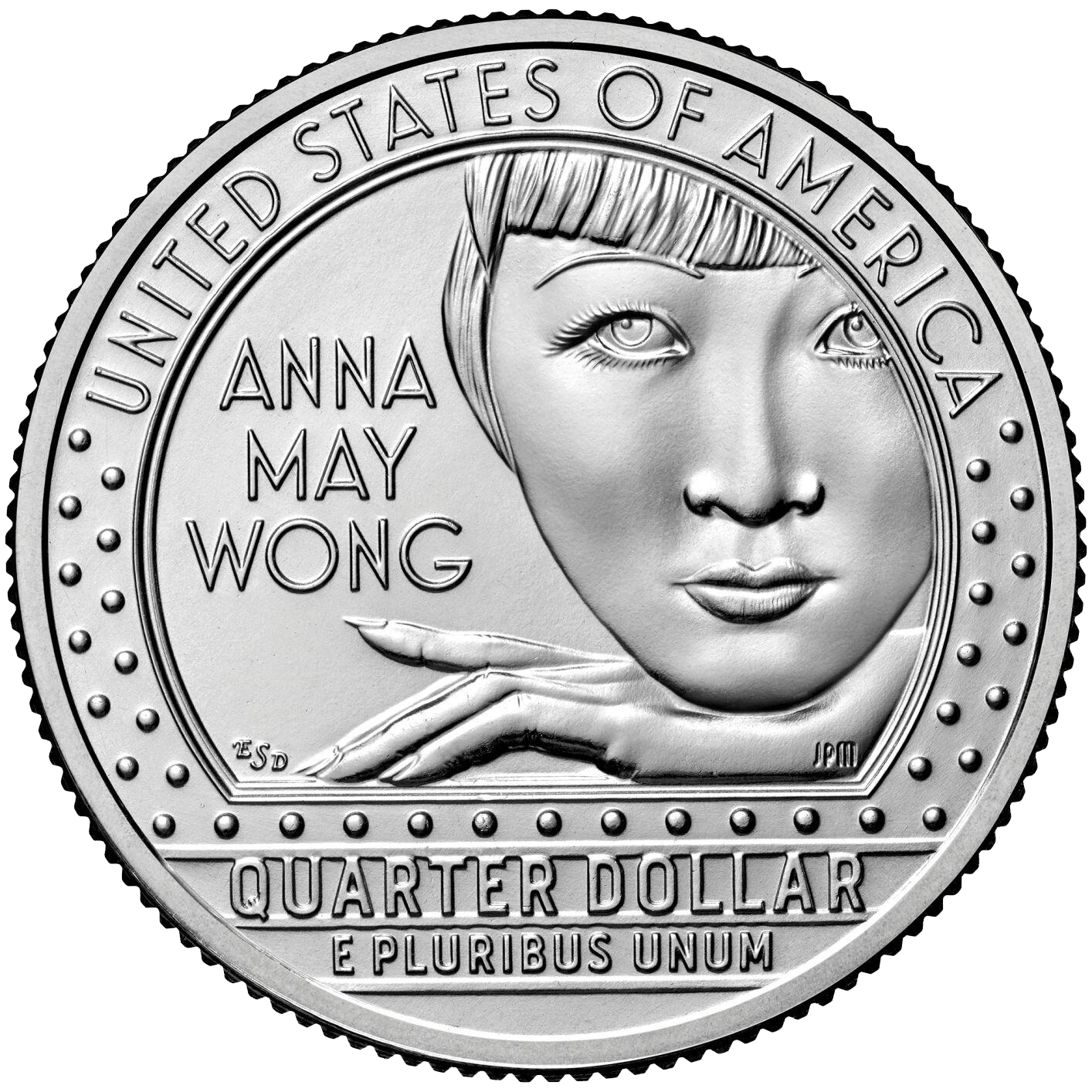
Image 26.02.02 — Anna May Wong’s inspiring legacy includes becoming the first Asian American to be featured on US currency when the US Mint issued a quarter bearing her name and likeness in October 2022.
1937-1948: The Virtuous Woman
By the time of Japan’s 1937 invasion of China, Hollywood’s Asians were differentiated as either “bad” Japanese aggressors or “good” Chinese underdogs. After Japan’s 1941 bombing of Pearl Harbor, the distinction was sharpened and reflected in influential Hollywood representations.
In films like The Good Earth (1937) and Dragon Seed (1944), Chinese women protagonists are depicted as simple, hardworking peasants. The protagonist in The Good Earth is a farming peasant who sacrifices her wellbeing for the sake of her family. She even allows her husband’s mistress to live with them to ensure his happiness. In the film the protagonist organizes her village to resist the Japanese but is also portrayed as demure and pure-spirited. It’s through her example as a flawless and unwavering woman that her neighbors begin to fight back as well.
These films were among the first pieces of media to portray Asian women in a positive, albeit problematic, light. Even as Asian American actors were capable of taking on leading parts, the roles were given to two white women in yellowface, and representation for Asian American women meant being docile, abiding, and patriotic.
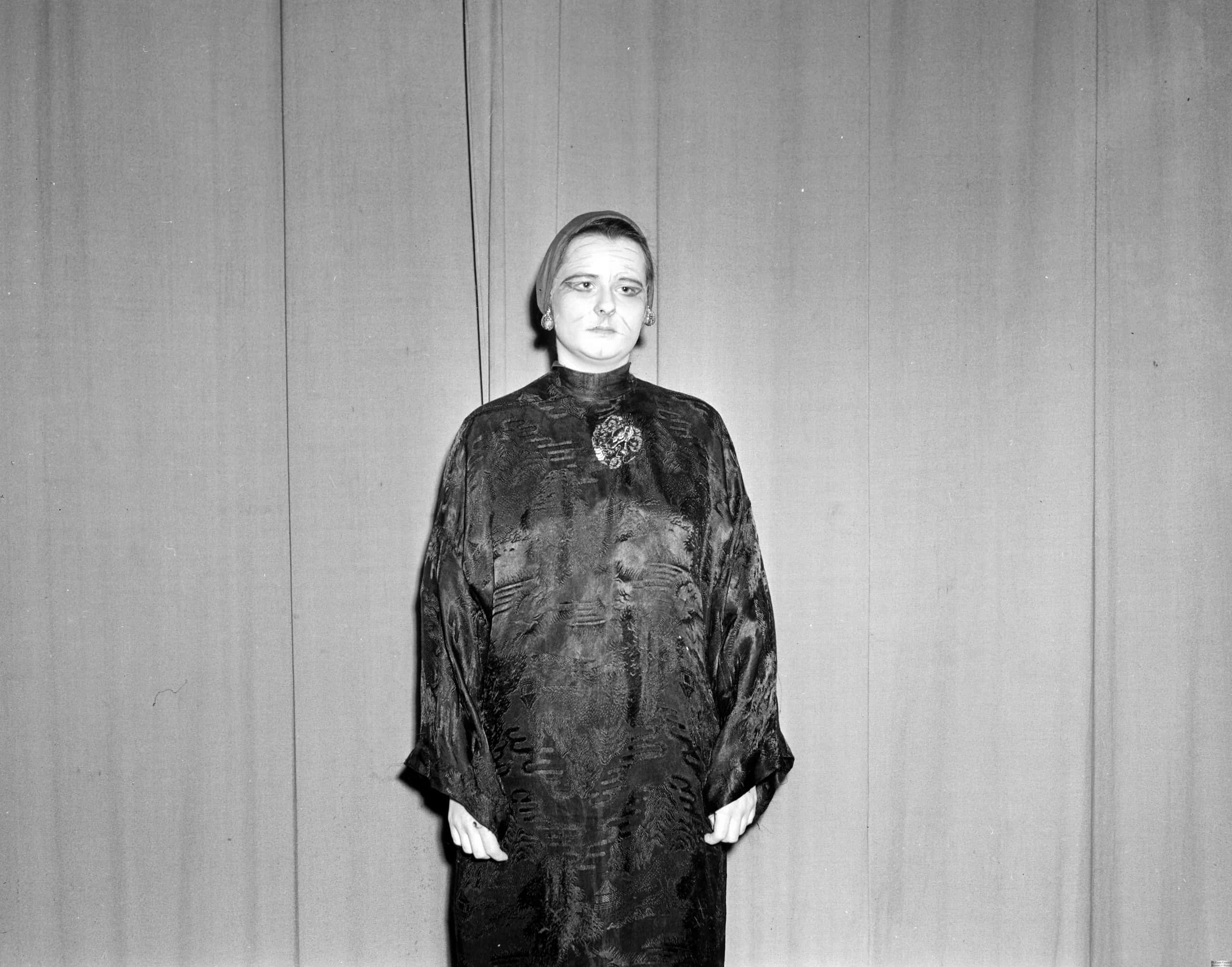
Image 26.02.03a — White American actress Katherine Hepburn played the Chinese character Jade in the film Dragon Seed (1944). Following the film’s success, local theaters adopted the practice of yellowface to reproduce the story, including this 1944 show in Bloomington, Illinois.
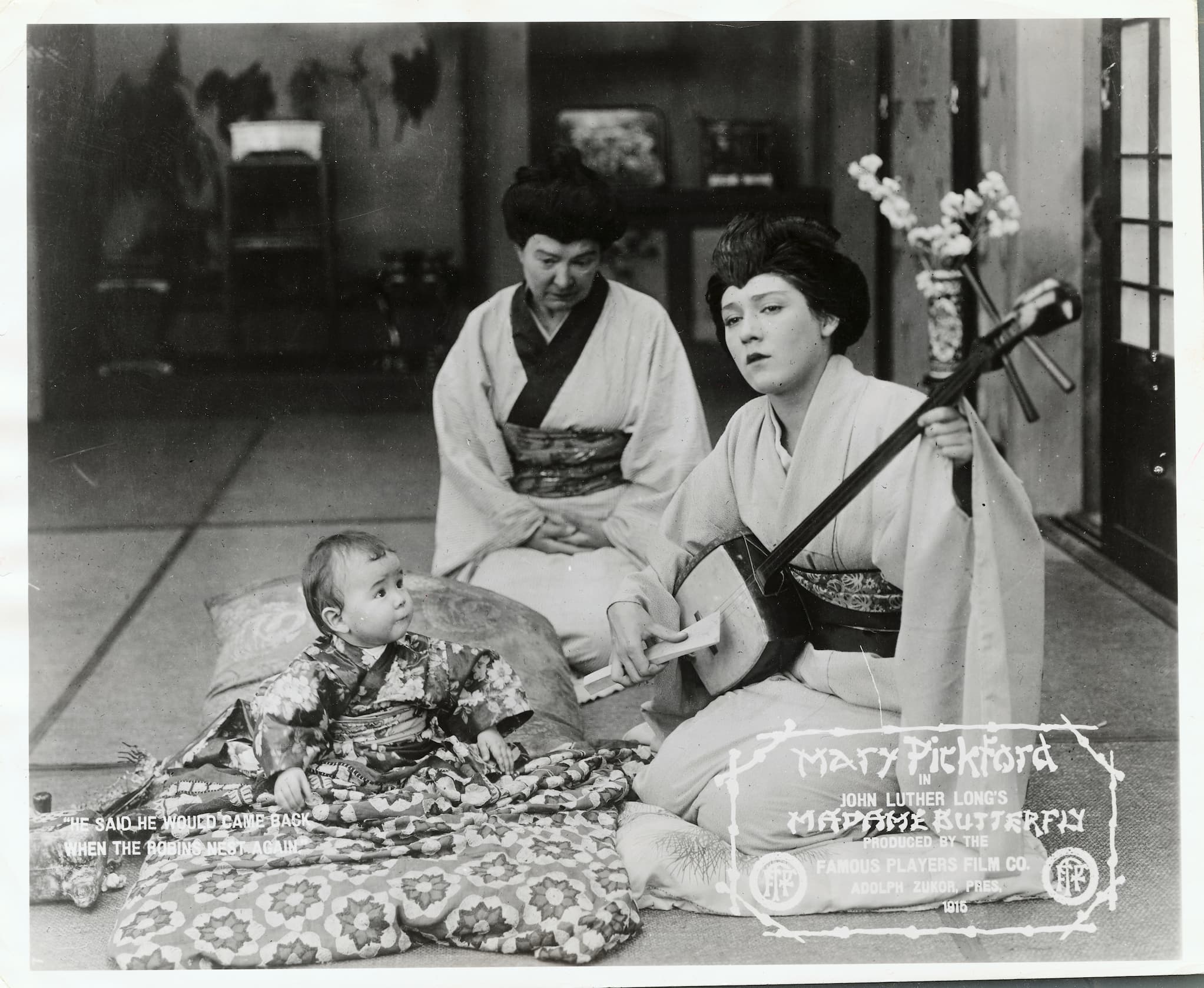
Image 26.02.03b — White actress Mary Pickford (right) portrayed the tragic Japanese protagonist, Cio-Cio-San, in a 1915 silent film adaptation of Madame Butterfly.
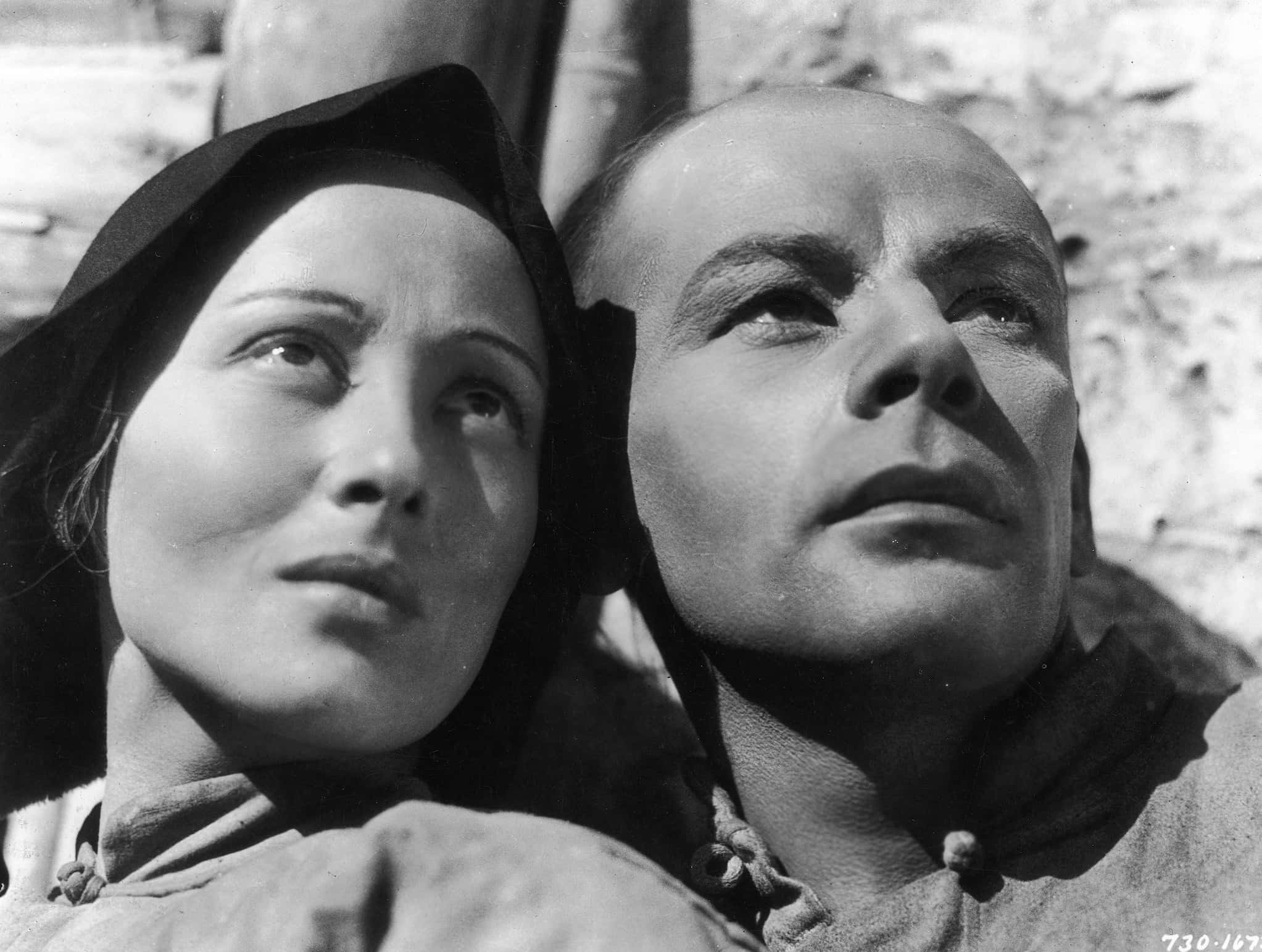
Image 26.02.03c — In The Good Earth (1937), actress Luise Rainer (left) plays O-Lan, a subservient and selfless Chinese woman who withstands the oppression of Japanese aggressors, alongside co-star Paul Muni (right) as Wang–her husband. The cast comprises largely non-Asian actors playing Asian roles.



Reflection Question
Acting was Anna May Wong’s lifelong passion, and she was profoundly good at it. If you were in her position and had worked hard to become a Hollywood actor but could only land racist or demeaning roles, what would you do?
Camp Towns, War Brides, and Lotus Blossoms
The Lotus Blossom is the trope of a subservient and meek Asian woman who is eager to please foreign men. The Lotus Blossom is praised for her beauty and her passivity. She is an object of desire who poses no threat and requires protection. Her existence is important to the US war efforts during the Second World War. The US emerged from World War II as a global superpower alongside the other Allied forces who were victorious against the Axis powers of Japan and Germany.
Economic and political disruption caused by World War II meant that many countries were establishing new leadership and political systems. There was deep fear among the US and its allies that these countries would adopt Communism and become hostile towards capitalist countries. As a result, the US became increasingly involved in civil wars abroad. They provided financial and military, and, eventually, soldiers to fight against Communist forces. The US, thus, established or increased its military presence in South Korea, Taiwan, Guam (Guåhan), Hawaiʻi, the Philippines, Japan, and Vietnam.
As these military bases grew, US “camptowns” emerged overseas. Camptowns are towns providing US-style infrastructure around the military bases that also catered to entertaining the American military men through bar culture and sex work. Many local women and girls were trafficked into sex work or became sex workers and bar entertainers as a means of survival during wartime, often subject to abuse and violence. This situation continued after the wars ended and still persists today because of its profitability.
In 2007, documentary filmmaker Kyoung Tae Park remarked that “these young women were often trafficked into camptown prostitution by gangsters, or ‘employment agencies,’ with the promise of well-paying jobs. Camptown women have been pariahs who occupied the lowest rung of the society.” 2
These camptowns continue to exist, but recently, the sex work roles have shifted from local women and girls to immigrants from countries including the Phillippines and Southeast Asia. The immigrant women are exploited and controlled due to their precarious economic standing and immigration status.
Furthermore, these systems of human trafficking that started in military camptowns have made their way to the US. Whether through false promises of legitimate, well-paid work or through coercion, human traffickers in Asia have brought vulnerable women to work in massage parlors as sex workers, again utilizing their low economic and undocumented immigration status to control them.
Partially based on these camptowns, women’s experiences of exploitation and abuse were shown in films about this time period. Phrases like “Me love you long time” from a Vietnamese sex worker in the Vietnam War film Full Metal Jacket (1987) are heard in derogatory taunts towards Asian American women. Actresses like Maya Erskine and Naomi Ko, among many others, have publicly discussed how they were mocked by classmates and strangers with this line when they were girls.
In the film Sayonara (1957), the main character is a US Air Force major and Korean war veteran played by Marlon Brando. The protagonist works on a Japanese military base where he falls in love with a Japanese dancer named Hana-ogi, played by Japanese American actress Miiko Taka. His colleague is married to a Japanese woman who pampers him. She’s agreeable and aims to please his every whim.
Brando’s love interest, Hana-ogi, is also quiet, demure, and subservient. The movie portrays the specific kind of interracial marriage emanating from this historical context, as one between a submissive Asian woman and a masculine white man. This passive, simple, and eager-to-please stereotype became known as the “Lotus Blossom.”
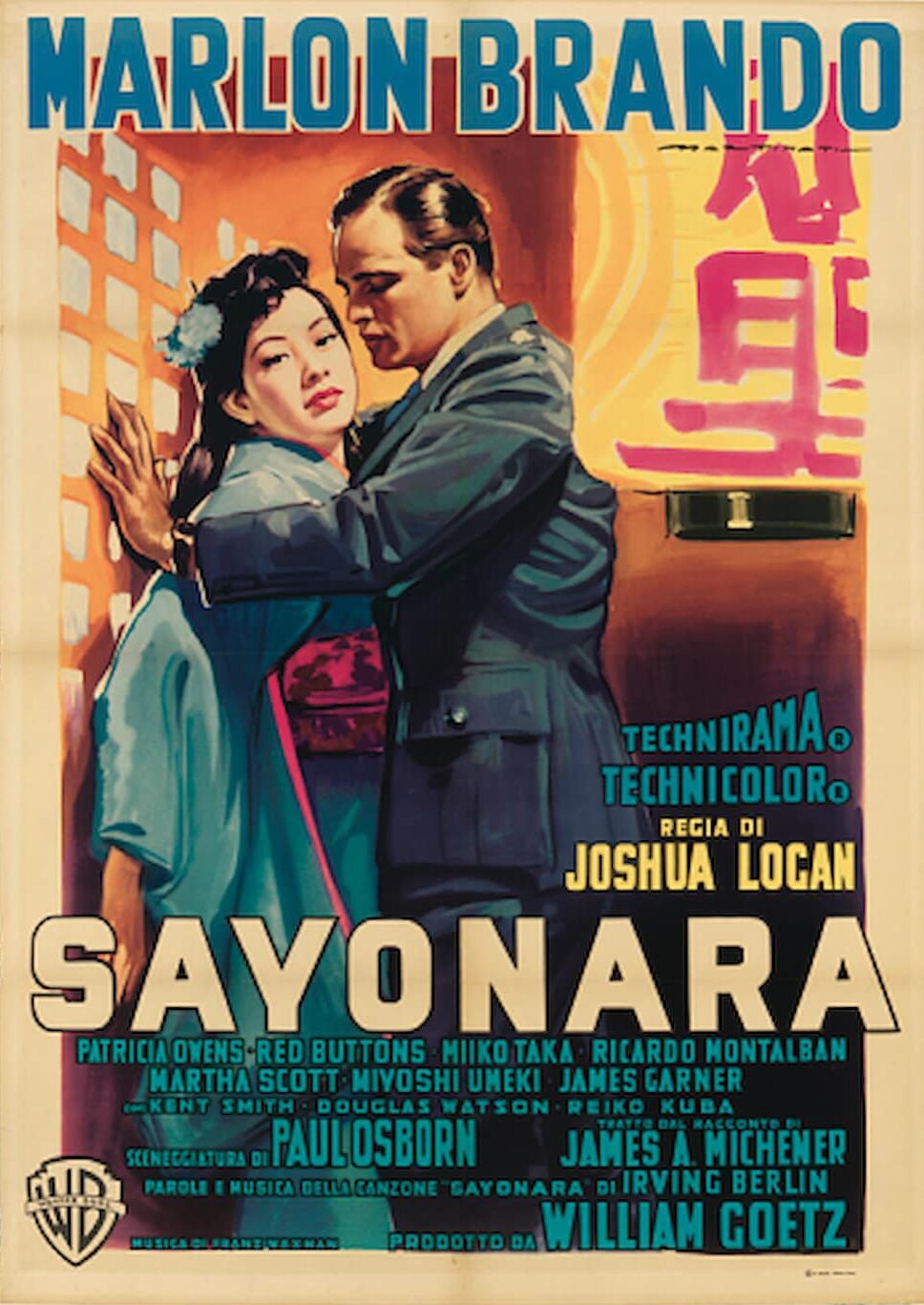
Image 26.02.04 — This movie poster for Sayonara (1957), depicts Hollywood superstar Marlon Brando as a military man and Japanese American actress Miiko Taka as his ”lotus blossom” love interest, Hana-ogi.
This film accompanied the growing number of “war brides,” mainly Japanese and Korean women who married American military servicemen between 1947 and 1975 and returned with their US military husbands to the United States. Many fell in love and saw marriage as a means of leaving their homelands that had been devastated by war for new opportunities.
In Japan and Korea, the American Red Cross went so far as to create “bride schools” for some of the women who married US soldiers to learn how to become an ideal American wife. The classes instructed women to be diligent housekeepers and submissive partners, traits that furthered the Lotus Blossom stereotype. In effect, the military system and infrastructure surrounding the need for and popularization of the Lotus Blossom and Dragon Lady tropes have culminated in the fetishization of Asian women in the US.
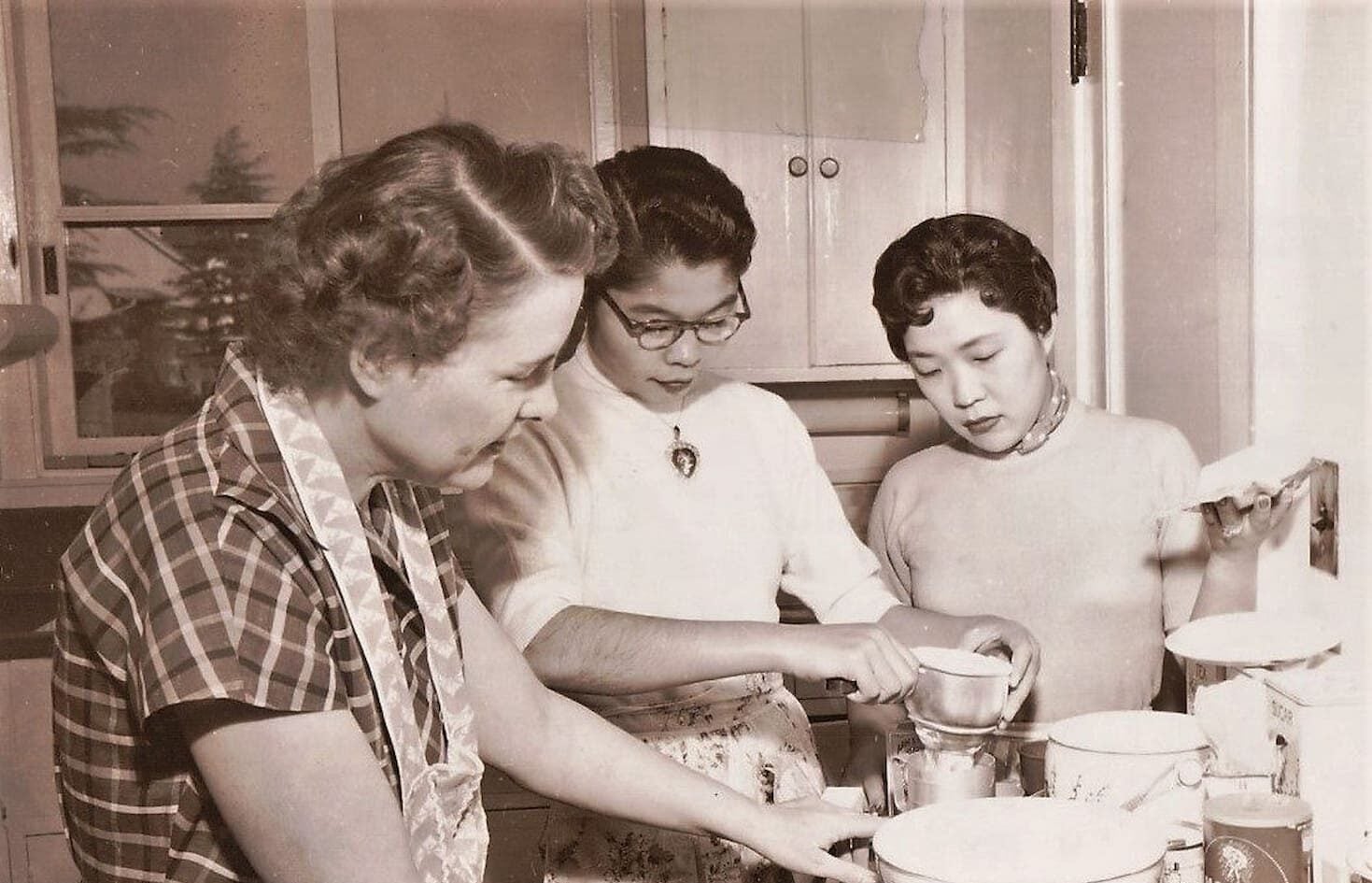
Image 26.02.05 — A “bride school” class taught in Tokyo, 1955. As students, Japanese and Korean wives of American soldiers would learn how to serve their husbands in American domestic life.
The Invisible Asian American and Pacific Islander Women
As part of the US military expansion in the Pacific Rim, the Philippines was colonized by the US in 1898, the same year that the US annexed Hawaiʻi and made Guam (Guåhan) a US territory. Depictions of women from the Philippines and other parts of the Pacific in mainstream media from the early 1900s are few. But when Pacific Islander women are included, they are most often portrayed as exotic and naïve, victims of barbaric, patriarchal cultures.
The 1912 play Bird of Paradise was an early production set in Hawaiʻi that depicts a white American man who falls in love with a Native woman who is eventually sacrificed in a volcano to appease the gods. The play was so popular that it was made into a black and white film in 1932 and a technicolor remake in 1951. In each instance, the heroine was played by a white and Mexican actress, respectively, colored with colonial fantasies of rescue and heroism.
Absent too are the Cambodian, Laotian, and Hmong women from popular narratives until far after the American wars in Southeast Asia. It was taboo to discuss US involvement in these regions during the 1950s and 1960s because of the secret bombings and other military actions that defied international law. As such, these stories never came into public awareness until the 1990s and early 2000s when refugees and their children began to share their own narratives.
Conclusion
From Dragon Ladies and Lotus Blossoms to virtuous women and pure-spirited heroines, the depictions of Asian American and Pacific Islander women have created a biased and limited view of their lived experiences. The lack of authentic stories shows how attitudes about Asian American and Pacific Islander women and girls might shape opinions and behavior towards them. The images of timid, eager-to-please, scheming, sexually-deviant, or helpless women are the stereotypes that they inherit. Pushing back against these narratives is not only possible but also necessary to dispel and disrupt them. What becomes even more important is the realization that storytellers and creators of all backgrounds can be part of this effort.
Glossary terms in this module
fetishization Where it’s used
Objectifying something or someone in a sexual manner; Viewing something or someone as attractive, important, or fascinating to an irrational degree, often rooted in sexual interest.
stereotype Where it’s used
Generalized beliefs about a group of people based on one characteristic. Typically, stereotypes perpetuate harmful discourse about groups of people and are rooted in incorrect, and often racist beliefs.