



ASIAN AMERICAN COMMUNITIES
Thai Americans

00:00
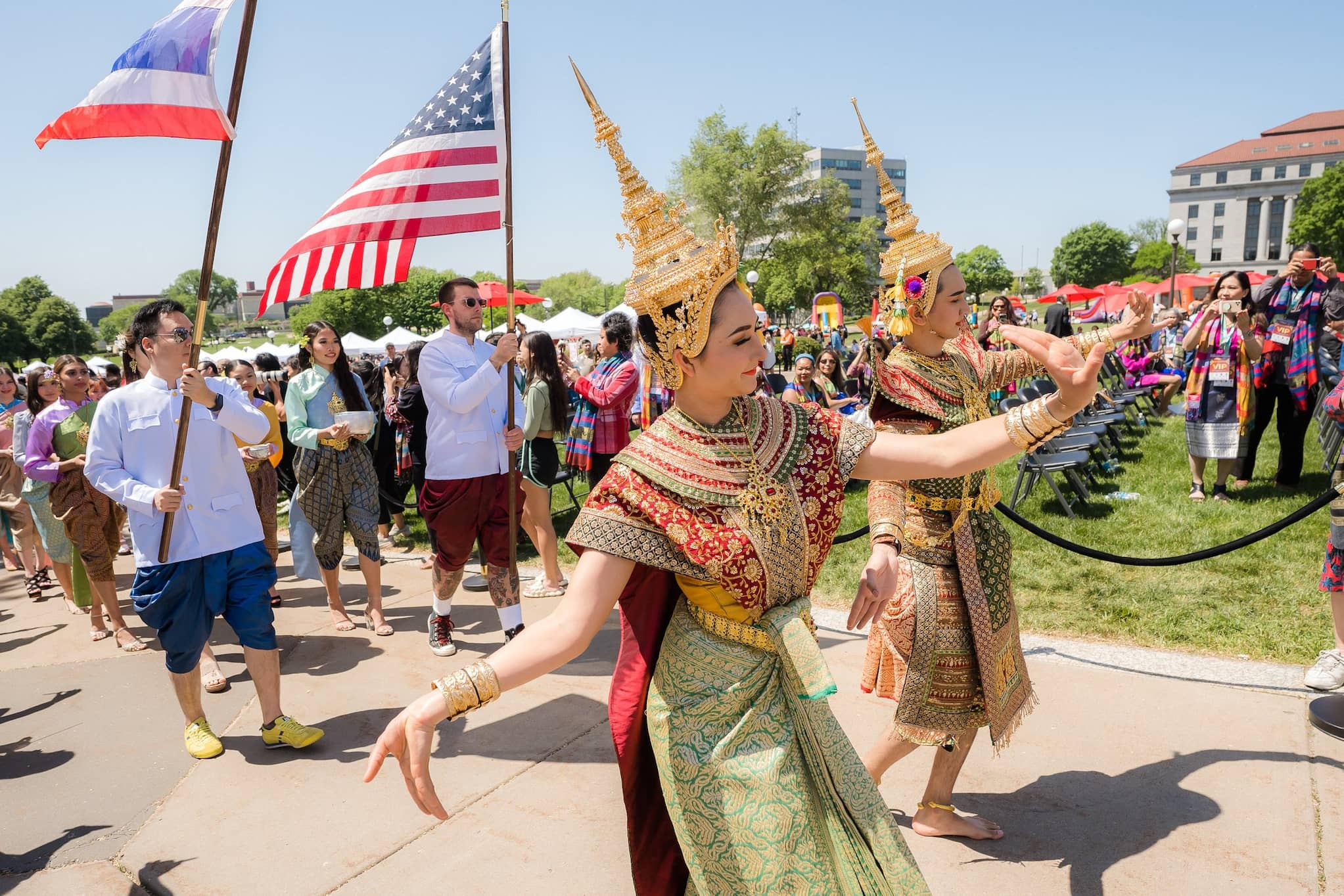
Have Thai Americans found or created a home in the United States?
Chapter objectives
- Learn about how Thai Americans are making a home and building communities in the United States.
- Understand the historical relationship between Thailand and the US that has influenced Thai American immigration and politics.
- Explore how immigrant communities are maintaining their connection to culture while constructing new identities in the US.
Thai Americans have made permanent footprints in the American cultural and physical landscape with many firsts: the first Thai Buddhist temples in the early 1970s, the first Thai American Miss Universe in 1988, the first Thai masjid (mosque) in the US in 1998, the establishment of the first Thai Town in 1999, and the first Thai American senator in 2016. The rise of Thai Americans in the US can be traced back to the complicated historical relationship between Thailand and the US that has deeply influenced Thai immigration. Today, Thais continue to build their lives and identities as Thai Americans through participating in social movements, producing forms of media, and strengthening Thai Towns. This chapter explores how Thais become Thai Americans, and what that means for creating their own path outside of Thailand.
Modules in this chapter
Departures and Arrivals
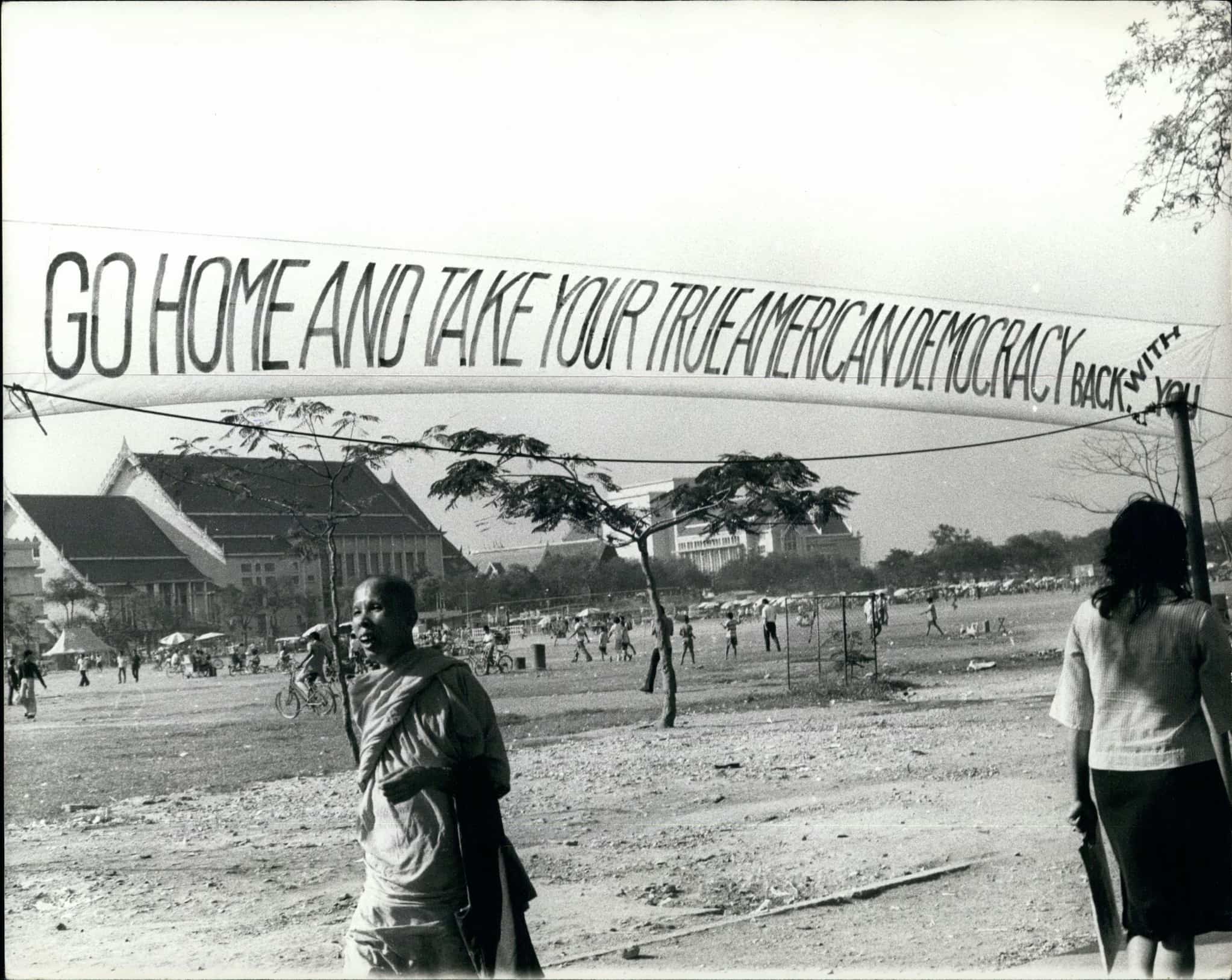
Departures and Arrivals
In this module, we will discuss the various ways to define “Thainess,” in other words, what it means to be Thai, in and outside of Thailand.
New Homes and Returns
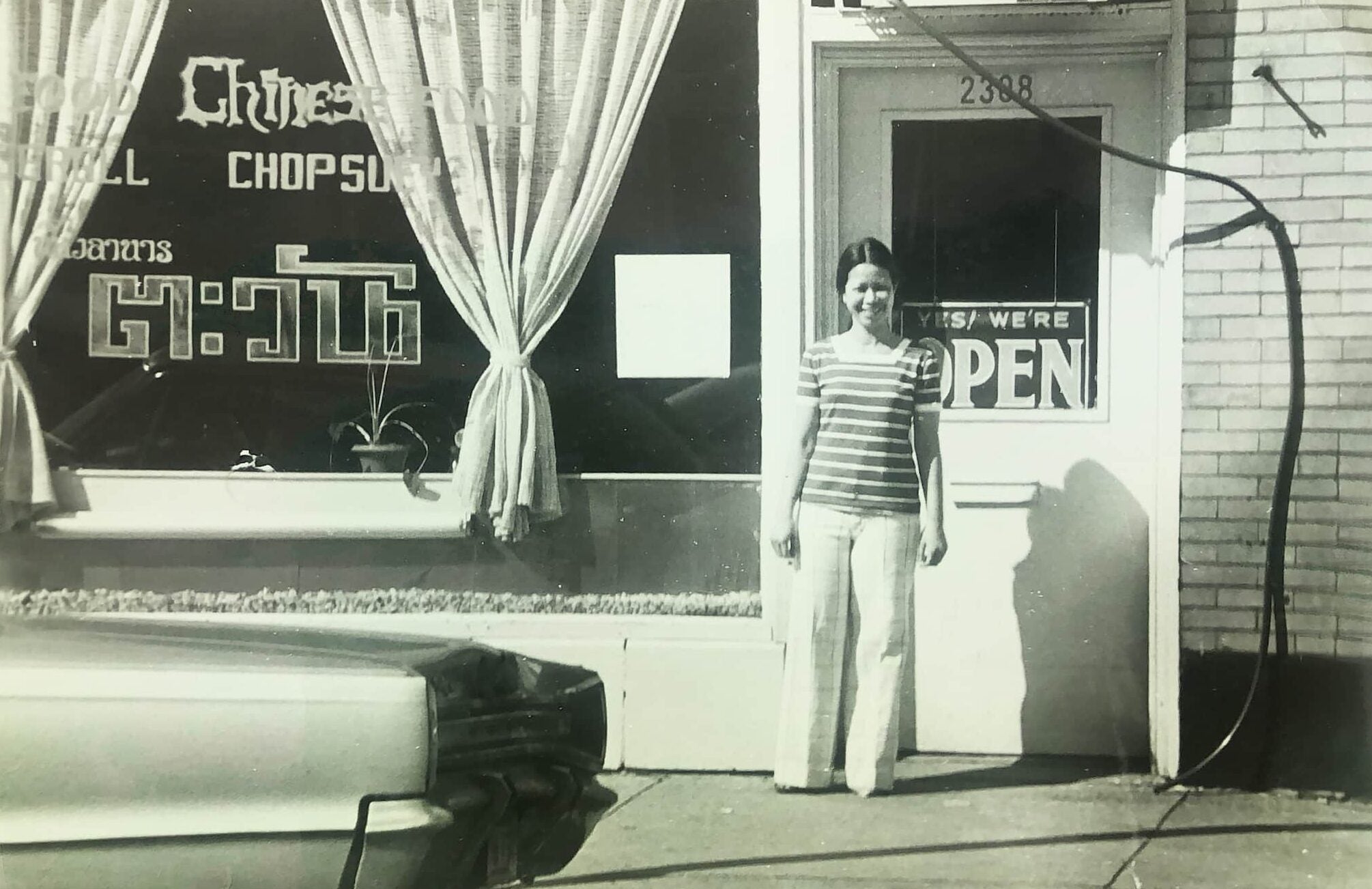
New Homes and Returns
This module will address these and other related questions by serving as an overview of the creation of Thai American spaces, places, and associations.
Places and Spaces
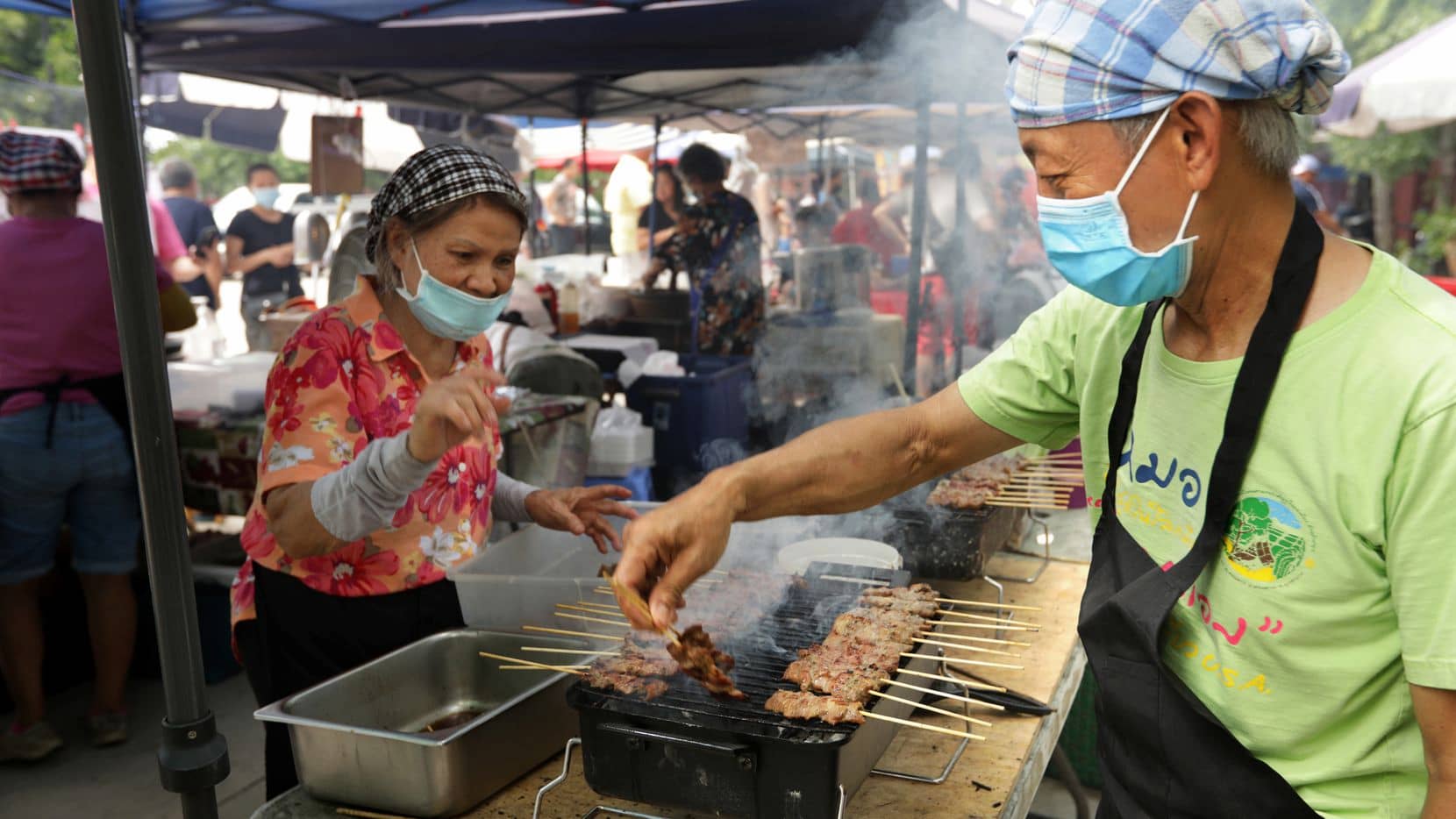
Places and Spaces
This module is about the importance of the wat and other gathering spaces for the Thai diaspora in the US, and how such spaces connect Thais to each other, to surrounding communities, and to Thais in Thailand.
Unity and Division
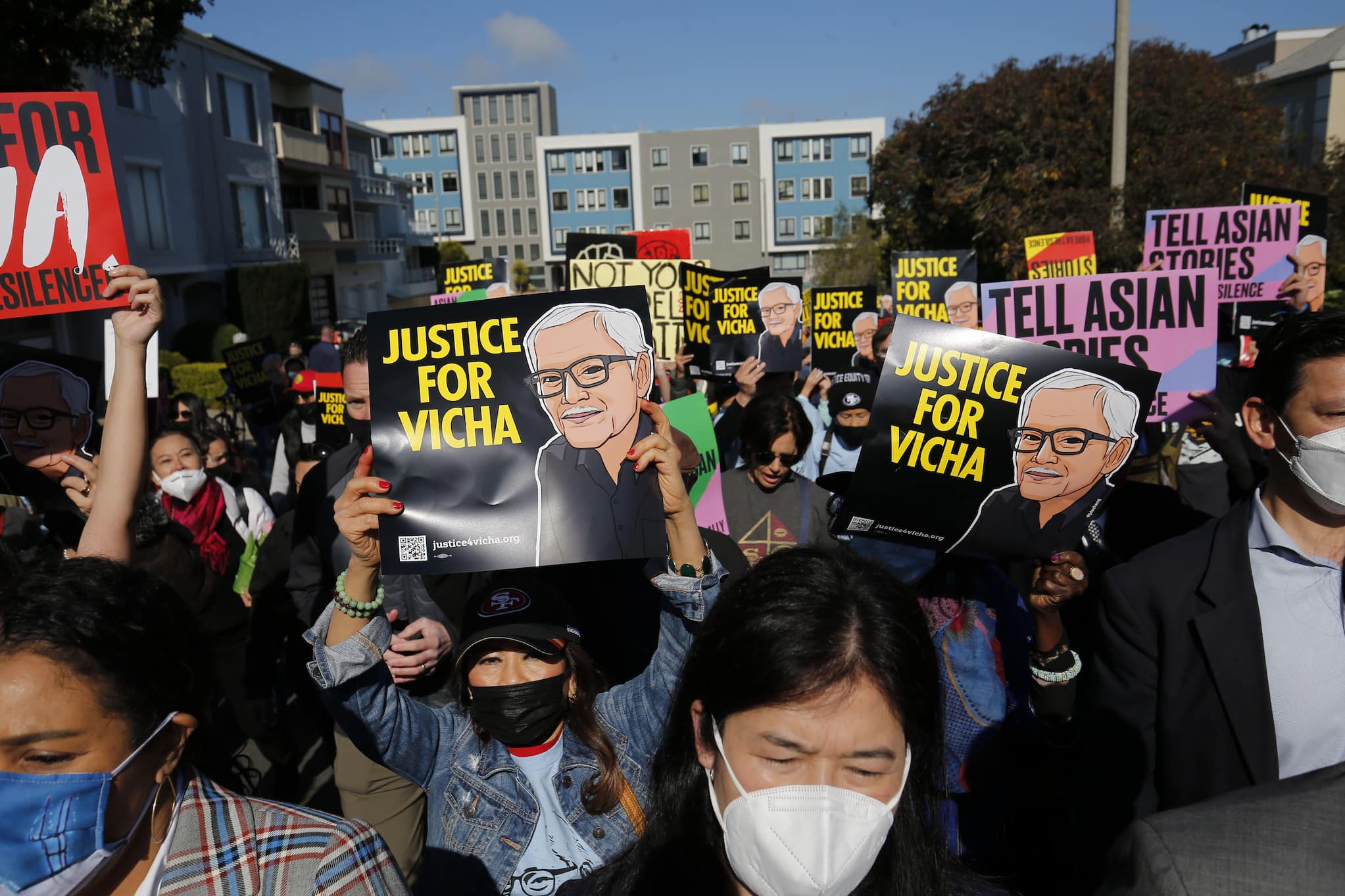
Unity and Division
This module considers how Thai Americans do—and do not—fit within a broader Asian American category, and how “Thainess” is a complicated identity in both the diaspora and in Thailand.
Belonging and Building Community
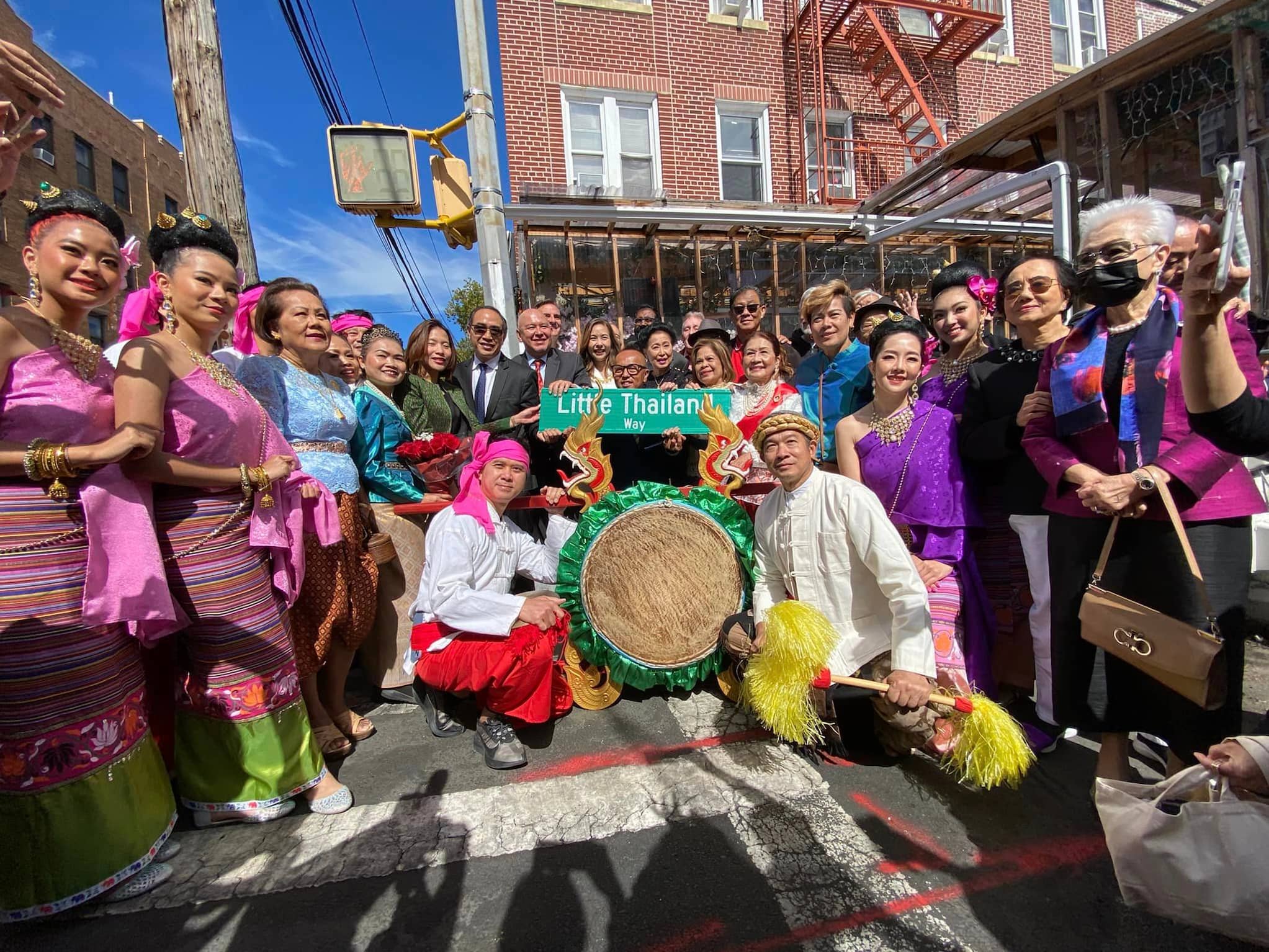
Belonging and Building Community
This module introduces a new generation of Thais who are defining their “Thainess” through civic engagement and advocacy and the creation of new Thai American organizations.
Departures and Arrivals
Departures and Arrivals
In this module, we will discuss the various ways to define “Thainess,” in other words, what it means to be Thai, in and outside of Thailand.
New Homes and Returns
New Homes and Returns
This module will address these and other related questions by serving as an overview of the creation of Thai American spaces, places, and associations.
Places and Spaces
Places and Spaces
This module is about the importance of the wat and other gathering spaces for the Thai diaspora in the US, and how such spaces connect Thais to each other, to surrounding communities, and to Thais in Thailand.
Unity and Division
Unity and Division
This module considers how Thai Americans do—and do not—fit within a broader Asian American category, and how “Thainess” is a complicated identity in both the diaspora and in Thailand.
Belonging and Building Community
Belonging and Building Community
This module introduces a new generation of Thais who are defining their “Thainess” through civic engagement and advocacy and the creation of new Thai American organizations.
Chapter Sources
Bao, Jiemin. “Chinese in Thailand”. In Encyclopedia of Diasporas, edited by Melvin Ember, Carol R. Ember, and Ian Skoggard. Springer, 2005. https://doi.org/10.1007/978-0-387-29904-4_78.
Cadge, Wendy, and Sidhorn Sangdhanoo. “Thai Buddhism in America: An Historical and Contemporary Overview.” Contemporary Buddhism, 6:1 (2005), 7–35.
Lee, Jennifer, and Karthick Ramakrishnan. “Who Counts as Asian.” Ethnic and Racial Studies, 43:10 (2019), 1733–56.
https://doi:10.1080/01419870.2019.1671600.
Leow, Melvin Khee-Shing. “Characterization of the Asian Phenotype—An Emerging Paradigm with Clinicopathological and Human Research Implications.” International Journal of Medical Sciences, 14:7 (2017), 639.
Losavio, JoAnn. “Temporary Thais: Circular Thai–US Migration in the 1960s.” Journal of American Ethnic History, 40:4 (2021), 41–85.
Morlan, Beatrice “Tippe” and Chanchanit Martorell. Thais in Los Angeles. Arcadia Publishing, 2011.
Padoongpatt, Tanachai Mark. “‘A Landmark for Sun Valley’: Wat Thai of Los Angeles and Thai American Suburban Culture in 1980s San Fernando Valley.” Journal of American Ethnic History, 34:2 (2015), 83–114.
Padoongpatt, Mark. Flavors of Empire: Food and the Making of Thai America. University of California Press, 2017.
Ruiz, Neil G., Carolyne Im, and Ziyao Tian. “Discrimination Experiences Shape Most Asian Americans’ Lives.” Pew Research Center, November 30, 2023. https://www.pewresearch.org/race-and-ethnicity/2023/11/30/discrimination-experiences-shape-most-asian-americans-lives/.
Ratner, Megan. “Thai Americans.” Gale Encyclopedia of Multicultural America. Accessed May 15, 2024. https://www.encyclopedia.com/social-sciences/encyclopedias-almanacs-transcripts-and-maps/thai-americans.