





A group of colorfully dressed people crouch and stand near crosswalk. They surround a green street sign reading “Little Thailand Way” in white font.
Module 5: Belonging and Building Community
Have Thai Americans found or created a home in the United States?
Half a century after arriving in the US, Thais are leaving permanent marks in their local communities in the form of restaurants, other businesses, wats, churches, and masjids. Thai Americans have successfully petitioned city officials to designate Thai spaces in the cities with the two highest Thai populations: Los Angeles, California and New York City. To have two permanent spaces in urban areas designated to be Thai is a welcomed reprieve from how Thai wats were being driven out of their spaces in the suburbs through zoning just years earlier.
This module introduces a new generation of Thais who are defining their “Thainess” through civic engagement and advocacy and the creation of new Thai American organizations. We learn how Thai Americans artists and writers are challenging the ways how Thais are portrayed in mass media by helming their own shows and writing their own books that center Thai stories and experiences.
What is Thai American identity?
What does it mean to be Thai American?
What does being Thai American look like in different spaces?
Los Angeles: The First Thai Town in the US
On the evening of Wednesday, October 27, 1999, the members of the Los Angeles City Council voted unanimously to designate the six-block area between Hollywood Boulevard, Normandie Avenue, and Western Avenue as the first ever “Thai Town” in the US.
The East Hollywood area in Los Angeles is the historic entry point of newly arrived Thais, who were seeking higher education and better employment opportunities in the city. The Thai Community Development Center (Thai CDC) had petitioned for eight years before they were successful in securing the Thai Town destination.
Additional funding from local agencies in 2008 made it possible to make new crosswalks and sidewalks, install Thai-style street lamps and banners, and, most notably, mark the entry to Thai Town with statues of mythical creatures from Thai lore.
The half-bird, half-human kinnari can be seen holding the many street lamps along the walkways, while the half-woman, half-lion aponsi can be seen guarding the entries into Thai Town. Both creatures are believed to be supernatural guardians for humans in times of crisis and danger. It is no surprise that Thais should want these creatures to guard and protect Thai Town.
The Thai Town designation came when the city of Los Angeles was still reeling from the 1992 civil unrest that followed the acquittal of four white police officers who severely beat Rodney King, a Black motorist. The outrage turned violent, and the rioting, looting, and arson killed a total of sixty-three people, injured nearly three thousand people, and caused over 1 billion-dollar worth of damages. Korean-owned businesses were disproportionately affected during the riots. Thai-owned businesses in what would later be called Thai Town were destroyed too, but were not numerous enough to warrant mention by mainstream news outlets.
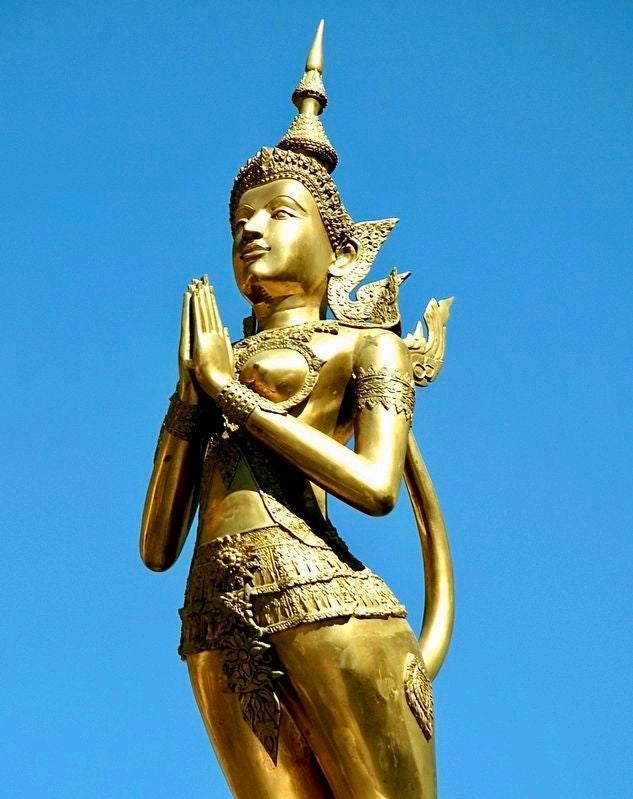
Image 18.05.01a — A half-woman half-lion, Aponsi, guards the entry of Thai Town in Los Angeles, California, while a half-human half-bird, Kinnari, lights the way. These mythical creatures were installed in 2008 to clearly delineate and guard Thai Town.
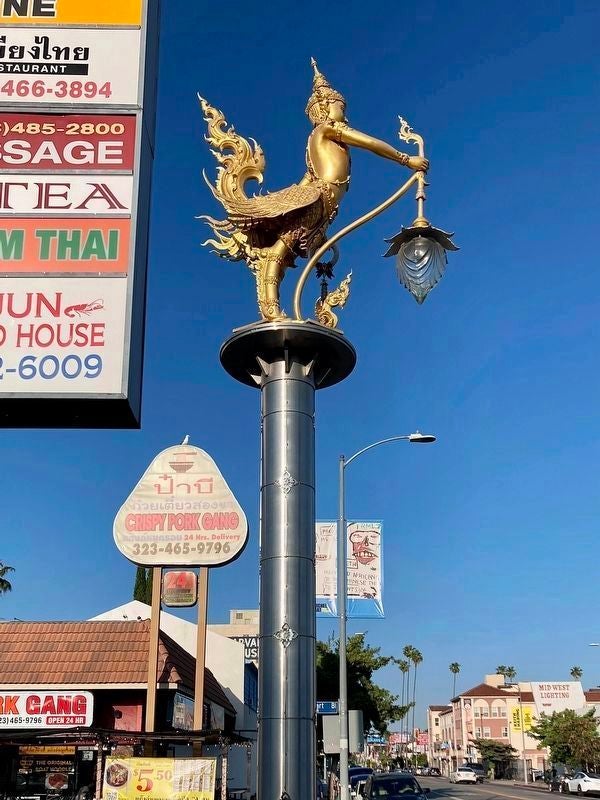
Image 18.05.01b — A half-woman half-lion, Aponsi, guards the entry of Thai Town in Los Angeles, California while a half-human half-bird, Kinnari, lights the way. These mythical creatures were installed in 2008 to clearly delineate and guard Thai Town.
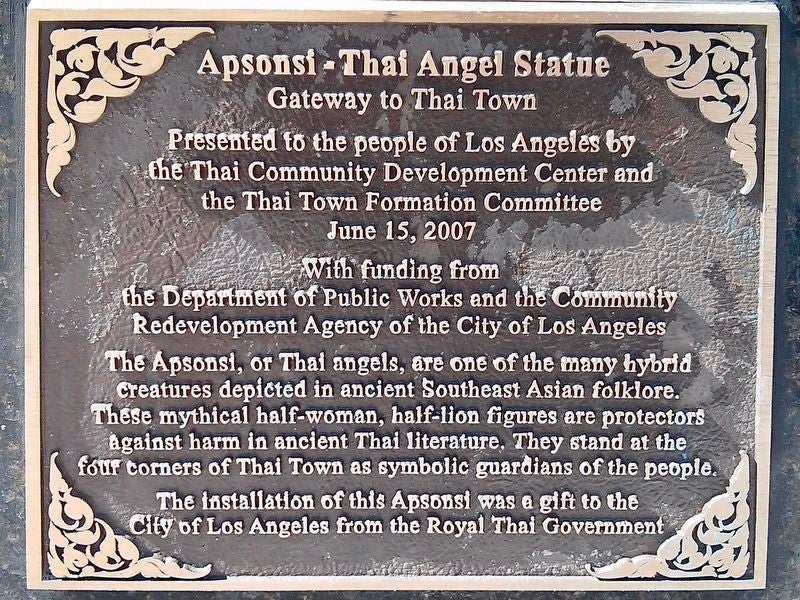
Image 18.05.01c — A half-woman half-lion, Aponsi, guards the entry of Thai Town in Los Angeles, California while a half-human half-bird, Kinnari, lights the way. These mythical creatures were installed in 2008 to clearly delineate and guard Thai Town.



New York City: Little Thailand
Fourteen years after the designation in Los Angeles, New York City Council approved the proposal to designate a three-block area on Woodside Avenue in the Elmhurst neighborhood in the borough of Queens as “Little Thailand,” a name long used by locals. The city held a naming ceremony on Saturday, September 24, 2013. Here, former Thai Deputy Prime Minister and Minister of Foreign Affairs, Don Pramudwinai, reiterated the transnational role Thai spaces have in the diaspora, saying “This road is going to represent Thainess to both New Yorkers and foreigners.”
Two blocks from Little Thailand sits Wat Buddha Thaithavornvanaram, which was built in 1994. Wat Buddha Thaithavornvanaram is the newer of the two Thai wats in the New York City metro area and is the only one still located within city limits. An older temple, Wat Vajiradhammapadip, established in 1975, outgrew its original Bronx location and is now located in Long Island. Today, approximately fifteen to seventeen thousand Thais live in Queens; this accounts for more than 50 percent of Thais in the New York City metro area.
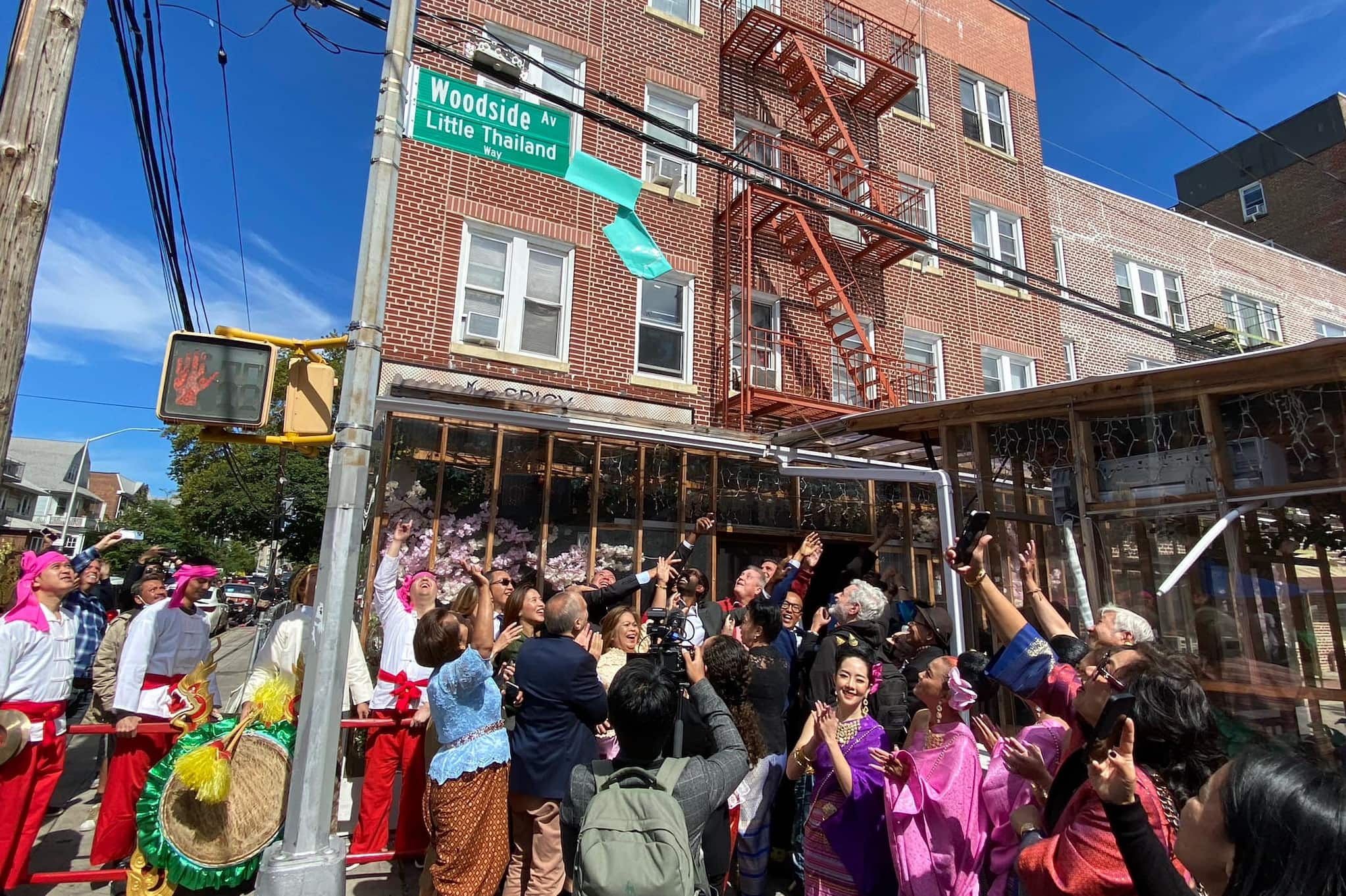
Image 18.05.02a — Thai community members and representatives from the Royal Thai Embassy and Royal Thai Consulate General of New York City attend the naming and unveiling ceremony for “Little Thailand Way” in 2022.
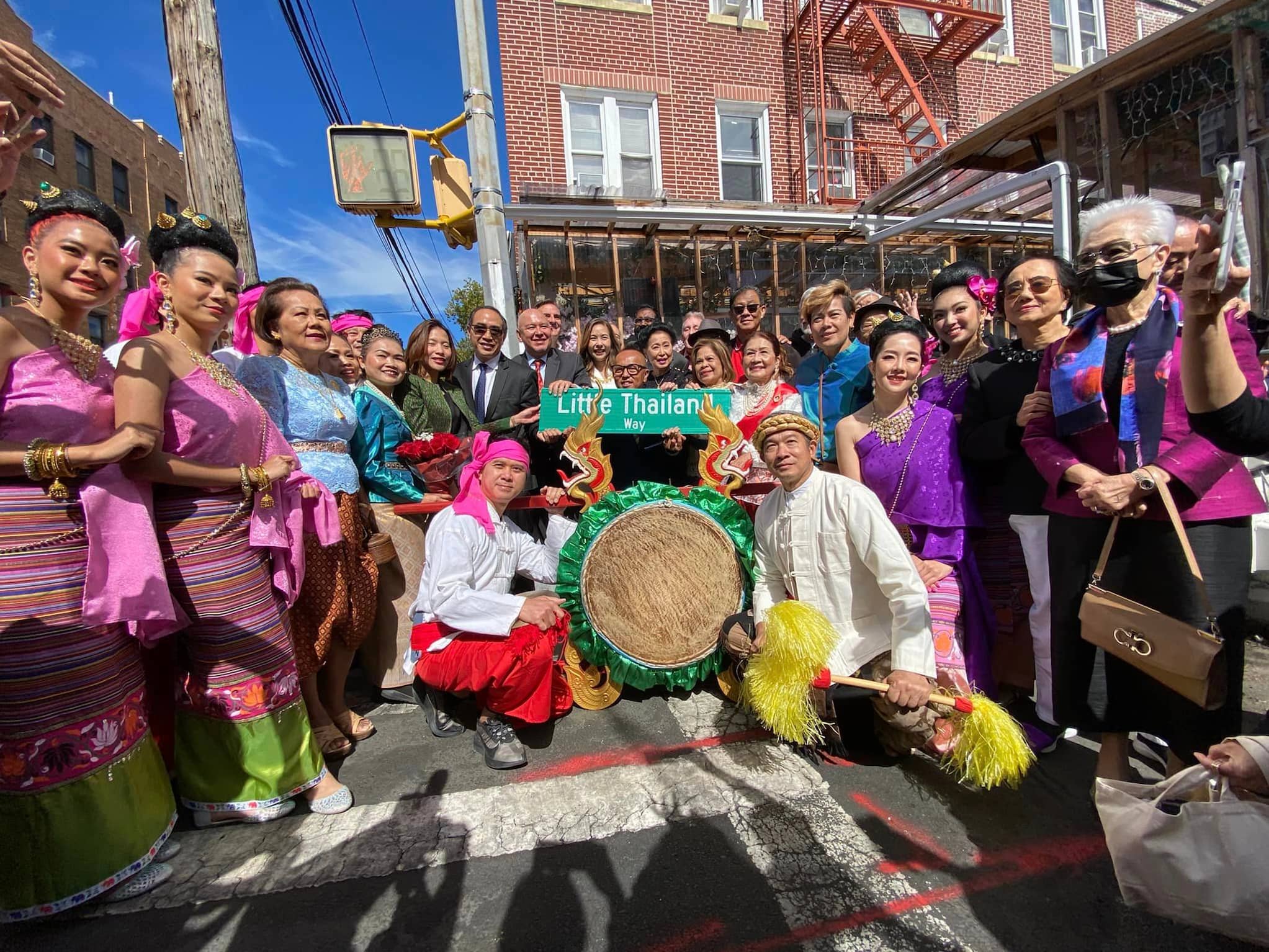
Image 18.05.02b — Thai community members and representatives from the Royal Thai Embassy and Royal Thai Consulate General of New York attend the naming and unveiling ceremony for ‘Little Thailand Way’ in 2022.


Samakkee for the Future
The Thai word Samakkee (สามัคคี) varies in definition based on context and use. When used as a noun, Samakkee means “cohesion” and “unity.” When used as a verb, it means “to cooperate” and “to be in harmony.” When nearly one hundred Thai American community members and advocates gathered at the first ever Samakkee Summit in 2013, they were seeking ways to cooperate in harmony across the country.
This summit—which birthed the Thai American Samakkee Coalition that was later formalized as a charitable organization in 2019—has become an annual event, and Thai organizations in various regions take turns hosting it. The first iteration was in Washington, DC, hosted by the Royal Thai Embassy and the Royal Thai Consulate.
Samakkee’s goals include promoting and aiding Thai and Thai American organizations in the United States. The founding of Samakkee was a recent defining moment for Thai American organizations in the US. The annual summit is open to all Thais of diverse professions and backgrounds.
Thai Americans for the Future
Shortly before the establishment of Samakkee, a similar organization was formed called Thai Americans for The Future (TAFF), whose goal is to promote awareness of Thai American concerns and to help empower the Thai American community. Like Samakkee, TAFF has leadership who are mostly US-born Thais and Thai Christians.
This leadership signals a new era in Thai American identity that is firmly rooted in the US and transcends affiliations based on region or origin, religion, alma mater in Thailand, and profession. Their concerns, too, are more US-centric, indicating their role and place within American society.
Whereas philanthropic efforts of the pioneer generation and their organizations generally benefit the needs of those in Thailand, newer Thai American organizations typically work to improve the lives of Thais living in the US. These newer Thai American organizations are more likely to align and collaborate with other organizations in their work than the first generation of Thai organizations.
The Thai Community Development Center
The Thai Community Development Center (Thai CDC) is a pioneer in both Thai American advocacy and in forming coalitions with other organizations to benefit the local communities. The center itself is located a short bus ride from Thai Town in Los Angeles, approximately two miles away, in the historic Halifax Apartment Building, which it helped to transform into low-income housing in 1997. Chanchanit Martorell, or Khun Chancee as she is known in the community, founded the Thai CDC on Thai New Year, April 13, 1994.
Like Bui Porntip, Khun Chancee was born in Thailand but grew up in Los Angeles and is a tireless advocate for Thai Americans. Her book, Thais in Los Angeles, co-authored with Beatrice “Tippe” Morlan and published in 2011, is a landmark book on Thais in the United States. The book was published as part of the Images of America series and is the first book written by Thais to explore the experiences and lives of Thais in detail.
Khun Chancee also pioneered the teaching of Thai American studies at the University of California, Los Angeles, where she created a course on Thai Americans, and on human trafficking and modern-day slavery.
Thais and Thai Americans in Culture and Media
Thai culture has gained visibility in recent years. One notable example is the inclusion of laab (ลาบ) into the Marvel cinematic universe. Laab, a popular ethnic Lao dish typically found on Thai restaurant menus, is a simple dish made with minced meat seasoned with lime, chilis, fish sauce, and pulverized roasted sticky rice, then tossed with shallots, cilantro, and mint leaves. That an ethnic Lao dish should become famous as part of Thai cuisine is indicative of the way Thainess is beginning to seep into popular culture.
Anna and the King
One of the earliest portrayals of Thais in the West is the Rodgers and Hammerstein musical The King and I, which made its Broadway debut on March 29, 1951, in New York City. The musical is based on the novel Anna and the King of Siam by Margaret Landon, which was published in 1944. The novel, in turn, was a semi-fictionalized account based on two memoirs written by Anna Leonowens that were published in the 1870s. Leonowens served as a governess in the court of King Mongkut, the fourth king of the current Chakri Dynasty and great-grandfather to the current Thai King.
The third-hand account of Thai people set to music, The King and I, became wildly popular in the US, and the musical won the 1952 Tony Award for Best Musical. Oddly enough, not a single Thai person was involved in the musical’s creation. Even the Thai silks used for the costumes of the first Broadway production were procured from an American intelligence officer named Jim Thompson, who was stationed in Thailand. Thompson’s family background with textiles manufacturing prompted him to revive Thai silk production in Thailand after World War II.
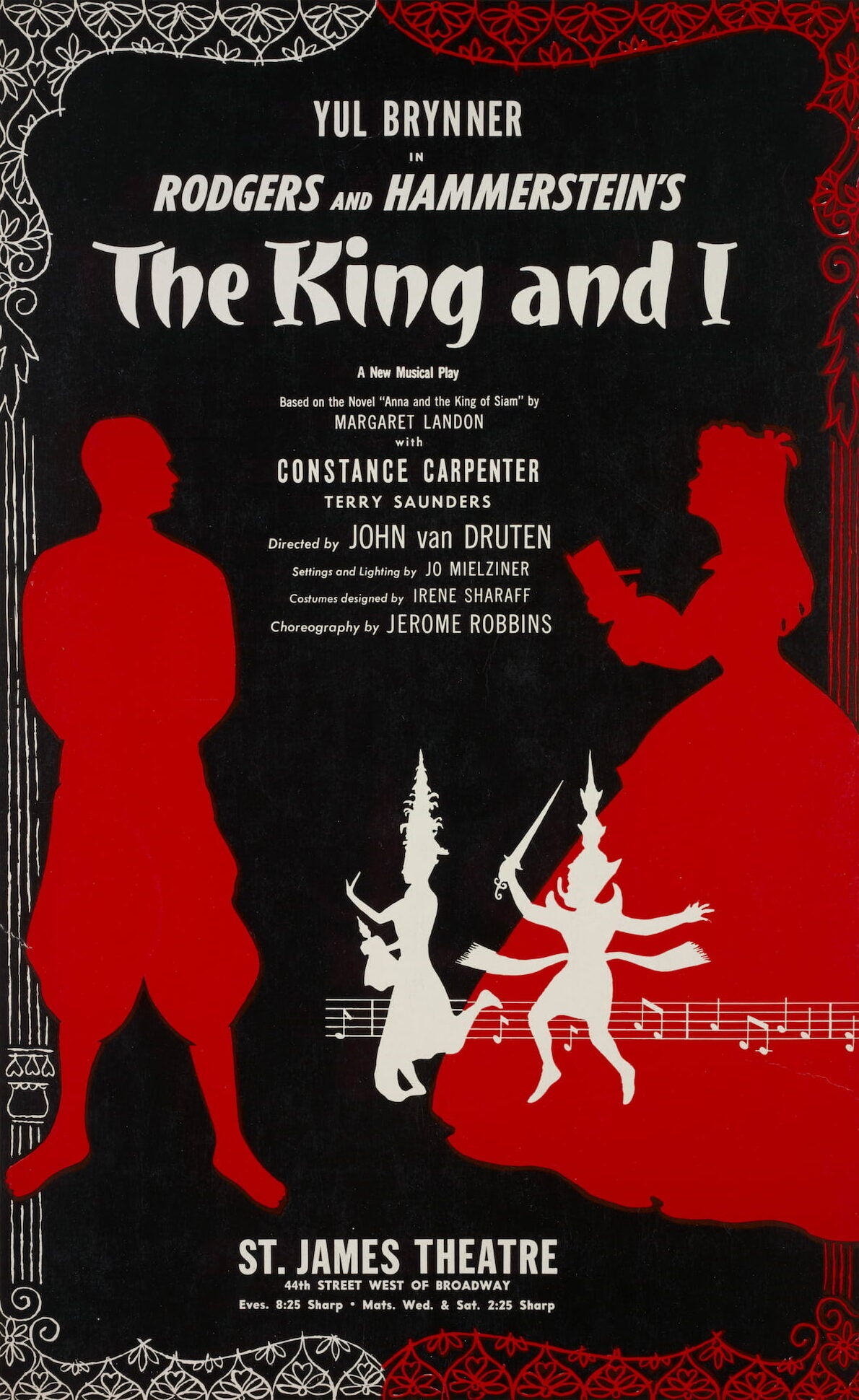
Image 18.05.03a — Poster for the original production of The King and I at Broadway’s St. James Theatre in New York City, 1951.
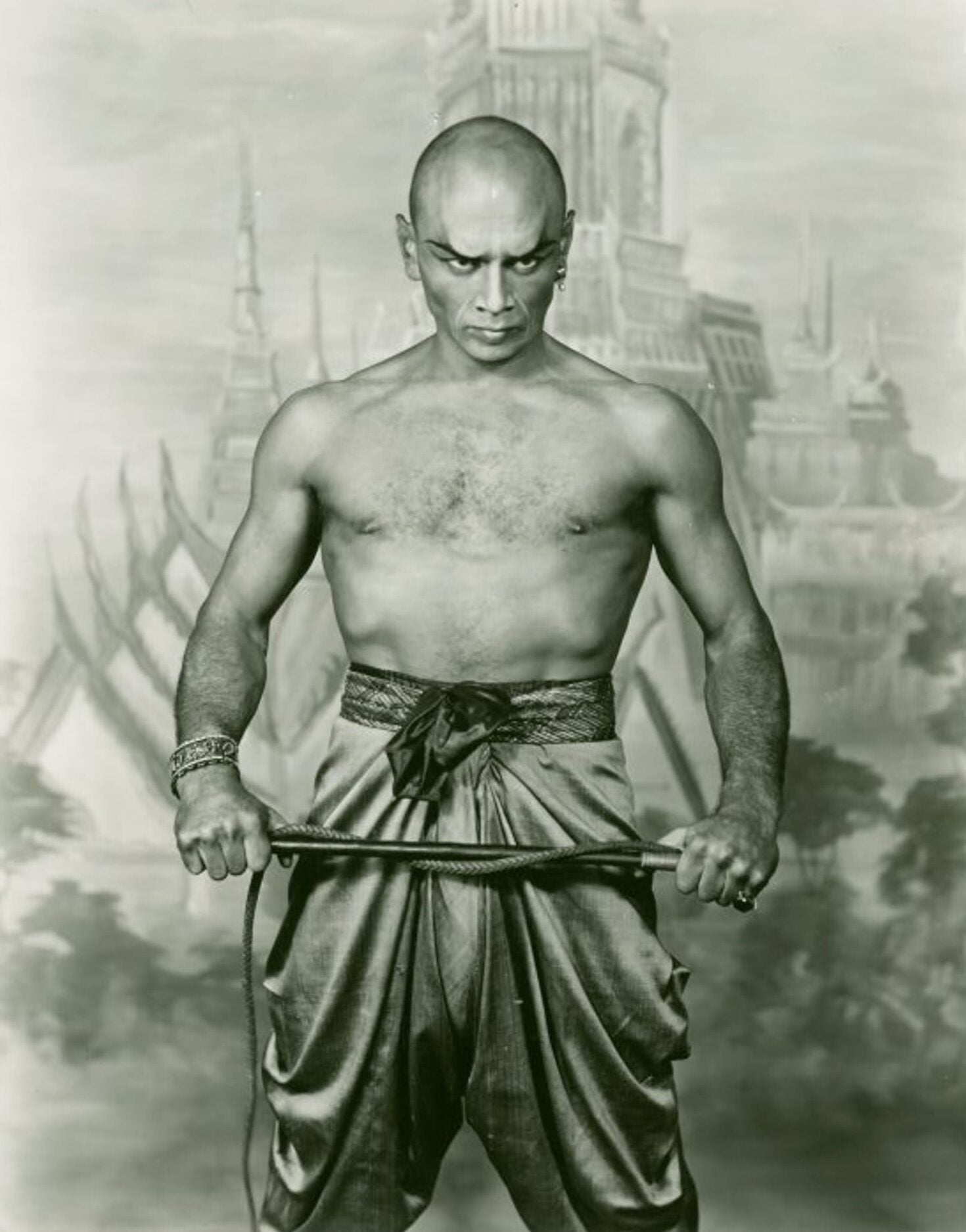
Image 18.05.03b — Actor Yul Brynner as King Mongkut in the 1951 production of The King and I at Broadway’s St. James Theatre in New York City. No Thais were involved in the show’s original production. Brynner was a Russian national with Mongolian ancestry on his mother’s side.
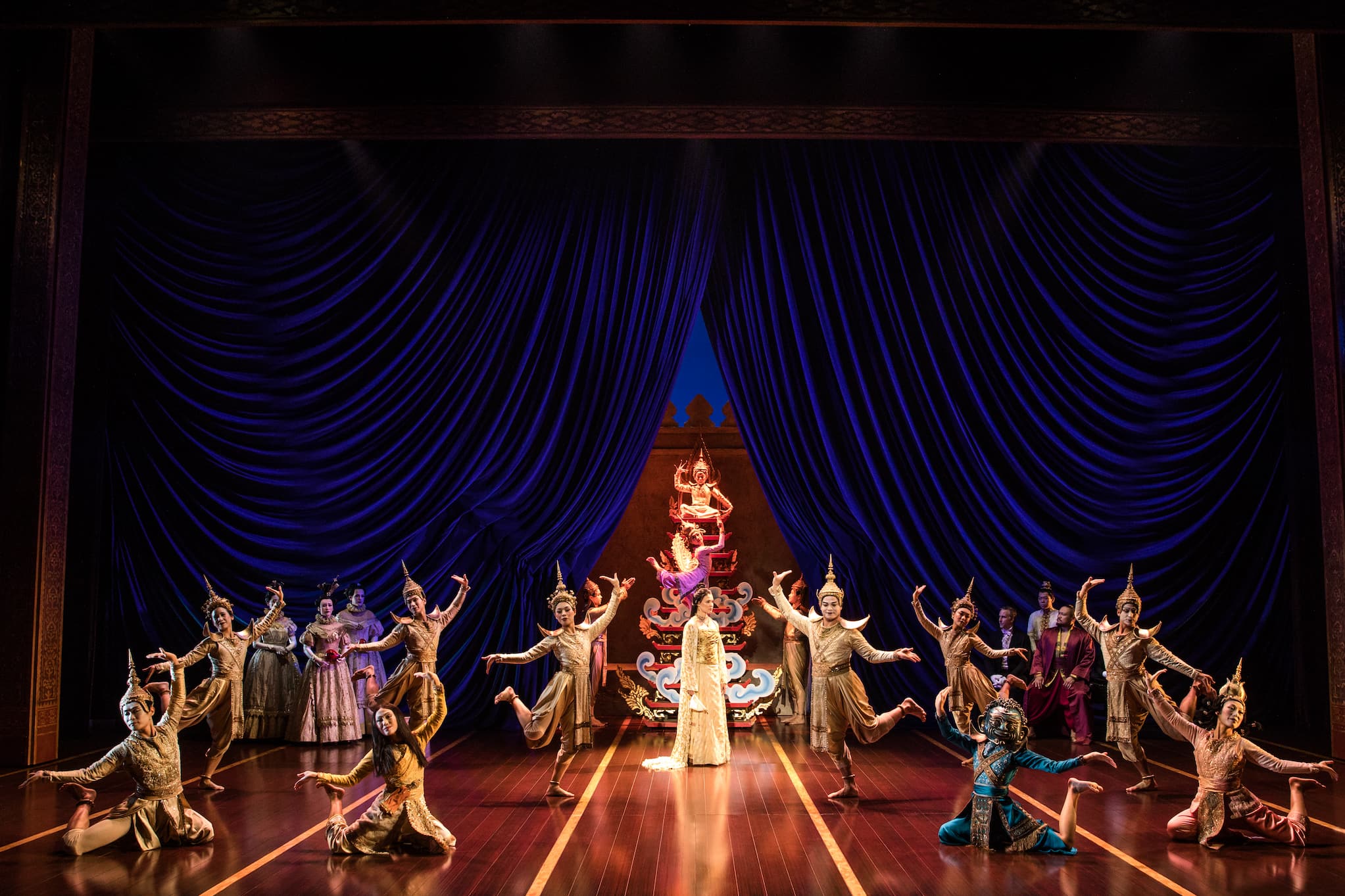
Image 18.05.03c — A 2018 production of The King and I at the Aronoff Center in Cincinnati, Ohio.



For many early Thai Americans, the musical served as the sole representation of Thais and Thai culture in the West. That the portrayal of Thais, or Siamese as they were then known, was scathing and heavily based on Western and Victorian prejudices was hurtful. The musical has been banned in Thailand since 1956, along with Leonowens’s two books, Landon’s novel, and all movies made since, due to their violation of Thailand’s strict lèse-majesté laws that prohibit the defamation, mockery, or criticism of the monarchy. It was to everyone’s surprise, then, that Queen Sirikit accepted the invitation from Yul Brynner, the leading star, to attend one of his performances in New York during her state visit in 1985.
Brynner, a Russian national with Mongolian ancestry on his mother’s side, originated the role in 1951 and starred alongside his wife, Kathy Lee Brynner, an ethnic Chinese Malaysian, in the 1985 production. In various news accounts, Queen Sirikit was seen sharing laughs with the couple. Thai Americans in New York had mixed feelings about the queen being in the audience, but the royal household insisted that the musical was only a musical comedy and that everyone at court knew that King Mongkut would never behave as portrayed in the production. The King and I continues to be regularly performed throughout the world today.
Changes to Thai Portrayals
Portrayal of Thais in the media has improved in recent years, mostly because Thai Americans are more involved in the process. Take the animation Amphibia, for example. The show ran for three seasons between 2019 and 2022 and explores the theme of growth, belonging, and friendship between Thai American Anne Boonchuy and the people and creatures around her. Matthew Benjakarn Braly, who is Thai American, wanted to create a show with a Thai American main character, because he saw so few Thais on television growing up. Brenda Song, who is also an ethnic Hmong Thai American, voiced the main character Anne, and the creator’s mother, On Braly, voiced Anne’s mother on the show.
Anne’s portrayal as a dark-skinned and curly-haired girl was inspired by a childhood photo of Matt’s maternal grandmother. Many Thais in Thailand and in the diaspora criticized Anne’s depiction, arguing that her skin and hair were not representative of Thai physical features. The creator based Anne’s physical appearance on a childhood photo of his grandmother who had dark, tanned skin and big, curly hair. The Thai beauty standards closely align with whiteness. Colorism is a serious problem facing Thai women both in Thailand and in the diaspora today.
Both Matt and Brenda have spoken extensively on the importance of being able to portray their culture and snippets of their lives as Thai Americans on the show. Since then, another animated show, The Ghost and Molly McGee (2021–2014), also features a Thai American lead character, Molly Suksai McGee. In one episode, Molly learned about Thai spirit houses from her grandmother Nin, which led to her offering a dollhouse to Scratch The Ghost to use as a spirit house. Molly is voiced by Sumalee Montano, who is Thai and Filipino.
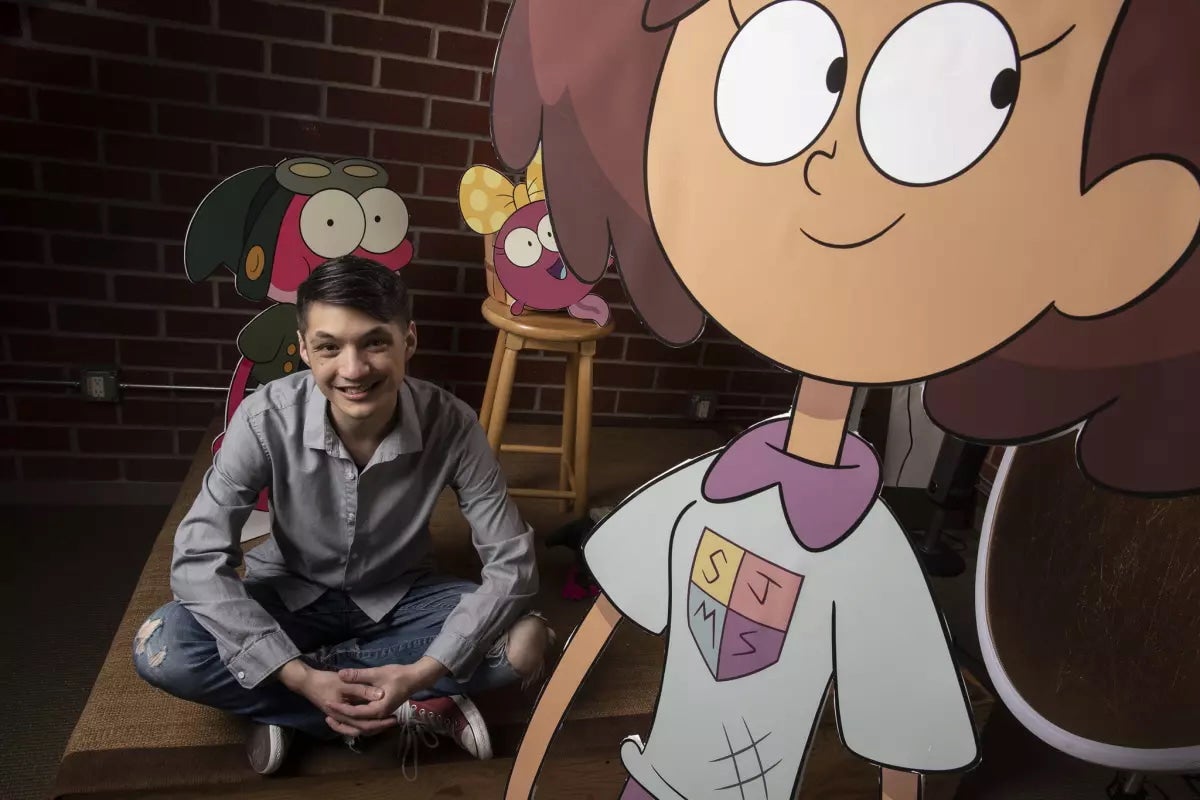
Image 18.05.04 — Anne Boonchuy, shown here with show creator Matthew Benjakorn Braly from Disney’s Amphibia (2019–2022), is the first Thai American lead character in an animated show. Anne’s skin tone and curly hair were inspired by a childhood photo of Braly’s grandmother.
Amphibia is a landmark moment in Thai American history in many ways. Though it is not the first show to have a Thai American showrunner—Marvel’s Agents of S.H.I.E.L.D. has that honor with Maurissa Tancharoen co-helming the show for seven seasons—Amphibia was the first show to have such deliberate depictions of Thai people and Thai culture. Many of the episodes’ main plots center around what it’s like to be Thai in the US, down to the very detail that Anne is a child of Thai immigrants who came to own a Thai restaurant, yet also that a classmate makes fun of her food at school.
Thai Americans in Film
The 2021 Disney movie Raya also depicted some aspects of Thai culture, though Disney’s goal was to represent Southeast Asia as a whole, not a particular group of people or country. As such, the movie showcased cultural elements shared across the geographical region. Many of the characters’ names, such as Noi, Tuk Tuk, Boun, Benja, Tong, Chai, and Virana, are common Thai names, nicknames, and words. The team of story writers for Raya include Vietnamese Americans, and the titular role was voiced by Vietnamese American actor Kelly Marie Tran. The movie’s Head of Story, Fawn Veerasuntorn, dropped out of medical school in Bangkok and came to the US with a student visa to study animation. Fawn co-directed the 2023 film Wish for Disney with Chris Buck.
Thai American Authors
Beyond animations and movies, Thai American authors and playwrights also represent Thai culture on the page and on stage. The year 2020 was a good one for Thai American literature. Both the award-winning children’s fantasy book A Wish in the Dark by Christina Soontornvat, and the Epigram Books Fiction Prize finalist A Good True Thai by Sunisa Manning were published in 2020. A Wish in the Dark retells the story of Les Misérables by Victor Hugo through Thai cultural elements and lore, while A Good True Thai is a fictionalized retelling of how the lives of three university friends were forever changed by the student protests in the 1970s.
Political Representation
Tammy Ladda Duckworth was one of those who entered the US as an American citizen. Tammy Ladda was born in Bangkok in 1968, one year before Bui Porntip, to an American serviceman and a Thai mother. Tammy came to live in the US for the first time at the age of 16 when the Duckworths moved to Honolulu, Hawaiʻi. She eventually followed the footsteps of her father by joining the military, becoming a commissioned officer in the United States Army Reserve in 1992.
She later moved to Illinois and, shortly after, was deployed to Iraq while she was pursuing a doctoral degree in Political Science at Northern Illinois University. In 2004, the helicopter she was piloting was shot down by enemy fire in Iraq and she lost the use of both legs due to injuries. In 2016, Tammy Ladda became the first Thai American and third Asian American woman ever to be elected into the US Senate. She represents the State of Illinois.
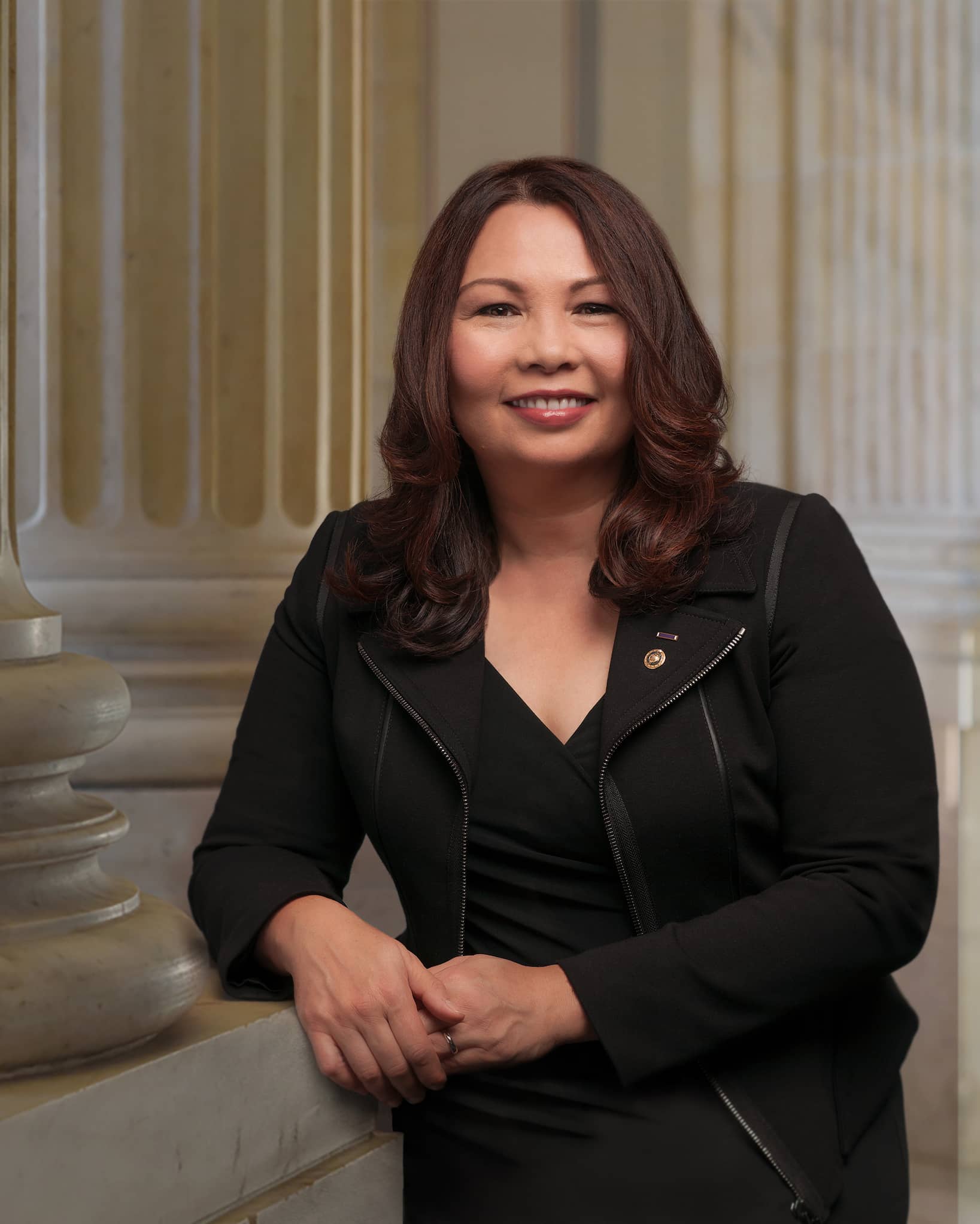
Image 18.05.05 — Tammy Ladda Duckworth became the first Thai American woman elected to the US Senate in 2016, representing the State of Illinois.
Though Tammy Ladda is not the only Thai American politician or public servant in the country, the number of Thais serving in public offices are extremely low when compared to other Asian groups who also arrived in the US after 1965. The State of Minnesota, for example, has had more than 10 Hmong American State Representatives while at least 15 Vietnamese Americans have served in public offices just in California.
Conclusion: Thai American Identity
So, what does it mean to be Thai American today? As Bui Porntip said at the 1988 Miss Universe Competition, “You don’t have to live in Thailand to be a Thai person.”
Thais are entering into the second half of their century in the US, more diverse and more represented than the pioneer generation could have imagined. Thai identity and Thai American identity remain as complex today as it ever has been. But if the new generation of Thai American organizations and artists are any indication, the future of Thai America will be one full of Samakkee and hopefully, one with more Thai American participation and visibility in American society.
It is doubtful that the feeling of alienation will ever not be a part of the Thai American experience. However, with better representation through a senator like Tammy Ladda, a beauty queen and philanthropist like Bui Porntip, or a Thai American girl just trying to find her way, like Anne Boonchuy and Molly Suksai McGee, future Thai Americans can learn to imagine and create a world of belonging for themselves and those in their communities.
Glossary terms in this module
colorism Where it’s used
A form of prejudice based on skin tone.
diaspora Where it’s used
The dispersal, movement, migration, or scattering of a people from their established or ancestral homeland.
human trafficking Where it’s used
The act of transporting a person using threats or coercion with the purpose of exploitation. A key part of trafficking is the lack of control the individual has in being transported and making decisions.
masjid Where it’s used
Also known as “mosque” in English. A place of prayer for Muslims. Thais use the Arabic word “masjid” to refer to what English speakers call a “mosque.”
transnational Where it’s used
Extending or operating across national borders.
wat Where it’s used
“Buddhist temple” in the Thai language.