




Module 1: Overview
Who “belongs” in the United States?
Who is included in America and who is excluded? Who can become an American? In US history, American citizenship—what rights and benefits that citizens receive—has often been defined in opposition to how Asians were categorized: non-citizen aliens who were denied rights and inclusion. Indeed, American policies have excluded Asians by race from immigration, citizenship, and other opportunities to this day.
This chapter examines how the United States has excluded Asians from migrating and becoming American citizens, and limited their access to education, property ownership, marriage partners, and legal protections.
In this module, students will learn how the categories of race and citizenship have barred Asian Americans from holding the same rights and opportunities as whites.
How has the US government excluded certain groups from admittance and naturalization to this country? On what basis?
How have Asian Americans resisted exclusionary laws and policies?
Are Asian Americans fully included today?
The Racialization of Asian as Aliens
The foundations of America’s restrictive immigration policies and enforcement institutions–including contemporary policies to detain and deport non-citizen aliens–started with racist, anti-Asian immigration laws in the nineteenth century. To this day, the divide between legal and illegal immigration status remains wide.
Confined to the status of “aliens,” by the 1882 Chinese Restriction Act, Chinese and later Asian immigrants could not gain citizenship by naturalization for a period of sixty years. Until 1952, racial barriers restricted Asian immigrants from naturalization, making them the last group to gain citizenship rights.
Beyond being barred from migration and citizenship, Asian immigrants and even their descendants were officially racialized as aliens and perpetual foreigners in that they faced exclusion in several other areas. For instance, legislation at times barred them from electoral politics, education, property ownership, and testimony in courts.
Racialization is the process by which people are categorized and into racial groups and ascribed by arbitrary characteristics, such as skin color, hair, or place of origin. The US government grouped disparate peoples from Asia—China, Japan, India—as similar, grouping them as “aliens ineligible to citizenship.” Officially designated in this way, Asians in the US faced legalized discrimination and mistreatment, and could not obtain rights held by white citizens. Asians then also faced mistreatment through other means, such as mob violence or interpersonal harassment, that has furthered their sense of exclusion. These exclusionary policies started with regulations regarding who could become an American citizen.
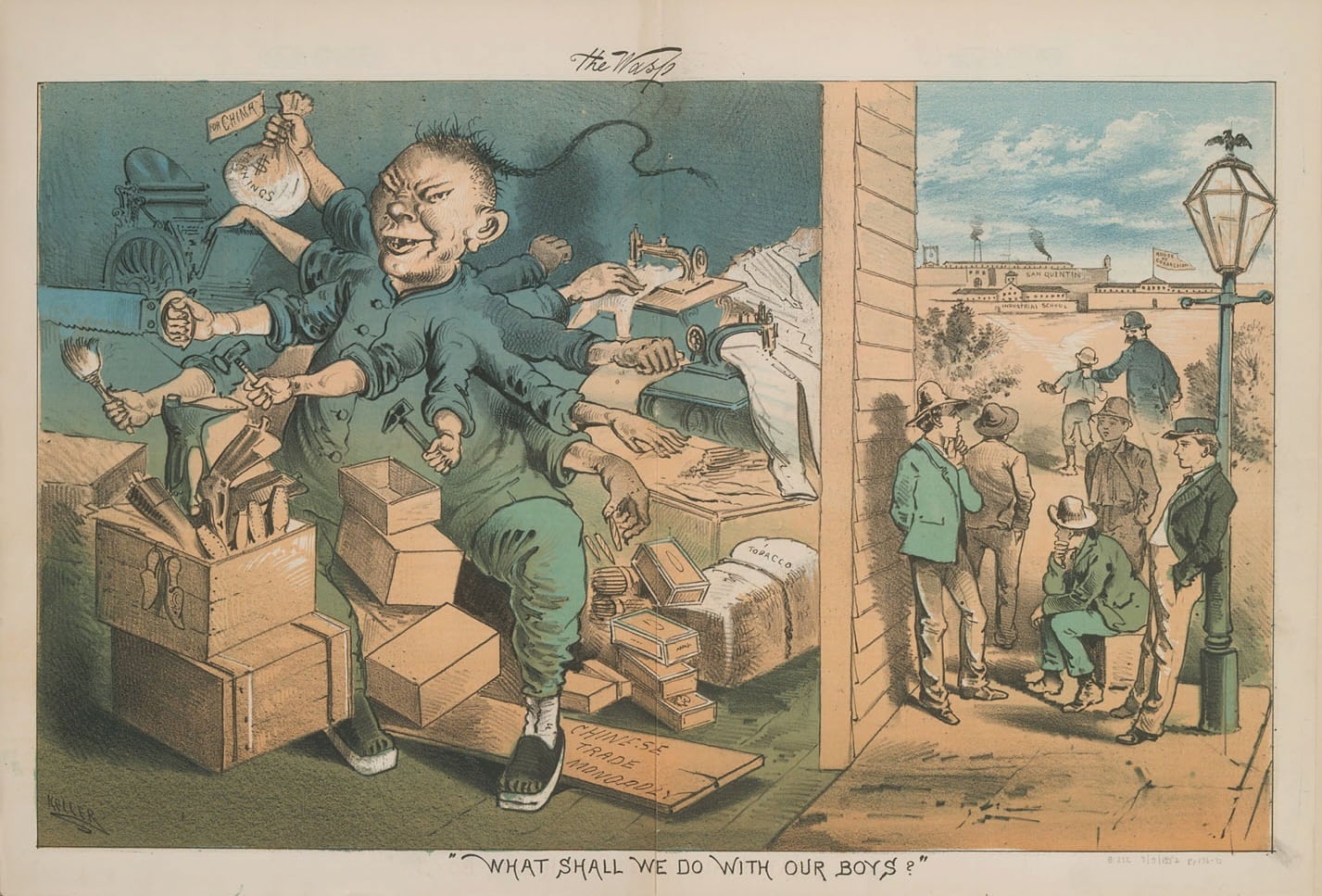
Image 42.01.01a — Political cartoons in the late nineteenth century depicted Chinese migrants as diseased, dangerous, and sinister. This cartoon by George Frederick Keller was created the same year as the passage of the Chinese Exclusion Act, and shows a caricatured Chinese labor as an economic threat.
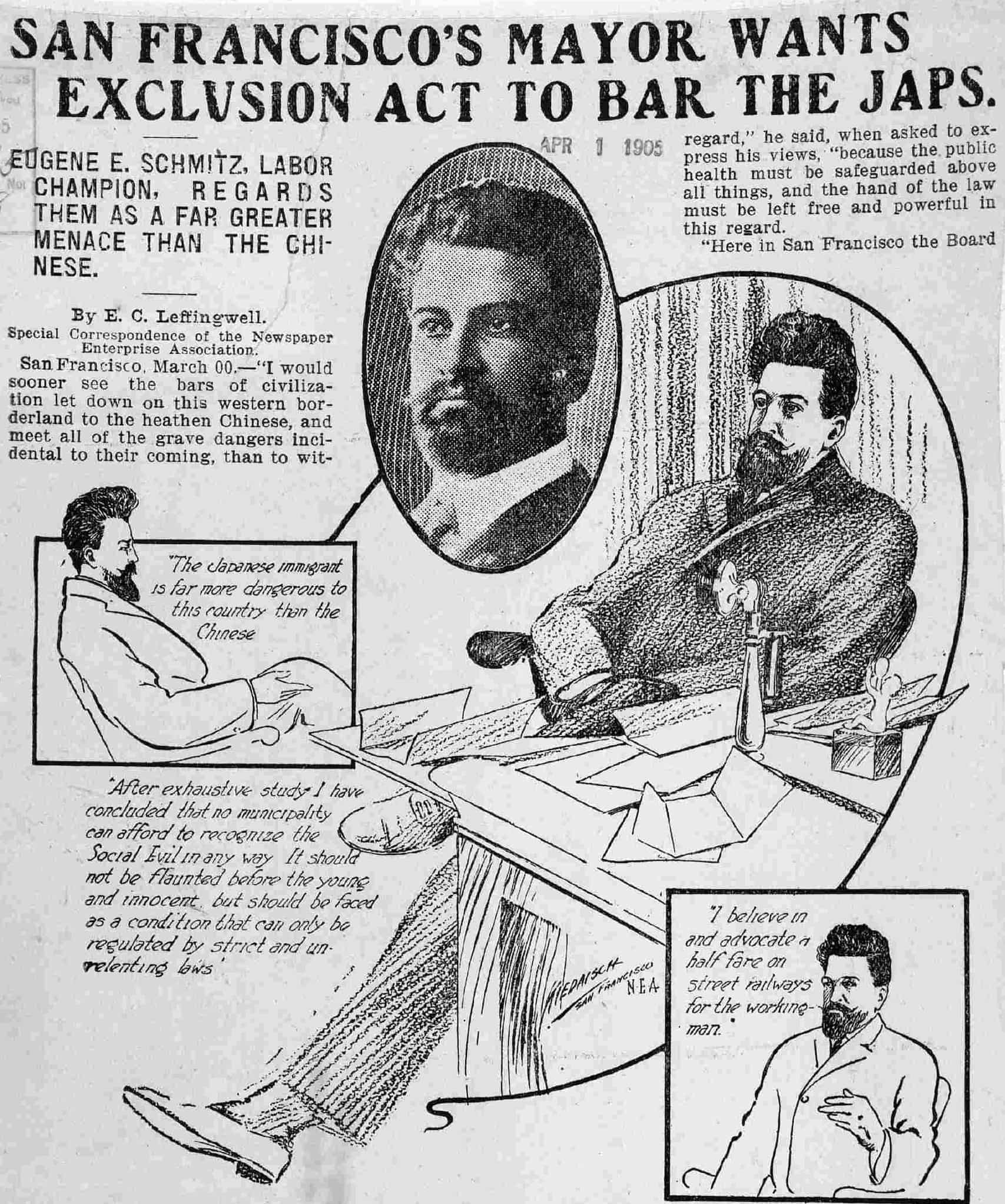
Text 42.01.01b — San Francisco mayor Eugene Schmitz ran on an anti-Japanese campaign. The segregation of Japanese American students in separate schools led to the Gentlemen’s Agreement of 1907.
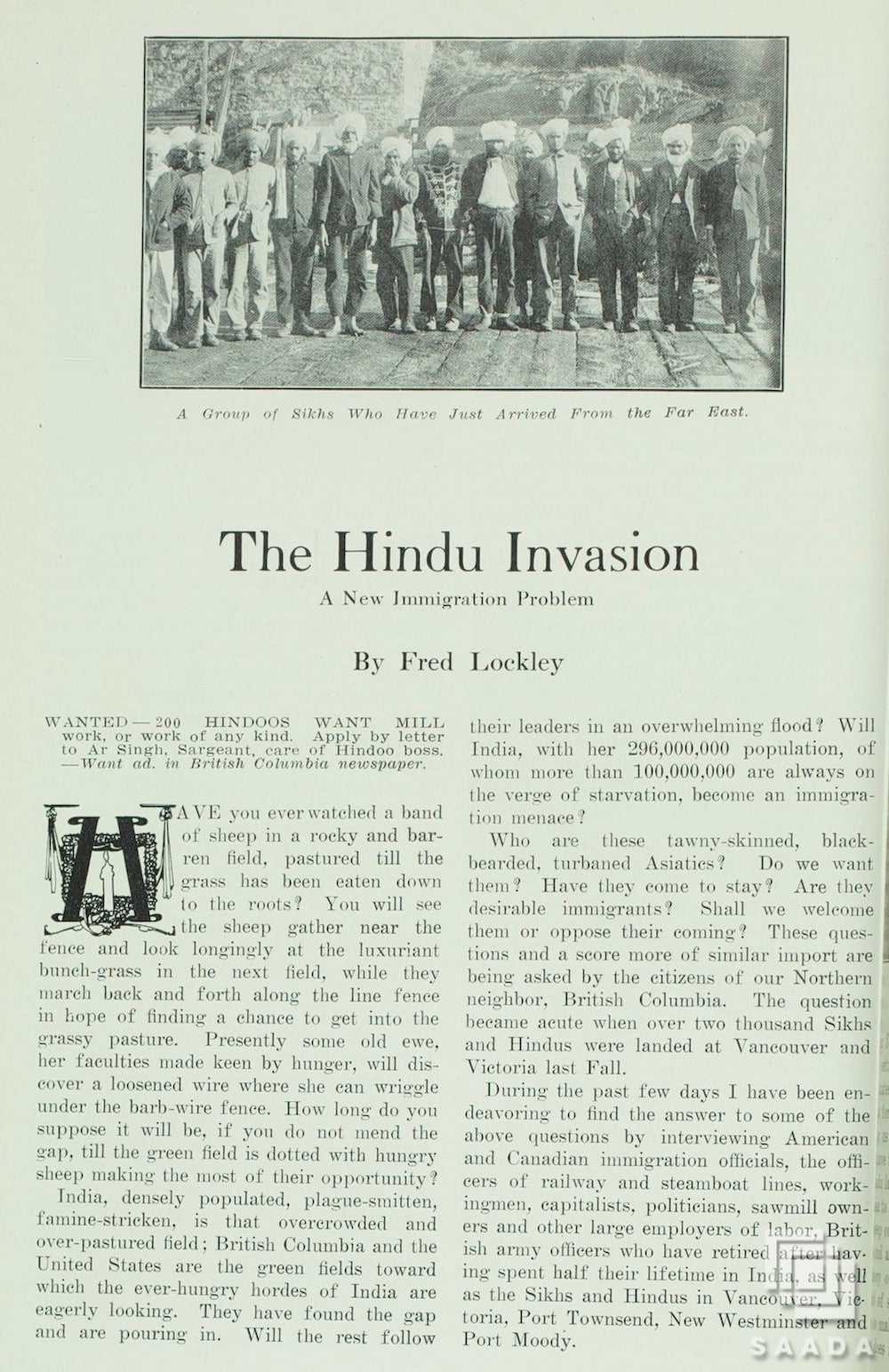
Text 42.01.01c — The anti-immigrant fervor against Chinese, Japanese, and Korean migrants extended to South Asians, who were racialized as “Hindus.” Journalist Fred Lockley makes a case against the entry of “Hindus” in the Pacific Monthly (1907) arguing that they are likely to become a public charge.



Legal Exclusion from Immigration:
Aliens Ineligible to Citizenship
From the start of their migration to the United States, Asians could not become American citizens. With the 1790 Nationality Act, Congress limited eligibility for citizenship to “free white persons.” Despite many legal challenges, Asians could not become citizens because the courts ruled they were not “free white.” Further, Congress then passed laws barring Asian migrants and argued that “aliens ineligible for citizenship” should not be allowed to enter the country.
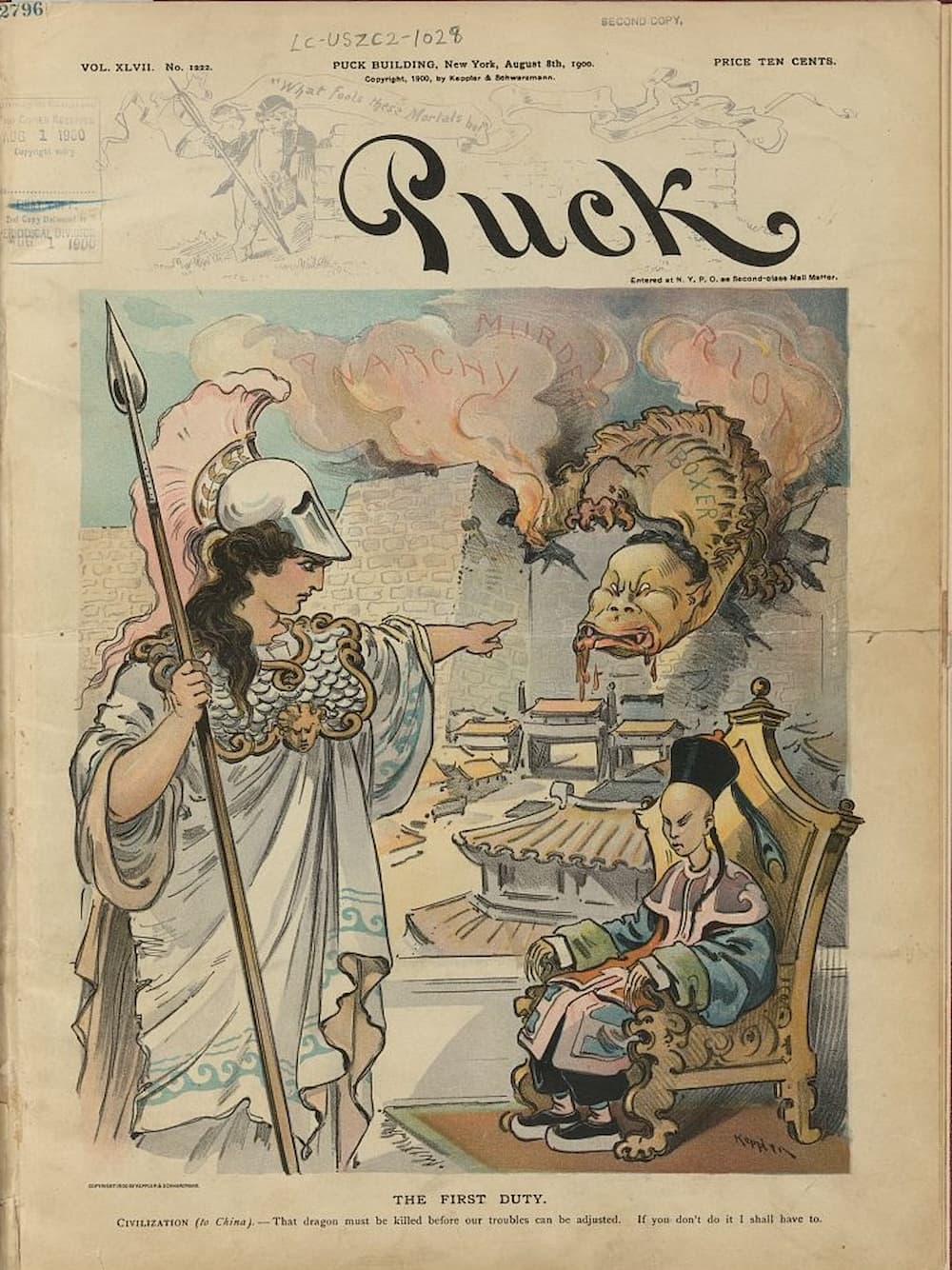
In fact, Asians were the first targets for immigration exclusion from the US. In the nineteenth century, congressional legislators viewed Asians similar to Black people as unfree “coolie” labor, as unfair competitors to white workers, and as the “Yellow Peril”—dangerous to the United States and undeserving of equality.
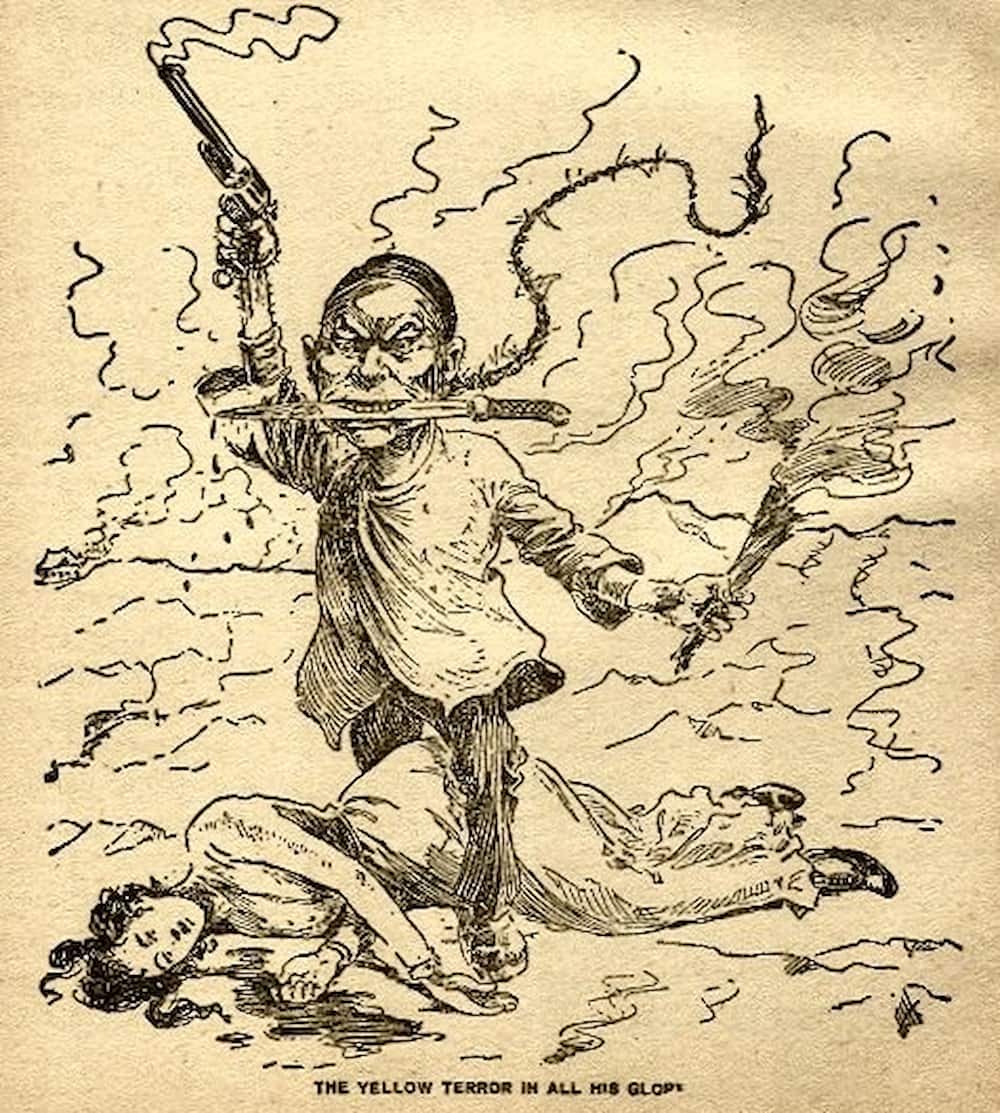
Image 42.01.02 — “The Yellow Terror in All His Glory,” an 1899 cartoon about the Boxer Rebellion in China, helped to inflame Western rhetoric about a “Yellow Peril.”
More to explore
Image
Yellow Peril
The racialized ideology of East Asia and, by extension, East Asian migrants, as a menace to the Western world has its origins in the late nineteenth century as European leaders characterized China and Japan as an existential threat to civilization. The word “Orientalism” describes this hostility of the Western, Christian world to peoples, cultures, and societies to the east of Europe including all of Asia stretching from the eastern Mediterranean to Japan.
Image
“Coolie” Labor
Early in the nineteenth century, the British finally banned the horrific slave trade and many newly independent nations abolished slavery. Demands for exploitable workers continued, however, and Asian indentured workers came to replace enslaved African people on many plantations, mines, and other brutal workplaces.
Almost immediately after Asians began to arrive to work in California, anti-Asian campaigns began. As early as 1852, California passed laws to restrict Chinese entries but these laws were challenged in courts and struck down because immigration regulation fell under federal–not state–authority.
In 1882, Congress enacted the Chinese Restriction Law, commonly known as the Chinese Exclusion Act. In addition to restricting immigration of Chinese laborers, this law identified Chinese by race, and made them “aliens ineligible to citizenship.” This racially-coded phrase framed Asians as perpetual foreigners who could not assimilate, and therefore did not belong to the United States.
More specifically, later arriving influxes of Asians also became subject to this racialization and official exclusion from entry, including:
- Japanese and Koreans through the Gentlemen’s Agreement of 1907
- South Asians and all other residents of the Asiatic Barred Zone through the 1917 Immigration Act
- The Immigration Act of 1924, which decreed all Asians as “aliens ineligible to citizenship.” After 1924, only Filipinos retained migration rights as US nationals residing in American territories. The 1934 Tydings-McDuffie Act offered independence for the Philippines, but imposed an annual immigration quota of fifty.
Taking Citizenship Cases to Court
Despite increasing restrictions on their rights in the United States, Asian immigrants used several strategies to gain access to equality and rights of citizenship. One way was through the US judicial system, often all the way to the Supreme Court, which made landmark decisions regarding civil rights, citizenship, and immigration policies. Wong Kim Ark, Takao Ozawa, and Bhagat Singh Thind are some key examples of how Asian Americans used the judicial system to fight for citizenship rights.
Image
Reconstruction Era
The period after the end of the Civil War is known as Reconstruction. The Reconstruction Era was a period of great social transformation as three constitutional amendments were passed in order to safeguard equal rights and protection for African Americans.
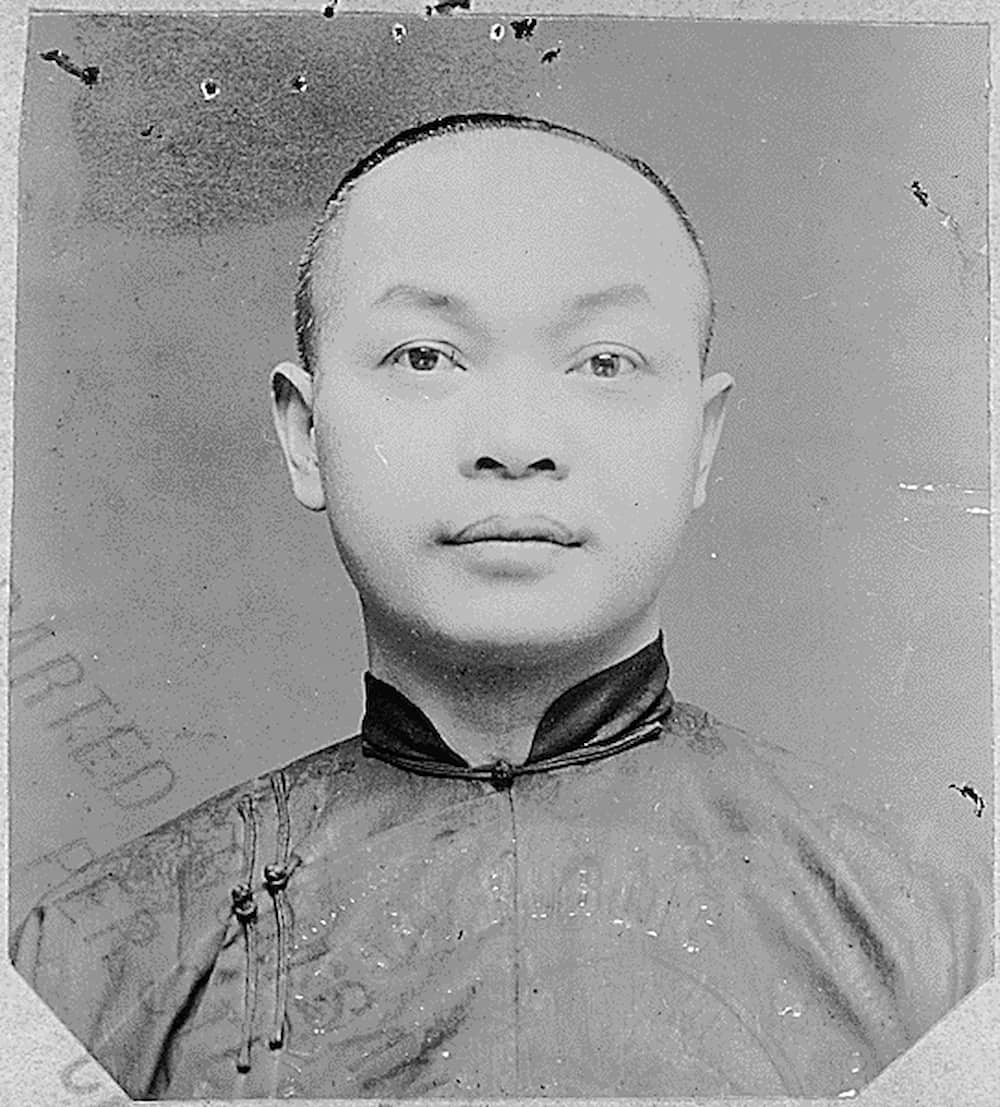
In 1894 Wong Kim Ark visited his family in China, and returned to the US only to be denied re-entry. The Bureau of Immigration claimed Wong was not a US citizen, even though he was born in San Francisco, California, and therefore a natural-born citizen. He filed a lawsuit asserting birthright citizenship and his case went to the Supreme Court. In 1898, the Supreme Court affirmed the Fourteenth Amendment’s birthright citizenship stipulation that “all persons” born in the US, regardless of race or status of parents, held US citizenship.
United States v. Wong Kim Ark set a precedent for those born in the US, but foreign-born Asians remained unable to secure naturalization rights until 1952. The US Supreme Court upheld the racial bar against Asian citizenship in Ozawa v. United States (1922) and United States v. Thind (1923). Takao Ozawa, a Japanese American, asserted he deserved citizenship due to his acculturation of American values, language, and ways. However, the Supreme Court deemed Ozawa to be non-white because he was not Caucasian, and denied naturalization rights. Bhagat Singh Thind, as an Asian Indian, made the argument that he was technically Aryan, or Caucasian. However, the courts ruled he would not pass as white “in the eyes of the common man” because of his physical features. Consequently, Thind and other South Asians were denied naturalization.
Many Asians in the US appealed to the judicial system to challenge the discrimination they experienced as a result of restrictive and exclusionary policies. Besides barriers to citizenship, they faced many other injustices in US society, which they challenged.
Image 42.01.06a — A photo of Wong Kim Ark from a federal investigation case.
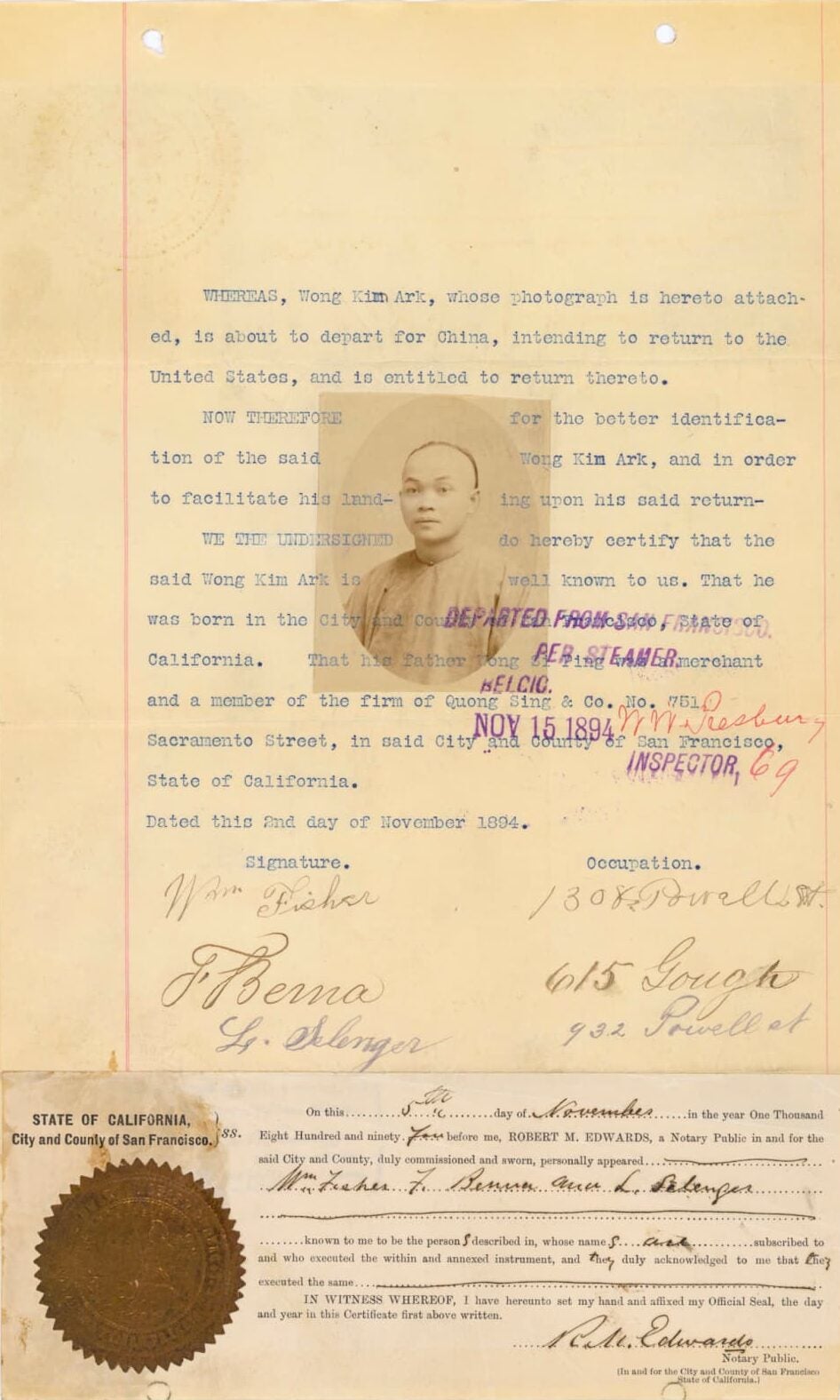
Image 42.01.06b — In 1894, Wong Kim Ark traveled to China to see his family. Despite these notarized re-entry papers, Wong was detained and denied reentry.


Image
Racialization
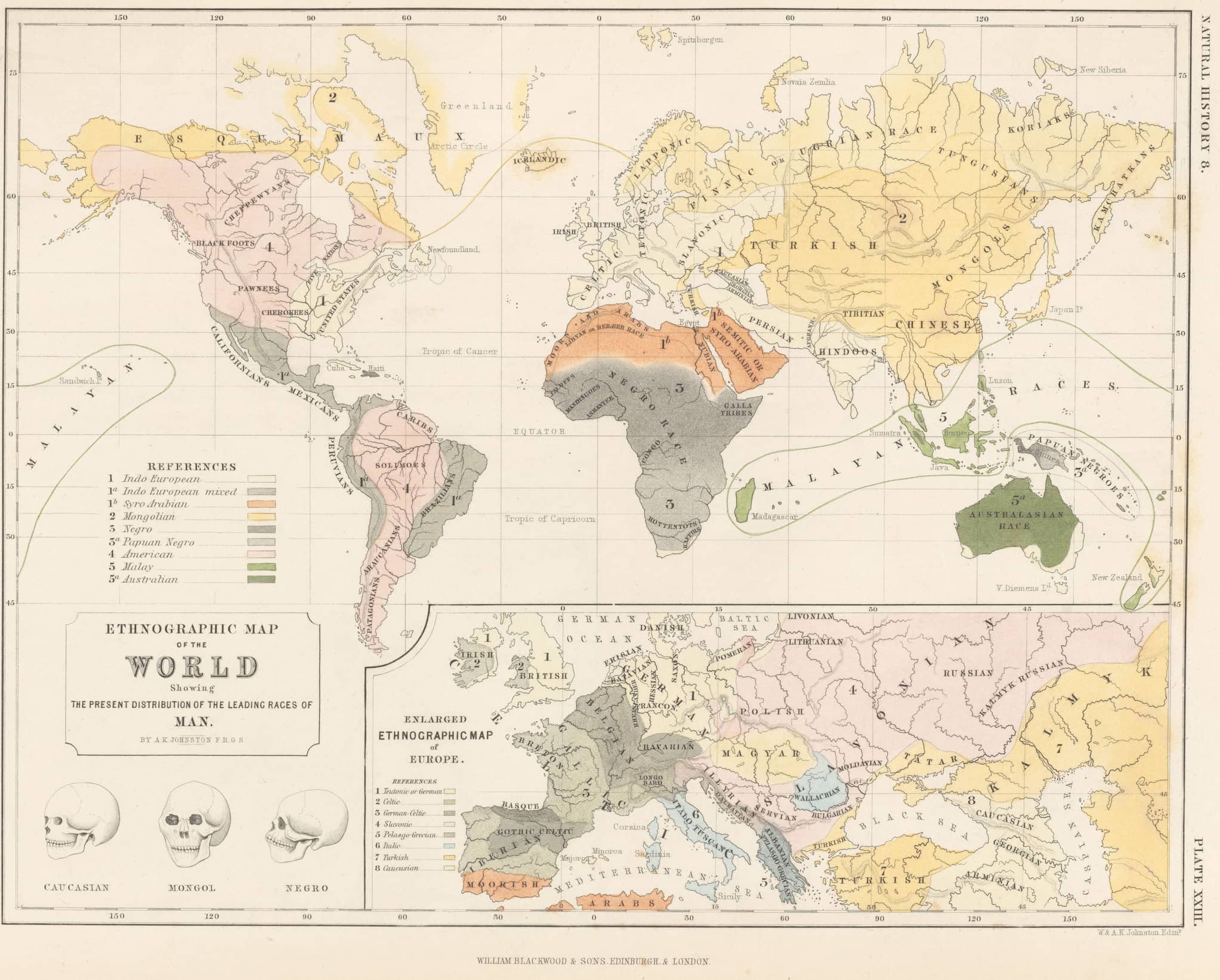
Racialization refers to a social and political process that categorizes and ascribes biological, essentialized attributes onto a group based on appearance, place of origin, and ancestry. Combatting racism requires recognizing that race is an idea and not a fixed, biological category.
Exclusion Through Segregation and Physical Removal
Along with excluding Asians from migration and naturalization, the American government also imposed legal limits on Asians’ lives within the US with laws that mandated physical segregation in schools and neighborhoods, as well as restrictions on property ownership and business operations. This racial discrimination against Asians institutionalized differential and unfair treatment of this group.
Institutionalized racism stoked and sanctioned other forms of hostile racism, such as white mob violence aimed at expelling Asians from local communities. This racial violence—often deadly–targeted their forced removal from cities and towns in the nineteenth century US West. These actions furthered segregation, in which Asians retreated to and remained in ethnic enclaves such as Chinatowns, Japantowns, and Manilatowns for safety.
The incarceration of Japanese Americans during World War II is perhaps the worst example of how the official categorization as “aliens ineligible to citizenship” and the perpetual foreigner stereotype harmed communities. Fueled by widespread racialization of Japanese Americans as “enemy aliens” during World War II, the US government committed a glaring and egregious civil rights violation when it forced Japanese Americans into incarceration camps under the principle of “military necessity.” Even though two-thirds of the 120,000 persons confined to incarceration camps were native-born citizens, the US government denied Japanese Americans’ due process protections and detained them without evidence or investigations.
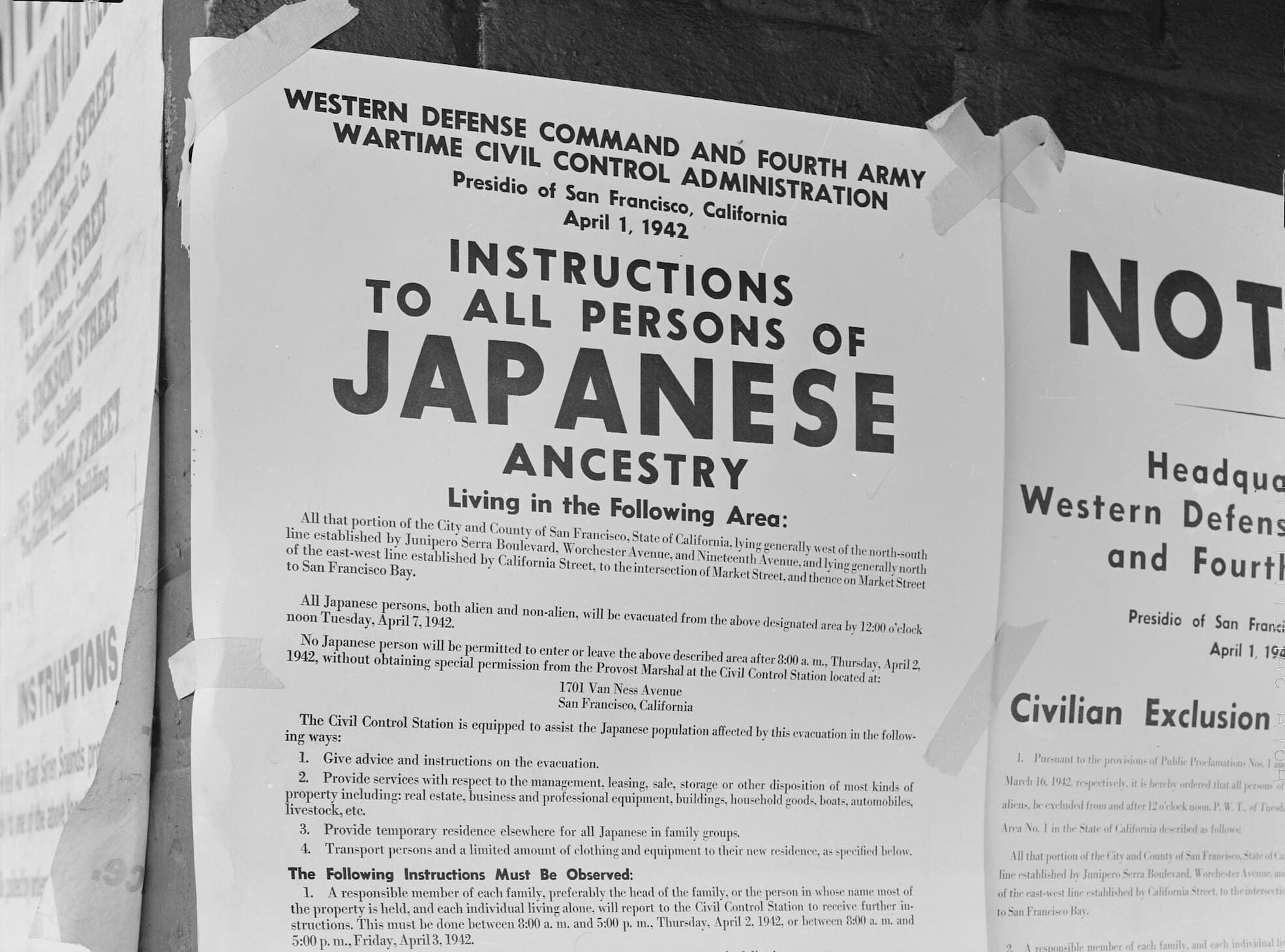
Image 42.01.08 — Posters displayed in San Francisco, California, in 1942 ordered the mandatory “evacuation” of Japanese Americans from the Western United States during World War II.
The 1965 Immigration and Nationality Act
Asian groups fought to end exclusion laws and segregation policies during the civil rights movement, often in solidarity with other racial groups. As a result of their advocacy, Congress passed the Immigration and Nationality Act of 1965 (Hart-Celler Act), which lifted the immigration quota system and allowed Asian applicants to enter legally through family reunification, skilled employment, or refugee status. Since then, the Asian population has grown significantly in size and in ethnic and economic diversity.
Asians disproportionately immigrated as skilled migrants, a selection process that screens for those with high educational and socioeconomic status. Even while they became stereotyped as the “model minority” with high achievement, Asian Americans continue to face other forms of racial exclusion.
For instance, both policies and stereotypes in the US still represent and treat Asian Americans as “perpetual foreigners” and “yellow perils.” In particular, Asians who are non-citizens in the US are subject to high rates of deportation, another form of legal exclusion. About 14 percent of unauthorized immigrants within the US are of Asian origin. Southeast Asians have been especially subject to removal despite possessing legal status in the United States as refugees.
In addition, South Asian, Arab, and Muslim communities have been racialized as dangerous threats to “national security” post-9/11. Discriminatory “anti-terrorism” policies and rhetoric based on these beliefs has led to restrictive immigration laws and deportations of these communities. Mass deportation policies during the second Trump presidential administration is yet another form of exclusion of Asians and immigrant communities.
More recently, discrimination against Asians heightened during COVID-19, when Asians were viewed as “disease-carriers” and told to “Go back to China!” Similar to how institutionalized policies aimed to exclude Asians in the past, political rhetoric and interpersonal discrimination during this period also fostered a xenophobic climate hostile to Asians in the US.
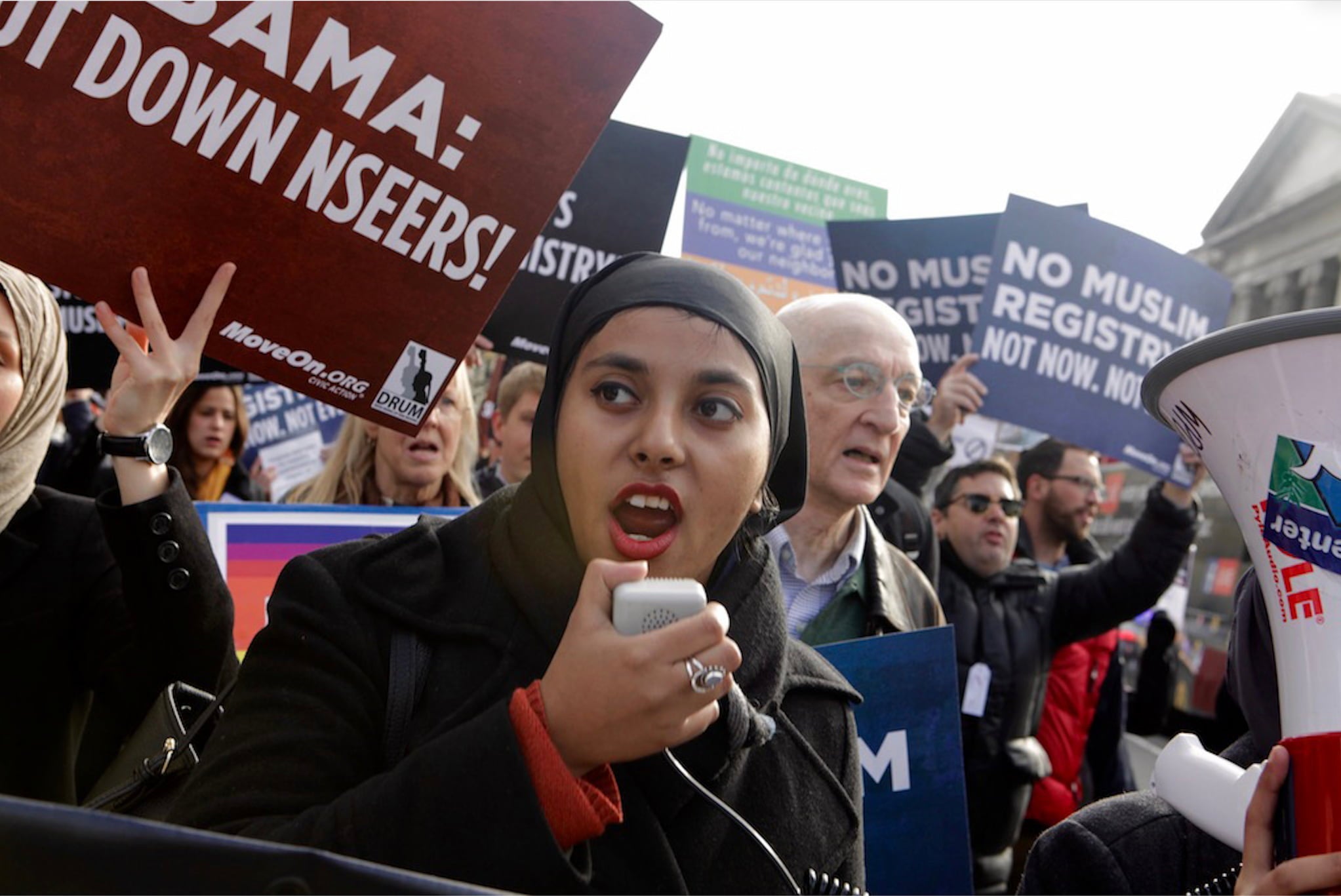
Image 42.01.09 — Activists in Washington, DC, protest the National Security Entry-Exit Registration System (NSEERS), which racially profiled South Asian, Muslim, and Arab American communities.
Conclusion
The legal categorization and racialization of Asians in the US as “aliens ineligible to citizenship” enabled the exclusion of this group in varied ways. The emphasis on race in citizenship and immigration laws subsided after World War II; however, even US-born Asian Americans continue to face stereotyping as foreign-born threats.
Despite their resistance to discriminatory treatment, Asian Americans continue to experience racism, particularly through the persistence of cultural stereotypes as “perpetual foreigners” and “yellow peril” threats. Racialized as outsiders, Asian Americans are subject to high rates of anti-Asian hate and discrimination.
Glossary terms in this module
deportation Where it’s used
Refers to the forced removal of a non-citizen from a country.
Immigration Act of 1924 Where it’s used
Also known as the Johnson-Reed Act, this law barred most Asian persons from immigrating and/or obtaining citizenship.
Immigration and Nationality Act of 1965 Where it’s used
Also known as the Hart-Celler Act, this law ended the openly discriminatory national origins quota system and exclusion-era policies, replacing them with a system of preference for applicants with certain skills, advanced education, and family already in the United States. This law greatly changed American demographics, especially within the Asian American community.
naturalization Where it’s used
The process of becoming a citizen for immigrants.
Osawa v. United States (1922) Where it’s used
This Supreme Court decision determined that even highly acculturated Japanese could not naturalize. While Takao Ozawa argued he possessed white skin and the characteristics of a model citizen, the Supreme Court ruled that Ozawa and other Japanese immigrants were racially ineligible to become naturalized citizens because they were not Caucasian.
United States v. Thind (1923) Where it’s used
This Supreme Court case reversed earlier eugenics labeling of Asian Indians as Caucasian, or Aryan, in ruling that Bhagat Singh Thind would not be considered white by “the common man.” Thind lost his naturalized citizenship and South Asian immigrants consequently became ineligible for naturalization. This case shows how the legal ideas of who is “white” shift in history.
racialization Where it’s used
The social and political process of categorizing and assigning racial characteristics to a group of people.