




Leading headline on the front page of May 19, 1913 San Diego Evening Tribune reads “Alien Land Bill is signed by Gov. Johnson.”
Module 3: Residential Segregation, Alien Land Laws, and Exclusion from Naturalization
Who “belongs” in the United States?
In 1914, Takao Ozawa applied for citizenship after living twenty years in the United States, where he completed his high school and college education in California before moving to Hawaiʻi, marrying, and starting a family. He petitioned for naturalization, a process for immigrants to apply for and to become citizens based on the years they have resided in a country. However the courts denied Ozawa’s application, and he spent the next eight years challenging the court system.
Ozawa wrote his own legal briefs where he often emphasized his “Americanness,” asserting he only spoke English in the household and had zero connection to Japan. “In name, General Benedict Arnold was an American, but at heart he was a traitor,” he reminded the court. “In name, I am not an American, but at heart I am a true American.” 1 Ultimately, he never obtained citizenship.
Racialized as inassimilable foreigners, Asian immigrants in fact had no legal pathway to citizenship until the mid-twentieth century. Systemic discrimination through municipal, state, and national laws affected the everyday lives of Asian communities. Mob attacks and other forms of violence further sought to drive out Asians from local communities and from work sites. Asian groups therefore deployed several strategies to survive, including taking cases to court and circumventing restrictive policies through other tactics.
This module explores how government authorities employed the legal category of “aliens ineligible to citizenship” to discriminate against Asian Americans. It focuses on late nineteenth and early twentieth century restrictions on immigration and land ownership that targeted Asian groups, who continually faced residential segregation, barriers to land ownership, and prohibitions from naturalizing and accessing rights to housing and property.
How did Asian Americans resist discriminatory housing laws?
What were the effects of alien land laws amongst Asian Americans? How did Asian Americans curtail these laws?
How do Ozawa v. United States and United States v. Thind inform past understandings of race, and who was eligible for citizenship?
Residential Segregation and Mob Violence
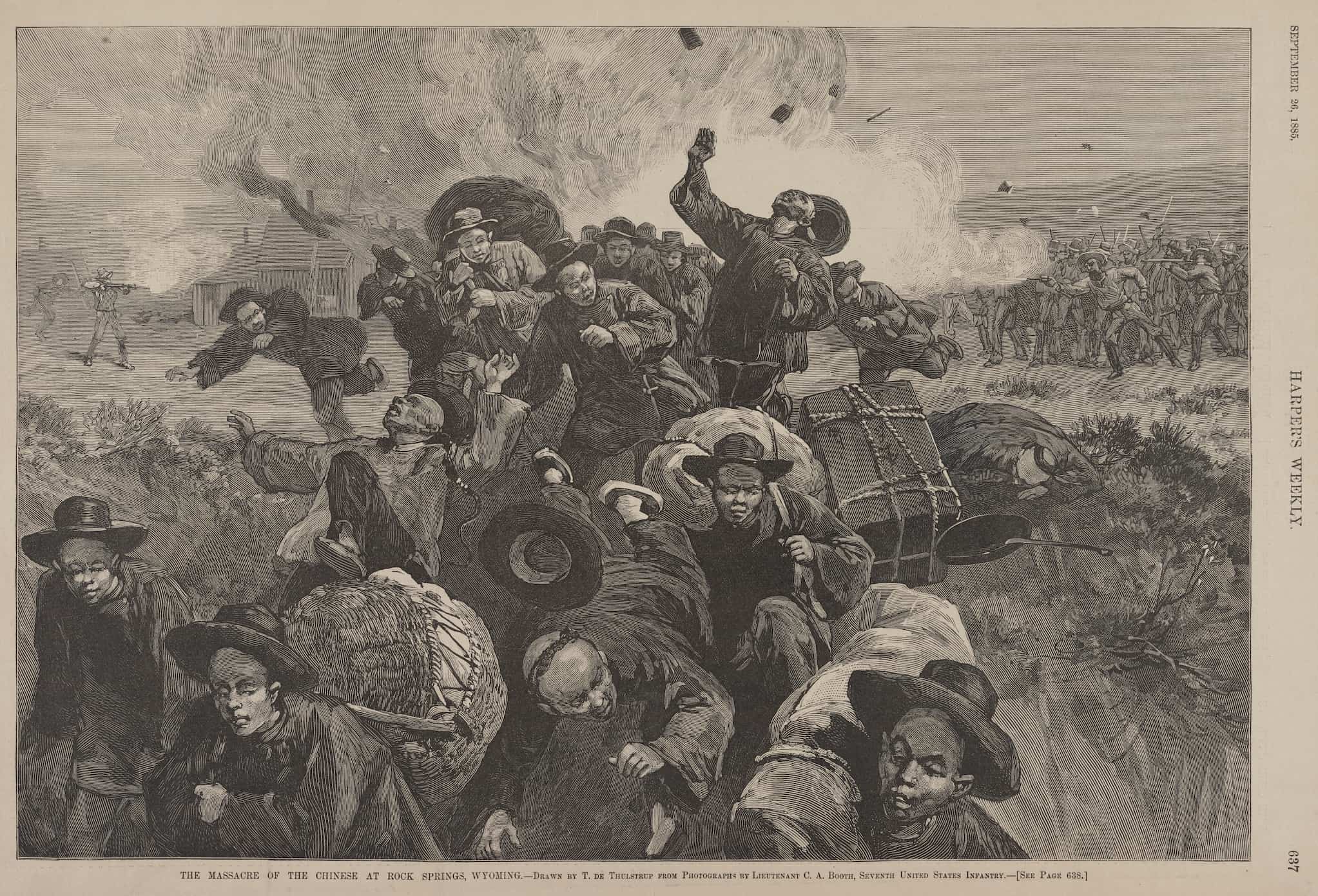
Image 42.03.01 — Anti-Chinese violence increased in the late 1800s. In 1885 in Rock Springs, Wyoming, armed white miners attacked and expelled Chinese immigrant miners working for the Union Pacific Coal Company, blaming the Chinese for taking their jobs.
Along with the federal exclusion of Asians from entering the nation, local and state authorities and white mobs aimed to expel them from their local vicinities. These policies and practices of forced removal succeeded in segregating Asians mostly into urban enclaves by the early twentieth century.
For example, local governments developed health and city planning policies to keep Asians out of specific neighborhoods. These policies racialized Asians as unhygienic and carriers of disease. San Francisco passed the Cubic Air Ordinance in 1870 to limit the numbers of people in boarding houses. This law specifically targeted housing in the Chinatown neighborhood, and Chinese people who did not comply were fined and arrested. In 1890, the city passed an ordinance that barred Chinese people from living and working in San Francisco, except in segregated neighborhoods.
With these laws sanctioning Asian exclusion, mobs employed violence in attempts to expel Asians, particularly in the American West. White mobs forcibly displaced over two hundred Chinese settlements in the nineteenth century. One particular instance was the Rock Springs Massacre of 1885 in Wyoming, in which a mob killed and expelled hundreds of Chinese people in the area. In other states such as Idaho, whose population was one-third Chinese in 1870 and almost zero by 1910, the population of Asians significantly decreased as they moved to different regions to escape racially motivated violence. Similarly, in November 1927, the Ku Klux Klan drove out hundreds of Filipinos from Yakima Valley, Washington, by destroying homes, setting fires, and threatening to lynch Filipinos.
The Development of Ethnic Enclaves
Private groups and neighborhood organizations also enacted racial restrictions to exclude Asians from renting or purchasing homes. Property deeds regularly included language known as a racially restrictive covenant to prohibit “Japanese or Chinese, or any other Malay or Asiatic race” from owning or renting, which enabled owners to rent or sell only to white people. 2 As a result, Asian groups retreated to ethnic enclaves—some of which still exist today. For example, Seattle’s Chinatown-International District developed as a result of exclusion laws and riots in the late nineteenth century, as Chinese and Japanese residents were denied housing elsewhere. These neighborhoods were born out of segregation and became a way for Asian groups to build community and keep each other safe.
In addition to building ethnic enclaves, Asian communities resisted housing discrimination through the courts. In the 1870s and 1880s, San Francisco’s Chinese residents sued the city for its discriminatory housing ordinances. The court agreed with the residents, citing the equal protections clause of the Fourteenth Amendment. The first court case challenging a restrictive covenant was filed by a Chinese business owner who wanted to lease a site in San Diego, California. He won, even though the covenant in a deed required that the grantee should never rent the property “to a Chinaman.” In other cases, Asian people obtained the support of neighbors to enable them to reside in their community. Nevertheless, Asians overall remained residentially segregated both by neighborhood hostility and practices such as housing covenants.
Alien Land Laws
While local authorities and mobs sought to drive out Asians, state governments used categories, such as “aliens ineligible to citizenship,” to restrict Asian immigrant groups from owning or leasing land and property. The “alien land laws” did not explicitly identify Asians by race, but in practice they limited the ability of Asian immigrants to own land or properties for residence or agriculture through their inability to become naturalized citizens.
Oregon was the first to enact an alien land law in 1859, declaring that no “Chinaman” could own property in the state. When the Naturalization Act of 1870 extended eligibility for the naturalization process to African Americans, California similarly allowed property ownership for aliens of “the white race or of African descent,” but continued to exclude Asians.
State laws, especially targeting Japanese people, further restricted Asians from owning independent farms. Heightened racism amongst California politicians led to the introduction of seventeen anti-Japanese bills in 1909. The Asiatic Exclusion League and the Anti-Jap Laundry League successfully lobbied the state to pass the California Alien Land Law of 1913, barring “aliens” from owning land or leasing property for more than three years. In a speech, Attorney General Ulysses S. Webb revealed he co-authored the bill to “limit [Japanese] presence by curtailing their privileges.” He hoped the bill would deter immigration, stating that, “they will not come in larger numbers and long abide with us if they may not acquire land.” 3
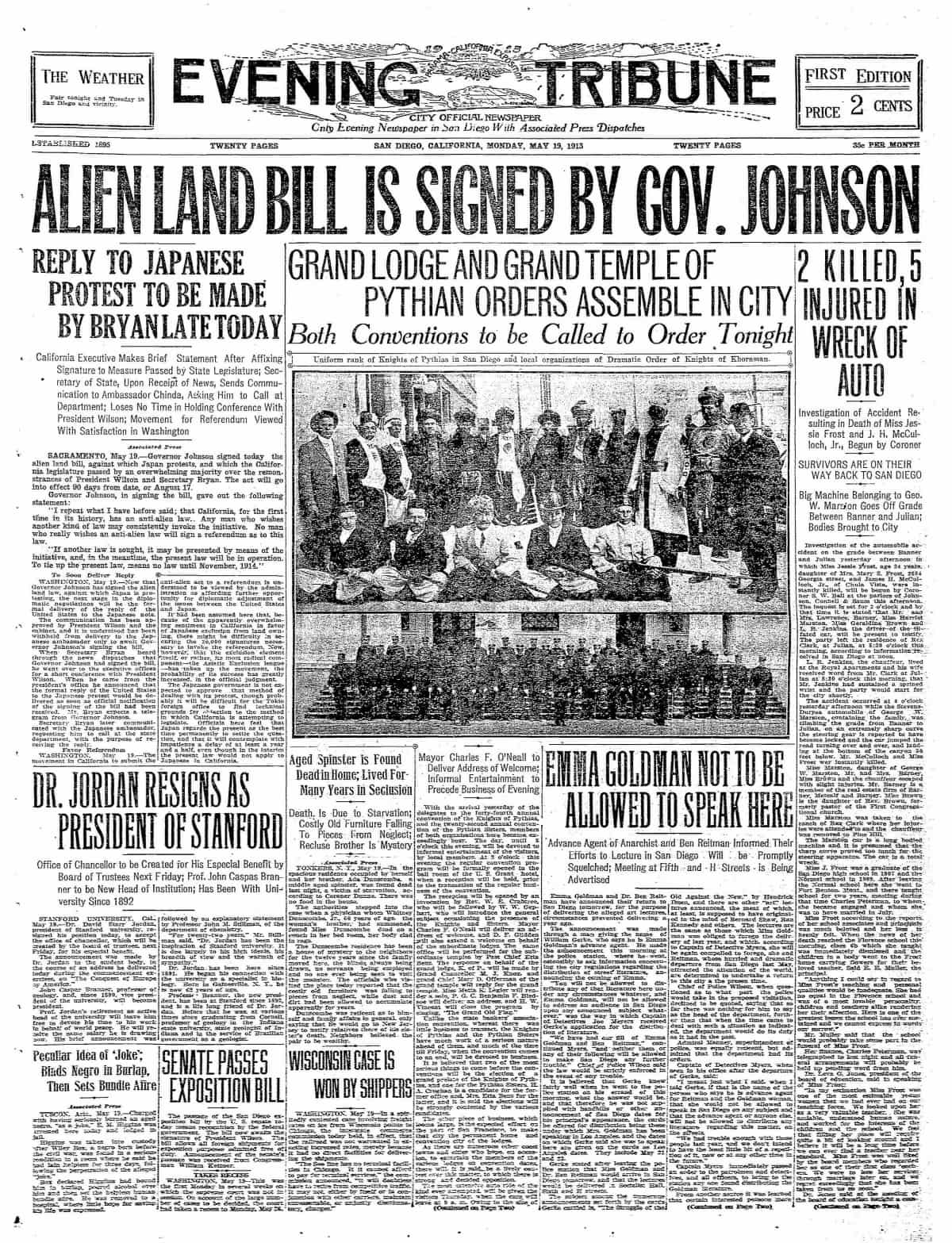
Text 42.03.02 — Several states including California passed alien land laws prohibiting non-citizens from owning farmland. This headline from a San Diego newspaper announces the passage of a 1913 law in California that specifically targeted Asian migrants. The law was renewed in 1920 and not invalidated until 1952 by the California Supreme Court.
As described in previous modules, Asians in the US met every restriction with multiple forms of resistance. Some Japanese farmers in California circumvented alien land laws by leasing or purchasing property under the names of their US-born children. In 1915 Jukichi Harada, a Japanese immigrant, purchased a home under his children’s name in Riverside, California. White neighbors harassed the family and brought a case against the Haradas to court. The county’s superior court ruled in favor of the Haradas, citing that because the children were American citizens, they were entitled to equal protection under the law.
Angered by this ruling, xenophobic politicians and groups like the Native Sons of the Golden West and the California Oriental Exclusion League organized to tighten restrictions. As a result, California passed the Alien Land Law of 1920, barring property lease to “aliens ineligible to citizenship” and limited property ownership to US-born adults.
By 1920, eleven states, including California, had enforced alien land laws, and the Supreme Court upheld this systemic discrimination as constitutional. Consequently, Japanese farming declined, and many in the community, unable to own or lease agricultural land, left the United States.
Ozawa v. United States
Many Asian immigrants attempted to prove their eligibility for citizenship, particularly through the naturalization process. When their applications were denied, some took their cases to court. The story of Takao Ozawa, mentioned at the beginning of this module, is one significant example.
Before the twentieth century, naturalization procedures had been inconsistently ruled by courts across the US. Some Asian immigrants had successfully become naturalized citizens under this decentralized process before the US government created the Federal Naturalization Service in 1906 (later becoming the Bureau of Naturalization), and set stricter requirements through the 1920s.
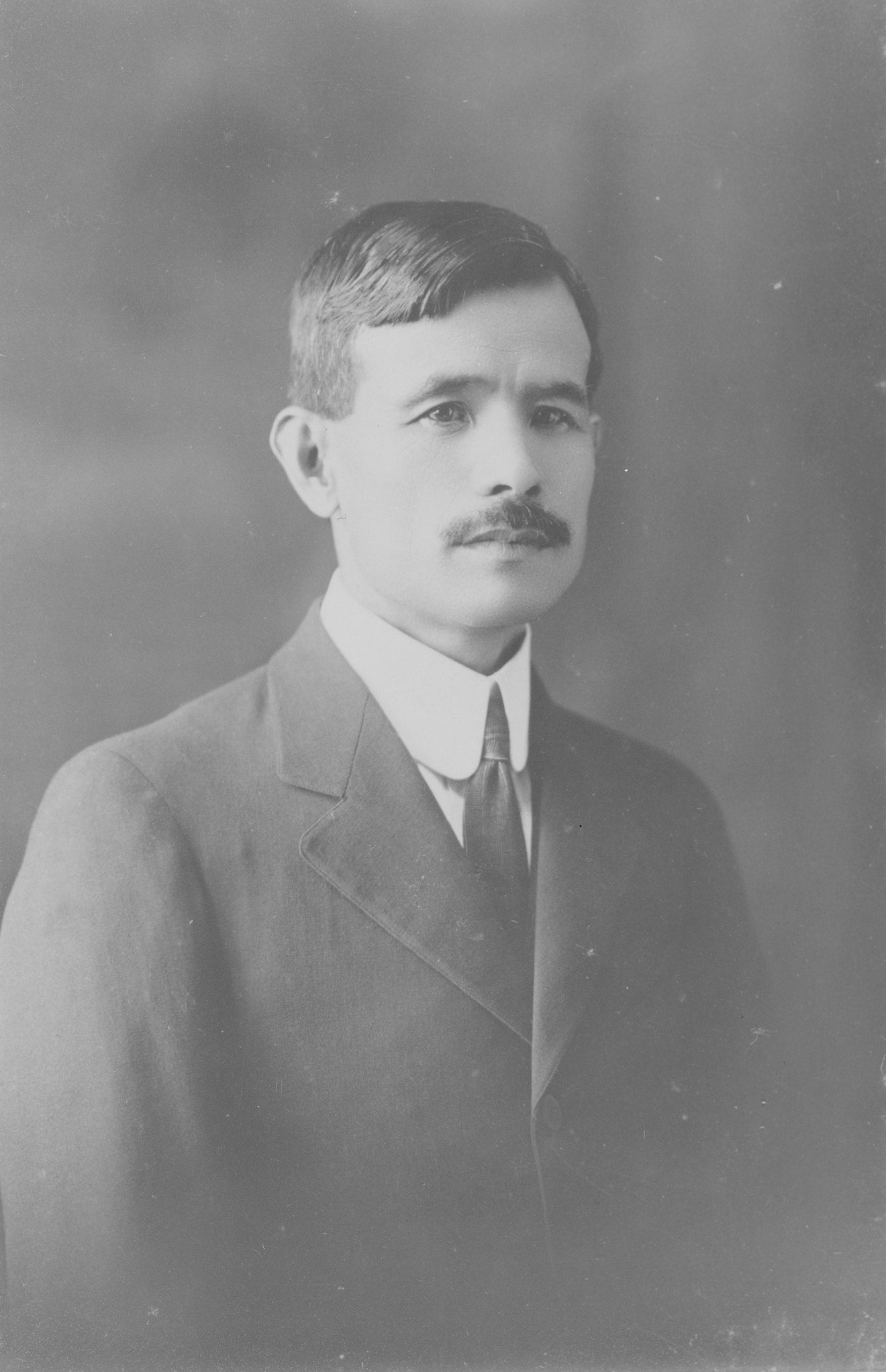
Image 42.03.03 — Portrait of Takao Ozawa, a Japanese immigrant who argued that his education, employment, and way of life proved his assimilation and right to naturalized citizenship. In 1922, the Supreme Court denied him citizenship because he was not white.
In Ozawa v. United States, Takao Ozawa argued his case to naturalize by emphasizing his acculturation to American society. Unfortunately, in 1922 the Supreme Court upheld previous rulings that Ozawa could not become a citizen. It admitted that Ozawa was well-qualified to become a citizen “by education and character,” but still denied him citizenship because he was not white. One justice, George Sutherland, stated that “white person” meant a person “of what is popularly known as the Caucasian race.” 4 This ruling denied citizenship and its associated rights to Japanese immigrants, and contributed to anti-Japanese sentiment in the US leading up to the Immigration Act of 1924.
The United States v. Thind
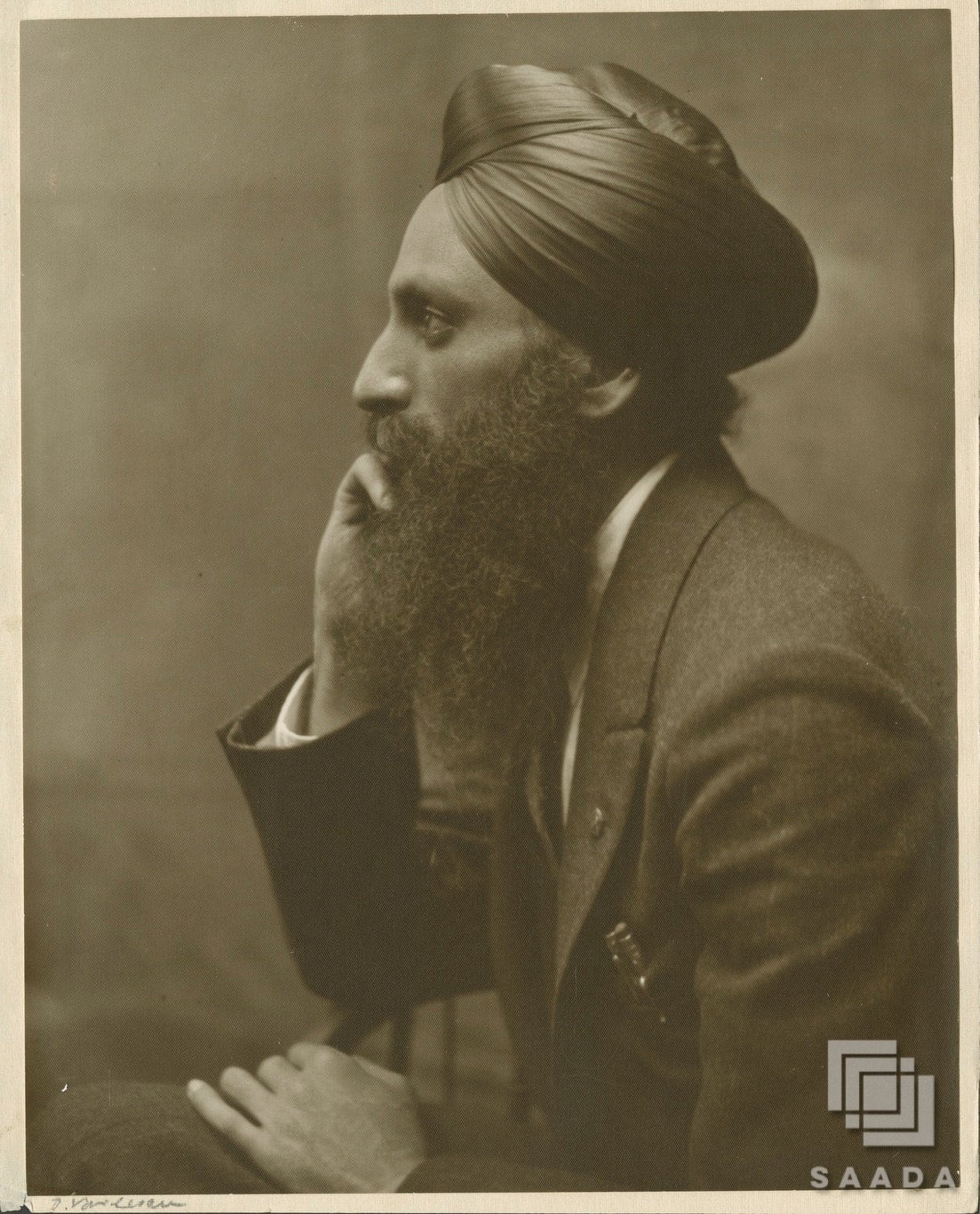
Image 42.03.04a — Born in India in 1892, Bhagat Singh Thind immigrated to the United States in 1913. This undated photograph of Thind is from his early years in the US.
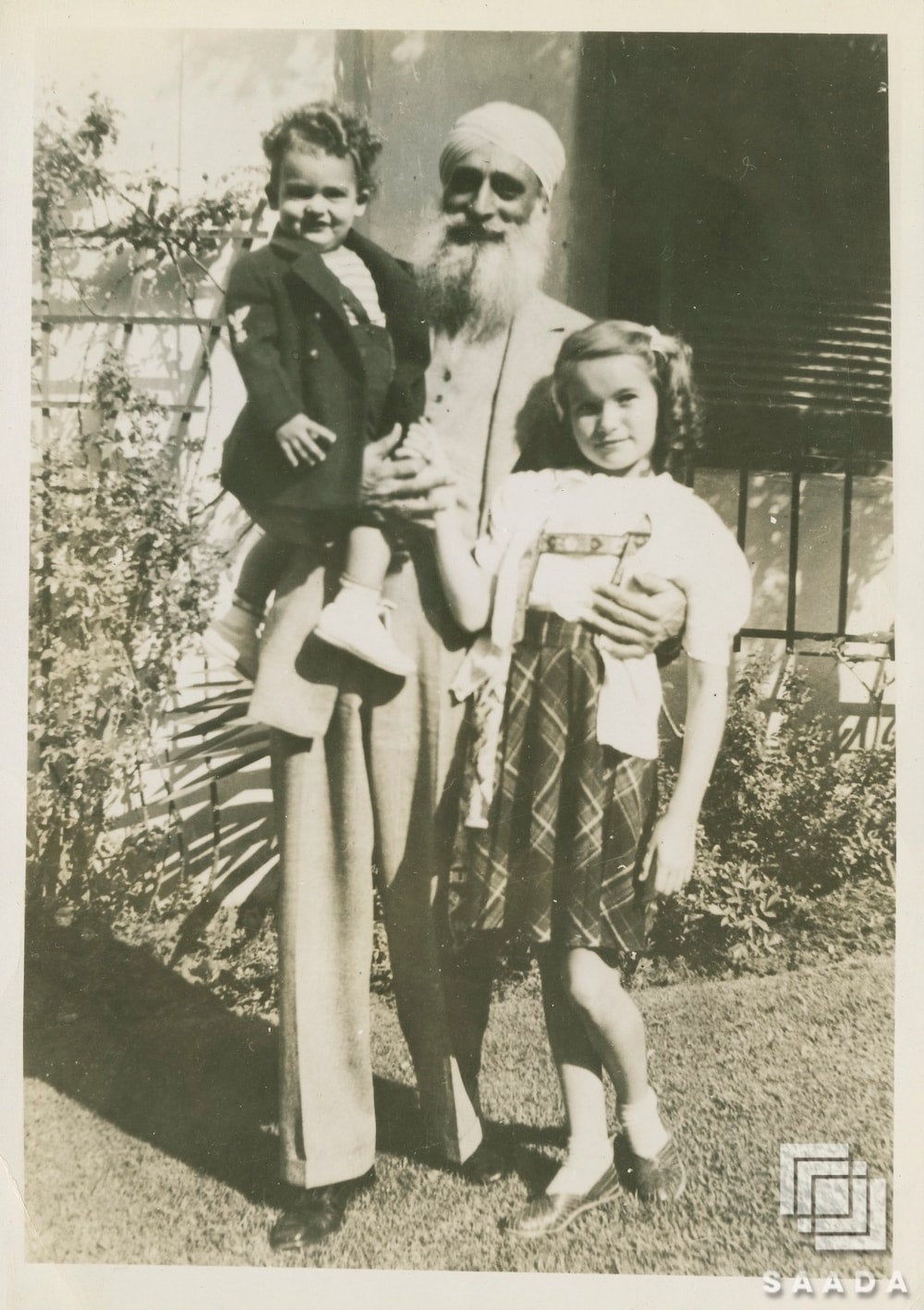
Image 42.03.04b — In 1940 Thind married his wife Vivian and had two children, David and Rosalind.
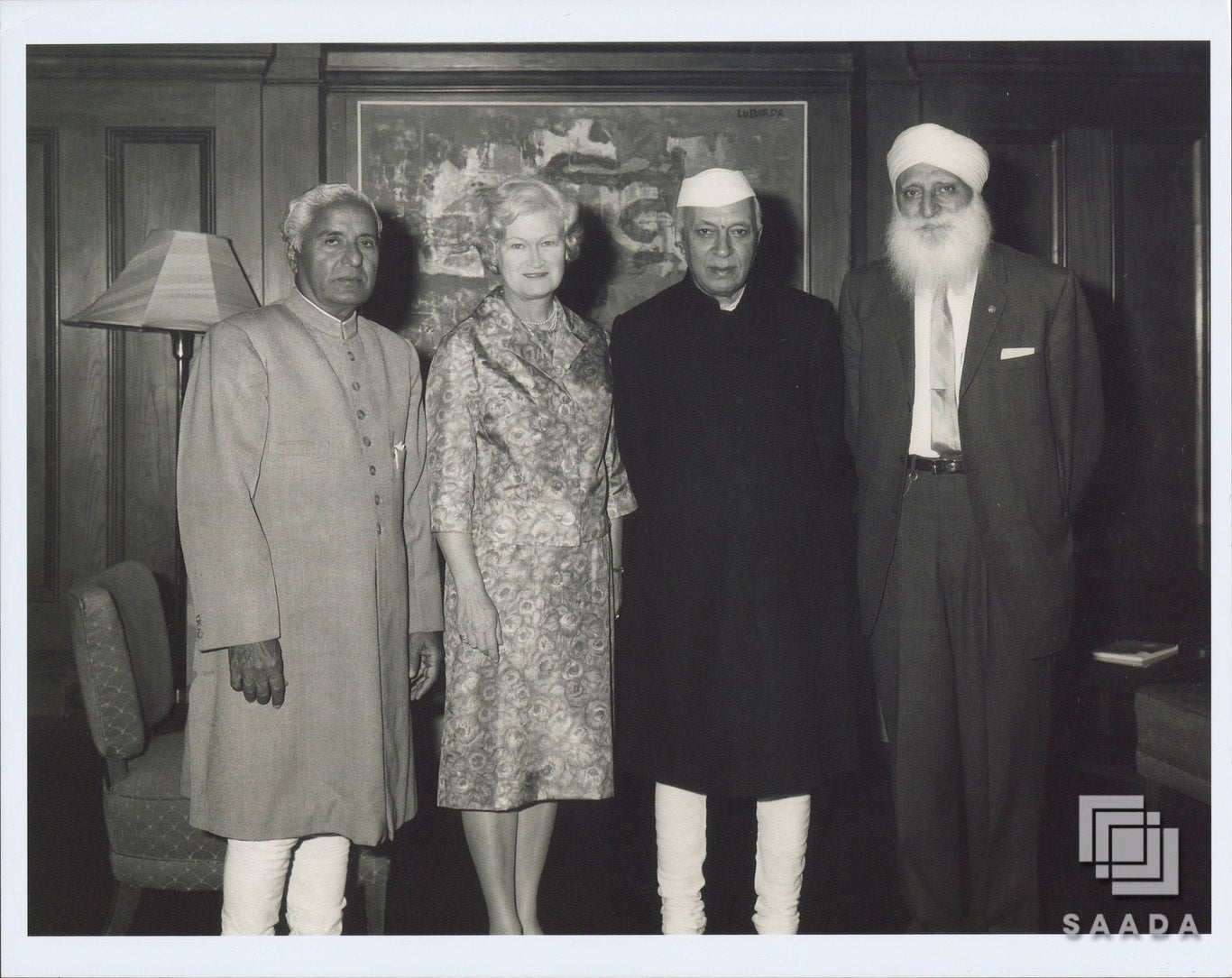
Image 42.03.04c — Thind visited an independent India in 1963 for the first time since he left in 1912. Here he poses with Prime Minister Jawaharlal Nehru, his wife Vivian, and an unknown figure.
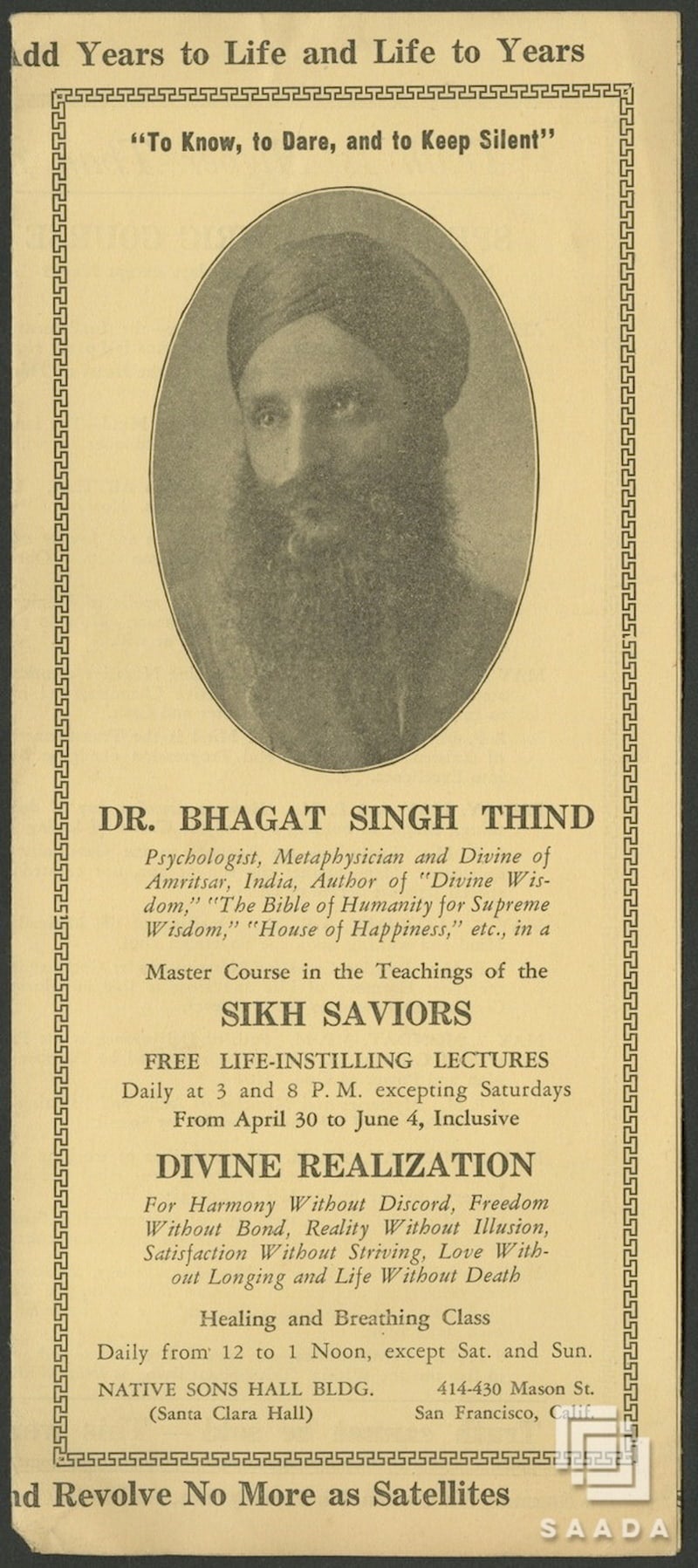
Image 42.03.04d — Thind earned his PhD in theology and English Literature from the University of California, Berkeley, and gave lectures in metaphysics, religion, and spirituality across the United States.




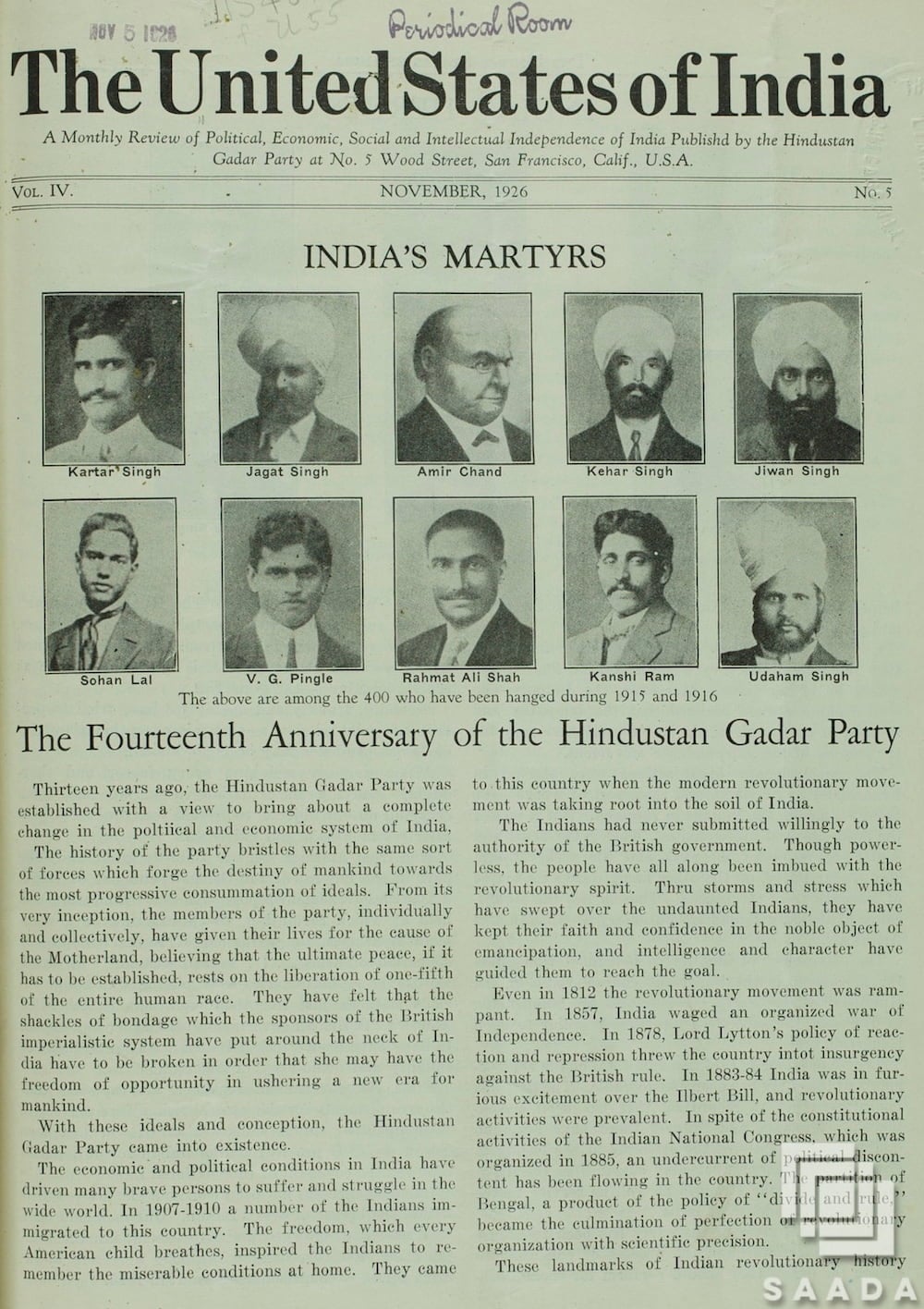
Another key judicial case involved Bhagat Singh Thind, a Sikh man from the Punjab region of India. He immigrated to the United States in 1913 to attend graduate school, and stayed in the US while working at lumber mills in Oregon. Fighting for labor rights and against colonialism, he joined the Ghadar Party, a group that supported India’s independence and the overthrow of British colonial rule. Western countries considered the Ghadar Party a threat, however, and members including Thind were under surveillance by both British and US intelligence agencies.
When the United States entered World War I, Thind enlisted in the US army and trained in Tacoma, Washington. He applied for citizenship and the state of Washington granted it in 1918, but after just four days, the Bureau of Naturalization rescinded his naturalization. It reasoned that the Naturalization Act of 1790 only granted citizenship to “free white person(s),” and that Thind was not white.
Thind reapplied in Oregon, this time arguing that because he was from India, he was of the “Caucasian race,” and therefore, white. While the judge agreed with Thind, the Bureau of Naturalization appealed the decision, taking their case against him to the Supreme Court.
The Supreme Court issued its ruling in 1923. They ceded that Thind was technically Caucasian, but the justices still denied his access to citizenship. Their decision was based on the belief that certain immigrant groups were inferior and unable to assimilate into US society. They stated:
The children of English, French, German, Italian, Scandinavian, and other European parentage, quickly merge into the mass of our population and lose the distinctive hallmarks of European origin. On the other hand, it cannot be allowed that the children born of Hindu parents would retain indefinitely the clear evidence of their ancestry. 5
Even though assimilation was not a legal requirement for naturalization, this ruling excluded Asians on these grounds and revealed shifting ideas of who could be officially “white”—and what “white” really signified. Racial stereotypes and scientific racism that classified and ranked races certainly informed many of these ideas.
The United States v. Thind decision had direct consequences for South Asian immigrants. Now deemed “aliens ineligible to citizenship,” South Asians also became subject to alien land laws, which further restricted their rights in the United States. The Bureau of Naturalization rescinded the citizenship of Indian immigrants who had already completed the naturalization process, and states like California banned them from owning and leasing property.
More to explore
Text
The Ghadar Party
The Hindustan Ghadar Party was founded in Astoria, Oregon, in 1913. It later established its headquarters in San Francisco, California, with members in the United States and Canada. Their newspaper, Hindustan Ghadar, circulated from Hong Kong to Panama, and other places of the South Asian diaspora.
Conclusion
Overall, these cases further racialized Asians in the United States as “aliens ineligible to citizenship.” The ensuing Immigration Act of 1924 placed quotas on immigrants, completely barring ineligible groups from even entering the US. Those already living in the country faced legalized discrimination through policies that prohibited their naturalization, right to vote, and integration into mainstream society. In the next module, we will learn about additional laws that affected how Asian communities traveled, worked, built families, and lived in the United States.
Glossary terms in this module
Immigration Act of 1924 Where it’s used
Also known as the Johnson-Reed Act, this law barred most Asian persons from immigrating and/or obtaining citizenship.
naturalization Where it’s used
The process of becoming a citizen for immigrants.
Ozawa v. United States (1922) Where it’s used
This Supreme Court decision determined that even highly acculturated Japanese could not naturalize because they were not seen as racially white.
United States v. Thind (1923) Where it’s used
This Supreme Court case reversed earlier eugenics labeling of Asian Indians as Caucasian, or Aryan, in ruling that Bhagat Singh Thind would not be considered white by “the common man.” Thind lost his naturalized citizenship and South Asian immigrants consequently became ineligible for naturalization. This case shows how the legal ideas of who is “white” shift in history.
Endnotes
1 Takao Ozawa, “Naturalization of a Japanese Subject in the United States of America; a brief in re Ozawa case now pending the decision in the Supreme Court of U. S. A.,” Hawaiian Collection Books and Articles, University of Hawai‘i at Mānoa Library, October 1922.
2 “Commonly encountered restrictions,” Racial Restrictive Covenants Project, Civil Rights and Labor History Consortium, University of Washington, 2022, https://depts.washington.edu/covenants/restrictions_king.shtml.