



Search the Media Repository
Discover the curated images, videos, and primary sources featured throughout Foundations and Futures
History is more than just text on a page; it is the photographs, voices, and artifacts of the people who lived it. The images and recordings featured across Foundations and Futures are part of a meticulously curated media repository. Whether you are building a lesson plan or investigating an artifact, you can use this database to trace the provenance of our media: discover who created an asset, the historical context behind it, and how it can be used to bring Asian American and Pacific Islander experiences into your classroom.
Multimedia
Chapters
-
Image
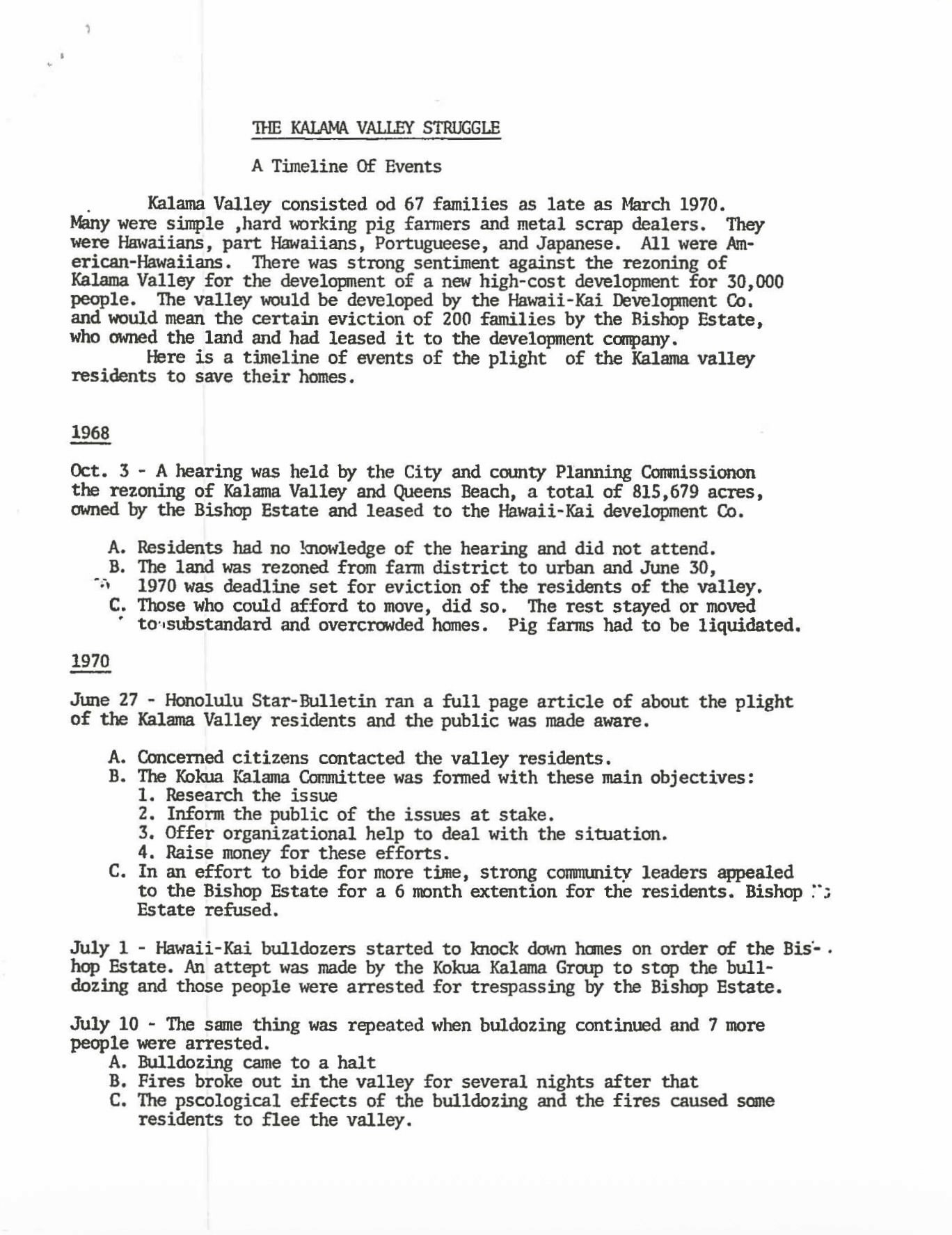
Chronological summary of Kalama Valley struggle, p1
Chronological summary of Kalama Valley struggle of pig farmers against eviction by the Bishop Estate in the early 1970s, which was the first of several such community-based campaigns during that decade.
-
Video
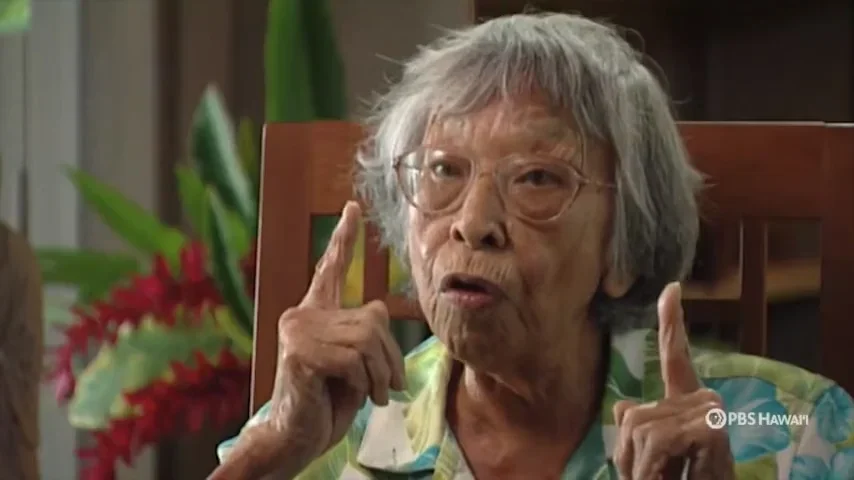
Labor activist Ah Quon Leong McElrath PBS Hawai‘i clip
In this video from PBS Hawai‘i, labor activist Ah Quon Leong McElrath explains the urgency for organizers to advocate for a more equitable economic system for working-class people in Hawai‘i. This belief fueled her distinguished career as a relentless social advocate.
-
Image
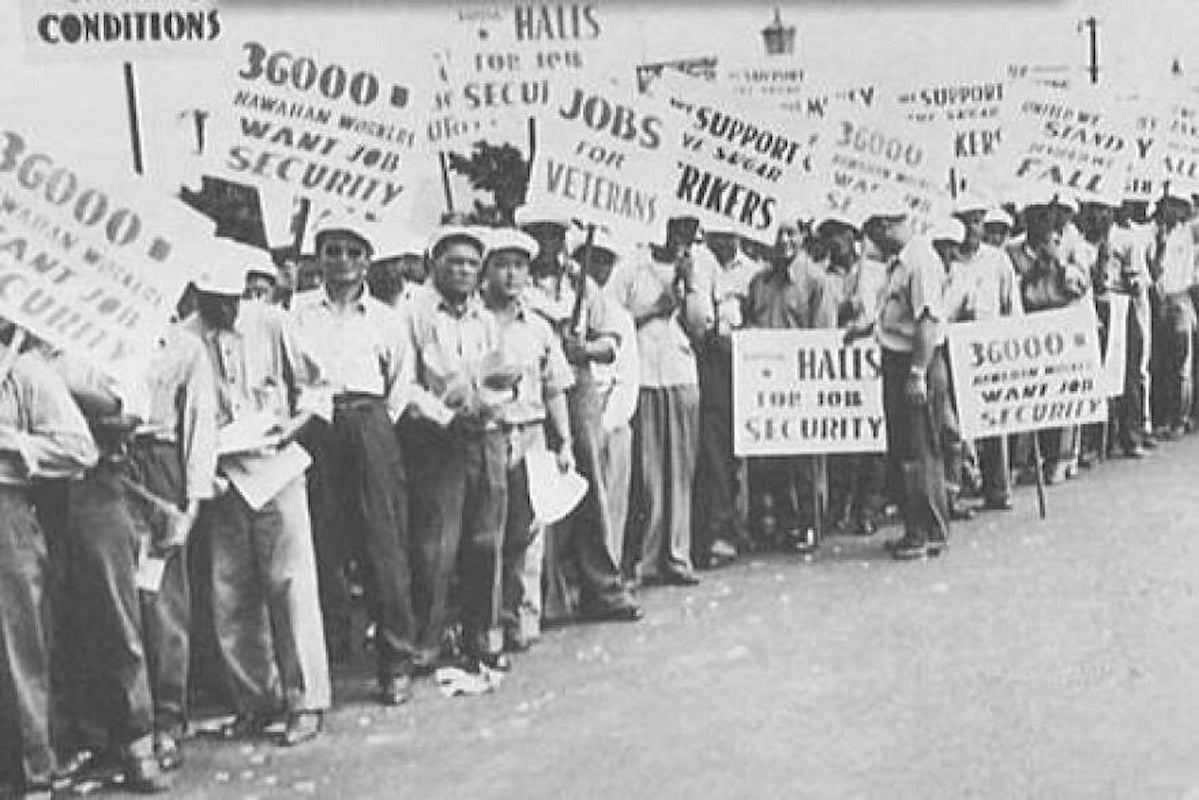
1946 International Longshore and Warehouse Union (ILWU) Strike
Picketing plantation workers who were among the twenty-four thousand participating in the historic 1946 strike led by the International Longshore and Warehouse Union (ILWU), the first multiracial and territory-wide strike, that shut down the plantations for seventy-nine days until the union won a substantial pay increase.
-
Image
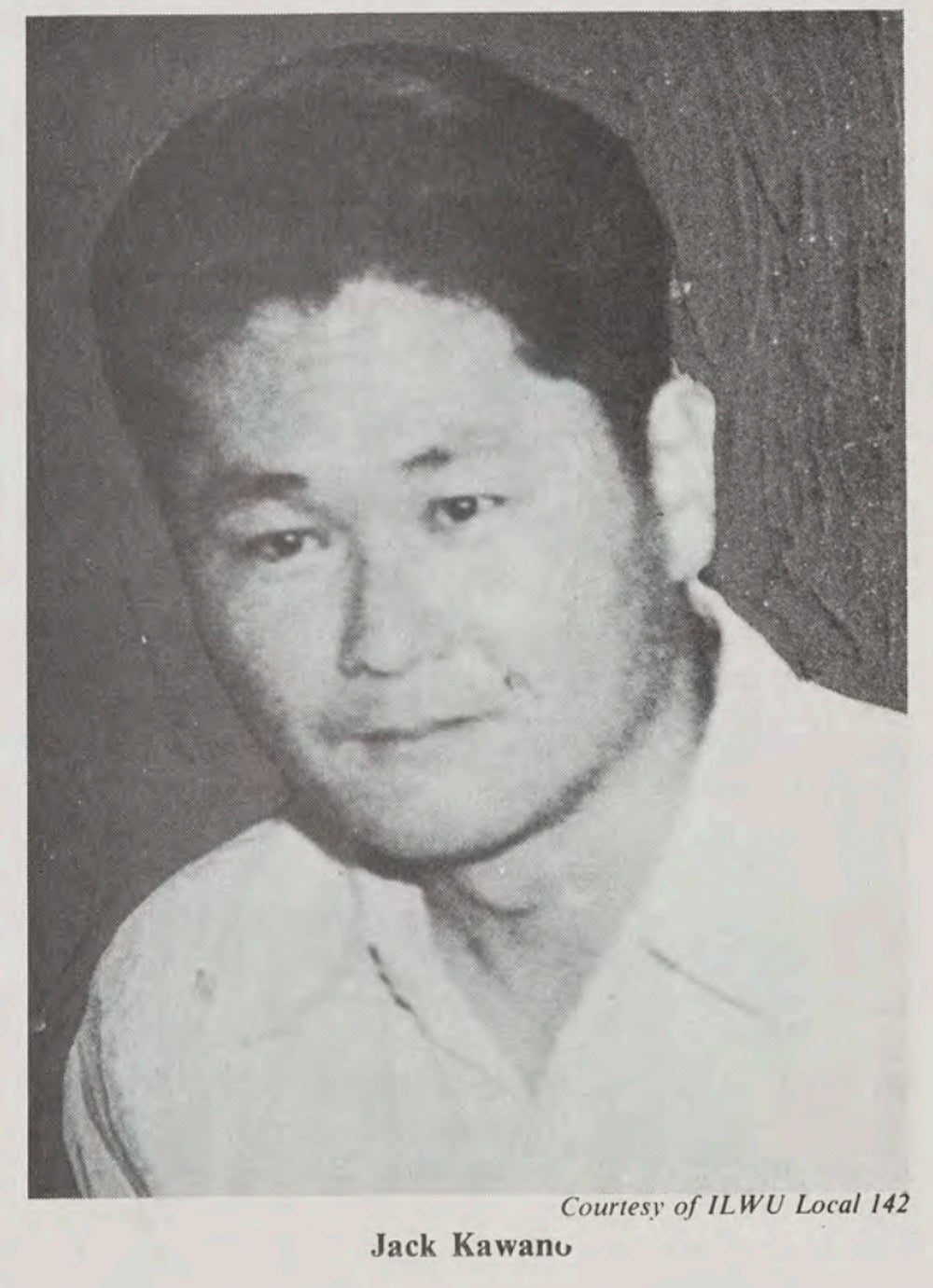
Jack Kawano
Jack Kawano was a prominent labor leader in Hawaiʻi. A plantation worker since quitting school after the seventh grade, Kawano became a dockworker and was eventually elected president of the International Longshore and Warehouse Union (ILWU) union of dockworkers
-
Image
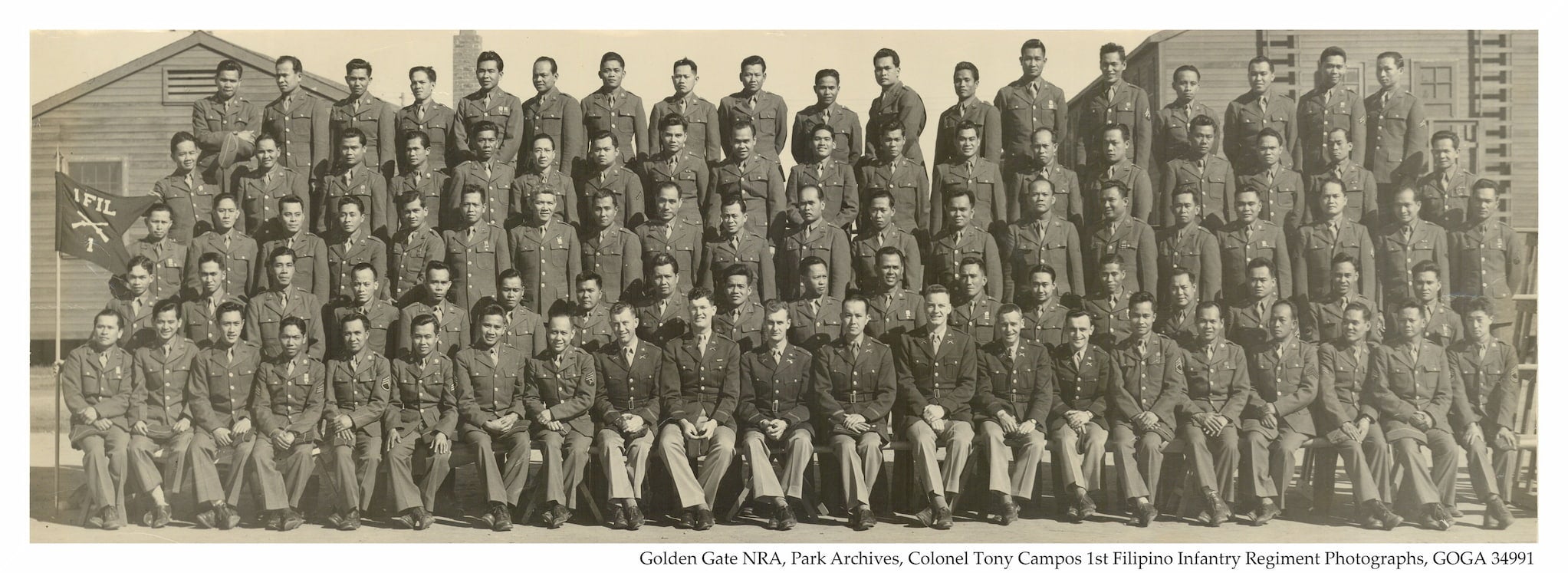
1st Filipino Infantry Regiment, 1942
Members of the First Filipino Infantry Regiment. So many men volunteered to join the unit that the Second Filipino Infantry Regiment was organized a few months later, and the two units included more than seven thousand men.
-
Image
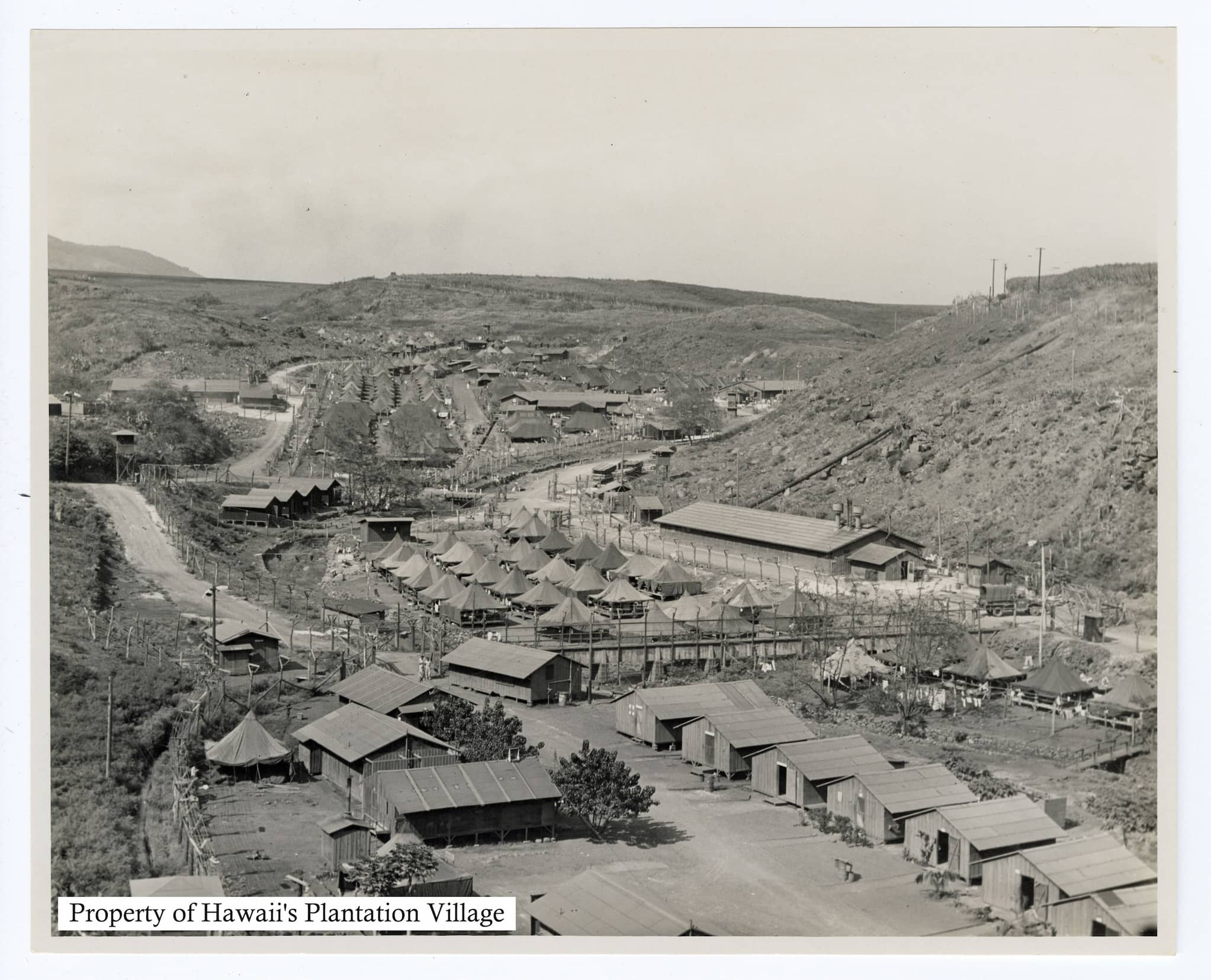
Hono‘uliuli Interment Camp Overlook
Honoʻuliuli was the largest of the incarceration camps in Hawaiʻi during World War II, holding about four hundred Japanese Americans, and many more prisoners of war, most of whom were from Okinawa and Korea.
-
Image
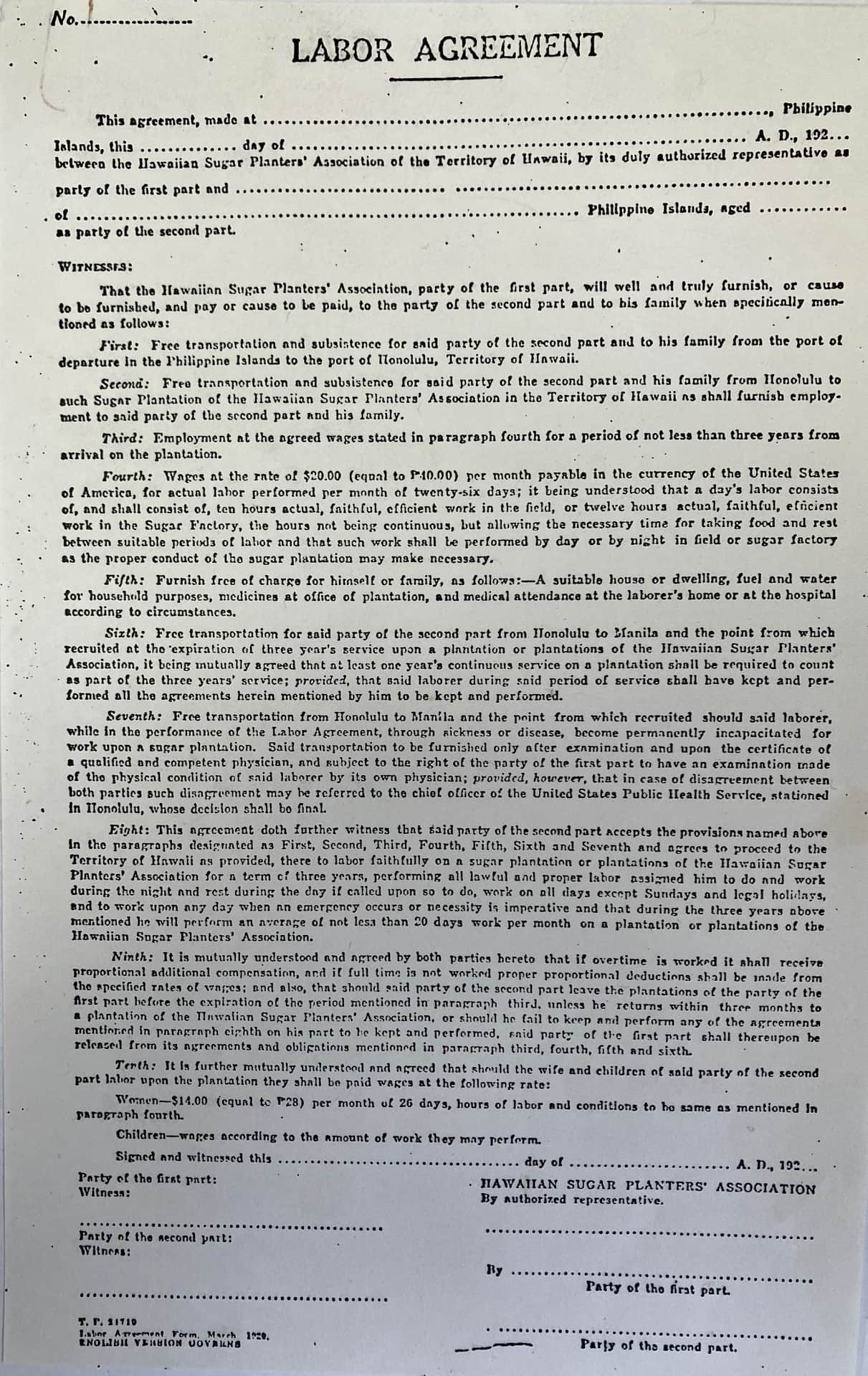
Blank Labor Agreement c. 1920s with the Hawaiian Sugar Planters’ Association of the Territory of Hawaii
This document is titled “agreement” because contract labor was banned by US law, which applied in Hawaiʻi with annexation in 1900. It provides for three years’ employment at twenty dollars a month, twenty-six days a month, and ten hours per day.
-
Image
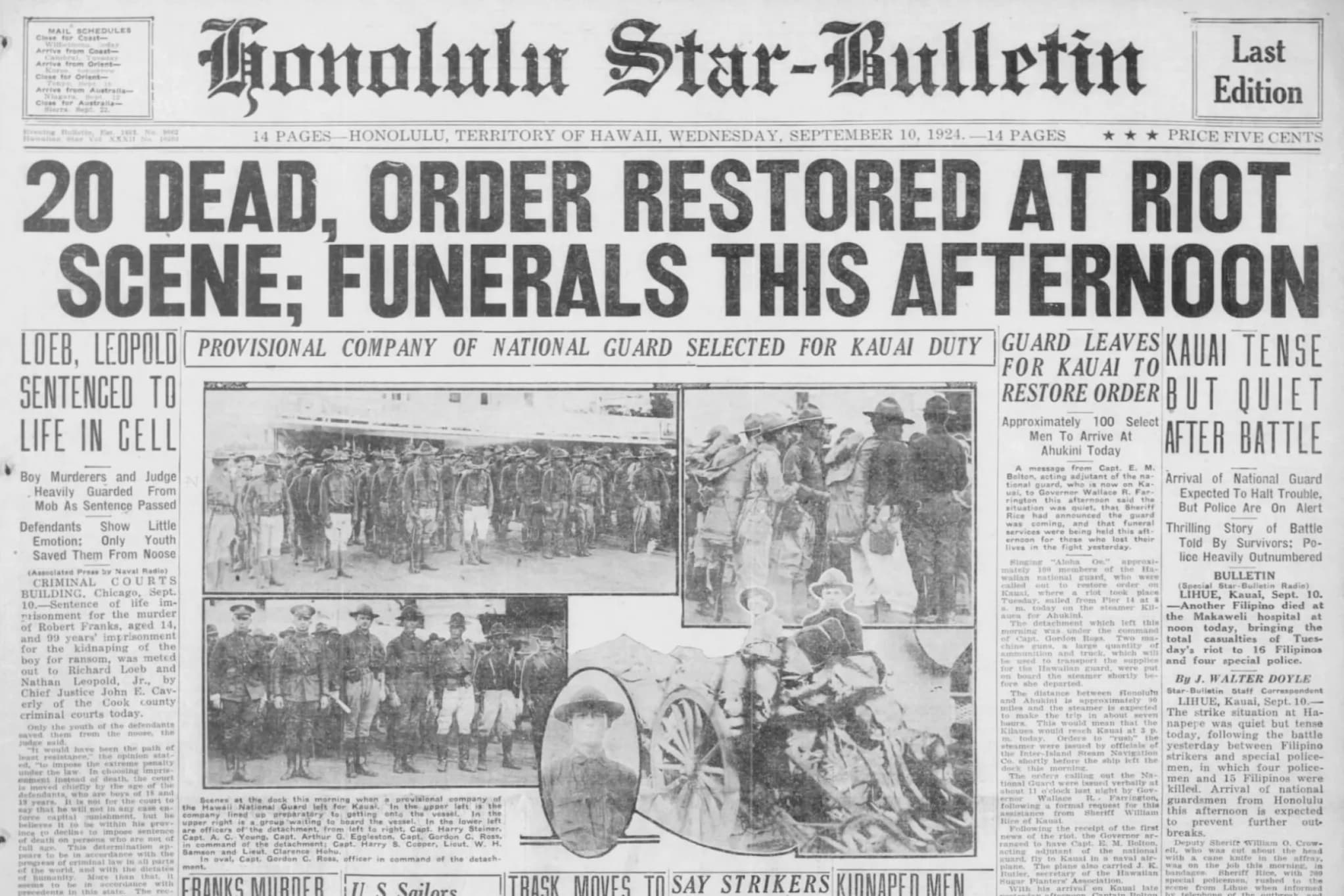
Hanapepe Massacre Headline, Honolulu Star, 1924
The Hanapepe Massacre in 1924 resulted in the deaths of sixteen Filipino striking plantation workers and four police officers after a five-minute burst of gunfire primarily by the police.
-
Image
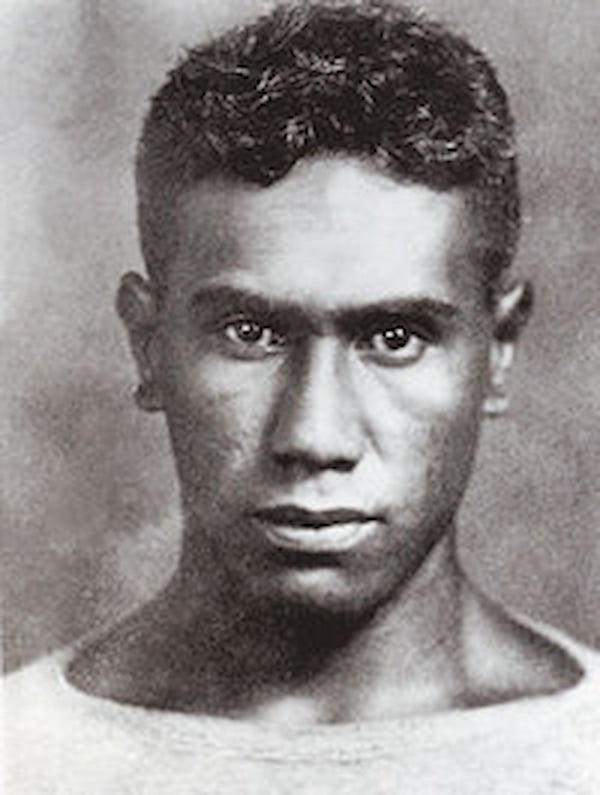
Joseph Kahahawai, bust portrait, facing front
Native Hawaiian Joe Kahahawai, one of five men falsely accused of raping Thalia Massie. A group of accomplices including Massie’s husband and mother kidnapped and killed Kahahawai, eventually serving a sentence commuted to only one hour in custody.
-
Image
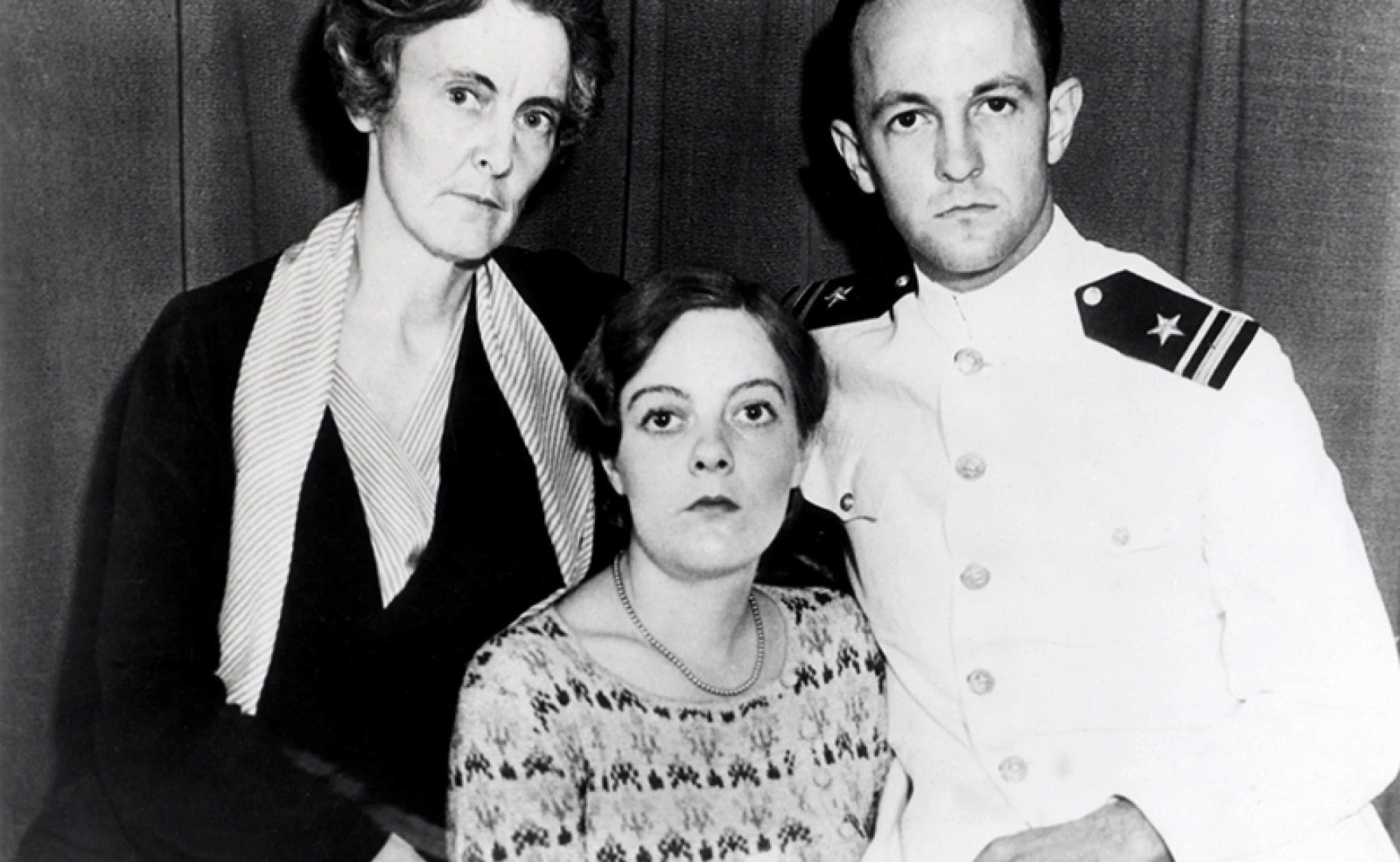
Mrs. Granville Fortescue with her daughter, Thalia Massie, and son-in-law, Lt. Thomas H. Massie, half-length portrait, facing front
(Left to right) Grace Fortescue, Thalia Massie, and Lt. Thomas Massie. Thalia Massie falsely accused five local men of raping her in Honolulu in 1931. The case spotlighted the extreme racial tensions between Haoles and the local population, revealing blatant racism in the justice system.
-
Image
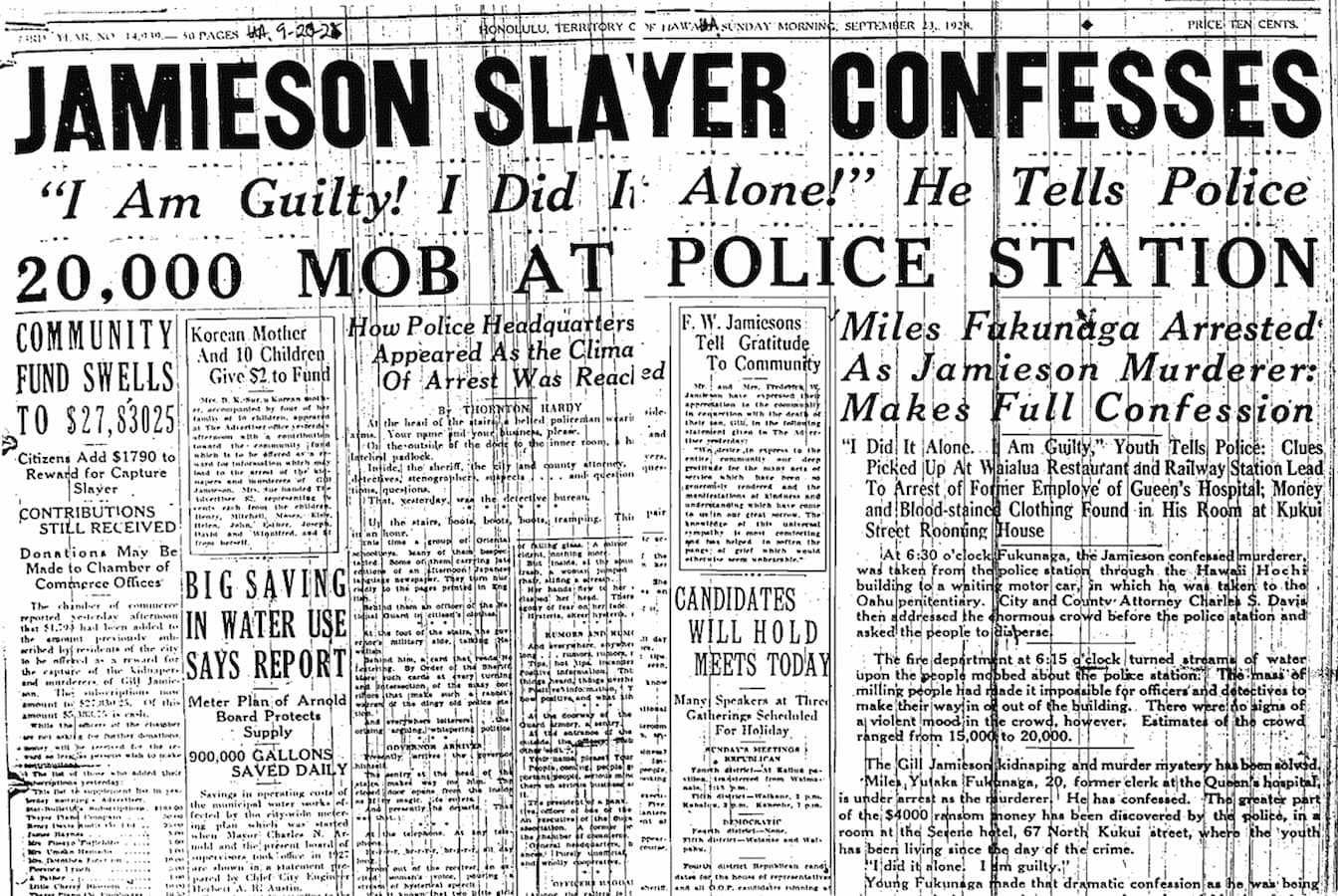
Jamieson Slayer Confesses Headline, Honolulu Star, September 23, 1928
A Honolulu newspaper headline following the capture of Myles Fukunaga that already referred to him as the “slayer” of Gill Jamieson who had “confess[ed]” to the police. His so-called “confession” was read by everyone on the jury that convicted him.
-
Image
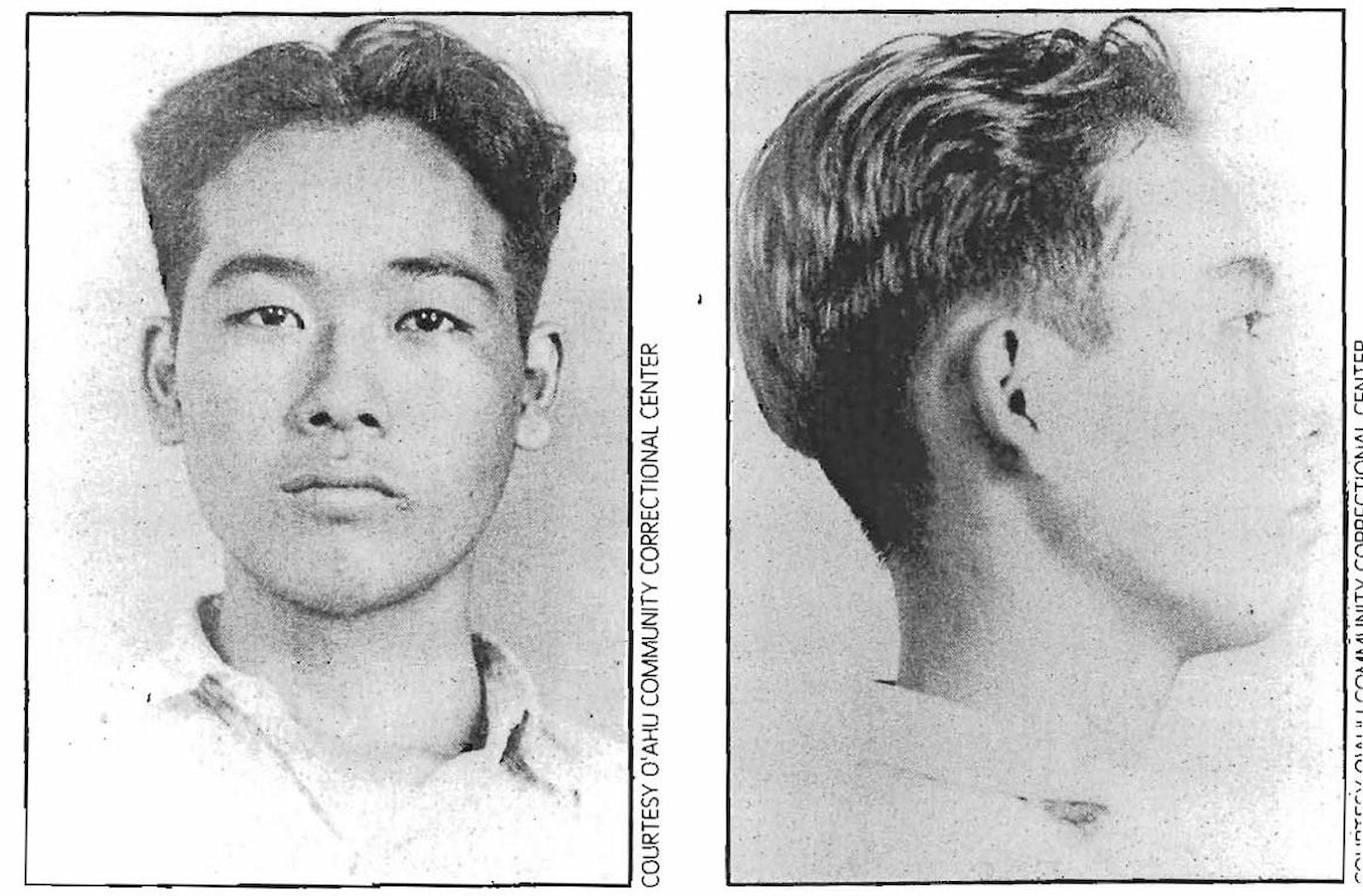
Mugshot of Myles Fukunaga, 1928
A 1928 police mugshot of Myles Fukunaga, who was arrested four days after brutally killing a Haole boy from a prominent family. Although probably legally insane, Fukunaga was quickly convicted in a racially-charged legal proceeding because Haoles wanted immediate revenge.
-
Video
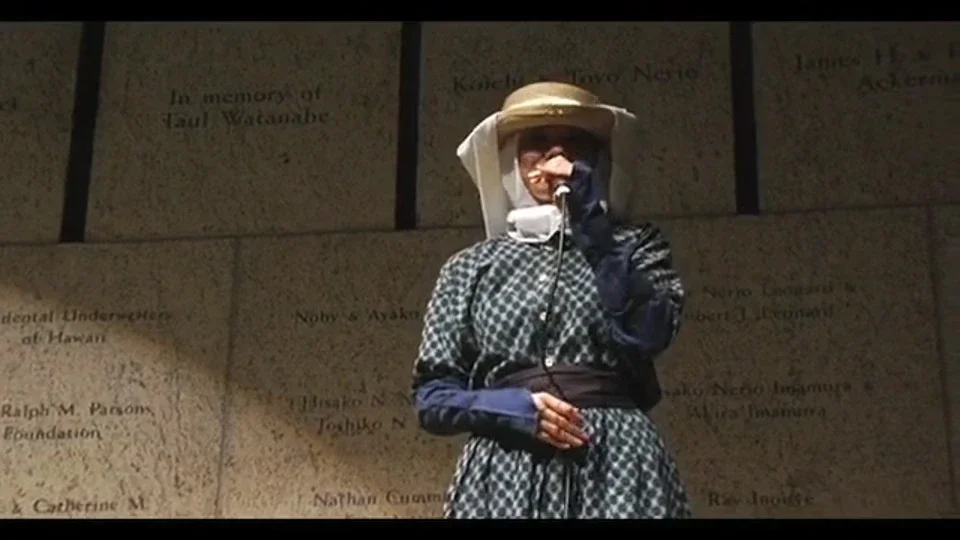
“Hole Hole Bushi” performed by Allison Arawkawa
Allison Arakawa performs a “hole hole bushi,” which were Japanese plantation workers’ songs. Perhaps hundreds were composed and sung primarily by Japanese women as they worked together and sought mental escape from the hard work in the hot plantation fields.
-
Image
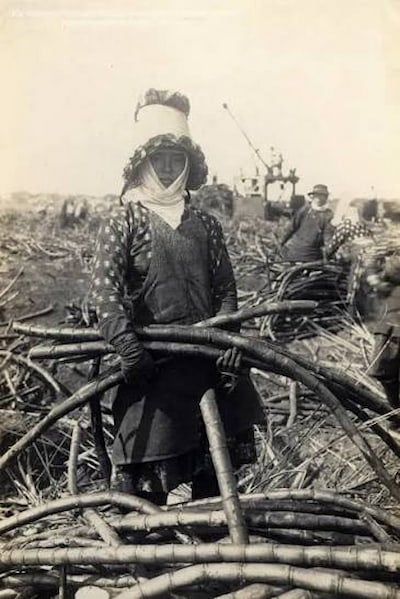
Female worker, Maui, 1915.
A Japanese woman hapai ko (loading cane) worker gathers cane stalks and loads them onto a cart to be taken to the sugar mill. Loading cane was perhaps the most difficult task on the plantation.
-
Image
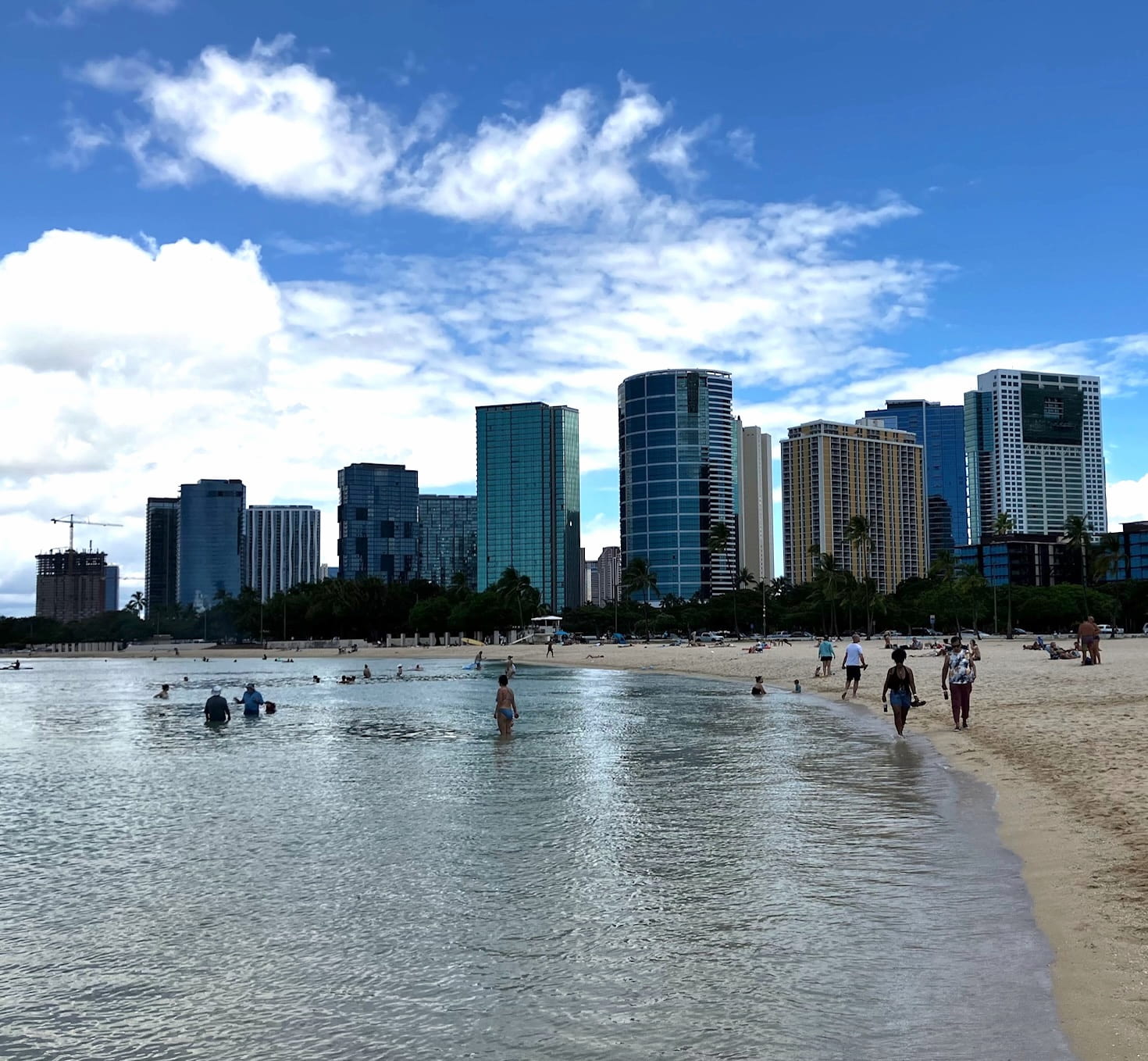
Luxury condos near Ala Moana Beach
High-priced “luxury” condos, such as these towers adjacent to Ala Moana Beach in Honolulu reflect the considerable wealth inequality in Hawaiʻi, which prevents many families from becoming homeowners.
-
Image
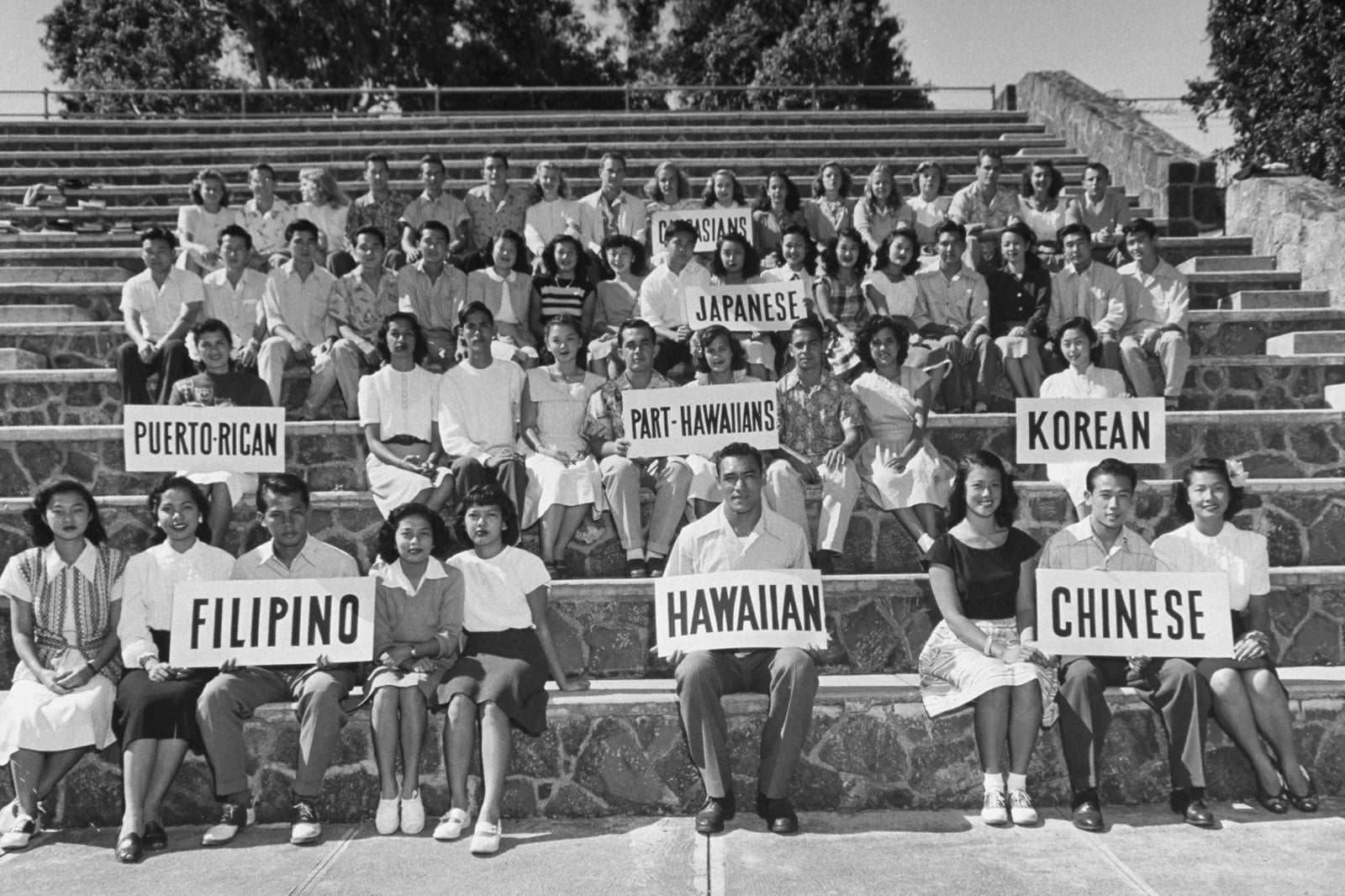
University of Hawai‘i students seated by ethnic representation, 1948
A photo from 1948 shows students at the University of Hawaiʻi representing different ethnic groups and their relative enrollment. It is unlikely that Filipino Americans outnumbered Chinese Americans at that time.
-
Image
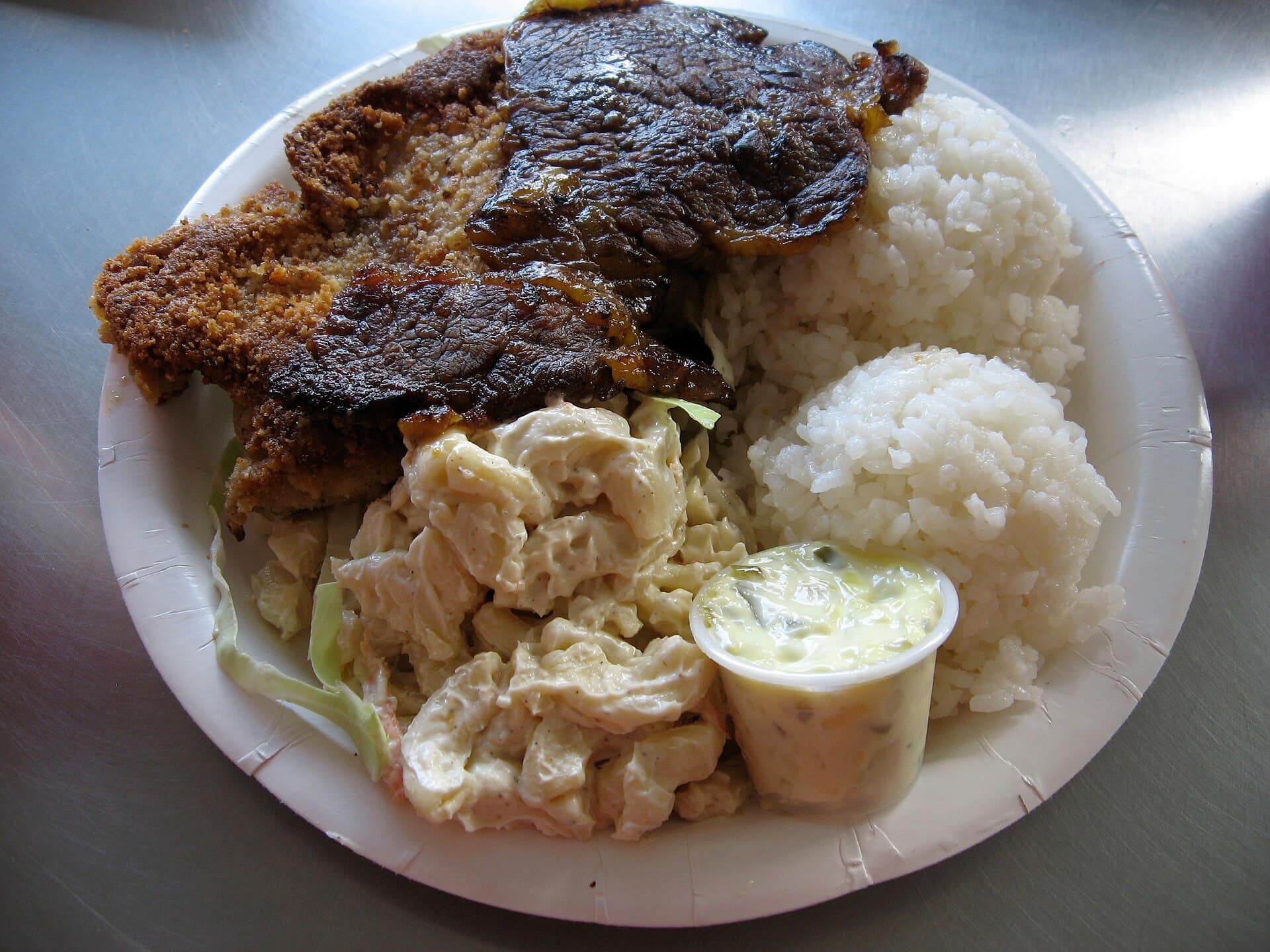
Mixed plate lunch from Rainbow Drive-In
A popular symbol of local culture, the mixed plate lunch includes entrees from different ethnic groups, such as Filipino lumpia, Chinese chow fun, Hawaiian kalua pork, and Japanese teriyaki chicken.
-
Image
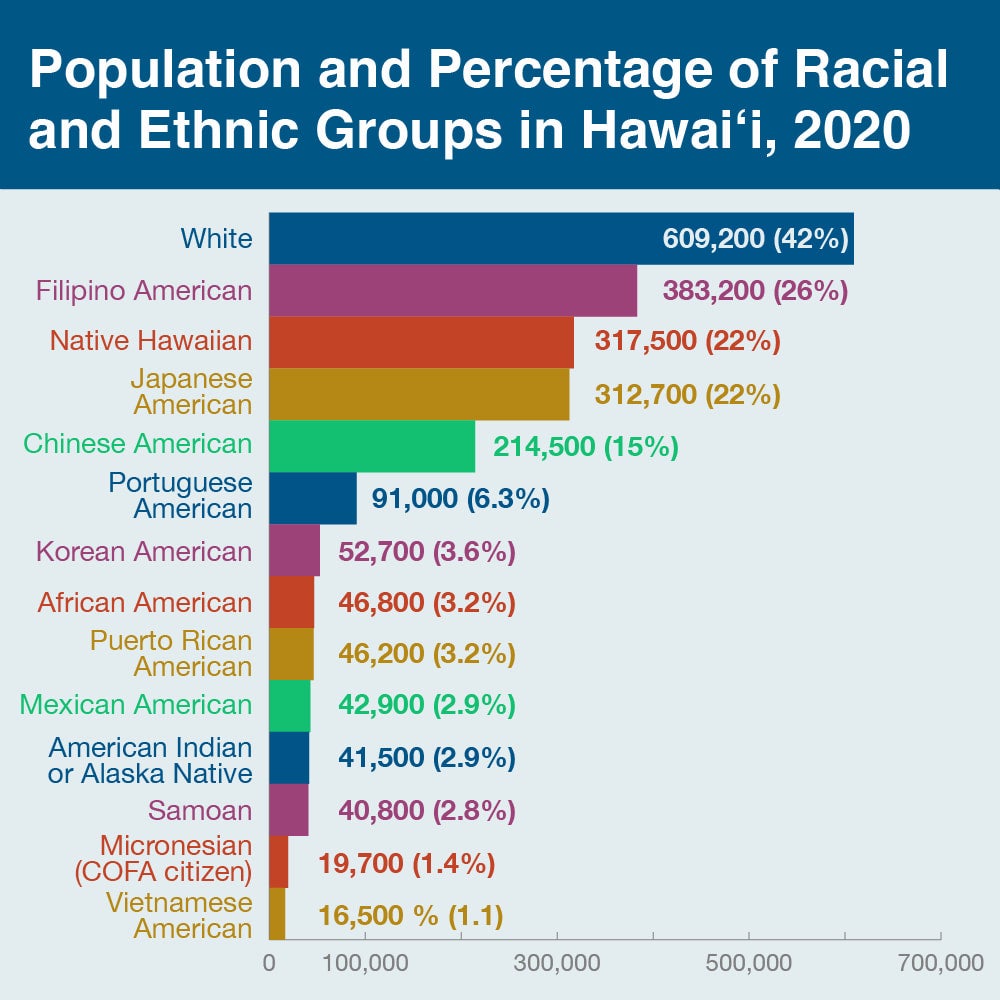
Population and Percentage of Racial and Ethnic Groups in Hawaiʻi, 2020
Population and Percentage of Racial and Ethnic Groups in Hawaiʻi, 2020
-
Video
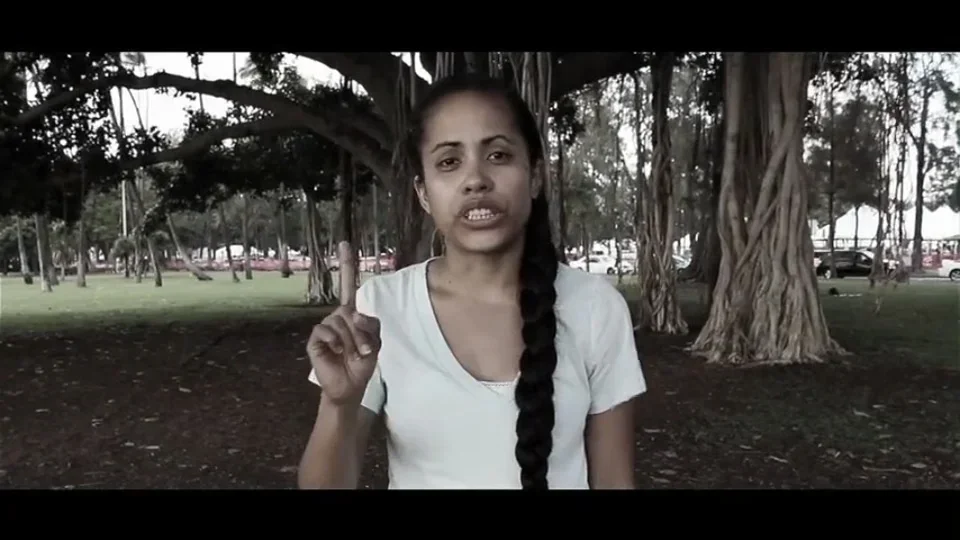
“Lessons from Hawaiʻi,” written and performed by Kathy Jetñil-Kijiner
Marshallese poet and activist Kathy Jetñil-Kijiner performs her poem, “Lessons from Hawaiʻi,” which depicts the racism that she, like many Micronesians, experienced while growing up in Hawaiʻi.
-
Image
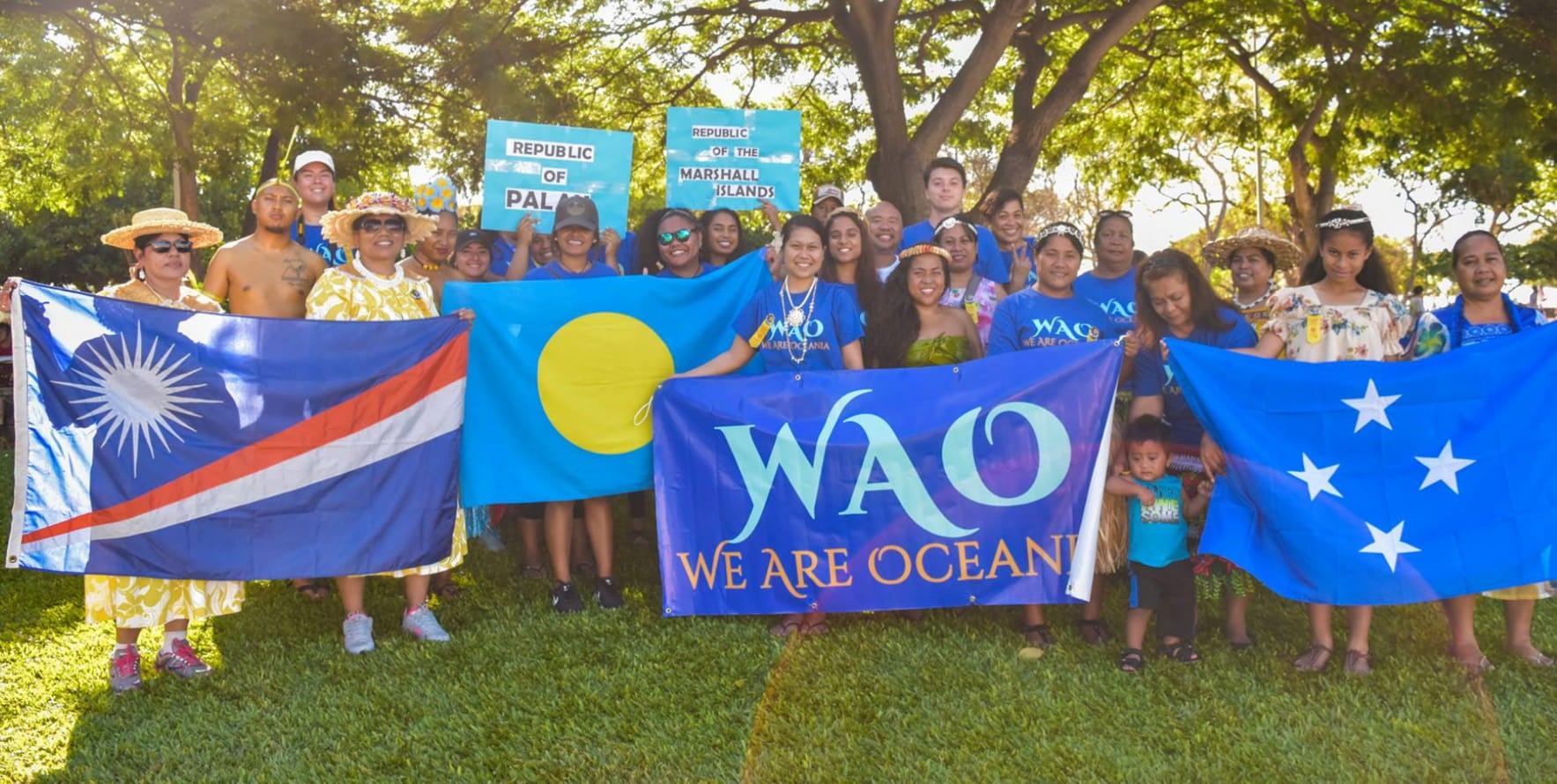
We Are Oceania Group Photograph
Established in 2017, We Are Oceania is a non-profit organization that provides services to Compacts of Free Association (COFA) citizens in employment, housing, health, food security, and language acquisition. It sponsors an annual Micronesian Youth Summit for intermediate and high school students.