



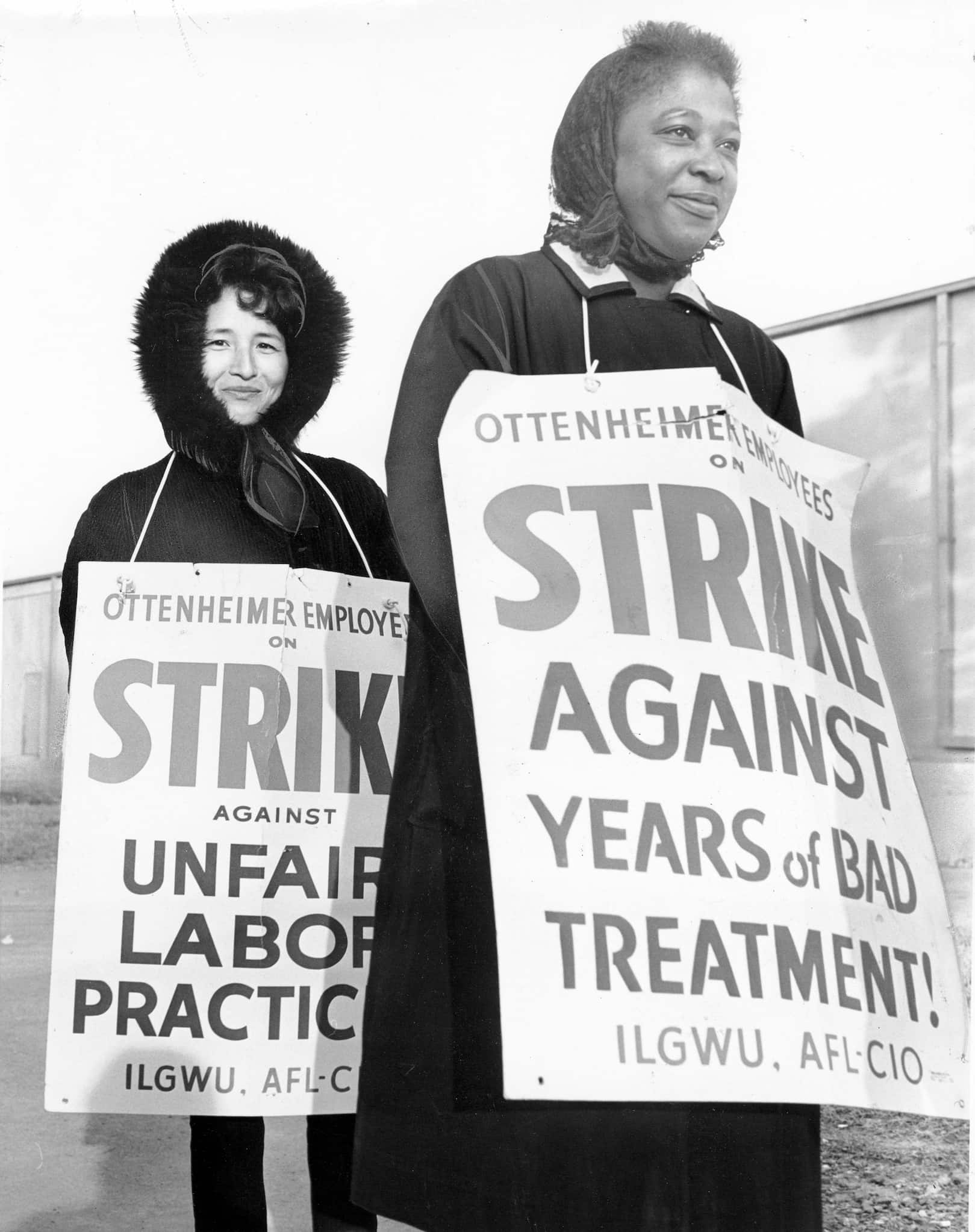
Module 4: Women’s Solidarity for Labor Rights
Does the media portrayals of Asian American and Pacific Islander women’s stories change the way they are treated in society?
Working with other racial and ethnic groups is a core theme in the history of Asian American and Pacific Islander women’s organizing. Indigenous Murri activist and artist Lilla Watson said at the United Nations’ Decade for Women Conference in 1985, “If you have come here to help me you are wasting your time, but if you have come because your liberation is bound up with mine, then let us work together.” 1 This often-cited quote emphasizes that while empathy is key to being a strong ally, what is more powerful and motivating is to understand that work on issues of equity and justice across communities is intertwined.
This module examines how activism around Asian American and Pacific Islander women’s issues has helped movements among other communities also move forward. When one group gains more rights and safety, other vulnerable communities also find protection and freedom. More specifically, when Asian American and Pacific Islander women work for labor justice to eliminate gender-based violence or exploitative treatment, positive ramifications spread for other marginalized groups.
To what extent do Asian American and Pacific Islander women’s collective action for labor rights improve their lives?
In what ways do solidarity movements by Asian American and Pacific Islander women create community?
How does the application of solidarity building methods help your own communities to mobilize?