





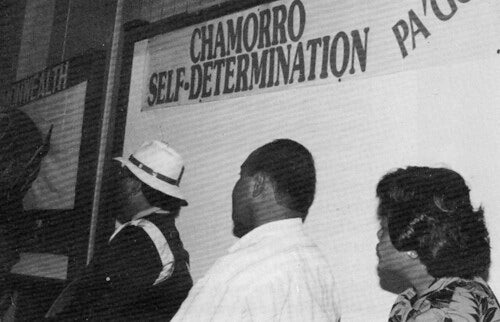
Module 4: The Fight for Sovereignty in the Pacific Islands Today
Is there still a need to fight for decolonization in the Pacific today?
The world’s largest international organization, the United Nations (UN), has 193 members. These members all recognize each other as independent countries with a seat at the international table. Yet, if one were to look at the number of members in 1950, there were only 60. In a span of seventy years, 133 new members (places recognized as independent countries) were added to the UN. What accounts for this significant increase?
Part of the answer lies in the process of political decolonization, where places once held as colonies largely became independent countries of their own. Some colonies achieved decolonization through violence, while others experienced peaceful transitions of power. For example, in 1962, Samoa, a former colony of New Zealand, became the first in the Pacific to gain independence, ultimately joining the United Nations in 1976.
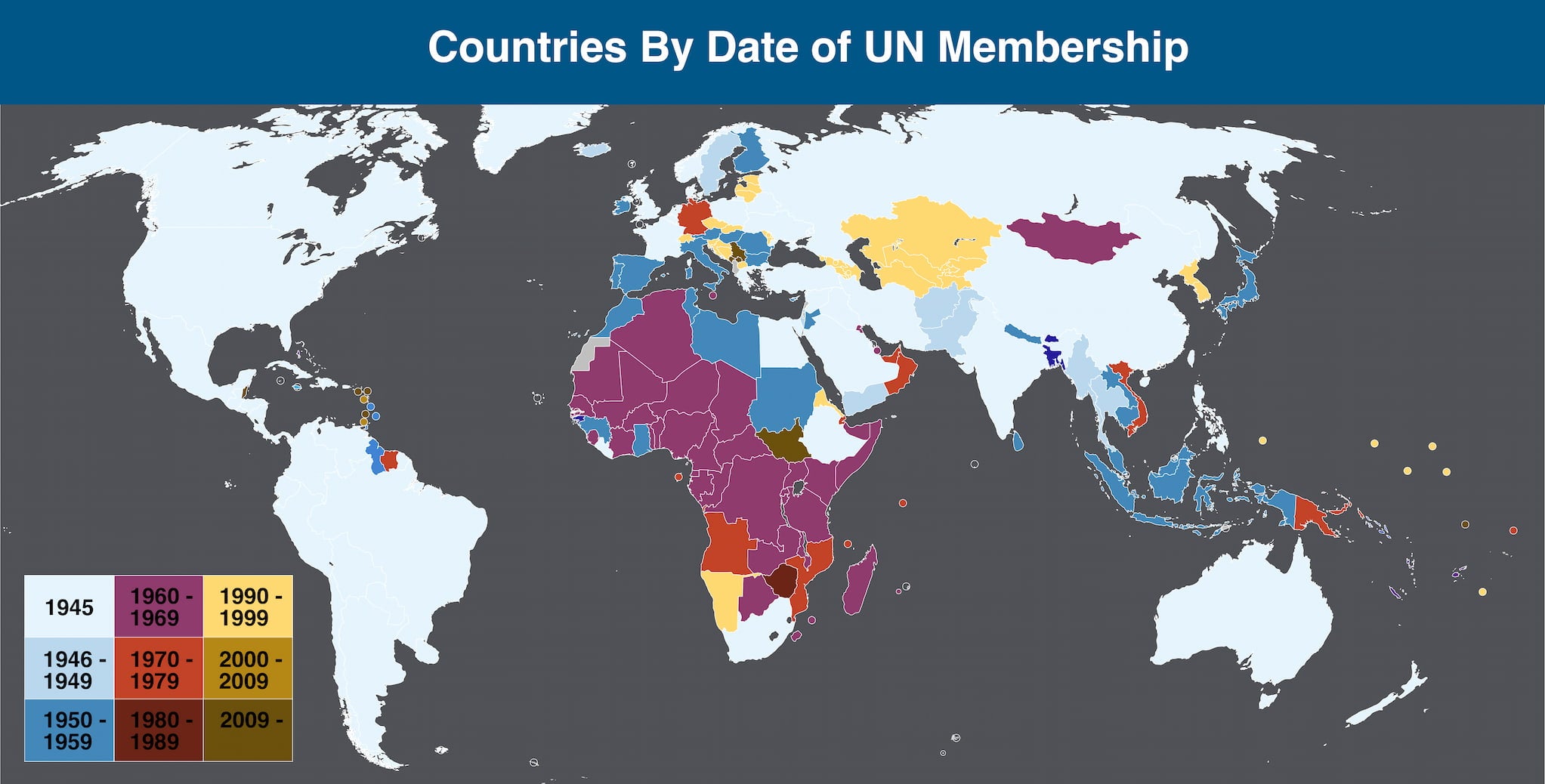
Image 20.04.01 — This map shows when countries joined the United Nations. A major wave of new member states between the 1940s and 1980s reflects an era of global political decolonization, as former colonies gained independence and international recognition.
Created date, created by Name, Title Italicized. Credit line indicating where the image is from. Metadata ↗
In this module, we will learn what political decolonization, self-determination, and sovereignty are and how they are important to Pacific Islanders. We will also learn about some obstacles to self-determination, and ultimately get a better understanding of how Pacific Islanders are using political processes to achieve political decolonization.
What is the role of sovereignty in decolonizing the Pacific Islands?
What is the relationship between sovereignty and self-determination?
How do Pacific Islanders use political processes to achieve decolonization?


