




Photo of Hōkūleʻa in partial silhouette on the water at Puʻuloa. Its two crab claw sails in crimson red are opened.
Module 5: Everyday Decolonization in the Pacific Islands
Is there still a need to fight for decolonization in the Pacific today?
Estella Gofigan distinctly remembers the pangs of her stomach as she watched her classmates eat their lunch. Her teacher took away the only money she had to eat. Sitting there in the cafeteria, she wondered why what she did was so bad. Her only “misdeed” was speaking her native language of CHamoru at school. Estella was raised during a time in Guåhan (Guam) when children were punished for speaking the Indigenous language of the island.
From paying fines to forms of corporal punishment (such as getting hit by a yardstick), children were being taught that their language was bad and that they should only speak English. Estella remembers being told that she would never amount to anything if she did not know English. This story shows one fundamental truth about colonization. Colonial rule happens at the political level, but colonial subjugation would be unsuccessful without the psychological, cultural, and linguistic components lying at the root of colonialism.
In this module, we learn more about how colonialism operates on an everyday level. We will also explore what everyday decolonization means in the Pacific Islands. We will understand how culture and language revitalization movements are used for self-determination, and explore how Indigenous people contribute to global thriving.
How can one decolonize their everyday lives?
What is the role of culture and language in exercising self-determination?
Why are Indigenous Pacific Islander peoples important to the world?
Colonization of the Mind and Everyday Decolonization
Kenyan scholar, Ngugi Wa Thiong’o, writes that one of the worst effects of colonization is the “cultural bomb.” Through colonial education, a cultural bomb is set off that destroys a people’s belief in or respect for their languages, histories, cultures, power, and their own people. Colonized peoples are often taught that their pasts are wastelands of non-achievement and nothingness.
The basic message is that what a people did before colonization was either evil, bad, or just simply not good enough. Colonial powers often offered themselves as tickets to economic success and more advanced civilization, leading many to believe they had to shed their languages, values, and cultures in order to climb the ‘civilization’ ladder. This belief gets passed down from generation to generation.
Imagine that you are an Indigenous person in a fictional land named Uchania. And imagine that I am from a fictional country in Europe and have come to live among your people for five years, learning your way of life. However, your way of life is drastically different from how I am used to living my life, and some parts of your life are deeply offensive to me.
For example, I am a staunch believer in a particular god who despises the worship of idols, yet your people put the skulls of their ancestors in their homes and worship them. In my culture, women are not supposed to talk back or express an opinion, yet your women are outspoken and occupy prominent places in your society. I write a book about your people. I critique your people as heathens whose women are rude and disrespectful. I leave Uchania after five years and publish my writings into a book that becomes the sole source of knowledge about your people in my homeland and continent. Suddenly, the only thing that the people of my country and Europe know about your homeland comes from what I have written. Now, I return to your homeland and convince your leaders to start making my book the main resource in your school system. Now, your children are learning that your people are all heathens and that their mothers and grandmothers are rude and need to learn their place.
This hypothetical scenario shows that the power to define what is considered “knowledge” is a key tool used by colonizers. This is the danger and deception of colonialism at the psychological and cultural levels. Simply conquering a people is not effective as they will continue to resist. Easier than violence is convincing people that controlling them is their best choice in the long run. Easier than violence is making people identify with you, your language, and your culture. Easier than violence is placing metaphorical cages around people’s minds and restricting their mobility.
Everyday decolonization is a way to exercise agency and resist colonialism in one’s daily life. It is meant to be an active antidote to the colonization of the mind. Scholars define everyday decolonization, or “everyday acts of resurgence,” as “daily actions undertaken by individual Indigenous people, families, and communities which often go unacknowledged but are no less vital to decolonial processes.” 1 They are not glamorous or spectacular acts, but they “connect Indigenous communities to each other and to lands, waters, cultures, and histories.” 2
These everyday acts help to center Indigenous ways of knowing and to give people belief in their communities and heritages again. Examples of such everyday acts include learning one’s language, studying one’s songs and chants, knowing one’s family ancestry, reviving a peoples’ way of hunting or fishing, and telling one’s peoples’ stories. All of these acts are important, but in this module, we will focus on language and cultural revitalization.
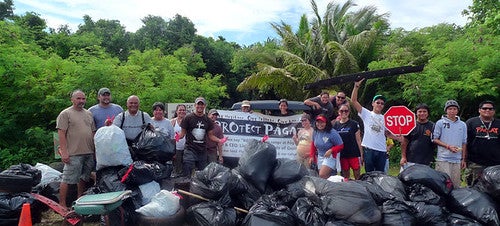
Image 20.05.01 — This photo shows a cleanup led by the organization, We Are Guåhan. The community gathered together to pick up hundreds of pounds of trash at the sacred site of Pagat, home to an ancestral CHamoru village in Guåhan (Guam).
Language and Cultural Revitalization Movements
Estella’s story at the beginning of this module is sad but not unique. In Guåhan’s case, many of Estella’s classmates shared in the sadness of being punished for speaking their language. After World War II, CHamorus wanted to become American and stopped passing down their language. In the 1950s, CHamoru was widely spoken throughout the island. Yet today, there are only a little over 21,000 CHamoru speakers on the island. Most of the native speakers are senior citizens, meaning there are very few young speakers, putting the future of the language at stake. However, there are CHamoru language revitalization initiatives aimed at ensuring that the language remains alive. These are critical projects of everyday decolonization.
Language revitalization is defined as the “development of programs that result in re-establishing a language which has ceased being the language of communication in the speech community and bringing it back into full use in all walks of life.” 3 Language revitalization projects are aimed at either teaching or passing down the language to those who do not know it, and they strive to get speakers to use the language in a broadening number of domains. In the Commonwealth of the Northern Mariana Islands (CNMI), there is a CHamoru Immersion program where kindergarten to third-grade students can take courses entirely in their native language, learning cultural practices as well.
In Guåhan, the non-profit organization Chief Hurao Academy has been at the forefront of language revitalization. Modeling their program after the Hawaiians’ push to revitalize their language, Hurao Academy offers pre-K immersion, and is now a fully-immersion charter school in Guåhan. The CNMI and Guåhan are doing what they can to make sure the language does not die.
Reviving a language is critical to everyday decolonization. Waking the CHamoru language up once again means connecting the CHamoru people to their ancestors, healing from past injustices, building community, and learning one’s cultural worldview. As Anne Marie Arceo from Hurao Academy says about the language: “We need to make sure that our people’s legacies are passed on to our grandchildren. We can give land, we can give assets, but they can sell those things, but the language and our heritage, even if they put a gun to your head, nobody can take that away from you. It’s something that makes you different than everybody else in this world and it’s yours.” 4
Cultural resurgence is also occurring in the Pacific Islands. The Kanaka Maoli (Native Hawaiian) creation of the Hōkūleʻa, a double-hulled voyaging canoe, is inspiring. Part of the colonization process in Hawaiʻi was the decline of their seafaring and wayfinding (navigating the ocean by the stars, winds, and waves). To revive this lost practice, the Polynesian Voyaging Society made a 62-foot voyaging canoe named the Hōkūleʻa, which took its first voyage in 1976, crossing the ocean blue. This became the catalyst for a larger movement of canoe-building and wayfinding in Hawaiʻi today.
Cultural resurgence projects also happen among diaspora groups who live in places like the US. For example, one can find voyaging societies in the Midwest! In the town of Milan, Minnesota, more than half of the population consists of migrants from the Federated States of Micronesia, a country that is in free association with the US. The Micronesian community came together to build an outrigger sailing canoe and joined with members of the Indigenous Dakota communities to help launch the outrigger on the Mississippi River. Both in the homeland and out in the diaspora, Pacific Islanders are engaging in these everyday acts of decolonization.
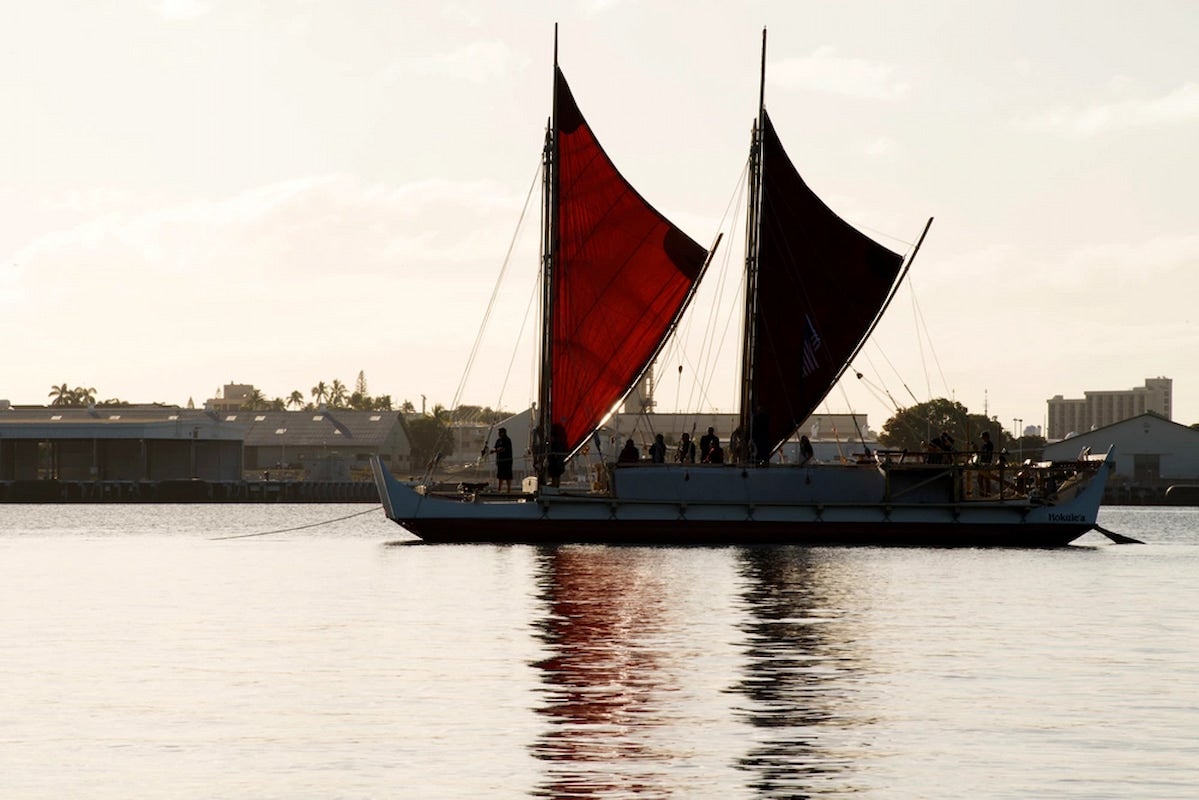
Image 20.05.03 — This image features Hōkūleʻa. Its first voyage was meant not only to revitalize navigation in the Pacific, but to show that we can continue to learn from our traditional knowledge and bring it into our everyday lives.
Global Waves and the Pacific Islands
This chapter has focused on decolonization in the Pacific Islands. For Pacific Islanders, like myself, this is important. We are fighting for political decolonization as well as decolonization of the mind and have used both international processes and everyday acts like language revitalization. It is easy for Pacific Islanders to recognize why decolonization in the Pacific matters and has major effects.
But for others, such recognition may be more difficult. For example, you, the reader, may be struggling to see how any of this matters to you. While the islands may seem far away, what happens in the Pacific Islands can cause global waves that will eventually reach your metaphorical shores. Many in the Pacific Islands are the first ones ringing the alarm for horrors to come—horrors that will ultimately affect us all. To put it differently, the future tends to come early in the islands.
One of the clearest examples of this is climate change. The entire world is now seeing the effects of climate change, from massive heat waves or hurricanes in places like California to floods in the middle of Europe. Pacific Islanders have for a while now been aware of the existential threat of climate change and the effects it has on people’s livelihoods. Many in the atolls of the Marshall Islands have had to face king tides that ruin infrastructure and make it hard to grow any crops. The government of the country of Kiribati in the Pacific has already bought land in Fiji to relocate their people when the islands are no longer inhabitable.
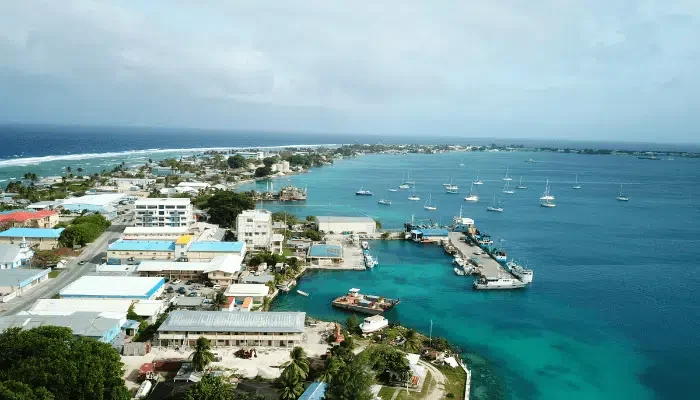
Image 20.05.04 — Majuro, the capital and largest city of the Marshall Islands, where homes sit at sea level. Any sea level rise can flood houses and farmland, making daily life, and the future, uncertain for many residents.
The future also comes early when it comes to geopolitics. With rising tensions between the US and China, it is the Pacific Islands, particularly Micronesia, that are preparing for a potential conflict. Existing military installations are being expanded, new military installations are being built, and the islands are being used for military exercises. Actions that are taken in the islands by great powers like the US can offer insight into how close to conflict the two countries are. A new military base in what is considered a faraway island can be an incredibly important development that signifies growing conflict. And any conflict between China and the US will affect every American in one way or the other.
Being at the forefront of the global climate and geopolitical crisis, Pacific Islanders can also help provide global solutions. Pacific Islanders, like other Indigenous peoples, co-existed with nature and have culturally rooted ways of living with the earth (very much unlike the actions that have led to the current climate crisis). Pacific Islanders, who are on the frontlines of conflict can also be at the frontline of knowledge when it comes to world events. If the events that happen in the islands are a crystal ball into various futures, then Pacific Islanders have agency and are uniquely situated to warn and guide the rest of the world.
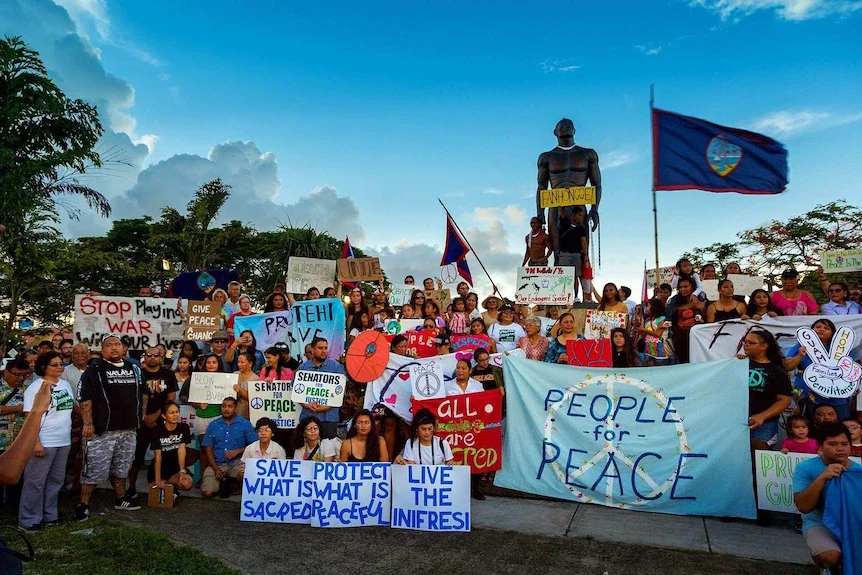
Image 20.05.05 — In 2017, community members came together in Hagatna, Guåhan (Guam), to rally for peace. This photo shows protestors gathered to speak out against the militarization of Guåhan after North Korea threatened to launch a missile at the island.
Decolonizing the Pacific Islands (from political to everyday decolonization) means allowing Pacific Islanders more control over their livelihoods and the decisions made for the Pacific Islands region. It means that the region will no longer be used as a playground or experimental lab for larger countries. If, contrary to popular imagination, the Pacific Islands can be globally instructive for the world, then decolonizing this region can help Pacific Islanders contribute to global solutions. Decolonizing the Pacific should not be an issue that is considered niche or partisan. Rather, decolonizing the Pacific should be viewed as a global good and goal. How can you help decolonize the Pacific?
Glossary terms in this module
colonialism Where it’s used
The process in which one country or people controls another place or people through partial or full political control for an extended period. Colonialism has lasting economic, social, and cultural effects even after the period of formal colonization is over.
cultural resurgence Where it’s used
The revival of cultural practices after they were dormant, suppressed, or erased.
everyday decolonization Where it’s used
Ways to exercise agency and resist colonialism in one’s daily life. These everyday acts, such as learning Indigenous languages or performing Indigenous cultural practices, help to center Indigenous ways of knowing. This gives people belief in their communities and heritages again.
free association Where it’s used
A political status in which a sovereign country establishes a special relationship with another country, usually a previous colonial power. This agreement between two countries includes, but is not limited to, economic packages and defense agreements. The Republic of Palau, the Republic of the Marshall Islands, and the Federated States of Micronesia all have separate agreements with the US, known as Compacts of Free Association (COFA).
geopolitics Where it’s used
The changing political and international relations that are tied to a place’s geography.
language revitalization Where it’s used
Methods or programs that are aimed at making a dormant (often Indigenous) language the primary language of communication again by increasing its usage in all facets of life and across multiple generations.
political decolonization Where it’s used
The process in which colonies reach a full measure of self-government form independent countries and gain control over their land, government, and destinies. Political decolonization breaks down having an empire as a way to govern the world, demanding instead for sovereignty and self-determination.
self-determination Where it’s used
The right of a people to freely determine their political status and freely pursue their economic, social, and cultural development without external interference. This right is recognized by the United Nations and is an important aspect of human rights.