




Module 1: Overview
Is there still a need to fight for decolonization in the Pacific today?
In January of 2000, Angel “Ånghet” Santos was sentenced to six months in federal prison for “trespassing” on military “property” in the island of Guam, known as Guåhan in the CHamoru language. At his hearing, Ånghet argued that he should be allowed to stay in Guåhan to serve his sentence. However, in the dark of the night, he was taken by marshals to a holding cell, from where he would be flown to a federal prison in the United States to spend his sentence. According to Ånghet, he was not trespassing on military “property.” He was reclaiming his family’s land, stolen by the US military.
Ånghet’s story resonates with many families in Guåhan, a territory legally belonging to the US. After World War II, the US military displaced more than one thousand families in the island in order to build military bases. Today, the US military continues to occupy roughly 27 percent of the island. This treatment of Guåhan is a prime example of colonization, because it portrays the story of Indigenous lands being taken over for political control by the US.
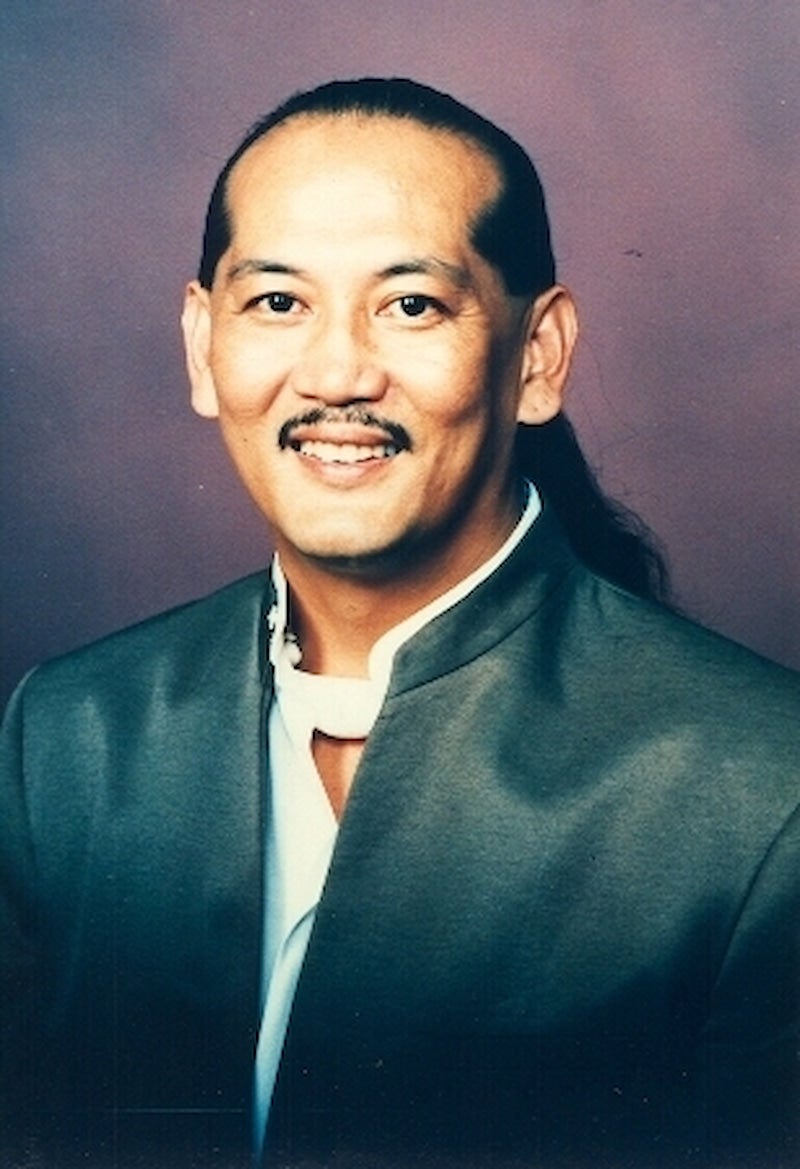
Image 20.01.01 — Activist and elected official Angel “Ånghet” LG Santos was sentenced to six months in federal prison for his activism. Ånghet not only fought for CHamoru rights in Guåhan, but also sought for human rights for all indigenous peoples to be respected.
In this chapter, we examine the history of colonization in the Pacific Islands, the role of decolonization, and how Pacific Islanders have resisted and continue to resist colonialism. While we will focus on the role of the US, we will also look at other countries that have engaged in colonialism in the Pacific, such as France and the United Kingdom.
What is colonization and how has the US empire operated in the Pacific Islands?
What is decolonization and what role does it have in the Pacific Islands?
How have Pacific Islanders resisted colonialism in the past and present?
What Is Colonialism?
In a scene in the movie Black Panther: Wakanda Forever (2022), one of the main characters, Shuri, tells another character, “Not Today Colonizer.” One can now buy T-shirts with this quote printed on the front. But what exactly does it mean to call someone a “colonizer?” In this section, we define colonialism and investigate its many forms.
Colonialism is the process by which one country or people subjugates another place or people, through partial or full political control for an extended period. While primarily a political process, colonialism has economic, social, and cultural effects. Until recently, empire and colonialism were organizing principles of the world. European countries, the US, and Australia searched for places to colonize.
Colonialism allowed each of these countries to expand their empire in order to gain more power and resources for their country. One thing to note is the pivotal role of race in the rise of colonialism. Many of the places that were colonized were inhabited by people of color, including Brown and Black Pacific Islanders, and this racial distinction was critical to maintaining colonialism as a structure of power.
The primary reasons for colonization included gaining access to natural resources and other materials, spreading religious ideology, and geographic positioning in foreign policy or military strategy, such as establishing military outposts. Another way to describe colonization is through the popular phrase, “Gold, god, and glory,” which best characterizes European motivations behind colonization.
Colonialism can take place in many forms. We focus on three forms in this chapter: extraction, settler colonialism, and military hubs. It is important to note that multiple forms of colonialism can occur at the same time.
Extraction is a method of colonization that refers to exploiting a land for its minerals and natural resources. Whether it is for gold or sandalwood, colonizers have often pushed Indigenous peoples off of their land to gain access to its resources.
Settler colonialism is another form in which colonizers move into and occupy these new places, often displacing Indigenous peoples indefinitely.
Military hubs are military bases built in strategic geographical locations to expand a country’s militaristic reach and power. These bases can be used for military exercises and experiments as well.
We can trace the start of US colonialism in the Pacific to guano, which is the accumulation of bird or bat excrement (poop). Rich in phosphorus, guano was valued for its use as a fertilizer. The search for guano resulted in the US scouring the Pacific Islands, which had large deposits of guano to extract from.
In 1856, the US Congress passed the Guano Islands Act, which gave US citizens permission to take control of any islets containing guano deposits, as long as they were not already claimed or inhabited. At its peak, there were nearly one hundred claims made on islands. As part of the Guano Islands Act, the US President was authorized to use military force to help protect the rights of the discoverer. Many Americans do not know that the US still controls some islands that the country originally claimed during this guano craze.
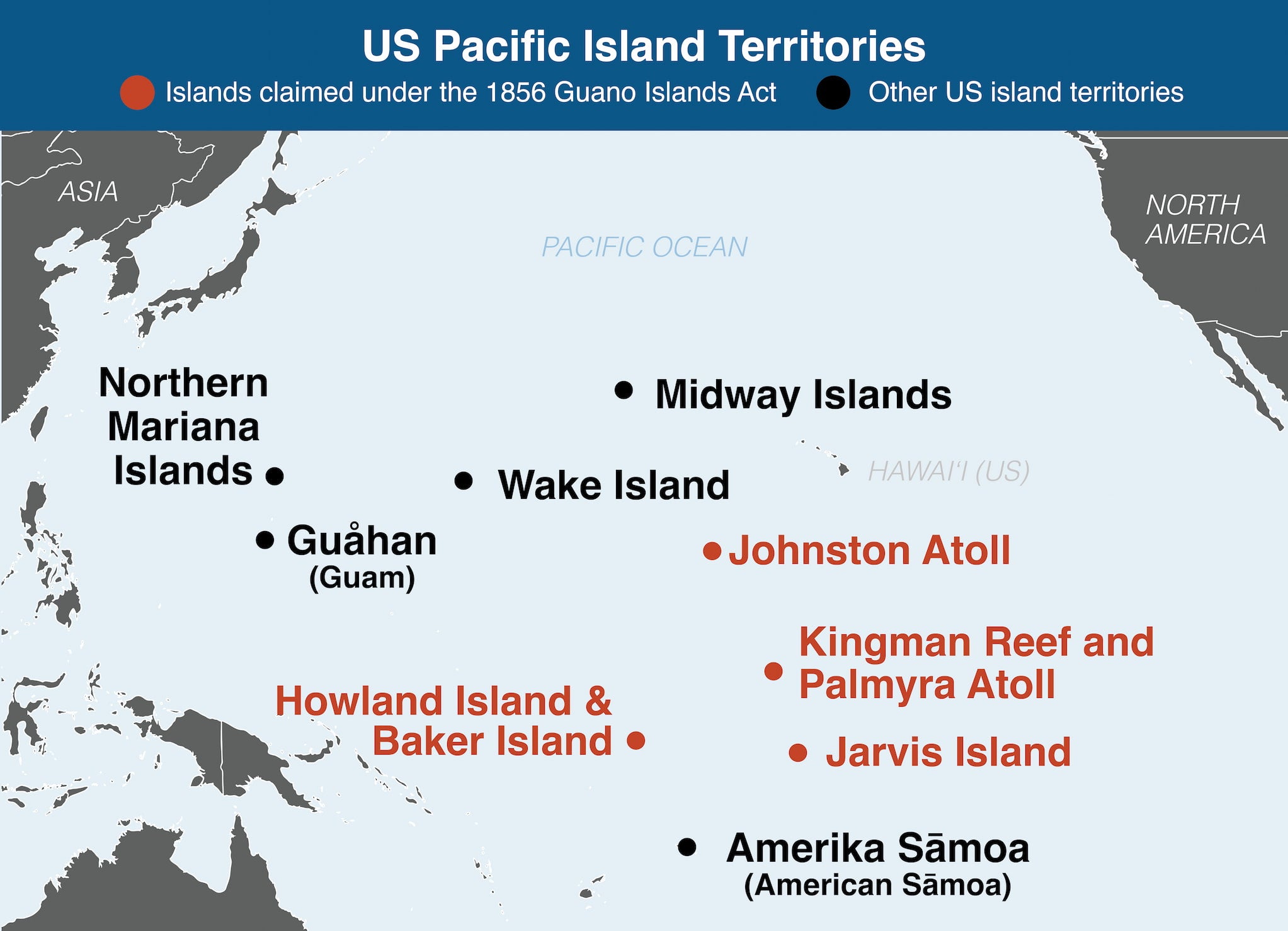
Image 20.01.02 — This map shows many of the islands controlled by the United States, most of which were originally claimed under the 1856 Guano Islands Act as sites for resource extraction.
Spotlight: US Territories
The US currently has five permanently inhabited territories: Guåhan (Guam), Puerto Rico, American Sāmoa, the US Virgin Islands, and the Commonwealth of the Northern Mariana Islands. However, it also controls nine primarily uninhabited territories, collectively referred to as the United States Minor Outlying Islands. These islands are Baker Island, Howland Island, Jarvis Island, Johnston Atoll, Kingman Reef, Midway Atoll, Palmyra Atoll, Wake Island, and Navassa Island.
As the table below shows, most of the current US territories (except for three) are located in the Pacific Islands. The history of colonialism behind both the inhabited and uninhabited territories reveal US thinking about how to best secure their interests, which often meant taking over islands. Finally, it is important to note that just because a place is uninhabited does not mean that it is unimportant, or that it should be “up for grabs” by another country.
Table 20.01.03
|
Territory |
Location |
Size (square miles) |
Population |
|---|---|---|---|
|
Guåhan (Guam) |
Pacific |
212 |
~160,000 |
|
American Sāmoa (Amerika Sāmoa) |
Pacific |
77 |
~55,000 |
|
Commonwealth of the Northern Mariana Islands |
Pacific |
183 |
~57,000 |
|
Baker Island |
Pacific |
0.4 |
Uninhabited |
|
Howland Island |
Pacific |
0.6 |
Uninhabited |
|
Jarvis Island |
Pacific |
1 |
Uninhabited |
|
Johnston Atoll |
Pacific |
1.03 |
Uninhabited |
|
Kingman Reef |
Pacific |
0.01 |
Uninhabited |
|
Midway Atoll |
Pacific |
2.4 |
Uninhabited |
|
Palmyra Atoll |
Pacific |
4.6 |
Uninhabited |
|
Wake Island |
Pacific |
2.5 |
Mainly uninhabited |
|
Navassa Island |
Caribbean |
2 |
Uninhabited |
|
US Virgin Islands |
Caribbean |
134 |
~106,000 |
|
Puerto Rico |
Caribbean |
3515 |
~3 million |
While we will discuss the complicated relationship between the US and these inhabited territories, it is important to remember that the US still controls these nine uninhabited islands. While guano is no longer a geopolitical treasure, these islands have been used for other purposes, such as US military experimentation (including on Johnston Atoll) and conservation.
Conservation, while seemingly positive for environmental purposes, has been used by the military to keep Indigenous people off of their sacred sites and away from resources they have used for generations, including medicinal native plants. In this way, US military outposts are sometimes turned into spaces of conservation that can further dispossess Indigenous peoples and displace them from their lands. Some scholars argue that the military uses environmental initiatives to maintain a positive public image, while they are actually controlling these areas in case they are later deemed useful for “security purposes.”
Settler Colonialism
When colonizing powers send many of their own people to a colony abroad or bring other populations to live in this colony, then they are engaging in settler colonialism. These powerful populations are “settling” in this new land. Some countries today that are settler colonies include Canada, New Zealand, Australia, and the US.
In each of these countries, European settlers came and established populations on lands that were long inhabited by Indigenous peoples. This colonization process was incredibly violent as Indigenous peoples were dispossessed of their land with vast proportions of their populations killed by physical violence and diseases. These new settler populations would then become the majority, ultimately marginalizing the Indigenous populations in their own homeland. In doing this, the settlers created systems and laws that enshrined their privilege and control of the land.
A clear example of settler colonialism is Hawaiʻi. While many view Hawaiʻi as the postcard-paradise fiftieth state, Hawaiʻi has a much deeper political history. Hawaiʻi was illegally annexed by the US in 1898 after US Marines helped white (or haole) businessmen overthrow Queen Lili’uokalani, who ruled the sovereign Kingdom of Hawaiʻi. She was forced to sign a document giving up her throne. She only signed it to save her people, writing that the “stream of blood” was “ready to flow unless it was stayed by my pen.”
These haole sugar industry businessmen formed the Republic of Hawaiʻi, which eventually became a state of the US in 1959. In this complete overthrow of the native Kingdom, much of the political power that Native Hawaiians had was taken away, and new systems were created to Americanize the population and invite others to live in Hawai‘i. As a result, today Native Hawaiians only represent roughly 22 percent of the state’s population, and they do not often hold positions of political power. The US acknowledged the illegal overthrow in an “Apology Resolution” (Public Law 103-150) in 1993.
The current resistance movements by Kanaka ʻŌiwi for their rightful sovereignty is embodied in the opposition to the construction of the Thirty Meter Telescope (TMT) atop Mauna Kea, a sacred mountain on the island of Hawaiʻi. Activists intertwine demands for cultural respect, political rights and environmental justice in an enduring call for self-determination.
More to explore
Video
01:45
A Voice for Sovereignty
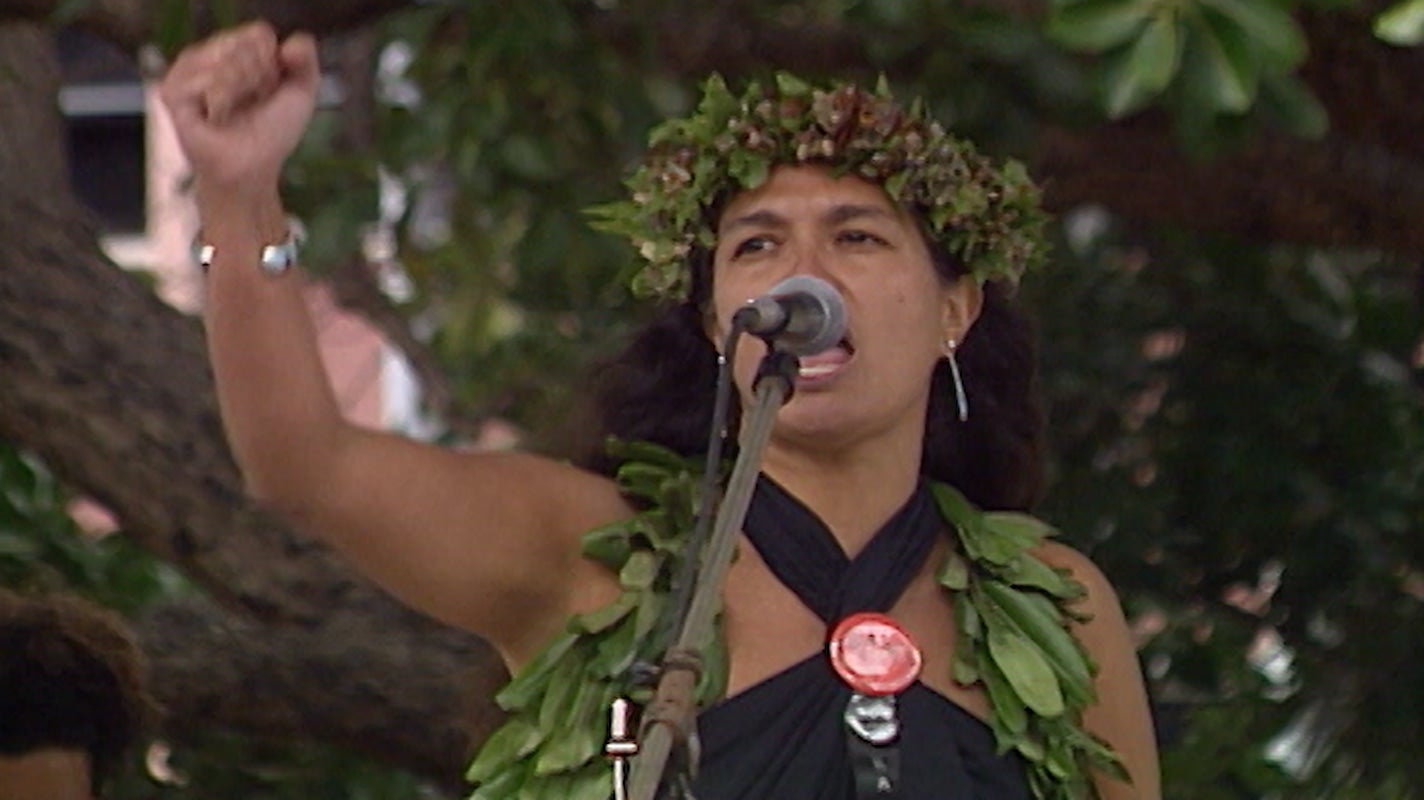
Voices of opposition against the US occupation of Hawai‘i rose in global prominence with the Hawaiian Renaissance from the 1960s and beyond. Native Hawaiian scholar and activist Haunani Kay Trask delivered a famous speech, “We Are Not American,” at ʻIolani Palace in 1993, marking a hundred years since the US-backed overthrow of the Hawaiian Kingdom. Her unwavering stance for self-determination left a legacy for future scholars, activists, and Indigenous communities.
Military Hub
In the case of Hawaiʻi and similar places, the primary reason for colonizing the land is its strategic location on the map. A place’s geography, such as its proximity to trade routes, continents, and waterways, becomes the primary reason to secure access to and control a place. Many military hub colonies are and continue to be islands.
Since islands are spread throughout the world, controlling islands means gaining control over places that can be useful for one’s own country, precisely because they are geographically far away. Furthermore, islands can be strategically important because of their proximity to vast expanses of water, including waterways that may serve as important trade routes.
Additionally, some larger powers view islands as “isolated” and “small” land masses where they can run risky experiments with little political resistance. This is called the “laboratory rationale.” The Pacific Islands were once home to nuclear testing sites for the US, France, and the United Kingdom, as well as chemical weapons storage, particularly at atolls like Kalama (also known as Johnston Atoll). This was possible because these places were claimed as US unincorporated territories, British Overseas Territories, and French overseas collectivities.
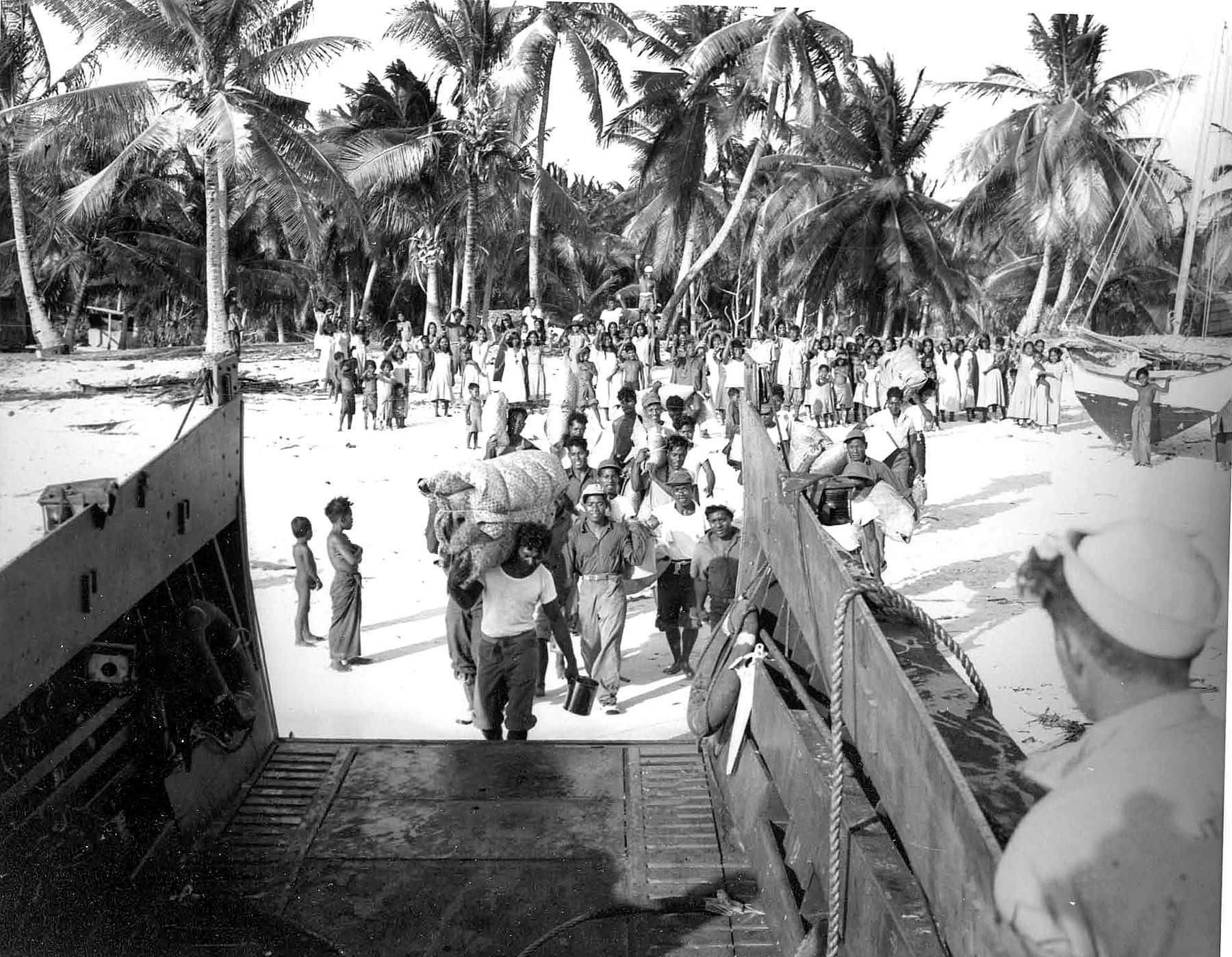
Image 20.01.06 — Between 1946 and 1958, the US conducted nuclear testing in the Marshall Islands, treating the region as a remote testing ground for atomic weapons. The lasting health and environmental effects of this testing are still being felt today. Pictured: Bikinians, the people of Bikini Atoll, leaving their home in 1946.
This is the island colonialism paradox. For larger powers, islands are important precisely because they are viewed as ultimately unimportant. Islands are simultaneously important and disposable, places of exploitation and places of nothingness. The fact that islands are perceived as“small” and “isolated” means that larger powers, and especially their militaries, feel they can do whatever they want with islands—actions they would not be able to get away with in their own country. They view islands as important because they think that they have a “free pass” to do whatever they want in islands with little to no consequence.
Under this power dynamic, the Pacific Islands have been subjected to various forms of colonialism. Yet, the story does not end here.
What Is Decolonization?
Upon the founding of the largest intergovernmental organization, the United Nations, there were fifty-one founding members. These founding members were the only ones recognized as being legitimate countries or, to be more precise, nation-states. In 2024, there were 193 member states. This represents a 278 percent increase in the number of states in the past seventy years. What accounts for this substantial difference? The answer is decolonization.
We refer to decolonization in one of two ways: the first is political decolonization and the second is everyday decolonization.
Political decolonization refers to the breakdown of an empire as a legitimate political form of governance. In other words, it challenges colonialism as a legitimate way to govern the world. Through political decolonization, colonies stop being controlled by other powers. Formerly colonized people then enter the world on their own terms, forming an independent country of their own, being in free association with another country, or becoming part of another country. Many Pacific Island countries (except Tonga) had once been colonized, which meant they needed to struggle for decolonization. Sāmoa was the first Pacific Island to decolonize in 1962.
The Pacific Islands that most recently changed their political status are the three Freely Associated States in Micronesia (FSM). After World War II the US took control of many of the islands that fell under the Japanese empire. They did so under the guise of the Trust Territory of the Pacific Islands (TTPI)—a program of the United Nations that allowed the US to “manage” the islands.
The responsibility of the US was to guide the Pacific Islands toward self-governance administered by the TTPI. The US originally had other plans for the TTPI, including territorial status, just like Guåhan (Guam). Micronesians did not accept this proposal and wanted to ensure that they were properly decolonized. Negotiating with the US, they entered into free association with the US as the Federated States of Micronesia, the Republic of Palau, and the Republic of the Marshall Islands. In doing so, Micronesians would form sovereign countries, but the US would handle their defense and consult with them regarding certain aspects of their foreign affairs. This relationship between Micronesians and the US still exists today.
However, not all of the Pacific is decolonized. The United Nations has a list of remaining colonies in the world called non-self-governing territories. There are seventeen places left on this list, with six of them being in the Pacific, including Guåhan and American Sāmoa. Thus, political decolonization for the Pacific is not yet complete. However, just because it is not yet complete, does not mean that Pacific Islanders are simply accepting the status quo. Rather, there are movements in the islands for political decolonization and even government bodies established in the islands to fight for decolonization.
The other more commonly used framing of decolonization is everyday decolonization. In his book Decolonising the Mind, Kenyan scholar, Ngũgĩ wa Thiong’o introduces the concept of the “cultural bomb.” By this, he refers to how colonialism annihilates a people’s beliefs in their culture, so much so that they view their own people, language, and culture as a “wasteland of nothingness.” If colonized people believe that colonization is beneficial for them, then the process of colonization becomes much easier because there is less resistance.
In order to do this, the colonizer makes colonized people think that they cannot do anything alone, meaning that if the colonizer leaves then the people will be left houseless, starving, or struggling to survive. Colonizing the mind through education is an effective method of spreading this belief and creating dependence on the colonizer. This is why Thiong’o writes, “the night of the sword and the bullet was followed by the morning of the chalk and the blackboard.” 1
In the island of Guåhan, for example, the US Navy banned the speaking of the Indigenous CHamoru language in schools. Schools punished students for speaking CHamoru in the classroom. Estella Meno Gofigan remembers the hunger pangs she felt as she watched her classmates eat lunch. She could not afford food as her teacher took her lunch money away. The only thing she did wrong: speak CHamoru in the classroom. Today, only around 16 percent of the entire population of the island speaks the language—a stark comparison to the almost 90 percent before World War II. Banning a language is a clear way to make people forget who they are.
Everyday decolonization of the mind, then, means fighting against the cultural bomb. It means reclaiming one’s culture, language, and, ultimately, belief in one’s own people. Pacific Islanders today, both those in the Pacific and the diaspora in the US, are engaging in movements to repair the damages of colonialism and to revitalize their sense of self. This is a form of resistance.
Speaking one’s language again, learning one’s dances and chants, and learning one’s history are all forms of resistance and reclamation. For example, in Hawaiʻi, Guåhan, and the Commonwealth of the Northern Mariana Islands today, there are programs to revitalize traditional navigation of the ocean. Active efforts are being made to ensure that Pacific Islander culture and agency remains alive.
In this module, we offered an overview of what colonialism means, different forms of colonialism, political decolonization, decolonization of the mind, and how these practices play out in the Pacific Islands and among Pacific Islanders. In the following modules, we will explore in greater depth each of the following topics: unincorporated territories of the US, geopolitics of the Pacific Islands, the fight for sovereignty today, and everyday decolonization in the Pacific.
Glossary terms in this module
colonialism Where it’s used
The process in which one country or people controls another place or people through partial or full political control for an extended period. Colonialism has lasting economic, social, and cultural effects even after the period of formal colonization is over.
empire Where it’s used
A large polity in which a central power controls many different peoples, territories, and regions that were often brought under control by conquest or colonization.
everyday decolonization Where it’s used
Ways to exercise agency and resist colonialism in one’s daily life. These everyday acts, such as learning Indigenous languages or performing Indigenous cultural practices, help to center Indigenous ways of knowing.
free association Where it’s used
A political status in which a sovereign country establishes a special relationship with another country, usually a previous colonial power. This agreement between two countries includes, but is not limited to, economic packages and defense agreements. The Republic of Palau, the Republic of the Marshall Islands, and the Federated States of Micronesia all have separate agreements with the US, known as Compacts of Free Association (COFA).
geopolitics Where it’s used
The changing political and international relations that are tied to a place’s geography.
Guano Islands Act Where it’s used
A law passed by the US Congress in 1856 that gave US citizens permission to take control of any islets containing guano deposits as long as the islands were not already claimed or inhabited. At its peak, there were nearly one hundred islands claimed. Today, some of these uninhabited islands are still under US control.
non-self-governing territory Where it’s used
A territory whose people have not yet attained a full measure of self-government. The United Nations established a list of places that meet this definition.
political decolonization Where it’s used
The process in which colonies reach a full measure of self-government and gain control over their land, government, and destinies. Political decolonization breaks down having an empire as a way to govern the world, demanding instead sovereignty and self-determination.
self-determination Where it’s used
The right of a people to freely determine their political status and freely pursue their economic, social, and cultural development without external interference. This right is recognized by the United Nations and is an important aspect of human rights.
sovereignty Where it’s used
The ability of a country to have independent freedom of action, such as making its own laws and rules without external interference. For Indigenous peoples, sovereignty means having control of their lands and way of life, free from colonial control.
Trust Territory of the Pacific Islands (TTPI) Where it’s used
A group of islands formerly controlled by Japan, which include the Commonwealth of the Northern Mariana Islands, the Republic of Palau, the Republic of the Marshall Islands, and the Federated States of Micronesia. After World War II, the United Nations transferred control of these islands to the United States. The system was meant to be temporary, and these territories were meant to develop towards self-government or independence.
unincorporated territory Where it’s used
A US political status in which a territory has no promise of formally becoming a state of the United States. In the US, people from unincorporated territories such as Guåhan (Guam) and Puerto Rico cannot fully participate in American democracy even though they are US citizens.
Endnotes
1 Ngũgĩ wa Thiong’o, Decolonising the Mind: The Politics of Language in African Literature (East African Educational Publishers and James Currey, 1986), 9.