




Unfurled sails from sakmans fill the horizon. Canoes sit on the calm ocean along with the sakmans. Two birds fly over the sakmans in a cloudy sky.
Module 1: Pacific Islanders Overview
What do Pacific Islander efforts to protect their cultures and the environment teach us about resilience and sovereignty?
Pacific Islanders are the Indigenous peoples of Oceania. They share many deep ancestral and historical connections. They also have unique local identities and histories. Whether they identify as Marshallese, Native Hawaiian, or Tongan, Pacific Islanders represent some of the most culturally diverse and politically dynamic communities.
The Pacific region boasts about 20 percent of the world’s languages, with over one thousand Indigenous languages. Several creole languages exist as well, including Tok Pisin in Papua New Guinea, Bislama in Vanuatu, and Hawaiian Pidgin (formally Hawaiʻi Creole English or HCE). English and French also function as the official languages of several Pacific Island governments.
Pacific peoples share similar histories in both the recent and distant past. These histories appear in chants, genealogies, proverbs, songs, and other oral traditions. With the rise of the arts and digital media, an increasing number of Pacific Islander histories can also be found in film, literature, social media, television, and theater. These histories highlight important issues like anti-nuclear movements, climate justice, political sovereignty, sacred spaces, and women’s leadership, among other topics.
This module is a brief introduction to the history of Pacific Islanders, as well as issues that shape their past, present, and future.
How can we describe the cultural, linguistic, and environmental diversity of the Pacific?
What are the impacts of colonization, militarization, and racism in Oceania?
How have Indigenous peoples of Oceania become a part of the United States? And what have been their key economic, religious, and social drivers for survival, resistance, migration, and settlement?
Environment and Politics
Approximately twenty-five thousand islands are distributed across Oceania. With its expansive ecologies and temperate zones, the region covers 28 percent of the globe’s surface. These islands vary in size and shape, with Fiji, New Caledonia, and Papua New Guinea being some of the largest. Smaller islands and island groups like Chuuk, Nauru, Niue, Kiribati, Palau, Tokelau, Tuvalu, and Yap are also spread out over vast distances. While most of the region is warm and humid, winter conditions that produce hail and snow frequently take place in the mountains of Aotearoa New Zealand and Hawaiʻi.
There is a considerable geographic and environmental variation as well as uniqueness between islands, with some having barrier reefs, dense jungles, freshwater lakes, lagoons, or mangrove swamps. Volcanic activity is also quite common throughout the Pacific Islands. Unlike the large islands with greater masses, the smaller islands, especially atolls, have limited space for agriculture and other sustainable practices. In fact many islands are uninhabitable. Atolls are also susceptible to floods and wind damage produced by cyclones or typhoons.
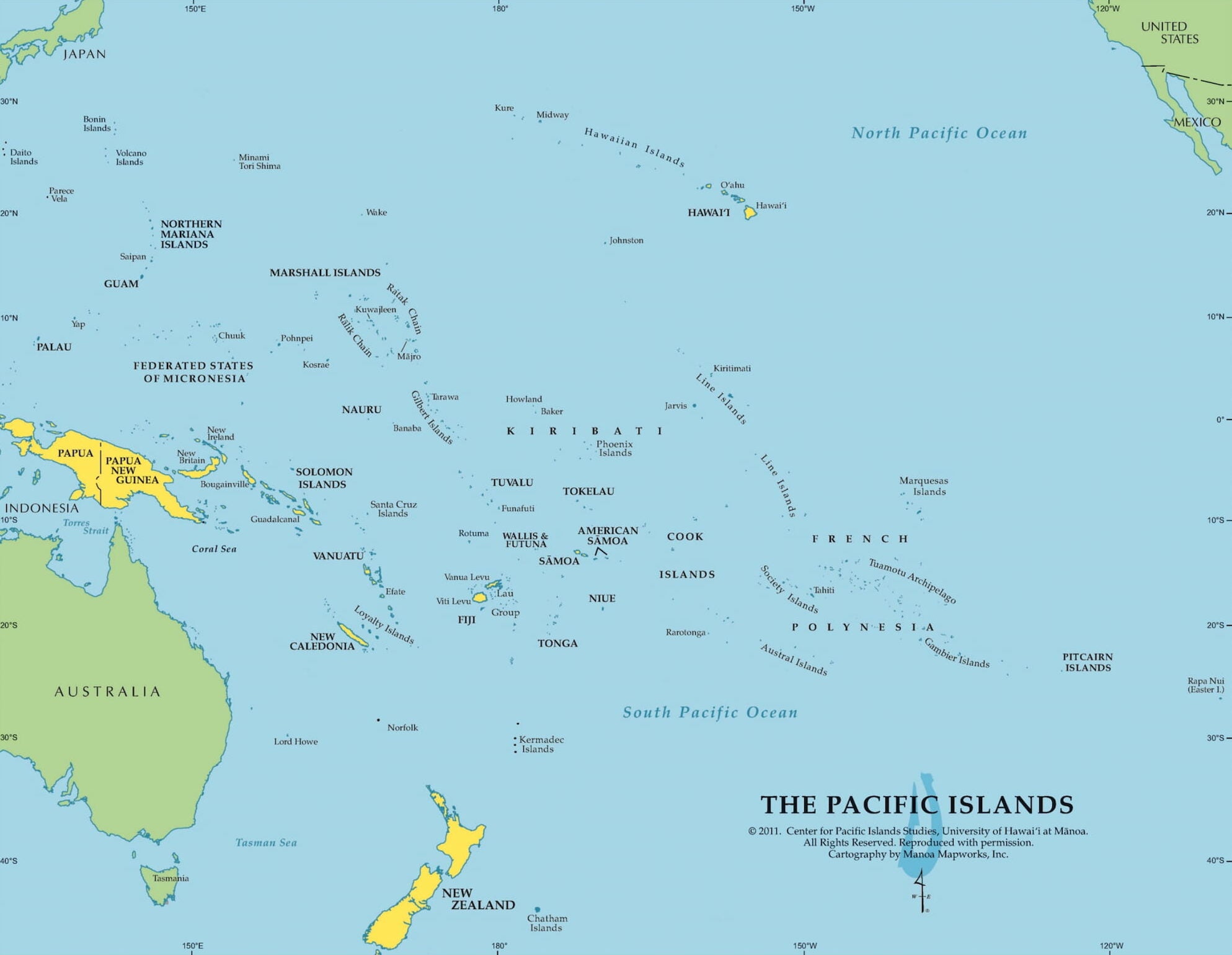
Image 02.01.01 — Map of the Pacific Islands, from the Center for Pacific Islands Studies, University of Hawaiʻi at Mānoa. Reproduced with permission.
With such a wide range of habitats, many unique animals, birds, fish, coral, and plants exist in the region. Many Pacific peoples hold much respect and reverence for all living and dead beings (e.g., ancestral spirits) across these environments. In this regard, they may not simply treat animals, coral reefs, forests, mountains, and rivers as biological or geological entities, but as supernatural beings as well. Historically, these beings may have been gods or they may have been departed relatives, trickster figures, or malicious spirits. Indigenous Pacific oral traditions reference these entities, as do their creation stories about the origins of the islands and the universe.
With the onset of global warming and sea level rise, Indigenous peoples of Oceania now lead international discussions about climate justice in Asia, Europe, and elsewhere. With their focus on the reduction of greenhouse gas emissions, the production of renewable energies, and the accommodation of displaced communities, Pacific Islanders are at the forefront of social movements for the restoration of ecosystems in the Pacific and globally.
Race and Colonization
Traditionally, Pacific peoples trace their relations to one another through genealogies and histories. Within these subregions, many Pacific peoples are connected through languages, marriages, political alliances, and some shared cultural practices. However, European explorers of the late eighteenth to mid-nineteenth century brought their own knowledge systems and views about skin color, culture, and civilization that remain today. They imposed new geographical categories onto the Pacific region so that today the Pacific Islands are defined by three geographical subregions called Melanesia (“dark islands”), Micronesia (“small islands”), and Polynesia (“many islands”).
Europeans racially classified and located the so-called “friendly” (“light skin”) or “dangerous” (“dark skin”) Pacific Islander groups in European maps of the region. As a result, Europeans generally stereotyped Micronesians and Polynesians as light-skinned and friendly but labeled Melanesians as dark-skinned and dangerous.
Due to the anti-Black violence of the slave trade, many European explorers, missionaries, and traders disparaged Black peoples and dark-skinned Pacific Islanders for several centuries. They also employed racist geographical markers to map maritime trade routes between Asia, especially China, and the Americas and Europe. These biases influenced the histories of European colonization in the Pacific.
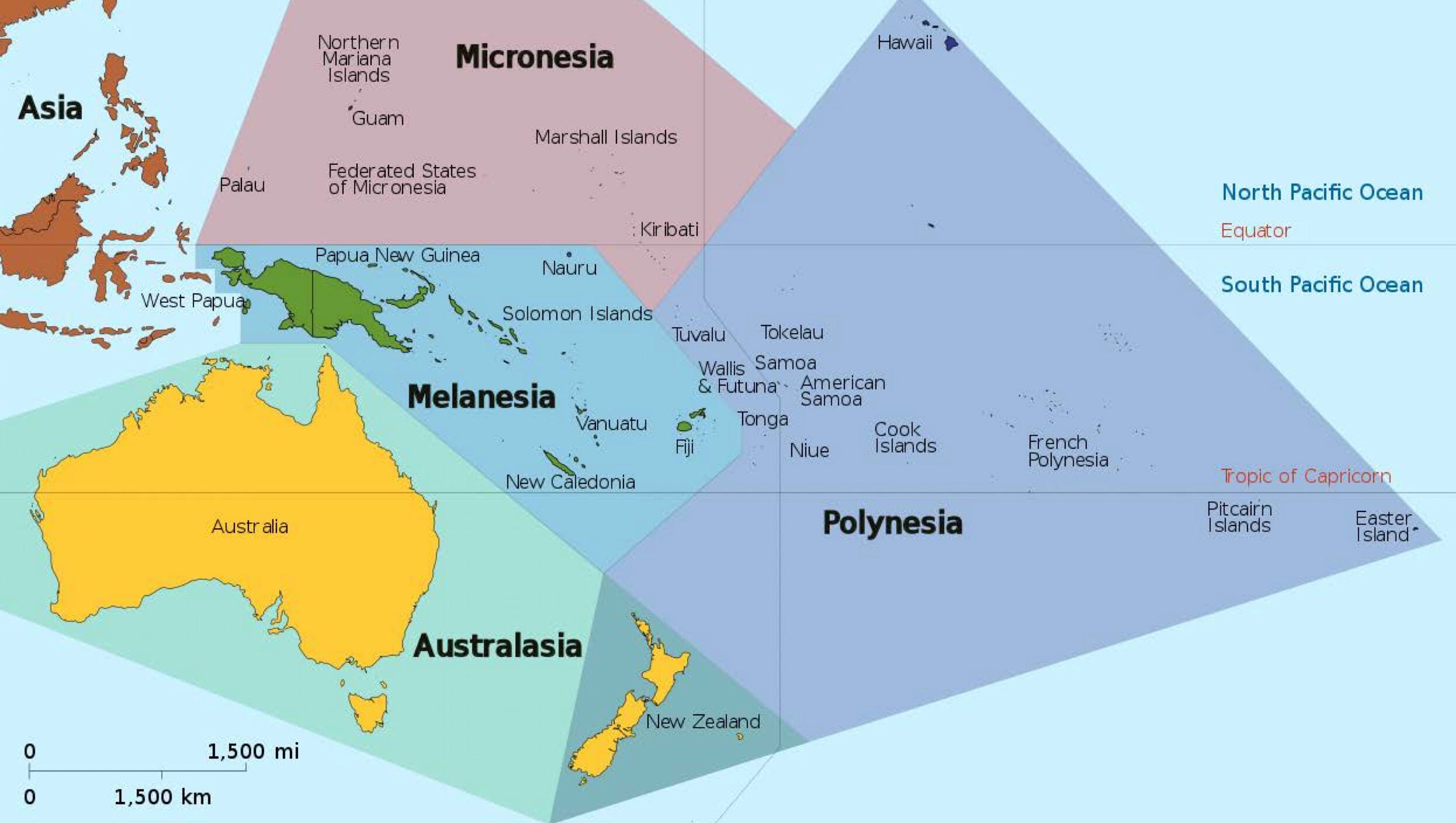
Image 02.01.02 — Another map of Oceania with the subregions Melanesia, Micronesia, and Polynesia identified. Compared to the map above, how might categorization be used to both divide and unite?
Colonization itself is the act of an outside entity asserting control in another place. France, Germany, Spain, the United Kingdom, and the United States have colonized the Pacific Islands from the sixteenth century to the present. Japan is the only non-Western country that has attempted to control Pacific Islanders. European, American, and Japanese colonization efforts were largely focused on the production of copra (dried coconut) and sugar plantations, nickel and phosphate mining, and access to locations for military outposts and the refueling of ships on trade routes.
Throughout this period of colonization, Pacific Islanders have resisted external forces that sought to take their lands, diminish their belief systems, and reduce their power. After World War II, for example, Pacific peoples organized with churches, parliaments, and the media to challenge colonial and racist depictions of their communities. They have also sought better political futures.
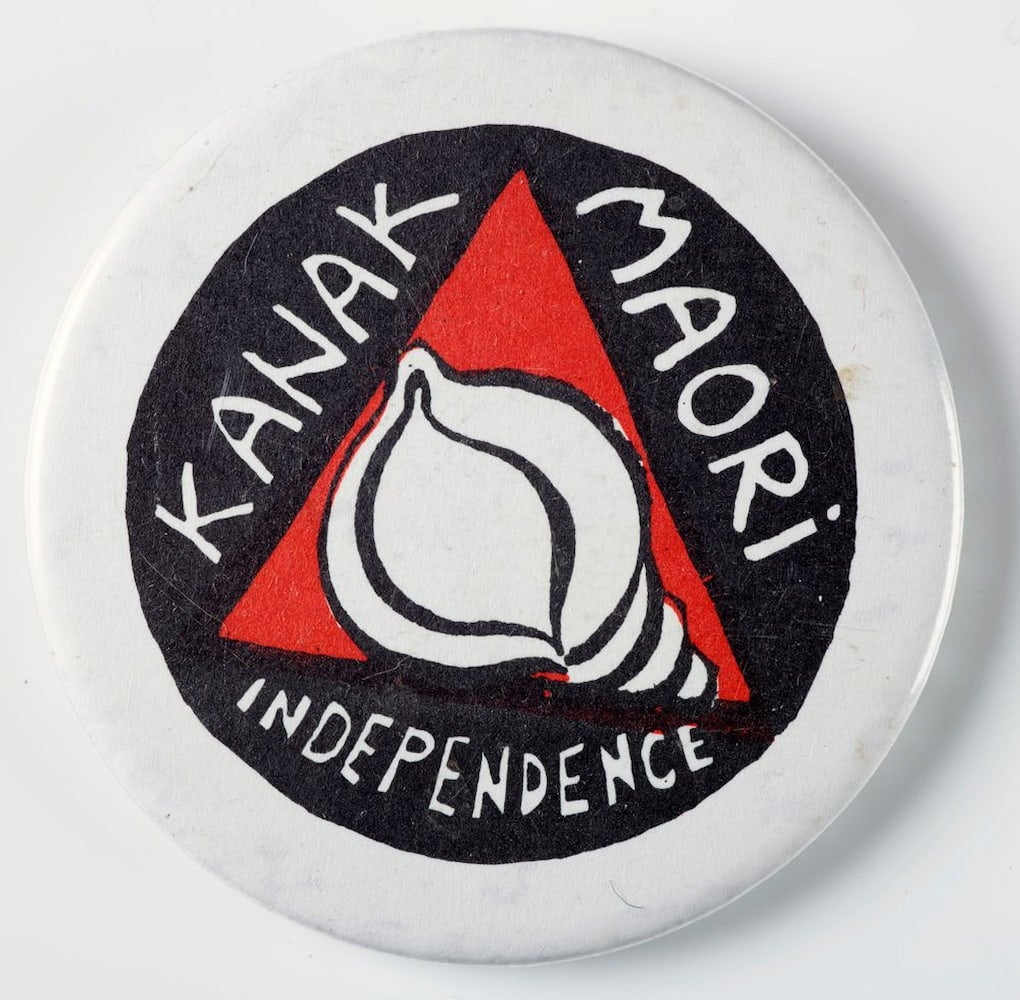
Image 02.01.03 — This badge from the 1980s calls for Kanak independence in New Caledonia, a French territory where Kanak are Indigenous peoples, in solidarity with Māori of Aotearoa New Zealand, a former British Crown colony.
As a result, the decolonization movements of the 1960s forged new collective identities, as well as launched an era of cultural pride, language revitalization, and ethnic nationalism. Sovereignty, or the ability of a people to achieve and express self-governance, subsequently entered the languages of many Pacific Islander communities.
In addition to a range of local identities, the Indigenous peoples of the Pacific may identify as Kanak, Moana, Pacific Islander, Pasifika, Te Māʻohi, and Wantok, among other terms. They have also appropriated Melanesian, Micronesian, and Polynesian as their own identities in education, music, politics, religion, and sports. Relatedly, Indigenous and immigrant peoples alike sometimes used collective names shaped by colonial histories, such as “Guamanians” in Guåhan (Guam), “locals” in Hawaiʻi, and “Kiwis” in New Zealand (Aotearoa).
Western Sāmoa (now called the Independent State of Sāmoa) was the first Pacific country in 1962 to achieve independence from New Zealand, its former colonizer. The same happened with Nauru (1968) and Fiji (1970) as they gained independence from the United Kingdom. Much like Ethiopia in Africa and Thailand in Southeast Asia, the Kingdom of Tonga remained formally independent over the course of these political transformations.
Today, Chile, France, New Zealand, and the United States still maintain colonial control over several Pacific Island territories, including the Marquesas, New Caledonia, and the Society Islands of France’s Ministère des Outre-Mer (Ministry of Overseas Territories), as well as Rapa Nui (Easter Island), governed by Chile. The US also possesses territories and colonies like American Sāmoa (Amerika Sāmoa) and Guåhan (Guam).
Demographics, Migration, and Pathways
Pacific Islanders are now a part of a global diaspora, with communities that are dynamic and thriving, but also poorly resourced. In smaller countries like Aotearoa New Zealand, they are just over 8 percent of the population and have a recognizable presence. In larger countries like Australia and the United States, they are a smaller group demographically (.04 percent and .05 percent, respectively) and are often not visible outside of the areas with strong community representation. Yet Pacific Islanders have outsized visibility in popular culture and global sport platforms. They also are disproportionately represented in the military and service industries.
Most Pacific Islanders living in the US are Indigenous to two Pacific regions: Polynesia (including Hawaiʻi, the Kingdom of Tonga, and American Sāmoa) and Micronesia (including the Commonwealth of the Mariana Islands, Guam, the Federated States of Micronesia, the Republic of the Marshall Islands, and the Republic of Palau). In the continental US they are well-rooted on the West Coast and in Hawaiʻi. There are long-standing Māori, Native Hawaiian, Tongan, and Samoan communities in Utah. The Marshallese and other Pacific Islanders have also extended their familial networks to Arkansas, Florida, Iowa, Oklahoma, Texas, and elsewhere. There are also growing Fijian communities, with the largest populations in California and Hawaiʻi.
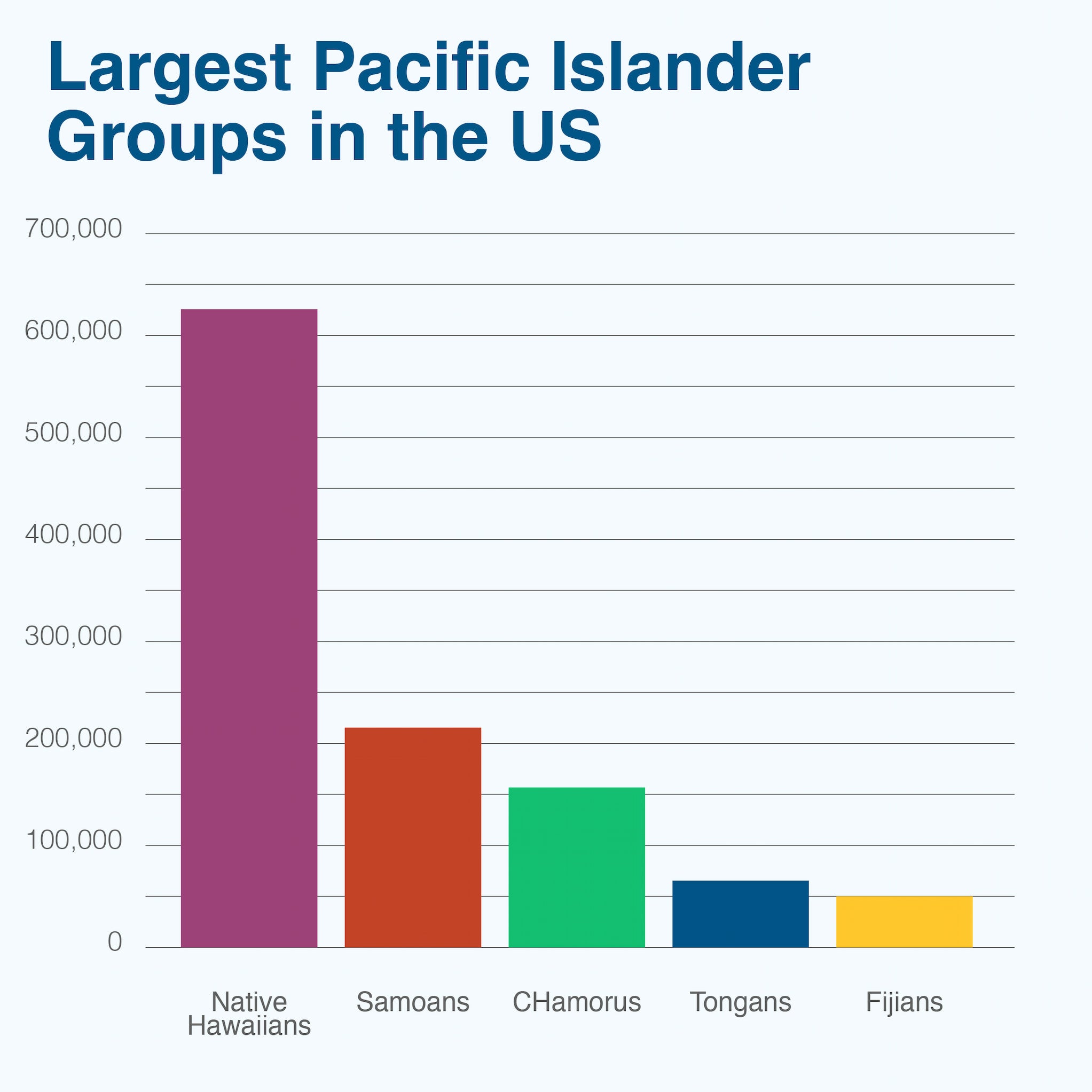
Image 02.01.04 — The largest Pacific Islander groups in the US are Native Hawaiians (620,000), followed by Samoans (212,000), CHamorus (156,000), Tongans (65,000), and Fijians (50,000). Data based on five years (2016–2020) of Census American Community Surveys.
The largest Pacific Islander groups in the US according to the 2020 census are Native Hawaiians (680,442), followed by Samoans (256,997), CHamorus (142,947), Tongans (78,871), and Fijians (54,006). Other groups include Chuukese, Māori, Marshallese, Palauans, Pohnpeians, and Yapese, to name a few. While Hawaiʻi (394,102), California (337,617), and Washington (114,189) are home to the largest number of Pacific Islanders, the states where Pacific Islanders (alone or in combination with another ethnicity) have the highest percentage of the resident population are Hawaiʻi (27.1 percent), Alaska (2.5 percent), and Utah (1.8 percent).
How is it that Pacific Islanders came to be a part of the United States? Many became a part of the US largely through histories of capitalism, colonialism, and Christianity in Oceania. Early American movement into parts of the Pacific were tied to plantation agriculture, missionization, military reach, and trade ambitions.
In Hawaiʻi, for example, early capitalist investments in plantation agriculture were once thought to be a source of strengthening the nation and building the economy under the Hawaiian monarchy. However, through investments in the burgeoning sugar trade and legal transformation of land to private property, planters and missionary descendants expanded their political and economic power over several decades.
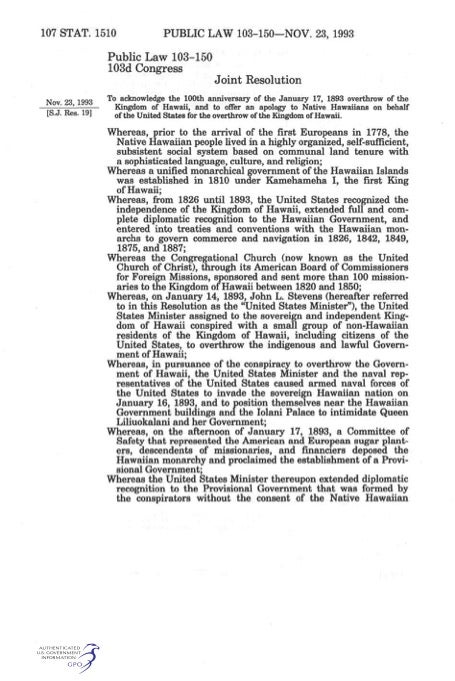
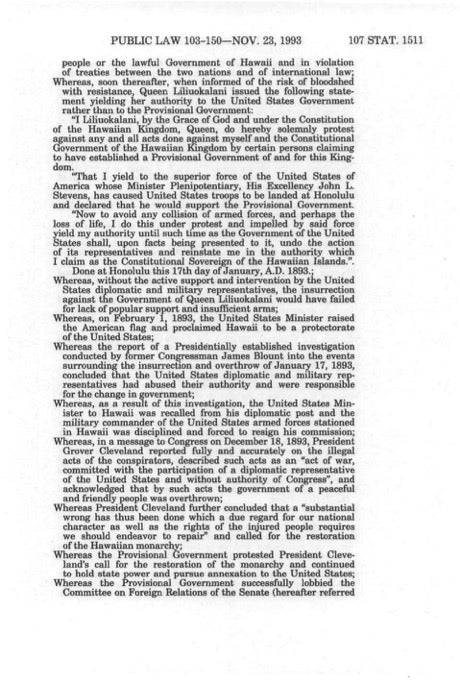
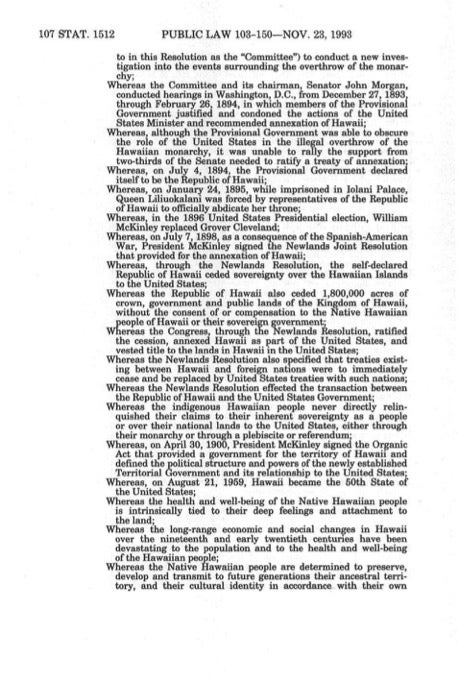
Supported by US military might docked off the shores of the island of Oʻahu, a group of American and European businessmen (known as the “Community of Safety”) perpetrated the illegal overthrow of the last Hawaiian monarch, Queen Liliʻuokalani, in 1893. While the Queen appealed to the US government for restoration of the monarchy, and the majority of Native Hawaiians engaged in mass anti-annexation petition drives, they were ultimately unsuccessful. In 1898, the US Congress moved forward with annexation, or incorporating a territory to a larger entity like the US, by passing a Joint Resolution of Congress.
More to explore
Document
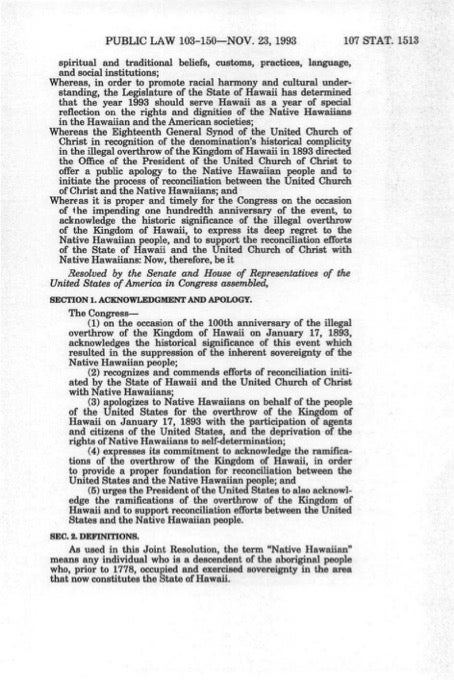
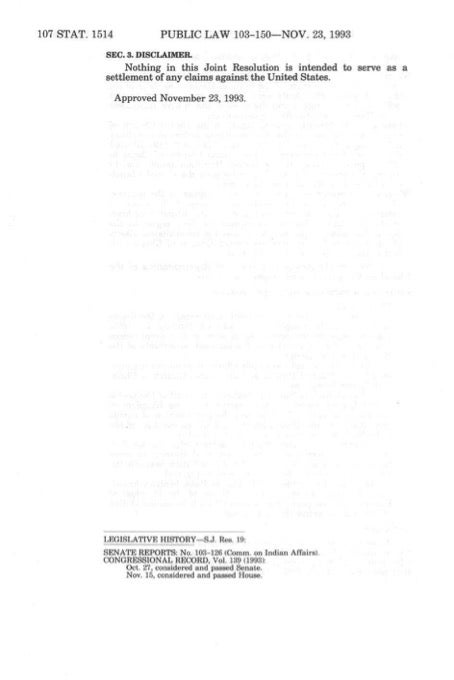
Public Law No. 103-150 (11/23/1993), or the “Apology Bill”
On the 100th anniversary of the overthrow in 1993, the US Congress recognized its violation of international law and the existing treaties between the Hawaiian Kingdom and the United States. In a joint resolution, Congress passed Public Law No. 103-150 (11/23/1993), also known as the “Apology Bill,” with the support of US President Bill Clinton.
The illegal annexation ultimately supported plantation agriculture and the multi-million dollar cultivation of sugar by American investors. In addition, it was also intended to secure future possibilities for American trade across Asia and the Pacific. Native Hawaiians are the largest Pacific Islander group in the US, a result of the overthrow of their kingdom, the annexation by the United States, US military occupation, and US statehood in 1959.
American colonialism in Hawaiʻi was part of a larger move toward an overseas empire at the turn of the twentieth century. In 1898, the United States launched the Spanish-American War, leading to the American invasion of Spanish colonies in the Caribbean and the Pacific. The war also served as one justification for the US to annex Hawaiʻi.
Militarization in American Sāmoa and the Marshall Islands
The islands that would later become American Sāmoa (Tutuila, the Manuʻa group, Aunuʻu, Swains Island, and uninhabited Rose Atoll) also trace their incorporation under the American flag to this time period. The US, alongside other colonial powers, Britain and Germany, divided the islands of Sāmoa at the 1899 Tripartite Convention in Berlin without consulting its local leaders.
After Britain withdrew its interest in the islands, Germany established a colonial government over what would later become known as Western Sāmoa. The US then asserted its claim to the eastern islands where a deep-water harbor in Pago Pago could support long distance voyages for trade. Local leaders from Tutuila signed the Deed of Cession of Tutuila in 1900, and the paramount chief Tui Manuʻa was compelled to sign one for Manuʻa in 1904. The Samoan islands remain politically divided today, although Western Sāmoa achieved independence from New Zealand in 1962 and is now known as the Independent State of Sāmoa.
Samoans are the second largest Pacific Islander group in the US, largely due to American Sāmoa’s status as a territory since 1900 and the longstanding presence of the US military in the archipelago. Recruiting stations on Tutuila continue to yield the highest per capita enlistment rates into the US military of any state or territory, making military service a significant pathway for labor and movement both historically and today.
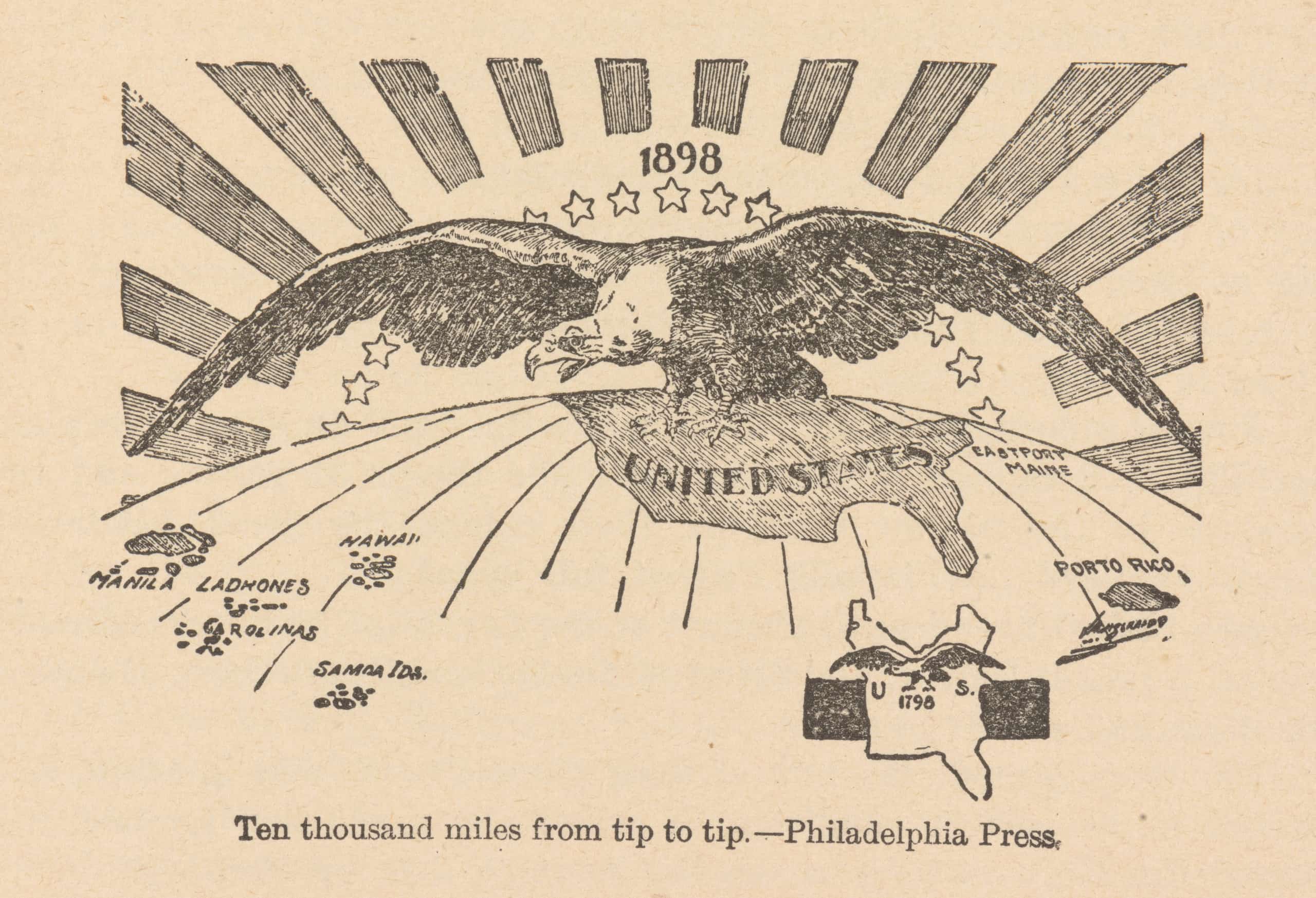
Image 02.01.06a — This Philadelphia Press political cartoon symbolizes US expansion in 1898 from “tip to tip:” Puerto Rico (identified as “Porto Rico”) to the Philippines (identified as “Manila”). A map of the US in 1798 presents a stark contrast in territorial size.
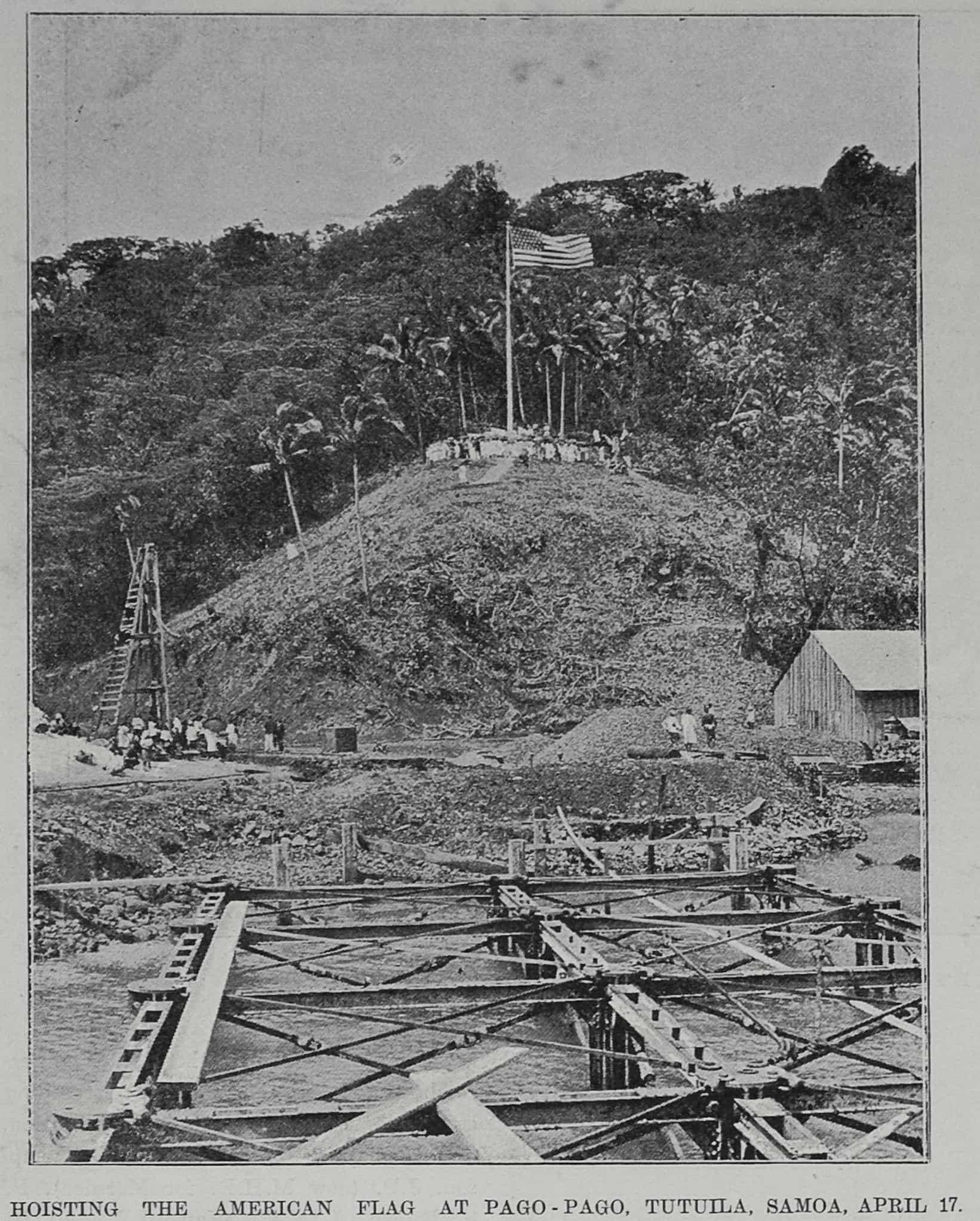
Image 02.01.06b — On April 17, 1900, high chiefs from the Samoan islands of Tutuila and Aunuʻu signed a Deed of Cession, ceding the islands to the United States.


Intertwined with capital interests, war and militarization across the Pacific have profoundly affected the Pacific Islander presence in the United States. Specifically, the “Pacific Theater” of World War II prompted massive investment in logistics and travel infrastructure to support the war effort. This resulted in a network of sites with soldiers, bases, weapons, military and communications equipment and resources along with large occupied segments of land.
From 1947 to 1986, the US and the United Nations maintained a trusteeship over “Trust Territory of the Pacific Islands” in the area known as Micronesia. In doing so, the US and the UN governed the Pacific Islands formerly colonized by Japan. During this period, the US also tested and detonated more than sixty nuclear bombs in the Marshall Islands. As a result, several generations of Marshallese have suffered from cancers and other radioactive-related illnesses. They now seek justice from the United States.
Today the island of Oʻahu in Hawaiʻi is the site of the United States Indo-Pacific Command, with over 22 percent of land controlled by the US military. Statewide, the military controls 5 percent of the land and military personnel represent 11 percent of local residents.
Comparable to Oʻahu, the US military also controls nearly 30 percent of the land in Guåhan (Guam) and, as of 2025, stations thousands of military personnel there.
Because of its status as an unincorporated territory, CHamorus from Guåhan can and have migrated freely to the US, creating significant communities in California, Hawaiʻi, and Washington. They are currently the third-largest Pacific Islander group in the United States. Like Native Hawaiians, some CHamorus have also begun to resist the US militarization of their homelands and the neighboring islands of Tinian and Saipan.
While the colonial extension of US overseas control through military might and capitalist investment has brought American interest to the Pacific, this presence has also paved the way for Pacific Islander movement eastward. Each of the largest Pacific groups that now reside in Hawaiʻi and the continental US can be tied directly to these activities.
Over the past forty years, this migration stream has grown to include the former colonial subjects of imperial Japan in the early and mid-twentieth century, namely Micronesia, the Indigenous peoples of the Caroline Islands (i.e., Chuuk and Pohnpei), the Marshall Islands, the Northern Mariana Islands, and the Palauan Islands. With the exception of the Northern Mariana Islands, which became a US commonwealth, the remaining archipelagoes became independent republics with “freely associated” treaty relationships with the United States.
Also known as the Compacts of Free Association, these treaty relationships with the Federated States of Micronesia, the Republic of the Marshall Islands, and Palau include monetary payments to the island states and allow Micronesians to travel visa-free to the United States. The treaties, in return, grant the US designated military usage of their lands and seas, thereby continuing the cycle of military occupation and violence, damaging ecosystems, and endangering innocent lives.
Christianity and Migration Across Oceania
As one of the newest groups of Pacific Islander migrants to the United States, Micronesians have created diasporic communities not only in Hawaiʻi but also in Arkansas, California, Guåhan, and Washington, working in meat processing plants and other low-wage jobs. Micronesians also serve as the leaders of churches, community organizations, and sports associations. At home, they have strong leaders like Dr. Hilda Heine (the eighth and first female president of the Republic of the Marshall Islands, and first female head of state from the Pacific) who navigate political challenges and shape decisions affecting the future of the islands.
Unlike other Pacific peoples discussed here, Tongans do not share a colonial history with the United States. As the fourth largest Pacific Islander group in the US, missionization and Christianity, education, labor, and employment have been the key drivers of Tongan movement eastward and northward. Utah is the state with the largest number of Tongan people, many tied to the strong presence of the Church of Jesus Christ of Latter-Day Saints. Membership in Methodist churches is also an important feature of many Tongan communities.
Across the Pacific, Christian missionization has had a long history. Church pathways have provided migration streams for the faithful for the past one hundred years or more. Some high-profile athletes like football player Seiuli Jesse Sapolu (San Francisco 49ers) can trace their family movement to church networks.
These religious pathways have shaped Pacific migration across the United States, with Pago Pago in American Sāmoa and Honolulu on Oʻahu marking two of the major entry points. Additionally, the 1965 Immigration and Nationality Act (Hart-Cellar Act) and its family reunification provisions have made it possible for others outside of the US dominion, like Tongans and Fijians, to immigrate to the US.
Mosaic of Pacific Islander Identities
Pacific Islanders traditionally identify with their islands, villages, clans, and genealogies. They also find collective belonging as “Indigenous” and “Pasifika” peoples; citizens of different countries; and members of the LGBTQI+ (lesbian, gay, bisexual, transgender, queer, and intersex), and MVPFAFF+ (māhū, vaka sa lewalewa, palopa, fa’afāfine, akava’ine, fakaleitī, fakafifine) communities.
The many ways Pacific peoples view themselves reflects the wide-ranging networks in which they are enmeshed across Oceania and in the diaspora.
This however does not mean that the Pacific Islanders in the United States are more or less “American.” Rather, the tendency to self-identify as “Chuukese” or “Tongan” and not “Chuukese American” and “Tongan American” in the United States demonstrates the strong cultural, economic, political, and religious ties that both connect and separate these communities. The lack of an American qualifier may also respond to the ongoing US colonization and militarization of the region, a contentious matter that many Pacific Islanders acknowledge, negotiate, and protest to some degree.
Emergent multiethnic categories like “CHamoru Mexican” and “Māori Chinese” also reveal the rising mix of multiethnic categories in cities like Los Angeles (Tovaangar) in California, and Auckland (Tāmaki Makaurau) in Aotearoa New Zealand. Comparable multiethnic identifications also appear in Australia, Fiji, New Caledonia, and elsewhere.
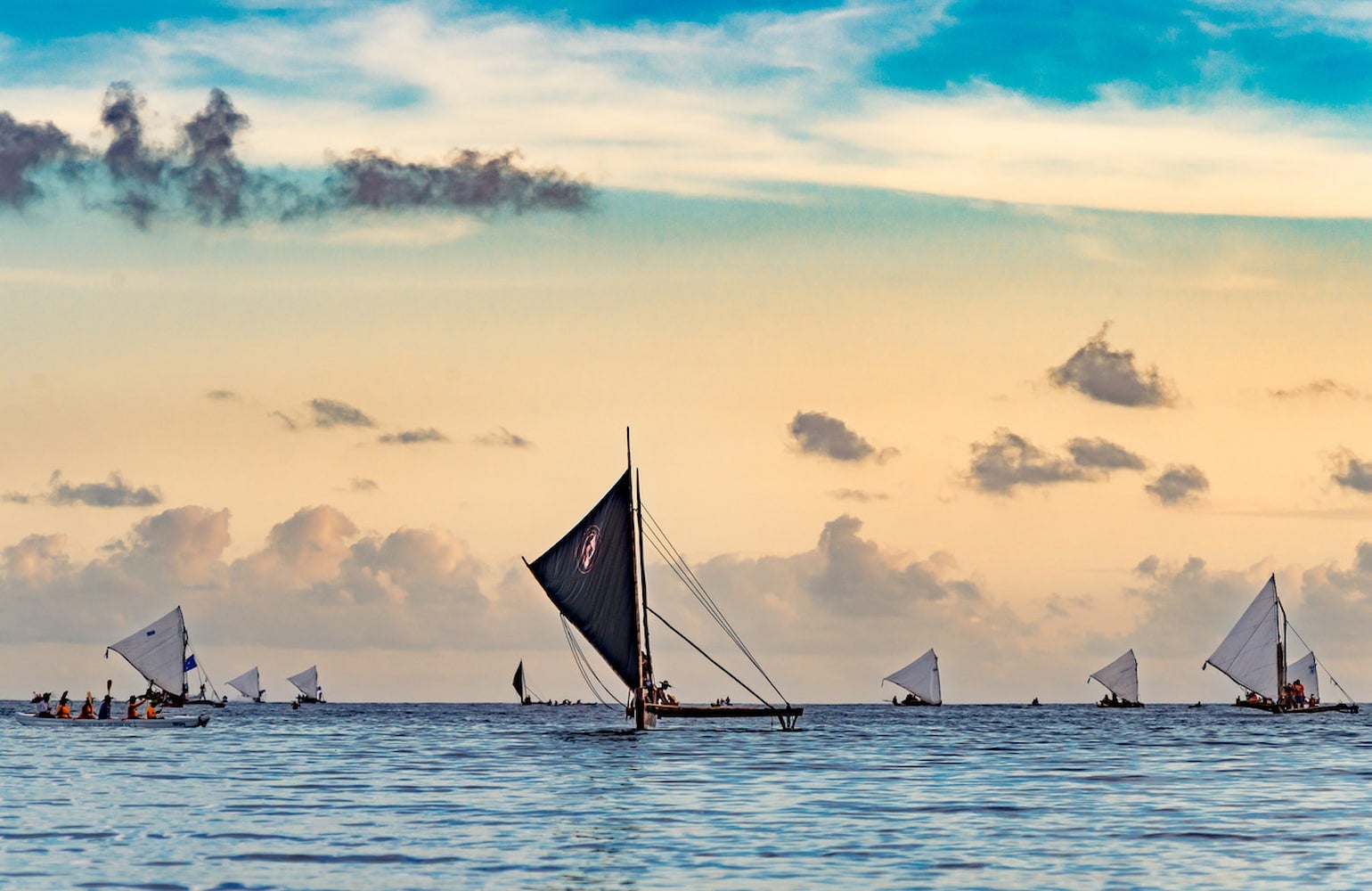
Image 02.01.09a — Boats ranging from sakmans to canoes during the traditional canoe welcome ceremony, signaling the commencement of the twelfth Festival of Pacific Arts in Hagåtña, Guåhan (Guam), on May 22, 2016. The festival brings together delegations from across Oceania every four years.
Image 02.01.09b — Mau Piailug (center), a master navigator from Satawal, Yap State, Federated States of Micronesia, taught many islanders the arts of traditional navigation and guided Hōkūleʻa on its inaugural voyage from Hawaiʻi to Tahiti in 1976.


Conclusion
Today, the Indigenous peoples of Oceania, some of whom are also part of an expanding diaspora, engage in efforts to protect and remain connected to the lands, waters, and sacred spaces. They lead global efforts to educate the world about climate change while adapting to its destructive impacts. They navigate the legacies of militarization and capitalist development while seeking sovereign rights across Pacific societies.
Pacific Islanders are also creatives, charting new pathways in film and media as bankable movie stars and independent directors. They have long shined in sports with their athletic, coaching, and organizational pursuits that continue to bring new opportunities and possibilities. Collectively, they are engaging in resistance and creative resilience that address current challenges and open bold new futures.
Glossary terms in this module
atoll Where it’s used
A ring-shaped series of islands, coral reefs, or islets surrounding a body water called a lagoon.
climate change Where it’s used
The long-term changes in our average weather patterns that affect regional and global climate. Human activity, particularly the burning of fossil fuels like oil and coal since the 1800s, causes greenhouse gases to trap heat in Earth’s atmosphere which in turn raises Earth’s temperature. Not to be confused with global warming (the long-term heating of Earth’s surface), climate change also encompasses droughts, rising sea levels, severe fires, flooding, and melting polar ice caps, among other natural disasters.
climate justice Where it’s used
A form of environmental justice that recognizes the harmful social, economic, and health effects that climate change causes for impacted communities. Pacific Islanders use Indigenous knowledge to think about and propose solutions for climate justice.
colonization Where it’s used
The act in which a group or country brings a region and its Indigenous people under its domination and control.
Compacts of Free Association (COFA) Where it’s used
A series of treaties between the Federated States of Micronesia, the Republic of Palau, and the Republic of the Marshall Islands with the US, granting citizens of Micronesia to join the US military without requirements of residency or US citizenship, live and legally work in the US without a visa, and access social and health programs. In exchange, the US has exclusive access to these islands, and significant military and veto power.
diaspora Where it’s used
The dispersal, movement, migration, or scattering of a people from their established or ancestral homeland.
genealogies Where it’s used
An account of someone’s family lineage. Pacific Islanders use genealogies to trace their ancestry and to recognize their statuses as Indigenous people.
greenhouse gases Where it’s used
Gases such as methane, carbon dioxide, and nitrous oxide that trap heat from the sun around Earth’s surface.
Indigenous Where it’s used
Refers to someone or something that originates from a region, predating colonialism.
Melanesia Where it’s used
A label given to the geographical region in the Western Pacific and north of Australia, including Papua New Guinea, the Solomon Islands, Vanuatu, New Caledonia, and Fiji.
Micronesia Where it’s used
A label given to the geographical region in the Northwest Pacific and east of the Philippines, including Palau, the Northern Mariana Islands, Guåhan (Guam), the Federated States of Micronesia, Kiribati, and the Marshall Islands.
militarization Where it’s used
The process in which a country orders an increase in military presence to organize and prepare for war.
Oceania Where it’s used
A huge geographic region that encompasses Melanesia, Micronesia, Polynesia, and Australia.
Polynesia Where it’s used
A label given to the large geographical region in the Pacific east of both Melanesia and Micronesia, including Hawaiʻi, Tuvalu, Tokelau, Samoa, the Cook Islands, the Society Islands, the Austral Islands, Mangareva, the Tuamotu Islands, the Marquesas Islands, Tonga, Rapa Nui, and Aotearoa New Zealand.
sovereignty Where it’s used
The ability of a country to have independent freedom of action, such as making its own laws and rules without external interference. For Indigenous peoples, sovereignty means having control of their lands, water, air, and way of life, free from colonial control.
stereotype Where it’s used
Generalized beliefs about a group of people based on one characteristic. Typically, stereotypes are rooted in incorrect, misconstrued and often racist beliefs to perpetuate harmful portrayals about groups of people.