






Module 5: Literature and Identity
Are Asian Americans who live in the United States South impacted by their experiences in the South?
Asian American literature in the South has steadily grown in the last few decades of the twentieth century. Many works focus on stories of isolation—some reflecting the small populations of the initial Asian American presence, and others drawing on isolation more metaphorically.
Pacific Islander (Pasifka) literature has too often been put in with the category of Asian American literature under the Asian American and Pacific Islander category without specific attention to the many ethnicities and cultures of this group, as well as their distinct histories. As Pacific Islander communities continue to grow across the South, this literature can confidently be expected to grow as well.
This module explores the fiction and memoir of three widely lauded Asian American and Pacific Islander authors from the South. The authors, Monique Truong, Abraham Verghese, and T Kira Māhealani Madden, each write about experiences of being Asian American in the South.
How have Asian Americans and Pacific Islanders used literature to express their experiences living in the South?
What do literary works tell us about the ways Asian Americans and Pacific Islanders perceived and formed their identities?
How do Asian Americans and Pacific Islanders position racial identity in relation to intersectional identities such as gender and sexuality?
Finding Meaning in Flavors and History
Linda Hammerick, the narrator and protagonist of Monique Truong’s novel Bitter in the Mouth, seeks to reconcile her identities as an adoptee and the lone Vietnamese American in Boiling Springs, North Carolina. “Since leaving Boiling Springs,” Linda says, “I was often asked by complete strangers what it was like to grow up being Asian in the South. You mean what was it like to grow up looking Asian in the South, I would say back to them…” 1 However, Truong does not reveal Linda’s race and ethnicity until halfway through the novel. This forces the reader to re-evaluate their understanding of her isolation, estrangement from her mother, and relationship to her own body.
Truong, drawing on some of her own childhood memories of Boiling Springs, employs a wide variety of metaphors that mirror and complicate Linda’s dual identities. The most visible one in the novel is Linda’s synaesthesia. A neurological condition of blended senses, Linda has a type of synaesthesia in which words have tastes, and are written out in the novel with the italicized flavor following the spoken words: “Lindamint HammerickDrPepper“ are the taste of her own name.
The flavors, many of them specific to Southern-identified food products or popular dishes, shape Linda’s reactions to words and objects in ways that others can not understand. Her synaesthesia operates as an invisible identity that she can not control, first hinting at and then adding to her racial difference. Helping us to understand their intersection, we learn that her Vietnamese name, Linh-Dao, gives her no taste at all.
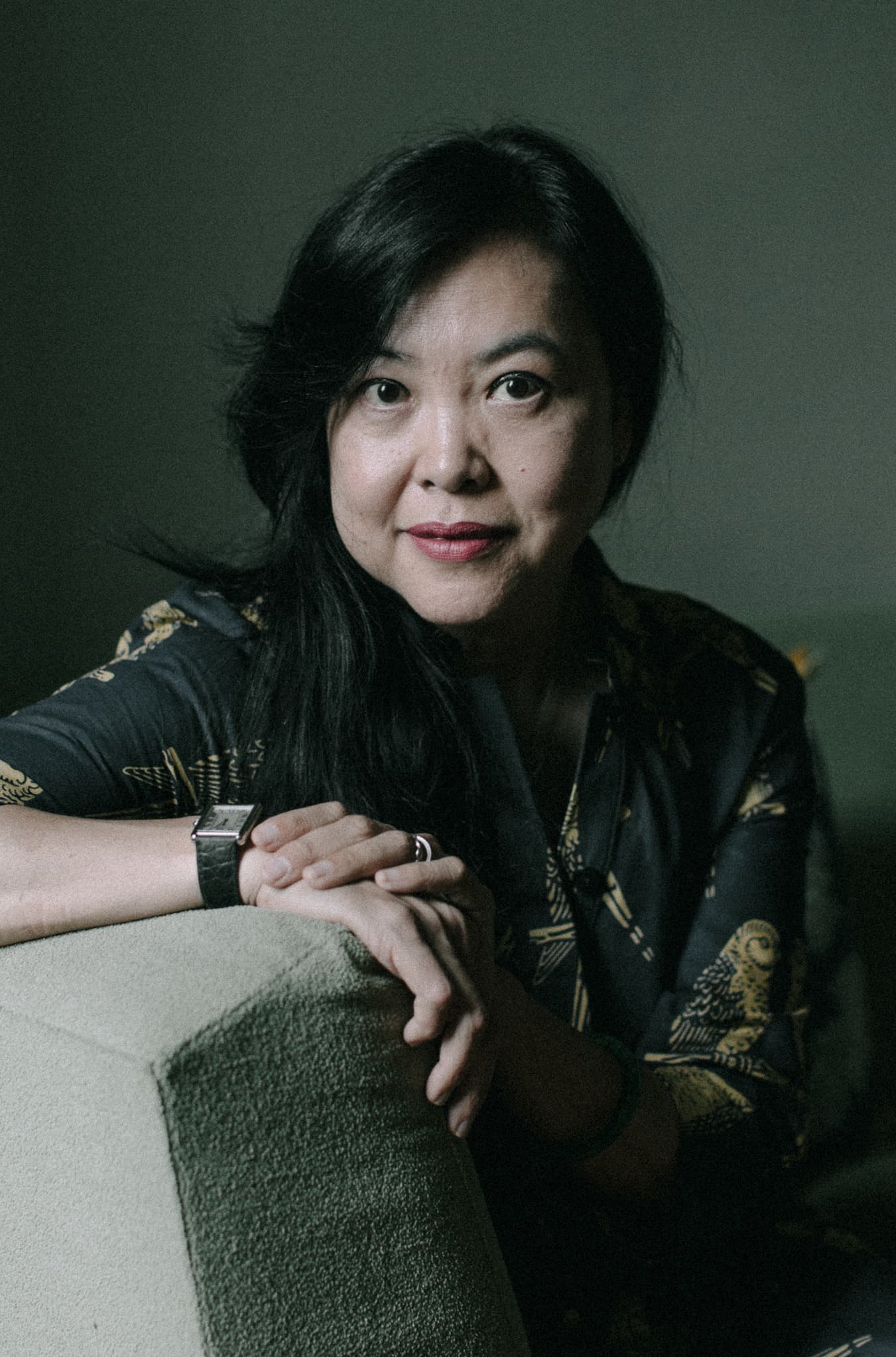
Image 29.05.01 — Novelist Monique Truong, author of Bitter in the Mouth, about a Vietnamese American adoptee in North Carolina whose hidden identity and synaesthesia shape her experience of race, language, and belonging in the South.
Linda’s life is further complicated by surviving sexual assault. As the novel progresses, Linda’s understanding of race and racism becomes easier to discuss than her experiences as a rape survivor. Linda’s experiences point to a central question: What does it mean to be Asian? She has not been taught about any Asian culture, and yet others point out how she looks Asian. And what does this say about her other, invisible identities as someone with synaesthesia or as someone who survived sexual assault?
Linda searches for meaning through famous white and Black North Carolina historical figures. She wonders about emotional experiences missing in the stories she hears about Virginia Dare, the first white English child born in North Carolina, or enslaved Black poet George Moses Horton. In doing so, she opens up space for her own history as a Vietnamese refugee and adoptee. Truong, as the author, demands that readers find ways to consider the emotions and lived experiences of women and people of color in the US South.
More to explore
Video
06:02
Writing the Asian American Experience
In this oral history interview, writer Monique Truong discusses community expectations for Asian American writers. The structure and focus of her novel Bitter in the Mouth was surprising and even difficult for some publishers and readers.
Finding Solidarities
Both Truong and Abraham Verghese write about finding commonality and comfort with the LGBTQ+ community, who are also relegated to the margins of the US South. In Bitter in the Mouth, Linda’s beloved Uncle Baby Harper is not only her steadfast champion but her companion in estrangement and escape. Both of their lives hold secrets that are revealed only in Linda’s adulthood—Baby Harper’s possible transgender (trans) identity, and Linda’s birth family’s deaths that led to her adoption. Linda’s discovery of her uncle’s secrets further complicates identities and prejudices in the South.

Image 29.05.03 — Dr. Abraham Verghese, whose 1994 memoir, My Own Country, reflected on his experiences treating HIV/AIDS patients in Tennessee during the 1980s, and how his identity as an outsider shaped his medical and emotional connection to them.
In Verghese’s memoir, My Own Country (1994), he recounts his experiences as an infectious disease physician caring for AIDS and HIV patients in northeast Tennessee during the 1980s and 1990s. Such care involved diligent and thoughtful medical treatment, but also emotional care; in the height of the AIDS epidemic, those patients were often stigmatized by and isolated from society and even their own families.
Verghese, an Ethiopian-raised Indian physician, connected his own feelings of being an outsider with those of his patients. “I cannot tell you whether Johnson City had truly made a place for me, a brown-skinned man, among its own or whether I, like some of my patients, was forever outside its real heart,” he writes, referring to racism and homophobia. 2
Like Truong, Verghese examines isolation and alienation, which he depicts as a common ground between himself and his patients. He is not interested in exploring the growing community of Indian doctors; he instead writes vivid portraits of his white Southern patients and, over time, himself. He describes everything from accents to clothing to landscapes, and in doing so, he realizes he has made the place his own. “The map of the town becomes the map of your memories,” 3 he writes, signaling a sense of belonging.
Verghese describes uncertainty about his race and his relationship with his patients, other doctors, and townsfolk. Even as he gets to know his HIV patients, he feels unsure if they truly like or respect him. He recounts feeling that “more than once I had the sense that a patient was opening up to me for this very reason, because of my foreignness… perhaps he felt that as a foreigner I had no right to pass judgment on him.” 4 He thus feels his outsiderness is what helps him gain trust with his patients–not his expertise as a physician or his compassion.
Moreover, he often witnessed racism and homophobia in the community in which he worked. In his memoir, he remembers a pharmacist who exposed a patient’s confidential HIV status. The pharmacist becomes suspicious of Verghese because of his skin color and his association with sick gay men.
In Truong and Verghese’s works, Asian American and queer communities both lie outside of normative social and political life in the South. Bitter in the Mouth and My Own Country reflect the potential of finding common ground with other marginalized groups. In the next book this module examines, we look at an author’s account of her intersectional experiences.
The Kuleana of Storytelling
“It is your Kuleana to tell [your story],” T Kira Māhealani Madden cousin told her—emphasizing this with kuleana, a native Hawaiian word meaning responsibility, right, and privilege. Her memoir, Long Live the Tribe of Fatherless Girls, contains a series of essays that piece together tragic, comic, and horrific events of her life–stories that others may have told her did not matter or should not be told. As Madden remembers the cruelty of her classmates, her traumatic sexual assault, and her parents’ substance abuse, she places them in the larger context of racial and gender dynamics of Hawaiʻi and the South.
As the mixed-race child of a Jewish father and a Chinese-Kānaka Maoli (Native Hawaiian) mother growing up in Boca Raton, Florida, Madden does not relate her experiences explicitly to the South in the way that Truong and Verghese did. Nonetheless, Florida’s car culture and its geography shaped her adolescence, from her sexual assault to her adventures with friends. Madden writes about driving to the Panhandle and the Keys and going to the mall or ocean.
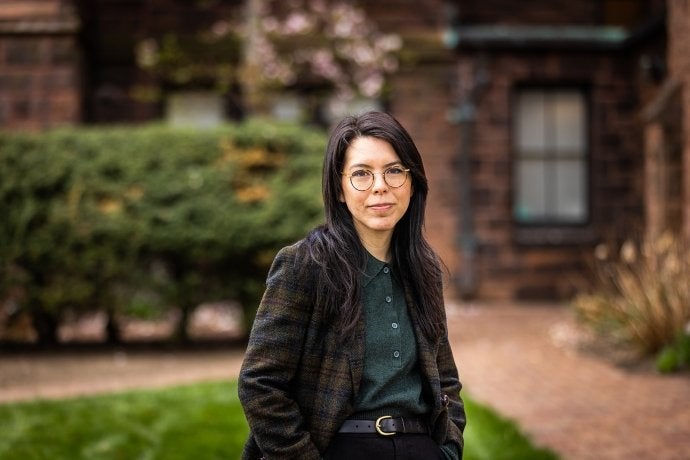
Image 29.05.05 — Writer T Kira Māhealani Madden explores race, sexuality, trauma, and belonging through her experiences as a mixed-race girl growing up in Florida in her 2019 memoir Long Live the Tribe of Fatherless Girls.
Madden shows rather than tells the reader about feeling different, writing that she did not fit in at her school. Despite her class privilege, she still feels under threat as the only Asian (or, presumably, Pacific Islander) in her school. She feels sexual peril as a young girl, particularly as she becomes aware of her queer desires.
At school, she is nicknamed “Queera” or “Twinky/Kinky Chinky.” Like many Asian American girls before her, she recognizes the exoticization of her body. When trying to impress a boy, she thinks, “This is your chance, you think, to look like a sultry island princess, to embrace where you came from, to show off the exotic woman you could one day be.” 5
After a boy she knows sexually assaults her, she changes her appearance, dying her hair blonde and wearing emerald contact lenses. Madden does not explicitly explain her choices, leaving it to readers to think about her complex identity and trauma response.
Listen to
An interview with T Kira Māhealani Madden
T Kira Māhealani Madden: It wasn’t clear to me until I had a greater context in the greater world after, after growing up and, and moving to New York and meeting new people. I… that social dynamic and hierarchy and racism wasn’t very apparent to me.
Um, my best friend growing up in school, which didn’t make this book but perhaps the next project, was the only black girl in the school, and we were best friends. And some of the harshest things that were said to us were said by us to each other in a way almost to protect ourselves that we could say those things before other people could say them to us. So they became part of our, our vocabulary—this kind of sarcastic, self-deprecating, um, racially charged vocabulary.
And I think we both felt, because we’ve had many conversations since as I was working on this piece that didn’t make this book, um, that it was our, it was just our way of self-preservation—that by accepting it and, you know, being, contributing to those insults and those conversations and especially using sarcasm as a tool, that just helped us get through. And only later could we reflect on that and see what was really going on there.
Audio 29.05.06 — T Kira Māhealani Madden describes how her slowly growing understanding of race emerged in her adolescence, particularly her shared experience with her Black best friend.
Listen to
An interview with T Kira Māhealani Madden (Part 2)
T Kira Māhealani Madden: I feel excited about the fact that it’s teased out so slowly in the book. I think many people who read the the jacket knowing it’s a queer coming-of-age story, they want it to be more- they want the book to be more front-loaded or they expect that with queer material. But instead, I really tried to mimic the way I experienced my coming out and my own self-awareness, which is that, like you said, there are these small moments and hints and teases; there’s a shadow running through the first half of the book of queer desire and specific thoughts that came to me or desires and only later once I had my first girlfriend did I understand what that meant. Could I- could I understand that knowing.
So I- I hope that comes through in the book. In the essay where I do finally have my first girlfriend and I really understand what’s happening with me, I do go back in time to some of those moments and that was important to me because that felt true to my coming out. It wasn’t until I had my first girlfriend could I make sense of those earlier experiences as “Oh, I was always gay. I just- I didn’t have the context to understand that.”
Audio 29.05.07 — T Kira Māhealani Madden explains how her memoir mimics her understanding of her queer sexuality and coming out as a teenager.
Amid these painful experiences, Madden also expresses love and joy. With the support of her new wife, she writes about her mother’s family, her father’s death, and the sudden discovery of other branches of her family tree. She offers vivid stories of her mother’s turbulent upbringing in Hawaiʻi, pointing to economic inequity in the islands that is mirrored in her parents’ interracial marriage.
Madden has said in interviews that the open-ended, inconclusive ending, as she hears about an unknown family member, came from the fact that she was living through it as the book was going to press. It shares the same spirit as the swift ending of Bitter in the Mouth, in which Linda reflects, “We all need a story of where we came from and how we got here. Otherwise, how could we ever put down our tender roots and stay?” 6 By the end of her memoir, Madden has shown us the knowledge and relationships that have helped her to root an identity that seemed so singular and vulnerable at the outset.
Creative Expressions
This module offers only a small sample of the ways that Asian American and Pacific Islander authors have created an understanding of the US South using imaginative ways of telling their stories. Asian American narratives in the US South continue to evolve and broaden, showing more and different stories of complex identities, different national origins and ethnicities, and literary genres.
Other tales remain to be told; in Verghese’s second book, set in El Paso, Texas, he notes that people take a “different view of foreignness when living on the border, when many of one’s patients were wading across the river for care.” 7 Madden has spoken publicly of her complex interactions with Black friends in school. Literature and other artistic expressions of different relationships across communities of color and Indigenous communities, multiple identities, and personal experiences will undoubtedly start to delve even deeper into the rich and growing stories of Asian Americans in the South.