





Hmong Americans Tou and Chue Lee of Lee’s One Fortune Farm stand among rows of crops, casually dressed in jeans.
Module 3: Building Communities
Are Asian Americans who live in the United States South impacted by their experiences in the South?
The Hmong population of western North Carolina, the South Asian population of Houston, Texas, and the Vietnamese community of New Orleans all have very different stories of migration and have built different community structures reflecting their resources and needs. Yet they all share common ground in the origins of the United States’ relationship with Asia during the Cold War.
Houston’s South Asian population began with relationship-building programs with India, which brought more students and professionals to the United States. This small population served as the foundation as Asian immigration rose rapidly after new immigration legislation passed in 1965, with family members and new migrants joining the community.
The Vietnamese and Hmong populations migrated largely to escape the wars in Southeast Asia, coming through refugee camps and with the aid of different organizations. This module looks at each community’s growth and establishment in the 1970s and 1980s, and the organizations and institutions that have helped individuals to settle in the United States while also building a new ethnic American community.
In this module, we explore the stories of three communities started by immigrants and refugees who arrived in the US South after World War II and constructed communities in different ways, with a focus on community organizations and institutions as well as for-profit businesses.
More to explore
Video
11:56
Breaking the Walls of Tradition
In The Fourth World, a 2022 short film by Nash Consing, Brandon Lee, a young musician, and his family reflect on their journey from Southeast Asia to Hickory, North Carolina, sharing their feelings and family photos.
How and why did particular Asian ethnic groups migrate to specific parts of the South?
How have Asian American communities laid down their roots in the South?
What cultural and economic organizations have these communities created to transform their places of residence?
Finding New Farms in North Carolina
As the US withdrew its military from Southeast Asia in 1976, the first Hmong people arrived in western North Carolina. In 1979, more families arrived thanks to the work of Rev. Allen McKinney of Garden Creek Baptist Church in Marion, North Carolina. While the congregation gave them a warm welcome, other locals opposed the influx of new arrivals, especially after the economic recession deepened.
Nonetheless, the Hmong community surged in the 1990s. Hmong people already in the US migrated to North Carolina, drawn by more opportunities as well as the landscape’s similarity to their home regions of Southeast Asia. Federal officials even encouraged the Hmong community in Fresno, California, where 90 percent of the community were on welfare, to go to North Carolina. Hmong people already in North Carolina also invited friends and family to join them. As the Hmong population grew, different groups formed to address their community’s needs.
North Carolina offered opportunities for the Hmong community to reclaim some traditions, customs, and ways of living. Kue Chaw, one of many Hmong men who the US recruited to fight in the Laotian army, arrived in Philadelphia, Pennsylvania, in 1976 before eventually joining friends in Morganton, North Carolina, in 1980.
There, he lived with his wife and children, plus his cousins, uncle and their spouses and families, in two houses and two mobile homes, where they gardened and raised animals and shared a traditionally separate small building for cooking. Factory employment, which was easy to find in the 1990s, meant they had steady incomes. With land to cultivate and farm, they could enjoy some traditional Hmong patterns of life.
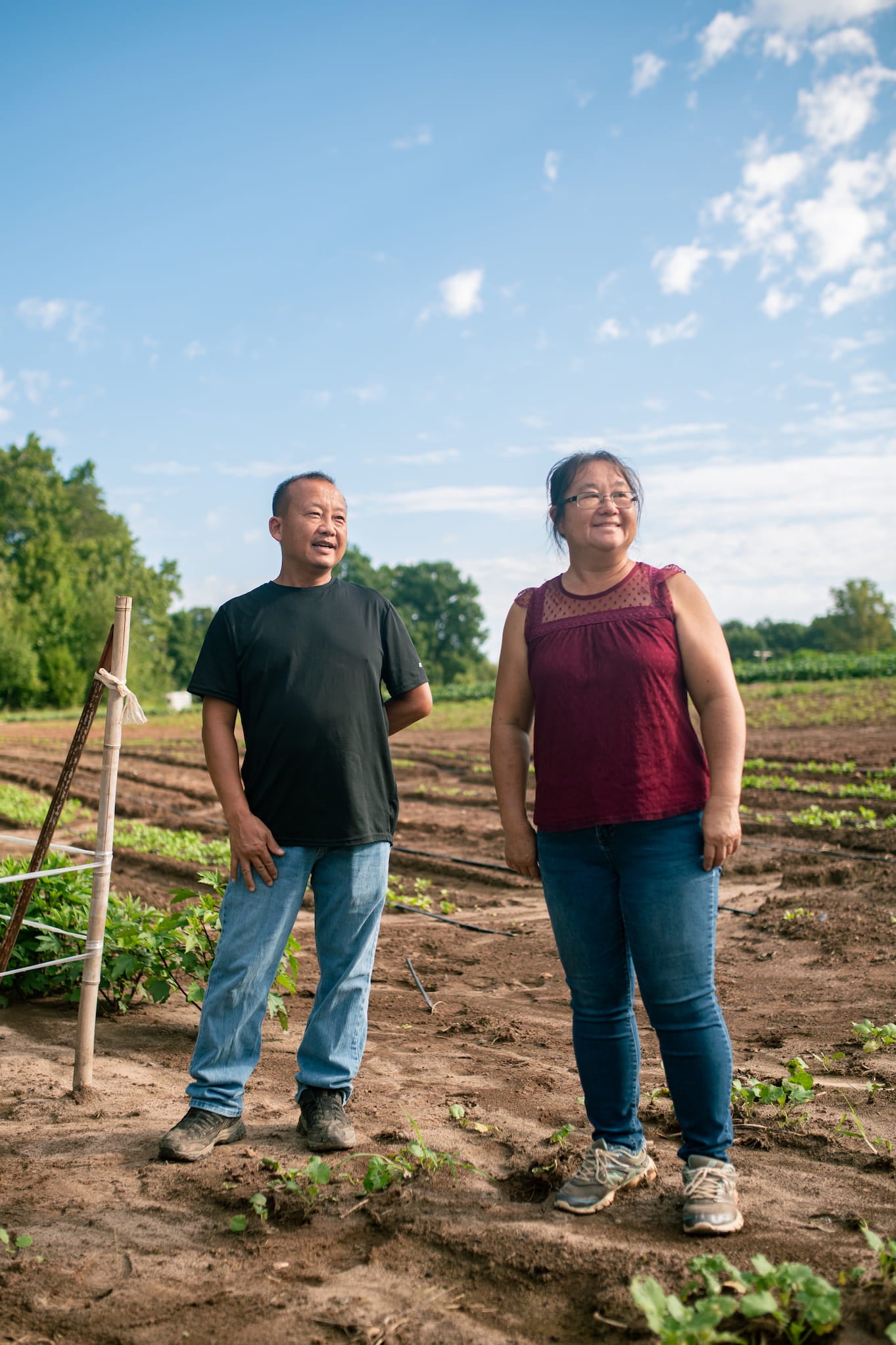
Image 29.03.02 — Hmong American farmer Tou Lee (left) of Lee’s One Fortune Farm in North Carolina, with his wife Chue, described how important farming is not only economically but emotionally. “It’s better than having money in a jar somewhere. This is life.”
Hmong of the first generation share common struggles with language, services, and maintaining culture and tradition. Existing programs in the South could not always address this problem. For example, federal funds supported learning English and marketable skills, but not Hmong language or traditional arts. As the community grew, members approached community needs in many ways.
The North Carolina Hmong community has actively organized to bridge this gap. Some helped to create the Hmong Keeb Kwm: The Hmong Heritage Project, a digital archive of artifacts, immigration documents, and oral histories of Hmong community members. Several universities in the state have Hmong Student Associations to connect Hmong students to community, culture, and traditions.
Some organizations were temporary because of community disagreement and the community’s shifting needs. Kue Chaw spoke openly about a rift with other community leaders in the 1980s. He said they were more interested in returning to Laos than building community in North Carolina. Kue Chaw founded the Hmong Natural Association of North Carolina and led it for many years. Through his organization, he worked with government entities such as the Office of Refugee Resettlement to fund the community. Other organizations, Hmong periodicals, and radio shows have also helped build community and disseminate information.
As of 2023, more than 14,000 Hmong people live in North Carolina, the fourth largest Hmong community in the country. Many other Southeast Asian ethnic groups have also come to North Carolina, and ethnic and religious organizations sometimes serve multiple groups. Other Hmong communities have also grown across the South.
The Hmong Southeast Puavpheej unites community groups in North Carolina, South Carolina, Georgia, and Florida to preserve and celebrate Hmong culture and arts. There is also a small Hmong community in northwest Arkansas, where many work in poultry farming and supply large meat processing companies in the area. As these communities grow, community organizations will continue to play a critical role in building and keeping not only basic needs but culture and identity.
Bridging Divides in Houston
As the largest city in the South as of 2023, Houston, Texas, contains a large and diverse Asian American population. The city’s robust South Asian community has been shaped by Cold War immigration policies, as well as domestic segregation practices. As South Asians established themselves in the city, they built their own unique community, forming together despite political, class, religious, and caste differences.
In the early decades of the Cold War, many universities recruited international students—particularly from Asian countries—in order to foster allies in the US’s long struggle against Communism. South Asians who came to Houston’s colleges through these educational exchanges formed student organizations. These organizations helped this emerging population stay connected and build new communities.
Outside of universities, community services and institutions formed, bridging this diverse community. For example, the first owner of the first Indian sweets and snack shop in Houston began catering for both Eid and Diwali, serving vegetarian and non-vegetarian dishes for celebrants. As the population grew, so did a need for spaces and ways for South Asians to sustain customs. Entrepreneurs within the community found ways to build this commercial base.
In the 1980s, entrepreneurs found affordable leases during Houston’s economic depression. They built the Mahatma Gandhi District on Hillcroft Street. Featuring restaurants, houses of worship, clothing, and jewelry stores catering to Indian and Pakistani immigrants, it remained a familiar site even as South Asians moved to more affluent suburbs.
Many of these entrepreneurs were the first in their business—not only in Houston, but in the South. Aku Patel, for instance, was the first to sell Indian designed gold jewelry. Patel recounted the community’s excitement in Houston, Texas, and then at shows in Dallas, Texas, as well as Louisiana, Georgia, and Florida. Business owners like Patel often spoke of years of sacrifice, hard work, and struggle. One shop owner mentioned that she never took a day off in fifteen years.
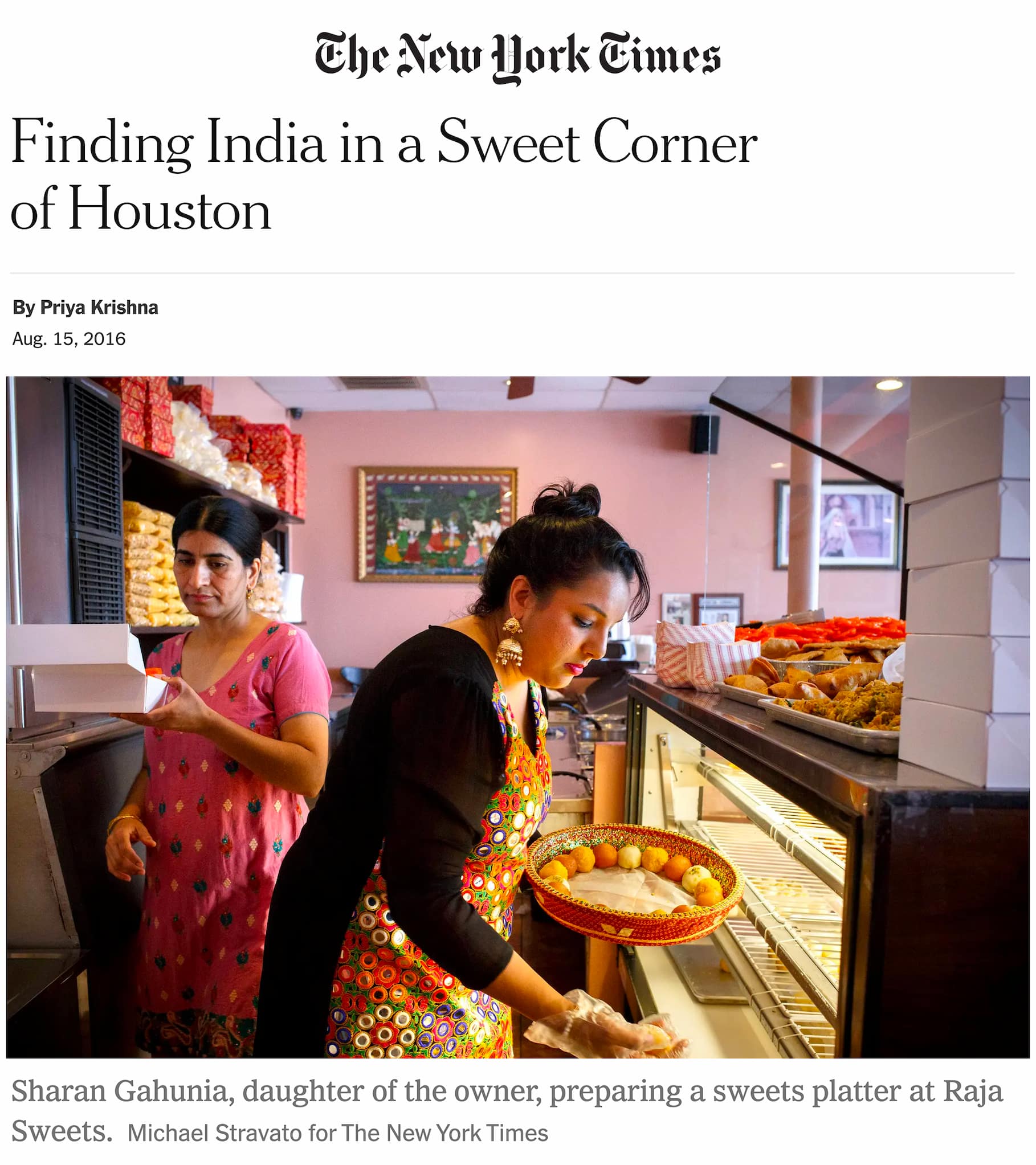
Image 29.03.04 — Raja Sweets, founded in 1986 by Joginder Singh Gahunia and his wife, Resham, was the first South Asian restaurant in Houston, Texas. Their daughter Sharan now owns the shop in what is known as the Mahatma Gandhi District.
More to explore
Video
04:54
Sulekh Jain on Organizing Jain Communities
In this oral history, Sulekh Jain describes the growth and community building of Jains in Houston, Texas, especially the development of programs for a new generation of US-born youth. His story reflects broader efforts by South Asian communities to establish cultural, religious, and social services across the city.
Community leaders invested heavily in cultural organizations and charities to serve the South Asian and other local communities. India House, a community center which opened in 2008, has held galas that hosted Indian diplomats and Texas politicians.
This demonstrates the importance of the community and its success at gaining recognition from powerful figures. India House hosts regular programs, events, and activities for the local community. In addition to cultural and exercise classes, it has also included a medical clinic and legal center on the weekends. Food bank distribution, relationship coaching, after school programs, and summer camps support children.
Although Houston’s South Asian community initially came together despite many differences, historian Uzma Quraishi has noted that political, class, religious, and caste divisions resurfaced as the population continued to grow. Moreover, divisions are also created in the US.
While many in the South Asian community are educated professionals who are comfortably in the middle-class, there are many who live in poverty. As the South Asian population grows, along with many other Asian ethnic groups in the Houston area, it seems clear that service and community building will continue to be a key value. Whether unity across class, religious, national origin, and other differences will be maintained remains to be seen.
A Community of Solidarity in New Orleans
Vietnamese refugees resettled in New Orleans, Louisiana, in the 1970s, aided by the Associated Catholic Charities. Upon arrival, they quickly became entangled in the racial and economic tensions of the city. The community that settled in a few blocks of New Orleans East, which became known as Versailles or “Versai,” entered at a moment when white residents moved into downtown and uptown areas, displacing long standing Black residents. In Versailles, the Vietnamese community was an Asian minority in a 90 percent Black neighborhood.
Although conservative politicians and the Urban League, an influential group mainly serving African Americans, often disagreed, the two opposed the influx of Vietnamese refugees. Numbering in the thousands, the Vietnamese organized and advocated to protect their livelihoods. Vu Huu Chuong of the New Orleans Area Vietnamese Committee spoke of the community’s desire to reach out and become “good citizens.” He clearly felt the threat to the community, calling the opposition a “dangerous misunderstanding.” 1
Over time, Black and Vietnamese communities forged a foundation of solidarity. Regulations on boats that targeted Black people in the 1970s extended to Vietnamese American shrimpers in the 1980s. Such common struggles brought the two communities together.
The environmental and humanitarian disaster of Hurricane Katrina in 2005 challenged the solidarity and organization of the community. The Vietnamese community had to rebuild and advocate for their own community’s interests in the long recovery. Father Vien of Mary Queen of Vietnam Church, who had remained with a small group of people sheltering in the church, worked to rebuild the neighborhood. This included reaching out for support from the Vietnamese community in the West Bank of New Orleans, as well as extending aid to the Black community, whose places of worship had been severely damaged. Father Vien helped repair their structures and invited them to services.
More to explore
Video
Starting a Movement
The testimony before the Bring New Orleans Back Commission and the interview with Ngo Ming Khang, a long-time resident of Versailles, demonstrate the determination of community members and allies and advocates such as City Council member Cynthia Willard-Lewis to rebuild New Orleans East. Father Vien Nguyen of the Mary Queen of Vietnam church was a key community advocate. Khang also discusses his determination to remain and help the community flourish, comparing the situation to his refugee migration. This excerpt from the documentary A Village Called Versailles (2009) is part of a story of community organizing, interracial solidarity, and resiliency.
As the community came together to recover and rebuild, Mayor Ray Nagin placed another barrier on them. Nagin approved a new and unlined landfill half a mile from Versailles. It was a major dumping site for the enormous amount of post-Katrina debris. The community protested both their exclusion from the redevelopment planning and the landfill itself. Elderly residents and the Vietnamese American Young Leaders Association of New Orleans protested and met with members of city council, successfully pressuring the mayor to close the site. This was seen as a step forward in public involvement in the city affairs and the creation of a cross-racial alliance.
Although the Vietnamese community has faced challenges in long-term organizing, their action against the landfill in Versailles is an important site of study. In describing the community’s resilience, scholars and activists have been careful to avoid stereotyping their success or ignoring its limitations. But at the same time, the solidarity of the Vietnamese community of New Orleans East with their Black neighbors has provided a model for what cross-racial alliance and community building can be even in the worst of times.
As the Asian American population has grown across the US South, community formation is still very much a product of local forces, structures, and populations. In many cases, with smaller populations, Asian Americans have banded together to support each other, particularly communities that share a migration history or come from the same regions. Asian Americans have shown extraordinary strength and determination in building community structures from ethnic businesses and community organizations to places of worship and service-oriented programs that connect them with the broader community.
Endnotes
1 Warren Brown, “A Different War: Vietnamese Refugees Caught in Black-White Friction in New Orleans,” The Washington Post, July 18, 1978.