




A lithograph of Eng and Chang Bunker surrounded by idyllic scenes of family life, leisure, labor, and assimilation to the American lifestyle.
Module 1: Overview
Are Asian Americans who live in the United States South impacted by their experiences in the South?
Asian Americans have formed an important part of the society and economy of the United States South since before the founding of the United States. As of 2020, Asian Americans were the fastest growing population across the South. There are many thriving Asian ethnic communities in and near urban centers and college towns across the South, such as the Korean American population outside Atlanta, Georgia, or the South Asian and Southeast Asian populations of Houston, Texas. But there are also towns and counties still with just one or two Asian American families, and many Asian Americans tell stories of being one of a few in their school growing up.
This chapter is an overview of the histories and creations of Asian American communities in the US South. We begin before the founding of the United States and look at how the population has grown, diversified, and found different socioeconomic niches. Asian Americans live in every southern state, in rural, suburban, and urban locales, and have found different ways to construct communities. The chapter modules that follow explore the migration of and their involvement in specific industries, community building and activism, the role that Asian Americans played in the fight for civil rights, and the growing presence of Asian American authors from the South.
Although principally about Asian Americans in the US South, this chapter also touches on Pacific Islanders communities, such as the Marshallese in Arkansas and Native Hawaiians throughout the South.
Listen to
An interview with Ping Nguyen
Audio 29.01.01 — Ping Nguyen recalls the disorientation of attending elementary school for the first time as a Vietnamese refugee in Rock Hill, South Carolina—an experience shared by many who were one of the only Asian students in schools across the US South.
How did Asian Americans migrate to the US South and develop communities?
What factors have shaped the position of Asian Americans in the South?
How have Asian Americans been involved in the struggle for civil rights and equity in the South?
Early Days: New Orleans as a Hub
New Orleans, with its importance as a southern port, has always been a key entry point and hub of Asian American life in the South. In the nineteenth century, the diverse ethnic communities that emerged in and around New Orleans had to navigate the laws of slavery and segregation.
The earliest Asian American or Pacific Islander settlement in the South was the “Manilamen” of Louisiana. These sailors from the Philippines, which was then a colony of Spain, sailed between the two ends of the Spanish empire. As early as the 1700s, many sailors jumped ship, forming a long-lasting community in Saint Malo. These communities in the city continued to thrive, creating their own floats in the famous New Orleans Mardi Gras tradition starting in the early twentieth century.
After the Civil War and the abolition of slavery, white landowners and business owners brought Chinese indentured laborers to the South through the port of New Orleans. This raised questions not only about race and economy, but also slavery and freedom. Formally ending slavery did not guarantee everyone’s freedom, as in the case of indentured servants. And just as enslaved people did, laborers rebelled against the poor conditions, some violently and some by quietly escaping, finding other areas of employment.
During Reconstruction in Louisiana, Chinese shrimpers joined the Filipino community and established prominent shrimp-drying export businesses in the marshes surrounding New Orleans. The 1882 Chinese Exclusion Act and consequent crackdowns on undocumented Chinese migrants led to these miniature towns becoming multiethnic immigrant locales. After World War I, they faded, hit by technological shifts, competition from white entrepreneurs, and natural disasters. But in the 1970s, Vietnamese shrimpers and fishers would form a new wave of Asian enterprise around New Orleans.
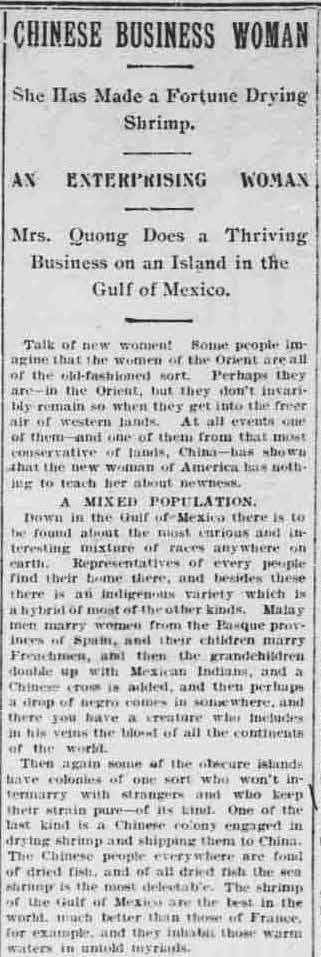
Text 29.01.02 — Quong Wo, profiled in an 1896 article, was the only known woman owner amongst Asian-run shrimp businesses in the New Orleans area. During Reconstruction, Chinese shrimpers like Wo joined the Filipino community in establishing businesses in marshes surrounding New Orleans.
Asian populations in New Orleans were not limited to agriculture. In the late nineteenth and early twentieth century, Bengali men peddlers in New Orleans, arriving seasonally from New Jersey and moving along routes that included the Caribbean and Central America, sold Asian goods. Afghan peddlers used similar circuits as well. Some married or partnered with Black women and settled in the Treme district. Some later moved to northern cities.
As these communities grew, local and national lawmakers created legal definitions and regulations to prevent them from being categorized as white and receiving access to the privileges of being white. For example, in 1921, Louisiana passed an “alien land law” that restricted land ownership for those considered not eligible for citizenship, causing some Asians to move to Texas.
As families took root, Asian Americans began raising questions about their civil rights. Some sued school districts to send their children to “whites-only” schools in the 1920s. Others evaded state laws to marry white people. With heightened segregation in some states but not others, many families migrated to other locations across the South where they could access more whites-only spaces.
The Bunker Brothers
Small, isolated, or mobile Asian Americans living in the South in the nineteenth and early twentieth centuries sometimes eluded strict regulation or scrutiny, but were still dependent on the goodwill of white connections at times of crisis. Many embraced Christianity and mainstream ways of life in order to ensure their security and their children’s futures.
One famous example of isolated Asian Americans were the internationally-known conjoined twins, Chang and Eng Bunker. Of Chinese and perhaps other ethnic descent from Siam (now Thailand), they settled in North Carolina as farmers for most of their adult lives. In 1829, when they were eighteen, they began touring in exhibitions, showcasing themselves as an anomaly of conjoined twins from an exotic land. White managers handled their tours, but eventually the Bunkers ran their own. These exhibitions spanned the US, Cuba, Canada, and Europe.
The Bunkers naturalized as US citizens, spoke fluent English, attended Christian services, married white women, and enslaved many Black people, including Grace Gates, who cared for their mixed-race children. Their willingness to benefit from the system of slavery reminds us of the different social and economic paths available to Asian Americans and African Americans.
Over time, they remained famous nationally. Shops sold portraits of them with their families. They used this fame to supplement their income, especially after the emancipation of their enslaved laborers at the end of the Civil War.
The Bunker twins’ citizenship came before the most heated opposition to Asian naturalization. The designation of race and rights for Asians and mixed-race family members varied by location in the nineteenth century. Even citizenship was administered case by case sometimes. A few South Asians were able to achieve citizenship in Louisiana, causing dissent among government officials. Others who were denied citizenship applied for naturalization anyway, perhaps as a way to document and legitimize their presence.
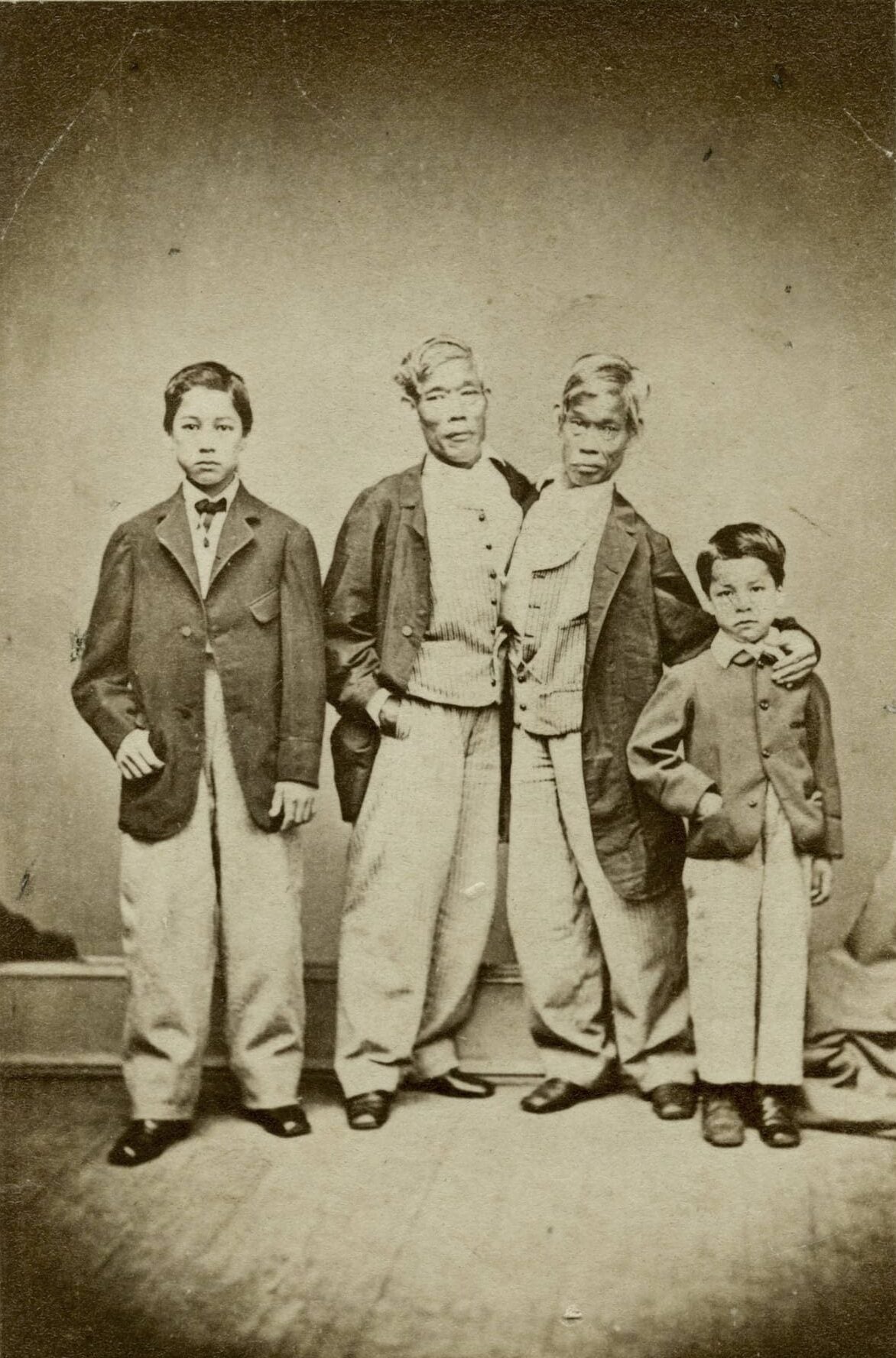
Image 29.01.03a — Conjoined twins Eng and Chang Bunker, pictured here with two of their children, toured internationally before settling as farmers in North Carolina. They became naturalized citizens, attended Christian services, and started families with white American women.
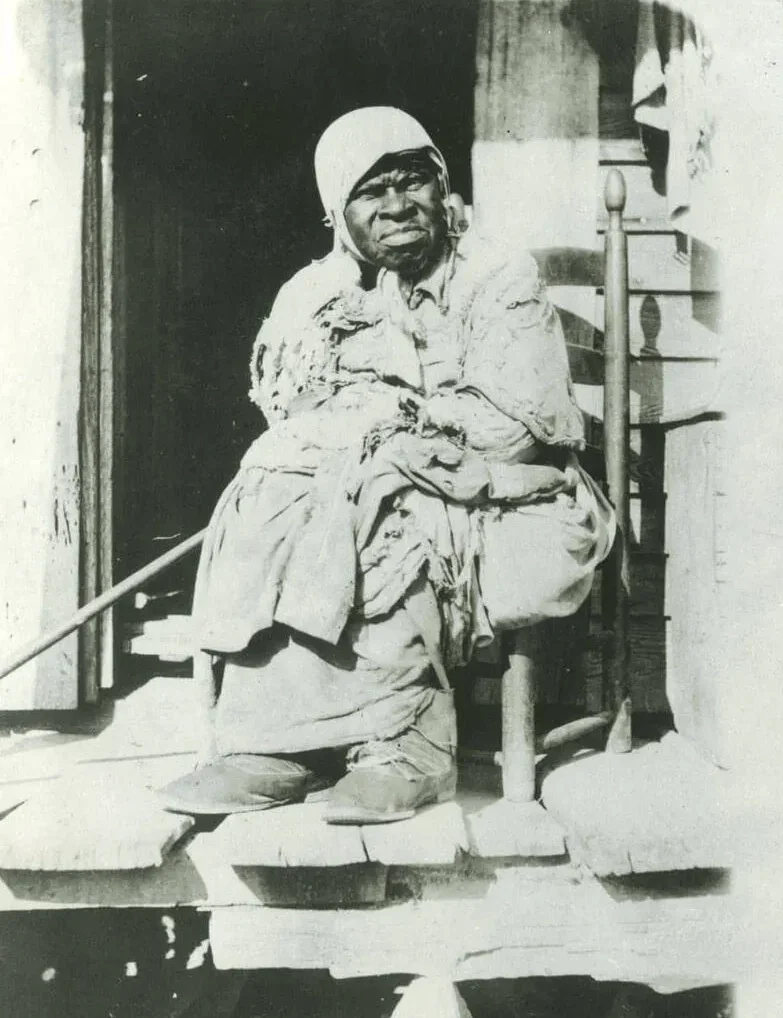
Image 29.01.03b — Grace Gates, one of the people enslaved by Eng and Chang Bunker, helped raise their children. The Bunkers’ participation in slavery highlights the different social positions available to Asian Americans and African Americans in the nineteenth-century South.
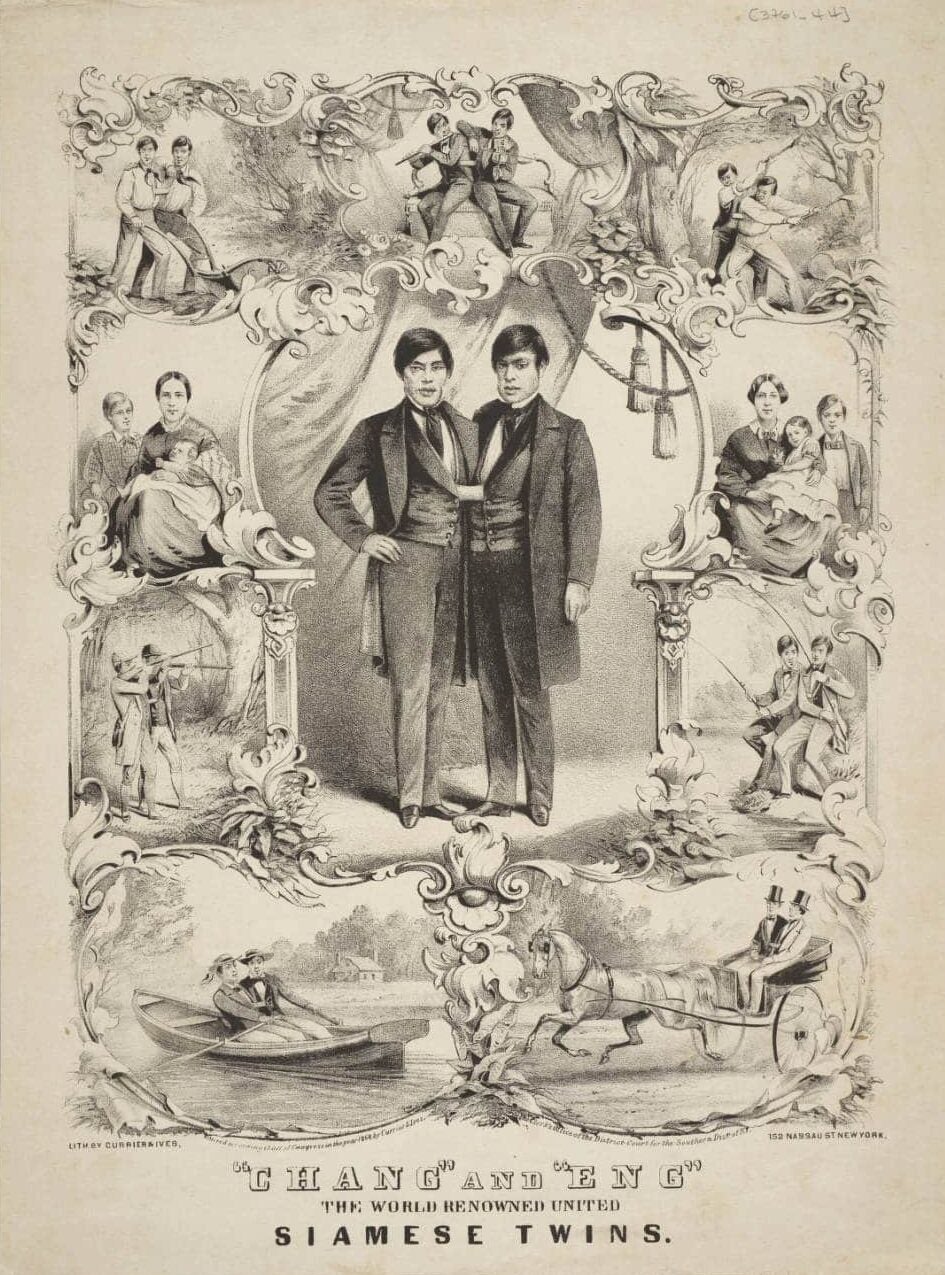
Image 29.01.03c — This nineteenth-century lithograph by Currier & Ives depicts Eng and Chang Bunker surrounded by scenes of family life and labor, reinforcing a romanticized image of their assimilation and success in the US South.



More to explore
Text
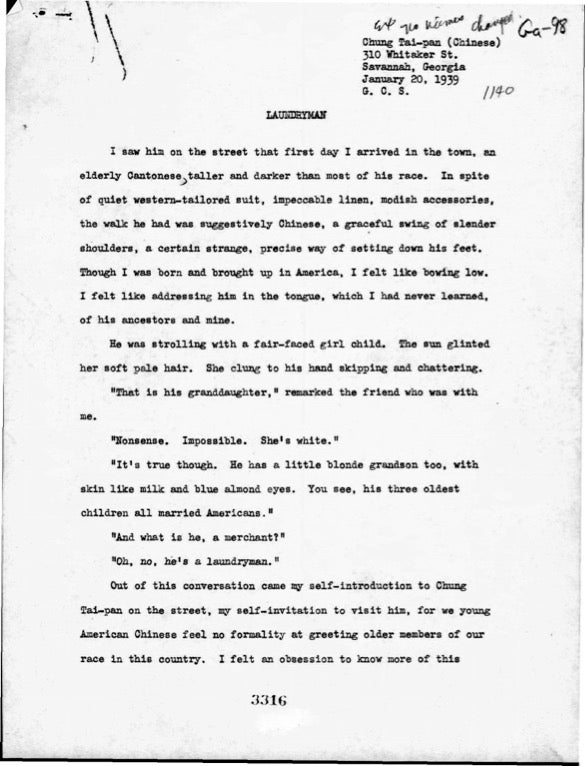
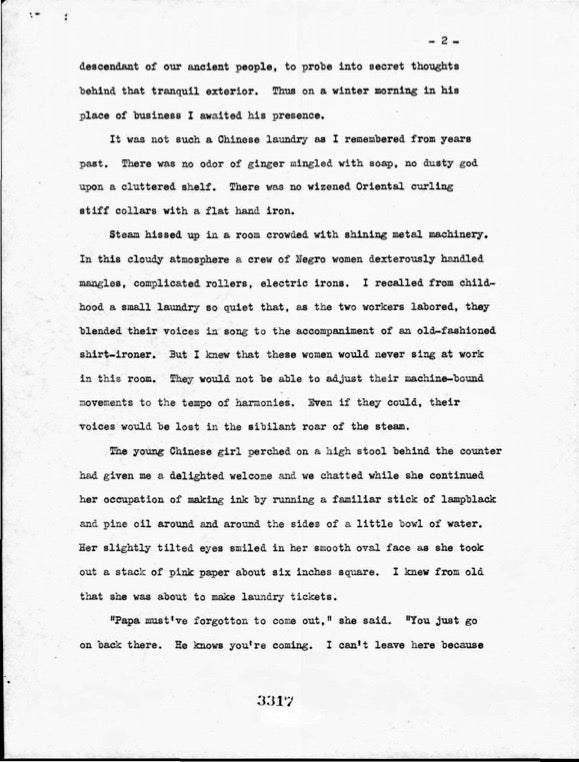
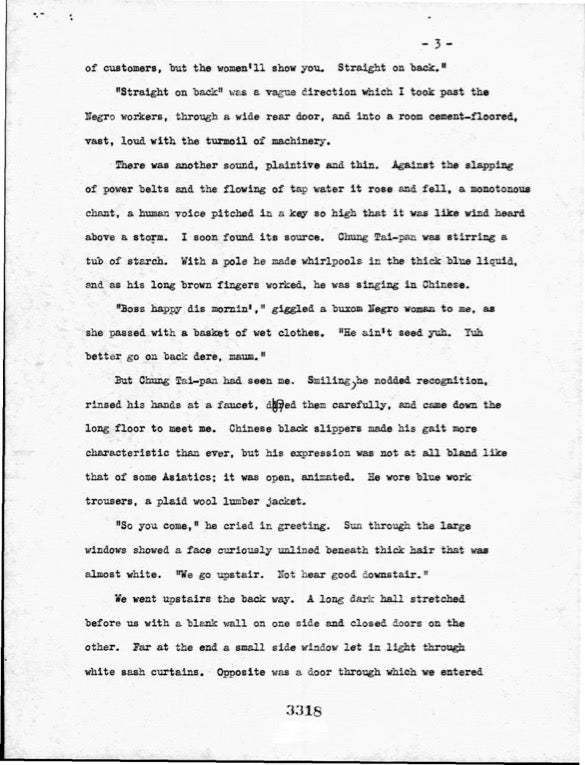
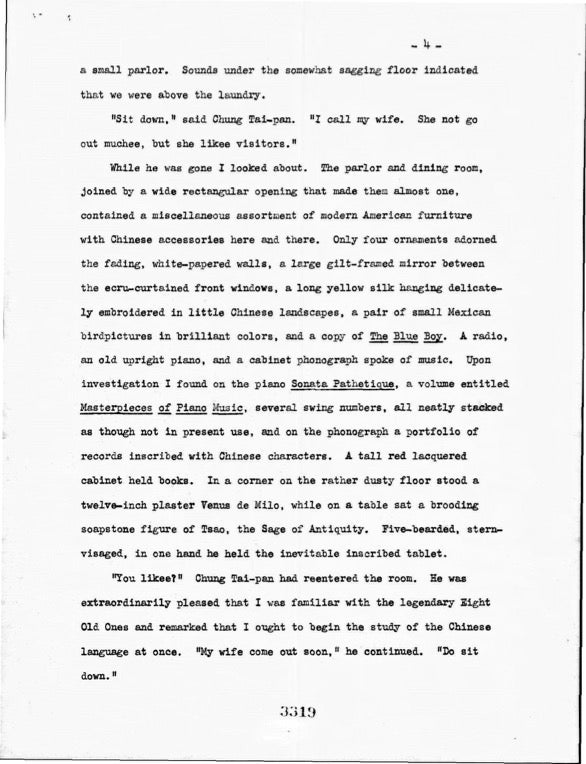
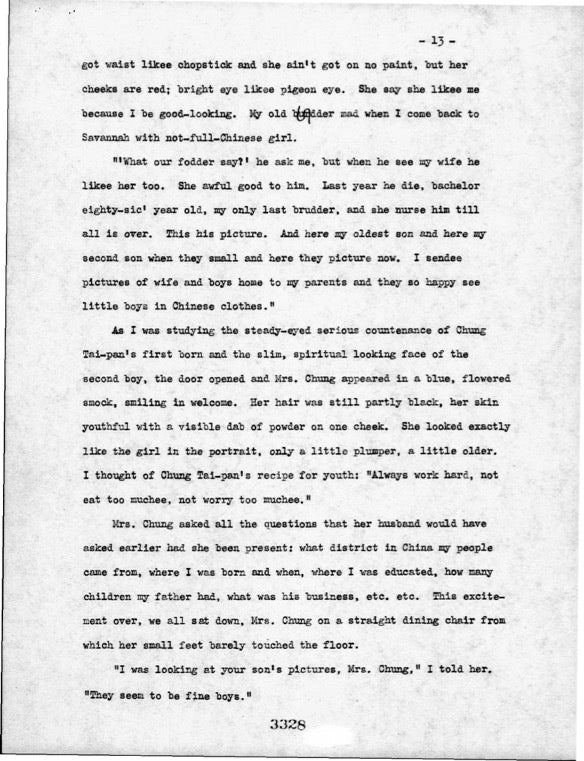
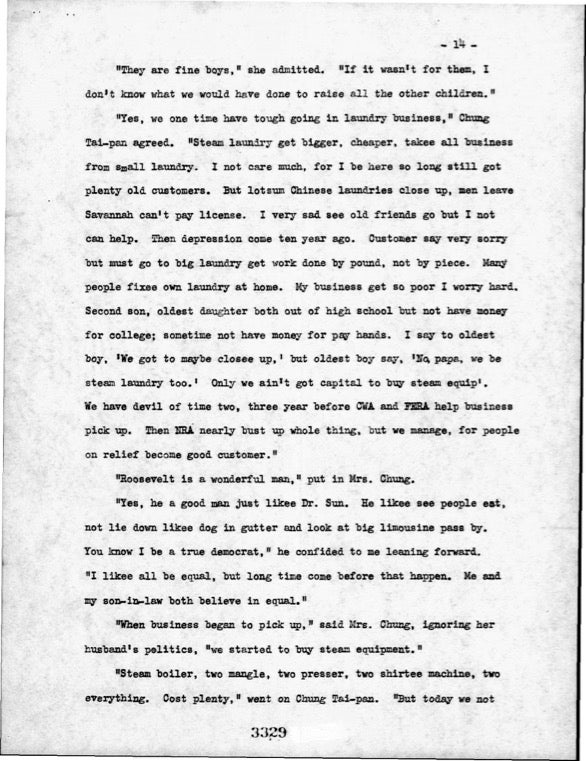
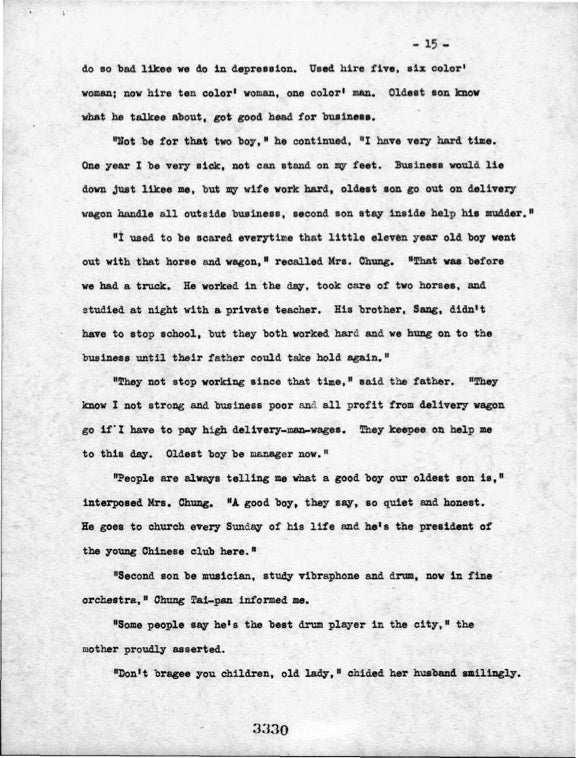
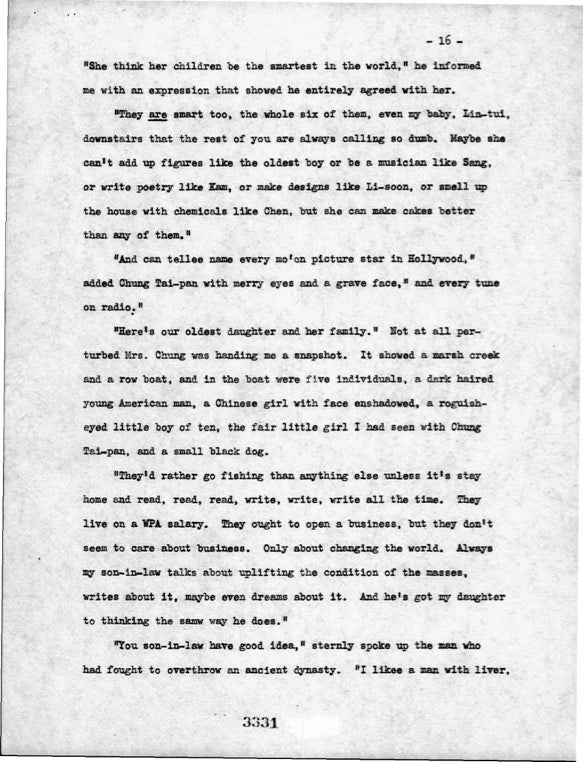
Early Chinese and Mixed-Race Community in Georgia
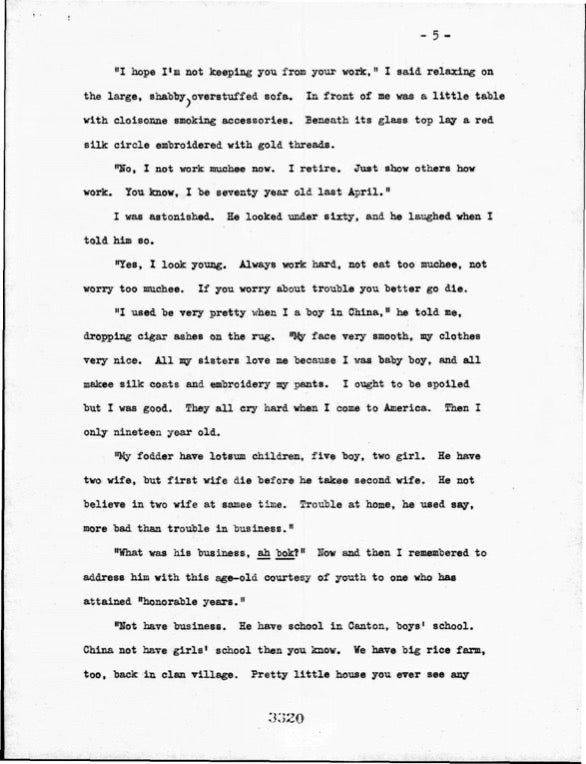
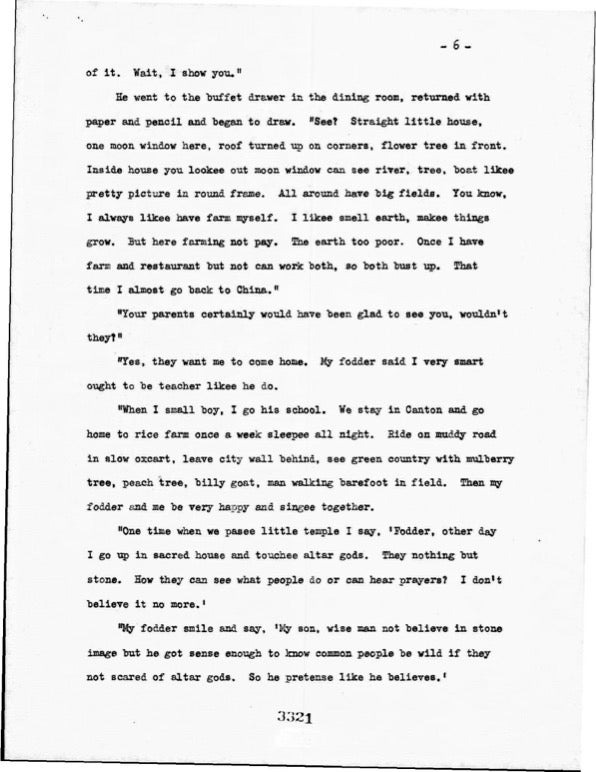
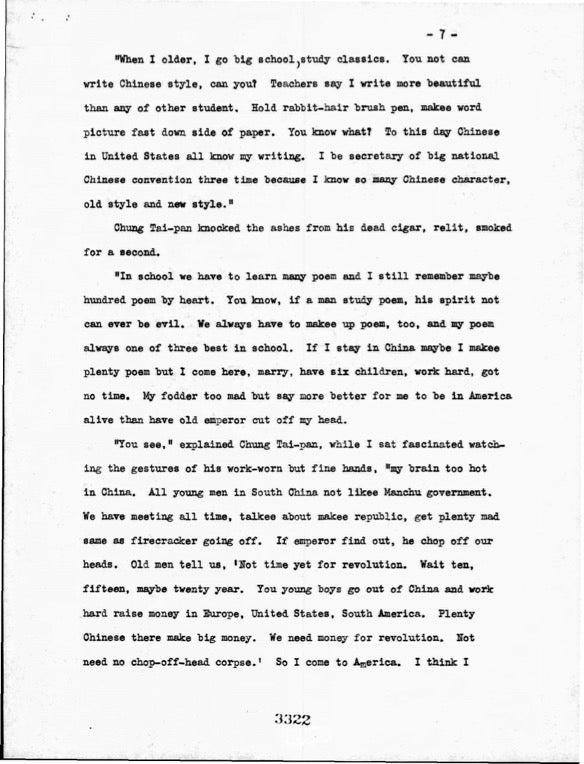
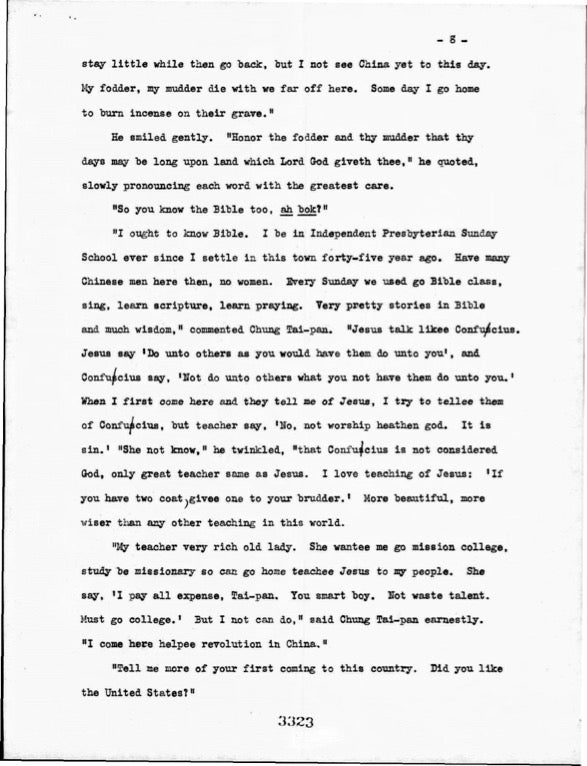
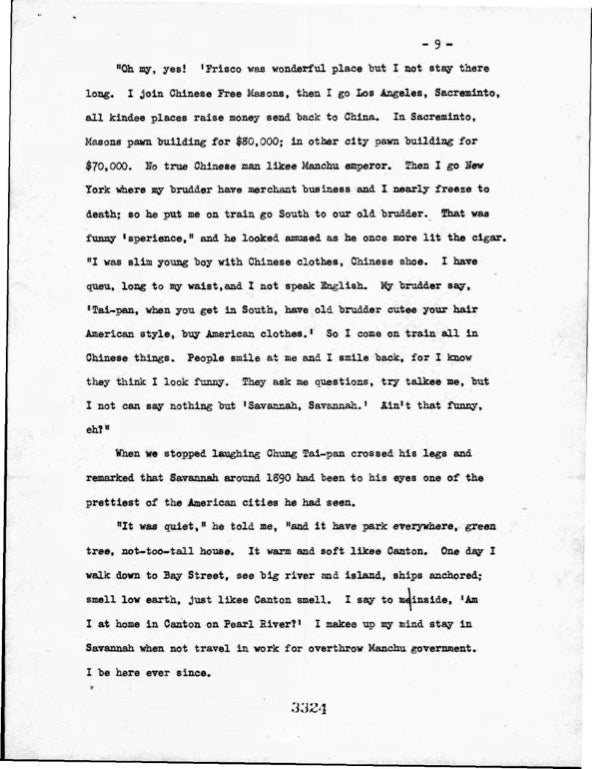
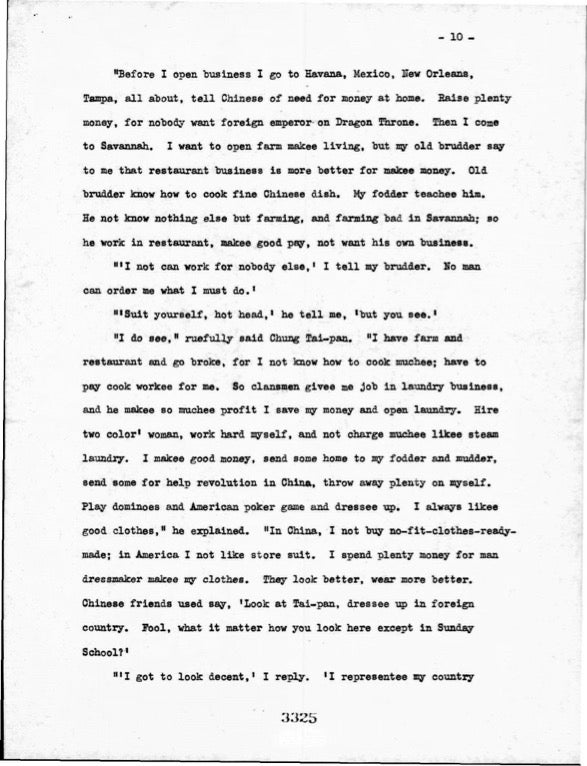
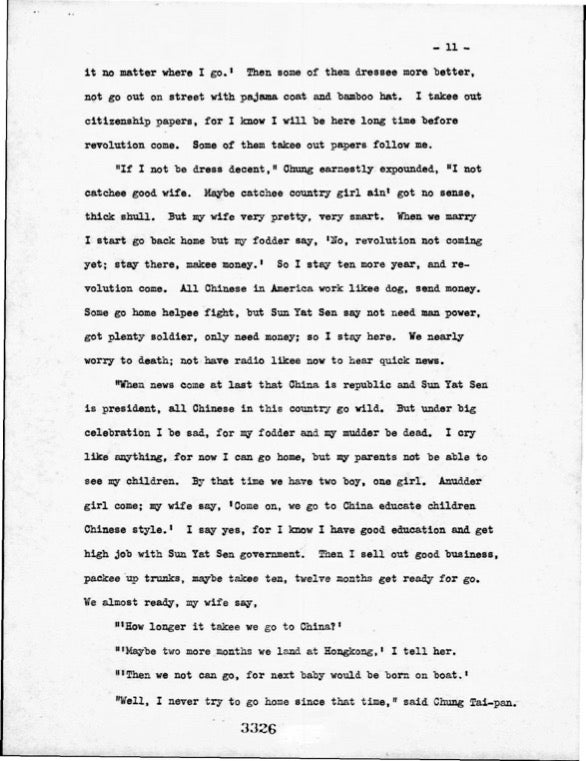
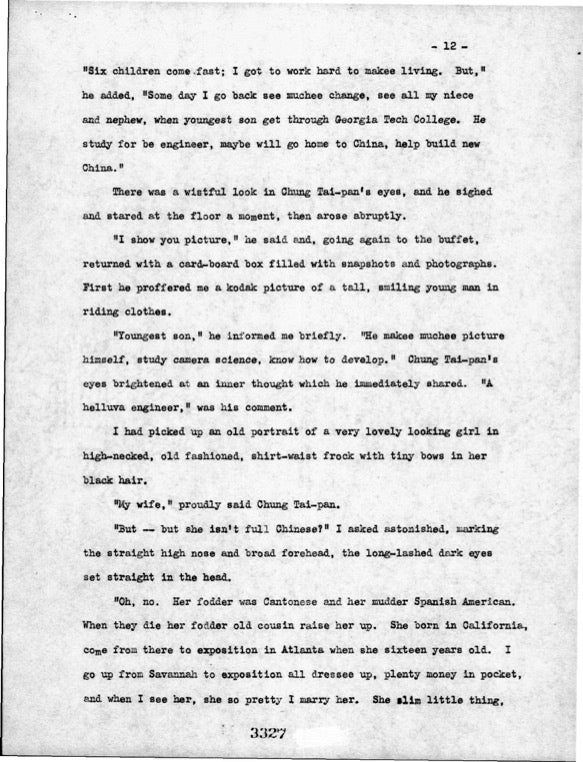
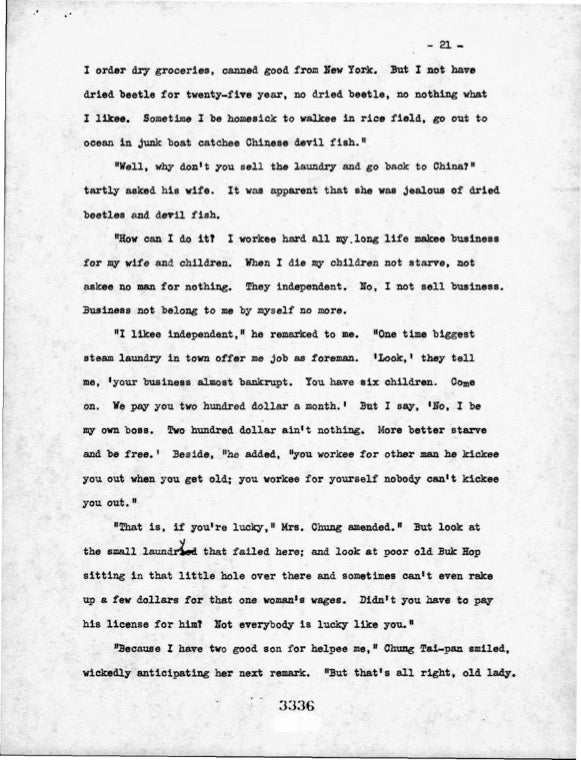
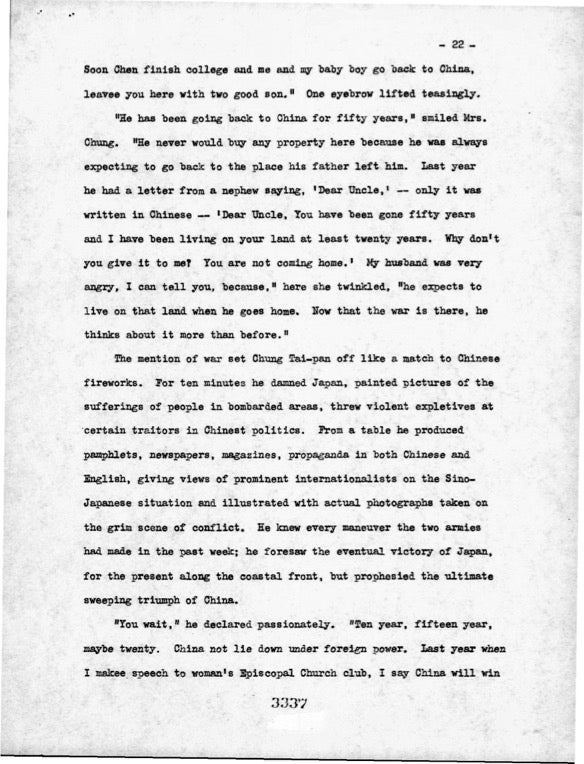
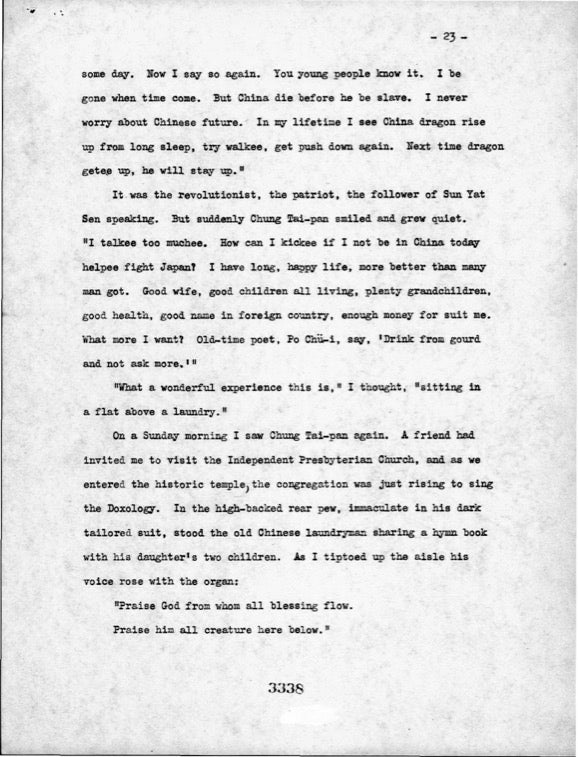
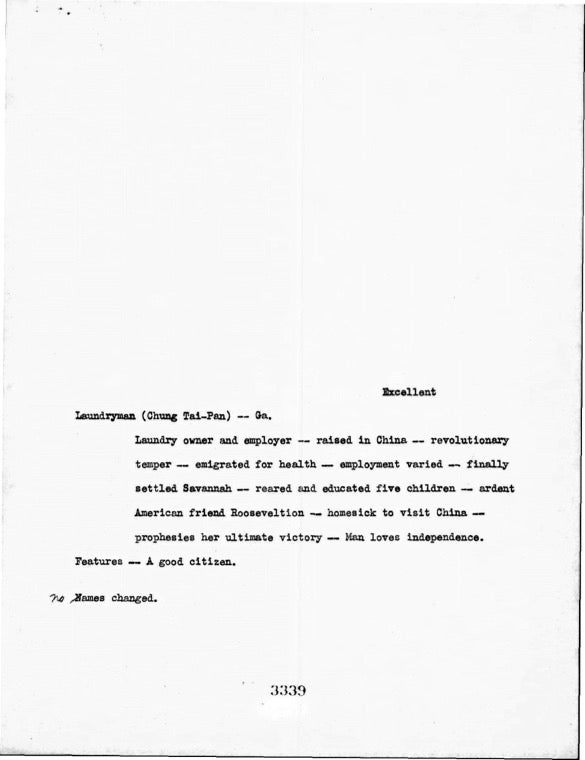
Chinese-run laundries, a huge business on the West Coast, spread across the South as well. An interview conducted during the Federal Writers’ Project of the Great Depression profiled a Chinese laundryman who, like the Bunkers, married and settled into his local community.
Postwar Change and Civil Rights
World War II and the Civil Rights era brought more changes to the demographics of the South. During the war, Japanese Americans were forced into incarceration camps. After the war, educational exchanges and expanded immigration policies brought many Asian immigrants to the South. Some participated in desegregation efforts in the Civil Rights era.
From 1942–45, over 15,000 Japanese Americans were incarcerated in the Rohwer and Jerome camps in Arkansas. White locals opposed their presence, resulting in at least three shootings in the first year of their arrival. One state law forbade anyone of Japanese descent, even US citizens, from buying land in the state. When World War II ended, most Japanese Americans left.
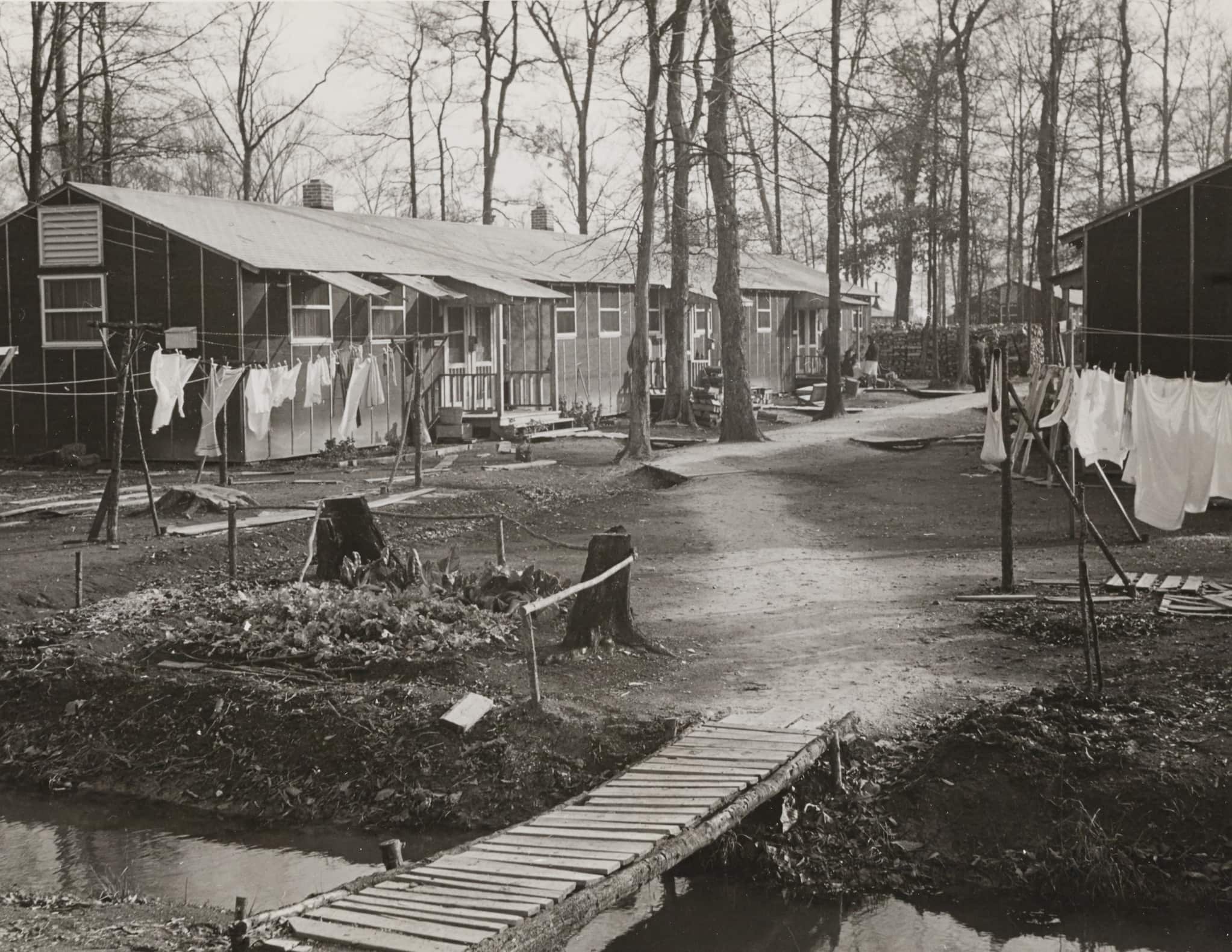
Image 29.01.05 — During World War II, over 8,000 Japanese Americans were incarcerated in the Rohwer “Relocation Center” in Desha County, Arkansas, with a similar number at the Jerome camp nearby. Families contended with crowded barracks and unfamiliar swampy surroundings.
After the war, universities began promoting educational exchanges in order to foster allies in Asia. This brought more Asian Americans to universities in the South. As a result, South Asian communities formed, becoming by far the largest Asian American group in the region.
These newly formed communities faced the politics of the South in the 1960s. At the time, the region was grappling with the fight for civil rights, particularly after the Supreme Court decided to desegregate public facilities with Brown v. Board of Education (1954). Desegregation–and the resistance to it–affected Asian Americans differently depending on local customs and population. Activists, including those coming from the West Coast, worked across the South to uphold civil rights. In some cases, they ran into violence in their efforts to register voters and participate in marches.
In 1965, Asian American and Pacific Islander communities grew quickly after a broad immigration reform law passed. From highly skilled laborers entering on employer visas to adoptees, this group contains a variety of migration pathways, experiences, and more languages and ethnicities than ever before.
Pacific Islanders from small nations, particularly those with special political relationships to the United States, as well as Native Hawaiians, migrated to specific locations in the South. West Asians and Arab Americans fleeing wars settled across the South; Southeast Asian refugees, some of whom first arrived at refugee camps at military sites in the South, settled or migrated to this region for economic opportunity, including farming and fishing. Today, vibrant and growing Asian American and Pacific Islander ethnic communities live across the South.
Asian Americans in the South
As Asian American populations grew and Asian Americans who grew up in the South started to bring their racial and regional identities together, Asian American foodways, literature, and other cultural elements have gained prominence. Many of the best-known narratives continue to reflect on the racial divisions between Black and white and the understandings of different Asian American groups about where they “fit.”
Thanhhà Lai’s poetic memoirs, Inside Out and Back Again and its sequel When Clouds Touch Us, pair the difficulty of her family’s flight from Vietnam with the difficulty of their adjustment to life in Alabama. Devi S. Laskar’s novel The Atlas of Reds and Blues examines how everyday and institutionalized racism can explode into violence. Such accounts also include affection for the South that grows while building families, friendships, and homes.
The presence of Asian Americans in the South has also sadly been brought to the fore at moments of violence. In 2007, a Korean American student at Virginia Tech committed one of the largest mass shootings in US history. In 2021, a white man committed two shootings at Korean-owned small businesses in the Atlanta area, killing eight people. These tragic episodes reflect ongoing tensions around race and belonging, and inspire larger dialogues about the lived experiences and the media depictions of Asian Americans in the South. They also inspire protest, community building, and artistic response.
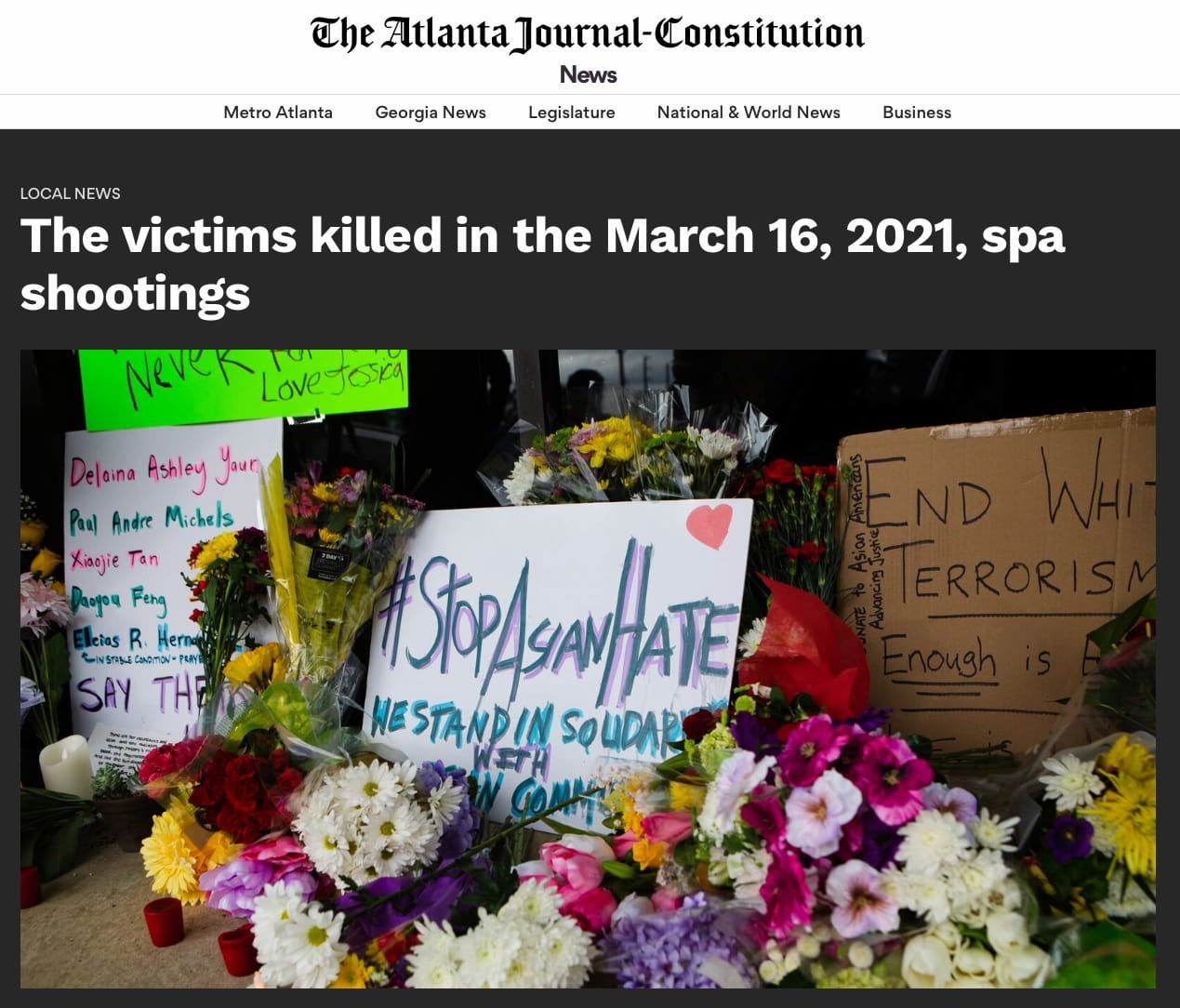
Image 29.01.06 — After the shootings at Korean-owned businesses in the Atlanta area in 2021, protest, community organizing, and artistic response among Asian Americans blossomed nationwide.
The historical presence of Asian Americans helps us to look at the South from a different viewpoint, thinking about the complex nature of migration and the ways that definitions of race change over time and vary in different regions of the United States. From the nineteenth century to the civil rights era, the presence of Asian Americans was puzzling to define in highly segregated areas that separated race by Black or white. Lawmakers and those in power created ways to regulate the presence of Asians among them, while Asian Americans found strategies to build lives and communities.
Glossary terms in this module
Alien Land Laws Where it’s used
State laws that restricted the purchase and ownership of land based on citizenship, which targeted and affected Asian immigrants, who were legally ineligible for naturalization.
Brown v. Board of Education Where it’s used
A landmark 1954 Supreme Court case examining the segregation of public education, initiated by an African American family in Kansas. The decision unanimously ended legal segregation of public facilities.
Chinese Exclusion Act Where it’s used
An 1882 federal law restricting Chinese immigration to the United States. Exceptions were granted on the basis of certain occupations, such as merchant or student. This and other restrictive laws remained in place until 1943, when China’s status as a wartime ally shifted public sentiment.