




Module 2: Labor and Migration
Are Asian Americans who live in the United States South impacted by their experiences in the South?
Political conflict in Asia and the Pacific, along with labor needs in the United States, have catalyzed different waves of Asian and Pacific Islander immigration from the nineteenth century to today. In the second half of the twentieth century, conflicts and decolonization in Asia and the Pacific have led to upheavals of various kinds—military, economic, social, and environmental—that have developed into complex migratory and refugee flows that involve stops at refugee camps in multiple countries and states.
Employers and community networks have often helped to accelerate immigration for a number of different ethnic groups. These groups are often associated with specific businesses or employment, from American Samoans connected with Fort Hood in Texas to Hmong American farmers in Florida. South Asian male immigrants began to enter in large numbers in the 1990s for employment in information technology (IT) positions through the H1-B visa program for “specialty occupations,” and South Asian-owned motels, half or more Gujarati-owned, extend across the South as in other parts of the country.
This module focuses on two migratory flows: the Chinese population in Mississippi in the 1870s and the Marshallese population in northwest Arkansas in the 1980s. Each case study shows how US foreign policy in Asia and the Pacific, as well as US labor needs, caused and increased migration. We will learn how these communities formed and found work in particular industries, and how they changed over time. Rather than thinking of these communities as “in-between” Black and white southerners, we consider the network of relationships the Chinese and Marshallese communities forged and navigated in their contexts.
Why did Chinese laborers begin opening grocery stores in the Mississippi Delta, and how did they interact with the Black community?
Why did Marshallese people come to Arkansas, and what were their living conditions in the US?
How are the migration patterns of Chinese and Marshallese laborers connected?
From the Plantation to the Store
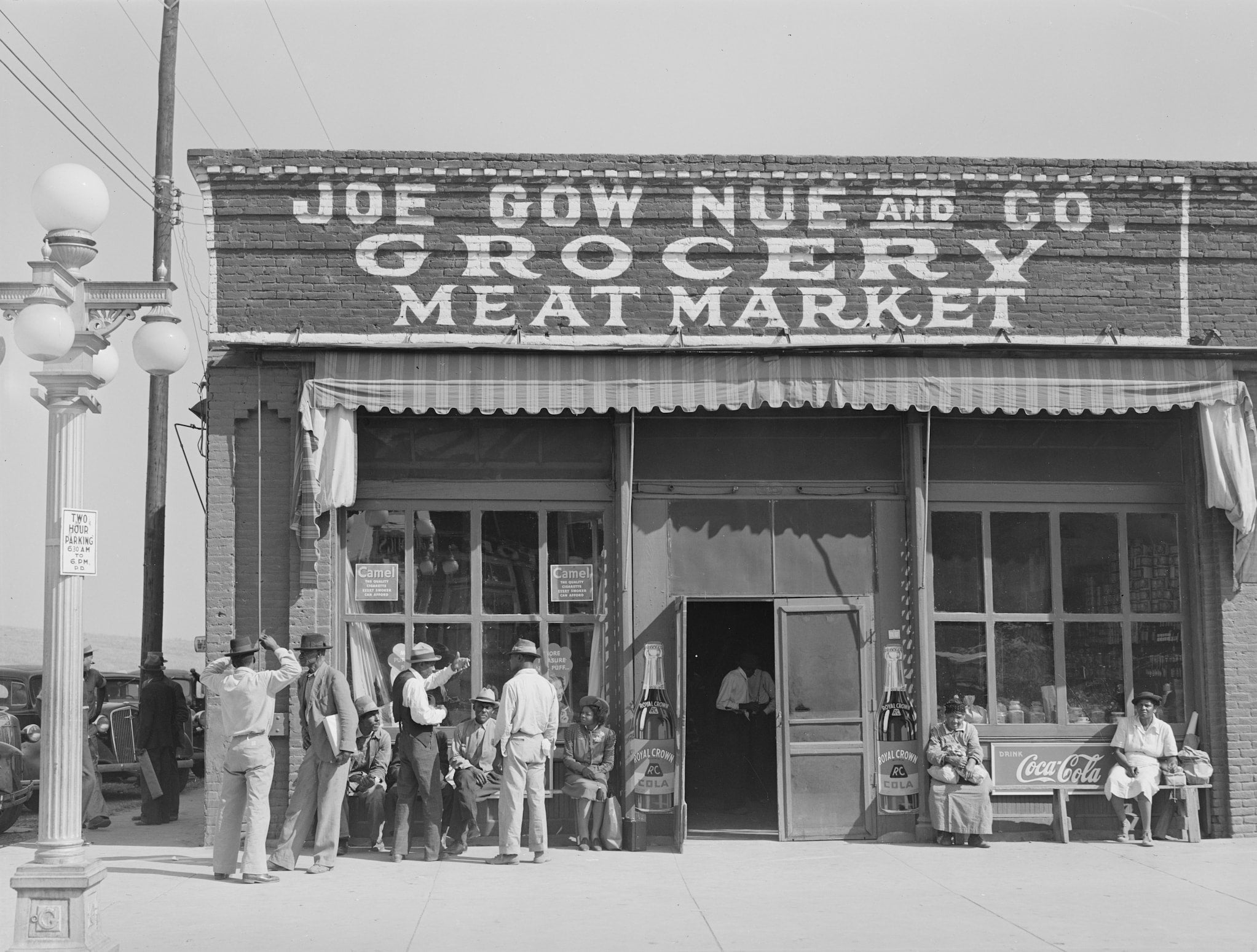
Image 29.02.01 — Chinese grocers in the Mississippi Delta navigated the different social and economic circumstances of their towns. The stores mainly served a Black clientele, who were mostly sharecroppers or nearby workers.
Reports and oral histories suggest that Chinese laborers entered Mississippi in the 1870s, and the first Chinese grocery was likely established in 1872. Soon after, Chinese groceries opened across the Mississippi Delta, the northwest part of the state that lies between the Mississippi and Yazoo rivers. These small stores initially served a Black clientele. How did these stores start in the Delta, and how did they change over time?
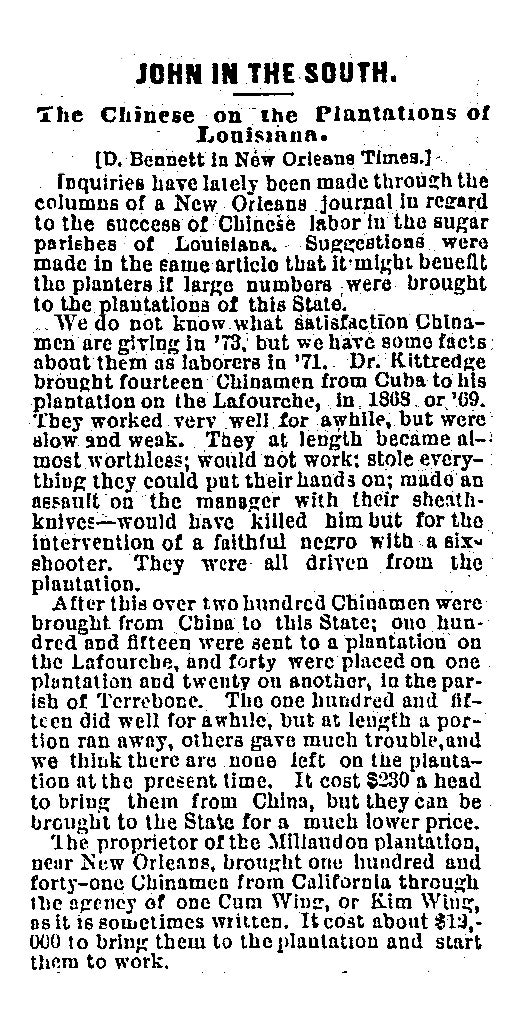
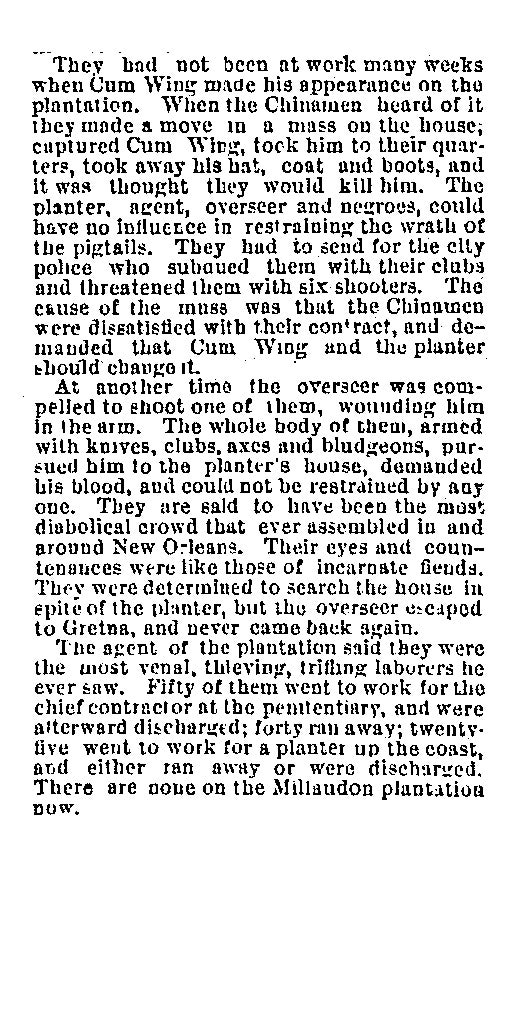
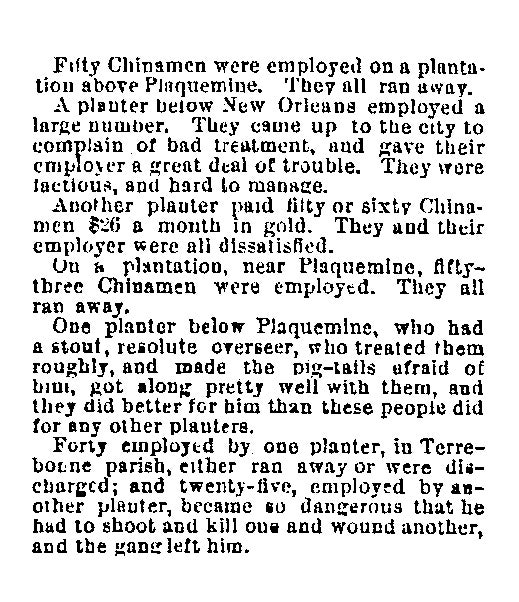
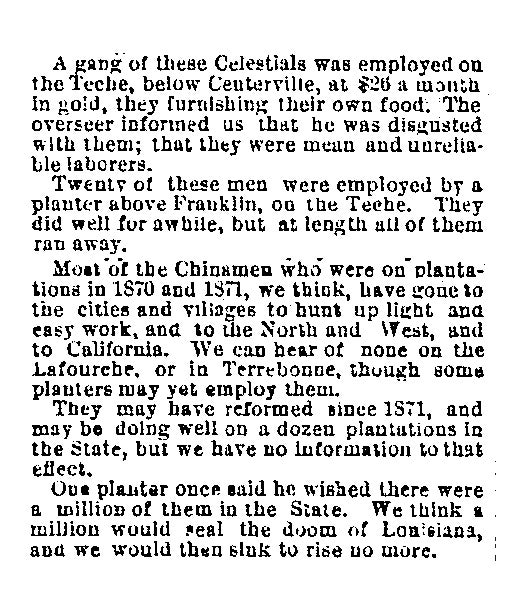
In the 1870s, Chinese laborers entered Southern states for employment. One newspaper account of the time reports sixteen laborers entered from Hong Kong to work on a plantation. Many plantation workers were brought in as indentured labor. Other Chinese laborers migrated from Louisiana plantations and shrimping businesses. In Mississippi, these workers faced mistreatment and low wages, and many left to open small stores.
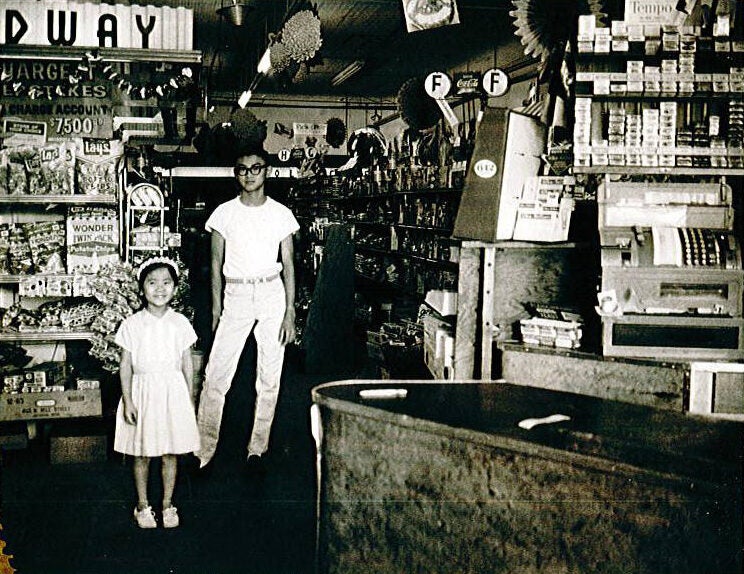
The typical Chinese grocery had two rooms: one room to live in and one to sell from. Living in their stores would continue since housing segregation limited where they could live. Chinese grocers drew on the support of family associations to establish their stores. Black business owners did not have such access, since they encountered difficulty procuring loans and wholesale suppliers.
These general stores became an essential part of the economy, and Chinese owners navigated the different social and economic circumstances of their towns. The stores mainly served a Black clientele, who were sharecroppers or workers nearby. By 1880, the census counted fifty-one Chinese in the Delta—probably an undercount—and by 1940, the count was 743. These numbers likely excluded any mixed-race Chinese and Black children. This growing group joined an already established population of Lebanese peddlers and merchants, who gradually put down stronger roots in Delta towns.
More to explore
Excerpt
Labor and Revolt on the Reconstruction Plantation
Though written in an unsympathetic tone, this article sheds some light on the harsh treatment of Chinese indentured laborers on Louisiana plantations as well as the failure of the business plan to use them as cheap mass labor as they rebelled and ran away. Notably, the article mentions Kum Wing (spelled in various ways), a Chinese man credited with engineering some of the first laborers’ arrival, and notes that he was attacked by Chinese laborers who, no doubt, felt betrayed by the conditions they experienced.
Although the 1882 Chinese Exclusion Act prohibited most immigration from China, grocers qualified for “merchant status” and could thus bring their wives and children to the US. Chinese people already in the US also migrated to the Delta to join this community. Over time, Chinese and Black intermarriage, which had been common in the early twentieth century, reduced to nearly zero, perhaps due to the pressures of segregation and community stigma.
An example of a family of Chinese grocers was the Joe family. Edward Joe’s father migrated from Canton to Seattle, then San Francisco, and eventually to join friends in Mississippi in 1912. He cooked hot dogs and sold lunches at 5 a.m. to Black field workers. Joe’s eldest brother also ran a grocery store, and Joe’s wife Annette also grew up in a family that operated a grocery store. This remained a predominant occupation for the family for many decades.
Migrating from the Delta
As the families of Chinese grocers took root, their occupations and social interactions changed significantly. Many left the business and migrated to other locations in the South.
The Lum family operated a grocery store in the Delta, earning enough to purchase a house in Rosedale, Mississippi. When the local whites-only school prohibited the Lum daughters from attending in 1927, the family unsuccessfully sued. As a result, some families left the Delta for destinations such as Memphis, Tennessee, where Chinese Americans could access more whites-only spaces. Some established institutions specifically for the Chinese community. Edward Joe’s father, for example, helped to found a school in Cleveland for Chinese Americans.
The generation of children who grew up in the Delta had a wider variety of occupations; some took over or ran similar stores, but others opened specialty stores or bigger groceries in less segregated neighborhoods. Others left store ownership and moved into other professions. Eventually, small independent grocery stores in the Delta, as in other parts of the country, felt the pinch of competition from larger chain stores, driving even more of the Delta Chinese community into other occupations. Today, descendants of this population still live in the Delta, as well as Arkansas and Tennessee.
It is difficult to make any single conclusion about how Chinese grocers understood their status as grocery store owners. Sociologists describe the careful relationship owners had with Black customers, noting that they often spoke to each other in formal terms, like using “Mr.” and “Mrs.” or “Miss” to address each other. One store owner explained that doing so kept white townspeople happy, but also offered respect to Black customers. On the other hand, the Chinese population had access to store ownership, while the Black population did not. This created some tension between the two communities. Some store owners donated to Black churches and schools to maintain good relations.

Image 29.02.04 — In an undated photo, Edward Woo stands in his Mississippi Delta grocery store, Eddie’s Leadway, with Nancy Gee, a young out-of-town visitor.
Nuclear Refugees: The Marshallese in Arkansas
Early in the morning of March 1, 1954, a fireball exploded over Bikini Atoll in the Marshall Islands in the Micronesian region of the Pacific Ocean, forming the now-famous mushroom cloud shape. This was the first of a series of powerful thermonuclear weapon tests carried out by the United States, exposing the Marshallese people to radiation and contaminating the environment for decades.
In 1986, amid calls for the islands to gain independence, the US government and the Marshallese government agreed to some compensation as well as a special agreement called the Compact of Free Association (COFA). The compact gives Marshallese the ability to travel to the United States without a visa, though they do not have full access to federal benefits such as Medicaid. Nor do they have access to citizenship rights, such as voting.
John Moody moved from the Marshall Islands to the United States in the 1970s to attend college. In 1986, he moved to Springdale, Arkansas, and began working for Tyson Foods, a food processing company best known for its chicken products. Moody started encouraging his fellow Marshallese to move to the area, and the population grew over the next two decades, surging after the year 2000.
As of 2020, the population in northwest Arkansas was estimated somewhere between 12,000 and 15,000; this area is predominantly white, with a significant Latinx population as well as a Hmong refugee population centered in one city. The Marshallese have chiefly worked for Tyson and other poultry plants, and other Marshallese nationwide also entered the meatpacking industry.
Listen to
An interview with Chris Balos (Arkansas Atoll Podcast)

Chris Balos: Well, after living here almost 10 years now, I think, you know, I’ve come to understand that, you know, it’s—it’s a good enough pace for a lot of my people that are, you know, first generation to the states. So, so you know, you have home, and then I feel like, you know, it’s—it’s like a sanctuary, you know?
You know, we can’t really say we’re home, but, you know, at least we know that we’ll be safe at, you know, at this place. You know, if you go down in Springdale, you could see the culture there. Um, so you can’t really say oh, these—these are, you know, immigrants who are assimilating to American culture, so they’re not technically American. We’re still Marshallese.
You know, we always say Springdale is the next island, you know? So, us coming from a navigator’s, you know, mindset, you know, it’s—um, we’re—we’re planting our seed and then kind of grow from there and—um, but I believe as soon as we lose the culture, then that’s—I believe that’s when we—we really left the island.
Audio 29.02.05 — Chris Balos, who works for two local community organizations, reflects on Arkansas as a second home for the Marshallese. He migrated to Hawaiʻi at the age of two, grew up on the US West Coast, and eventually came to Arkansas at the age of 21. (Arkansas Atoll Podcast, Courtesy of the Pryor Center for Arkansas Oral and Visual History, University of Arkansas)
Despite the job opportunity in Arkansas, Marshallese have faced many challenges. The unusual paperwork of COFA, language, and lack of transportation can become barriers. A different educational system and a lack of acceptance of Marshallese certifications in the US prevent job mobility. Thus, this labor flow was initially confined in scope, though new arrivals and new programs are gradually diversifying employment. Cultural difference also exacerbates these barriers and leads to a feeling of displacement, as some said they felt “neither here nor there.” 1
In addition, poverty in the Marshall Islands and among Marshallese in the United States led to a rise in adoptions that caused concern among community and adoption advocates. The head of an adoption agency in the United States was sentenced on federal human smuggling charges in 2021 after bringing pregnant Marshallese to the United States and arranging for the adoption of their children by white couples.
This was a dynamic that Melisa Laelan, the founder of the Arkansas Coalition of Marshallese, compared to decades of Native American children being taken away from their families. Further efforts to address the unusual legal status of the Marshallese under COFA are likely, as well as cultural education, awareness, and customs that have already taken root in northwest Arkansas.
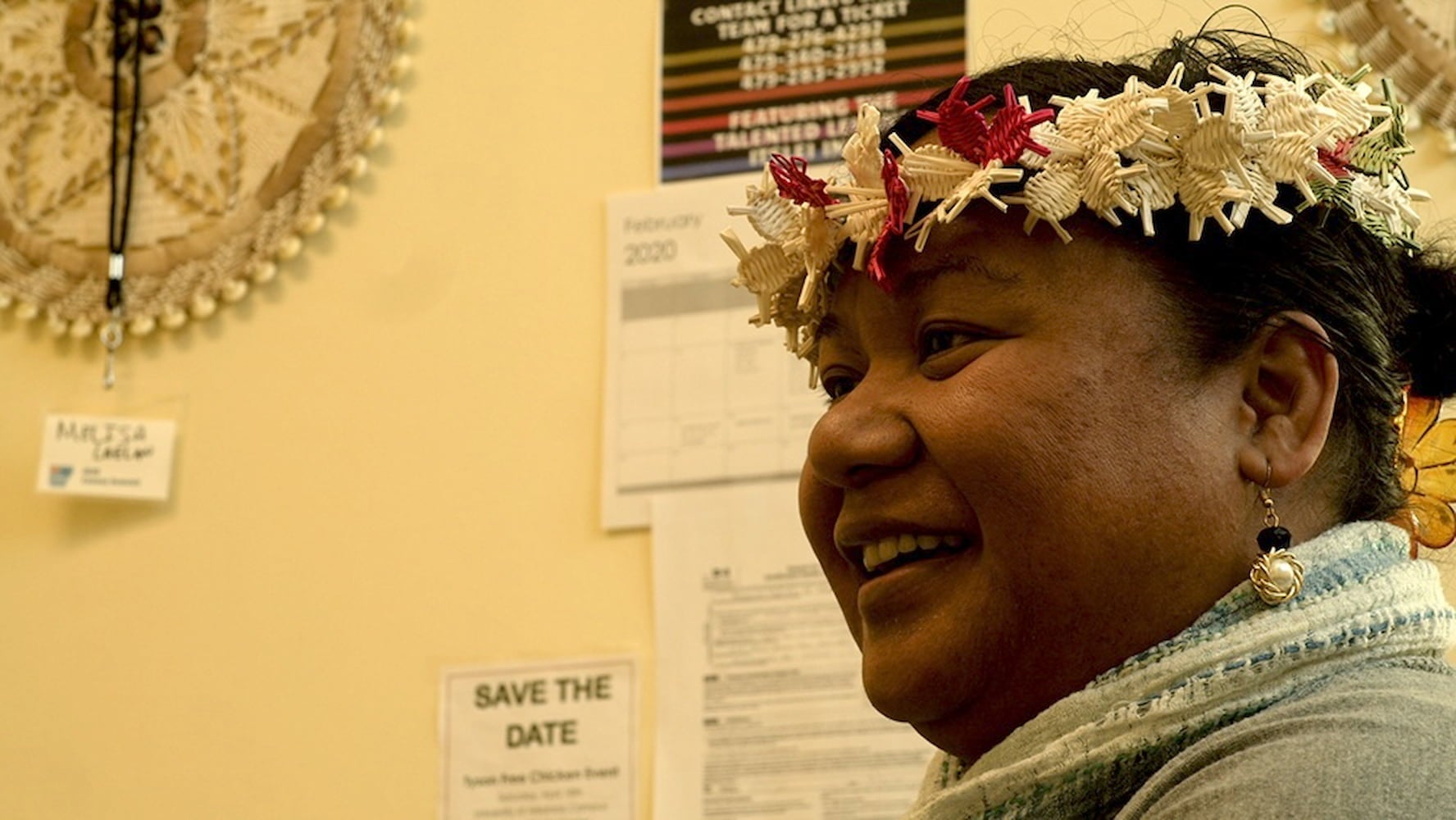
Image 29.02.06 — Melisa Laelan founded the Arkansas Coalition of Marshallese, a nonprofit organization, to advocate for the community’s needs and improve their quality of life. (Arkansas Atoll Podcast, Courtesy of the Pryor Center for Arkansas Oral and Visual History, University of Arkansas)
COVID-19 and the Marshallese Community
The Marshallese community suffered disproportionately under the COVID-19 pandemic due to the conditions of the meatpacking industry, which was considered an essential business and stayed open. Although they only comprised 1.5–3 percent of the northwest Arkansas population in 2020, the Marshallese community accounted for 65 percent of deaths from COVID-19.
These rates were so alarming that the Centers for Disease Control and Prevention (CDC) conducted a special visit and study to assess and remedy the situation. COVID-19 intensified all of the factors that were stressing the community: employment in the meatpacking industry (which remained open), difficulty accessing health care, language barriers, preexisting health conditions, and poverty.
Even the tightly knit multigenerational households created a risk of rapid COVID-19 spread. Importantly, however, the community resilience and organization that had already developed over previous decades helped to fight the pandemic with a combination of testing, education, support for care and quarantine, and food and housing assistance.
Listen to
An interview with Neisan Laukon (Arkansas Atoll Podcast)
Neisan Laukon: They told us that they couldn’t stop working at Tyson because according to them, we feed the world. Even they got t-shirts for us that says, “my work feeds the world.” So, uh, I haven’t heard anything about that the sickness at our work, but they’re doing everything they can to, you know, wearing masks, you know, stay six feet apart, you know. They—they do a lot of things, you know, to make it work.
So, I haven’t—I haven’t heard anything about anybody get sick in—where I work. But other plants, you know, I have heard. Uh, there are three people died this week, you know, from coronavirus. Now I don’t know if from their work or from getting together with other people or what, I don’t know. At my work—at my work they’re definitely taking all the, you know, whatever they’re telling them to do.
And today, my husband is at—well, my husband went back to work now too. He’s retired from Kraft, but uh, at their work right now they’re checking all the workers, you know, all the employees—even there this morning from 3 o’clock and they’re going to do it all day long today. Check all the people at—at their plant. There are, I think, six different plants—Tyson plants—here in Arkansas. So, uh, one of them they’re checking this morning, or today.
Audio 29.02.07 — Neisan Laukon, a Marshallese employee at Tyson Foods during 2020, speaks about the early days of the COVID-19 pandemic, and the dangers faced by these essential workers in close quarters. (Arkansas Atoll Podcast, Courtesy of the Pryor Center for Arkansas Oral and Visual History, University of Arkansas)
In a 2020 survey, Arkansas Marshallese overwhelmingly responded that they had come to the United States for education, jobs, health, and family reasons, but a majority also noted that they did not want to return because of concerns about climate change and sea level rise, which has affected the atolls of the Marshall Islands significantly.
This community can be expected to increase, not only from migration from the Marshall Islands, but also from Marshallese in Hawaiʻi and other states who come to Arkansas for the lower cost of living. Further efforts to address the unusual legal status of the Marshallese under COFA are likely, as well as new cultural education, awareness, and customs that have already taken root in northwest Arkansas.
Navigating Federal and Local Conditions
Political, environmental, and social conditions have shaped the conditions of labor for the community of Chinese grocers in the Mississippi Delta and the Marshallese meatpacking workers in Arkansas.
After the end of slavery, white business owners and politicians hoped that Chinese indentured labor would impede the success of Black sharecroppers. They did not expect the Chinese laborers would settle in the US. Nonetheless, Chinese grocers managed state and local policies and responded to the local community’s attitudes and needs. They became a vital part of the Delta’s economy, serving a mainly Black customer base. Across the South, they established families and communities.
The US government’s nuclear testing in the Marshall Islands has had long lasting effects on the climate, health, and economy of the Marshallese people. Many sought opportunities in the South, enabled by COFA. A large community formed in Arkansas, working mainly in the meatpacking industry. Like the Chinese community almost a hundred years before them, the Marshallese community has navigated federal policies at the same time they have dealt with local economic opportunities and relationships.
Glossary terms in this module
Chinese Exclusion Act Where it’s used
An 1882 federal law restricting Chinese immigration to the United States. Exceptions were granted on the basis of certain occupations, such as merchant or student. This and other restrictive laws remained in place until 1943, when China’s status as a wartime ally shifted public sentiment.
Family associations Where it’s used
These associations based on family lineages and other similar associations provided connection and support among community members. However, they were often viewed with suspicion by US authorities as criminal organizations that enabled financial and immigration fraud.
Endnotes
1 S. N. McClain et al., “Migration with Dignity: A Case Study on the Livelihood Transition of Marshallese to Springdale, Arkansas,” Journal of International Migration and Integration 21, no. 3 (September 1, 2020): 855, https://doi.org/10.1007/s12134-019-00688-7.