




Groups of Japanese American families dressed in Sunday suits and coats wait outside to board trains with their luggage piled beside them.
Module 3: Looking Like the Enemy (1942-1945)
Why did many Japanese Americans retain a strong sense of ethnic identity and community after being in the United States for multiple generations?
On December 7, 1941, Japanese planes attacked American military installations in Hawaiʻi, leading the United States to declare war on Japan, Germany, and Italy. Many Japanese Americans remember that day vividly. Members of the Uno family were on their way to church when they heard the news on the radio. “And that’s when life kind of changed for all of us,” remembered Kay Uno Kaneko, the youngest of the Uno children.
This module is about what happened to Japanese Americans like the Unos when Japan went to war with the US. Japanese Americans living on the West Coast were forcibly removed from their homes and businesses and sent to inland concentration camps, while those in other parts of the country were selectively arrested and interned due to their ancestry. Life for most Japanese Americans would never be the same.
What forces led to the mass exclusion and incarceration of West Coast Japanese Americans?
What were the conditions and politics of life in American concentration camps?
What were the varied ways Japanese Americans responded to their wartime plight?
Issei Arrests and the Road to Executive Order 9066
Based on information gathered through years of prewar investigation, the FBI, with the assistance of local law enforcement, immediately began arresting Issei (first generation) male community leaders, such as Buddhist priests, leaders of business or community organizations, and Japanese language school instructors.
By December 10, nearly 1,300 such men had been detained, with another one thousand arrested by February 1942. George Uno was among them. After being held briefly in local detention camps, they were taken to concentration camps run by the Justice Department through the Immigration and Naturalization Service (INS).
These camps also held German Americans who had been similarly arrested. George Uno was eventually taken to camps in New Mexico and North Dakota. Later in the war, some of these camps also imprisoned some two thousand Japanese Latin Americans who had been brought into the country to be used in possible prisoner exchanges for Americans held by Japan.
Despite this limited roundup of those deemed suspect by the FBI, West Coast politicians and business leaders, among others, pushed for more, drawing on the fifty-year legacy of anti-Japanese sentiment. Before long, calls for forcibly removing all Japanese Americans from the West Coast gained momentum.
While President Franklin D. Roosevelt’s Justice Department (which housed the FBI and INS) opposed a mass roundup—arguing that they had already identified and imprisoned all those deemed dangerous, and that such a roundup would be unconstitutional—the War Department and army pushed for it as a “military necessity,” eventually winning over the president. On February 19, 1942, President Roosevelt issued Executive Order 9066, which authorized the War Department to order such a policy. By March they were formulating plans on how to carry it out.
In Hawaiʻi, by contrast, there was no mass imprisonment of Japanese Americans. While a similar roundup of Issei community leaders took place and martial law was declared, the rest of the Japanese American population was largely spared.
While there were many reasons for the divergent policies towards Japanese Americans in Hawaiʻi versus the continent, the main one was likely the Hawaiʻi Japanese American community’s larger numbers. They made up about 37 percent of the population on the islands, which led to the community’s greater integration into mainstream society and the local economy. As a result, most of Hawaiʻi’s business and military leaders knew local Japanese Americans and largely opposed any sort of mass removal or incarceration. In the end, less than 2 percent of the Japanese American population of Hawaiʻi was imprisoned.
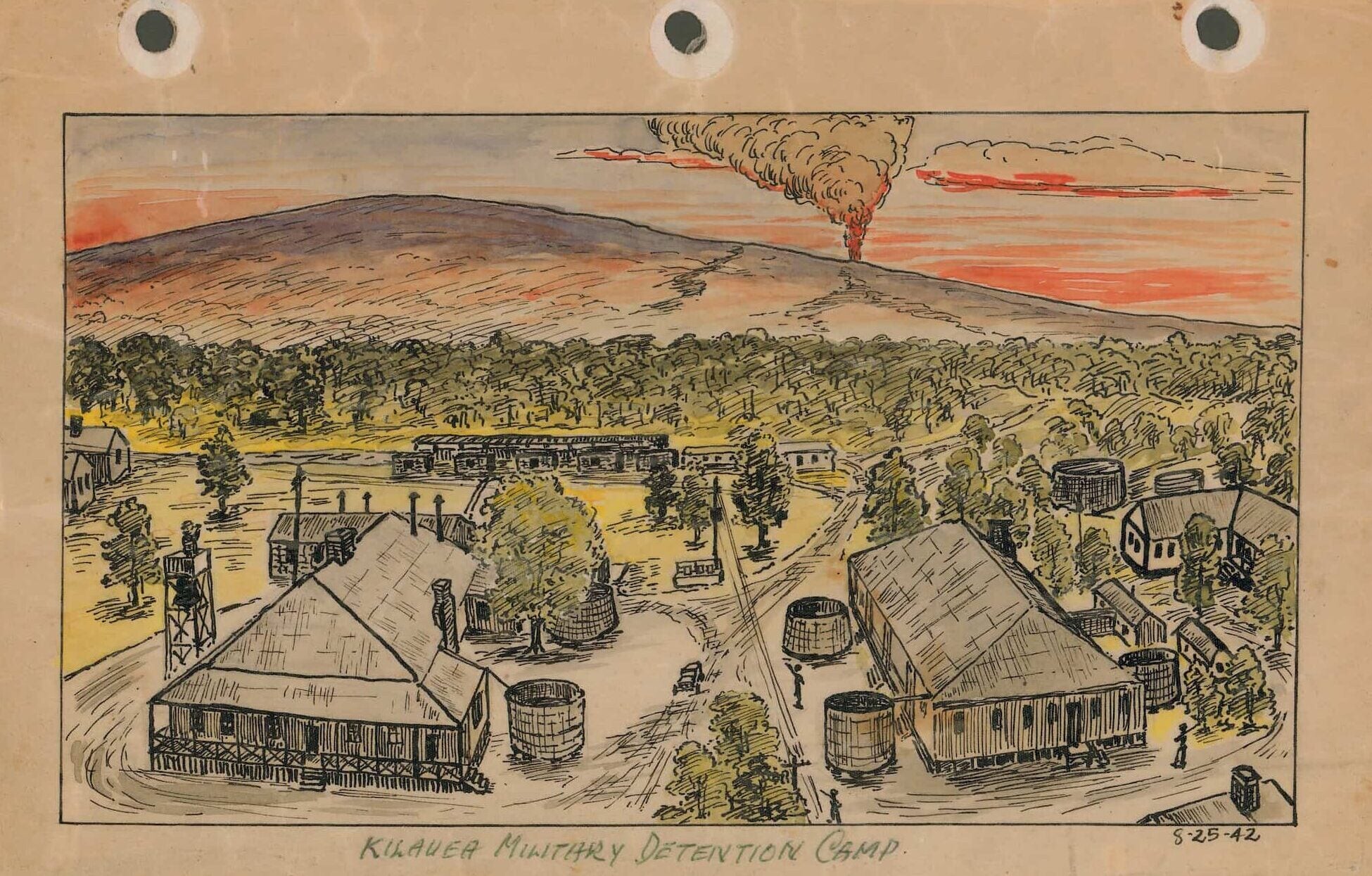
Image 13.03.02 — A young Issei artist and leader in the Hilo, Hawaiʻi, Japanese American community, George Hoshida documented his incarceration following his arrest and detention in Kilauea Military Detention Camp through illustration.
Mass Incarceration
Ten days after Executive Order 9066 was issued, military officials specified an area from which Japanese Americans would be excluded, which included the western halves of California, Oregon, and Washington, and a portion of southern Arizona. After an aborted attempt to encourage Japanese Americans to move from those areas on their own, the army began issuing a series of exclusion orders starting at the end of March, ordering “all persons of Japanese descent” to vacate those areas, usually giving them a week to do so, and transporting them to temporary detention facilities that were called “reception centers” or “assembly centers.”
Over the spring and summer of 1942, the government systematically removed all Japanese Americans from these areas, which later expanded to include all of the state of California. Nearly 110,000 Japanese Americans were thus forcibly removed from their homes, joining the thousands of Issei who had already been imprisoned. Thousands more would later be born into incarceration.
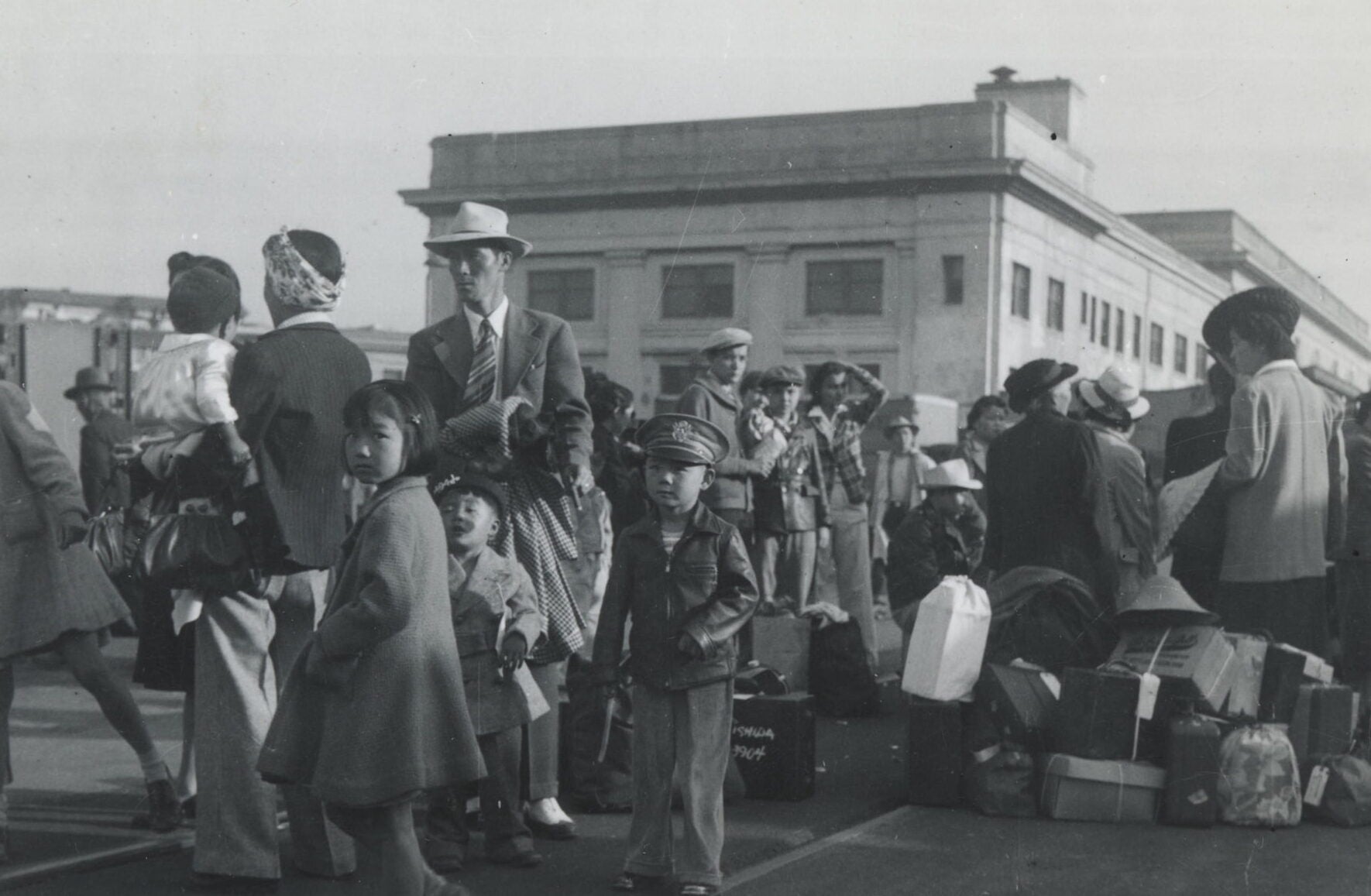
Image 13.03.03 — Thousands of Japanese Americans were forced from their homes, uncertain of their futures. In this image, many gathered at Union Station in downtown Los Angeles in May 1942 where they were transported to the Manzanar concentration camp in central California.
Japanese American families scrambled to sell off homes and businesses, pack up their belongings, and get their affairs in order before being forced out. Many Japanese Americans recall people knocking on their doors and offering them pennies on the dollar for their possessions, or being forced to leave a beloved family pet behind, since pets could not be taken along.
Not all Japanese Americans obeyed orders. Dozens in fact refused to leave for a variety of reasons. Several challenged aspects of the forced removal in court, and three cases went all the way to the Supreme Court. Gordon Hirabayashi, a college student in Seattle, Washington, and Minoru Yasui, a young lawyer in Portland, Oregon, challenged curfew and exclusion orders by getting themselves arrested. Fred Korematsu tried to evade exclusion orders in California. All were convicted, and the Supreme Court ultimately upheld their convictions and thus the legality of the racially-based curfews and exclusion.
Most of the Uno family was taken to the Santa Anita Assembly Center in California. A large horse racing track prior to the war, Santa Anita was converted to a temporary detention facility that held nearly 19,000 Japanese Americans from the Los Angeles area. A little under half lived in horse stalls that had been quickly converted into “apartments,” while others lived in military style barracks. Sixteen other temporary detention camps quickly sprouted up throughout the exclusion area on sites that had been fairgrounds, migrant labor camps, and even a livestock pavilion. The various camps were surrounded by barbed wire fences, and armed military police manned the guard towers overlooking them.
In the meantime, a new federal agency named the War Relocation Authority (WRA) began preparing longer term detention facilities that were mostly located far away from where Japanese Americans had once lived, typically in desolate locations throughout the West and in Arkansas. There were ultimately ten such camps, each of which held anywhere from 7,500 to nearly 19,000 people. After being held in the assembly centers between one and six months, Japanese Americans were moved to these new camps throughout the summer and fall of 1942. The Unos were sent to a camp in southeastern Colorado that was called Amache.
Similar to when they were in the assembly centers, Japanese Americans lived in often overcrowded barracks that were furnished only with one army cot per person, a stove for heating, and a single light bulb. Entire families were often housed in a single 20′ by 20′ unit. Because they were a large family, the Unos occupied two units, one for the males and one for the females. Meals were served in a communal mess hall, and bathrooms and showers were communal as well. Many were shocked by the lack of privacy, from room dividers that did not go all the way to the ceiling to rows of shower heads and toilets that lacked partitions. And again there were barbed wire fences and guard towers that served as a reminder of the loss of freedom.
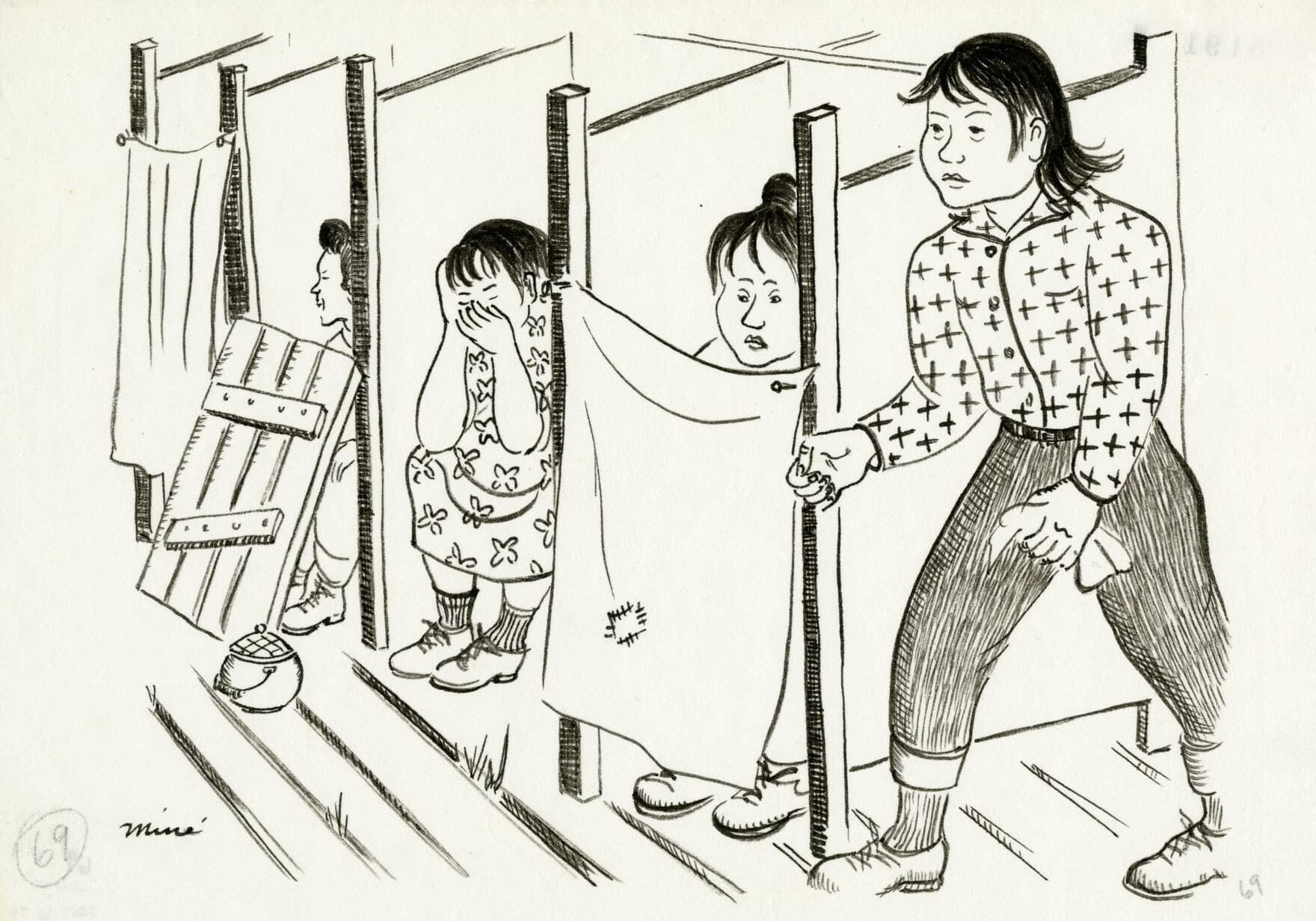
Image 13.03.04 — Nisei artist Miné Okubo documented her family’s incarceration in drawings that were later published as a book titled Citizen 13660 (1946). This image illustrates the lack of privacy in communal bathrooms at the Tanforan Assembly Center in San Bruno, California, 1942.
The WRA tried to run the camps as if they were small towns, starting schools, libraries, recreational activities, and even attempting a “democratically elected” inmate government. Many Japanese American incarcerees staffed these entities, for which they were paid a paltry wage that ranged from 12 dollars to 19 dollars per month, roughly one-tenth of what white WRA staffers were paid for similar work. But no matter how much the WRA tried to emulate normal life, it was hard for inmates to forget that they now lived in a concentration camp.
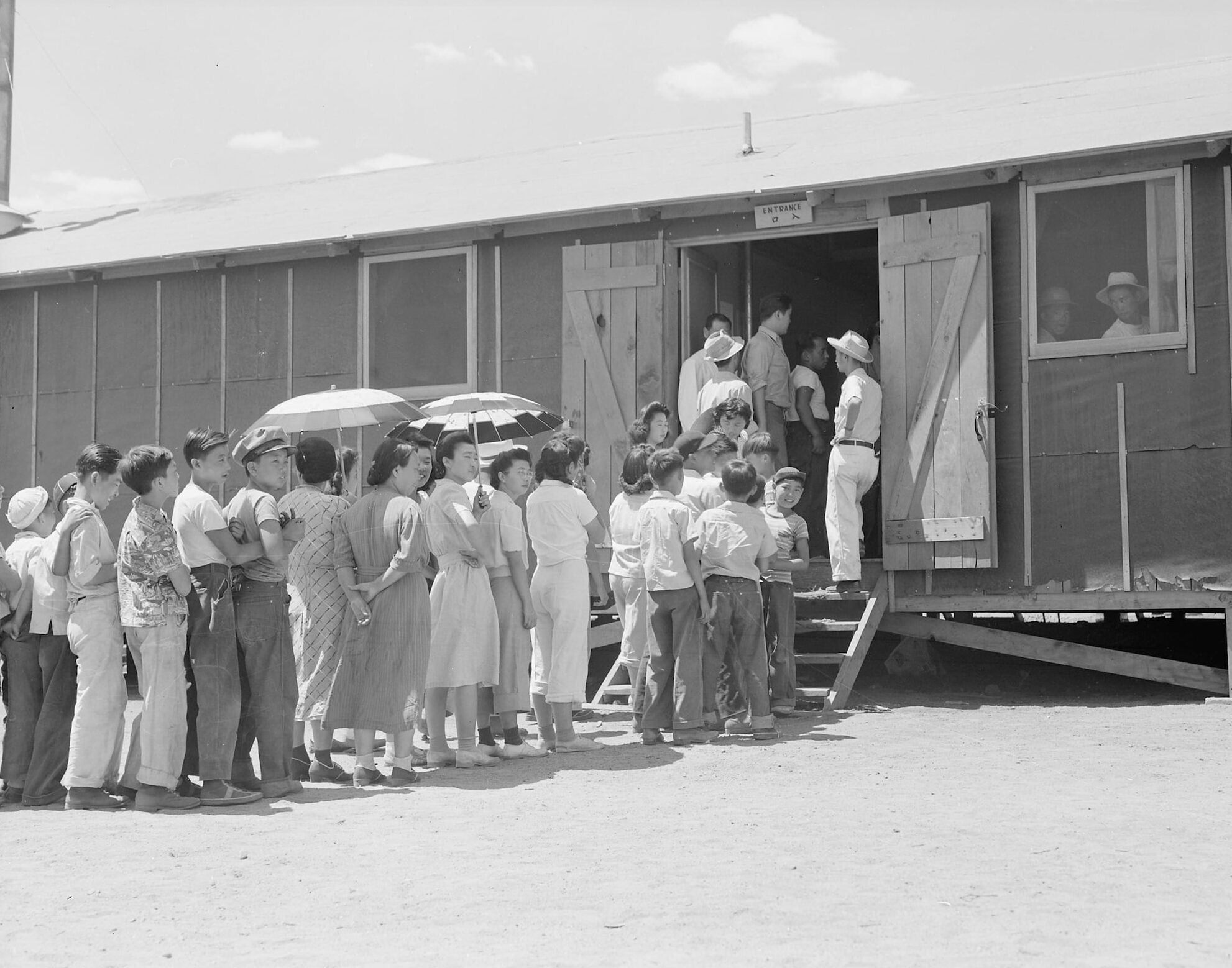
Image 13.03.05a — Photographed by Dorothea Lange, this image shows the long lines inmates had to wait in before entering the mess hall at the concentration camp in Manzanar, California, July 1942. Many recounted the constant lines they had to endure as part of camp life.
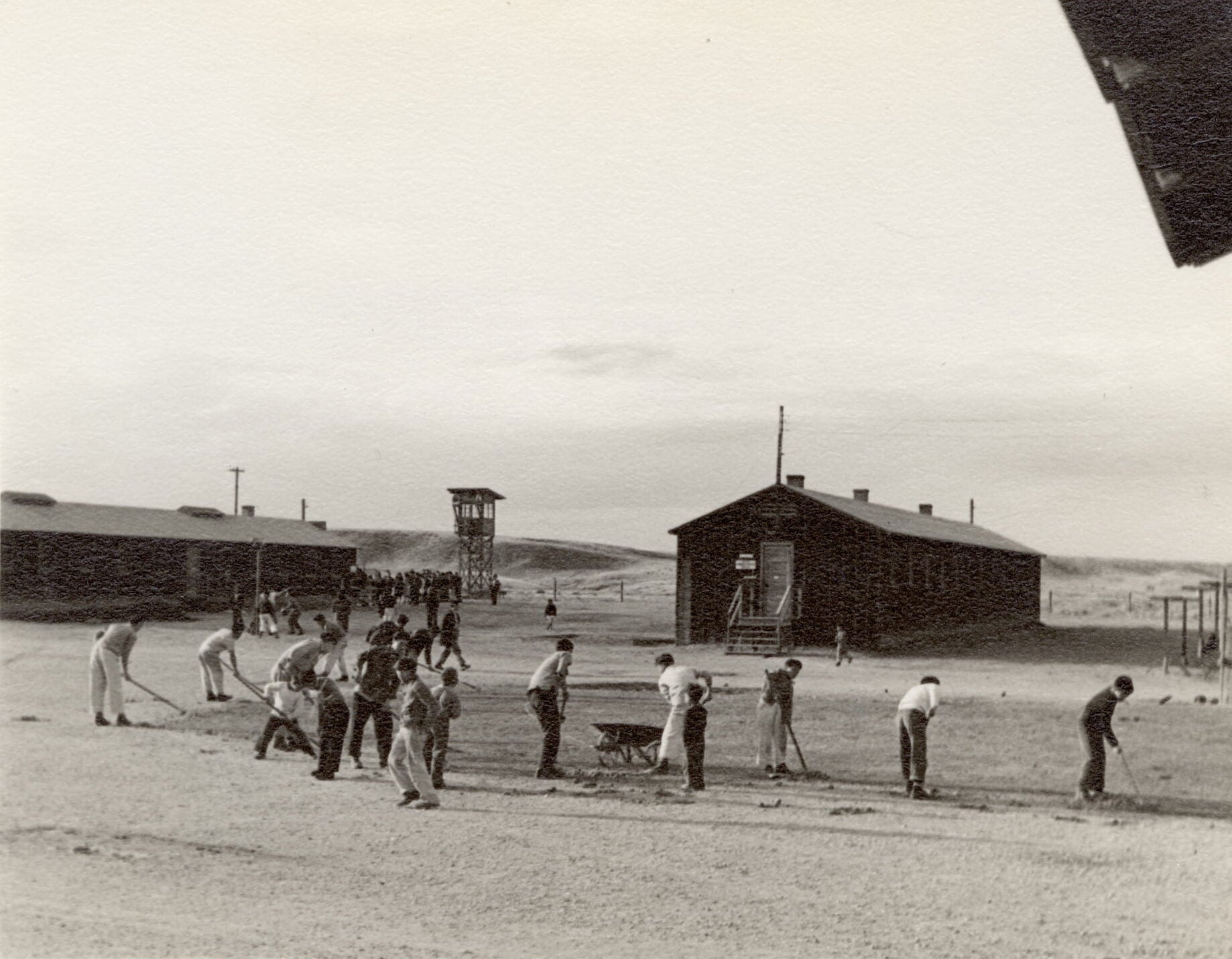
Image 13.03.05b — Concentration camps were run as if they were small towns. Many incarcerees staffed these positions, receiving one-tenth of what white WRA staffers were paid for similar work. This image shows Heart Mountain incarcerees working in Wyoming.
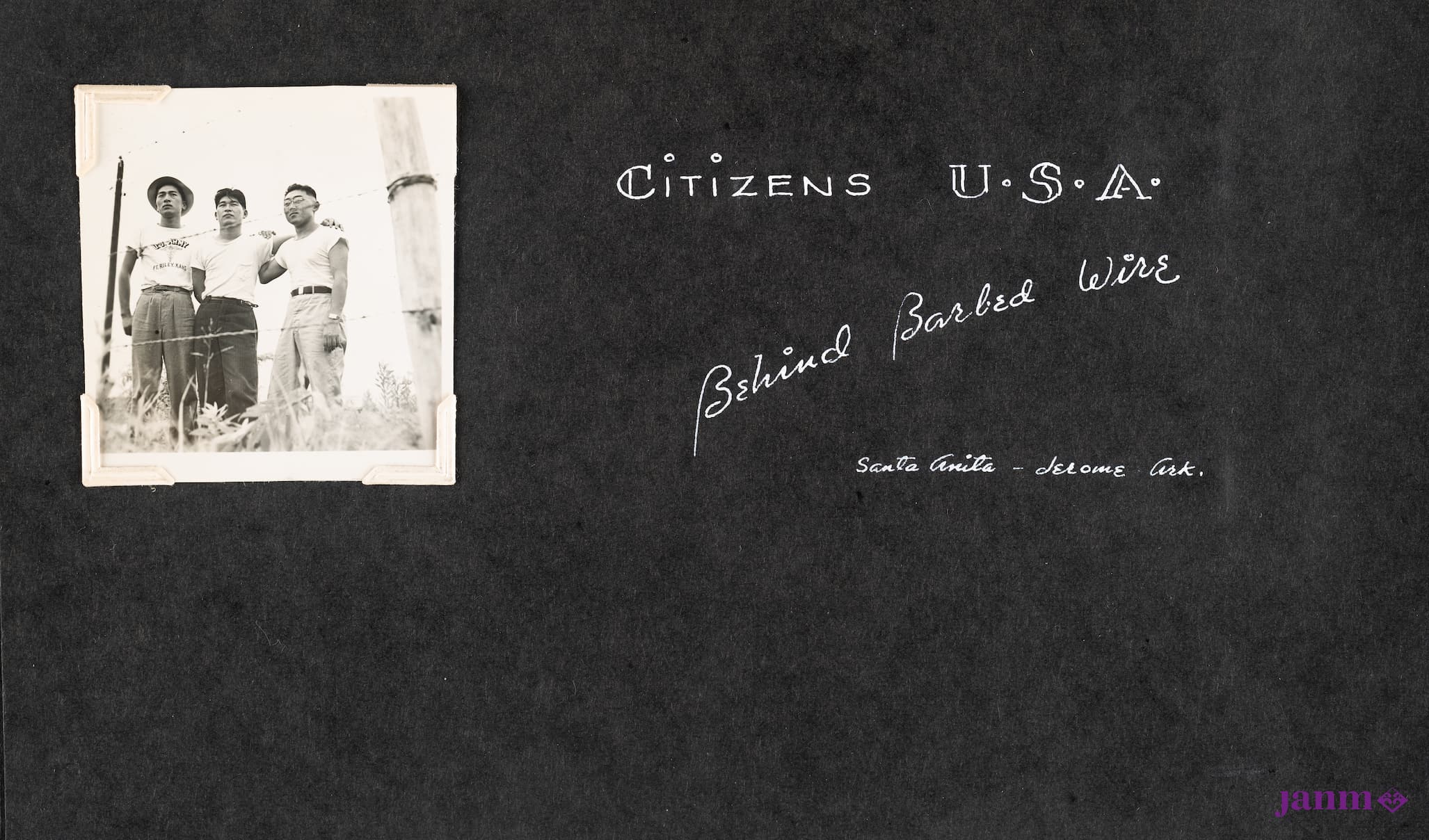
Image 13.03.05c — A page from a scrapbook by Kiku and Mary Masaoka, who were incarcerated in Santa Anita, California, and Jerome, Arkansas. Despite administrative attempts to make life as normal as possible, the incarcerees never forgot they were being held behind barbed wire.

The Meaning of “Loyalty”
In the meantime, the WRA encouraged Japanese Americans to leave their camps to “resettle” in parts of the country outside of the West Coast area from which they were banned. But unrest in the camps in the fall and winter of 1942 complicated this goal. Frustrated by their forced removal and incarceration, and by the conditions in the camps, many incarcerees lashed out at authority. At the Manzanar camp in California, military police opened fire on protestors, killing two inmates.
Blaming the unrest on a small group of “troublemakers,” the WRA decided to institute a process that would separate them out on the basis of “loyalty” to the United States. Meanwhile, the War Department in Washington, DC, decided to lift prohibitions on Nisei serving in the armed forces and announced the formation of an all-Japanese American army combat unit in February of 1943.
The WRA issued what became known colloquially as the “loyalty questionnaire” in February 1943, which had the dual purpose: first, separating “loyal” incarcerees who would be eligible to leave, versus ”disloyal” ones who would continue to be imprisoned; and second, identifying young men who wanted to volunteer for the US Army.
But the clumsy wording and implementation of the questionnaire led to thousands refusing to pledge their loyalty to the US, out of protest or out of a desire to preserve family unity. In spite of the uncertain results, the WRA proceeded to move all those it deemed disloyal to the Tule Lake camp in California, in late 1943 and early 1944. The Tule Lake Segregation Center transformed into a high security facility, its inmates forever stigmatized. The call for volunteers for the combat unit—called the 442nd Regimental Combat Team—also proved disappointing.
Around eight hundred Nisei men volunteered, far short of the army’s goal of three thousand. However, the response from Hawaiʻi, where Japanese Americans had not been imprisoned, more than made up for it, as some ten thousand Nisei stepped forward there. But when Nisei eligibility for the draft was restored at the beginning of 1944, many refused to report for induction as a means of protesting their forced removal and incarceration. In the end, over three hundred Nisei resisted the draft.
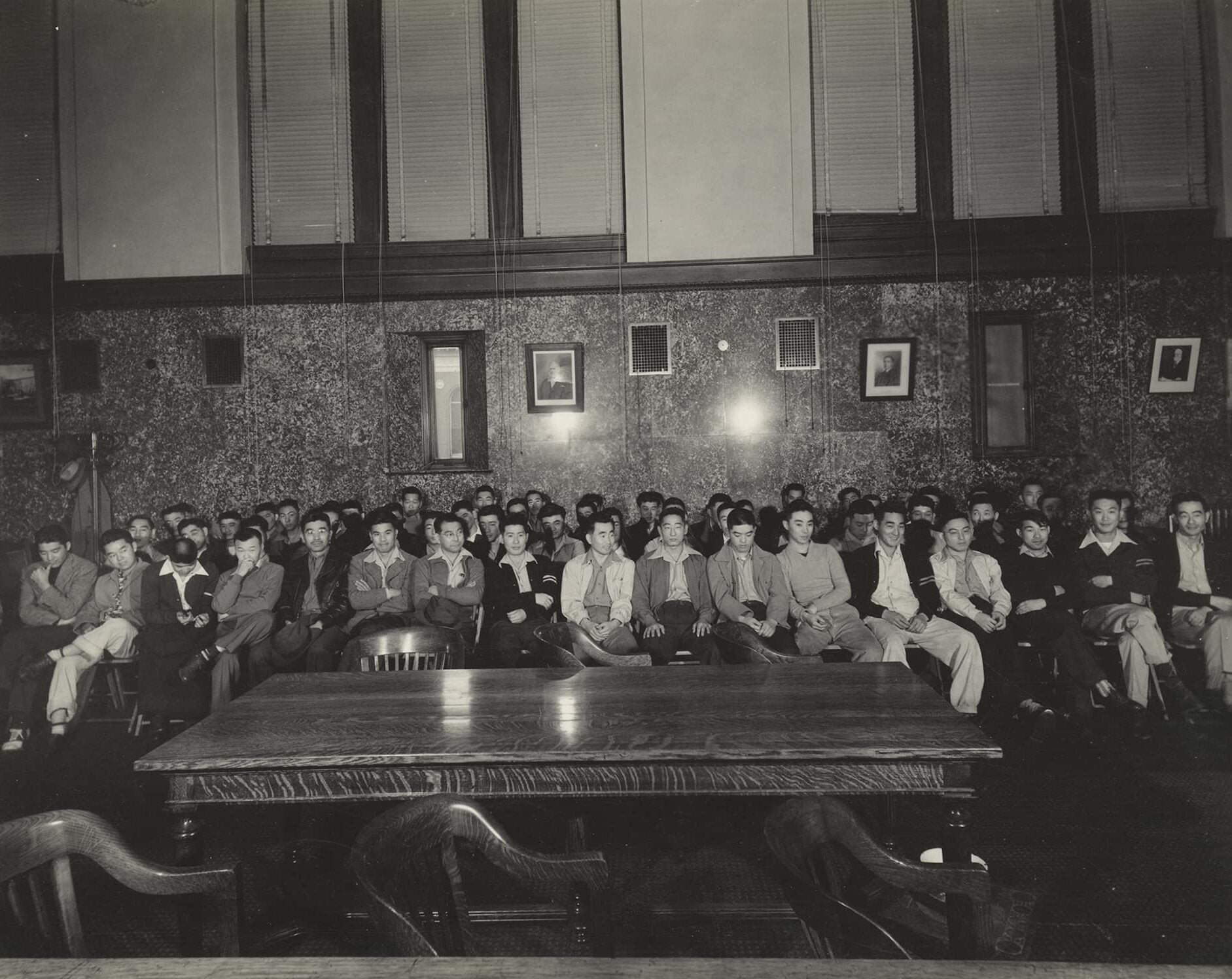
Image 13.03.06 — Sixty-three Nisei men who resisted the draft while incarcerated at Heart Mountain, Wyoming, were tried and convicted in the largest mass trial in the state’s history. This image shows the trial in Cheyenne, Wyoming, June 12, 1944.
Decisions made under the pressures of war and incarceration divided many Japanese American families, the Unos among them. Oldest brother Buddy remained in Japan, where, as a journalist, he promoted Japanese victories in Asia and the Pacific. Despite their incarceration, three of his brothers volunteered for the US Army.
When an American newspaper correspondent, who had been interned in the Philippines, reported on Buddy’s views, the three Uno brothers called Buddy “a traitor to the American way of life” and “pledged the destruction of him and all those like him.” 1 Later in the war, Howard, as an American intelligence officer, encountered Buddy, who had been captured as a Japanese prisoner of war.
Meanwhile, her siblings recall that eldest sister Hana was forced to take on a heavy burden through the roundup and incarceration, with her father George still interned and the brothers gone. She nonetheless became an important youth leader at Amache, serving as executive secretary of the YWCA and advisor to the Girl Reserves. Eventually, in March 1944, Riki and their three youngest children joined George in the Crystal City, Texas, detention camp. The other Nisei siblings resettled in different parts of the country.
Moving On
In addition to the 442nd—which absorbed the earlier 100th Infantry Battalion composed of Nisei from Hawaiʻi who had been in the army prior to the attack on Pearl Harbor—some Nisei served in the Military Intelligence Service (MIS). Utilizing their Japanese language ability, they served as interpreters and translators in the Pacific Theater. Howard and Stanley Uno were among them.
The 442nd ended up fighting in Italy, France, and Germany as part of the 5th Army, where they quickly distinguished themselves in battle. The 442nd ended up being one of the most decorated units of its size in the US armed forces, and publicity about their exploits helped to change views of Japanese Americans back in the US. Over 25,000 Japanese American men—along with a handful of women—served in the US armed forces during World War II, and about eight hundred died while serving their country.
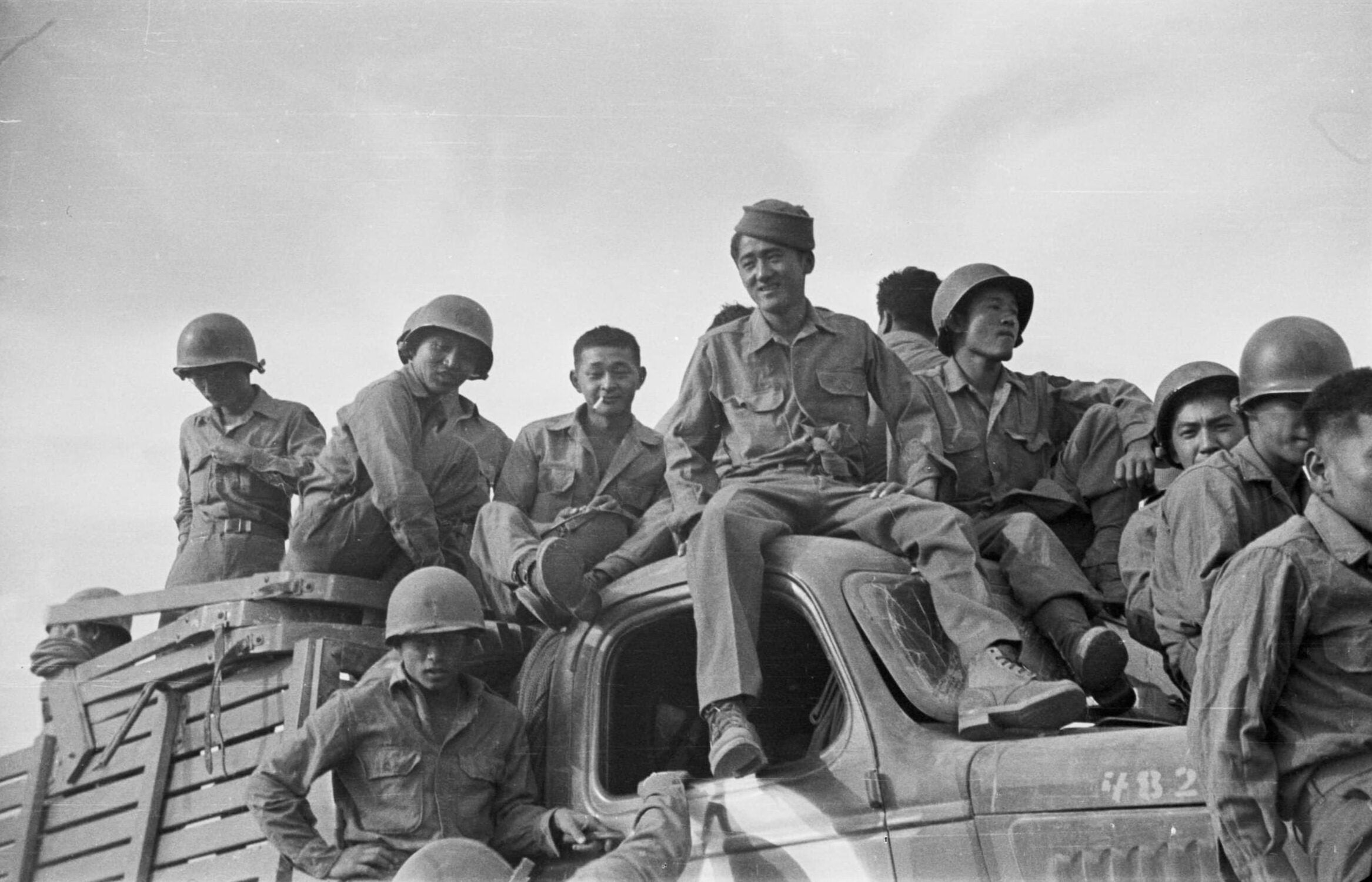
Image 13.03.07a — The Nisei soldiers of the 442nd Regimental Combat Team, pictured here in Europe (1944–1945), became one of the most highly decorated units in American military history for its size and length of service.
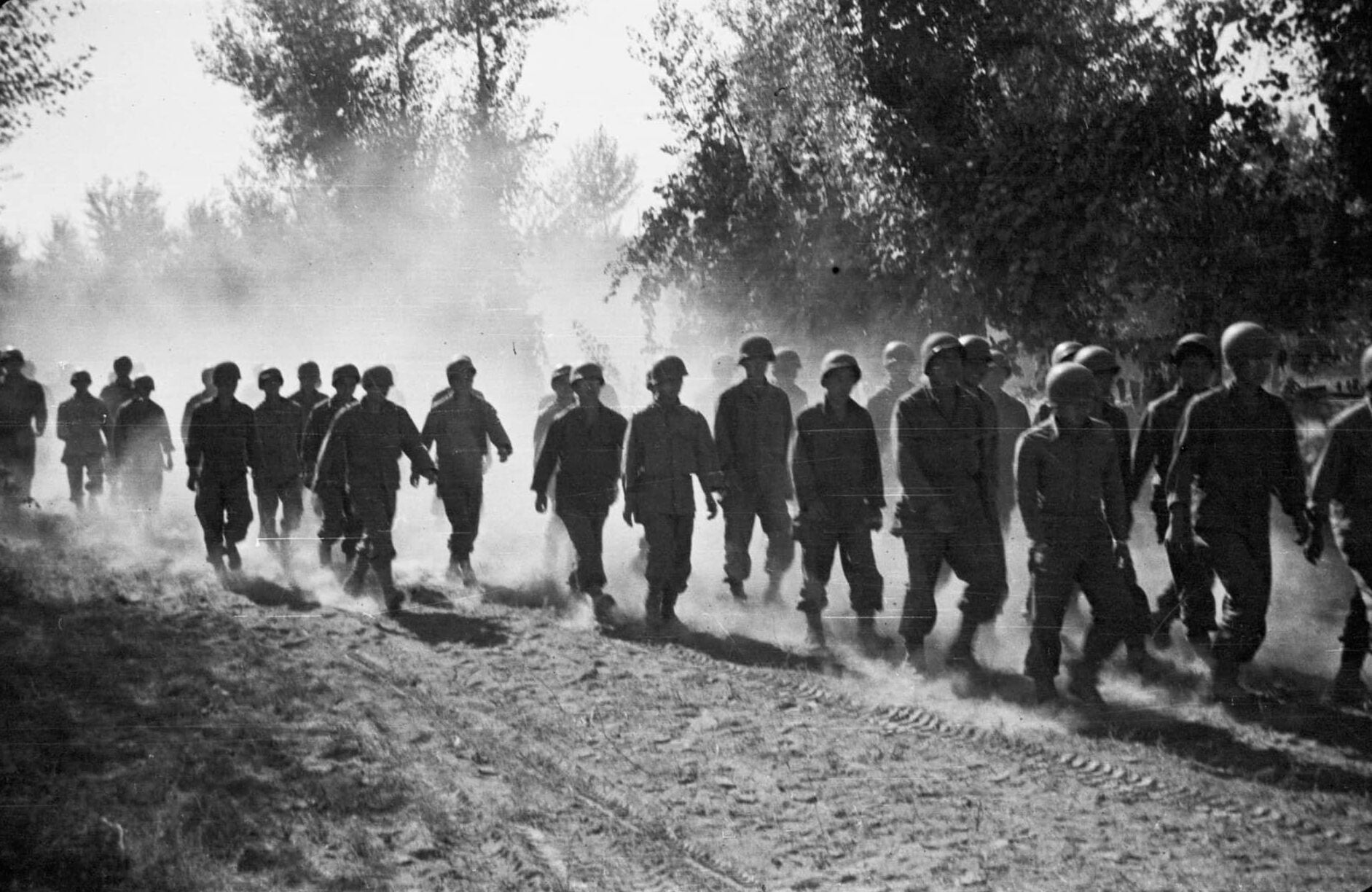
Image 13.03.07b — Nisei soldiers of the 442nd Regimental Combat Team fought in Germany, Italy, and France.
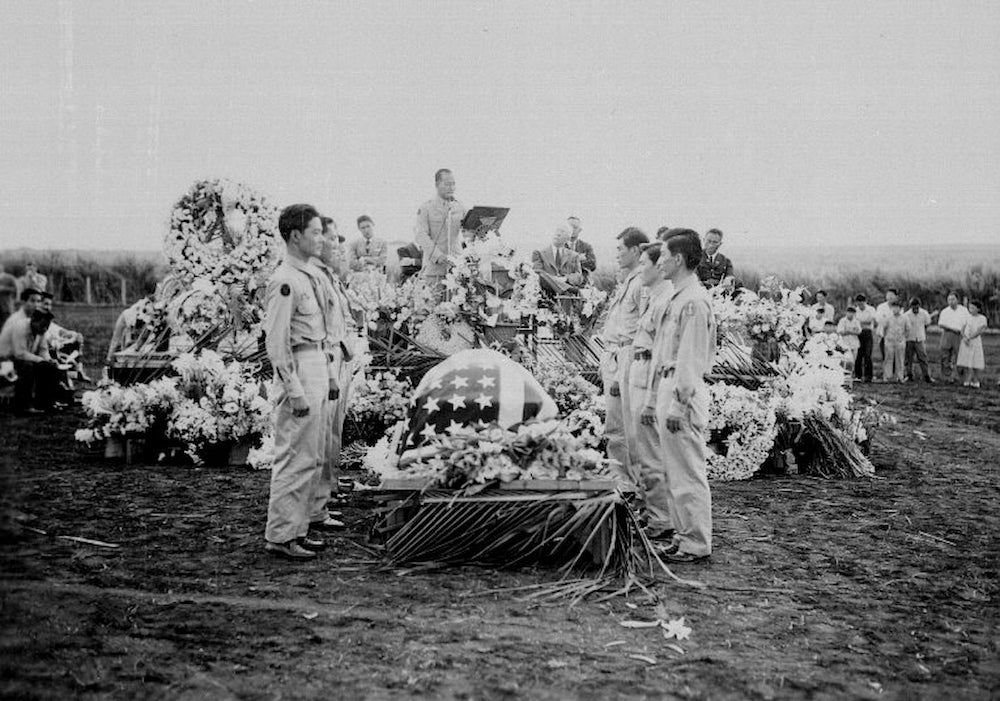
Image 13.03.07c — A funeral for a soldier killed as a member of the 442nd Regimental Combat Team, Oʻahu, Hawaiʻi.

The WRA continued to urge incarcerees to leave the camps as soon as possible. Most who left initially were young Nisei who departed to start or continue college educations, or who were able to find jobs and housing in areas outside the West Coast exclusion zone. By the end of 1944, about one-third of the 120,000 Japanese Americans in WRA camps had left.
At the end of 1944, the Supreme Court ruled on a fourth test case, one brought by Mitsuye Endo, a Nisei woman clerical worker, who challenged the legality of the incarceration. This time, the court ruled in Endo’s favor, effectively opening up the gates of the concentration camps. The army lifted the exclusion orders shortly thereafter, and the WRA announced that their camps would close by the end of 1945. Starting in January 1945, Japanese Americans would be allowed to return to the West Coast.
More to explore
Image
“Relocation Centers” and “Concentration Camps”
During World War II, the US government used words that made the forced removal and imprisonment of Japanese Americans seem less bad than it was. Such terms are called “euphemisms.”
Glossary terms in this module
Executive Order 9066 Where it’s used
On February 19, 1942, President Franklin D. Roosevelt gave the US military the power to exclude anyone they saw as a threat from special “military areas.” Although Japanese Americans were not specifically mentioned, this led to them to be mass incarcerated.
martial law Where it’s used
A form of government under military control where constitutional rights are suspended.
War Relocation Authority (WRA) Where it’s used
The federal agency that managed the imprisonment of Japanese Americans. The word “relocation” inaccurately describes the action as simply moving or relocating to a new home. In reality, Japanese Americans did not have a choice and were forcibly removed from their homes.
Endnotes
1 “Story of the Week: Three Nisei Brothers Vow Death of Brother in Japan,” Pacific Citizen, April 1, 1944, 1.