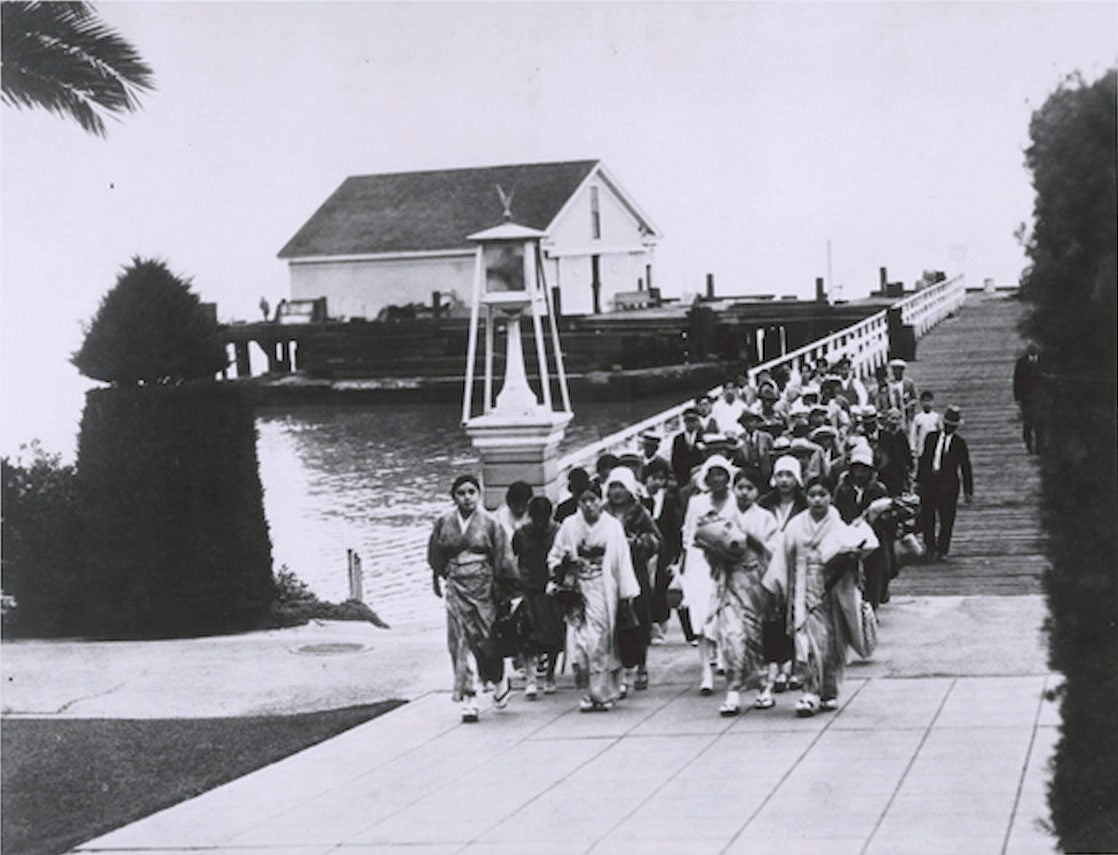





Four Japanese American people stand in the middle of a large flower field.
Module 2: Building Homes and Community in the Shadow of Two Empires (1885–1941)
Why did many Japanese Americans retain a strong sense of ethnic identity and community after being in the United States for multiple generations?
In 1906, as Kumemaro “George” Uno stepped off the boat in Seattle, Washington, he was both excited and a little scared. Just nineteen years old, he had come to America in search of greater opportunity at the urging of Christian missionaries. He was one of thousands of migrants from Japan who had come to either the continental United States or to the Kingdom of Hawaiʻi—both before and after its annexation by the US—since 1885.
In this module, we learn about these migrants who settled in the United States in the late nineteenth and early twentieth centuries and their struggle to make a place in America. Beyond issues with language and culture that all immigrants faced, Japanese immigrants and their American-born children also faced stinging racism and were burdened by international events that eventually saw their countries of origin and of settlement come to war.
What drove the first waves of migration to Hawaiʻi and the United States?
How did anti-Asian racism shape the lives and decisions of Japanese migrants?
What was the geography of Japanese American communities?
Dreams of Fortune
Early Japanese migrants were drawn by stories of riches to be had and to escape poverty and limited opportunity in a rapidly changing Japan. The changes in Japan stemmed from a chain of events that began when American gunboats led by Commodore Matthew Perry steamed into Tokyo Bay in 1853, forcing a formerly isolated Japan into the modern world. A new government, resulting from a 1868 revolution, began a rapid industrialization and changed systems of land ownership and education, with the peasant class bearing the brunt of paying for these changes. Largely prohibited from going abroad for two centuries, many young men now began to look overseas for better opportunities in the late 1800s, someplace where they might go for a few years to make some money before returning to Japan in better positions to start their lives.
The first place to see large-scale migration from Japan was the Kingdom of Hawaiʻi. There they found a booming sugar industry, largely owned and operated by Americans who would later orchestrate the overthrow of the Hawaiian government and an eventual takeover by the United States, with the islands becoming a US state in 1959. The sugar industry needed laborers for the arduous task of harvesting and processing the sugar cane that blanketed the islands on large plantations. After an aborted attempt to bring over laborers from Japan two decades prior, large-scale migration from Japan began in 1885.
Over the next decade, around thirty thousand workers from Japan—mostly young men, but also a substantial number of women and even children—arrived on government-sponsored labor contracts.
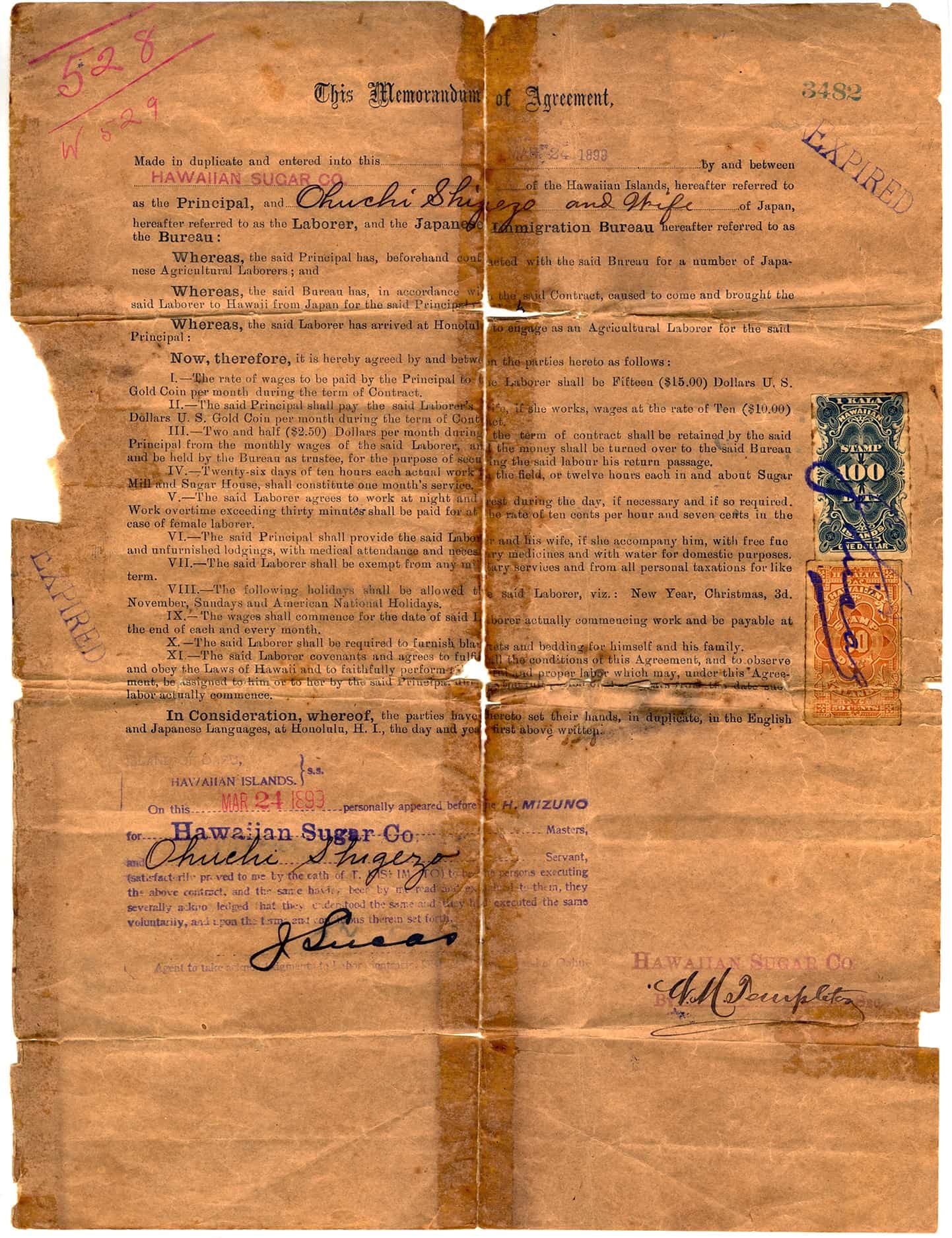
Image 13.02.01 — Japanese laborers who worked on Hawaiian sugar plantations typically signed labor contracts like the Ouchi labor contract of 1899, which specified wages and work expectations. Trapped by these contracts, some tried to escape while others organized.
The work was difficult and dangerous, and the bosses harsh. Trapped in their jobs by their labor contracts, some tried to escape, while others organized and enacted strikes to try to improve conditions. As soon as they were able, most left the plantations, with many moving on to the continental United States where conditions and opportunities were said to be better.
The growing West Coast also needed cheap labor to build their railroads, cut down their trees, and harvest their crops, particularly since earlier labor migration from China had been cut off due to rampant anti-Chinese sentiment. Japanese workers helped to fill that void, coming directly to the West Coast, as well as through Hawaiʻi, by the mid to late 1890s. Japanese workers also continued to migrate in large numbers to Hawaiʻi. By 1924, some 270,000 Japanese had come to the United States, which now included Hawaiʻi.
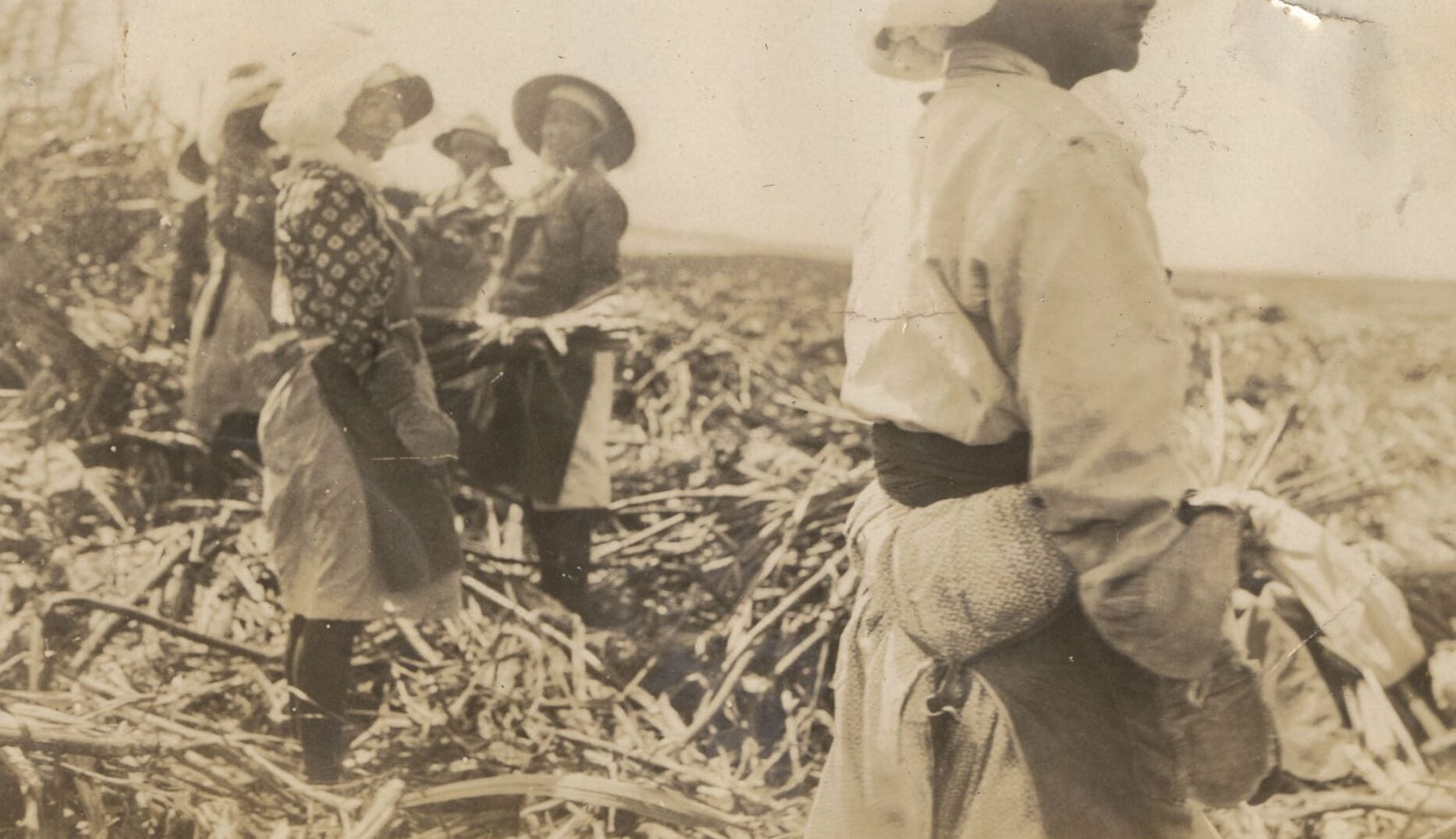
Image 13.02.02a — Many women traveled to Hawaiʻi for better lives but, once on the islands, they worked grueling hours on sugar cane plantations. As soon as couples and families were able to, they would leave for the continental United States for better opportunities.

Image 13.02.02b — This image shows the first fishing outing of the Nakata Fishing Club, likely in San Pedro, California, in the 1920s.
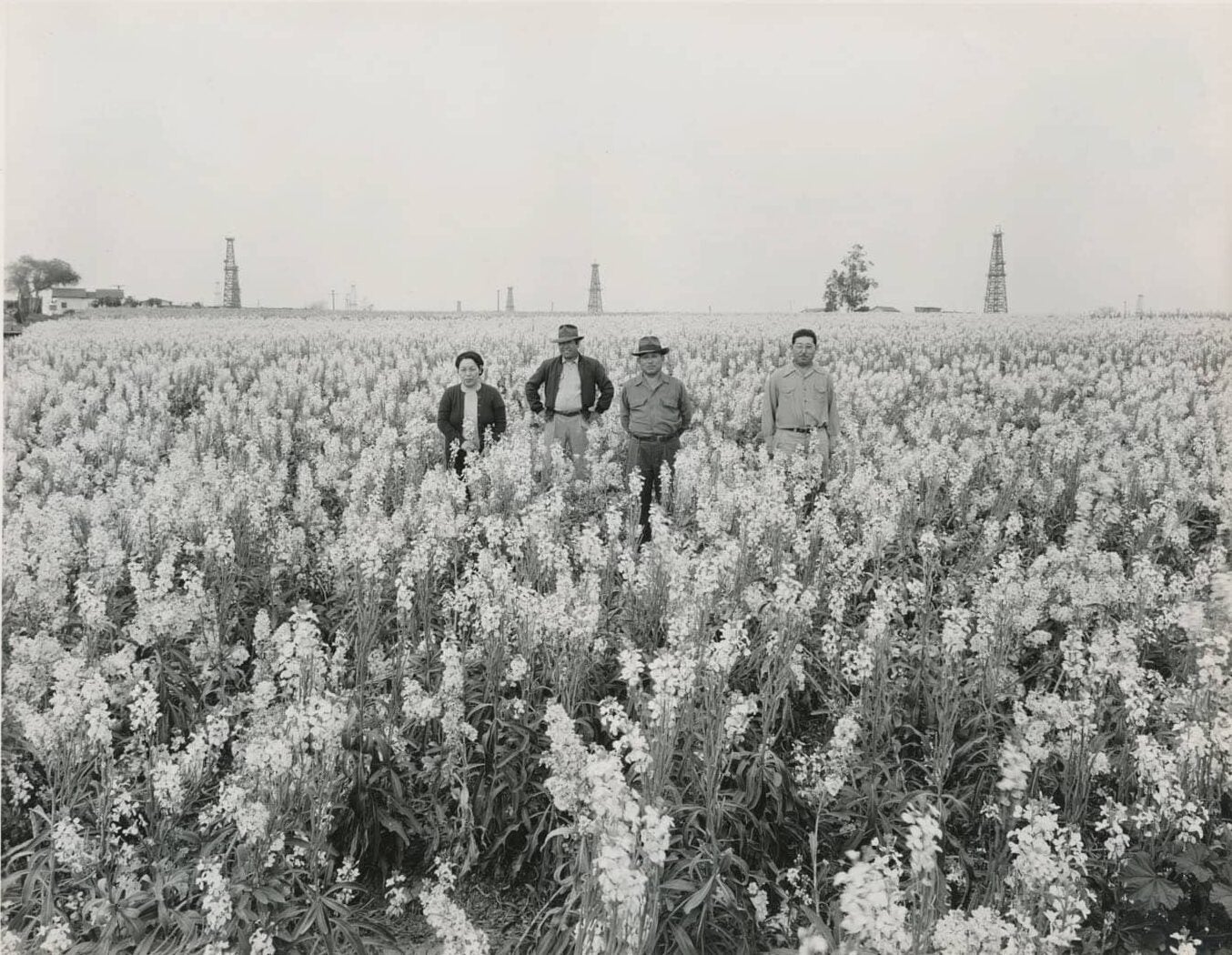
Image 13.02.02c — Both vegetables and flowers were popular crops for Japanese American farmers in California and the West Coast before World War II. This image shows Japanese American flower growers in Compton, California.
“The Yellow Peril”
Like Chinese immigrants who had preceded them, the growing numbers of Japanese workers soon drew opposition from other workers, many of whom were themselves immigrants from Europe. What would become known as the anti-Japanese movement was centered in California, which had the largest Japanese population outside of Hawaiʻi. By the early decades of the twentieth century, the movement had spread beyond labor organizations to affect all sectors of society, including farm and business organizations, mainstream newspapers, and political leaders. Japanese migrants—along with smaller numbers of other migrants from Asia, including Chinese, Filipinos, Koreans, and Indians—were targeted in part because they looked different from the largely white population of the American West, and because they spoke different languages and mostly practiced different religions.
Preying upon the fears and hatred drummed up by anti-Japanese activists, opportunistic politicians passed numerous laws targeting the Japanese. One of the earliest was the San Francisco school board’s 1906 ruling that Japanese children must attend segregated schools. Trying to avoid an international incident, President Theodore Roosevelt negotiated a settlement—dubbed the Gentlemen’s Agreement—whereby San Francisco schools would end the segregation order in exchange for Japan agreeing to stop issuing passports to laborers. This law was intended to curb the further migration of Japanese workers.
Other anti-Japanese laws targeted the citizenship status of Japanese immigrants. While immigrants from other parts of the world could, through a process called naturalization, become American citizens, Japanese and other immigrants from Asia were prohibited from becoming naturalized citizens.
The most notable of the laws aimed at Japanese and other Asians were the alien land laws. First introduced in California in 1913, these laws prohibited “aliens ineligible to citizenship” from purchasing land. Fearing migration into their states, other states followed suit. There were also bans on interracial marriage, formal and informal bans from many occupations, along with occasional violent attacks. The culmination of the anti-Japanese movement came with the passage of the Immigration Act of 1924, which banned all further migration from Japan.
Building Community
Japanese immigrants did not take all of these attacks passively. Largely shut out of electoral politics, they turned to the courts, mounting a test case to challenge the ban on naturalization and issuing various challenges to the alien land laws. Although most of their legal challenges were unsuccessful, they did win some key victories. They were able to strike down restrictions on Japanese language schools in Hawaiʻi and a ban on commercial leasing by Japanese immigrants, which thereby allowed a group of Japanese doctors to establish a Japanese hospital in Los Angeles, California. Additionally, Japanese immigrants were largely able to sidestep the alien land laws by purchasing land in the name of their American-born children, who were US citizens by birth.
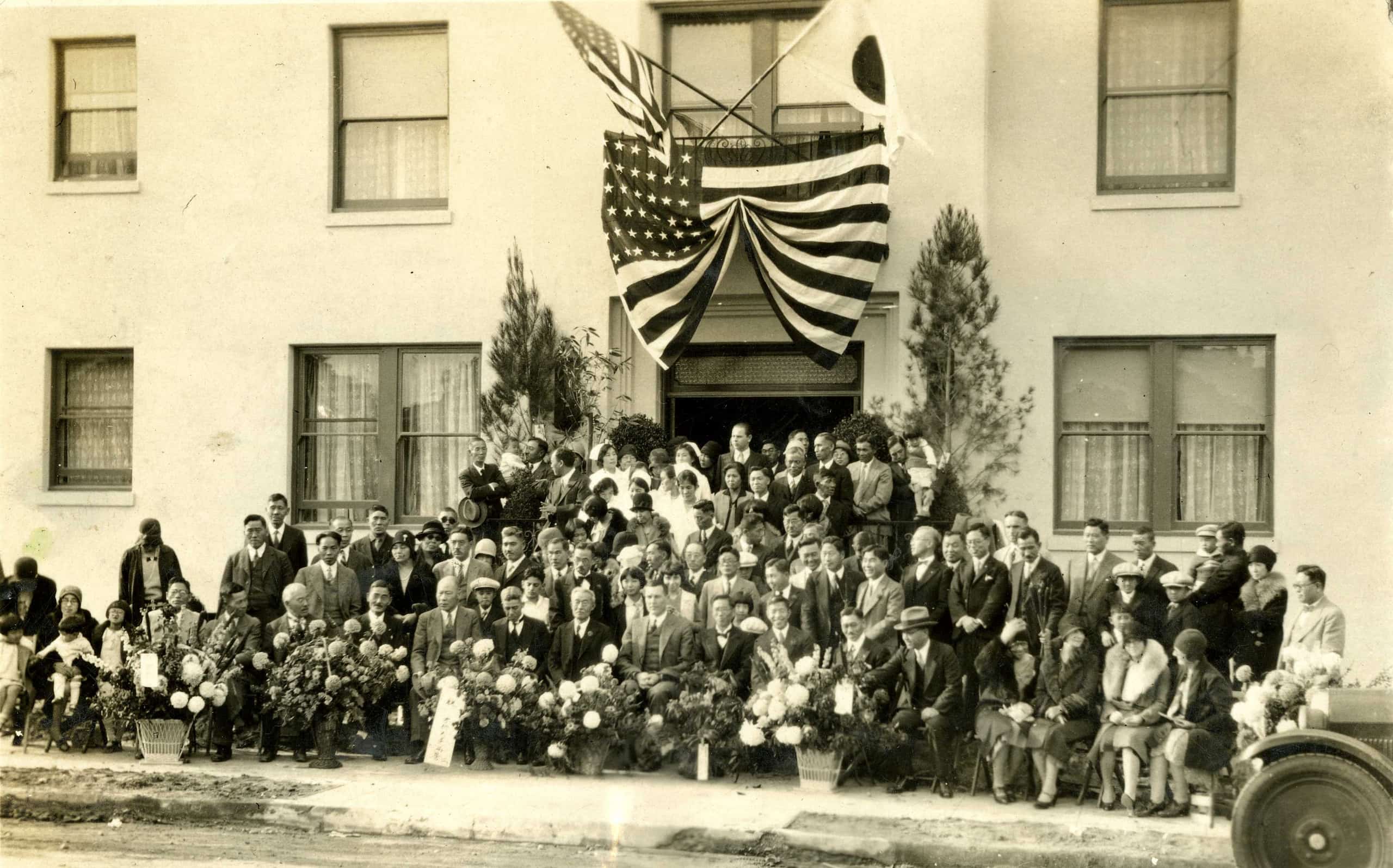
Image 13.02.03 — Japanese immigrant doctors successfully challenged alien land laws in the California Supreme Court that initially prevented them from building a hospital. In 1929, they celebrated the opening of the Japanese Hospital of Los Angeles, California.
Most significantly, the Japanese immigrants took advantage of a loophole in the Gentlemen’s Agreement, which, while banning labor migration from Japan, allowed the families of those already in the US to join them. Many men brought wives and children who had been left in Japan to join them in the US, while others went to Japan to get married. George Uno, by now working in an import-export business, was one of them, marrying a young woman named Riki Kita, whom he had known in Japan, in 1911.
Other men who were unable to go to Japan to get married enlisted the help of their families in Japan, who identified a suitable woman with whom they might exchange photographs. Officially married in Japan, even in the absence of the groom, the “picture bride” would then come to the US to meet her husband for the first time. Although this was an adaptation of Japanese marriage customs of the time, the picture marriage practice was attacked by other Americans, and the immigration of picture brides was prohibited in 1920. Nonetheless, thousands of Japanese women came to the US in this fashion.
George and Riki’s first child, Kazumaro “Buddy,” was born in 1913. Nine more children would follow. They were not alone—the uptick of marriages among Japanese immigrants in the 1910s led to a baby boom. With a significant number of American citizen children arriving in these years, the need to differentiate between the generations led to the immigrant generation being referred to as “Issei,” or first generation, and to their children being called “Nisei,” or second generation. Later, the children of the Nisei would be called “Sansei,” or third generation, and their children “Yonsei,” fourth generation.
Although the earliest Japanese American communities date back to the 1800s, the arrival of the Nisei spurred community formation in the 1910s and 1920s. “Japantowns” and “Little Tokyos” formed both as a reaction to racism, which often only allowed Japanese Americans and other people of color to live in certain designated areas, and as a proactive effort to build a place where Japanese language and culture could flourish. In addition to the Japantowns in big cities such as Los Angeles and San Francisco in California or Seattle, Washington, they could also be found in numerous smaller towns up and down the West Coast.
Whether big or small, a typical Japantown would include community institutions such as churches—though most Japanese Americans were Buddhist, a significant minority were Christian—and Japanese language schools for the Nisei. They also featured Japanese businesses, such as movie theaters, grocery stores, or barber shops that served both local Japanese Americans and those who came from rural areas outside the cities.
There were Japanese American newspapers, which printed news in both Japanese and English, sports leagues for both kids and adults, and organizations built around common occupations or common geographical origins in Japan. A vibrant Nisei youth culture emerged in the Japantowns. In Los Angeles, Hana Uno was active as a member or advisor in several Nisei girl’s/women’s clubs.
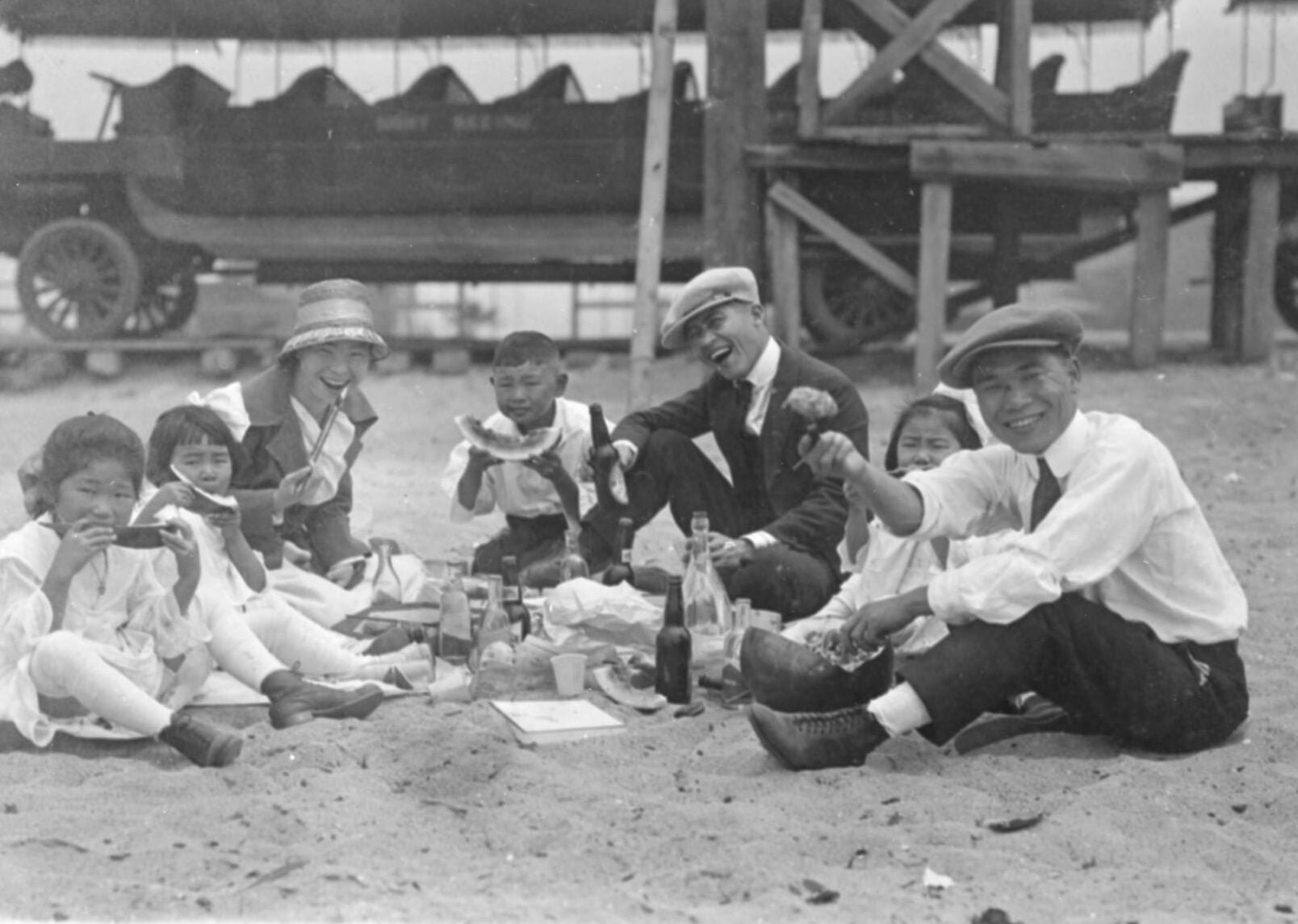
Image 13.02.05a — The uptick of marriages among Japanese immigrants in the 1910s led to a baby boom. By the 1920s and 1930s, Japanese American family life flourished.
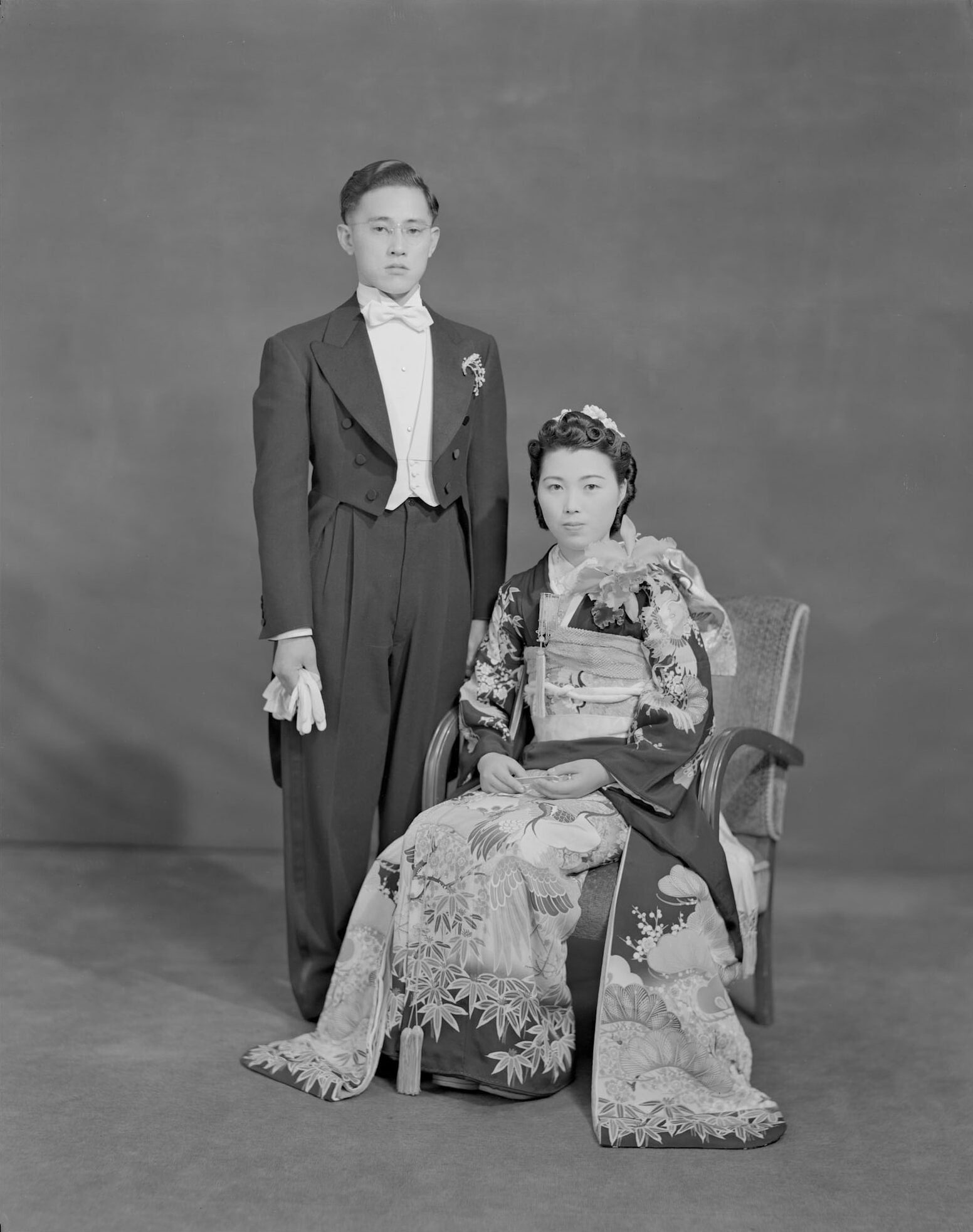
Image 13.02.05b — As depicted in this photograph, many aspects of Japanese American culture mixed traditional Japanese and Western elements. In this image taken in 1939 of a Buddhist wedding, notice the groom wears a tuxedo while the woman dons a kimono, embracing both cultures.
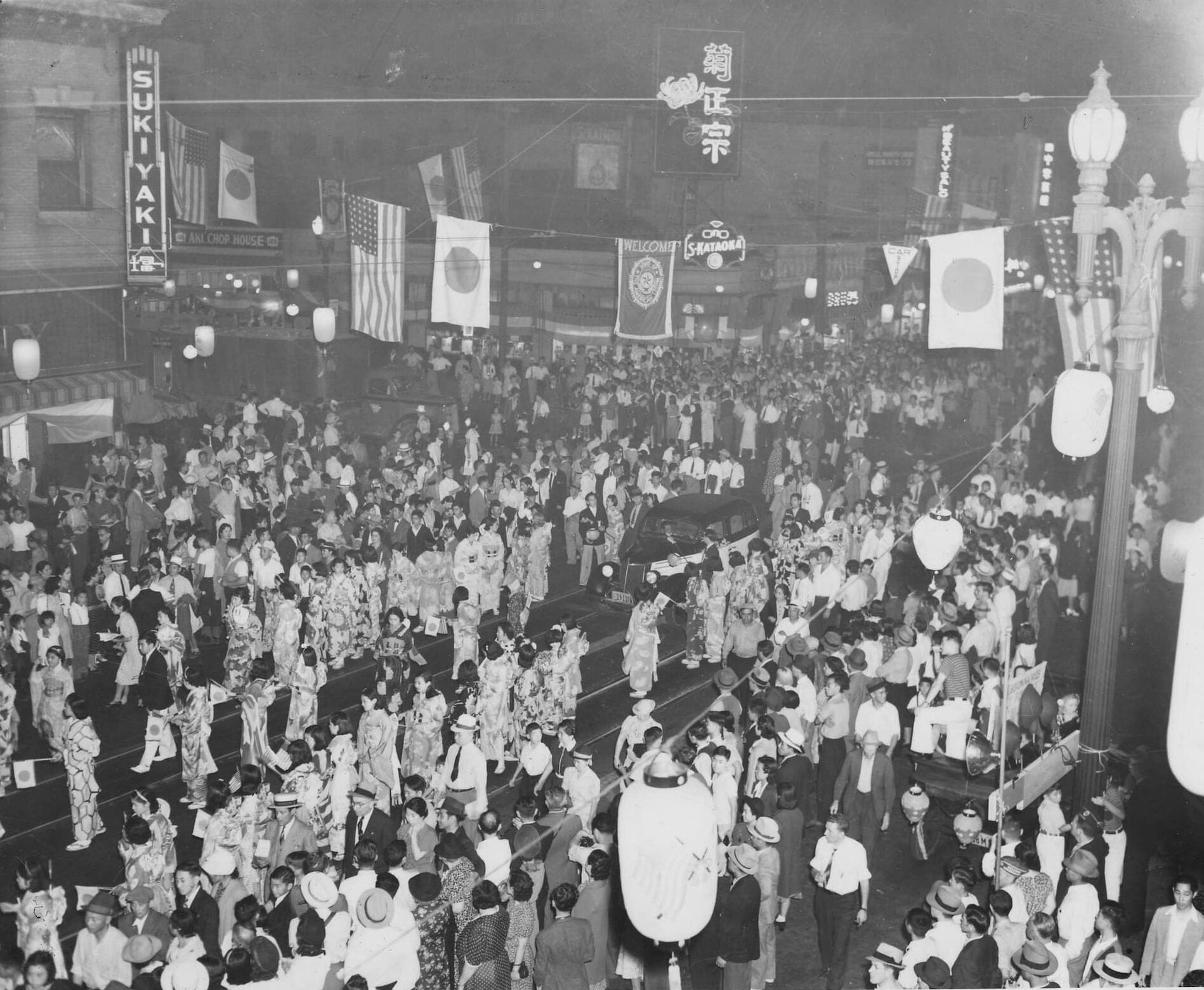
Image 13.02.05c — Japanese Americans take part in an American Legion parade in Los Angeles, California, in the late 1930s. As international tensions rose in the 1930s, many Japanese Americans sought to highlight both their American patriotism and their pride in their Japanese heritage.
Winds of War
The large number of Nisei born in the 1910s and 1920s became a major focus of both outside agitators and Issei community leaders. Anti-Japanese activists exaggerated Nisei birth statistics and claimed that Nisei would pose a special danger to the US given their American citizenship. Issei worried about raising children in such an environment and wondered what their life chances would be in the US. In this context, many Issei decided to send their children to be educated in Japan, in case they later decided to return to Japan as a family. In other cases, sending children to Japan to be raised by grandparents was driven by economics and the need for both Issei parents to work.
When they returned to the US after a number of years in Japan, these Nisei made up a distinct subgroup of Nisei who were called “Kibei.” Kibei were typically more culturally Japanese than other Nisei, who mostly grew up as typical American children, socialized by American schools and speaking English as their first language. Up to a quarter of Nisei spent significant time in Japan before the war, either as children or adults.
Especially after Japanese exclusion became policy in 1924, many Issei either returned to Japan or left the United States to settle elsewhere. While most of these Issei likely earned more money in the US than they would have in Japan, many wondered if the continued discrimination they faced would continue to affect their Nisei children in the future as well.
The growth of Japan’s empire in the 1930s, and Japan’s subsequent invasion of China, led to a growth of nationalism among Japanese Americans, most of whom supported Japan’s ambitions to control all of Asia. This growing nationalism inevitably led to conflict with Chinese Americans and other Asian Americans. At the same time, there were some Japanese Americans who opposed Japan’s conquests. Fearing that war with Japan might be on the horizon, US military and law enforcement agencies began to spy on Japanese Americans starting in the early 1930s, compiling lists of Issei community leaders who could be arrested in the event of war.
As Nisei came of age in the 1930s, they often found that, despite their American citizenship, their options were limited. Graduates from top universities discovered that neither mainstream corporations nor the government would hire them, and many ended up working within the ethnic community, often for their parents’ farms or businesses.
Some Nisei, including the Unos’ oldest son, Buddy, took advantage of opportunities in Imperial Japan, where they were able to land a job. Buddy started work as a mainstream journalist—a position that would have been unavailable to him in the United States. Two of his siblings later joined him in Japan. Others took pains to express their American patriotism, such as members of the Japanese American Citizens League (JACL), which was formed in 1930 by older Nisei. In contrast, some others, frustrated by discrimination and lack of opportunity, formed youth gangs, and juvenile delinquency spiked.
As the 1940s began, there were about 160,000 Japanese Americans in Hawaiʻi, and 125,000 in the continental US, of whom almost 75 percent were in California. Over two-thirds had been born in the US and were thus American citizens by birth. Japanese Americans made up over one-third of the population in Hawaiʻi and were therefore inevitably more integrated into mainstream society there than in the continental US, where even in California they made up less than 1.5 percent of the population.
While many Japanese Americans in Hawaiʻi still worked on sugar plantations, most had moved off the plantations to start small businesses or farms, and some were even able to find jobs in the mainstream economy. On the continent, most Japanese Americans were farmers or worked in occupations tied to agriculture, such as running produce or flower markets or landscape gardening. While there was uneasiness about the future, none were prepared for what was to come.
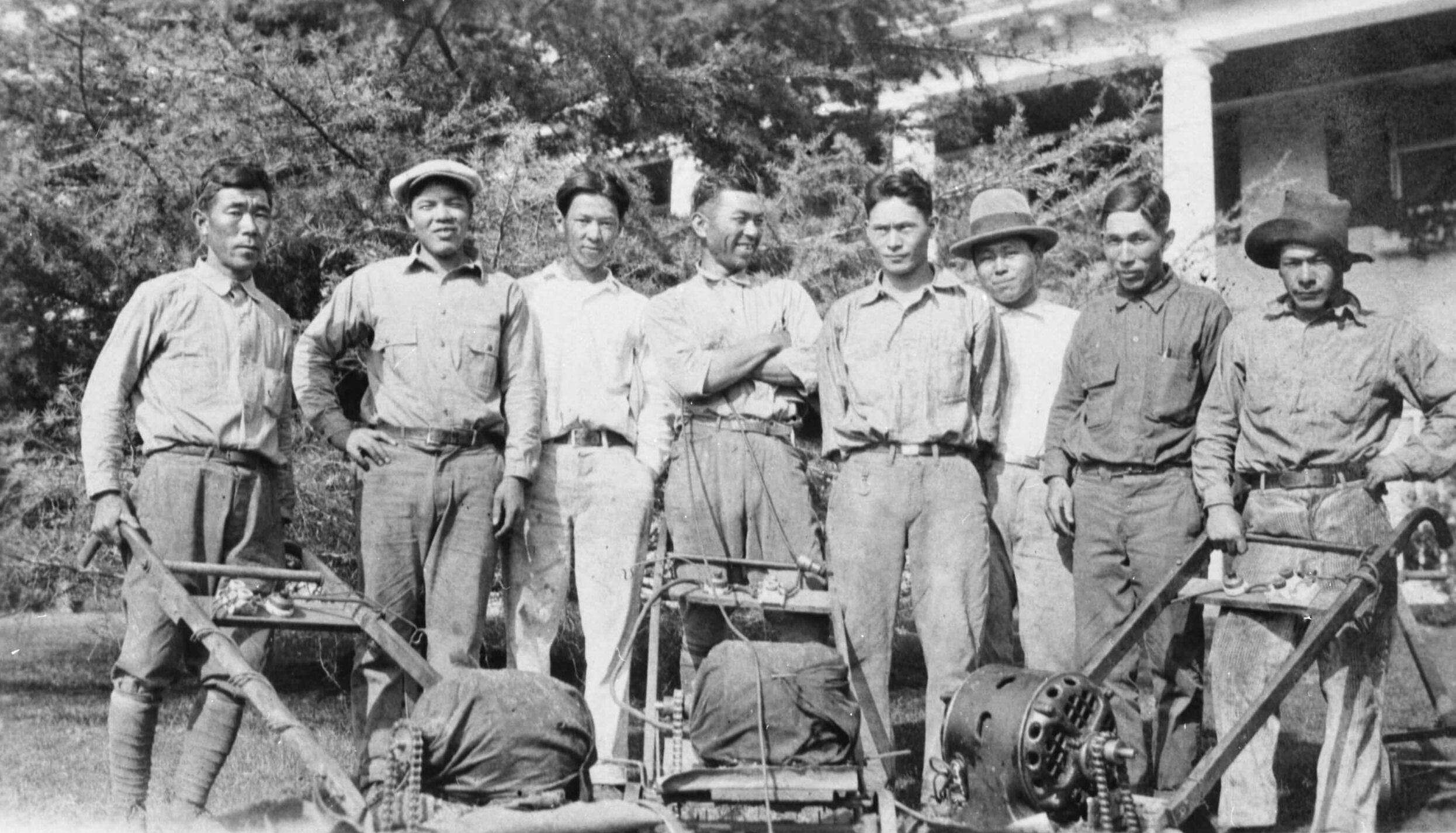
Image 13.02.06 — Most Japanese Americans were farmers or worked in occupations tied to agriculture. As such, residential landscape gardening became one of the most popular urban occupations for Japanese American men. This image shows gardeners in Los Angeles, California, in 1928.
More to explore
Image
A Nation of Immigrants
The period of large-scale migration from Japan largely coincided with the peak years of migration from Europe, though on a much different scale. The vast majority of Europeans arrived via the immigration station on Ellis Island in New York Harbor, which processed some ten million immigrants between 1892 and 1924.
Glossary terms in this module
alien land laws Where it’s used
Laws enacted by California and other Western states starting in 1913 that banned the purchase of land to noncitizens, specifically targeting Japanese Americans and other Asian immigrants.
Immigration Act of 1924 Where it’s used
A federal law that denied immigration to the US from Japan, Eastern and Southern Europe, and other Asian countries except the Philippines, which was then a US colony. The ban on Japanese immigration would last until after World War II.
naturalization Where it’s used
The process of becoming a citizen for immigrants.