




Japanese American activist Warren Furutani holds microphone as he addresses crowd alongside three other men during outdoor rally.
Module 5: Balancing Past and Present (1970s to the present)
Why did many Japanese Americans retain a strong sense of ethnic identity and community after being in the United States for multiple generations?
This module is about key trends of the last fifty or so years: the unlikely effort by Japanese Americans to seek an apology and monetary reparations from the federal government for their wartime incarceration, the changing composition of the Japanese American community due to new waves of immigration, and the continuing impacts of the past.
What was the impact of postwar immigration from Japan?
How are Japanese Americans maintaining community and cultural ties?
What impact does the legacy of incarceration and redress have on Japanese Americans today?
Reckoning with the Past
For thirty or so years after the end of World War II, Japanese Americans largely didn’t talk about their wartime incarceration. Sansei—even those who had been born in a concentration camp—typically weren’t told by their parents about the incarceration, and they often assumed that their parents’ stories about “camp” referred to a summer camp. But things started to change in the late 1960s, in the context of the various social movements of the time.
In 1966 reports began to circulate that the federal government was preparing concentration camps in case activists—for instance, supporters of the civil rights and Black Power Movements, or Vietnam war protestors—needed to be imprisoned. One of the camps was the former Japanese American concentration camp site, Tule Lake, California.
A movement began among Japanese Americans to seek the repeal of the Emergency Detention Act of 1950, legislation that authorized such camps. Edison Uno was among the leaders of this movement, which evolved to gain widespread support within the Japanese American community, sparking discussion about the wartime incarceration. The repeal campaign was ultimately successful, resulting in legislation that President Richard M. Nixon signed into law in 1971.
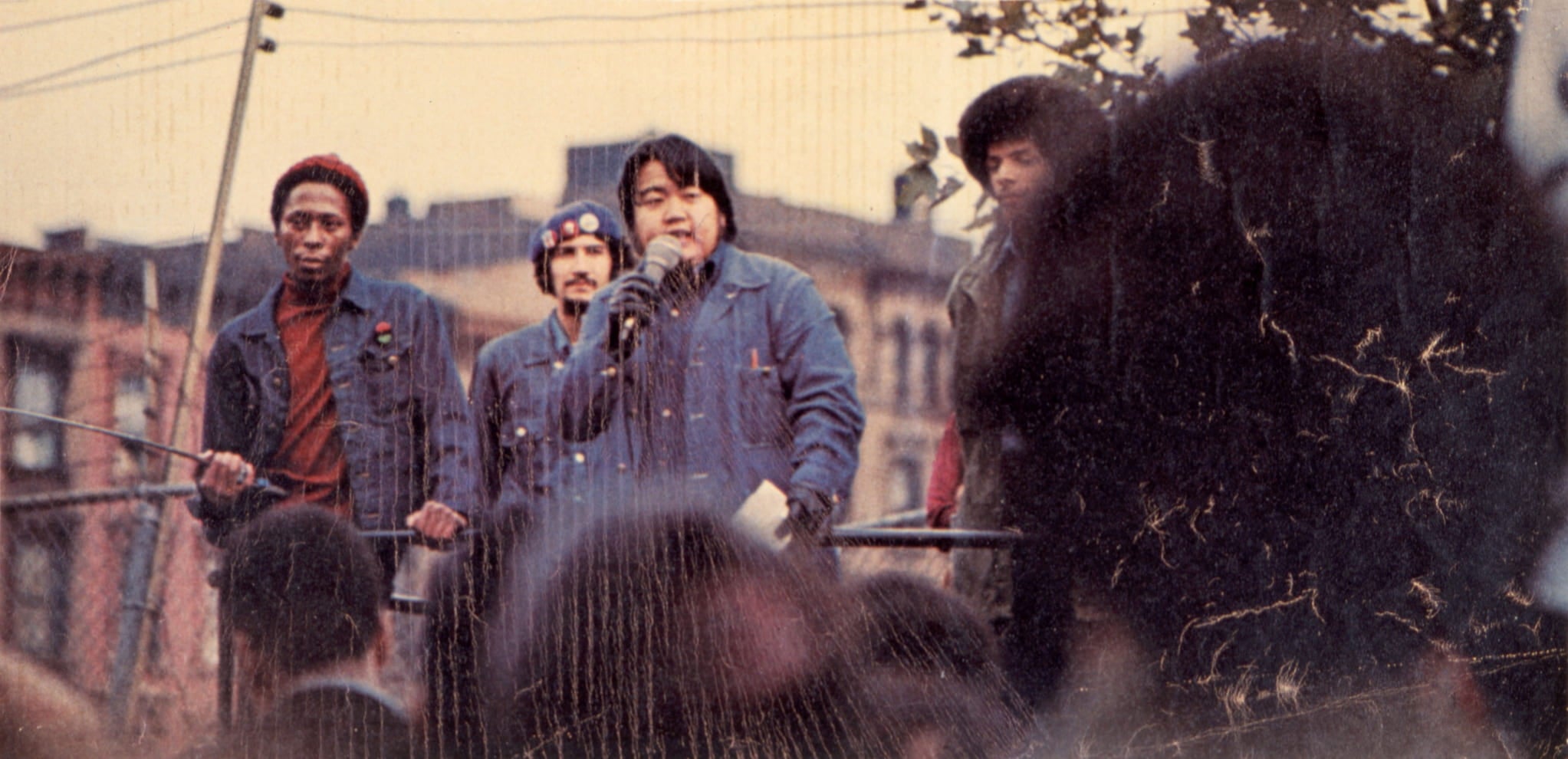
Image 13.05.01 — Sansei activists, like Warren Furutani (center), were inspired to fight for social change alongside other communities of color in the 1960s and 1970s. Pictured here is Furutani speaking at a New York City rally alongside African American and Chicano activists.
Among those supporting the campaign were Sansei activists at San Francisco State and other college campuses who began to organize to demand ethnic studies as part of a larger Asian American Movement, which was inspired by and aligned with African American, Chicano, and American Indian activism. The first Asian American Studies courses were taught at the University of California, Los Angeles, and the University of California, Berkeley, in 1968–1969, giving students the chance to learn about their own histories for the first time. In 1969 a coalition of Nisei and Sansei organized the first public pilgrimage to a concentration camp site, the one in Manzanar, California.
Japanese American writers such as Yoshiko Uchida, Jeanne Wakatsuki Houston, and Michi Weglyn wrote books inspired by or documenting their wartime incarceration story. Houston’s Farewell to Manzanar (1973), coauthored by James D. Houston, would even be made into a television movie that aired nationally in 1976. Documentary films, museum exhibitions, and new scholarship brought further attention to the Japanese American incarceration.
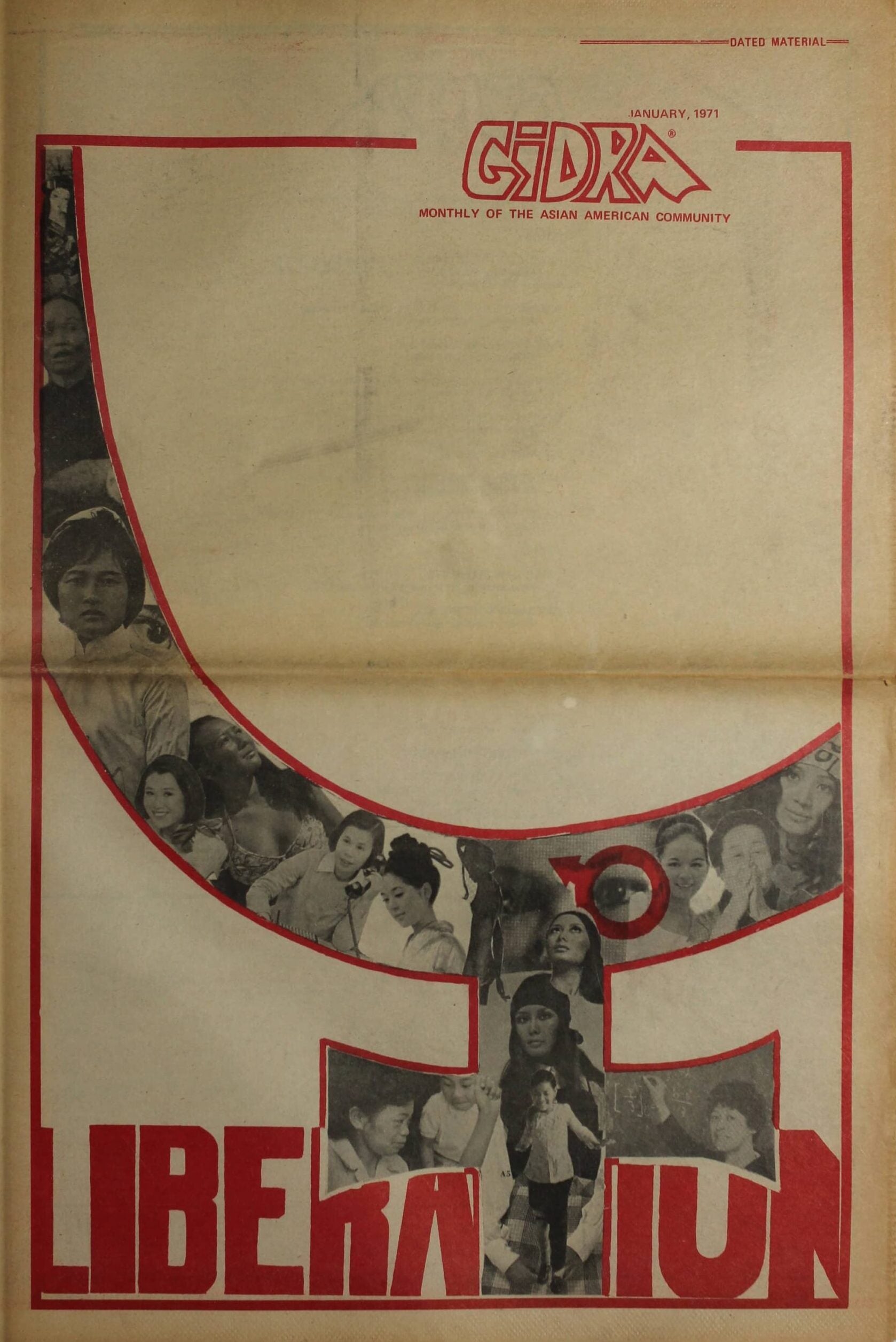
Image 13.05.02 — Published in Los Angeles, California, and led by a largely Sansei staff, Gidra was a monthly newspaper that became the leading voice of the Asian American Movement.
The Redress Movement
At the 1970 Japanese American Citizens League convention, Edison Uno introduced a resolution that asked Congress to “compensate [Japanese Americans] on an individual basis a daily per diem requital for each day spent in confinement and/or legal exclusion.” This set into motion a movement to secure monetary redress from the government for the mass forced removal and incarceration of Japanese Americans during World War II.
Three Japanese American organizations formed, taking different approaches to seeking redress through the 1970s and slowly building support among Japanese Americans and others. Led by the five Japanese Americans serving in Congress, legislation to form the Commission on Wartime Relocation and Internment of Civilians (CWRIC) was passed by Congress and signed into law by President Jimmy Carter in 1980. The CWRIC would be empowered to study the forced removal and incarceration and to make recommendations to Congress about possible remedies.
Although not all Japanese Americans supported the study commission approach, the subsequent hearings in the summer and fall of 1981 proved to be a turning point for the community. At these hearings, held in various cities across the country, dozens of Japanese Americans spoke about the impact of the removal and incarceration on themselves and their families across generations. It was the first time many had ever spoken about these experiences. These hearings have often been described as a moment of catharsis—or releasing strong emotions—for the community.
Though Edison Uno had passed away in 1976, his youngest sister, Kay Uno Kaneko, was among those who testified before the CWRIC. In February 1983, the CWRIC issued its report that concluded that the forced removal was “not justified by military necessity” but was caused by “race prejudice, war hysteria, and a failure of political leadership.”
Four months later, the commission issued its recommendations, which included a governmental apology and monetary payments of twenty-thousand dollars to surviving Japanese Americans who had been incarcerated. These recommendations became the basis for legislation named H.R. 442, after the 442nd Regimental Combat Team. Passed by Congress, it was signed into law as the Civil Liberties Act of 1988 by President Ronald Reagan. The first redress checks and apology letters were issued to the oldest survivors at an October 9, 1990, ceremony. In total, the Office of Redress Administration paid out 82,264 cases before closing in 1998.
At more or less the same time as the movement for redress, a parallel effort was taking place in the courtroom. Researchers discovered documents in the National Archives that indicated the government had knowingly suppressed evidence in the Hirabayashi, Yasui, and Korematsu cases, through which the Supreme Court upheld the legality of the forced removal of Japanese Americans.
Using an obscure legal procedure called a writ of error coram nobis that allows defendants to have convictions vacated (or canceled) due to errors before the court, a team of mostly Sansei attorneys took up the three cases starting in 1982. Over the next five years, the progress of the cases worked in tandem with the redress movement to bring attention to the wartime incarceration and to educate the public about the injustice. All three cases were successful in that all three convictions were vacated in the courts in which they were originally tried in Seattle, Washington; Portland, Oregon; and San Francisco, California. None reached the Supreme Court.
An Expanding Community
As the redress movement was playing out, other changes were taking place in the Japanese American community. After decades of very limited immigration from Japan, numbers began to slowly creep up after the Immigration Act of 1965. Numbers grew in particular from the 1980s as postwar generations that grew up in Japan, strongly influenced by the US, came of age, and as Japan’s economy started to show signs of slowing.
The new Japanese immigrants—referred to as shin-Issei (“shin” meaning “new” in Japanese) were quite different from the earlier ones. Most came from middle class backgrounds, and most were women, many of whom faced limited opportunities in Japan if they wanted to pursue careers instead of marriage. Other postwar immigrants came to pursue specialized occupations for which there were better opportunities in the US, or to start small businesses.
Also, many Japanese corporate employees came to the US with their families for short stints, though in some cases, those stints grew into longer ones as their children became acculturated to American ways. Many shin-Issei worked in industries supporting Japanese companies that had opened US offices, which were often located in historic Japanese American communities. Yet, although they lived in the same neighborhoods, there was often limited interaction between shin-Issei and their families and pre-1924 Japanese American immigrants.
A substantial portion of shin-Issei are undocumented, having overstayed tourist or student visas to take jobs. Many of the women married American men with whom they had families. Due to the influx of shin-Issei, over a third of Japanese Americans today are foreign born.
Some of the shin-Issei were hibakusha, survivors of the atomic bombs that the US dropped on Hiroshima and Nagasaki—bombs that effectively ended the Pacific War. Many were military brides, while others came for similar reasons as most shin-Issei. However, most of the roughly three thousand Japanese American hibakusha were Nisei who had been stranded in Japan during the war, only returning to their birth country after it had ended.
As with Japanese Americans who had been incarcerated during World War II, American hibakusha were largely silent about their experiences for decades after the war. But they began to break their silence in the 1970s, in the context of seeking US government support related to medical services for radiation illnesses that afflicted many hibakusha. Many Sansei activists supported these demands. Although the US largely denied their demands, hibakusha were able to get support from the Japanese government; Japanese doctors, with experience in treating bomb victims in Japan, made biennial visits to the US.
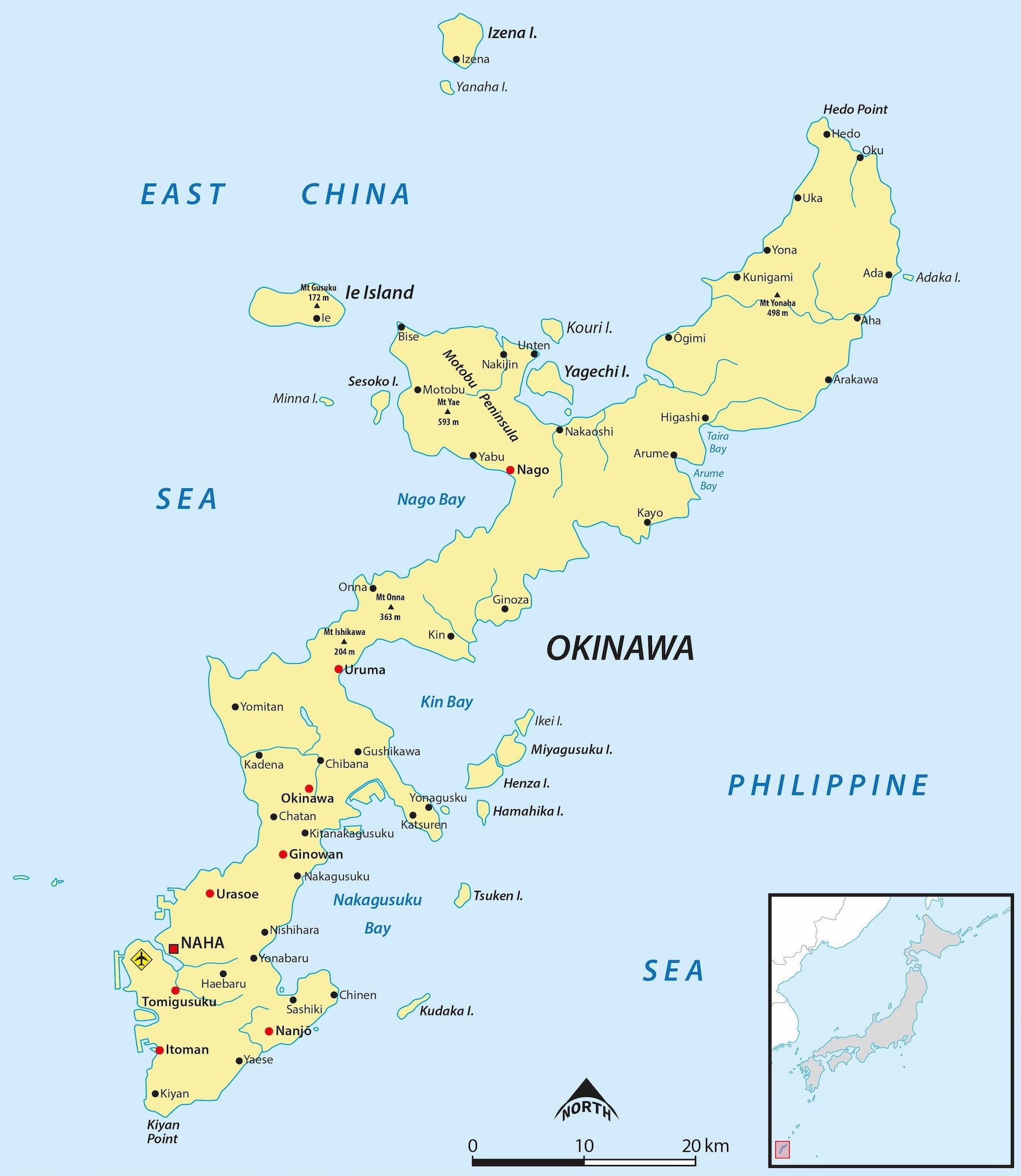
Okinawan Americans make up another significant subgroup among Japanese Americans. Part of the Ryukyu Islands, southwest of the main Japanese islands, Okinawa was annexed (or taken by force, usually after military occupation) by Japan in 1879. Okinawans migrated to Hawaiʻi starting in 1900 to work on sugar plantations, similar to migrants from the rest of Japan. But because they spoke a different language, had a distinct culture, and were stereotyped as looking different, naichi (Japanese people from the main islands of Japan) looked down on Okinawans and discriminated against them. Many Okinawan Americans in Hawaiʻi were pig farmers prior to World War II, and many also clustered in running small restaurants serving “American” food.
After the war, Okinawan Americans organized to provide relief goods to war-ravaged Okinawa. As discrimination eased after the war, Okinawan Americans began to assimilate into the Japanese American community. However, a resurgence of Okinawan identity, led by third and fourth generation Okinawan Americans, began in the 1980s, fueled by study tours/pilgrimages to Okinawa along with a desire to assert a distinct Uchinānchu (person of Okinawa) identity separate from Japanese Americans.
Today, Okinawan American music, dance, and food have enjoyed renewed popularity, and annual Okinawan Festivals in Honolulu, Hawaiʻi (started in 1982), are a staple of island life. Many Okinawan Americans also attend World Uchinanchu Taikai, a gathering of overseas Okinawans that has been held every five years since 1990.
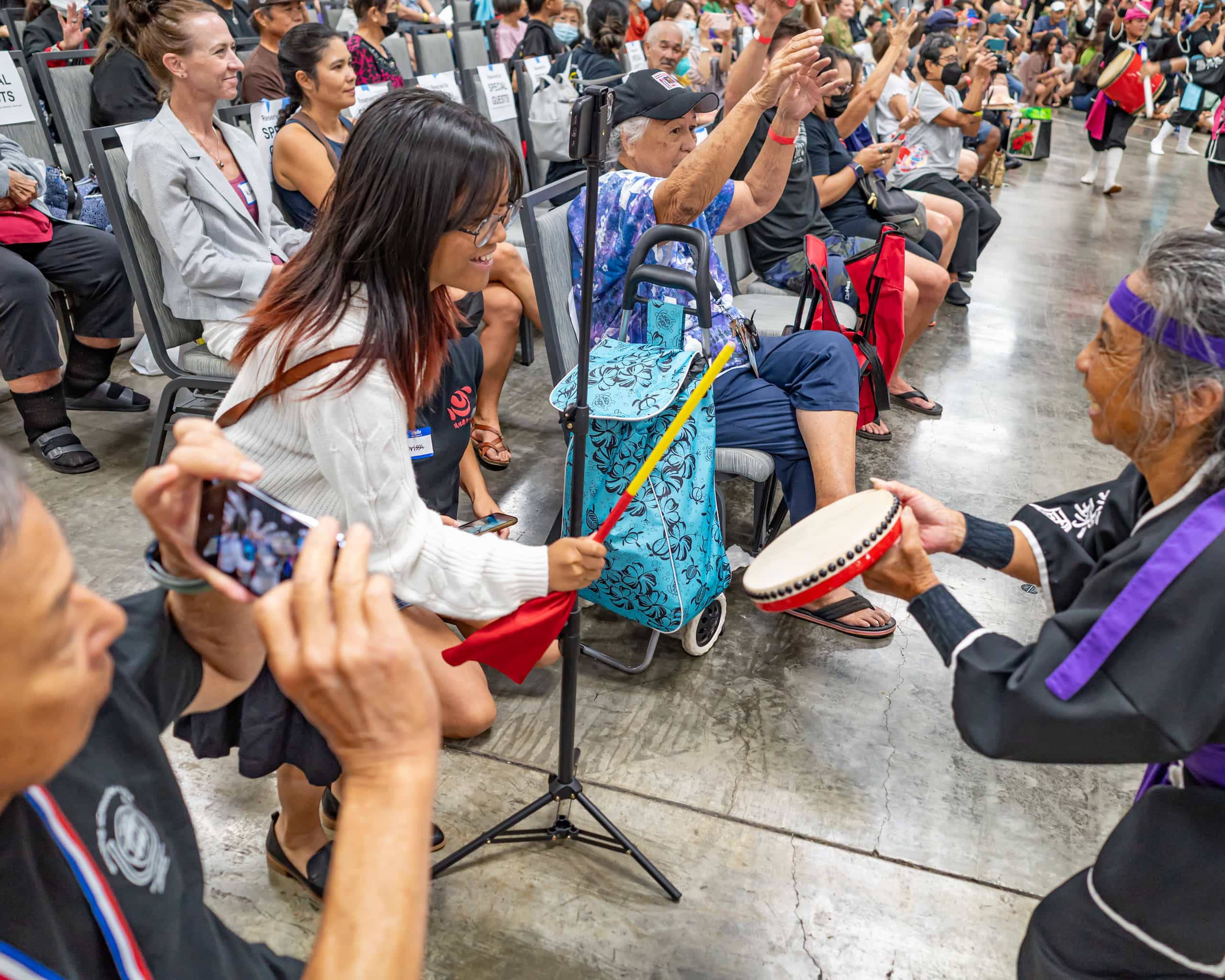
Image 13.05.04 — Annual Okinawan Festivals in Honolulu, Hawaiʻi, celebrate Okinawan American culture every Labor Day Weekend.
More to explore
Image
Okinawa and Okinawan Americans
Okinawa is the largest island of the Ryukyu archipelago, a chain of islands stretching south of Kyushu (the southernmost of Japan’s main island cluster) towards Taiwan. It had been a semi-independent kingdom for centuries with its own king and court. After the Meiji Restoration—a change in Japan’s government—in 1868, Japan sought to quickly modernize and emulate Western imperial powers.
Looking Backwards and Forwards
According to the 2020 Census, there were 1.6 million Japanese Americans. Japanese Americans are the most likely of Asian American subgroups to be intermarried, and they make up the highest percentage of those who are of mixed-race descent, totalling nearly half. Japanese Americans also have the smallest percentage who are foreign-born, about a third, compared to nearly three-quarters for other Asian American subgroups.
In the 1980s and 1990s, in the context of the aging of the Nisei generation and the ongoing redress movement, Japanese Americans began several large-scale endeavors to preserve the history of the Nisei and World War II incarceration. These included the Japanese American National Museum, founded in Los Angeles Little Tokyo in 1985, the San Francisco-based National Japanese American Historical Society (1981), and the National Japanese American Memorial to Patriotism During World War II, erected in Washington, DC, in 2000, among other endeavors.
There were also many local Japanese American historical organizations, as well as various efforts to preserve, document, and memorialize the many sites that held incarcerated Japanese Americans during World War II. In 1992, Manzanar became the first of these sites to be established as a unit of the National Park Service (NPS) as the Manzanar National Historic Site. In subsequent years, NPS units have been established at four more sites: Minidoka, Idaho; Tule Lake, California; Honouliuli, Hawaiʻi; and Amache, Colorado.
As the redress movement wound down in the 1990s—but especially after the 9/11 attacks in 2001 and the subsequent scapegoating of Arab and Muslim Americans—Days of Remembrance (DoR) commemorations and camp pilgrimages increasingly focused on linking what happened to Japanese Americans during World War II to similar injustices inflicted on other groups today.
Even as we approach a time when few if any survivors of the incarceration remain, DoRs and pilgrimages continue to increase both in number and size. For example, a typical pilgrimage to the detention site in Crystal City, Texas, chose as its 2023 theme “Reaching Across Barbed Wire Fences.” It focused both on commemorating the incarceration site and on building connections with the largely Mexican American communities that surrounded it.
The pilgrimage co-chair Karissa Tom, a young woman of mixed Japanese and Chinese descent, cited the influence of her grandfather, Edison Uno and of the Uno family story, in trying to “really connect people intergenerationally, to really help younger people understand the reality of the experiences of incarceration.” As with the remaining Little Tokyos that introduced this chapter, pilgrimages and DoRs provide a site of community for a dispersed and diverse population.
More to explore
Image
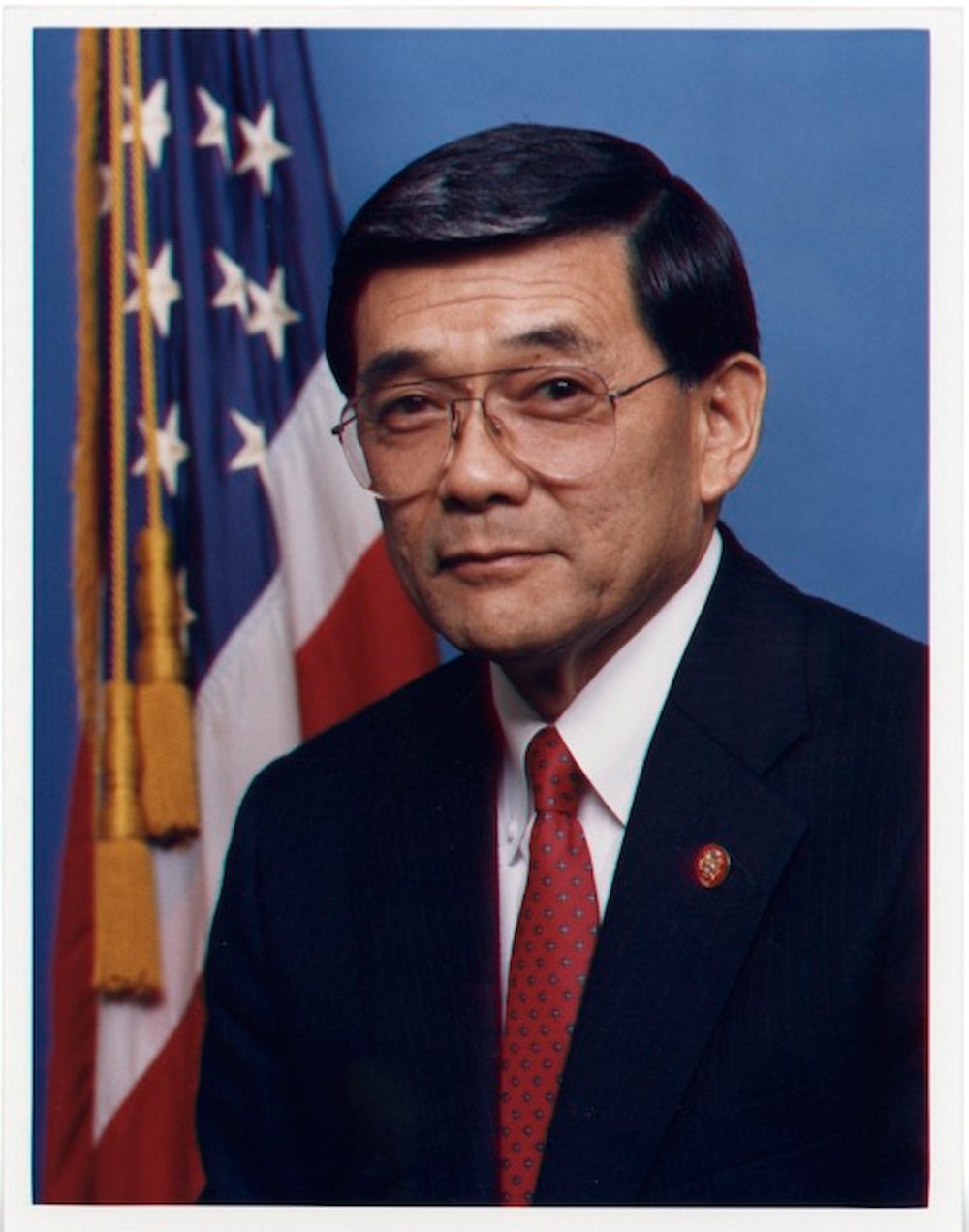
Norman Mineta’s Impact: From Redress to 9/11
Norman Y. Mineta (1931–2022) served a long and distinguished career in American politics as the mayor of San Jose, California, a longtime member of the United States House of Representatives, Secretary of Commerce under President Bill Clinton, and Secretary of Transportation under President George W. Bush.
Glossary terms in this module
Asian American Movement Where it’s used
Political and cultural movement launched by young Asian Americans in the late 1960s who advocated for racial equality and justice for Asian Americans. The Asian American Movement was inspired by the Civil Rights and Black Power Movements.
camp pilgrimages Where it’s used
Organized journeys to the sites where Japanese Americans had been incarcerated during World War II. The first large-scale pilgrimage was in 1969 to Manzanar, California.
Civil Liberties Act of 1988 Where it’s used
A federal law that granted all surviving Japanese American citizens and legal residents who were wrongfully incarcerated during World War II 20,000 dollars each and a formal presidential apology. The Civil Liberties Act of 1988 was passed as a result of the findings in the federal report Personal Justice Denied and the activism of Japanese American groups.
Commission on Wartime Relocation and Internment of Civilians (CWRIC) Where it’s used
A nine-member bipartisan group appointed by the US Congress and president to study the effects of Executive Order 9066 and World War II incarceration. The idea for this federal commission began with Nisei activist Edison Uno, when he called for reparations at the 1970 Japanese American Citizens League (JACL) convention. The JACL pushed for a federal commission, and it was officially formed through a 1980 law initiated by the US Congress and signed by President Jimmy Carter.
Days of Remembrance (DoR) Where it’s used
A day of commemoration for Japanese Americans held on February 19, the anniversary of Executive Order 9066. Initiated during the Redress Movement, Days of Remembrance often highlight the parallels between injustices of the present day and those that led to the mass incarceration of Japanese Americans.
hibakusha Where it’s used
Survivors of the atomic bombs the United States dropped on Hiroshima and Nagasaki, Japan, in 1945.
redress movement Where it’s used
The term “redress” means to right a wrong or injustice, often through compensation. During the redress movement, many activist groups fought to gain reparations for Japanese Americans who were wrongfully incarcerated during World War II. These activists sought for the restoration of Japanese Americans’ civil rights, compensation for lost property, and a formal national apology.