



Module 1: Overview of Asian American Workers
Has Asian American and Pacific Islander labor activism transformed working conditions for all workers?
On Labor Day September 1, 1946, over twenty-five thousand sugar plantation workers in Hawaiʻi refused to go to work. For three months, the mostly Japanese and Filipino workers, alongside Native Hawaiians, went on strike and shut down production in thirty-three out of thirty-four plantations. They demanded higher wages, forty-hour work weeks, and better housing. Historically, plantation owners hired workers from different countries to prevent the workers from strategizing together, purposely setting up systems to encourage competition among different ethnic groups. In the end, the plantation owners gave in to the workers’ demands, and workers won better wages and housing despite the overwhelming odds stacked against these newly immigrant workers.
In this module, we learn who Asian American workers are and their historical patterns of migration, often moving to escape violence in their home countries and to seek economic opportunity in their host country. The module also explores how Asian American workers have collectively organized against racism, discrimination, and poor working conditions in order to transform their lives and better their communities.
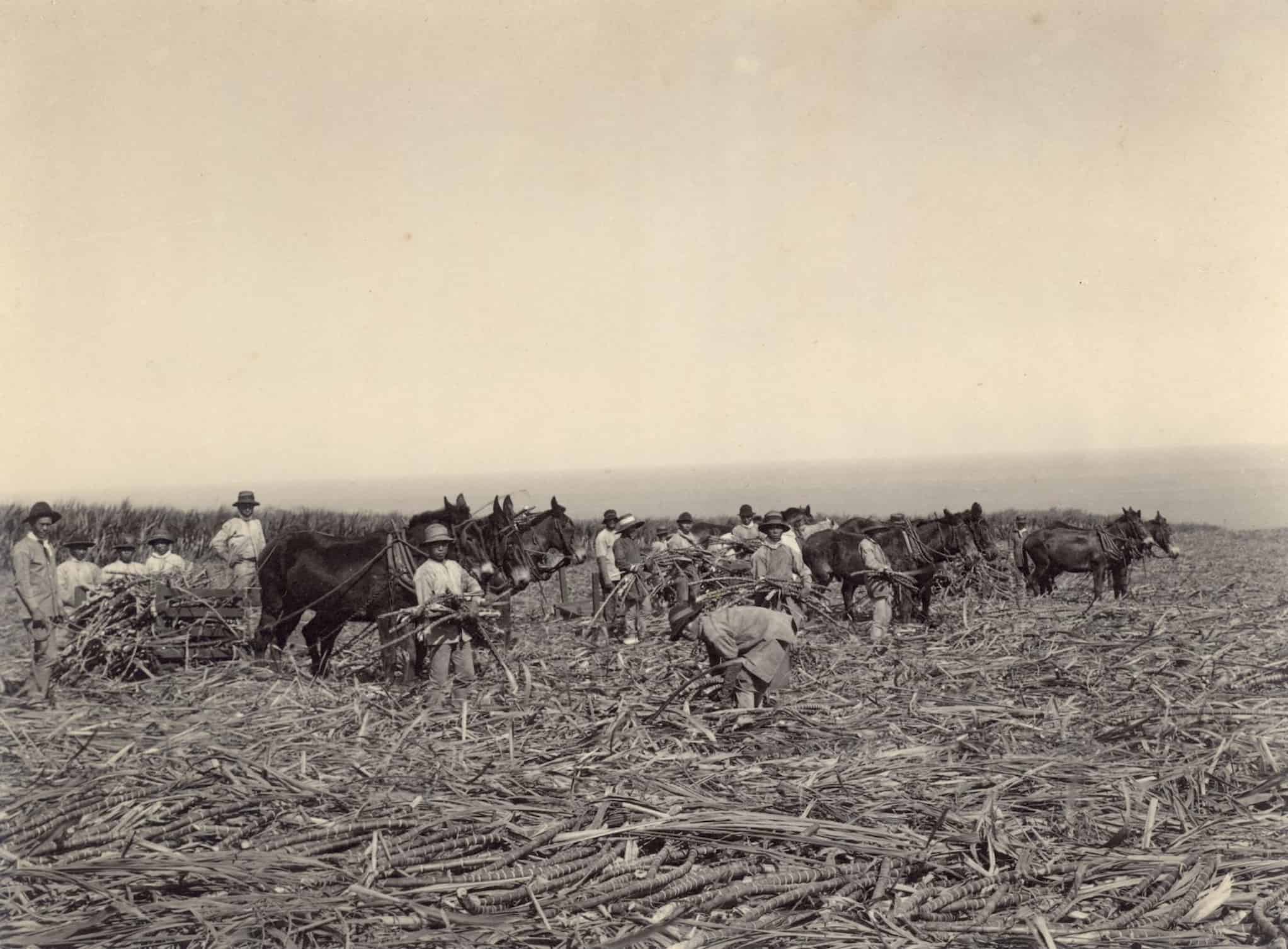
Image 40.01.01 — Laborers in Hawaiʻi used mules to carry sugar cane, circa 1900.
Created date, created by Name, Title Italicized. Credit line indicating where the image is from. Metadata ↗
What role do unions and workers’ centers play in the lives of Asian American workers?
What are the working conditions of Asian American workers in the United States historically?
What social and economic justice do Asian American workers seek?