





Five female cannery workers, dressed in aprons, overalls, rubber boots, and bandanas, rest on a dock by the ocean and drink out of paper cups.
Module 3: Alaska Cannery Workers
Has Asian American and Pacific Islander labor activism transformed working conditions for all workers?
When David Della was sixteen years old in the late 1970s, he did not spend his summers like most other teenagers. He did not spend time with friends and family, nor did he work a local job as a newspaper courier. He did what his father and his grandfather had done: he traveled from his hometown in Seattle, Washington, to Alaska to work in canneries. There, he carried out labor-intensive tasks, such as cutting, gutting, and washing fish on an assembly line. During peak season, the canneries ran twenty-four hour days, seven days a week, with employees working sixty to eighty hours days. He noted that it was a natural thing for Filipino males to work in the canneries during summers, noting the commonality of such work for the Filipino community.
Della added that he and many around him began to question the working conditions that Filipino cannery workers, or those working in the industry of packing food into cans, faced at the factories. He attributed his growing awareness of labor conditions to the civil rights and anti-war movements, both of which energized him and other cannery workers to organize and fight against the segregation and discrimination they experienced.
In this module, we learn about those Asian American workers who were employed at the salmon canneries in Alaska and how these workers organized. In the face of deportation and even death, they worked together to change their discriminatory working conditions. We also explore the impact of their lawsuits on civil and labor rights.
How are Asian Americans connected to the Alaska canneries?
How did Alaska cannery workers organize to change their discriminatory work conditions?
How did the cannery workers’ court cases advance civil and labor rights?
History of Canneries
For thousands of years, the Unangan people of the Aleutian Islands, the Inuit people of the northern seas of Western Alaska, and the Haida, Tlingit, and other tribes of Southeastern Alaska thrived before the foreign aggressions. Russia began to occupy the land in 1774, constructing colonies and forts for the sea otter fur trade. About a century later, in 1867, Russia sold this stolen land to the US. Alaska became a state in 1959, the same year as Hawaiʻi. While fishing had always sustained Indigenous communities, the commercial exploitation of salmon marked a turning point in Alaska’s colonial economic development by the mid-1800s. Those canneries displaced Indigenous fishing grounds.
The first canneries were built in 1878 at Klawock and Sitka, Alaska. The ideal site for canneries had abundant fresh water, salmon, and salmon streams. Eventually, over 150 canneries were built. However, since they were constructed as seasonal structures, many did not last long. The Alaska season of salmon processing was May through September. Climate change, industrial pollution, and commercial fishing practices have reshaped this season, reducing it over the last 150 years.
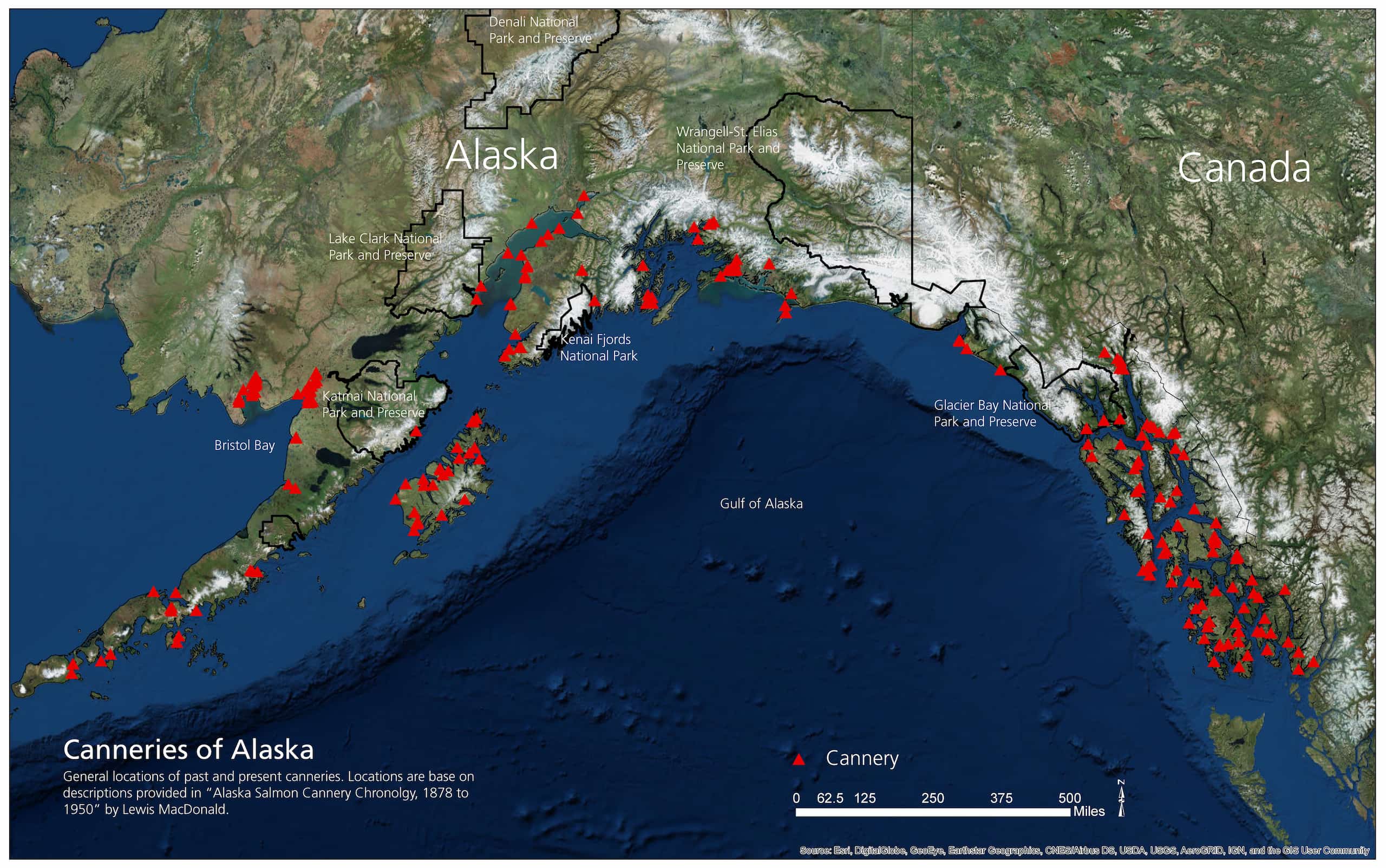
Image 40.03.01a — Canneries along the southeastern coast of Alaska, which displaced Indigenous fishing grounds. Alaska became a state in 1959, the same year as Hawaiʻi.
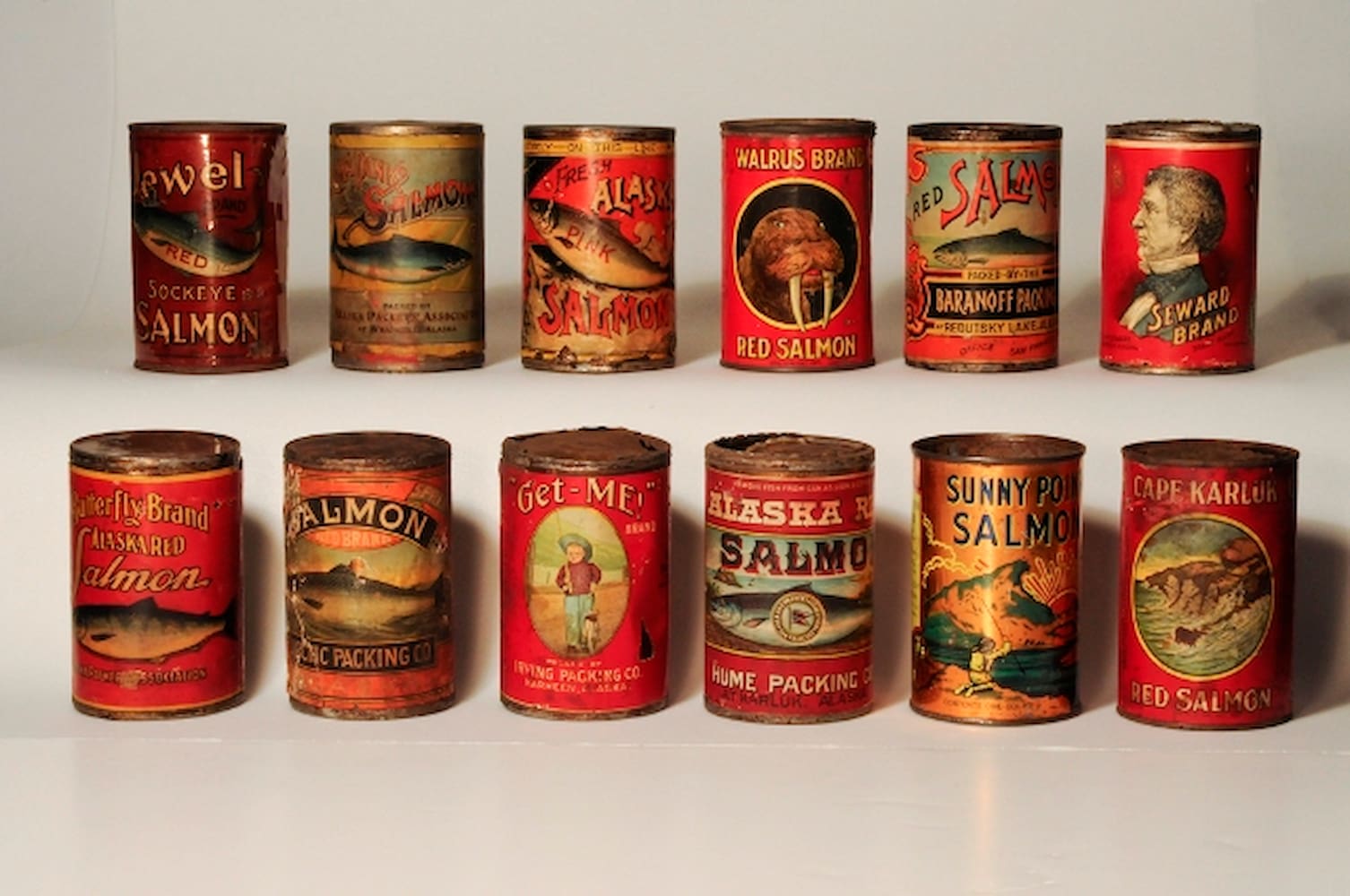
Image 40.03.01b — Salmon can label artwork; starting in the mid-1800s the commercial exploitation of salmon marked a turning point in Alaska’s colonial economic development.


Cannery Workers
Labor contractors facilitated Asian workers to enter into the West Coast salmon industry. Contractors were responsible for recruiting workers and provisioning them. They also established their working conditions and pay scales—all without oversight from cannery owners. Without oversight, labor contractors could abuse the system, taking kickbacks, picking favorites, and not providing adequate provisions and living conditions. They even sometimes blacklisted anyone who would complain.
Canneries preferred Chinese workers, who were controlled by Chinese labor contractors. With the passage of the 1882 Chinese Exclusion Act, immigration of Chinese workers became prohibited, and Japanese workers soon followed in larger numbers. They initially worked under Chinese contractors, and some became contractors themselves. By the 1920s, the Japanese made up about one-third of the cannery workforce. Then the 1924 Immigration Act barred Japanese immigrants from entering the US. As a result, Filipinos, who were classified at the time as US Nationals, became the dominant cannery workforce population.
The Pensionado Act of 1903 passed after the Philippines became a US territory. It funded scholarships for Filipinos to study in the US. Pensionados were expected to return to the Philippines to apply their American education, but some stayed in the US. They worked seasonal jobs in the fields and canneries, hoping to receive an education and earn prosperity.
Asian workers were assigned low-wage, physically demanding work, such as cleaning, butchering, fileting, and cooking the fish. Such cannery work became associated with Asians, as indicated in the naming of a machine invented in 1903. The “Iron Chink” mechanized some of the tasks Asian cannery workers carried out, that of removing the head, fins, and tail of a fish, eviscerating the innards. This machine replaced ten to twenty workers. Larger canneries adopted this expensive machine over the next ten years. The machine’s racist name persisted through the twentieth century and was presented as evidence of discriminatory treatment in the cannery worker lawsuits of 1973.
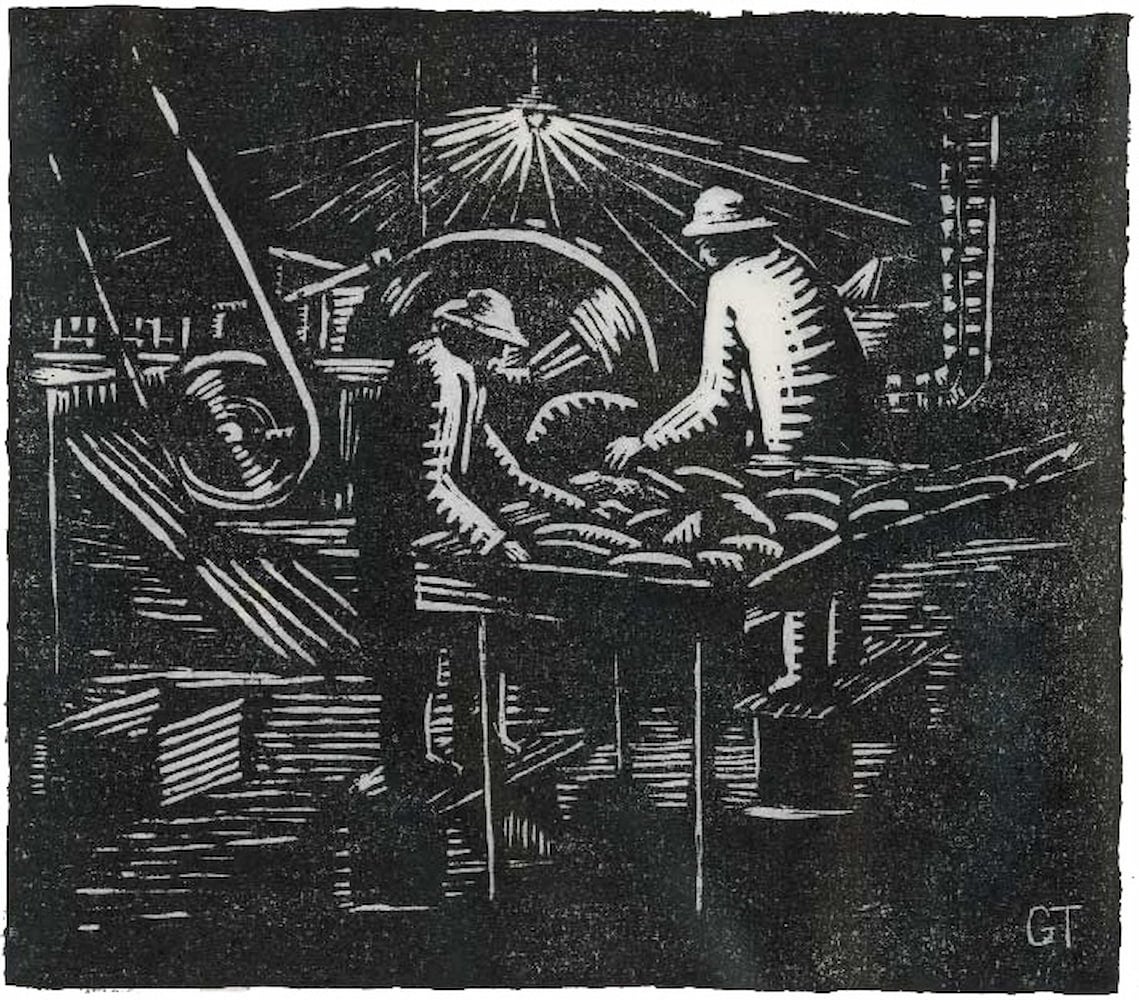
Image 40.03.03a — In this 1932 blockprint by George Tsutakawa, workers process fish alongside the “Iron Chink,” a cannery machine named with a derogatory ethnic slur. Tsutakawa, who worked at Alaskan canneries, illustrates the imposing presence of the machine against Asian workers.
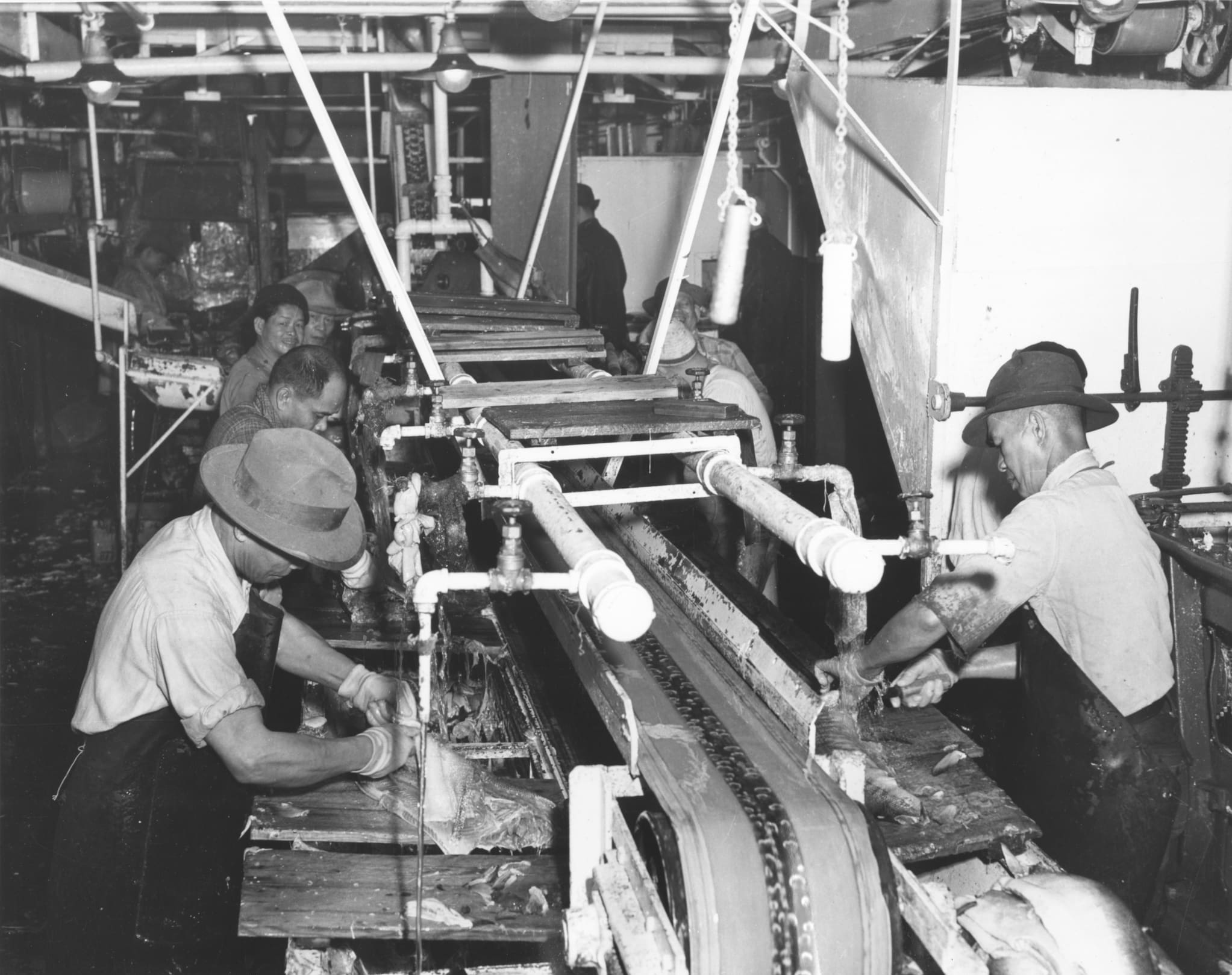
Image 40.03.03b — Chinese cannery workers in Alaska at risk of being replaced by new machinery with a racist name and losing their jobs.
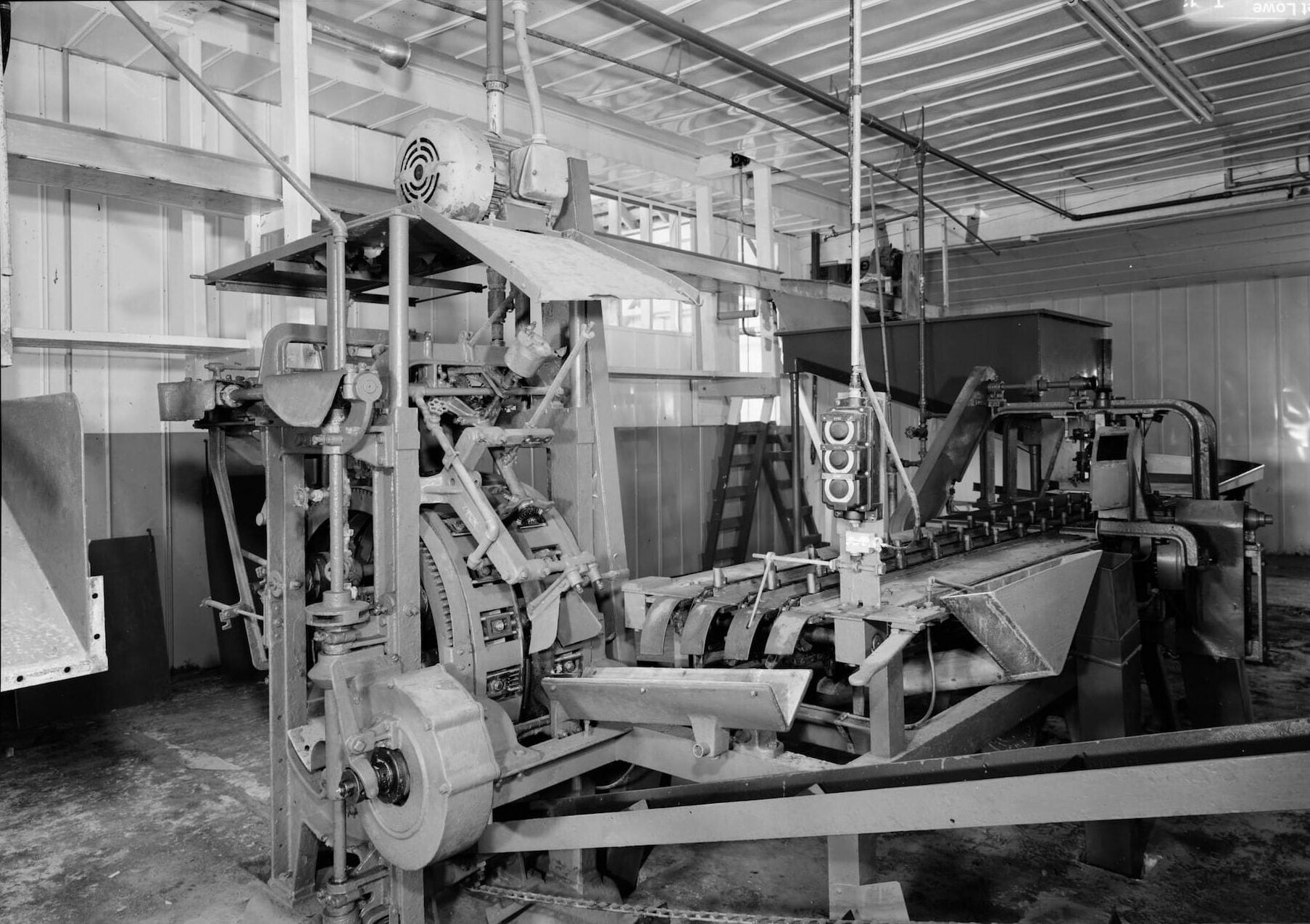
Image 40.03.03c — The machine that could replace ten to twenty cannery workers bore a racist anti-Asian slur for its name, and was adopted by larger canneries in Alaska.



Justice for Cannery Workers
The social justice movements of the 1960s and 1970s provided a different lens through which workers realized the discriminatory conditions of canneries. The revolutionary currents of worldwide anti-colonial movements and Black Power organizations like the Black Panther Party inspired new ways of thinking and organizing. In Seattle, Washington, for example, African American labor leader Tyree Scott founded the United Construction Workers Association (UCWA) in 1970, an organization of Black workers denied employment. Under his leadership, UCWA challenged the racist construction industry hiring practices, and their victories would eventually shape national policies in fair employment and affirmative action.
While employer policies and practices claimed to be based on merit, UCWA’s wins in court proved their hiring practices were based on race and gender. As protected groups under the 1964 Civil Rights Act, Scott supported Black workers to settle disputes in court under Title VII of the act. Furthermore, the Supreme Court ruled in Griggs v Duke Power Co. in 1971 that employers have a “burden of proof” in disparate impact cases, making it possible for workers to file class action lawsuits. Instead of fighting for one worker at a time, a collective lawsuit provided mutual aid in learning the process, sharing the fees, and allocating resources.
Scott recognized that workers of color in other industries faced similar discriminatory work conditions. The UCWA supported cannery workers and dispatched Michael Woo and Silme Domingo to conduct a fact-finding trip on Alaska worker conditions. To gain access, Woo and Domingo presented themselves as student researchers at the University of Washington. Their findings and contacts became the basis for founding the Alaska Cannery Workers Association (ACWA).
Woo and Domingo’s findings exposed the extent to which the canneries discriminated against and mistreated Asian workers. They were the lowest-paid, segregated into bunkhouses by ethnicity, and Filipino workers lived in the most overcrowded and poorly constructed housing. Moreover, segregated mess halls served food with a scale of food quality wherein white workers received fresh vegetables and meat and workers of color ate cheap, bone-ridden cuts of meat. On top of these conditions, cannery culture daily hurled racist language, and even the laundry facilities were segregated. Moving into better jobs was limited to those with connections to people in management or other positions of power.
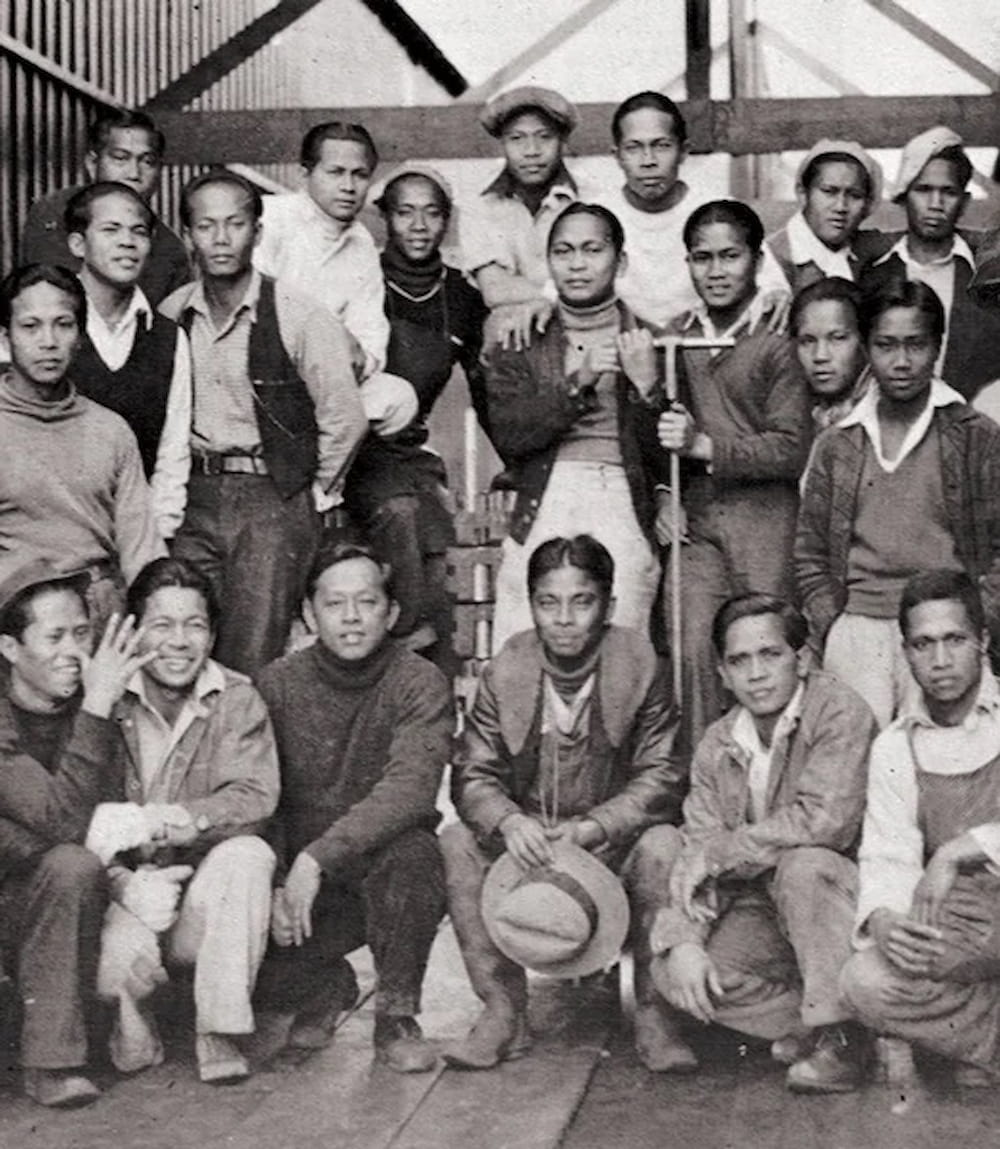
Image 40.03.05 — Filipino cannery workers in Alaska, who faced discrimination and segregation alongside other workers of color.
Working Wins and Setbacks
In 1973, the UCWA, ACWA, and the Northwest chapter of United Farm Workers hired progressive lawyer Michael Fox and established the Northwest Law and Employment Office (LELO) as their legal support. ACWA filed three lawsuits from 1973 to 1974. Cannery companies settled two cases in 1985, earning historic cash settlements for hundreds of cannery workers who had suffered discrimination and maltreatment for years. Unionized cannery workers won class action lawsuits, but they faced still more challenges during the rising conservatism of the Reagan administration of the 1980s, Reagan’s appointment of four Supreme Court Justices and the roll back of civil rights.
The consequences of Reagan’s policies also affected the Wards Cove Packing Co. v. Antonio case in 1989. The cannery workers’ disputes with their employer lasted for some ten years until the landmark Supreme Court decision ruled in a five to four decision in favor of the cannery company. Moreover, the majority decision placed the onus of proving “disparate impact” back on the workers, making it harder for workers to file a class action lawsuit. To counter this setback for civil and labor rights, Congress passed the 1991 Civil Rights Act to restore civil rights protections.
Unfortunately, Wards Cove Packing Company and Alaska congressional representatives acted to exclude the two thousand cannery workers as part of the bill’s passing. This conservative win against labor organizing resistance to powerful companies was a setback for the labor movement. Equally, the initial wins for the cannery workers proved dangerous, especially as workers of color connected workplace struggles with larger political struggles.
On June 1, 1981, Silme Domingo and Gene Viernes, two leaders of the ILWU Local 37 and ACWA, were assassinated in the union hall. They had led reforms within the union, attempting to democratize and root out corruption. Further, Filipino Americans Domingo and Viernes connected workers’ struggle for rights with the Filipino peoples’ struggles against the Ferdinand Marcos dictatorship. The Committee for Justice for Domingo and Viernes led a ten year campaign which convicted former ILWU Local 37 president, Tony Baruso, in the assassinations and proved Ferdinand Marcos’ role.
Garry Owens and Nemesio Domingo, LELO leaders, called for a Third Reconstruction that frames civil and labor rights as part of the United Nations’ 1948 Universal Declaration of Human Rights. The First Reconstruction followed the Civil War, abolishing slavery and amending the constitution for equal protection before the law and establishing birthright citizenship, or citizenship for anyone born in the US.
The Second Reconstruction emerged from the social justice activism of the 1960s and 1970s, including fights for civil and voting rights, fair housing practices, and other anti-discrimination laws. A Third Reconstruction could take an intersectional approach to rights instead of the piecemeal approach that abandoned the cannery workers in 1991.
The legacy of the cannery workers’ struggle demonstrates the strength of organized, broad, community-based approach to collective action. Their success came from multiethnic and multicultural organizing and built upon international solidarity that connected workers’ struggles globally. Their experience shows that justice is not only decided in the courts but also through the solidarity and relations forged in a global movement.
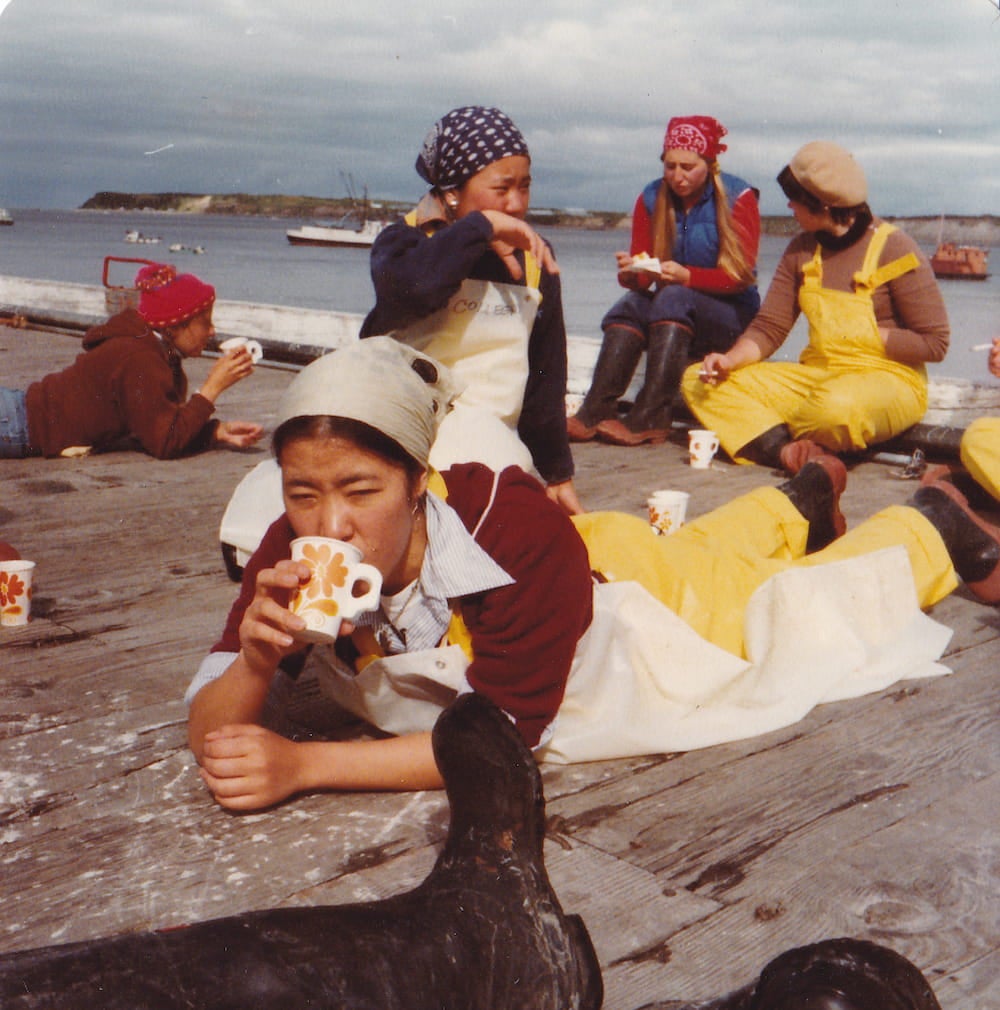
Image 40.03.07 — This candid photograph from a National Parks Service-supported project captures a break in the monotony of daily life at Diamond NN Cannery as workers drink coffee and rest on the dock.
Glossary terms in this module
exploitation Where it’s used
Taking advantage of someone for one’s own benefit.
organizing Where it’s used
The process of establishing a leadership structure, base of allies, and method of educating peers/allies on a specific issue, typically to support a cause well into the future.
retaliation Where it’s used
Any act causing harm done in response to a real or perceived threat of harm or danger.
solidarity Where it’s used
A political, cultural, and collective stance that recognizes the mutual responsibility and support that is necessary to achieve change. Taps into the power in numbers and considers the collective interests of communities.
unions Where it’s used
Organizations formed by workers, typically from the same industry or company, representing the workers’ collective needs in the workplace such as pay, benefits, and working conditions.