




Union leaders, community organizers, and worker activists visit the wall at the U.S.-Mexico border. The wall is topped with barbed wire and crosses.
Module 5: Contemporary Asian American Labor Organizing
Has Asian American and Pacific Islander labor activism transformed working conditions for all workers?
Work has changed dramatically in the twenty-first century. The rise of globalization reduced manufacturing jobs in the US as multinational companies seeking a low-wage workforce outsourced jobs to other countries. Labor unions and workers organized to create middle-class jobs with union benefits, but those jobs became less available. New jobs emerged with unfamiliar names for which traditional education did not prepare.
The “gig economy” provided short-term contracts and freelance jobs. While such work promised flexibility, workers were not provided with long-term stability such as health care and retirement benefits. Work also changed dramatically at the onset of the COVID-19 pandemic in 2020, especially as schools moved online and other occupations went remote. Unions lost members and worksites. As businesses and workplaces reopened, the underlying issues of labor exploitation and anti-union legislation and policies remained.
This module explores the contemporary work landscape within the global structures of capitalism. It provides a brief overview of Asian American national organizing efforts and organizations, and a case study of the Asian Pacific American Labor Alliance (APALA) including its history, accomplishments, and future goals. The module forwards the discussion by highlighting key challenges for building worker power in the global context.
Reflection Questions
Do you or someone you know have a job? What is one working condition you would like to change at this job?
More to explore
Document
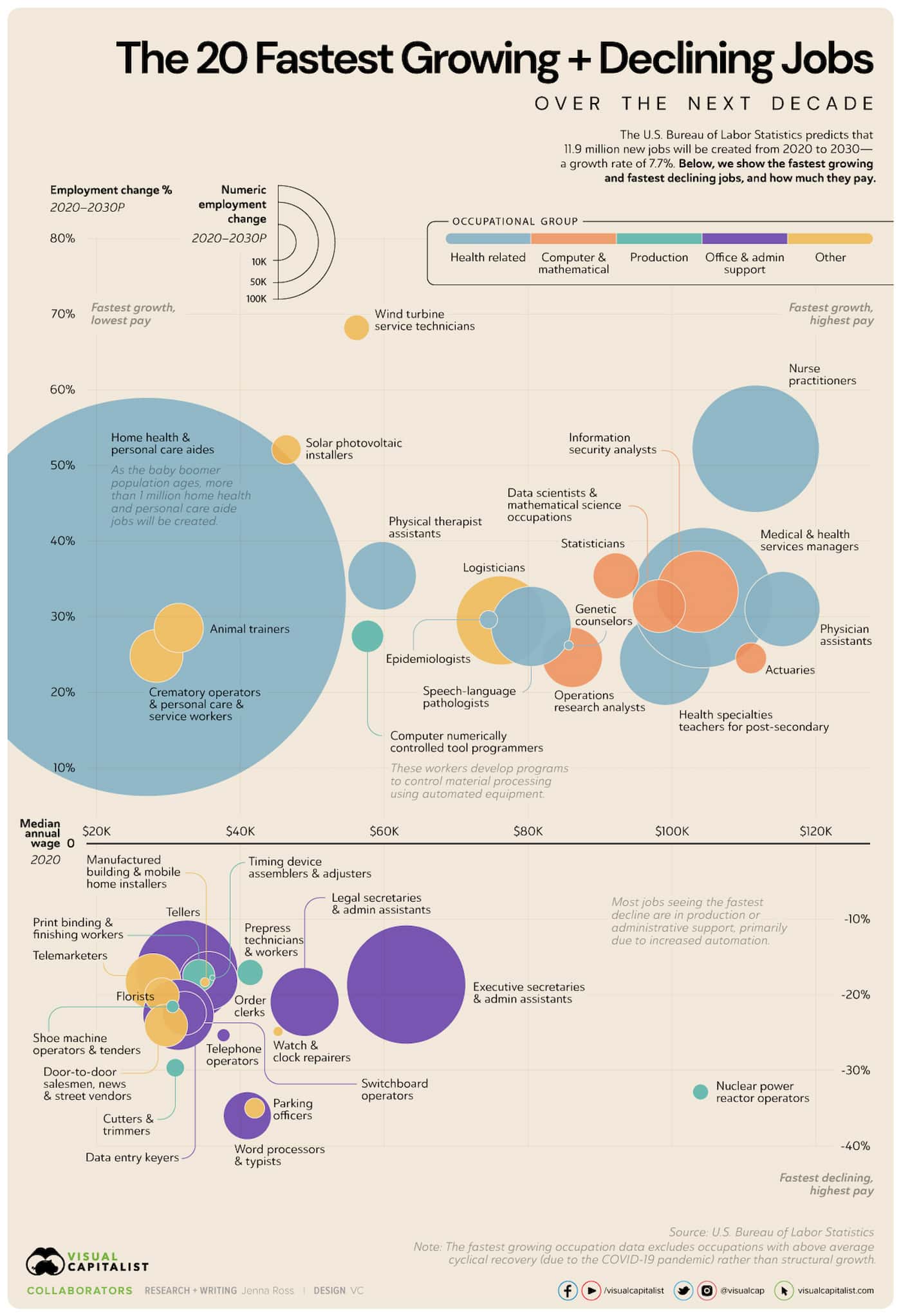
The Fastest Growing and Declining Jobs
In 2020, the US Bureau of Labor Statistics published the twenty fastest growing and declining jobs in the next decade, which show the effects of globalization, automation, and outsourcing.
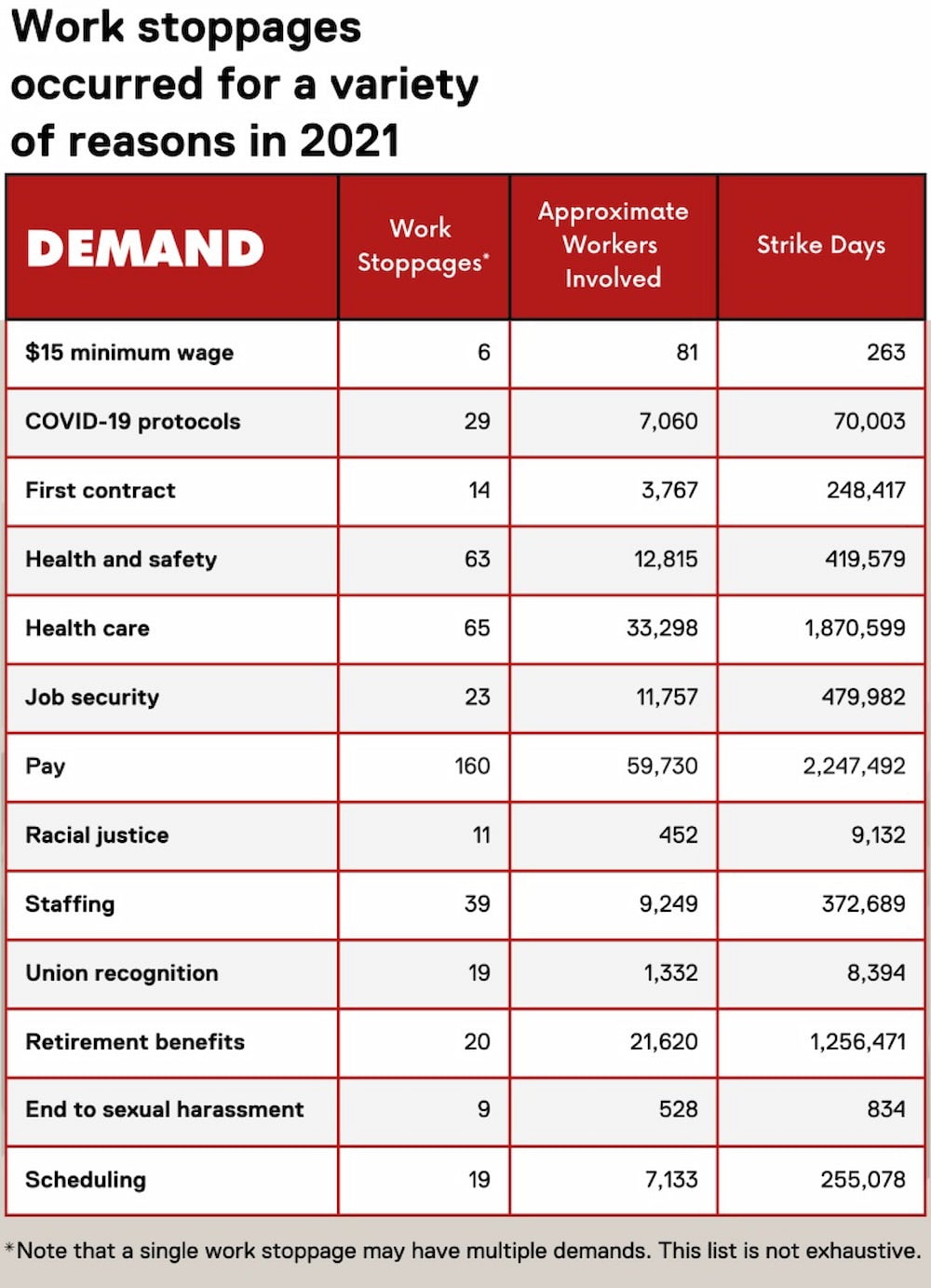
Image 40.05.02 — Details on the large number of work stoppages that took place in 2021.
How have Asian American workers organized nationally?
How has the Asian Pacific American Labor Alliance (APALA) influenced contemporary organizing?
How did the Asian Pacific American Labor Alliance (APALA) provide leadership and build alliances across racial, ethnic and international boundaries?
APALA and AFL-CIO
In 1990, Kent Wong, a staff attorney for the Service Employees International Union in Los Angeles, saw a chance for Asian American labor organizers to receive broader union support. He persuaded AFL-CIO president Lane Kirkland to establish a new constituency group of Asian American trade unionists. Wong knew the AFL-CIO could provide staffing, resources, and infrastructure for hundreds of Asian American workers. He recruited other labor activists across the country, gaining the support of key unions with large Asian American membership, such as the International Ladies’ Garment Workers’ Union.
Over five hundred Asian American, Native Hawaiian, and other Pacific Islander activists and union members attended APALA’s founding convention in Washington, DC, on May 1, 1992. Labor organizers observed the significance of both Asian American and Pacific Islander labor organizers coming together across sectors, as well as a national labor federation recognizing these labor organizers.
That same day, APALA demonstrated its commitment to social justice unionism, connecting labor issues to broader racial and economic justice movements. APALA pivoted the event and marched to the US Justice Department in solidarity with Black organizers demanding justice for Rodney King, a Black man who was severely beaten by Los Angeles police in 1991. Despite the brutality of their act, the officers were all acquitted.
As some five hundred Asian Americans and Pacific Islanders marched to demand an end to police brutality against Black bodies, Wong and APALA members demonstrated the importance of solidarity and intersectionality of race, class, and ethnicity.
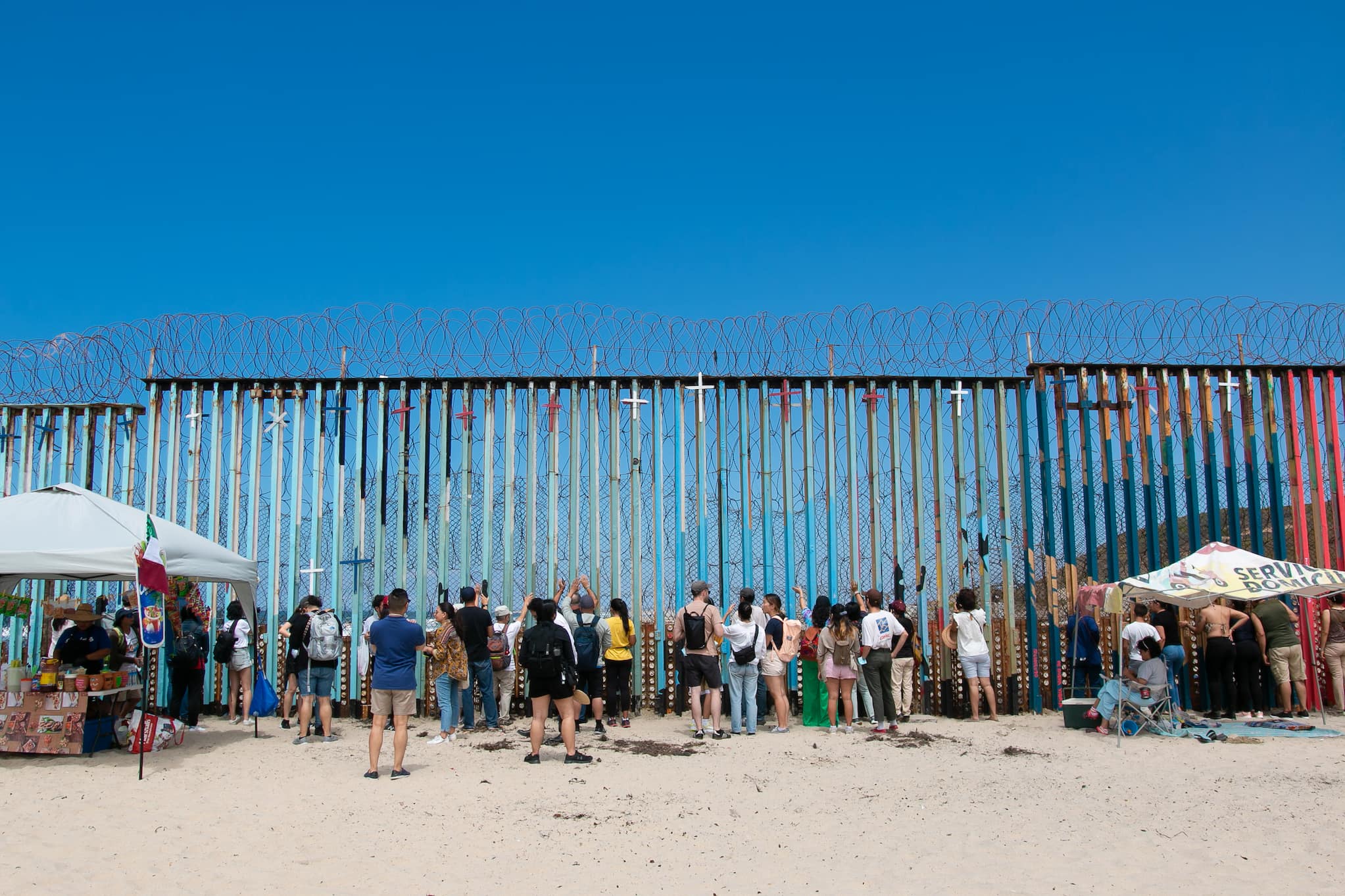
Image 40.05.04 — APALA members visit the border wall that was erected inside Friendship Park, a binational park on the US-Mexico border in the San Diego-Tijuana region.
“On Strike for Our Students”
A historic teachers’ union strike in 2019 demonstrates the cultural shift of labor movement organizing toward greater community focus. APALA members of the United Teachers Los Angeles (UTLA) union implemented a multiracial, community-wide, solidarity action calling for better working conditions for teachers across multiple unions. On January 14, 2019, over thirty thousand Los Angeles Unified School District (LSUSD) teachers walked out of their classrooms, demanding better pay, smaller class sizes, more support staff, and a process to cap charter schools.
The strike lasted six days and included incredible community and cross-union solidarity. Union members of groups such as the International Association of Firefighters and the Screen Actors Guild joined the picket line. LAUSD students and parents joined to support the teachers, believing that improved teaching conditions would improve student classroom experiences.
Eighty percent of Los Angeles residents supported the strike, demonstrating how schools and teachers are an essential part of a community. The strike was a success and UTLA won most of their demands. This effort has inspired others, both nationally and internationally. Arlene Inouye, a UTLA and APALA leader, has even shared these experiences with teacher unions in Japan.
Reflection Question
In what ways can unions and other aid organizations aid teachers in the classroom?
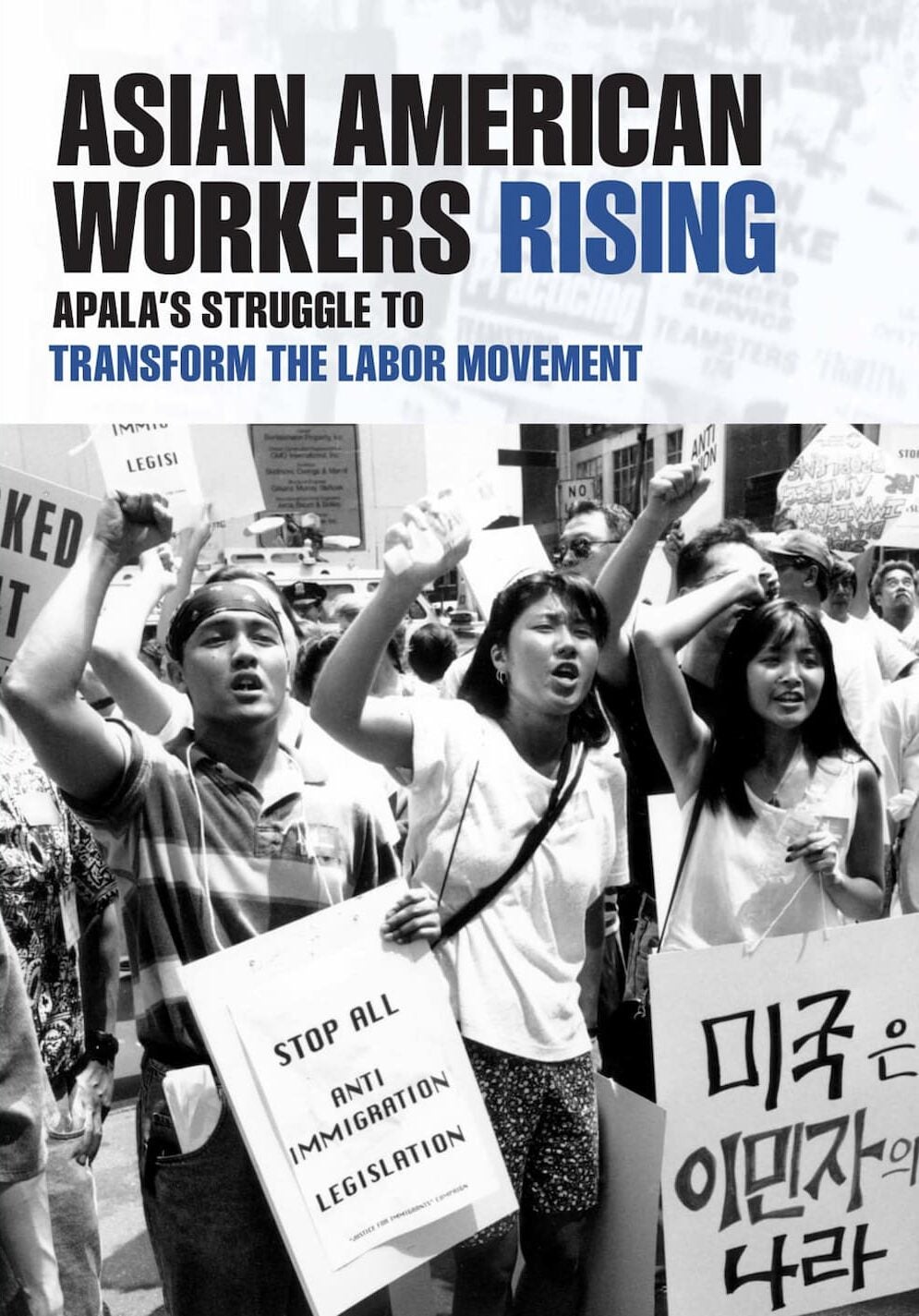
Image 40.05.05 — Asian American Workers Rising celebrates the first thirty years of the Asian Pacific American Labor Alliance (APALA), the first national Asian American worker organization within the US labor movement.
Despite decades of accomplishments, APALA is still a relatively small organization with uncertain funding and limited capacity. Many unions still do not disaggregate their member data, which makes it harder to identify Asian American workers who could potentially join APALA. As in the past, the AFL-CIO and founding unions of APALA make annual contributions, and individual memberships are a significant part of the base. Foundation grants supplement the national budget but also require meeting the grant’s outcomes, which may differ from APALA’s overall priorities. APALA is still largely a volunteer organization with interns and fellows doing much of the work.
Labor Trafficking
Many Asian American workers continue to work in vulnerable circumstances. Some have limited work visas with no guarantees of being able to remain in the US. In the absence of more accessible legal immigration, some workers have been trafficked, or put in conditions of modern-day slavery through coercion and kidnapping.
In 1995, seventy-two Thai garment workers, who were mostly women, were freed from captivity. They had been trafficked to the US and were kept captive for years, often forced to work eighteen-hour days. The workers successfully won a four million dollar settlement from manufacturers and retailers who profited from their imprisonment. Further, Congress passed the Trafficking and Victims Protection Act in 2000, which created special visas to provide temporary immigration status protection for victims of sexual slavery and crime. In 2023, the US Department of Labor inducted these workers in their Hall of Honor.
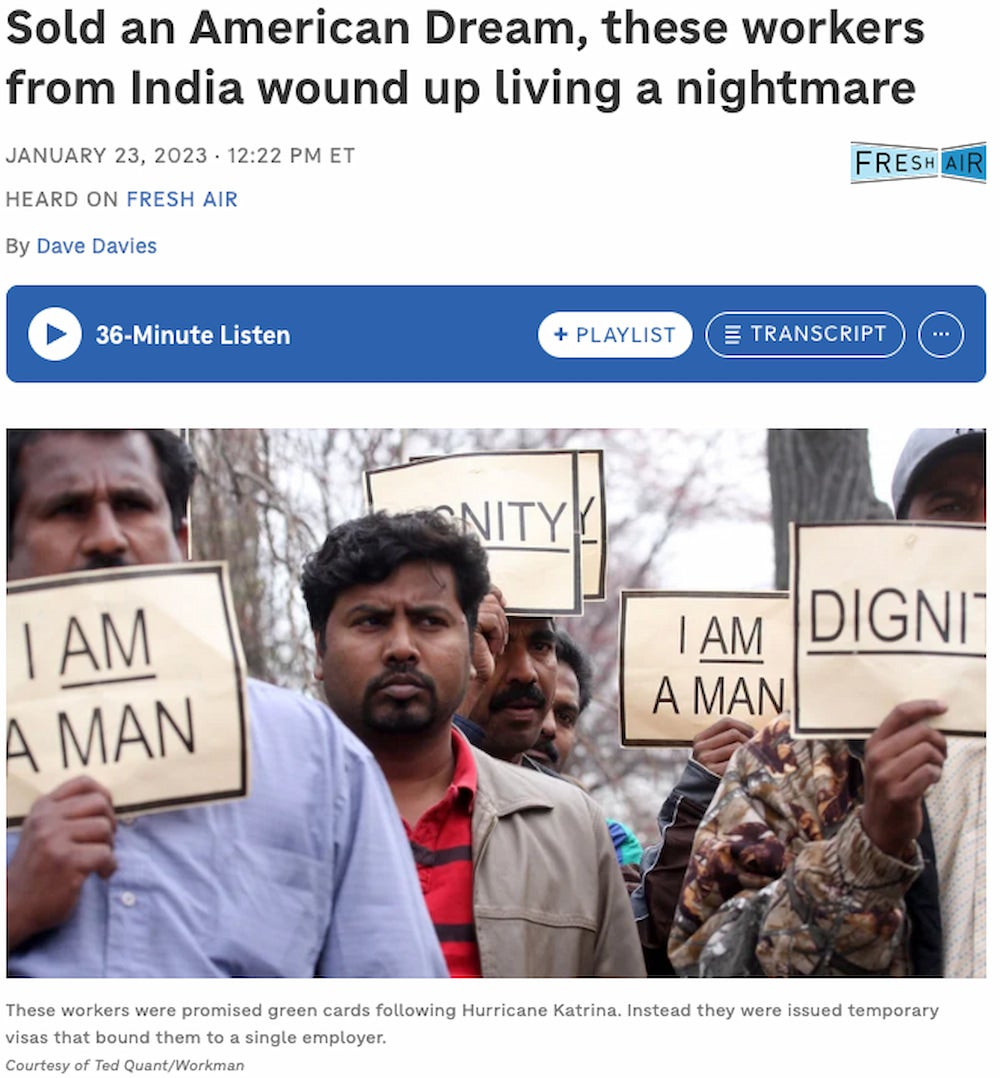
Image 40.05.06 — In January 2023, The National Public Radio reported on the outcomes of Indian workers who were exploited in the aftermath of Hurricane Katrina in 2006, and trafficked for work by Signal International.
In another trafficking case, Signal International, a Gulf Coast marine services company, lured five hundred Indian workers to repair oil rigs and facilities damaged by Hurricane Katrina in Louisiana and Texas in 2006. Workers paid labor recruiters as much as twenty thousand dollars, expecting good jobs, green cards, and permanent residency. Instead, workers were under guard in overcrowded housing, which was deducted from their paychecks. Eventually, one hundred workers marched and rode buses to Embassy Row in Washington, DC, where they held a hunger strike that lasted weeks. With the help of the Southern Poverty Law Center, Signal International paid millions in damages to its former workers.
More to explore
Video
04:28
The misconceptions about human trafficking
Excerpt of a TED Talk by journalist Noy Thrupkaew, dispelling the common misconceptions about human trafficking.
Reflection Question
What are some outcomes–both intended and unintended–of organizing?
Glossary terms in this module
exploitation Where it’s used
Taking advantage of someone for one’s own benefit.
organizing Where it’s used
The process of establishing a leadership structure, base of allies, and method of educating peers/allies on a specific issue, typically to support a cause well into the future.
solidarity Where it’s used
A political, cultural, and collective stance that recognizes the mutual responsibility and support that is necessary to achieve change. Taps into the power in numbers and considers the collective interests of communities.
trafficked/trafficking Where it’s used
Illegally transporting or coercing someone into performing labor or services. Common examples include labor trafficking and human trafficking.
unions Where it’s used
Organizations formed by workers, typically from the same industry or company, representing the workers’ collective needs in the workplace such as pay, benefits, and working conditions.