



Module 1: Temples and Trauma
Did Cambodian Americans attain justice for the harms of war and genocide?
The tourists are here to stroke black-and-white photographs
Of tortured prisoners.
They press closer to look at a picture:
a handcuffed boy
leaning toward them. Walking slow
around the prison,
they crouch in cramped stalls and shut themselves in
to imagine what horrors.
They walk around the metal bed frame,
cover their mouths at rusted chains,
…
They cry. They write on the walls NEVER FORGET
signing their names.
Now they have been here.
They buy books from the souvenir shops
and silk scarves and krama
and handmade purses.
But we come here to look for someone.
– Monica Sok, excerpted from “Tuol Sleng,” A Nail the Evening Hangs On 1
“Tuol Sleng,” a poem from Cambodian American Monica Sok’s debut collection, A Nail the Evening Hangs On, takes place at one of the most infamous torture centers of the genocide committed by the Khmer Rouge regime (1975–1979). In the poem, Sok as the narrator visits the school-turned-prison-turned-dark tourism-site with her nephew Ratanak. Foreign tourists express horror at the grisly scenes of pain and suffering. They vow to “never forget” in the face of systematic mass killing.
The tourists mark off Tuol Sleng as another sightseeing stop on their trip to Cambodia, simultaneously taking in Cambodian culture while distancing themselves from Cambodian history. But for Sok—who, like myself (this chapter’s author), is a daughter of Cambodian Holocaust survivors—and other Cambodian visitors, Tuol Sleng is not just another sightseeing stop. Instead, they visit Tuol Sleng to search for evidence of the missing, for dead family members and unknown relatives.
In this module, we discuss Cambodia’s colonial and postcolonial history, and view how war has shaped the experiences of Cambodian Americans.
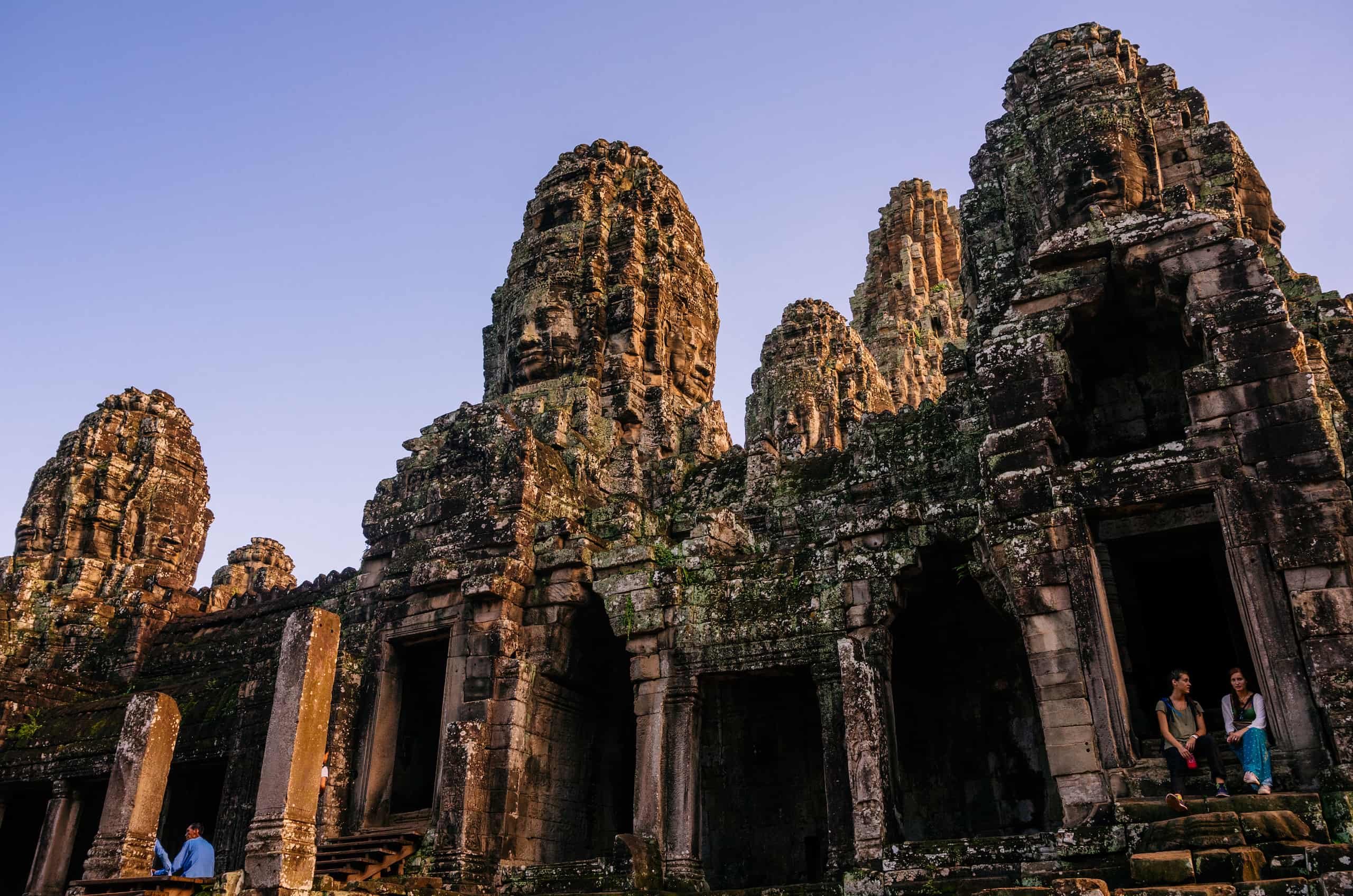
Image 08.01.01 — Bayon Temple was built in the late twelfth or early thirteenth century by King Jayavarman VII and stands at the center of his capital, Angkor Thom, in modern day Siem Reap, Cambodia.
Created date, created by Name, Title Italicized. Credit line indicating where the image is from. Metadata ↗
Why has Cambodian history been described as a “tragedy”?
How has war shaped the experience of Cambodian Americans?
How is Cambodian American history transnational?