





Module 2: Demographic Profile and Economic Life
Have Indian Americans found belonging in the United States?
The Immigration and Nationality Act of 1965 enabled many changes for the Indian American community. The law relaxed many previous immigration restrictions, including quotas based on national origin. People with highly specialized skills or advanced degrees in certain fields were given preference for entry to the United States, and spouses, children, and relatives could enter more easily through the “family reunification” preference. This system of immigration, with some modifications, is still practiced today.
This law reshaped the Indian American community. According to the 1975 Census, “Asian Indians” numbered over 175,000—an astonishing 93 percent were classified as “professional/technical workers.” These doctors, engineers, and scientists sought professional advancement and brought family members to the US.
This module uses demographics, or statistics and data, to provide a fuller understanding of the Indian American community and the impact of the 1965 Immigration and Nationality Act. We will also learn how these statistics obscure Indian Americans’ experiences of racism and violence and how they have resisted over the years.
What was the impact of the 1965 Immigration and Nationality Act on Indian migration?
What explains high education and income attainment among many Indian Americans?
What narratives are missing from the story of “Indian American success?”
Demographic Information
Demographics can create a profile of an ethnic community. This information provides insights on a community’s living conditions, or how a law or policy has affected them. For example, the US Census Bureau surveys communities across the nation every ten years and releases reports of their findings. In this section, we will look closely at census and other demographic data to understand the impact of the 1965 Immigration Act and related immigration laws on the Indian American population.
Census data reveals that the 1965 Immigration and Nationality Act enabled the Indian American community to grow exponentially—and the trend continues to this day. By 1980, there were an estimated four hundred thousand Indian Americans; over the next decade the number rose to 800,000. From 1990 to 2000, the population more than doubled to 1.71 million. Indian Americans constitute 16.4 percent of the Asian American population, exceeded in size only by Filipino and Chinese communities.
Census and other demographic data also reflect the 1965 Immigration Act’s preferences for highly educated immigrants. The Immigration Act of 1990 extended the 1965 Immigration Act, increasing the allowance of H1-B visas. These visas allowed highly skilled foreigners to work for up to six years in the US. A large percentage of H1-B visa holders eventually acquired permanent residency.
From 2001 to 2015, India received about 50 percent of the allotted H1-B visas; in 2018, that number rose to 75.6 percent. In 2019, one report showed that 33 percent of Americans earned at least a bachelor’s degree; for Indian Americans, it was 75 percent. The same report found that 13 percent of all Americans earned a postgraduate degree; and, in contrast, 43 percent of Indian Americans held a postgraduate degree.
Demographic data shows the economic and educational success of many Indian Americans, but it also demonstrates the vast inequalities within this large group. The 1980 Census showed that US-born Indians had an unemployment rate five times that of other Asian American groups.
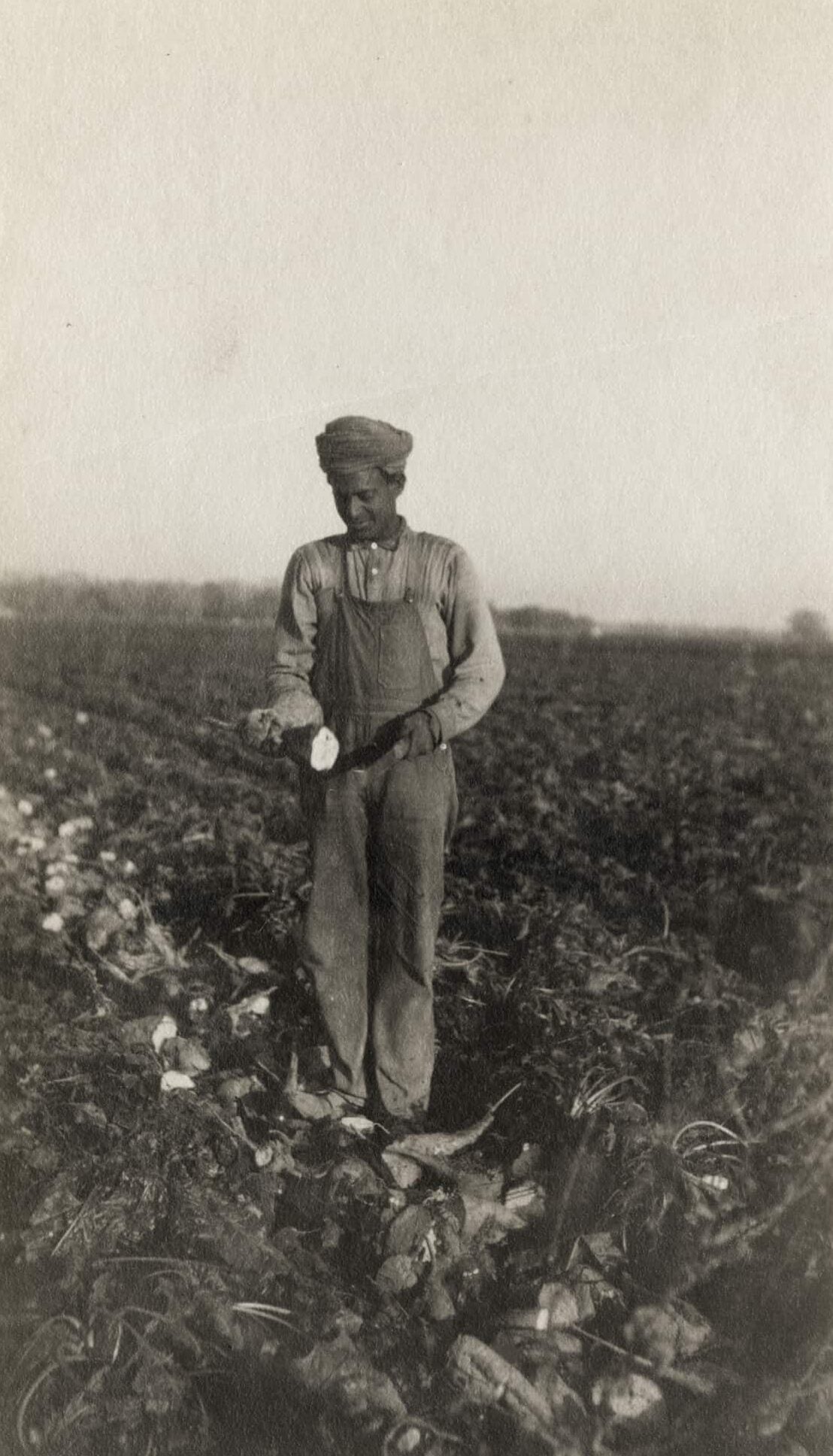
In 1995, the University of California published a study that found large pockets of poverty among Indian Americans in California. A 2005 report showed that 14 percent of Indian Americans in the Central Valley, where agricultural work predominates, were living below the poverty level, and 35 percent did not have a high school diploma.

Image 12.02.01 — An Indian immigrant worker harvests beets in Hamilton City, California, in the early twentieth century.
Poverty was also part of the Indian American experience before the 1960s. This included workers on the West Coast in agricultural, railroad, and lumber work as well as Indian Muslim communities in Philadelphia, New York, Savannah, Atlanta, and New Orleans. Between the 1890s and the 1920s, Indian Muslim sailors and peddlers jumped ship, found low-wage work as dishwashers, cooks, and waterfront workers, and built multiracial communities and families with African Americans, West Indians, and Puerto Ricans.
Listen to
In Search of Bengali Harlem
Audio 12.02.02 — Author and filmmaker Vivek Bald discusses his research of the migration of thousands of South Asian men who worked on British colonial steamships, who then jumped ship after arriving in American ports in order to escape British colonial rule. They married African American and Puerto Rican women, raising interfaith and interracial families.
Navigating Race, Poverty, and Stereotypes
The narrative that Indian Americans are successful also obscures the racism and violence that many have encountered in the United States. In the 1960s, the then-retired president of the University of Chicago, Robert Hutchins, admitted that the appointment of the distinguished astrophysicist and later Nobel Laureate, S. Chandrasekhar, had for two decades been blocked “because he was an Indian, and black.” 1
Although Chandrasekhar was not African American, Hutchins implied that his colleagues discriminated against the astrophysicist in part because of his skin color. In 1975, the Association of Indians in America (AIA) wrote to the US Civil Rights Commission that “Indians are different in appearance; they are equally dark-skinned as other non-white individuals and are, therefore, subject to the same prejudices.” 2
By the 1970s, a substantial number of Indian Americans owned motels. A 1979 Washington Post article headlined, “Indians Snap Up Small Motels,” stated that Indian Americans were “becoming a strong economic force in the United States.” 3 According to the Asian American Hotel Owners Association, Indian Americans have owned 50 percent of all hotels in the US over the last three decades.
Some 70 percent of motels are owned by Gujaratis, people from the Indian state of Gujarat. In some locations, Indian American motel owners have been racialized as “Patel” after a common Indian surname. Some have even referred to the trend as the “Patel Motel Cartel,” implying that Indian Americans were monopolizing the motel industry. The writer V.S. Naipaul noted that motels in southern US states began advertising themselves as an “American motel” to signal they were not Indian American-owned. This rhetoric overshadowed the entrepreneurship and long working hours of the motel owners and its workers.
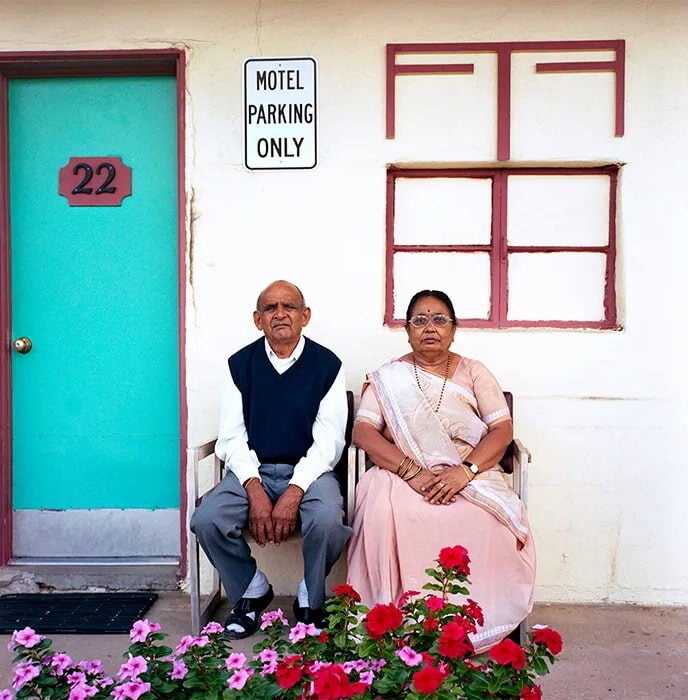
Image 12.02.03 — Pratima Patel takes a photo of her father (at right) and his siblings as her sisters look on. In the early 1970s their Gujarati grandfather bought the Vincent Hotel in San Francisco. The granddaughters now run and own twelve properties.
In the 1980s, a hate group called the “Dotbusters” formed in New Jersey. The name referred to the bindi some Hindu women wore between their eyebrows. Across three days in September 1987, the group assaulted Dr. Kaushal Sharan, a physician, rendering him unconscious; beat Bhered Patel with a metal pipe while he was sleeping at home; and fatally injured Navroze Mody, a bank manager, who died from his injuries. 4 In a letter to the Jersey Journal, a “Dotbuster” wrote:
“We will go to any extreme to get Indians to move out of Jersey City. If I’m walking down the street and I see a Hindu…. I will hit him or her…. We use the phone books and look up the name Patel. Have you seen how many of them there are? … we just don’t want it anymore.” 5
As sociologist Dr. Sripati Chandrasekhar wrote, the “Dotbusters” disliked Indian Americans for their “supposed economic success.” 6
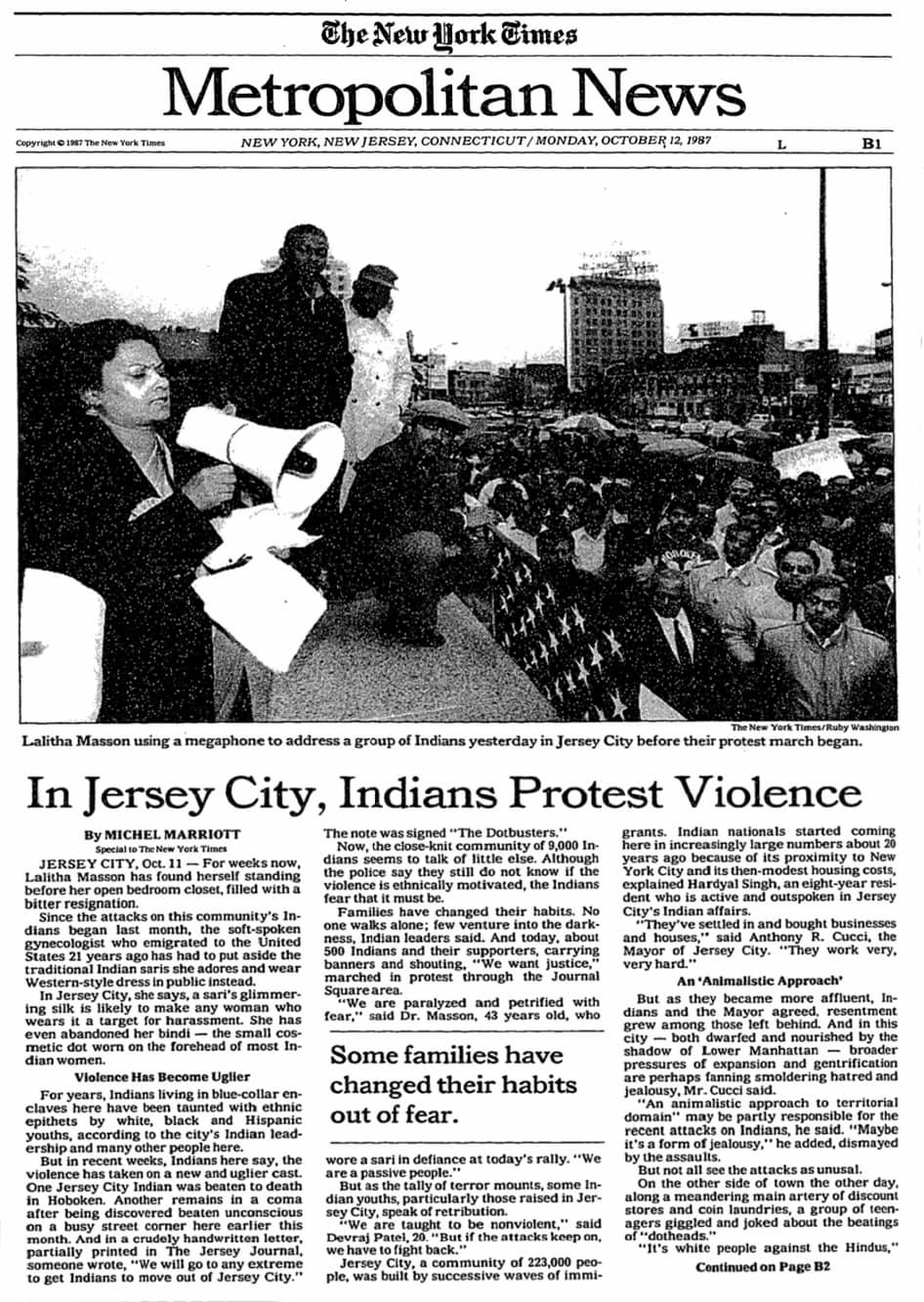
Image 12.02.05a — The New York Times in 1987 wrote of Indians in Jersey City protesting the anti-Indian violence of the “Dotbusters.”
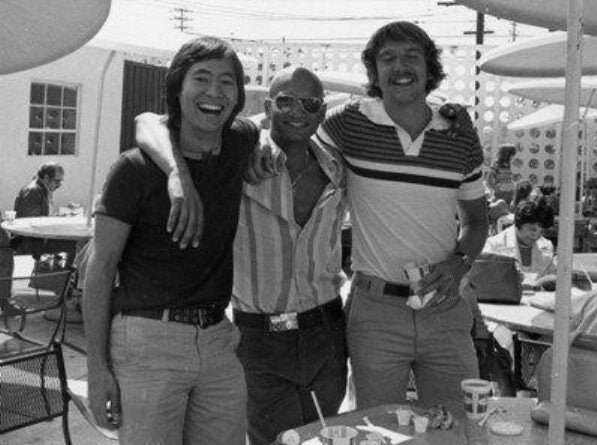
Image 12.02.05b — Navroze Mody (middle), an Indian American who was murdered as a victim of racial violence.


Conclusion
The second phase of Indian American immigration began with the Immigration and Nationality Act of 1965. The passage of this law allowed the Indian population’s numbers to dramatically increase. It also diversified the profile of Indian Americans in the United States. Whereas the first phase of Indian immigrants tended to come from the Punjab region and worked in agriculture, the post-1965 Indian American population now worked in science and engineering or became small business owners. However, despite their increasing numbers and diverse socioeconomic contributions, Indian Americans continued to navigate pervasive racial stereotypes and prejudice.
Glossary terms in this module
Immigration and Nationality Act of 1965 Where it’s used
This act, also known as the Hart-Celler Act, officially ended the era of Asian Exclusion and created an immigration system based on family relationships and job skills. The law significantly changed the demographics of Asian immigrants.