





Bhangra dancers in colorful outfits are standing on one leg during a performance on stage while using sapp, a Punjabi musical instrument.
Module 4: Indian Culture
Have Indian Americans found belonging in the United States?
Culture encompasses the many practices related to social connection. It can include literature, art, music, dance, and cuisine. Culture also includes social practices, such as how people negotiate marriage, sexual relations, dating, family relationships, or managing mental illness and domestic abuse. Many understand culture to be related to tradition and therefore unchanging. However, culture can evolve over time, and people can have differing interpretations of culture.
In this module on the social and cultural life of Indian Americans, it is important to remember that culture is not static. Therefore, this module only captures part of Indian Americans’ approach to culture. Indian Americans have embraced culture in different ways to give shape to their own identity and find their own place in the United States. They have also found ways to give expression to politics, public service, social activism, and more.
What are some unique manifestations of Indian American culture?
How do second, third, and fourth-generation Indian Americans navigate culture?
How do youth engage in Indian American culture on college campuses?
Indian Culture and the Family
Generational differences usually have an important bearing on how people understand culture. Thus, many young Indian Americans may have attitudes about dating, marriage, and careers that differ from their parents and grandparents. This can cause some tension within households.
Career choices are an area of disagreement across some generations of Indian Americans. Many Indian American college students feel drawn to study literature, history, or the performing arts; however, there may be parental pressure to pursue careers in engineering, medicine, or business administration. Middle-class Indian culture is still largely averse to pursuing the humanities and arts as a profession. The “culture of science” is seen as more rigorous, masculine, or stable than the “culture of the arts.” These parents view science, technology, engineering, and mathematics (STEM), economics, and business administration as more lucrative and likely to yield better prospects for marriage.
One of the few surveys carried out among Indian Americans that looks at marriage, religion, caste affiliation, and civic engagement confirms that even among US-born Indian Americans, marriage is still valued across generations. There is a very high rate of marriage within the wider Indian community. However, there may be some differences in dating and marriage practices across generations.
While identity and culture are assumed to be unchanging, Indian American identity is not a stable category simply because there are so many sub-national categories within it. Bengalis, Tamilians, Kashmiris, Punjabis, Malayalis, Maharashtrians, Gujaratis, Kannadigas and so on, each carry rich traditions, languages, and practices. Culture and identity are always in flux, especially affected by exchanges with other identities and cultures.
Culture, Success, and the Spelling Bee
An Indian American first won the Scripps National Spelling Bee championship in 1985 but the trend of Indian Americans dominating the championship started at the turn of the twenty-first century. In 2019, eight students, seven of whom were from diverse Indian backgrounds, were declared co-winners of the spelling bee.
There are different theories people have applied to explain this success. Many sociologists, educators, and Indian Americans themselves attribute it to some aspect of culture. For example, some observe that “Indian culture” emphasizes rote learning, or parental pressure to succeed. Others say Indian American children tend to come from highly educated, multilingual households where knowledge of English is already common.
For immigrant communities in particular, success leaves pathways for others to follow. Perhaps seeing their own community win a nationally recognized award encourages other Indian Americans to try, too. Success stories in niche areas like spelling bees, certain sports, or areas of business ownership can provide a blueprint for other community members to duplicate. Whether that is through study methods, training arenas, special coaches, or sources of finance, culture only plays a partial role in explaining such immigrant success.
Moreover, this “success” has also come with racism. When two Indian American boys were declared the spelling bee winners in 2014, Twitter (now X) was ablaze with hateful comments. Some asked why the contestants were “foreign,” and others insisted “the kids in the spelling bee should only be AMERICAN.” When immigrants or people of color are viewed as dominating a particular profession, trade, or cultural phenomenon, this type of backlash often rears its head.
College as Site of Indian American Culture
Indian American college clubs and groups are another way through which Indian Americans can practice, learn about, and show others their culture. For many young Indian Americans, college is the first “home away from home,” and a place where they negotiate their cultural identity away from the parental home.
Annual culture shows at college campuses often follow the same three-part pattern. There is a large component featuring folk and classical dances of India. Performances in Bharatnatyam and Kathak, the two most well-known classical dance forms, are complemented by a fisherman’s folk dance from Kerala, the Gujarati Garba, a Rajasthani dance, and the Punjabi Bhangra. This exercise showcases India’s diverse and variegated culture, while also enabling Indian Americans to take pride in their sub-national identity.
Then there are Bollywood numbers, old and new songs, with hip-hop and “fusion” mixed in. There is often a solo instrumental piece. The dance and music numbers are interspersed by one long play, or several short skits, usually about generational differences. Some plays deal with the conflict between the first and second generations over dating, marriage, and other lifestyle choices. In recent years, students from the LGBTQ+ community have taken an active role in representing their perspectives as well.
National politics are not often part of culture shows. Although the first Asian American victim of a hate crime after the 9/11 attacks was Sikh, the 2002 and 2003 Indian culture shows at the University of California, Los Angeles, made no reference to the aggressively anti-immigrant statements and actions that were being openly displayed on American streets against South Asians at the time.
The full story of Indian dance in the United States has yet to be told. Training in
Bharatnatyam, the most popular Indian classical dance form, is commonly given to Indian, especially Hindu, girls in middle class and affluent homes. Bharatnatyam is a staple at culture shows at universities, Diwali fairs, Indian Independence day festivities, and Indian American NGO fundraising events. At American universities, however, it is “Bollywood fusion dance” which reigns supreme.
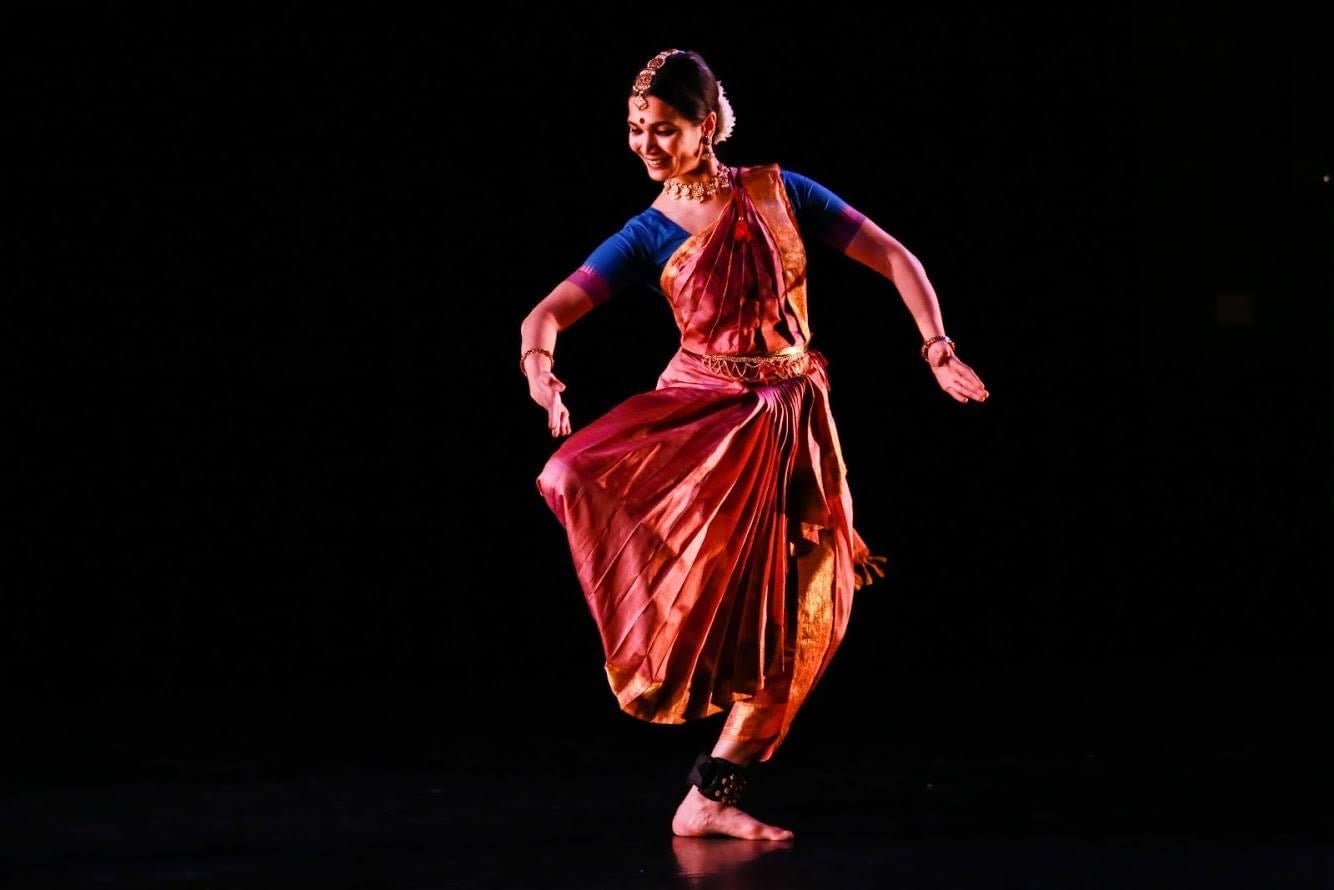
Image 12.04.04 — A performance of Bharatnatyam, a well-known classical Indian dance, in Cambridge, Massachusetts.
Nearly every university has a Bollywood fusion dance team: on the internet you can read about the Purdue Indian Dance Club, “Princeton Bhangra” and “Princeton Naacho” (dance), and similar clubs at all University of California campuses, Harvard, Yale, Massachusetts Institute of Technology, Brown, Johns Hopkins, and many other universities.
One writer described Bollywood dance contests as a “rage across US Colleges.” 1 “Bollywood fusion” bills itself as “co-ed,” but Bhangra, a boisterous Punjabi dance form for men has also seen a dramatic increase in popularity in recent years. This rise suggests that even young “nerdy” Asian men and Silicon Valley types can also have fun.
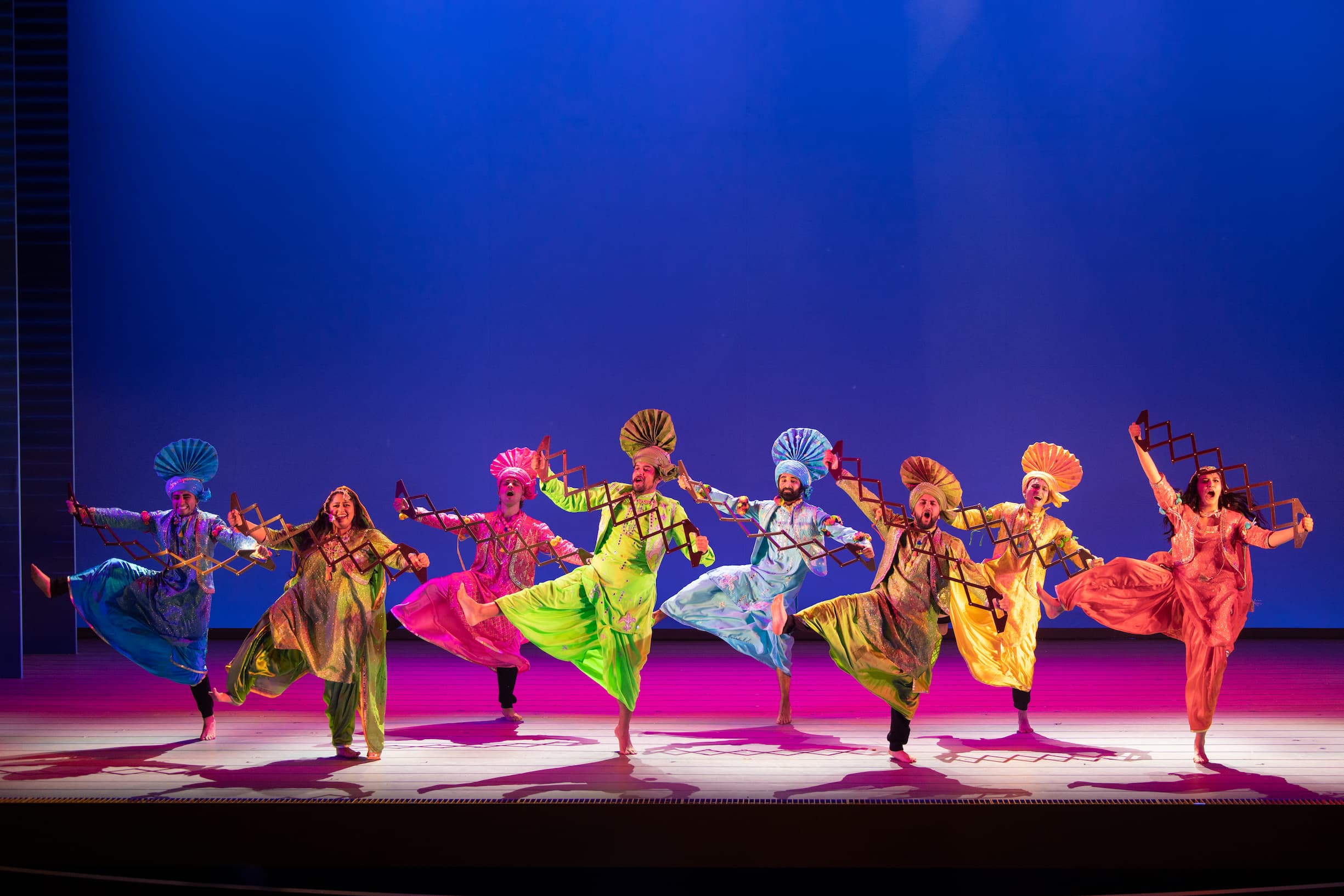
Image 12.04.05 — Bhangra dancers in an exuberant performance use saip (also sapp or chikka), a Punjabi instrument that expands and collapses to produce loud clapping noises.
Who Speaks for Hindu and Indian Culture?
There are sober and sometimes aggressive conceptions of Indian culture related to the “Hindu way of life.” The Hindu Students Council (HSC), the youth division of the Vishwa Hindu Parishad (VHP), was founded in India in 1964 to promote Hindu culture worldwide.
Rashtriya Swayamsevak Sangh, a paramilitary organization associated with turning India into a Hindu nation-state, was established in the United States as Hindu Sevak Sangh, with a youth division known as Hindu YUVA. Both Hindu YUVA and VHPA operate on most major American university campuses. These student organizations cater to “heritage students” and state their goal as bolstering the faith of Hindu students. Since the early days of the Internet in the 1990s, young Hindu American men have been particularly active in pushing forth positive narratives of Hindu culture.
The Hindu American Foundation (HAF) began in 2004 as a lobbying and watch group set up by a few lawyers and professionals to bring attention to “Hinduphobia.” HAF is firm in the belief that certain cultural phenomena, such as yoga, must be credited to Hinduism. HAF has sought to mobilize young Hindus to guard religious traditions.
Other Hindu groups seek to expand and build bridges across other groups. For example, Hindus for Human Rights openly advocates for solidarity between Hindus and progressives from other racial groups, LGBTQ+ communities, and secular groups. Indian American writers, student activists, musicians, and artists have also worked with a broader conception of Indian and South Asian culture and identity. The work of acclaimed writers such as Salman Rushdie, Amitav Ghosh, Jhumpa Lahiri, and Abraham Verghese may be in seen in this connection, but chefs and cookbook authors such as Julie Sahni, Meera Sodha, and especially Madhur Jaffrey have also brought a plurality of South Asian cultures into American homes and hearts.
Conclusion
Culture is a broad category that includes social practices, traditions, and the arts. While many understand culture to be a static, unchanging category, it is constantly evolving. This is demonstrated by the social and cultural life of Indian Americans who negotiate their identities, traditions, and social practices to find connection with others in the United States.
Glossary terms in this module
solidarity Where it’s used
A political, cultural, and collective stance that recognizes the mutual responsibility and support that is necessary to achieve change. Taps into the power in numbers and considers the collective interests of communities.
Endnotes
1 Uttara Choudhury, “Bollywood Dance Contests a Rage Across US Colleges,” BrainGain Magazine.