





Black and white family photo: Maya is an infant in her mother’s lap. Her father and brother sit to either side of her mother on a bench.
Module 1: Maya Soetoro: A Biographical Overview
Can Maya Soetoro’s life as an Indonesian American inform us about how we build community on a global scale?
This module introduces the life of global peace leader, educator, activist, and author Maya Soetoro. It provides a biographical profile of her life and explains her political outlook as a leader of peace. Growing up in Indonesia, Maya saw the possibilities created by peaceful coexistence and mutual obligation. As an adult, these values deeply shape her outlook and her commitment to building a more peaceful world. This module will chronicle her life and work, demonstrating the significance of Indonesian American history.
What is “gotong royong” and how does this value shape Maya Soetoro’s perspective?
How did Maya Soetoro’s experiences in Java, Hawaiʻi, and New York influence her outlook?
How did moving between communities shape Maya Soetoro’s ideas about positive peacebuilding and community connections on a global scale?
Background
Family History
Maya Soetoro was born in Indonesia on August 15, 1970, to an Indonesian father, Soetoro bin Martodihardjo, known as Lolo Soetoro, and an American mother, S. Ann Dunham. Maya grew up with her extended family in Java, the world’s most populated island, which is home to over half of the Indonesian population. She lived there until the age of fourteen, when the family moved to Honolulu, Hawaiʻi.
Her parents met as graduate students at the East-West Center at the University of Hawaiʻi at Mānoa, a nonprofit organization begun in 1960 by US Congress that builds connections and knowledge among those in the United States, Asia, and the Pacific region. After they married in 1965, the couple lived in Indonesia with the extended Soetoro family in Java. Ann brought Barack Obama, her son from her first marriage, to Indonesia with her.
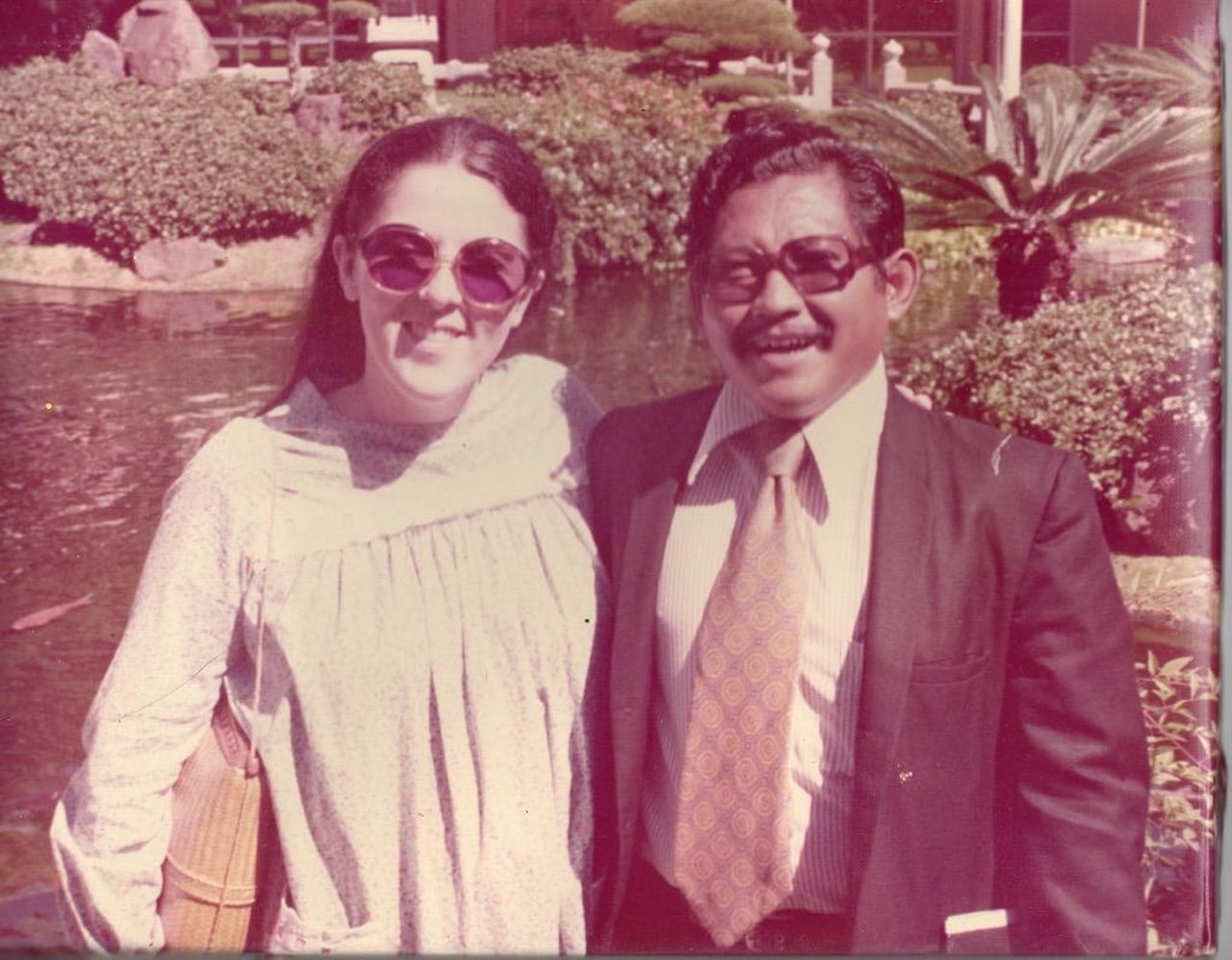
Image 33.01.02 — Ann Dunham Soetoro (left) and Lolo Soetoro at the East-West Center, University of Hawaiʻi at Mānoa, where they originally met as graduate students. This picture likely was taken during a trip back to Hawaiʻi in 1972.
Maya has fond memories of growing up in Indonesia. While Ann, her mother, conducted research in nearby villages as part of her PhD graduate study, Maya had great freedom as a young child to explore the neighborhoods and villages as well, and learn Indonesian culture.
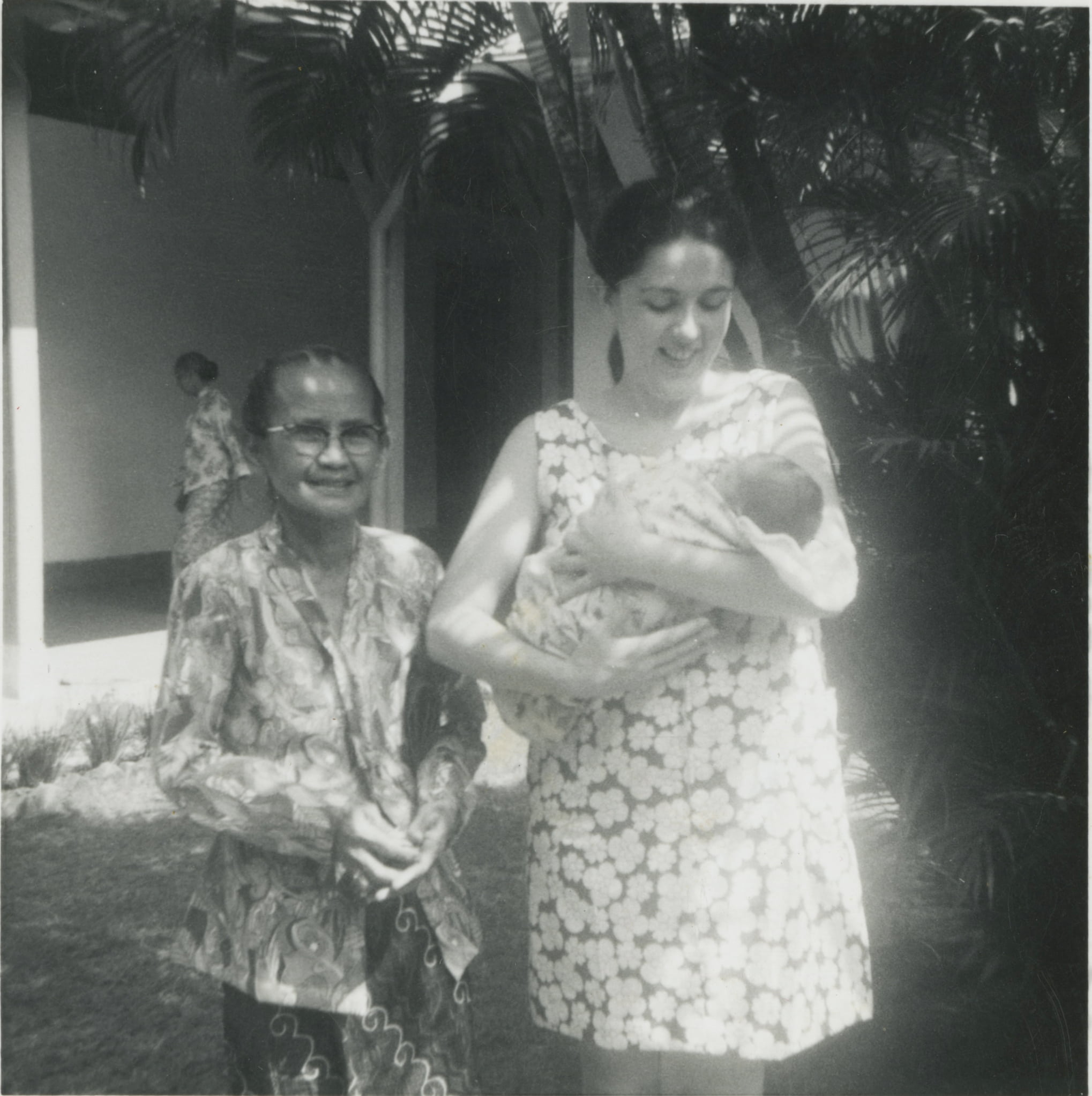
Image 33.01.03a — Ann holding Maya as a newborn. They stand next to Soetoro’s grandmother, Djoeminah, whom Maya knew as Eyang Supoyo, ca. 1970.
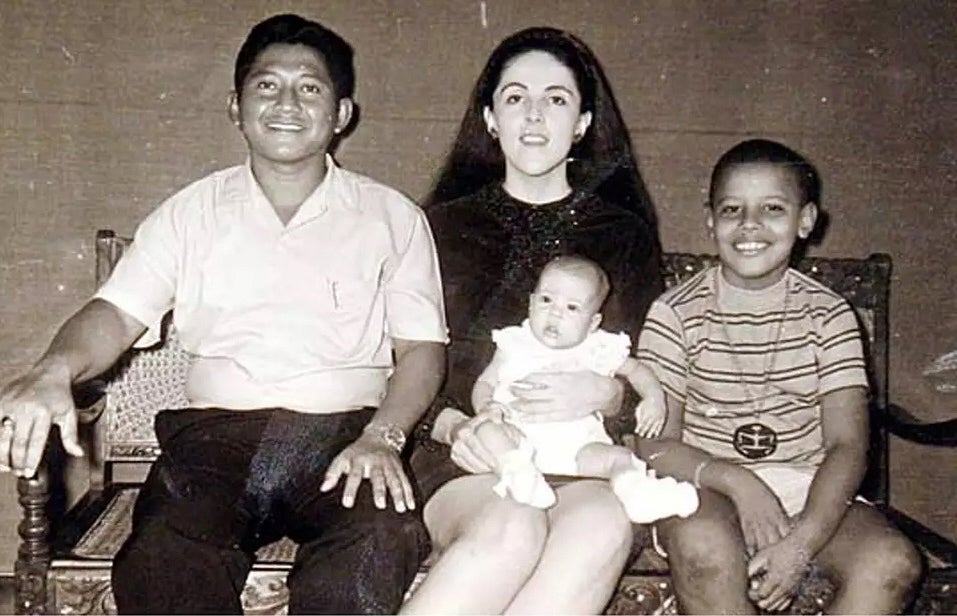
Image 33.01.03b — Maya as a baby with her family, ca. 1970. From left to right: Lolo Soetoro (Maya’s father), Ann (her mother), Maya (on her mother’s lap), and Barack Obama (her older brother).


Indonesia
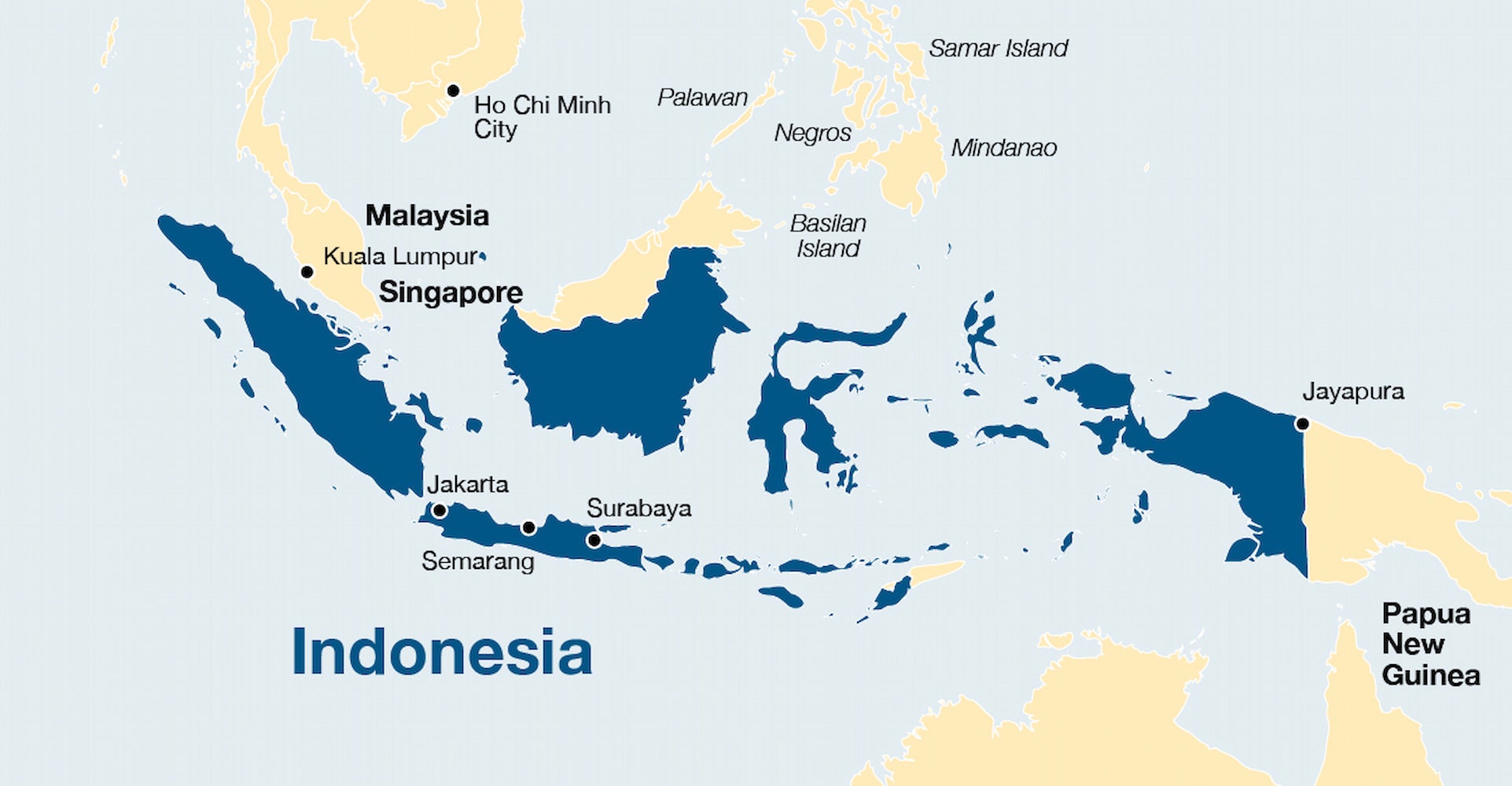
Image 33.01.04 — Indonesia is the fourth largest country in the world by population. The physical span of the archipelago is roughly equivalent to the length of the United States.
To understand the deep, rich culture that surrounded Maya as a child, it is essential to know more about Indonesia. Indonesia has roughly the same physical span of the United States and is the fourth largest country in the world in terms of population—the United States is the third largest. While Islam is the dominant religion in Indonesia, different religions coexist with Islam, including Buddhism, Hinduism, Indigenous beliefs, and Christianity. Indonesian is the national language; however, people also speak many other languages in Indonesia, depending on their ethnicity and physical location.
Indonesia is the largest archipelago (a group of islands) in the world. The two biggest islands population-wise in Indonesia are Java and Sumatra. However, there also are many other islands, including Kalimantan (on the island of Borneo, along with Brunei and the Malaysian states of Sabah and Sarawak), Sulawesi, Bali, and Lombok. As a reflection of Indonesia’s rich resources and important location, many different empires have come to Indonesia over the centuries. The Netherlands was Indonesia’s primary colonizer for hundreds of years, from the early seventeenth century to the mid-twentieth century. Indonesia declared independence in 1945, with Dutch forces finally leaving in 1949.
Growing Up in Java
Yogyakarta
It is significant that Maya Soetoro initially grew up in Yogyakarta (commonly known as Jogjakarta), the capital city of the Special Region of Yogyakarta on the island of Java in Indonesia. Java is where most of Indonesia’s population is located; it also has an ancient history.
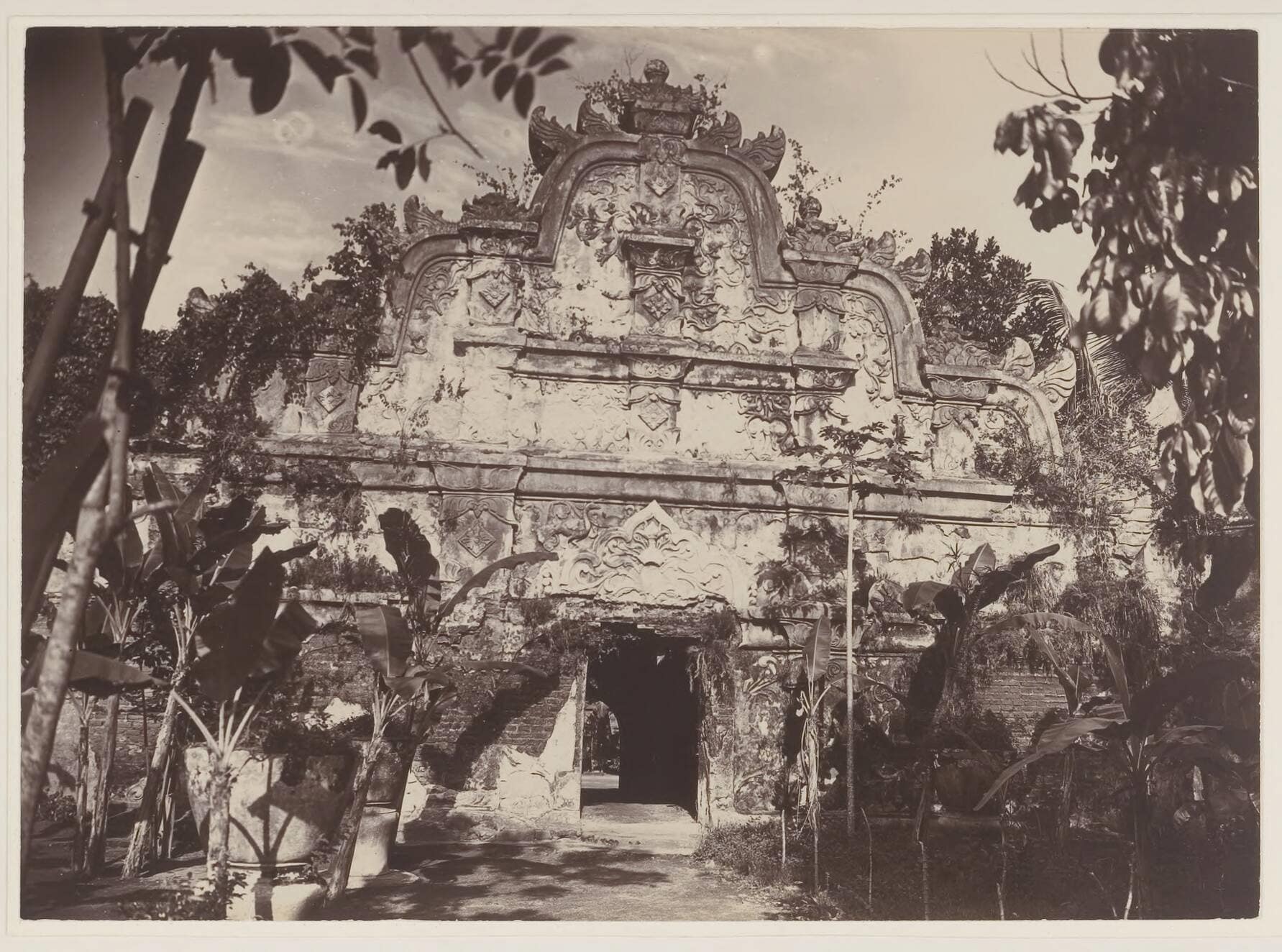
Image 33.01.06 — As a child in the 1970s, Maya played in the Taman Sari’s ruins. This photograph of the Water Castle was taken in a much earlier time, in 1910 during the Dutch colonial era.
As one of Java’s major cities, it has historically served as a cultural center for the arts, and it features several important sites. Maya’s paternal grandmother’s house, where the family lived, was near the Taman Sari, the Water Palace of the Sultan of Yogyakarta, a royal ruler.
Community Lessons and Gotong Royong
Maya spent her early childhood in a neighborhood where numerous artisans worked, including painters, woodcarvers, and batik-makers. (Batik is a special Indonesian fabric that originated in Java, in which wax designs are applied to a cloth. The cloth is dyed then submerged in multiple baths to produce intricate designs.) A site for music, dance, storytelling, and other arts, Maya grew up going to performances as a regular part of her childhood. She even took dance lessons at the Kraton, the Sultan of Yogyakarta palace.
As a child, Maya learned about gotong royong, which means “mutual assistance,” regarding the importance of collective responsibility as a cultural value. “Gotong” means to “carry or lift together,” and “royong” translates to “together, in unison.” Thus, the literal image meant by this phrase is to carry a burden together. Gotong royong describes a deeply rooted cultural value and practice in Indonesia of collective action, where community members help one another voluntarily without expecting direct compensation. It reflects the belief that shared responsibility strengthens social bonds and ensures the well-being of all.
Maya saw people practicing gotong royong all around her. Raised in a large, loving, extended family in Indonesia, Maya was fortunate to live in a neighborhood with strong community bonds. Because so many people looked out for her, Maya had the freedom to roam and explore her environment.
A Storytelling Culture
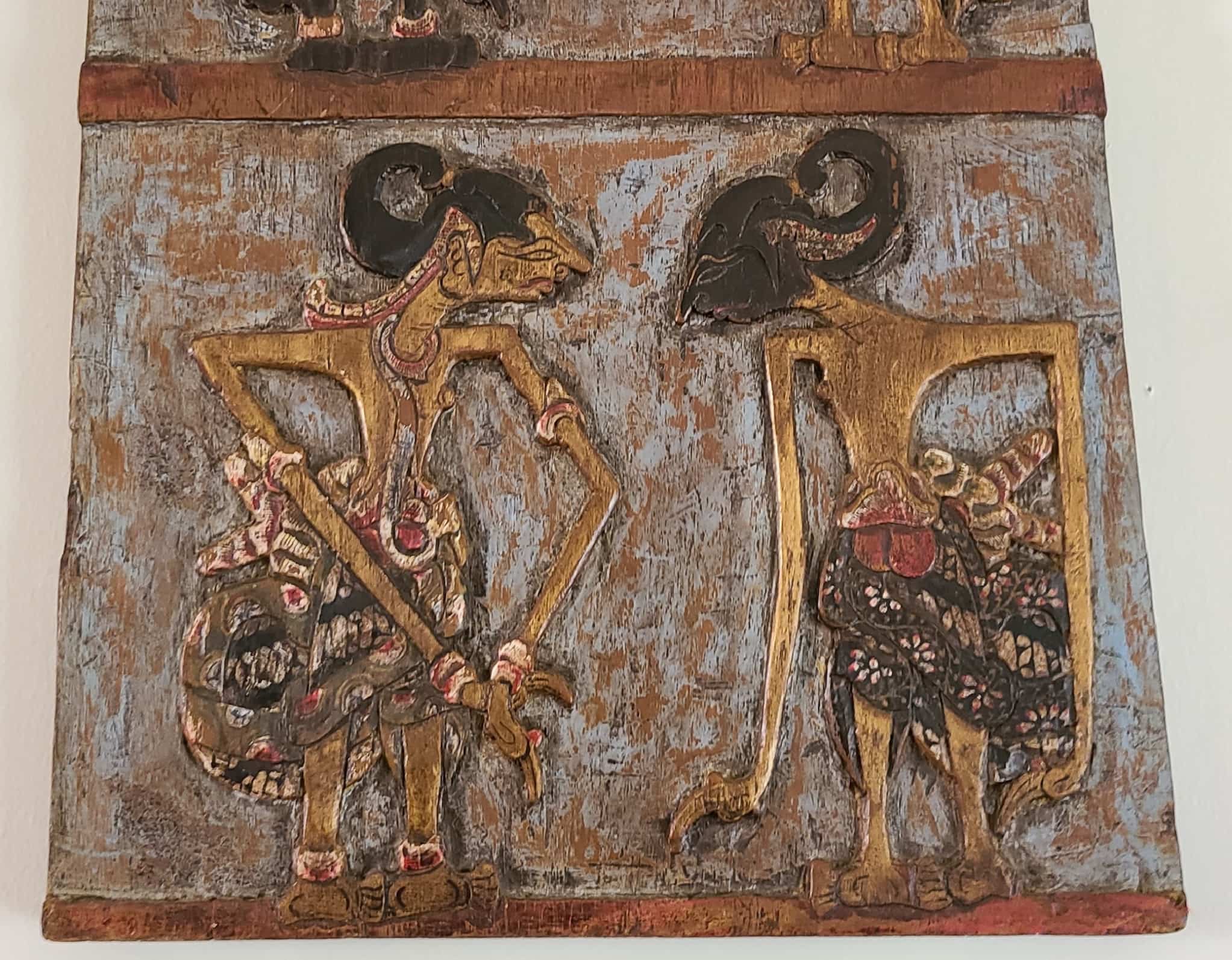
Image 33.01.09 — Growing up in Indonesia, Maya was surrounded by art through her mother’s work with artisans. This carved wood panel from Yogyakarta, artist unknown, belonged to her mother as part of her microfinance projects. It is now in Maya’s personal collection. (Source: Maya Soetoro Collection)
Another crucial component of Maya’s childhood was being surrounded by storytelling, not only in terms of the important stories that gave a foundation to Javanese culture in the performances she saw, but also due to her mother’s work. During that period, her mother Ann was conducting research as a graduate student in nearby rural villages. Ann documented various village industries, and she eventually focused on blacksmithing, or people who work with metal.
In her research, Ann spent considerable time listening to people in the village and learning about their stories. She was also a storyteller herself. Fluent in the Indonesian language, Ann emphasized learning from the wisdom and solutions of villagers. She practiced careful listening and creating relationships of respect and trust. At times, Ann would take Maya with her on these research trips.
Later, Ann also was involved in development work, with a particular focus on supporting women’s leadership. Due to her mother’s work, the family moved to other cities in Java. In Semarang, Maya witnessed the anti-Chinese riots of the late 1970s, her first exposure to violence against ethnic communities caused by political unrest. That experience was unforgettable to Maya, and showed Maya the importance of peacebuilding. Afterward, the family moved to Jakarta, Indonesia’s capital. There, Maya attended school and learned more about urban culture.
Moving to the United States
Honolulu, Hawaiʻi
At age fourteen, Maya Soetoro moved with her mother to Honolulu, Hawaiʻi, for her mother’s graduate education at the University of Hawaiʻi at Mānoa. Her maternal grandmother, Madelyn Dunham, also lived in Honolulu. Although being in Hawai‘i was a big change from Maya’s younger years in Indonesia, it was familiar in other ways, located as it was in the Pacific.
Like Indonesia, Hawaiʻi had a diversity of communities, a cultural ethos that supported community, and rich cultural traditions. In addition, the University of Hawaiʻi was a center for Southeast Asian Studies and had many international students with knowledge of other cultures. While Maya attended high school, her mother encouraged her to learn more about Indonesian culture to maintain a connection to the land of her birth.
College Years
Next, Maya moved almost five thousand miles to New York City to attend Barnard College. Like Jakarta, New York City was a bustling metropolis full of energy and life. Maya eagerly learned about her new environment, including Latino culture. As she was a multiracial Indonesian American and the Indonesian American community in New York was relatively small, others often assumed that Maya was from the Latino community.
During college, Ann continued to support Maya in learning about her Indonesian heritage. In fact, during college, Maya traveled to Indonesia, where her mother then lived. Working as a tour guide, Maya was delighted to become reacquainted as a young adult with the cultural treasures of Java, like the ancient Buddhist temple of Borobudur and the Hindu temple of Prambanan. Making a full circle to her Indonesian roots, Maya appreciated the richness of Indonesian culture in new ways.
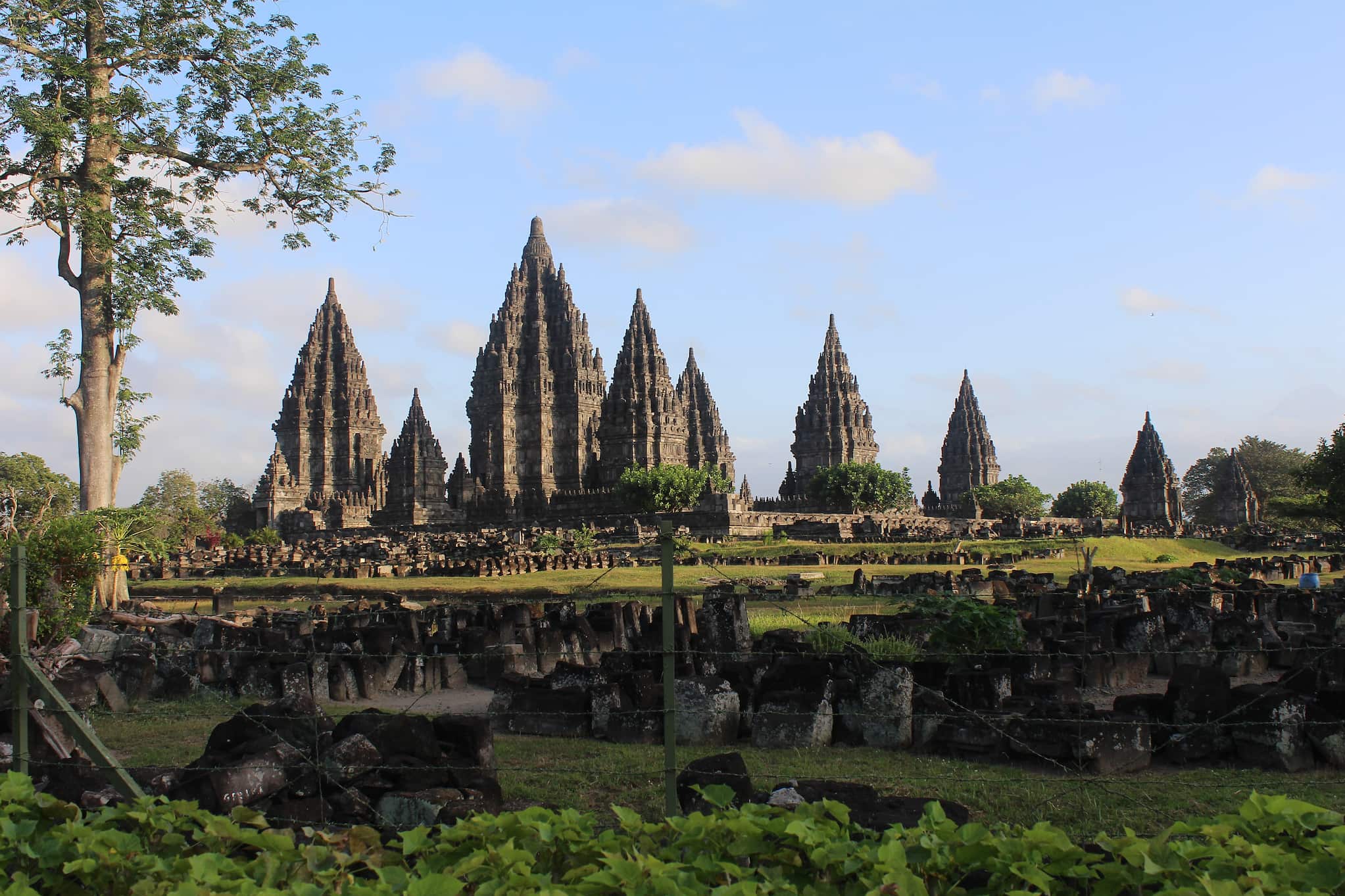
Image 33.01.11 — The Prambanan, a ninth-century sacred site, was one of the sites through which Maya gained a greater understanding of the rich culture of Java while working as a tour guide.
After Barnard and traveling to Indonesia, Maya decided to finish her bachelor’s degree in literature at the University of Hawaiʻi. She then returned to New York City to earn a teaching degree at New York University, and to work as an educator. Eventually, Maya returned to the University of Hawaiʻi to pursue a doctoral degree in education. Today, she is a professor in the Matsunaga Institute for Peace at the University of Hawaiʻi at Mānoa.
Peace Leader and Teacher
Peacebuilding and Organizations
Alongside her work as a professor, Maya is a global peace leader and the cofounder of multiple nonprofit organizations. Also an author, Maya writes for both children and young adults. She also supports the work of the Obama Foundation, started by her brother Barack and her sister-in-law Michelle Obama. Maya spoke at the Democratic National Convention during Barack Obama’s presidential campaigns in 2008 and 2012. Barack Obama became the forty-fourth President of the United States from 2009 to 2017.
Peacebuilding is fundamental to Maya’s endeavors as a teacher, an author, and a leader. In her vision for a better world, Maya emphasizes the importance of positive peacebuilding—that we all can work toward positive change, whether our efforts are on small or large scales. In doing so, the lessons that she learned in Indonesia as a younger person are very apparent, as well as the impact of her long relationship to Hawaiʻi.
Growing up in places where various ethnic and religious communities coexisted in everyday life, Maya emphasizes the importance of listening to each other and valuing diverse viewpoints. Maya works with different organizations, and they all reflect these values:
- Ceeds of Peace, which Maya co-founded, stresses peacebuilding, education, leadership, community, and local empowerment.
- Institute for Climate and Peace, which Maya also co-founded, focuses on the importance of learning from Indigenous wisdom as well as frontline community and women’s strategies for climate justice.
- The Peace Studio, a third organization which Maya co-founded as well, provides support to artists and journalists to become peacebuilding leaders for social change.
- The Obama Foundation’s Leaders: Asia Pacific program, which Maya also works with, addresses the development of leadership in the Asia Pacific region, with a special focus on emerging leaders.
- The Obama Foundation program, Girls Opportunity Alliance, is also supported by Maya and helps to support opportunities for women and girls in the Global South as well as in the United States.
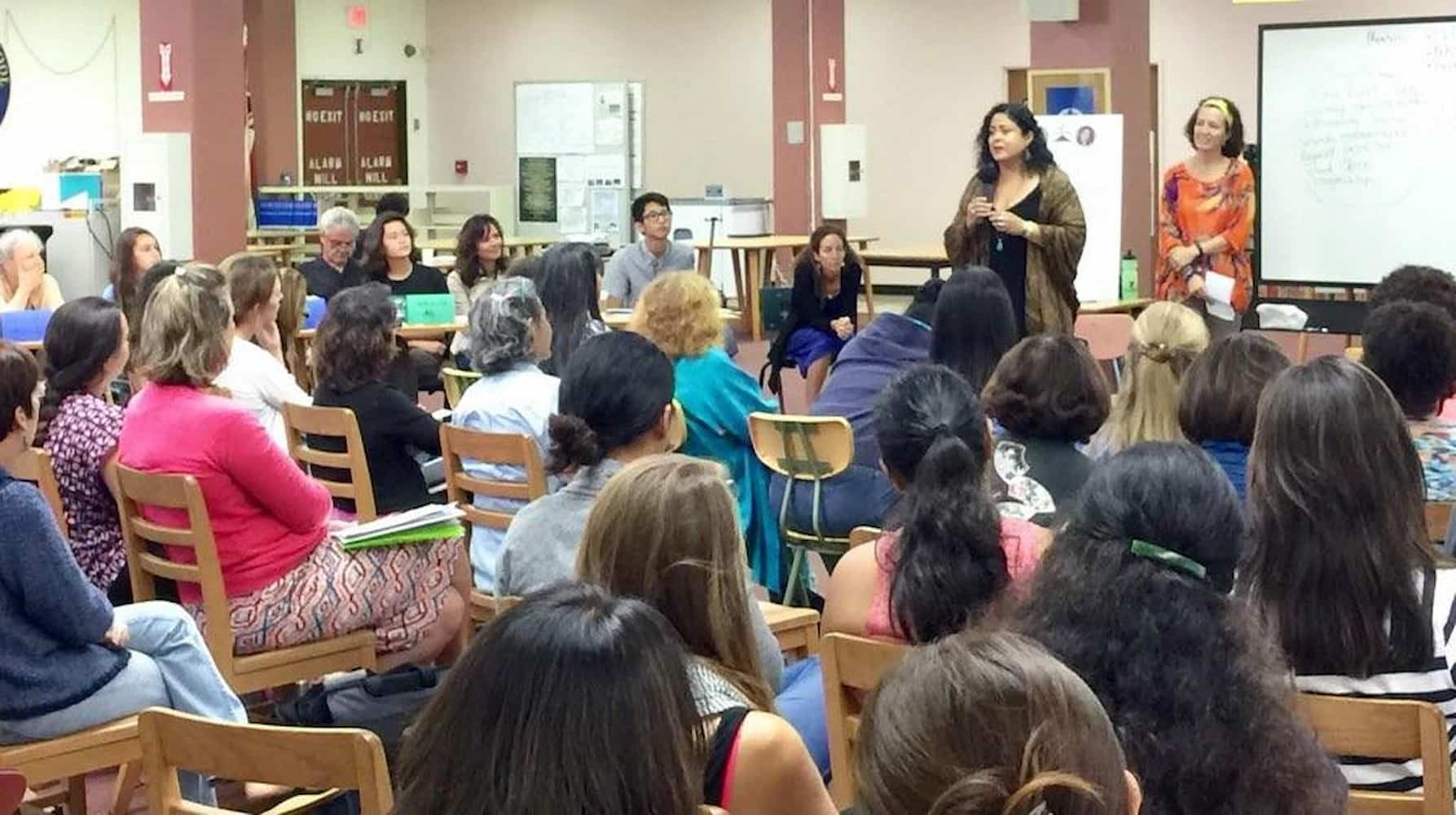
Image 33.01.12 — Maya travels around the world to promote understanding and peace, devoting much time to organizing in her chosen home of Hawaiʻi. Here, Maya is pictured making a presentation for Ceeds of Peace, an organization that develops peacebuilding leaders.
Importance of Indonesian Upbringing
These endeavors demonstrate the lasting impact of Maya’s Indonesian upbringing and the profound example of her mother’s work. The organizations are inspired by a vision that peace needs to be built through understanding others and what they face. In keeping with this, the organizations are based on looking for solutions from the ground up, as opposed to outsiders coming in to impose their viewpoints.
Maya’s life reminds us that we need to have careful understanding of people’s complicated life journeys, and to value the insights of diverse people who can contribute other vantage points. Her work challenges us to consider the world that we want to build for the future, and how we must apply careful listening and respectful action. In her work as a global peace leader, educator, and author, Maya Soetoro is profoundly committed to empowering and teaching young people, as well as building community in many different arenas.
Glossary terms in this module
batik Where it’s used
An Indonesian fabric that originated in Java, in which wax designs are applied to a cloth and is then dyed in multiple baths to produce intricate designs.
gotong royong Where it’s used
An Indonesian cultural value of mutual assistance and collective responsibility.
Indigenous Where it’s used
Refers to someone or something that originates from a region, predating colonialism.
nonprofit Where it’s used
Organizations or programs that are conducted without the aim of making profit. Participants are often donors, volunteers, and program recipients.