



Search the Media Repository
Discover the curated images, videos, and primary sources featured throughout Foundations and Futures
History is more than just text on a page; it is the photographs, voices, and artifacts of the people who lived it. The images and recordings featured across Foundations and Futures are part of a meticulously curated media repository. Whether you are building a lesson plan or investigating an artifact, you can use this database to trace the provenance of our media: discover who created an asset, the historical context behind it, and how it can be used to bring Asian American and Pacific Islander experiences into your classroom.
Multimedia
Chapters
-
Text
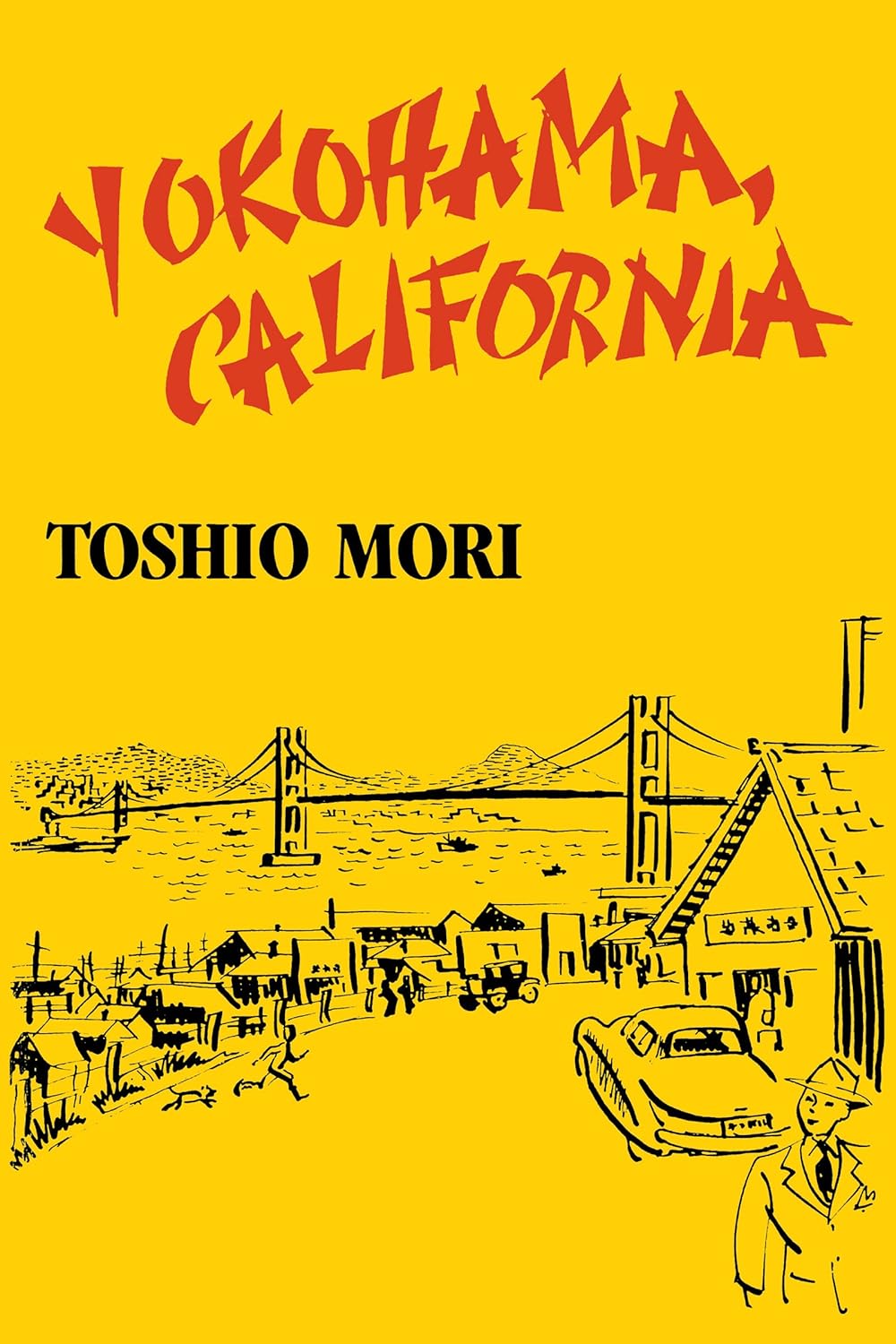
Yokohama, California by Toshi Mori
In this excerpt from the short story, “Lil’ Yokohama,” Nisei author Toshio Mori describes an idealized version of a pre-World War II Japanese American community in California.
-
Image
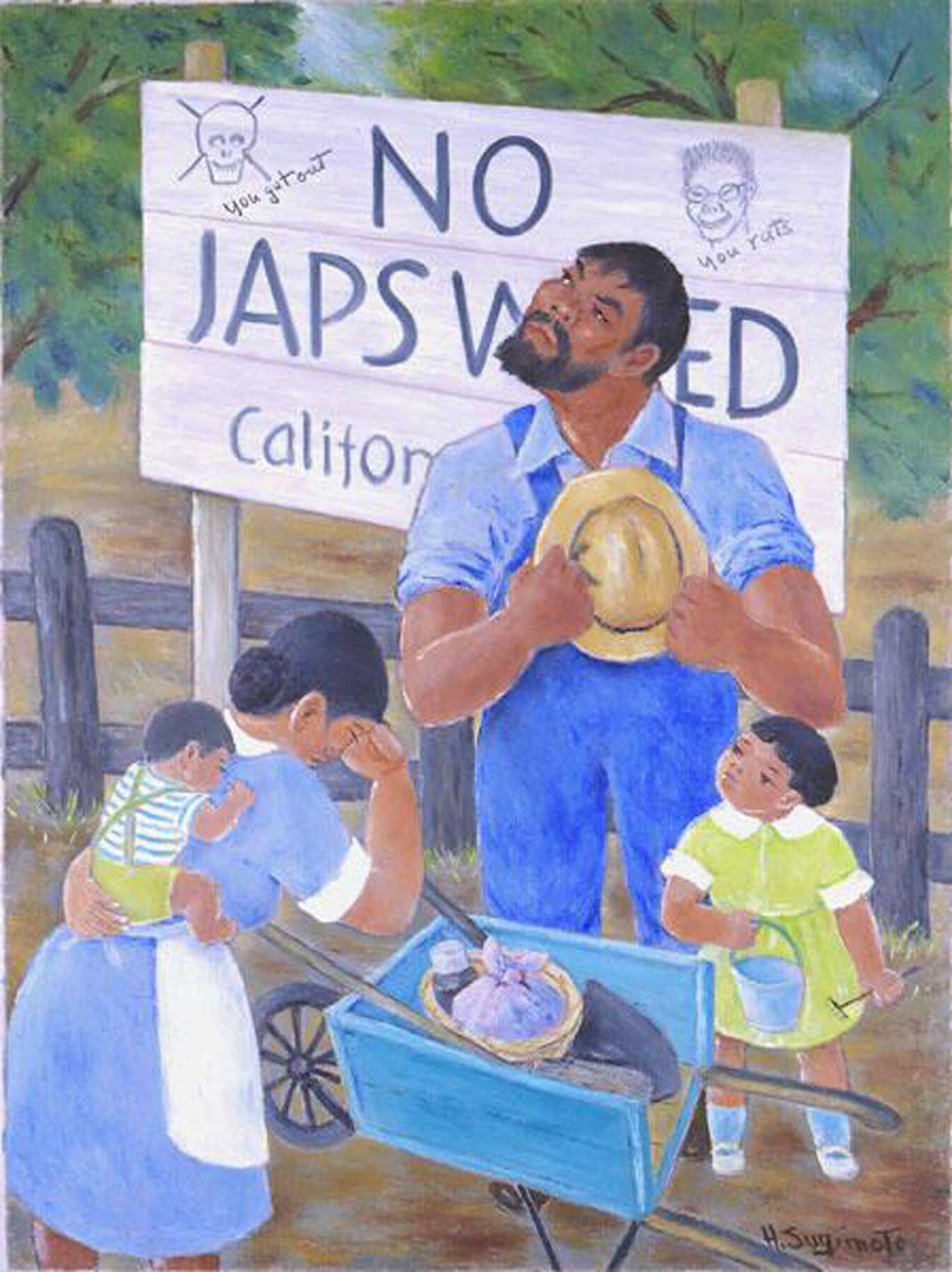
Untitled (“No Japs Wanted”)
This painting by Henry Sugimoto depicts a Japanese American family forced to leave their rural community.
-
Image
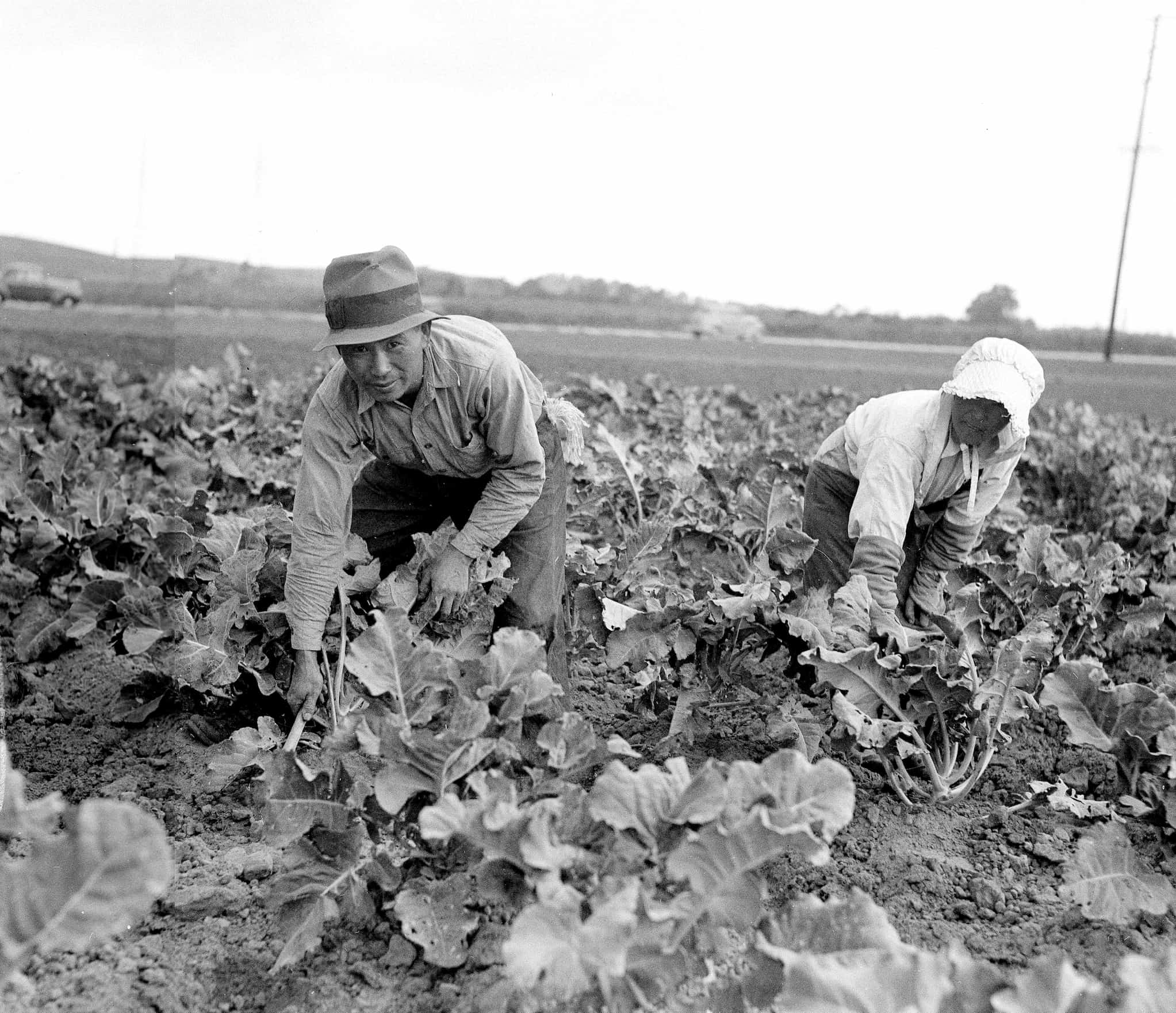
Issei Farmers in Gardena
In 1940, nearly two-thirds of all Japanese Americans living in Pacific Coast states, like those pictured here in Gardena, California, and Sumner, Washington, were involved in agricultural work or in the sale and transport of crops.
-
Image
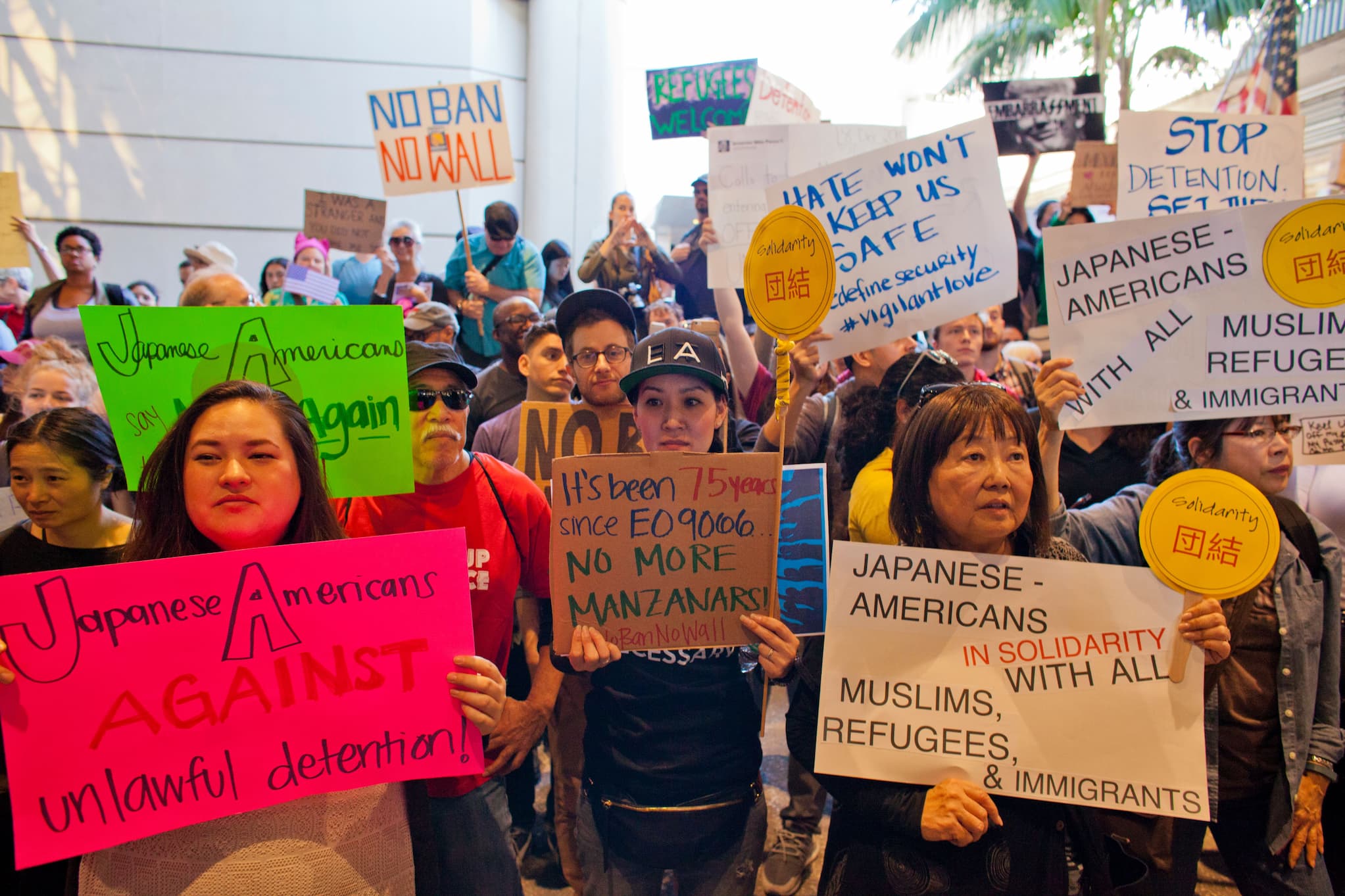
Muslim Travel Ban Protest
Japanese Americans protesting at the Los Angeles International Airport against the Trump administration’s ban on travelers from several Muslim-majority countries.
-
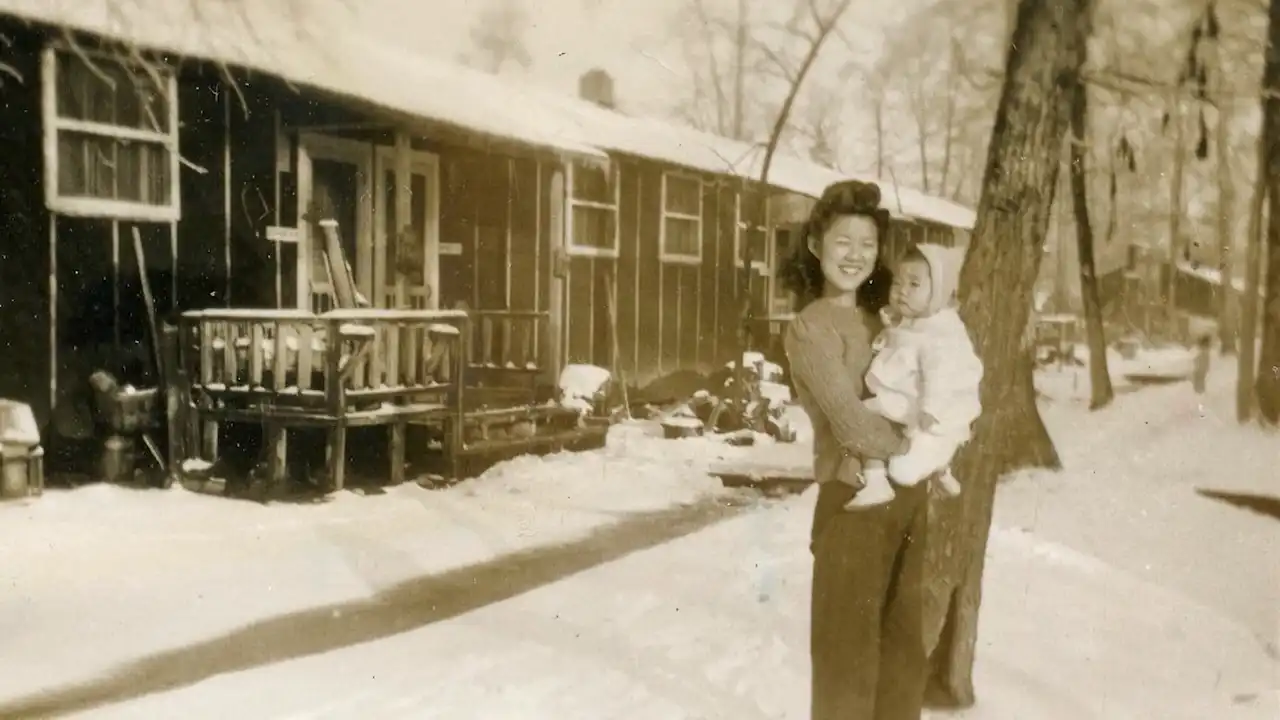
Video
Alternative Facts: The Lies of Executive Order 9066
Documents uncovered in the 1980s by researcher Aiko Herzig-Yoshinaga and attorney Peter Irons show that during World War II, a Department of Justice Attorney, Edward Ennis, learned that claims made by General John DeWitt to justify the mass removal of Japanese Americans were untrue.
-
Image
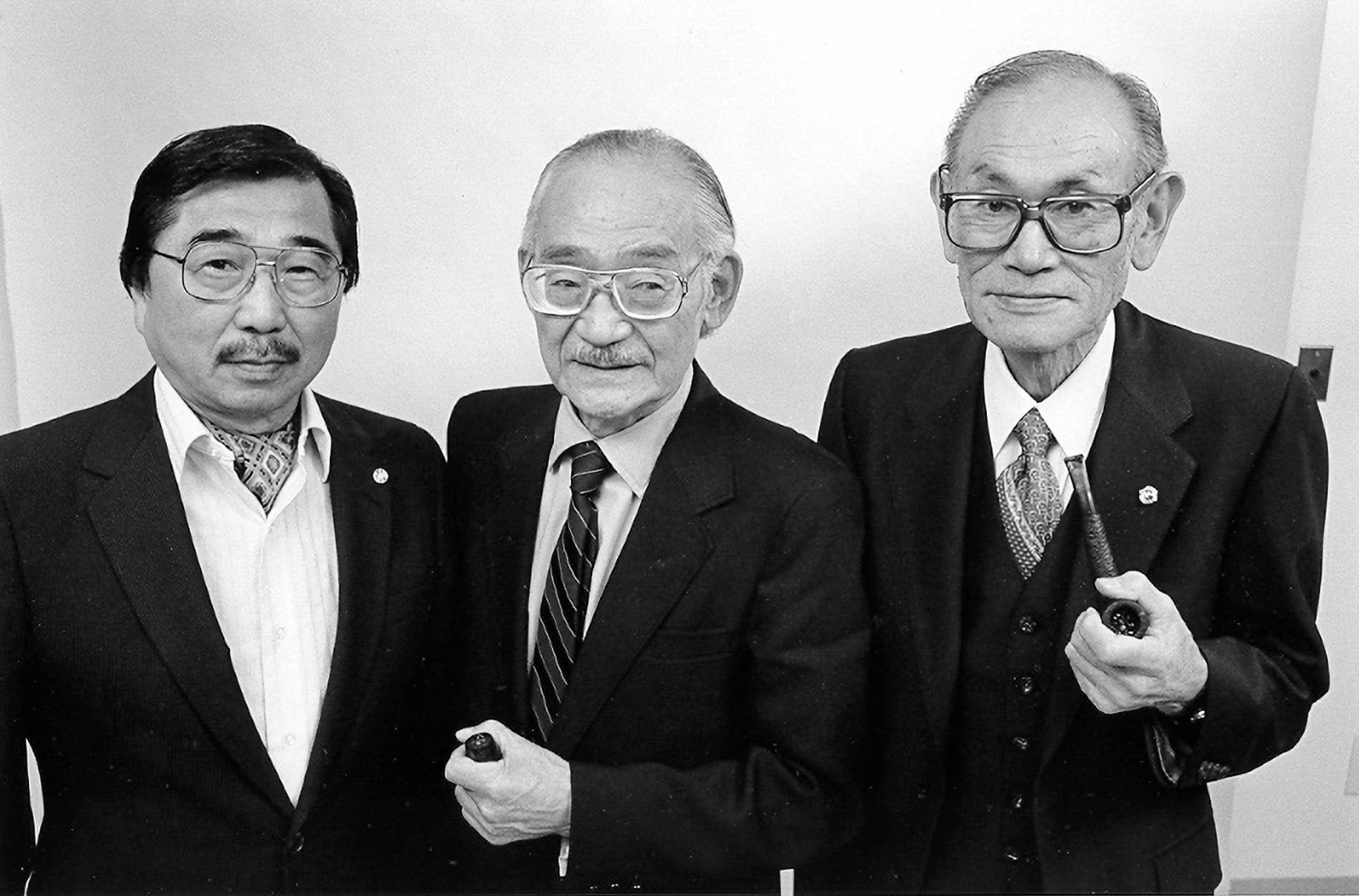
Gordon Hirabayashi, Min Yasui, and Fred Korematsu
Forty years after the US Supreme Court ruled against Gordon Hirabayashi, Min Yasui, and Fred Korematsu, pictured here, federal judges in the 1980s overturned their criminal convictions. All three men subsequently received the Presidential Medal of Freedom, the highest honor for civilians in the US.
-
Image
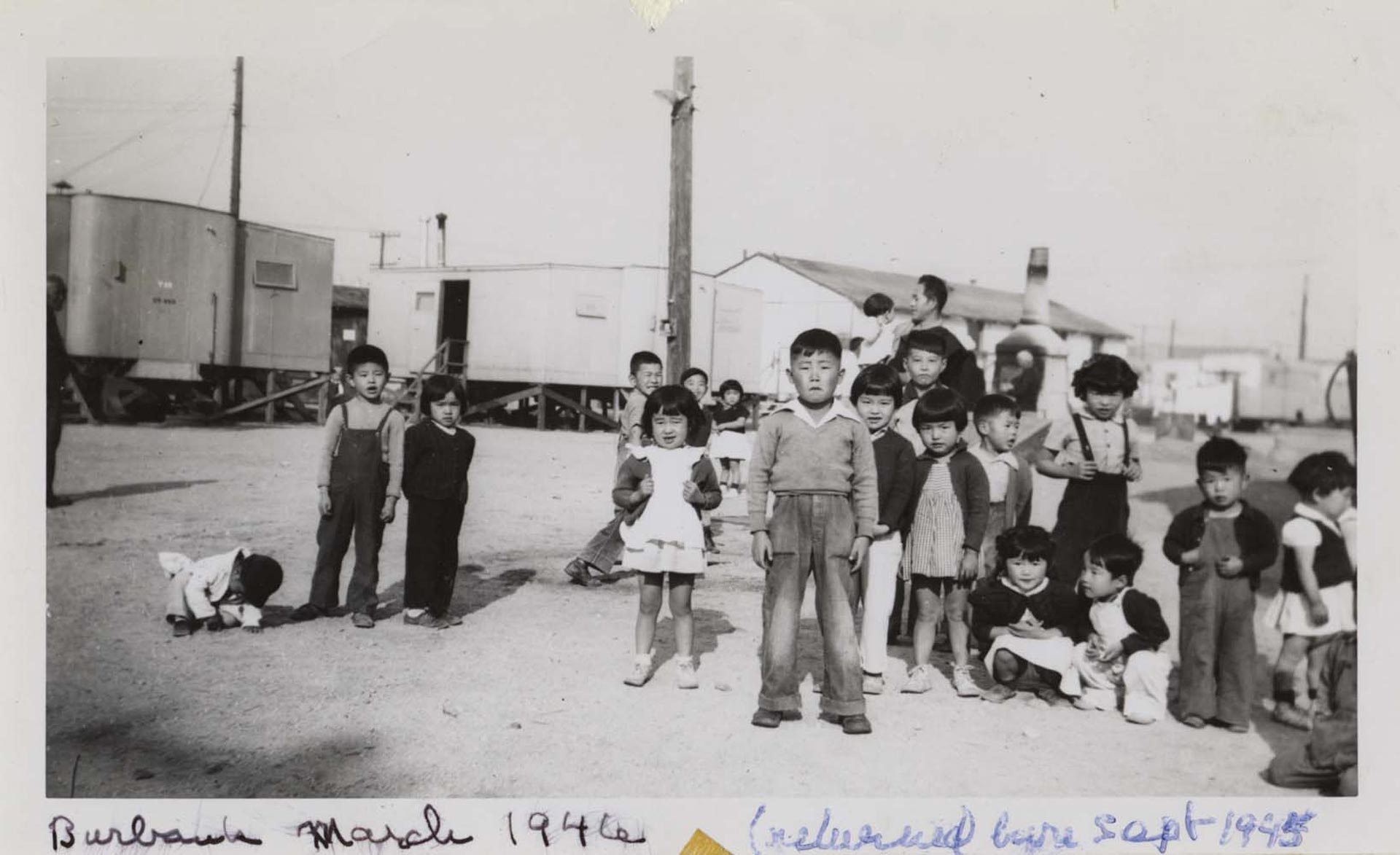
Japanese American Children in a Trailer Park
These children lived in a Burbank, California trailer park that served as temporary housing in 1946 for Japanese Americans who returned to Southern California after incarceration in concentration camps.
-
Image
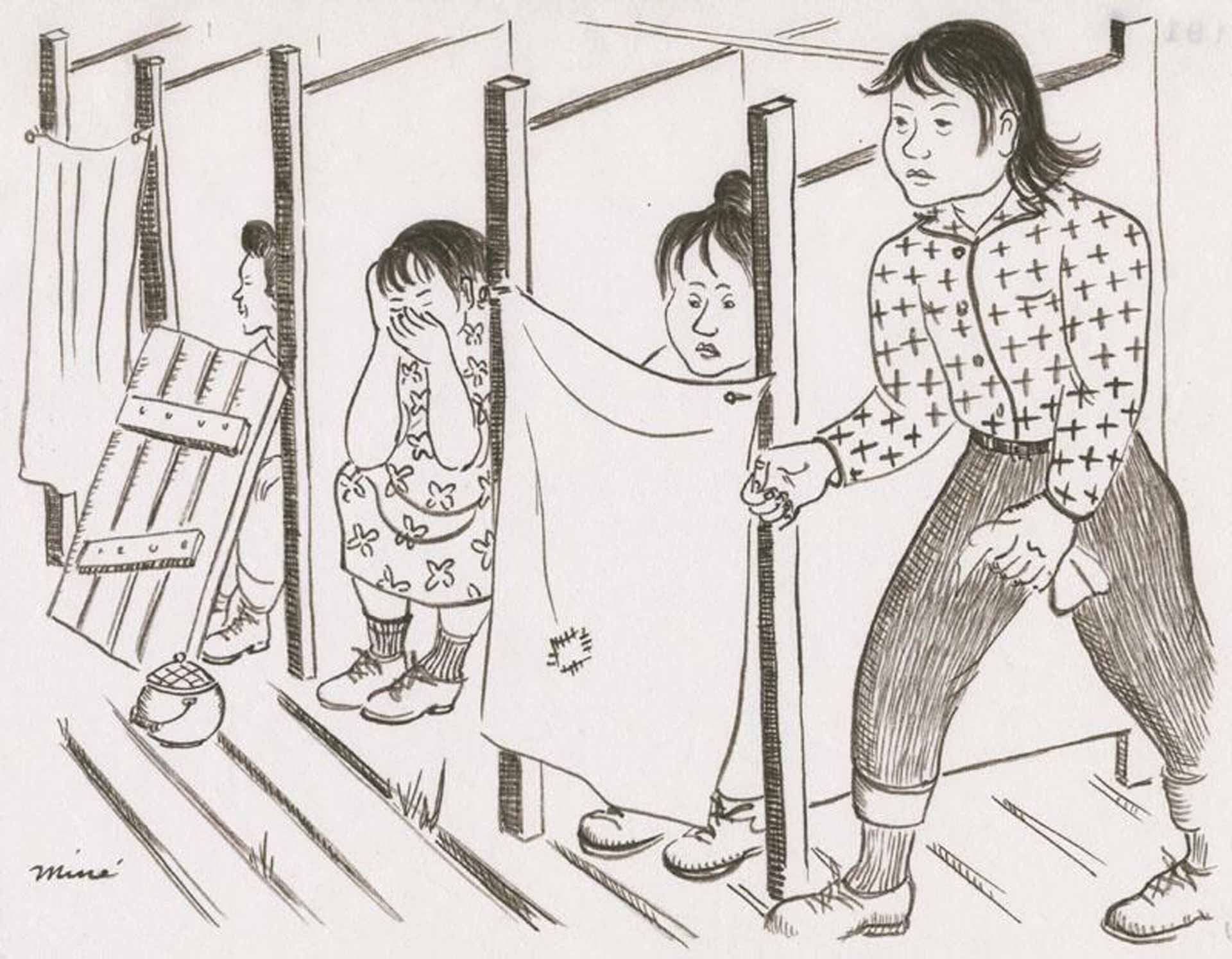
[Community toilets, Tanforan Assembly Center, San Bruno, California, 1942]
This drawing by artist Miné Okubo documents a communal bathroom at the Tanforan Assembly Center. Initially, no partitions separated toilets in camp latrines. This lack of privacy upset people.
-
Text
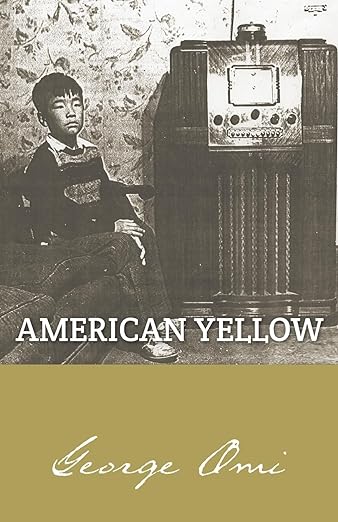
American Yellow Book Cover
In this excerpt from his memoir, American Yellow, George Omi recounts his uncle leaving his beloved dog at a San Francisco beach because he could not take the dog with him to the concentration camp.
-
Image
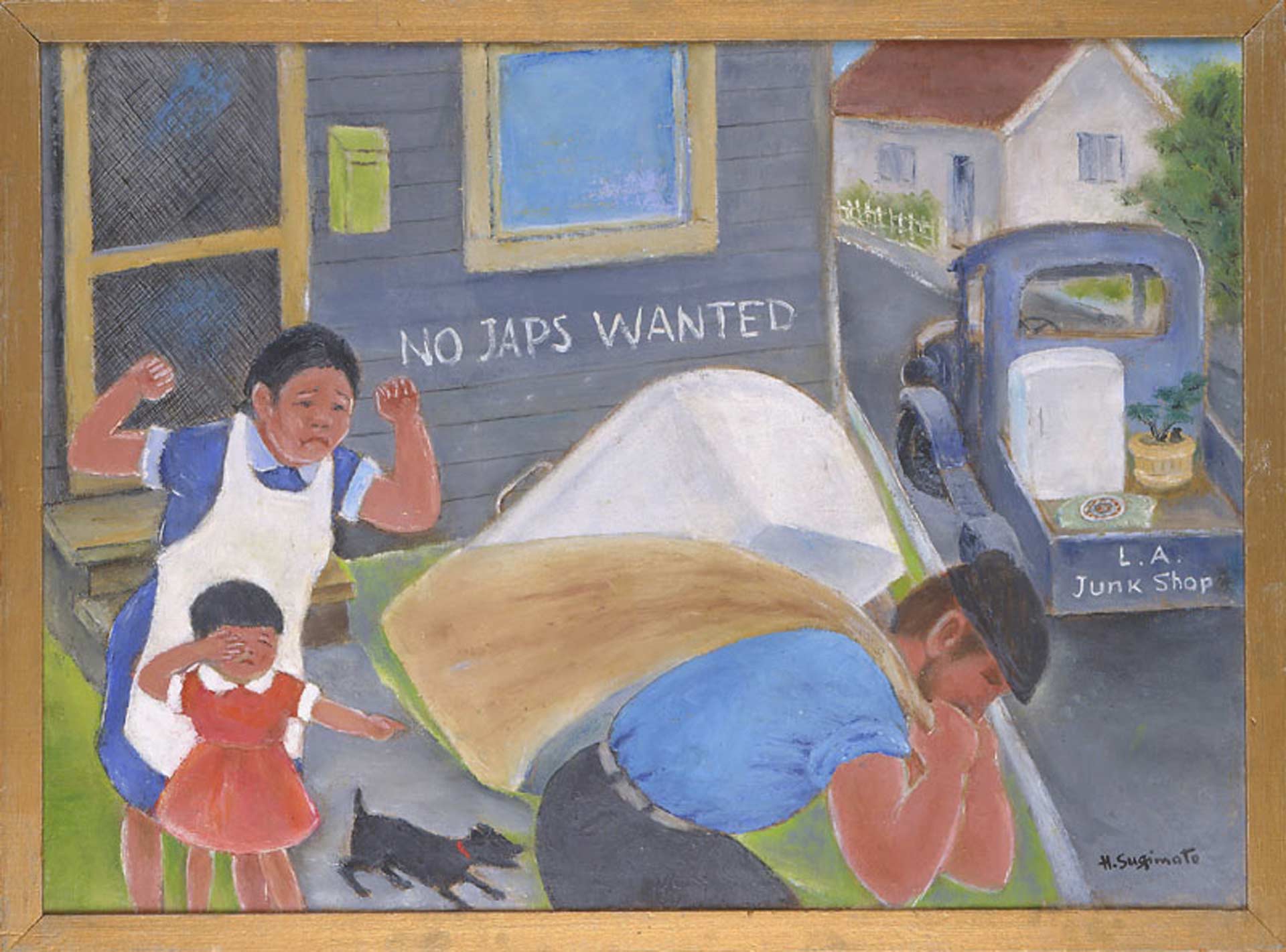
“Junkshop Man Took Our Icebox Away”
Japanese Americans on the West Coast had to sell most of their possessions at rock-bottom prices to unscrupulous buyers. This painting, “Junkshop Man Took Our Icebox Away,” by Henry Sugimoto, captures the emotions of a mother and daughter who must get rid of the family’s belongings.