



Module 1: Bangladeshi Migration and Settlement in the US
Has the political history of their homeland shaped Bangladeshi American visibility, identities, and community formation?
A visitor to the intersection of Church and McDonald Streets in Brooklyn, New York will see densely packed storefronts with signs in both English and Bangla, the language of Bangladesh. Businesses line the streets: money transfer companies, law and accounting offices, 24-hour pharmacies, and retail stores selling Bangladeshi clothes and jewelry. In the local restaurants, visitors will hear the sounds of lively conversations in Bangla as customers drink hot cups of milky tea and feast on the popular snack of foochka, a spicy ball-shaped flatbread.
Immigrant neighborhoods like this have surged in the US since the 1990s. New York City alone is home to more than 100,000 people of Bangladeshi origin. Other areas with robust Bangladeshi communities include Detroit, Washington D.C. and Los Angeles. Wherever they now live, Bangladeshi immigrants often struggle to earn a livable wage, and must work to forge identity as newly arriving residents.
This chapter will examine the history of Bangladeshi migration and settlement in the US, specifically in response to changes in US immigration laws and the independence of Bangladesh in 1971. We will examine the 1971 Bangladesh Liberation War and how remembrances of the war have shaped identity for generations of Bangladeshi Americans. We will also explore the diverse ways in which Bangladeshi American writers navigate their Bangladeshi origins, including influences on their creative practices and how they write and present their work to US and global audiences. We will provide portraits of two Bangladeshi American political activists and consider how their activism is influenced by their experiences in Bangladesh and the US. Finally, we will examine how Bangladeshi Americans shape US urban landscapes through public art and commemorative structures.
In this first module we will look at the history of Bangladeshi migration to the US and how they have established communities in the country. We will also examine the changes in US immigration policies that shaped the Bangladeshi American experience.
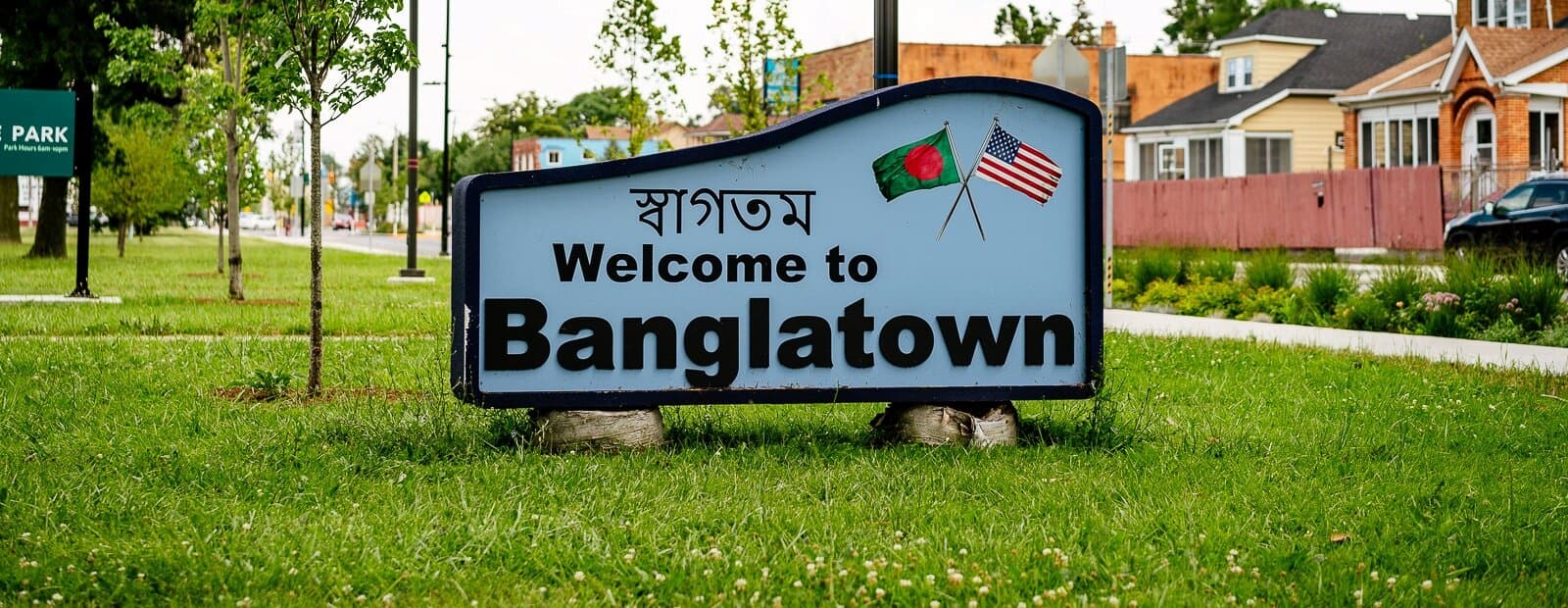
Image 07.01.01 — A sign welcomes visitors to Banglatown, a Bangladeshi American neighborhood in Michigan straddling the Detroit/Hamtramck border.
Created date, created by Name, Title Italicized. Credit line indicating where the image is from. Metadata ↗
How have US immigration laws enabled Bangladeshi migration and settlement in the US?
How have Bangladeshi immigrants used entrepreneurship and self-employment to establish themselves in the US?
How did 9/11 impact Bangladeshi Americans and shape their political consciousness?