





Bangladeshi American author Diruba Ahmed uses one hand to take off her glasses while holding a pen and the other hand to keep a book open on a table.
Module 3: Bangladeshi American Literature
Has the political history of their homeland shaped Bangladeshi American visibility, identities, and community formation?
When Sharbari Ahmed stepped into the writer’s room for the ABC program Quantico in June of 2015, she was the first writer of Bangladeshi descent to ever write for an American network show. Growing up in the US, Ahmed never felt she could “represent” her heritage. The producers soon realized she was a “twofer,” or someone who can fill two roles. First, they hired Ahmed because she was South Asian like Priyanka Chopra, who was the star of the show. Second, she was Muslim like some of the main characters. Producers deferred to Ahmed on writing anything referring to South Asia or being Muslim, including the experience of being Indian and Muslim, and not necessarily Bangladeshi and Muslim. In the end, she felt simultaneously visible and invisible.
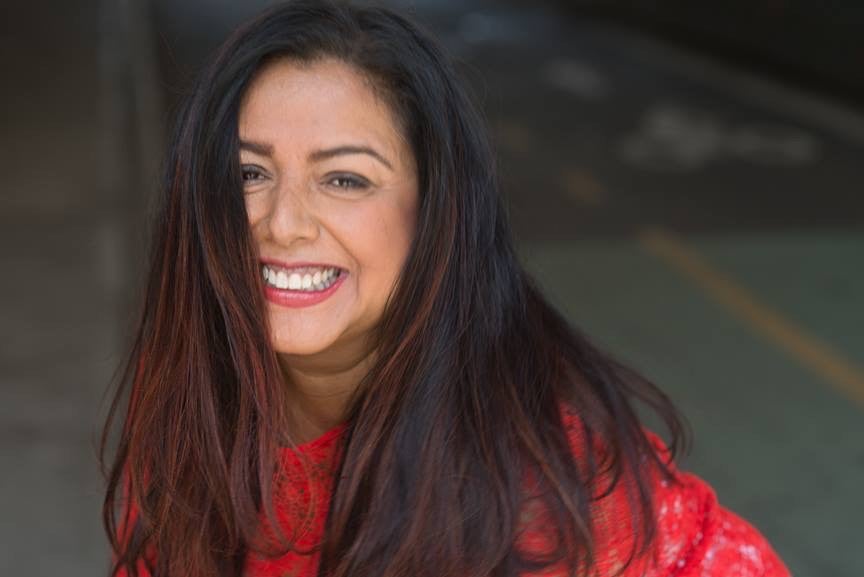
Image 07.03.01 — Author and screenwriter Sharbari Ahmed is the first Bangladeshi to write for an American network TV show, Quantico on ABC.
South Asian American literature is celebrated in the US, but for Bangladeshi American writers, the challenge has been to carve out a distinct space for themselves in order to express their unique history and voice. However, the publishing world still marginalizes them. It expects them to conform to the standard narratives of South Asian American writing, even if that does not represent their experiences as Bangladeshi.
This module presents portraits of four writers to explore how each negotiates Bangladeshi American identity in their writing and careers. Such a negotiation includes first and foremost the burden of representation. As any ethnic minority writing literature in the US, Bangladeshi American writers also have the weight of representing the Bangladeshi diasporic experience in their writing.
This module also explores the significance of the political history of Bangladesh including the 1971 Liberation War. We consider how Bangladeshi American writers navigate the political context of the US, from the anti-Muslim backlash post-9/11 to the challenges of remaining invisible as Bangladeshis within Asian American and South Asian American communities. Together, these portraits illuminate the Bangladeshi diaspora writers’ triumphs and challenges as they navigate the broader landscape of Asian American writing.
How do Bangladeshi American writers navigate the pressures of representing the Bangladeshi diasporic experience in their cultural expression?
How does Bangladeshi political history, including the 1971 War of Liberation, influence these writers’ imagination?
What role does language, both Bangla and English, play in forming the authors’ voices?
Mahmud Rahman: “I lived in the US but still ‘wrote home.’”
Writer Mahmud Rahman grew up in Dhaka, Bangladesh, and moved to the US as an adult. He writes and reflects on the issues of language specifically in relation to Bangla and English. Rahman was educated at English missionary schools in Dhaka. He writes that “[o]nce English became the language of schooling, it brought along a whole aural and print environment …that English had become my first language was now a fact of my life. It was a product of my history.” 1
In the 1960s and 1970s, Rahman as a teenager was an active anti-colonial organizer against the Pakistani state. He went into hiding during the 1971 Liberation War to escape the Pakistani army. His family became refugees in India, and he later left to study in the US. As an undergraduate student at Brandeis University in Massachusetts in 1975, Rahman was an activist alongside fellow students. Rahman’s global political consciousness was informed by anti-imperial movements that also included the anti-Vietnam War protests.
Rahman’s global anti-imperialist experience informs his writing. His first publication was a short story that appeared in a South Asian immigrant anthology titled Contours of the Heart in 1998. It is about a chance encounter between an African American woman and a Bangladeshi man traveling on a Greyhound bus. The story narrates Felicia’s experience growing up in Mississippi and moving up north at age seventeen:
I wanted to finish high school. You couldn’t do that in Mississippi. Not in those days anyway. So I came up to live with my dad who’d moved to Ohio. My mama died when I was small. Never really knew her much. Grandma raised me and my sisters. She worked in the town cafe. It was a place where black folk had to go in through the back door. You know what I did when I went down there a few years back? I went to the cafe and, like always, I went to the back. Without thinking. But they turned me away. The cook came and told me, “No, you can’t come in this way. You gotta come in through the front door. 2
In turn, the Bangladeshi traveler shares:
You know, I left home at 17 too. With me, it was in the middle of a war. In the country we were part of back then, we were the “[expletive].” The people who ruled us were taller, bigger, and lighter-skinned. They called us darkies and black bastards. And when we wanted our freedom, they murdered us like dogs. I tried to give Felicia a picture of what life had been like for Bengalis in Pakistan during the years of revolution and war. 3
Thus, the travelers find unexpected alliance in each other’s marginalized racial identity and migration stories, a theme central to Rahman’s own migrant journey and his fiction. After publishing this seminal short story, Rahman enrolled in writing workshops and eventually earned a Masters of Fine Arts, all the while working as an IT professional.
Rahman’s fiction is set in both post-war Bangladesh and the 1990s US. It centers on Bangladesh after the nation gained independence in 1971, a time when freedom did not emerge as was hoped. The isolation of the freedom fighters and feelings of dejection and loss are central to his collection of short stories.
His writing also focuses on the racial experiences of South Asians in the United States and what day-to-day racial discrimination does to one’s self-identity. He reflects on migration and dislocation from the countryside to the city, from war to peace, and from Bangladesh to the US. In sum, Rahman’s fiction explores the themes of making a new life while living in the shadow of the past.
Rahman has said he does not feel that he was pushed to write about Bangladesh, nor was he pressured to align with other writers from his home country. In fact, there was no critical mass of Bengali writers when he began his writing career. The book market was unfamiliar with the history of this faraway land. He eventually published his first book of short stories Killing the Water: Stories in 2010 with Penguin Publishers in India.
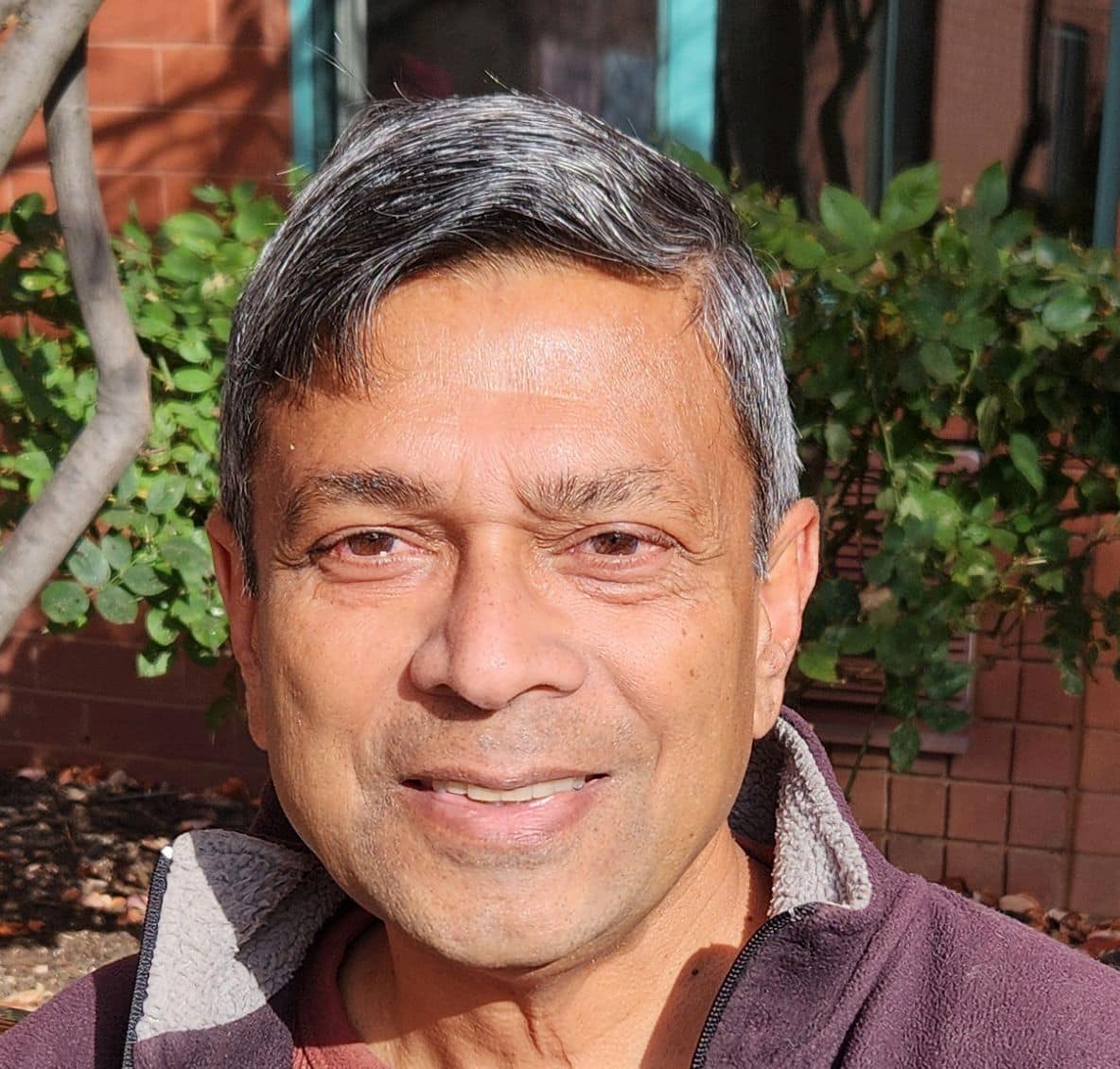
Image 07.03.02 — Author Mahmud Rahman moved to the US from Dhaka, Bangladesh, as an undergraduate student. His writing reflects on movement and dislocation: from village to the city, from war to peace, from Bangladesh to the US.
While Rahman does not feel a “burden of representation,” his writing does reflect Bangladesh’s political history. He firmly believes that if one can read and write Bangla, one must translate the works of the many influential and powerful Bangla language writers. He notes that Bangladesh is a country with a rich heritage of language that has much to offer the world. He believes his language journey includes several eras: the nationalist upheaval in Bangladesh, the collaborative political engagement with Bangladeshi Americans, and the reclamation of Bangla literature in translation. Rahman’s immigrant writer’s journey has been one inflected and shaped by his Bangla heritage, specifically through the lens of language and literature.
Tanaïs: “I write from spaces of discomfort.”
In her Kirkus Prize-winning work of nonfiction, Senorium: Notes for My People, published in 2022, the Bangladeshi American author Tanaïs writes:
As a Bangladeshi Muslim raised in the United States, I am still just two generations out of the village. I’ve felt called to do right, to write, because of my grandmothers, both child brides, who lived as British, Indian, and Pakistani, and never had a say in shaping the world outside of their homes. My paternal grandmother did not live long enough to witness the birth of Bangladesh, a fifty-year-old country at the time of this book’s writing. 4
Author Tanaïs is a second generation Bangladeshi American who grew up in Illinois, Bangladesh, Texas, Alabama, and Missouri. She spoke Bangla at home, English in school, and grew up surrounded by racial diversity. A quiet child but enthusiastic reader, her teachers often considered her illiterate or unintelligent. Writing helped her find her voice and power. Tanaïs attended Vassar College, where she pursued social justice activism, acting, and playwriting under the mentorship of renowned writer Kiese Leymon. Leymon’s experience as an African American voice within the dominant white majority US literary landscape influenced Tanaïs’ own identity as a minority within US society.

Image 07.03.03 — Tanaïs, a Bangladeshi American author and perfumer, grew up in Bangladesh, Illinois, Texas, Alabama, and Missouri. “I write from spaces of discomfort, the syncretic spaces of blending cultures.”
Tanaïs describes her writing journey as a transformative personal revolution. In her 2015 debut novel Bright Lines, her 2022 memoir In Sensorium, and her 2026 science fiction novel Stellar Smoke, the themes of gender and sexuality take center stage. Set in post-9/11 New York, Bright Lines explores queer identity and family life. It illuminates a Bangladeshi story distinct from the usual Savarna, or upper caste writings, by South Asian and Indian writers.
Ten years after its publication, Tanaïs finds it still rings true for the Bangladeshi Americans who grew up amidst the Liberation War. Her writing gives voice to a Bengali identity that is fragmented, as it does not neatly fit into dominant South Asian traditions. But it is also a fusion of works, drawing from gender queer, trans, mystical, pre-Islamic, Buddhist, Sufi Muslim, and Vaishnavi Hindu traditions.
Stellar Smoke draws on the life of Bangladeshi feminist Rokeya Sakhawat Hossain, a visionary Muslim educator and pioneer in East Bengal. Hossain wrote in the early 1900s on themes of female oppression and global capitalism, yet her visionary work is not widely known outside of Bangladesh.
Tanaïs writes against dominant representations of South Asian cultures created largely by male authors who are celebrated in mainstream literary worlds and routinely praised in major publications such as The New Yorker and New York Times. Meanwhile, her uniquely queer identity as nonbinary and feminine-expressing is considered niche.
Tanaïs pushes against the stigmatization of bodies that do not conform to an ideal standard. As a femme, shyamla (darker complexioned), diasporic Bengali, she pursues a more just world that does not divide. In an April 2024 interview, Tanaïs states that she
“[is] not interested in the story of South Asian excellence. Reproducing that is a fascist way to operate. I reject that burden of representation. It is exhausting to hold on to that pretense. I want to talk from my heart. The core Bengali value I espouse is freedom; you cannot hold me down.” 5
In this sense, Tanaïs does not see herself as a “good representation of a Bangladeshi citizen.” Rather, she is critical of nationalism and identifies with the liberatory spirit of 1971:
I am not a bhalo meye [good girl] and I don’t subscribe to a patriarchal framework. I write from spaces of discomfort, the syncretic spaces of blending cultures.” After all, the East Bengali Muslim heritage is of an “ancient people with a deep past while also being a people of a relatively new nation-state. 6
Dilruba Ahmed: “It’s not a binary of East versus West.”
Dilruba Ahmed was born in Pennsylvania and raised in rural Ohio. She is on the faculty of Warren Wilson College’s Master of Fine Arts (MFA) Program for Writers and is the author of two books of poetry Dhaka Dust (2011) and Bring Now the Angels (2020). Her work has appeared in The New York Times Magazine, Kenyon Review, New England Review, and Ploughshares.
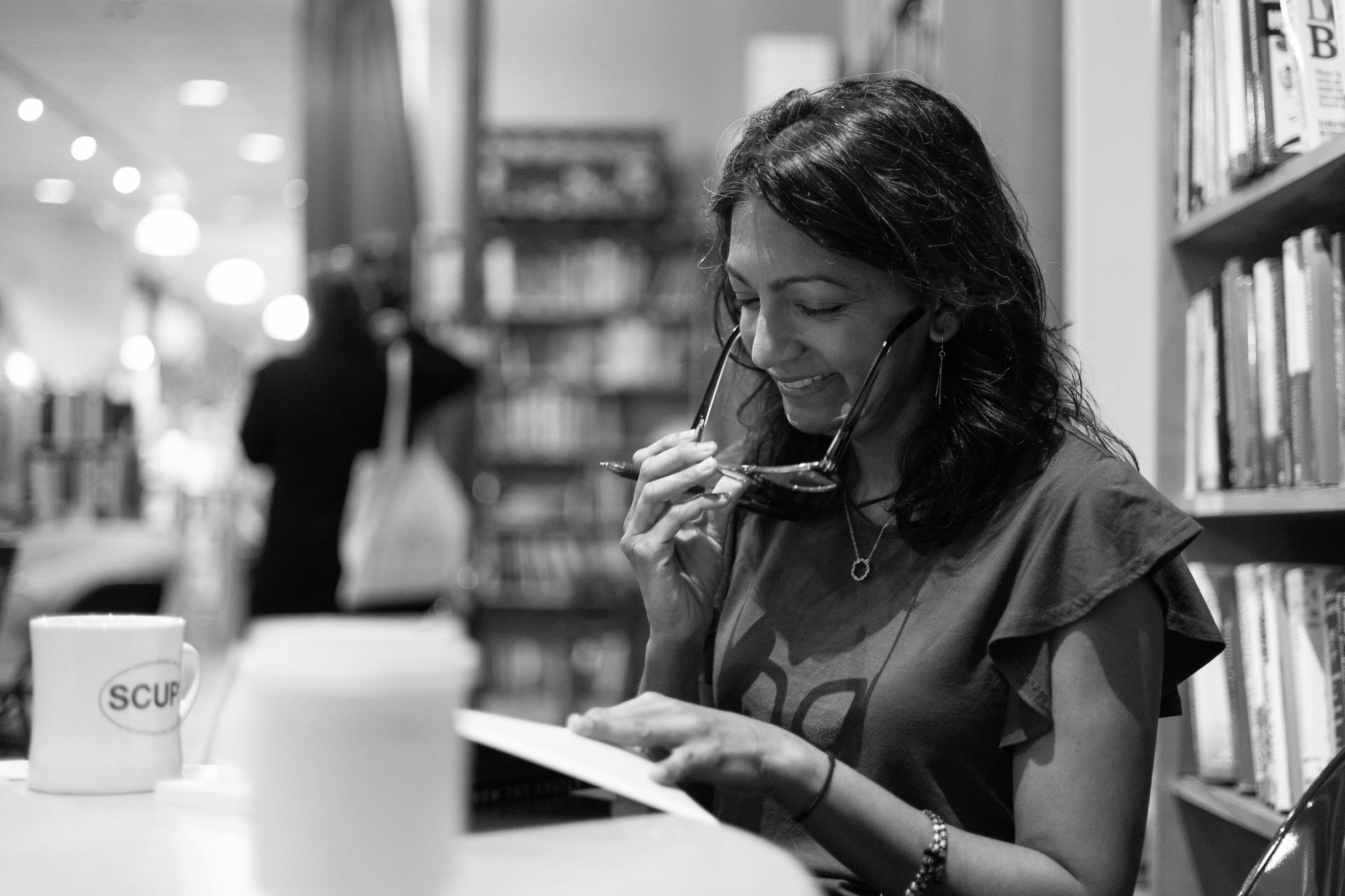
Image 07.03.04 — Bangladeshi American author and poet Dilruba Ahmed at a bookstore reading. Her writings defy stereotypical representations of the exoticized Bengali and non-Western woman, emphasizing identity as fluid and multi-dimensional.
In a 2024 interview, she describes her connection to Bangladesh poetically: A distant land, to which she was connected by “late night phone calls” and “tragic news.” It is a “phantom place,” symbolized by “one of these little aerograms in crisp blue paper that would get lost.” 7
Ahmed began writing poetry in college where she was a double major in pre-med and creative writing. She noted how few resources on the bookshelves of her school library or book stores represented her experience of having been born in the United States. Instead, she said she read about oppressed Bengali Indian women
who had to break free of the bonds of [their] saris to become independent American westernized women which of course did not resonate with my experience. All the Bangladeshi women I knew were bold, loud and basically bad asses…doing amazing things. There were women who were physicists who also knew how to fold a sari. 8
Ahmed’s work challenges binaries of East versus West. Her writings defy stereotypical representations of the exoticized non-Western woman from Bangladesh so prevalent in South Asian and broader Western literature. She understands identity as fluid and multi-dimensional and hopes to convey the complexity of the Bengali/Bangladeshi identity in her writing.
Given her Bangladeshi heritage and small town Ohio upbringing, Ahmed is also aware of her combined identities. Her early poetry attempts to represent this hybrid experience. “Not East vs West,” she said in an interview. “What does it mean to have this heritage? I was born here. I am vaguely Muslim, Bangladeshi American. How can I show up on the page with all the contradictions and questions and uncertainties?” 9
Ahmed’s second book, Bring Now the Angels (2020), moves from ideas of belonging and identity to those of grief and loss of her father. Themes revolve around forgiveness, both of oneself and of others.
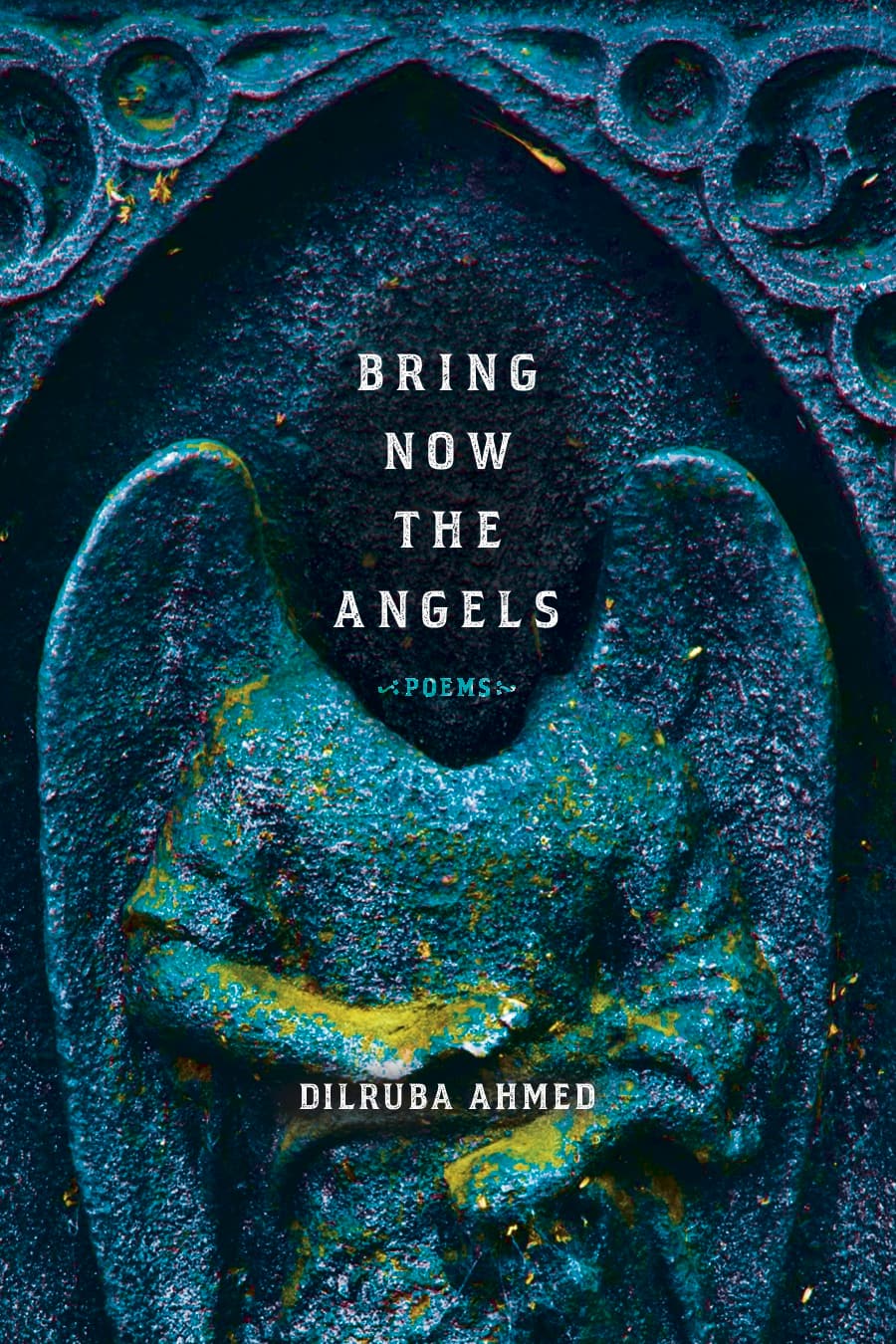
Image 07.03.05 — Author Dilruba Ahmed’s Bring Now The Angels (2020). This book of poetry moves away from exploring notions of identity and belonging and instead deals with themes of grief and forgiveness.
When it comes to the burden of representation, Ahmed struggles with how to present a complex identity, including the racism, sexism, and classism that exists both within and beyond immigrant communities. She said she would like to write about class issues among Bangladeshi Americans and to do so without damaging her community.
Nadeem Zaman: “We inherit the lineage we’re all born into”
Nadeem Zaman teaches in the English department at St. Mary’s College of Maryland. His work has appeared in numerous journals, and he is also the author of the novel In the Time of Others (2018) and the collection Up in the Main House (2019). His 2023 novel, The Inheritors, is a re-imagining of F. Scott Fitzgerald’s novel The Great Gatsby (1925) set in modern-day Dhaka, Bangladesh. Zaman writes, “we inherit the lineage we’re all born into, with its history and its contradictions, with the very beautiful and the very ugly, neither of which we can have a hand in being able to change.” 10
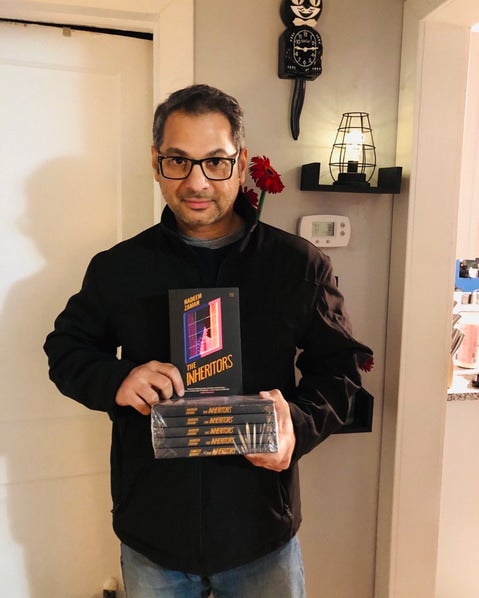
Image 07.03.06 — Author Nadeem Zaman with his book, The Inheritors (2023). An English professor at St. Mary’s College of Maryland, Zaman arrived in the US in 1991 at fifteen. The legacy of the 1971 Bangladesh War of Liberation features heavily in his writing.
Zaman first came to the US in 1991 when he was fifteen years old. He did not immediately feel a sense of belonging. In a 2024 interview, he said his move to the US was “completely unplanned. I was well settled in Dhaka. Next thing I know I’m beginning my sophomore year [of high school] in Chicago.” 11 He writes about his family’s decision to migrate to the US after the Independence War that left them feeling a sense of deep loss and disappointment:
We led a prosperous life in Dhaka, steeped in privilege. We, along with the country, weather violent coups, two assassinations of heads of state and a long military dictatorship, at the end of which my father had had enough. The country he’d envisioned after Independence had been a heartbreaking let-down. It pained him to admit that we could no longer live there. My mother agreed. …As was to be expected, being a child, I didn’t have a voice in the decision. The more time passed, the fewer our trips became, until they stopped altogether. My father only resumed them to take care of the property sales, then ended them once and for all for his health. My mother never again expressed a desire to go. 12
In their new suburban community in Chicago, Illinois, assimilation was a priority. Contrary to the community where “everything was about status and money and jobs,” Zaman said that his own prerogatives were different. “I was figuring out that I love to read and write. I was treading sensitive waters.” Though he initially declared a major in engineering in college, he did not take a single engineering class and became “the lone Bengali in the liberal arts and sciences department. My circles were anything but Bangladeshi.” 13
Zaman did not easily identify as a Muslim. He saw himself as culturally Bengali with its political and linguistic alignments. His religion was more about symbolic and ritual observations. This heritage, especially the legacy of 1971, loomed large in his consciousness. “I was writing stories and engaging in college,” and the Liberation War features heavily in his work. Growing up in a Bengali nationalist family, “1971 was in every story I ever heard, everything revolved around it. Did it inform me as a writer? 100 percent.” 14
The result was his first novel. In the Time of Others takes place in 1971 during the war. He describes it as more nuanced than simply celebrating a victorious Bangladesh and the “Joy Bangla” (Victory to Bengal) nationalist slogan of the time, which was pitted against a call for an authentic Islamic state by West Pakistan. Zaman’s novel illuminates how Bengali/Bangladeshi identity is more fluid and encompasses the nation’s many traditions. His writing is critical of the treatment faced by marginalized communities, including women and ethnic minorities.
The 9/11 attacks and racial discrimination against Muslims that followed were a turning point for Zaman as a writer:
[It] was a big jolt to me. Before that I was kind of situated. I knew I was Bangladeshi. Beyond that, gender, class—those complexities were not part of my thinking or writing. After 9/11 and the Iraq war, I was working at the Indian Tribune, and I started digging into learning America anew…[Increasingly] I was confident that Bangladesh and my investigation of it was something I needed to dig deeper into. Identity, belonging. Land, home. What does belonging mean? 15
Zaman longs for a more holistic writing community and for Bangladeshi visibility: “I love my connection with Bangladeshi writers. I needed to know that there’s more of us. This is so incredibly important.” 16
Glossary terms in this module
burden of representation Where it’s used
The pressure that ethnic minorities face in the US to correctly represent their communities’ experiences in their work. Because these minorities have so little representation, their work is judged at an extremely high standard. In some cases, the burden of representation affects how writers may approach their work to please their communities or the wider audience.
diaspora Where it’s used
People scattered across different parts of the world who share an identification with a homeland.
East Bengal Where it’s used
The eastern part of the province of Bengal in India. Later, the region became East Pakistan, a province of Pakistan formed at the time of national independence from British colonial rule in 1947. This would become the nation of Bangladesh in 1971.
Endnotes
1 Mahmud Rahman, “Of Borders and Tongues: A writer’s lifelong journey of losing and finding his mother language,” Scroll.in, February 29, 2019.
2 Mahmud Rahman, “Felicia,” in Contours of the Heart: South Asians Map North America, Sunaina Maira and Rajini Srikanth, eds. (Asian American Writers’ Workshop, 1996), 164–173.
3 Rahman, “Felicia.”
4 Tanaïs, In Sensorium: Notes for My People (Harper Collins, 2022), 2.
5 Tanaïs, in discussion with the author, April 26, 2024.
6 Tanaïs, in discussion with the author, April 26, 2024.
7 Dilruba Ahmed, in discussion with the author, August 5, 2024.
8 Ahmed, in discussion with the author, August 5, 2024.
9 Ahmed, in discussion with the author, August 5, 2024.
10 Nadeem Zaman, The Inheritors (Renard Press, 2013).
11 Nadeem Zaman, in discussion with the author, August 5, 2024.
12 Nadeem Zaman, The Inheritors (Renard Press, 2024), 12.
13 Nadeem Zaman, in discussion with the author, August 5, 2024.
14 Nadeem Zaman, in discussion with the author, August 5, 2024.
15 Nadeem Zaman, in discussion with the author, August 5, 2024.
16 Nadeem Zaman, in discussion with the author, August 5, 2024.


