




The Ismaili Muslim Youth Marching Band in uniforms march down Devon Avenue in Chicago while playing recorders and drums for the parade.
Module 5: Banglatowns, Public Art, and Symbols of Community Formation
Has the political history of their homeland shaped Bangladeshi American visibility, identities, and community formation?
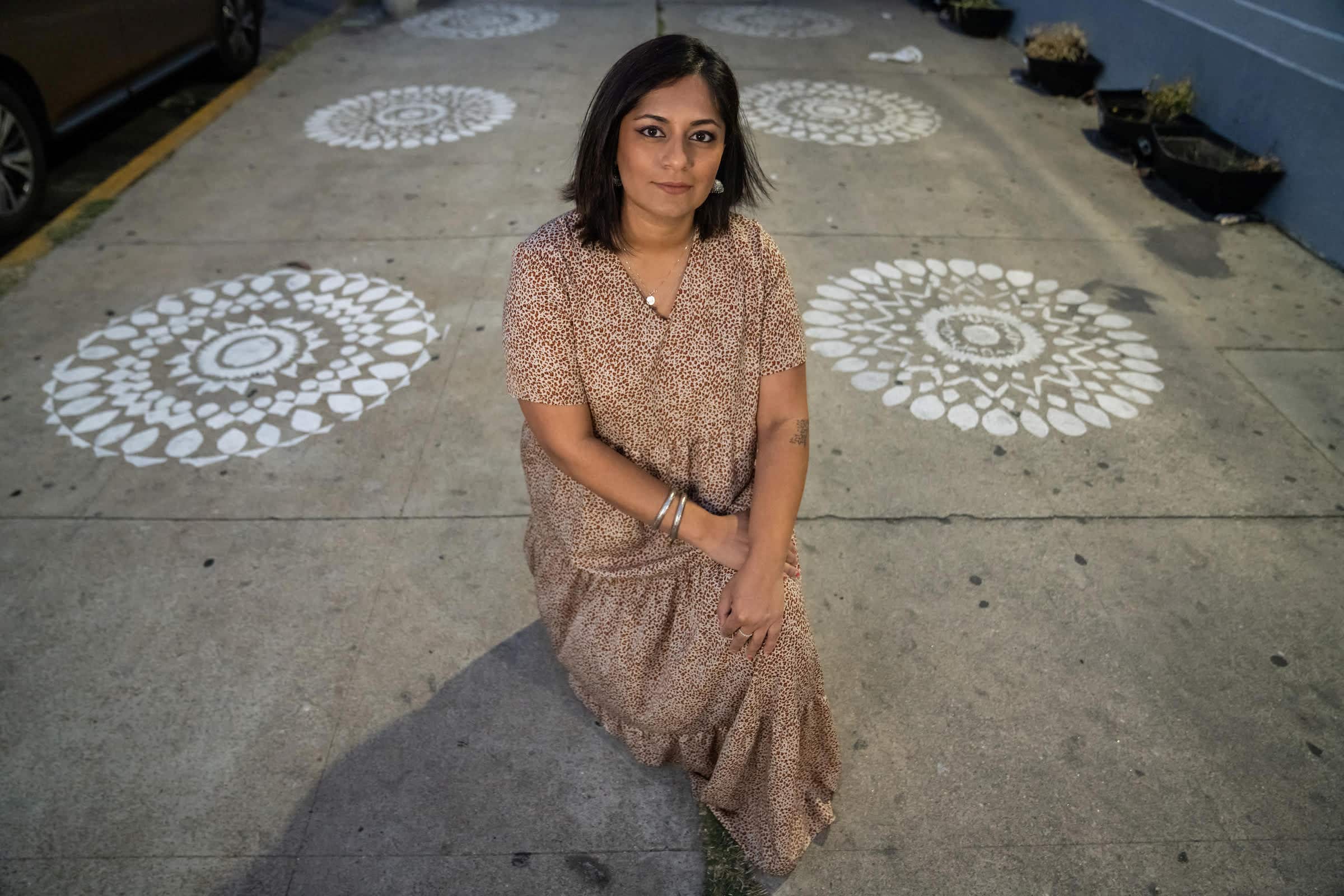
Image 07.05.01a — Tanzila Ahmed, a political activist born and raised in Los Angeles, California, poses with hand-painted alponas (traditional Bengali folk art) in the neighborhood of Little Bangladesh in Los Angeles.

In Los Angeles, vibrant murals in shades of blue, red, and green bring life to some of the most iconic figures and symbols from Bangladeshi history. The artworks sit atop a corner building and feature several prominent figures: Sheikh Mujibur Rahman, the founding father of Bangladesh; Rabindranath Tagore, the Bengali Nobel laureate; and Kazi Nazrul Islam, the national poet of Bangladesh. The murals also include a painting of the Shaheed Minar, the national monument in Dhaka, Bangladesh, erected to honor the martyrs of the 1952 Bengali Language Movement in what was then East Pakistan.
In this module we discuss how Bangladeshi Americans have shaped US urban landscapes through public art and commemorative structures.
How do Bangladeshi Americans make themselves visible in the United States?
How do public art installations such as murals encourage belonging and signify community formation?
What role do spaces such as Little Bangladesh throughout the US play for the Bangladeshi American and greater community?
“Little Bangladesh”
Located within a four-block area designated by Los Angeles city officials as “Little Bangladesh,” the murals hold enormous significance, despite being modest in size when seen against the local billboards. They sit alongside the Bangladesh Academy, an educational organization dedicated to promoting Bangladeshi culture, symbolizing the hard-fought efforts of Bangladeshi Americans to establish their presence in Los Angeles. These murals function as powerful pieces of public art, art that engages with its surroundings to disrupt, challenge, and transform the urban landscape. They also function as bold declarations of belonging and identity, celebrating the contributions of Bangladeshi Americans to the fabric of the United States.
Ethnic communities such as “Little Bangladesh” in Los Angeles are the result of recent immigration patterns, economic opportunities, and housing policies. Immigrant communities often settle in specific areas where they can access familiar cultural institutions, affordable housing, and social networks. Over time, these neighborhoods, shaped by both cultural and linguistic commonality as well as exclusionary policies, became cultural hubs that sustain diasporic identity and express belonging.
Potent symbols of Bangladeshi American belonging and community can also be found in Michigan, New York, and New Jersey. Specifically, neighborhoods such as Hamtramck, Michigan; Jackson Heights and Kensington, New York; and Patterson, New Jersey, all demonstrate how Bangladeshi Americans are making their mark on urban landscapes. Throughout the US, wall murals and sculptures, such as the replicas of the Shaheed Minar seen in many “Little Bangladesh” neighborhoods foster community formation and a sense of belonging.
Banglatown in Hamtramck, Michigan
In an area just north of Detroit, Michigan, called Hamtramck, a striking 55 by 46 foot mural adorns the side of a local school. The art depicts a young girl with flowers in her hair set against a red and green backdrop, interwoven with a Bengal tiger, Bengali script, Shaheed Minar, and verdant hills. It was made possible by the 2018 Bangladesh Mural Project, a community-driven initiative led by local Bangladeshi residents and a local organization called One Hamtramck.
The project’s archived website notes, “In a climate where minorities and people of color face discrimination, it’s crucial [the mural] celebrate the richness of our culture and spotlight the contributions Bangladeshis have made to American life.” 1
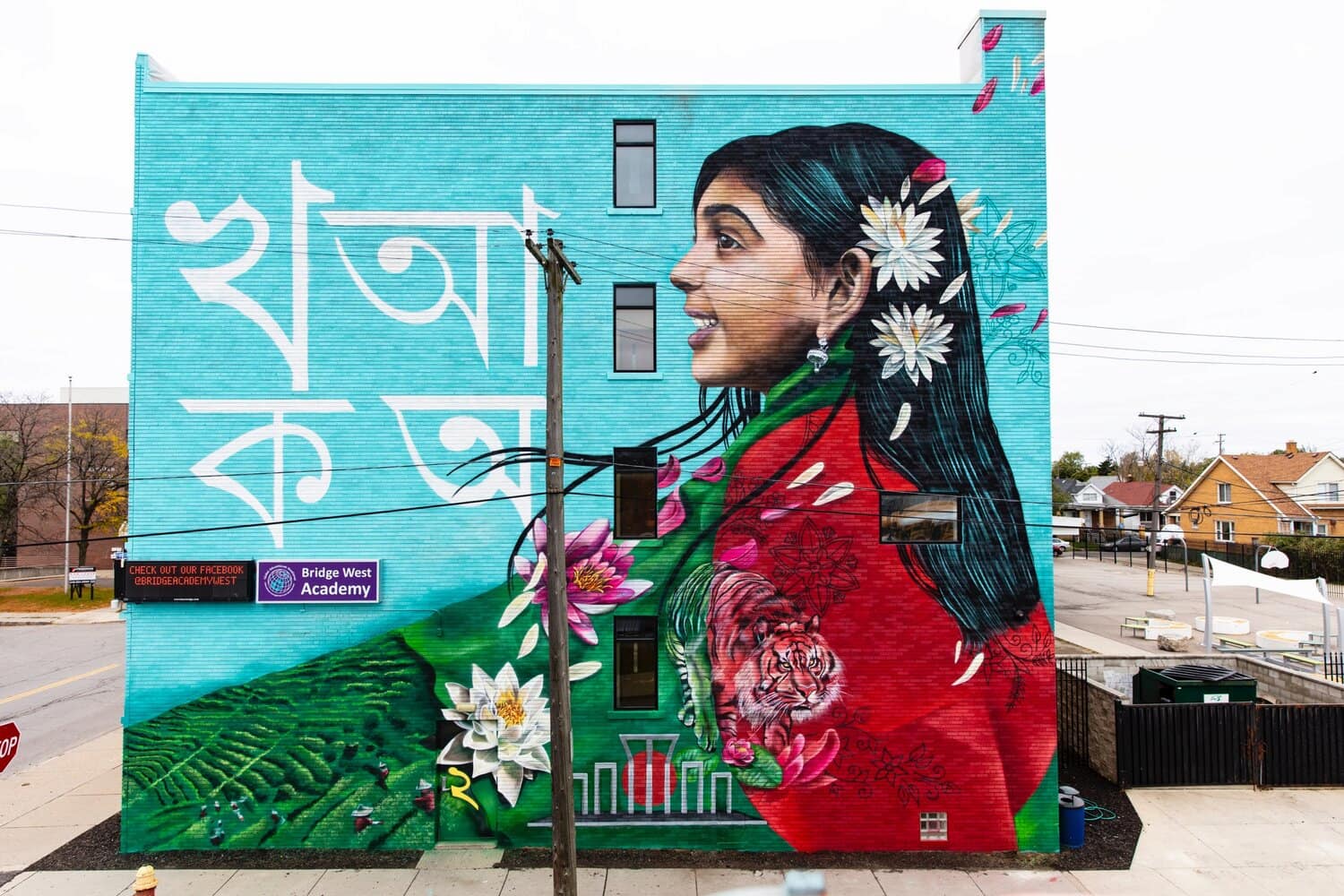
Image 07.05.02 — A large mural titled “Bangladesh, Coming to America,” painted by artist Victor “MARKA27” Quiñonez, as part of the OneHamtramck mural project in Detroit, Michigan.
The Hamtramck mural honors Bangladeshi heritage, much like the murals in Los Angeles. The portrayal of a young girl in swirling paint evokes a sense of momentum, mirroring the community’s growth. Towering over a street corner, the artwork marks the area as a “Banglatown,” or a neighborhood with an expanding Bangladeshi American population, characterized by its unique Bangladeshi shops, restaurants, and cultural institutions.
The city of Hamtramck was previously referred to as “Poletown,” a name that originated from the Polish immigrants who arrived during the late nineteenth and early twentieth centuries. When General Motors demolished part of the neighborhood to build an automotive plant in the early 1980s, many Polish residents were forced to relocate.
A decade later, Bangladeshi immigrants restored abandoned homes and revitalized storefronts, transforming the once-vacant area into a thriving hub. According to the Pew Research Center, after New York City, which has nearly 100,000 Bangladeshis, Detroit is the next largest community with approximately fourteen thousand Bangladeshis.
In Detroit, as in other parts of the US, Bangladeshi Americans have taken steps to make their social and economic contributions visible to the wider American public. As part of a broader initiative by the State of Michigan and the City of Detroit to revitalize and recognize immigrant neighborhoods, Hamtramck was named “Banglatown” in 2015.
Driven by Bangladeshi American advocacy, this state-level recognition deeply affirmed the community’s sense of belonging. When the Hamtramck mural was unveiled a few years later, local resident Raihan Rahman remarked, “[The mural] is a great representation of the community…It’s public validation.” 2 Titled “Bangladesh: Coming to America,” and considered the largest mural in the US depicting Bangladeshi life, this Detroit artwork stands as a celebration of their public arrival.
Taken one step further, public art that reflects one’s heritage can contribute to an inner sense of belonging. Tanzila Ahmed, a political activist and native of Los Angeles, said of her time in Little Bangladesh, “When I saw that someone had painted alponas (traditional Bengali folk art) on the sidewalks, I was charmed by the gesture. It’s so symbolic…a way of claiming home on the LA sidewalks.” 3
Bangladeshi American Public Art and Community Formation in New York City
The Bangladeshi population in New York City grew by 88 percent from the year 2010 to 2015. Throughout the city, the drive for recognition and celebration of Bangladeshi American life is powerful. In neighborhoods across the boroughs, the naming, claiming, and activation of public space through the display of art plays a pivotal role in the development of the Bangladeshi American community. These actions are milestones in community formation.
Shahana K. Hanif has been a pivotal figure in elevating the community in Kensington, Brooklyn, where 19 percent of New York City’s 100,000 Bangladeshi Americans reside. From an early age, she understood the link between activating public space, advocating for social justice, and empowering Bangladeshi American New Yorkers.
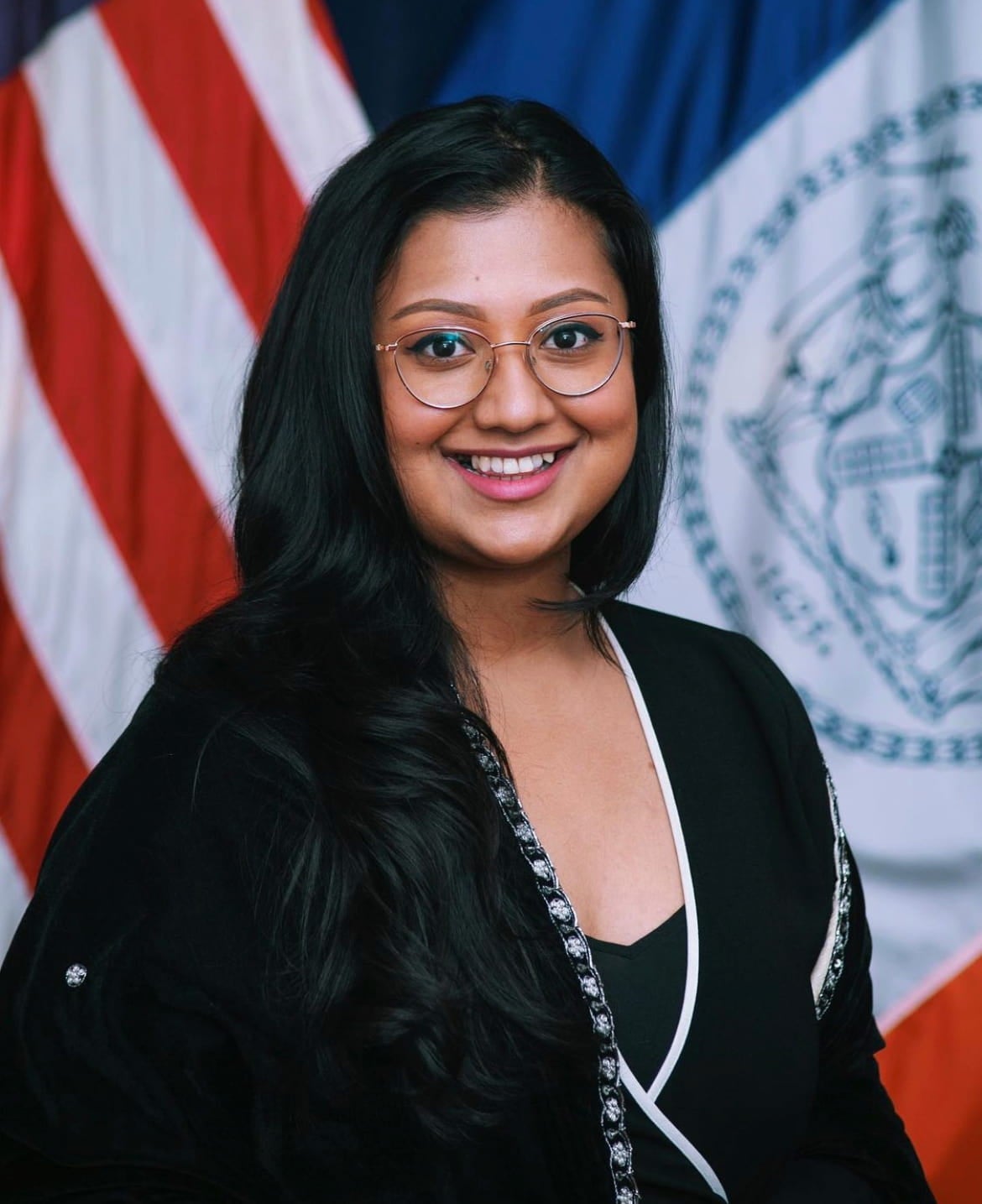
Image 07.05.03 — Shahana K. Hanif, a Bangladeshi American member of the New York City Council since 2022 for the 39th district, which covers neighborhoods in central Brooklyn including “Little Bangladesh.”
Hanif was born and raised in Kensington, where her family settled in early 1980s. Her father opened Radhuni Sweets & Restaurant, which would become a neighborhood landmark. Hanif was elected as a New York City Council member in 2022, but her community work started well before.
She recalls that she felt the need to leave her neighborhood when she was growing up in order to engage in her personal and public life. Most of the streets were dominated by men and lacked spaces for communal gatherings. This experience inspired her to establish safe spaces and advocate for the inclusion of all segments of the Bangladeshi American community, particularly women and individuals with health impairments.
In 2016, Hanif spearheaded the revitalization of a neglected lot in Kensington. Working alongside fellow residents, she transformed “Avenue C Plaza” from an unremarkable space to an inviting and welcoming one. With thoughtful additions like seating, lighting, and landscaping, she helped bring the paved corner to life. “Kensington lacked open spaces and plazas for decades,” Hanif shared in an interview with the Prospect Park Alliance, and “when the community came together to reclaim this vacant lot, it opened up a whole new world.”
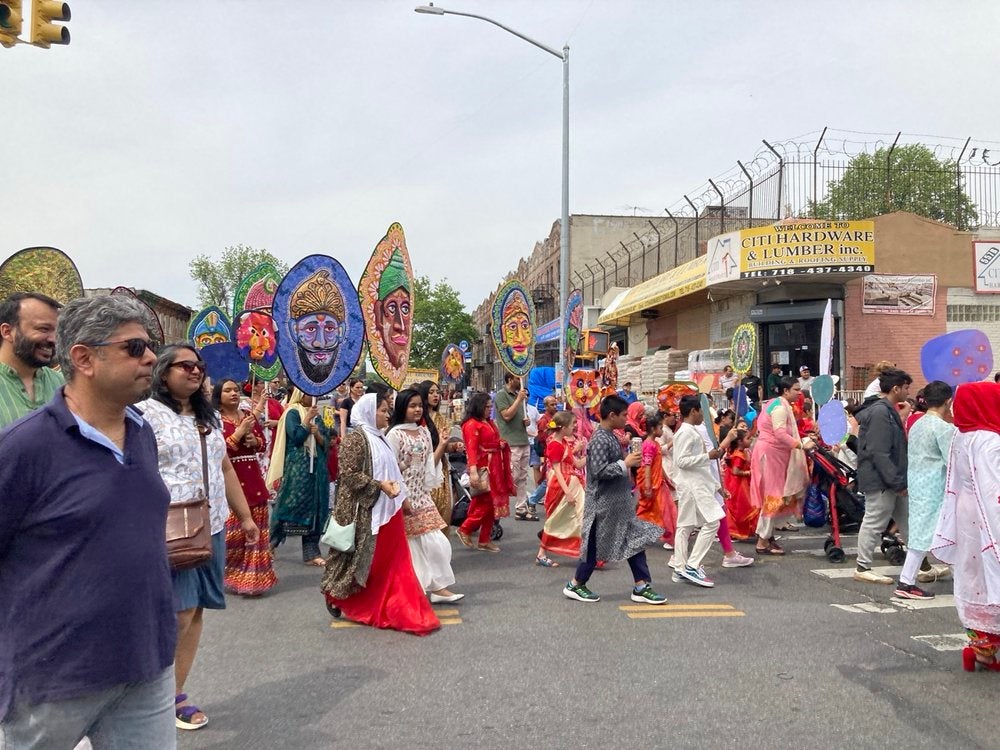
Image 07.05.04a — Bangladeshi Americans celebrate Boishakh, the Bengali New Year, near Avenue C Plaza in Kensington, Brooklyn, in New York.
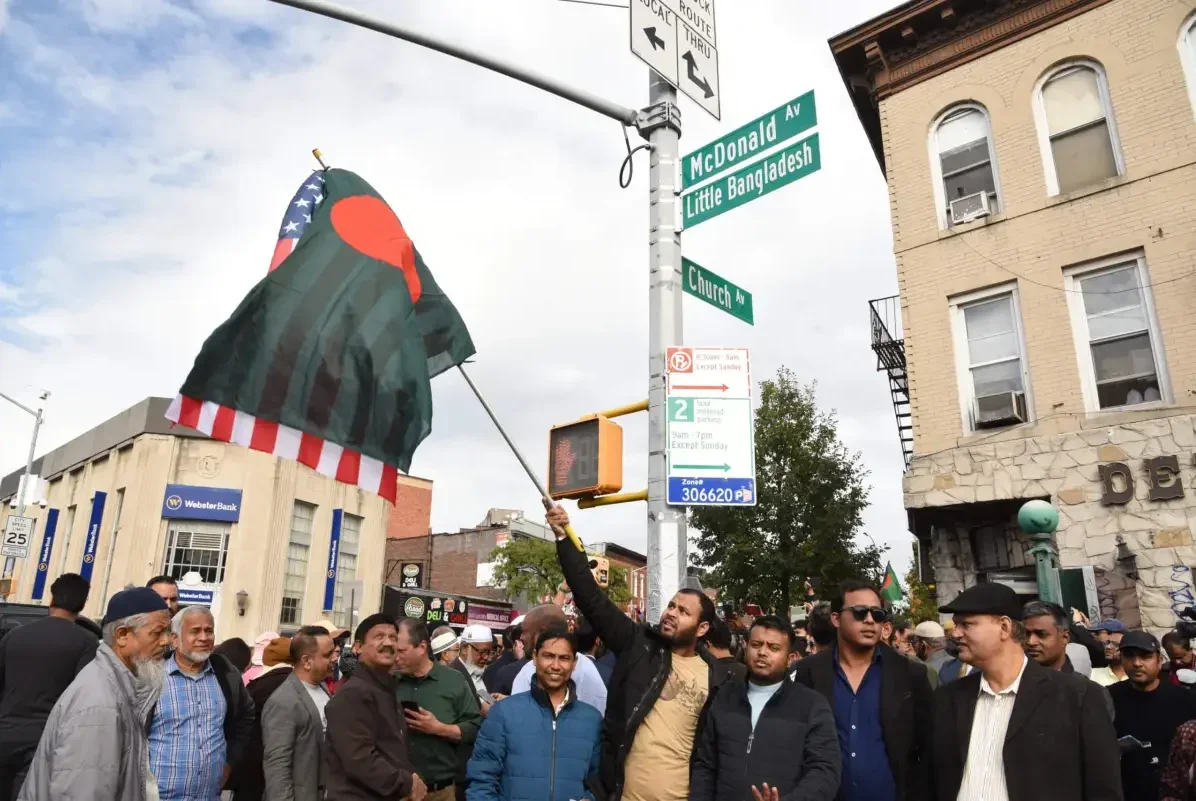
Image 07.05.04b — Bangladeshi Americans in 2022 celebrate the naming of the neighborhood “Little Bangladesh” in Brooklyn, New York.
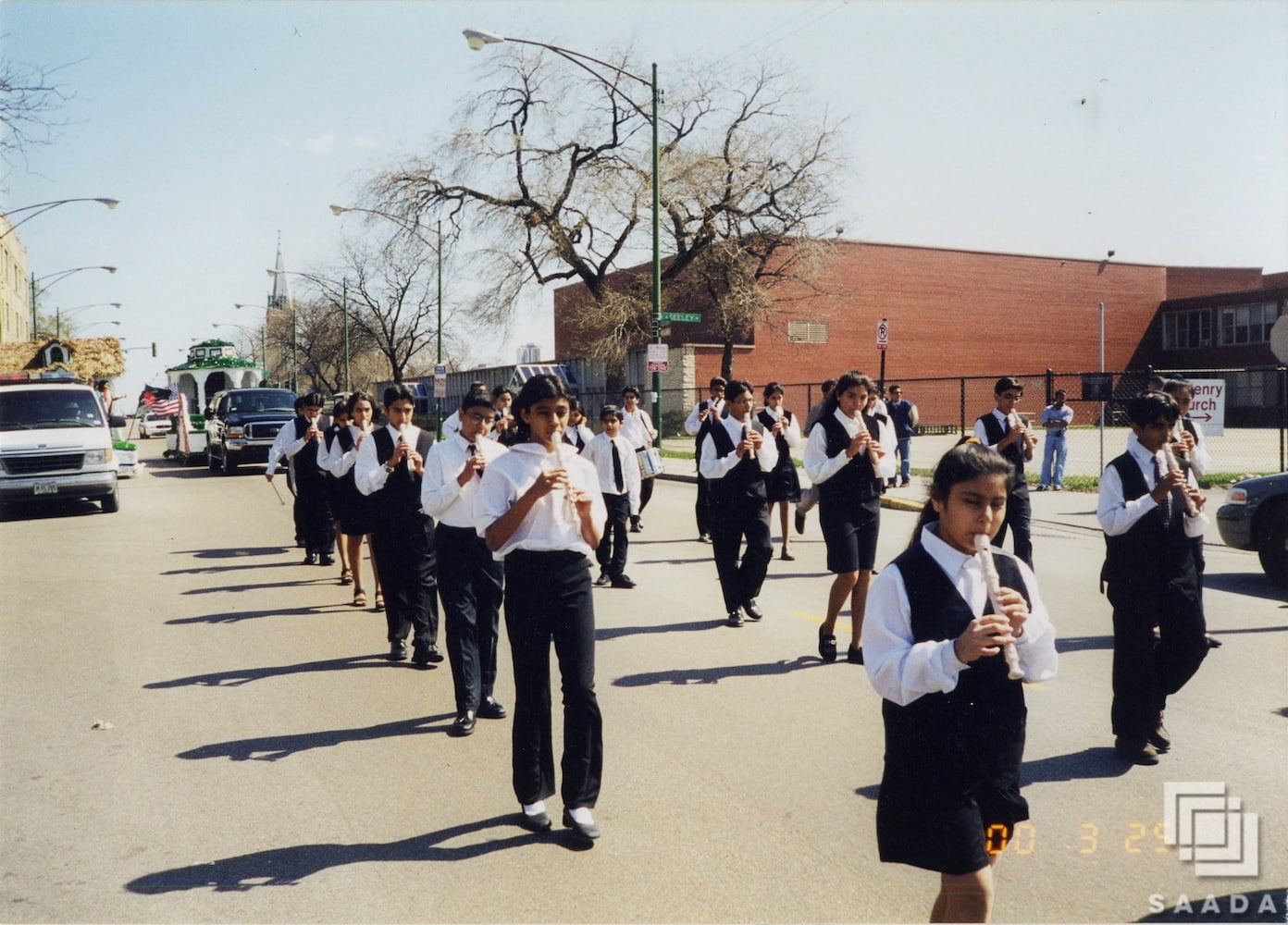
Image 07.05.04c — The Bangladesh Independence Day Parade on Devon Avenue in Chicago, Illinois, in 2000.



Hanif organized poetry readings, art workshops, and dance performances to draw people to the plaza. By 2018, the Kensington Cultural Council was able to formalize ongoing programming. According to her City Council campaign page, this coalition is committed to creating year-round activities for the square, such as interfaith town halls, Dia de los Muertos celebrations, and feminist iftar (meals consumed after sunset during Ramadan). The council helped establish the neighborhood as an inclusive gathering space, marked by a spirit of joy and celebration.
In addition to promoting a sense of belonging, Hanif’s efforts to create a safe public space also helped to create a sense of collective confidence among neighborhood residents. Emboldened by her steps to claim city blocks as Bangladeshi, the Kensington community and the larger New York Bangladeshi American community felt motivated to engage more actively in civic life and local politics. This burgeoning constituency played a crucial role in electing Hanif to the New York City Council in 2022. In 2025, Hanif, backed by Assembly member Zohran Mamdani, secured re-election to the City Council, reaffirming her role as a leading progressive voice in New York City politics.
Ten months after assuming office, Hanif led the effort to designate a Kensington street corner as “Little Bangladesh.” She shared that the street name of “Little Bangladesh” allows residents to see this neighborhood as their home and “to further establish our commitment to serving and protecting this community.” 4 Much like the designation of the Banglatown area in Detroit, the designation of a Kensington corner as “Little Bangladesh” helped Bangladeshi Americans internalize that they are not only locals, but that they are also Americans.
Jackson Heights, Queens
About five miles to the east in the borough of Queens, a corner of Jackson Heights is home to a diverse array of Latino and Asian businesses, including Bangladeshi ones. After the mayor’s office commemorated Bangladesh Independence Day at City Hall in 2023, Jackson Heights hosted the first-ever Bangladesh Day parade in New York in 2024. Visual markers throughout Jackson Heights signal an expansive Bangladeshi presence. Storefronts display Bengali signage and festive logos, shop windows showcase bright saris, Bengali music spills onto the streets, and colorful posters announce Bengali events and political activities.
Set against this visual backdrop, street murals with Bangladeshi motifs play a role in signaling a sense of belonging. Zeehan Wazed, a Bangladeshi American artist who immigrated to New York City with his family from Libya in 1993, creates murals all around New York City. In 2023, Wazed collaborated with a local business to create a mural at Diversity Plaza in Jackson Heights.
The mural depicts a young girl picking water lilies, Bangladesh’s national flower, as a tribute to the Bangladeshi community in the area. In coordination with an organization called Bangladeshi Humanitarian Aid and Leadership Outreach (BHALO), Wazid created a second mural in Jamaica, Queens, at Little Bangladesh Avenue, close to where he grew up.
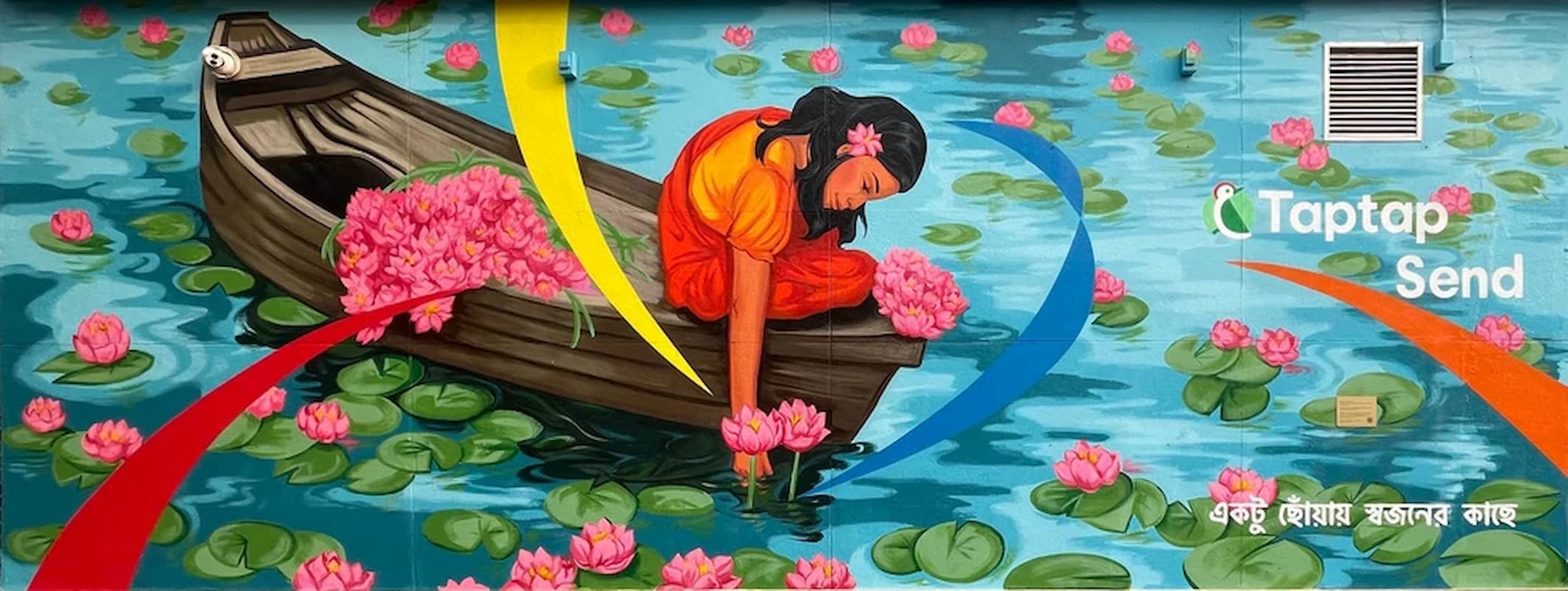
Image 07.05.05 — A young girl picks “shapla”, a water lily and the national flower of Bangladesh, in a mural by artist Zeehan Wazed in Jackson Heights, Queens, New York.
Wazed connects his mural work to the rich heritage of Bangladeshi art, ranging from classic paintings and folk art to street art, poetry, theater, and pop art scenes on rickshaws. In a 2024 interview, Wazed said, “In Bangladesh, art is everywhere and [it] is meaningful. Art is what defines us.” 5 Wazed also links his public art practice to New York City’s graffiti scene. This connection bridges his Bangladeshi heritage with the dynamic and evolving art scene in New York. It also places his practice in a wider tradition of graffiti as an art form that is increasingly recognized for its impact on American cities and culture.
Wazed expresses pride in creating art for his community, as well as a sense of frustration that not all community members see the significance of public art. At the same time, Wazed highlights the role of younger Bangladeshi Americans who have formalized their commitment to the arts and connected artistic presence to cultural belonging. One such organization is Bengalis of New York (BoNY), a nonprofit that celebrates “Bengali culture and people through storytelling, community building, and discourse in order to further empower the diaspora.” 6 For BoNY and artists like Wazed, preserving their own art and displaying it publicly is how they diversify and shift the landscape in the US.
Shaheed Minar, Recreations of Home
A striking way in which Bangladeshi Americans have established their presence in cities across the US is by recreating the Shaheed Minar, a monument in Bangladesh commemorating those killed during the Bengali Language Movement. In Bangladesh, the Shaheed Minar is a forty-six-foot marble structure, set upon a dais and painted with words of legendary poets.
This iconic image has also been painted into the Detroit and Los Angeles murals. Physical architectural replicas of the monument also appear across the United States. In Paterson, New Jersey, the City Council funded a replica in 2015 “to honor the Bangladesh community in Paterson City and to acknowledge the multicultural significance of the mother tongue of the diverse immigrant communities.” 7 In 2023, Bangladeshis in Perris, California, partnered with their local mayor’s office to build a replica of the Shaheed Minar.
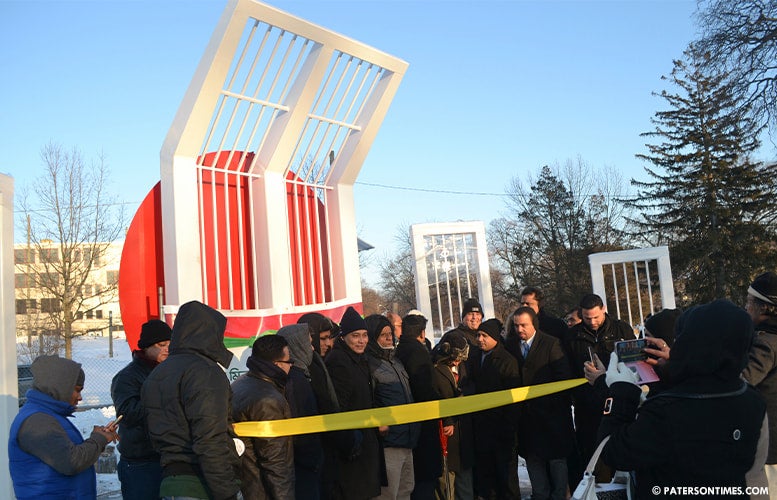
Image 07.05.06 — Bangladeshi Americans unveil a replica of the Shaheed Minar in Paterson, New Jersey, in 2015.
The recreation of an entire monument in Bangladesh on American soil is very impactful. The continuity of art, architecture and heritage reflects an emotional, spiritual and soulful depth of pride that Bangladeshis hold for their ancestors. It also signifies the formidable spirit of Bangladeshis in America to intervene within the landscape of the US in order to become part of it.
Bangladeshi Americans and the American Landscape
Bangladeshi Americans have carved out a significant presence in the American cultural and physical landscape. From the bustling streets of Little Bangladesh in Kensington, Brooklyn, to the colorful mural outside Detroit, Michigan, and the solemn Shaheed Minar replica in Paterson, New Jersey, their influence is evident.
These snapshots of Bangladeshi American communities and contributions underscore the dynamic role these immigrants play in contributing to the rich history of the United States. Beyond these physical markers, Bangladeshi Americans have made strides in various fields, including business, academia, science, medicine, and politics, exemplifying the community’s creative and innovative contributions.
Cultural performances, culinary delights, and artistic expressions also continue to enrich American society. As Bangladeshi Americans gain greater visibility—and as the next generations amplify their political and creative paths—they play a crucial role in promoting multiculturalism and inclusivity, ensuring their legacy and stories are included in the broader American narrative.
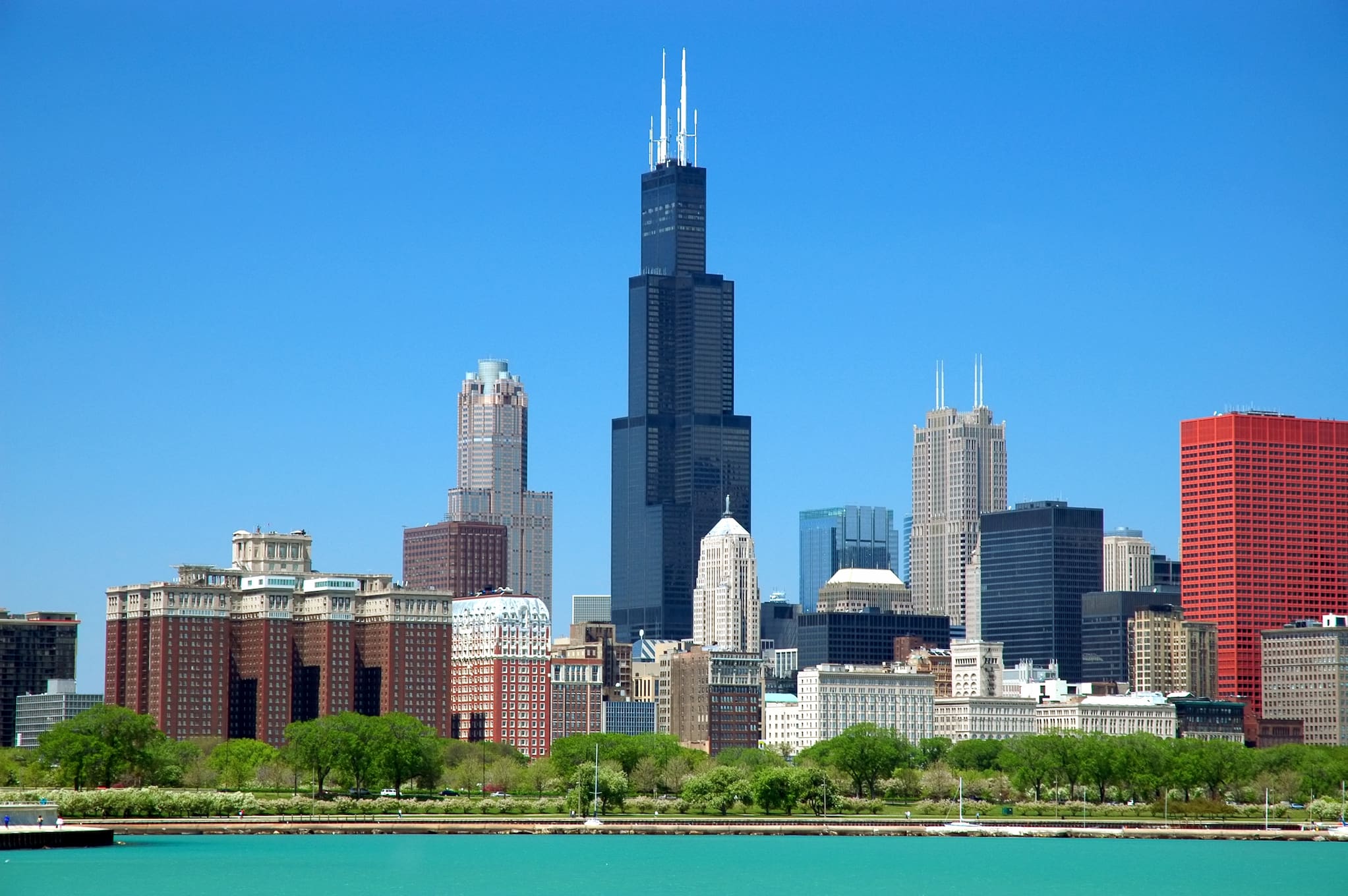
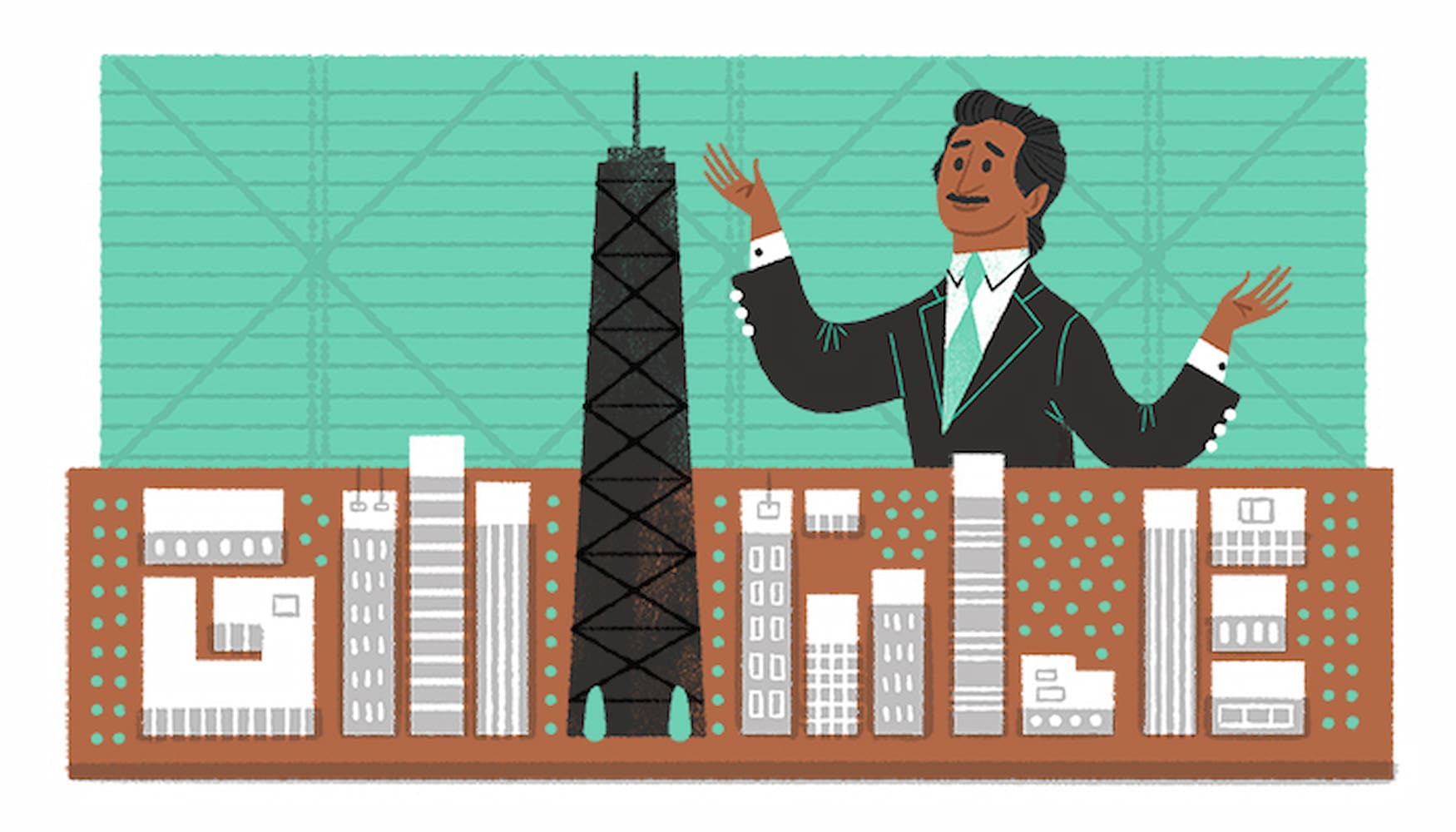
On a busy street in the midst of Chicago, a monumental 110-story skyscraper stands still. This is Willis Tower, formerly named the Sears Tower, built in 1970 and designed by Bangladeshi American engineer Fazlur Rahman Khan. Through this building, Khan spearheaded a revolutionary approach to high-rise construction that would reshape the skyline of major cities in the US and across the world. He invented a trussed tube system in his visionary design for Chicago’s iconic John Hancock Center in 1968, then the second-tallest building in the world after the Empire State Building and the tallest in Chicago.
More to explore
Slideshow
Fazlur Rahman Khan
Fazlur Rahman Khan (1929–1982) was a pioneering structural engineer whose groundbreaking work revolutionized skyscraper design and left an indelible mark on modern architecture. Born in Dhaka, Bangladesh, Khan earned his Bachelor’s degree in civil engineering from the University of Dhaka. He then pursued his higher education in the United States, where he earned his Master’s and Doctoral degrees from the University of Illinois at Urbana-Champaign.
These landmark achievements solidified Khan’s legacy as a trailblazer in modern architecture and engineering, forever altering the landscape of urban development and the landscape of America itself. While public art is not always on the scale of Khan’s buildings—and while the Willis tower is not a Bangladeshi heritage marker—Khan’s spirit sparks a thread in the longstanding presence of Bangladeshi Americans in the US. It stands as a towering mark of the presence of Bangladeshi creativity, innovation, and art in the US from over fifty years ago, one that started with early arrivals and will only continue into the future of this ever-expansive community.
On any given day in America, Bangladeshi entrepreneurs, scientists, writers, shopkeepers, and artists across all mediums contribute to the academic, cultural, and social fabric of the US. The plazas of Kensington and Jackson Heights echo with the native tongue of Bengali, while Willis Tower stands still, as it stretches into the sky. Bangladeshi contributions have changed the American skyline forever; in 1998, the city honored Fazlur R. Khan by naming the street that leads to the Willis Tower “Fazlur R. Khan Way.”
Glossary terms in this module
community formation Where it’s used
The process in which immigrant groups establish cultural, social, and economic networks.
diaspora Where it’s used
People scattered across different parts of the world who share an identification with a homeland.
public art Where it’s used
Artwork that is created for and displayed in public spaces, such as on the street or in parks, often intended to engage the community and reflect the cultural or social context of the area.
Shaheed Minar Where it’s used
A monument dedicated to honoring the memory of those who died in the Bengali Language Movement in 1952 in Bangladesh, symbolizing linguistic and cultural pride.
Endnotes
1 Mural Project Committee, “Bangladesh: Coming to America Mural Project,” Patronicity, https://www.patronicity.com/project/bangladesh_coming_to_america_mural_project#!/.
2 Niraj Warikoo, “New Mural in Detroit near Hamtramck Border Celebrates Bangladeshis,” Detroit Free Press, October 20, 2018, https://www.freep.com/story/news/2018/10/20/new-mural-detroit-near-hamtramck-border-celebrates-bangladeshis/1689544002/.
3 Tanzila Ahmed, in discussion with the author, April 26, 2024.
4 Shahana Hanif (@shahanafrombk), “Nearly 40 years ago,” October 17, 2022, https://www.instagram.com/p/Cj0WiycOrQq/?hl=en.
5 Zeehan Wazed, in discussion with the author, 2024.
6 Bengalis of New York, “Our Mission,” https://www.bengalisofnewyork.com/about/.
7 “New Jersey Sees Shahid Minar,” Prothom Alo, February 16, 2015, https://en.prothomalo.com/lifestyle/New-Jersey-sees-Shahid-Minar.