





A sign with concrete footings placed on a lawn that reads “Welcome to Banglatown”. Images of a Bengali flag and an American flag are next to the text.
Module 1: Bangladeshi Migration and Settlement in the US
Has the political history of their homeland shaped Bangladeshi American visibility, identities, and community formation?
A visitor to the intersection of Church and McDonald Streets in Brooklyn, New York, will see densely packed storefronts with signs in both English and Bangla, the language of Bangladesh. Businesses line the streets: money transfer companies, law and accounting offices, twenty-four-hour pharmacies, and retail stores selling Bangladeshi clothes and jewelry. In the local restaurants, visitors will hear the sounds of lively conversations in Bangla as customers drink hot cups of milky tea and feast on the popular snack of foochka, a spicy ball-shaped flatbread.
Immigrant neighborhoods like this have surged in the US since the 1990s. By the 2020s, New York City alone is home to more than 100,000 people of Bangladeshi origin. Other areas with robust Bangladeshi communities include Detroit, Michigan; Washington, DC; and Los Angeles, California. Wherever they live, Bangladeshi immigrants often struggle to establish themselves and must work to forge identity as newly arriving residents.
This chapter will examine the history of Bangladeshi migration and settlement in the US, specifically in response to changes in US immigration laws and the independence of Bangladesh in 1971. We examine the 1971 Bangladesh Liberation War and how remembrances of the war have shaped identity for generations of Bangladeshi Americans. We also explore the diverse ways in which Bangladeshi American writers navigate their Bangladeshi origins, including influences on their creative practices and how they write and present their work to US and global audiences. We provide portraits of two Bangladeshi American political activists and consider how their activism is influenced by their experiences in Bangladesh and the US. Finally, we examine how Bangladeshi Americans shape US urban landscapes through public art and commemorative structures.
In this first module we look at the history of Bangladeshi migration to the US and how Bangladeshi Americans have established communities in the country. We also examine the changes in US immigration policies that shaped the Bangladeshi American experience.
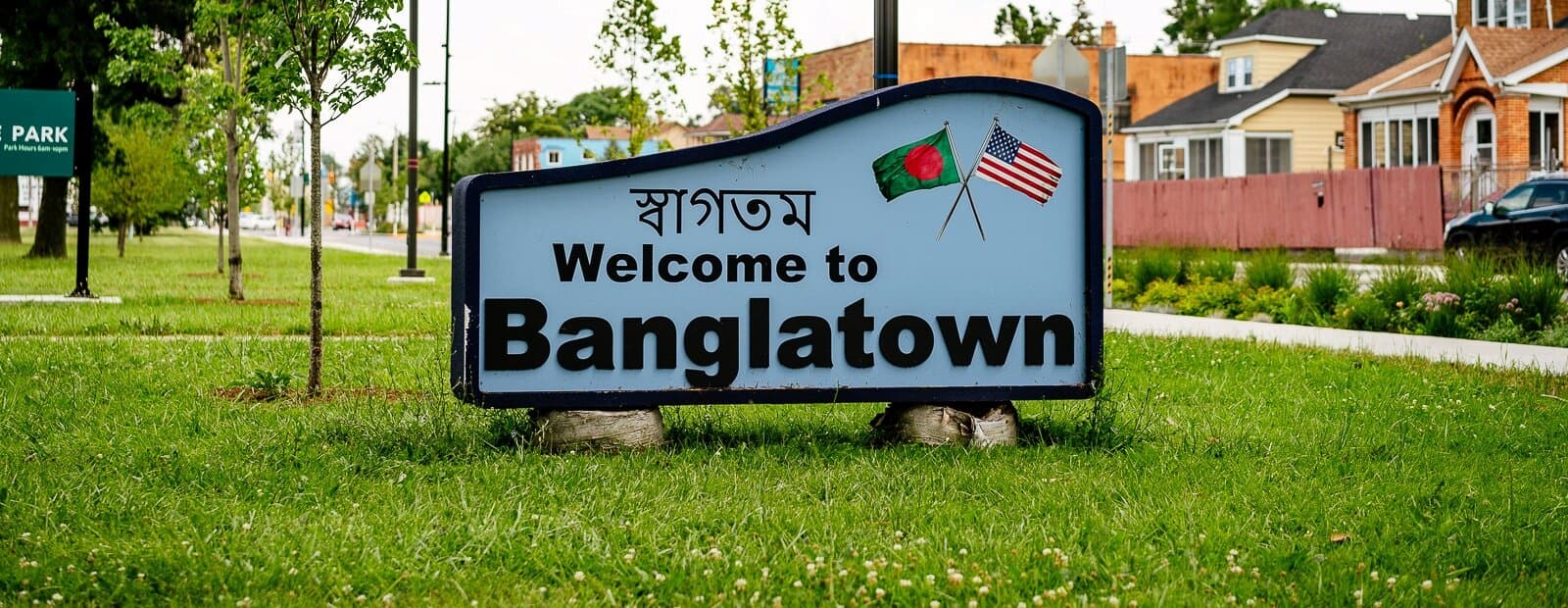
Image 07.01.01 — A sign welcomes visitors to Banglatown, a Bangladeshi American neighborhood in Michigan straddling the Detroit/Hamtramck border.
How have US immigration laws enabled Bangladeshi migration and settlement in the US?
How have Bangladeshi immigrants used entrepreneurship and self-employment to establish themselves in the US?
How did 9/11 impact Bangladeshi Americans and shape their political consciousness?
Early History of Bangladesh
Bangladesh, meaning “Bengal nation,” is a relatively new nation in the contested lands of South Asia. The country emerged as an independent state in 1971, separating itself from West Pakistan after nine months of armed struggle. The country sits between Myanmar and India and is located on the Bay of Bengal, the largest delta in the world. With a population of over 174 million in the mid-2020s and a land mass of roughly 147,570 square kilometers, Bangladesh is home to 1,350 people per square kilometer. This makes it the most densely populated country in the world.
British colonial rule over the Indian subcontinent began in the mid-eighteenth century and continued until 1947. During this era, the area that is currently Bangladesh was known as “East Bengal,” the eastern part of the provincial region of Bengal. A small number of men from Bengal first came to North America in the late 1800s. The earliest arrivals worked in trade, seafaring, and ship work. Some Bengali shipworkers were colonial subjects working on British ships who fled into US port cities to escape British rule.
Some of these early pioneers from East Bengal became long-term settlers in the US and established family ties in Black and Puerto Rican communities. In Bengali Harlem, Vivek Bald tells the story of John Ali from East Bengal who jumped ship in 1920 in the city of Baltimore. There, he married a local Black American woman, Mamie Chase, and had three children. His son, John Ali Jr. recalls a racially segregated city in which Bengalis like his father were identified with the Black community. At movie theaters, managers directed Bengalis to “sit on the same side the Black people sat,” highlighting how Bengalis experienced racial segregation at that time.
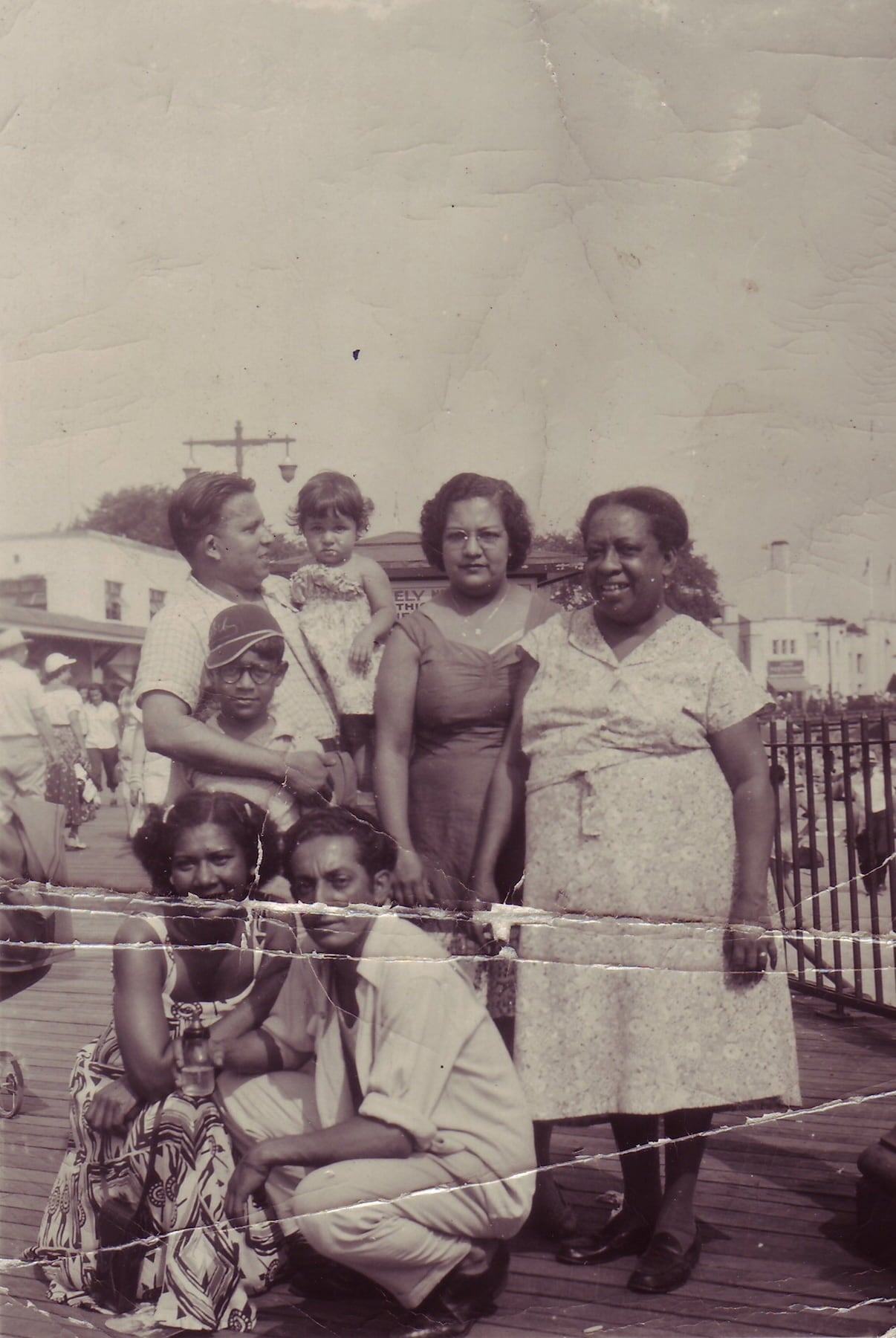
Image 07.01.02 — A Bengali-Puerto Rican family enjoy a day at the beach in the Bronx, New York, circa 1950.
During the 1950s and 1960s, international migration was next to impossible for the Bengalis of East Pakistan. However, as US restrictions on Asian immigration began to ease, small numbers of Bengalis from East Pakistan did migrate, often as students or as professionals in science, medicine and engineering. Among them was Fazlur Rahman Khan, the architect of the Chicago Sears (now Willis) Tower.
Post-1971 Bangladesh Migration Abroad
The independence of Bangladesh in December 1971 ushered in an era of Bangladeshi migration abroad. The growing Bangladeshi overseas population has expanded in size and scope throughout the world. Wherever Bangladeshis have settled, whether it is Australia, Italy, the United Arab Emirates, or the US, they have maintained active transnational ties with their homeland as part of the growing Bangladeshi diaspora residing outside of the home country.
In the 1980s, Bangladeshis moved to the US through sponsored employment-based visas for skilled workers and the Diversity Visa Program. The latter is also known as the Green Card Lottery, a program that offers a certain number of entry slots to randomly selected citizens from countries with low rates of immigration. Between 1996 and 2001, the Diversity Visa Program accounted for almost one-third of Bangladeshi admissions to the US. In 2014, however, Bangladeshis became ineligible due to their growing numbers in the US.
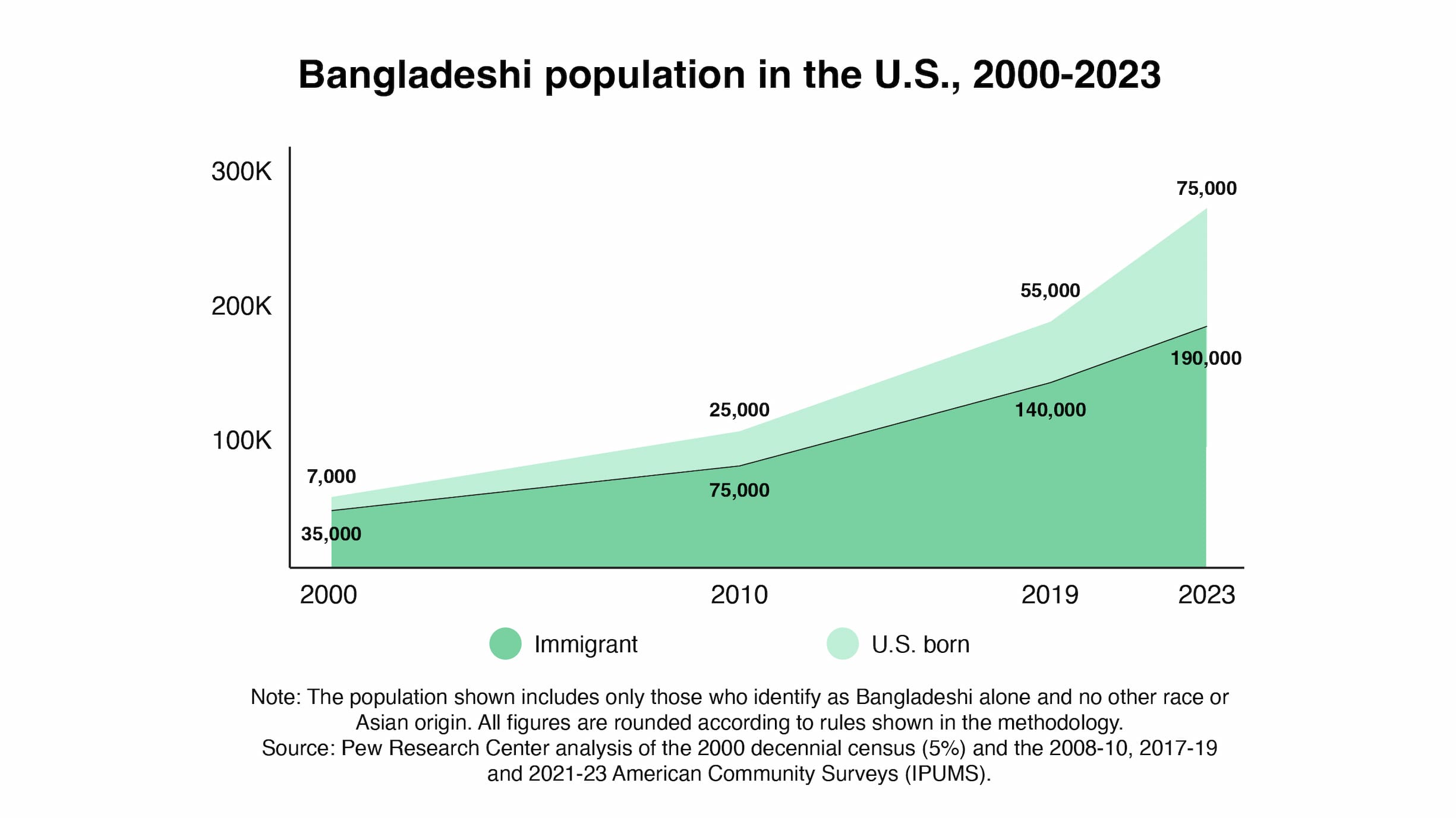
Image 07.01.03a — The growth of the Bangladeshi population in the United States from 2000 to 2023, including both immigrants as well as those born in the US. (Source: Pew Research Center)
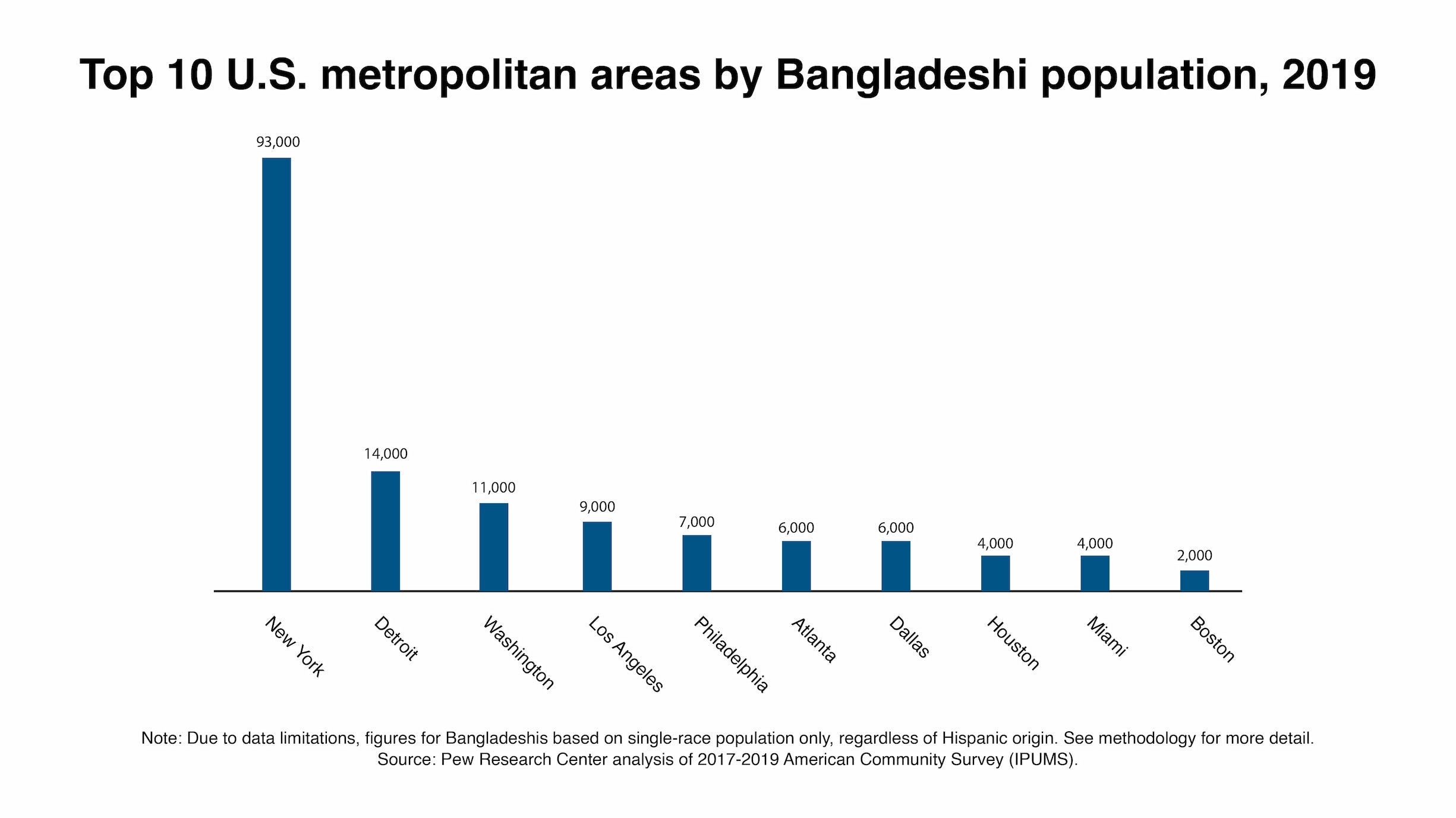
Image 07.01.03b — The top ten US metropolitan areas by Bangladeshi population, in 2019. (Source: Pew Research Center)


Those entering through these programs paved the way for more families to migrate to the US. Between 2010 and 2022, almost 90 percent of Bangladeshi migration to the US occurred through family reunification laws, which allow US citizens and permanent residents to sponsor family members to migrate to the US. Bangladeshis Americans have helped newly entering immigrants from the homeland acclimate to their new homes.
Bangladeshi Americans from 1971 to 1991
Bangladeshis who came to the US sponsored by employment-based visas were able to find jobs relatively easily. But finding work has been more difficult for those coming through the Diversity Visa lottery and family reunification programs.
The story of Mohammed Chisti-Shipu shows the challenges faced by some Bangladeshis as they work to build their lives in the US. Chisti-Shipu paid $10,000 to an agent to prepare his papers and arrived in 2010 through the Diversity Visa Program. As an accountant with years of work experience, he expected to resume his career in accounting in the US.
However, like many other middle-class immigrants who immigrate with college degrees and professional qualifications, he discovered that these credentials were not accepted in the US. Companies advertising for accountants only wanted to hire those with experience in the US. Chisti-Shipu eventually found work at a juice store to make his rent. “I cried while washing blenders because my parents worked hard to send me to a good school, and here I am, making smoothies for other people.” 1
After years of working to regain his accounting credentials, Chisti-Shipu opened his own accounting firm in the Bangladeshi American neighborhood of Queens, New York. Like many others, he sees his business as a way not only to avoid discrimination in the labor market, but also to have autonomy in his work life. He now welcomes the opportunity to help fellow Bangladeshis navigate taxes and financial planning in New York.
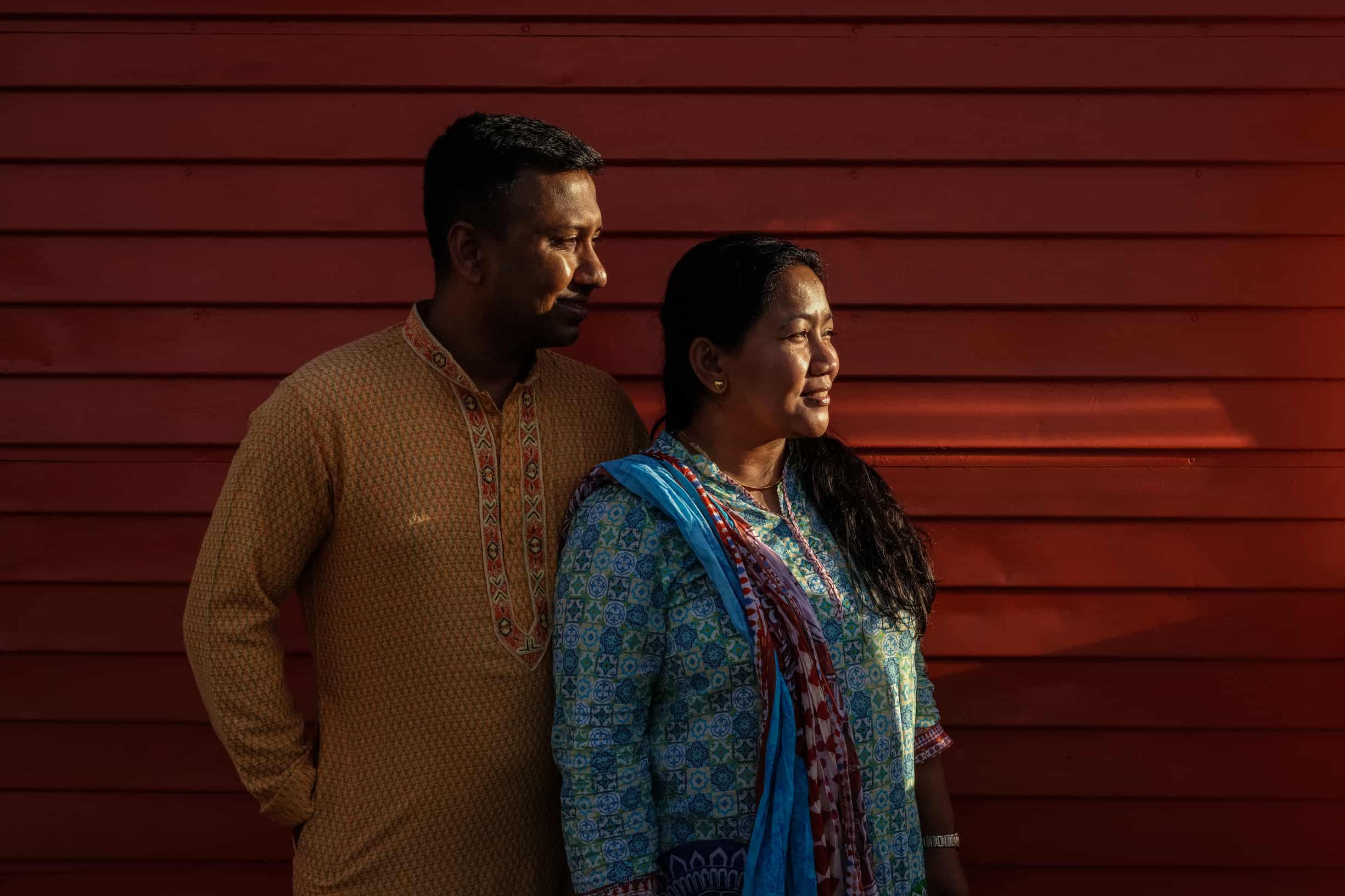
Image 07.01.04a — Mohammed Chisti-Shipu and his wife, Cherry, pose outside of their home in Queens, New York, in 2017.
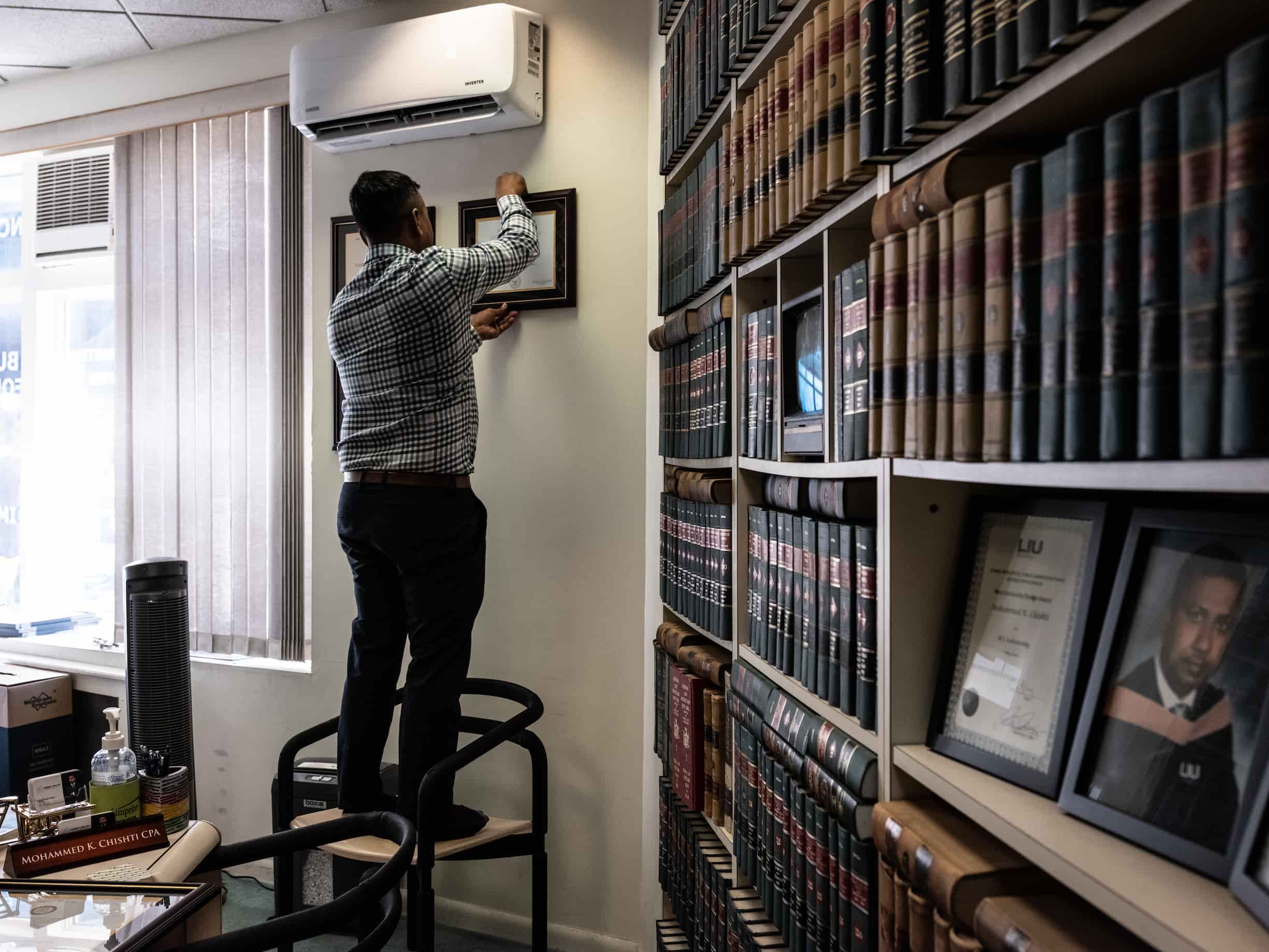
Image 07.01.04b — Mohammed hangs his diplomas in the office of his accounting practice in Jackson Heights, Queens, New York.


It is not only in New York that Bangladeshi immigrants have created their own businesses. In Hamtramck, Michigan, journalist Nargis Rahman found Bangladeshi women entrepreneurs who have created businesses that are different from the “traditional brick-and-mortar” model with a storefront. 2
These in-home businesses use social media to advertise and sell products such as jewelry, baked goods, and prepared meals. Others provide services such as henna art, professional makeup, catering, and home healthcare services. Rahman reports that these women have redefined entrepreneurship, creating adaptable business models to work around their family structures.
Some of these women-owned, self-employed businesses eventually transition to a brick-and-mortar model, while others continue to offer home-based products and services. Together, they have forged an important path toward economic empowerment for Bangladeshi American women and their families.
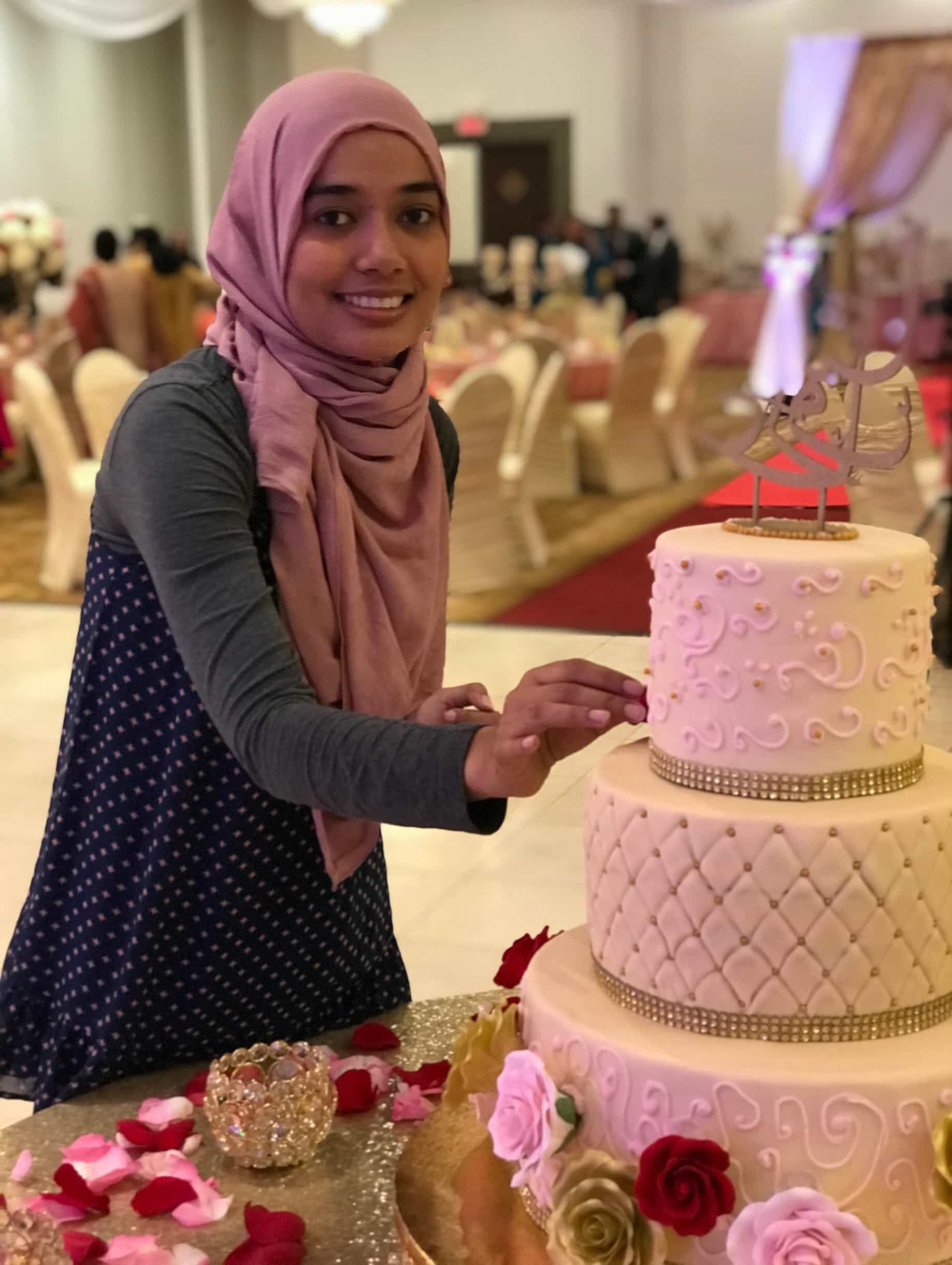
Image 07.01.05 — Entrepreneur Shamsun Nehar, founder of Cakes by Lucky, shows a wedding cake which she created and decorated. Many Bangladeshi American women run their own small businesses.
Post 9/11: Bangladeshi Americans
The aftermath of the 9/11 attacks marked a watershed political point in the Bangladeshi American community. As a brown-skinned, majority Muslim population, Bangladeshi Americans were deeply impacted by anti-Muslim backlash. Muslims experienced hate crimes and anti-terrorism government surveillance.
A month after the attacks, President George W. Bush approved the USA PATRIOT Act (Uniting and Strengthening America by Providing Appropriate Tools Required to Intercept and Obstruct Terrorism Act) that gave expanded legal powers to government agencies to implement special measures to address terrorism, both domestically and abroad. The PATRIOT Act also allowed federal government agencies to arrest immigrants on alleged suspicion and to set a precedent by secretly and indefinitely detaining or deporting them without due process.
Post-9/11, Bangladeshi Americans became more conscious of their vulnerability as a racial minority in the US. As a result, a growing number of Bangladeshi Americans have found a new cause to fight against injustices such as anti-Muslim bias, anti-immigrant hysteria, and even the mass incarceration of young men of color.
Tori, a Bangladeshi American woman in her twenties who was born and raised in New York, identifies herself as an anti-racism activist. While attending college in the late 2000s, she became involved in progressive pan-Muslim organizations, bringing together Muslims from different racial and national backgrounds. When she says, “I am Muslim,” she is defining herself to be part of a political community that brings together oppressed peoples. 3
In politics, Bangladeshi Americans have forged new voices to represent their growing communities. In one example in 2023, Nabilah Islam became the first Bangladeshi American and the first South Asian woman to be elected to the Georgia State Senate. Born in the US, Nabilah speaks about the importance of her identity as a child of immigrants from Bangladesh: “Coming to this country, we’ve always held that part of our identity – that we’re fighters and survivors. We are forging on and trying to make sure that we have representation for our communities.” 4
In another example, Bangladeshi American Rahima Begum took her quest for political representation to the courts to advocate for voting rights. She has drawn attention to the barriers that Bangladeshi Americans like herself face in political participation. Thanks to her efforts, ballots in her home town of Hamtramck are now available in Bangla. In such ways, Bangladeshi Americans are carving a path into the political landscape of the US. Their involvement extends across diverse arenas, from electoral politics to rights-based political movements. They have also developed cross-ethnic alliances to make as significant a political impact as possible.
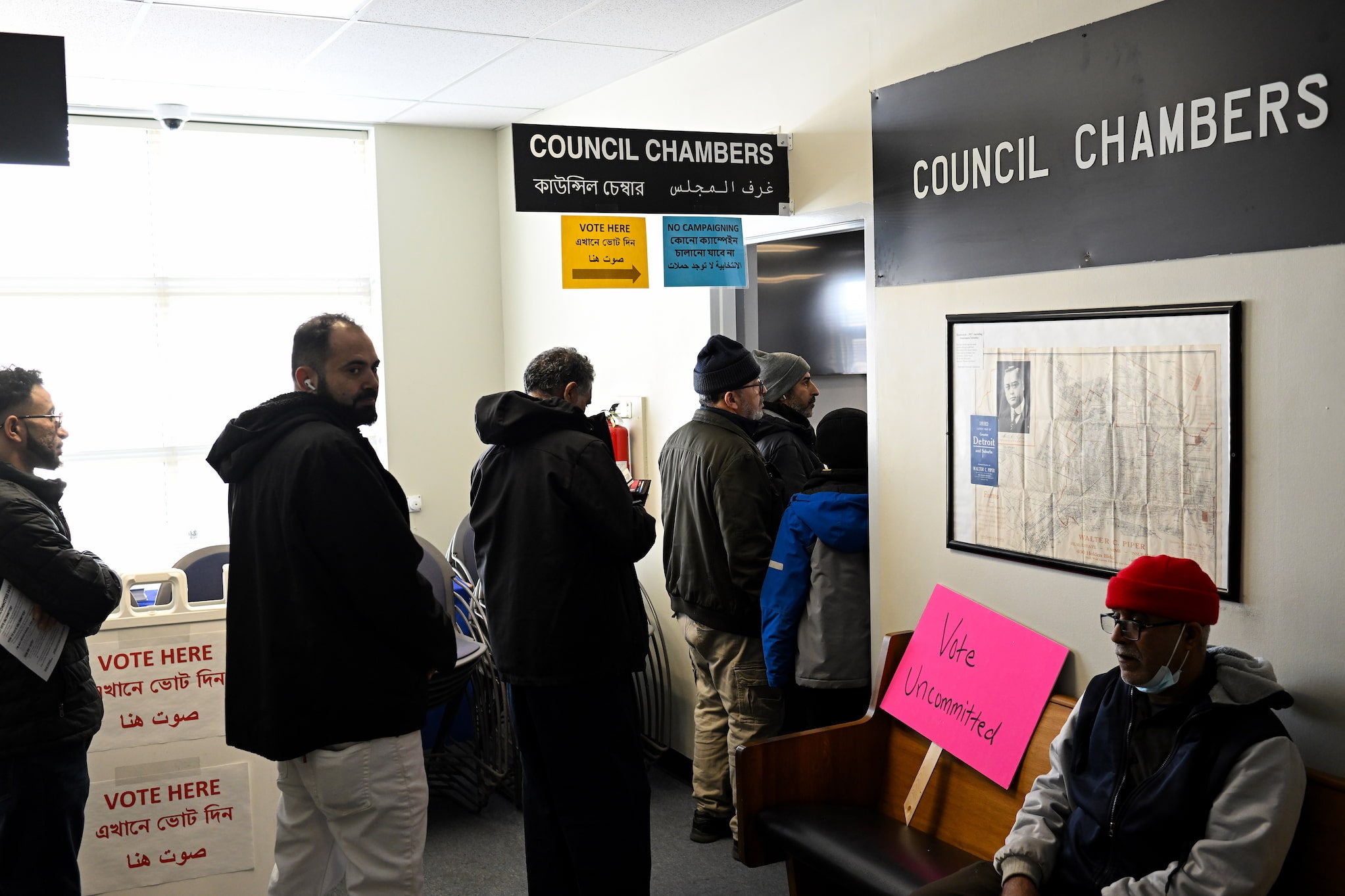
Image 07.01.06 — Immigrant voters, including Bangladeshi Americans, arrive for early primary voting in Hamtramck, Michigan, in 2024.
Glossary terms in this module
Bangladesh Liberation War Where it’s used
The armed conflict of 1971 that led to the independence of Bangladesh from Pakistan.
diaspora Where it’s used
People scattered across different parts of the world who share an identification with a homeland.
public art Where it’s used
Artwork that is created for and displayed in public spaces, such as on the street or in parks, often intended to engage the community and reflect the cultural or social context of the area.
transnational Where it’s used
Crossing, extending, or going beyond national borders.
Endnotes
1 Xyza Cruz Bacani, “The American Dream of Bangladeshis,” Asia Society Magazine, November 11, 2022, https://asiasociety.org/magazine/article/american-dream-bangladeshis.
2 Nargis Rahman, “Bangladeshi Third Spaces,” Tides Magazine, South Asian American Digital Archive (SAADA), May 18 2021, https://www.saada.org/tides/article/bangladeshi-third-spaces.
3 Nazli Kibria, “‘Let Them Attack Me for Wearing the Hijab’: Islam and Identity in the Lives of Bangladeshi American Women,” in Our Voices, Our Histories: Asian American and Pacific Islander Women, ed. Shirley Hune and Gail Nomura (New York University Press, 2019), 384.
4 Tanita Hossain, “Bangladesh American Women Making History in Politics,” Dhaka Tribune, June 11, 2020, https://www.dhakatribune.com/feature/212595/bangladeshi-american-women-making-history-in.