



Module 2: America’s Secret War in Laos (1954-1973)
Despite the US Secret War in Laos, have Laotian Americans found home in the United States?
The Vietnam War is a familiar chapter in US history textbooks. However, a lesser-known but equally devastating war raged in the shadows: the US Secret War in Laos. Conducted covertly by the Central Intelligence Agency (CIA), the secret bombing missions left Laos the most heavily bombed country per capita in history. Despite the scale and consequences, the war remains largely unknown in mainstream US discourse and is often treated as a footnote to the Vietnam War.
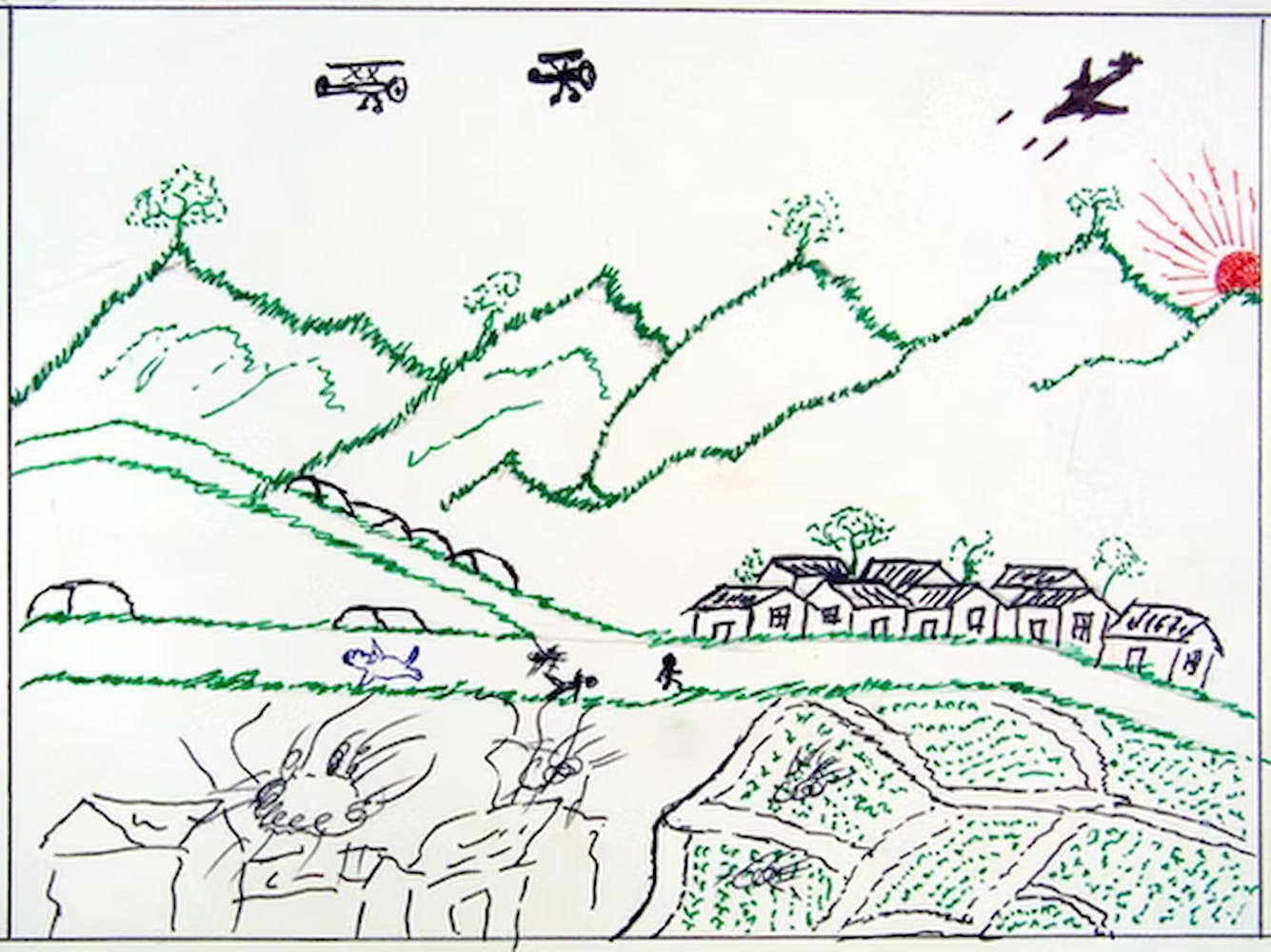
This module examines how the experiences and memories of war are preserved through oral histories and the work of Laotian Americans in addressing the legacy of the Secret War. The US Secret War came to public attention through the efforts of Fred Branfman, an international aid worker who went to Laos in 1967. During his four years in Laos from 1967 to 1971, Branfman interviewed thousands of Laotians who recounted their devastation and loss from American bombing missions in northern Laos. He recorded their experiences in essays, poems, songs, and drawings, and testified before Congress in 1971.
In 1972, Branfman and his Lao colleague Bouangeun Luangpraseuth published Voices from the Plain of Jars: Life Under an Air War that recounted survivors’ stories and drawings from the US bombings. Some stories include villagers recalling their lives before the war as simple, where families lived peacefully and cultivated the land. They farmed livestock, such as cows, chickens, and buffaloes. When the bombings started, their lives changed. Praying the planes would not come, one survivor spent years hiding in a cave. The stories and drawings brought to light the war that the US tried to deny and keep secret to avoid violating international agreements recognizing Laos’ neutrality.
How has the Secret War in Laos been recognized in the United States?
To what extent has the impact of the Secret War continued to be felt today?
What are the legacies of the US Secret War?