





Module 2: America’s Secret War in Laos (1954-1973)
Despite the US Secret War in Laos, have Laotian Americans found home in the United States?
The Vietnam War is a familiar chapter in US history textbooks. However, a lesser-known but equally devastating war raged in the shadows: the US Secret War in Laos. Conducted covertly by the Central Intelligence Agency (CIA), the secret bombing missions left Laos the most heavily bombed country per capita in history. Despite the scale and consequences, the war remains largely unknown in mainstream US discourse and is often treated as a footnote to the Vietnam War.
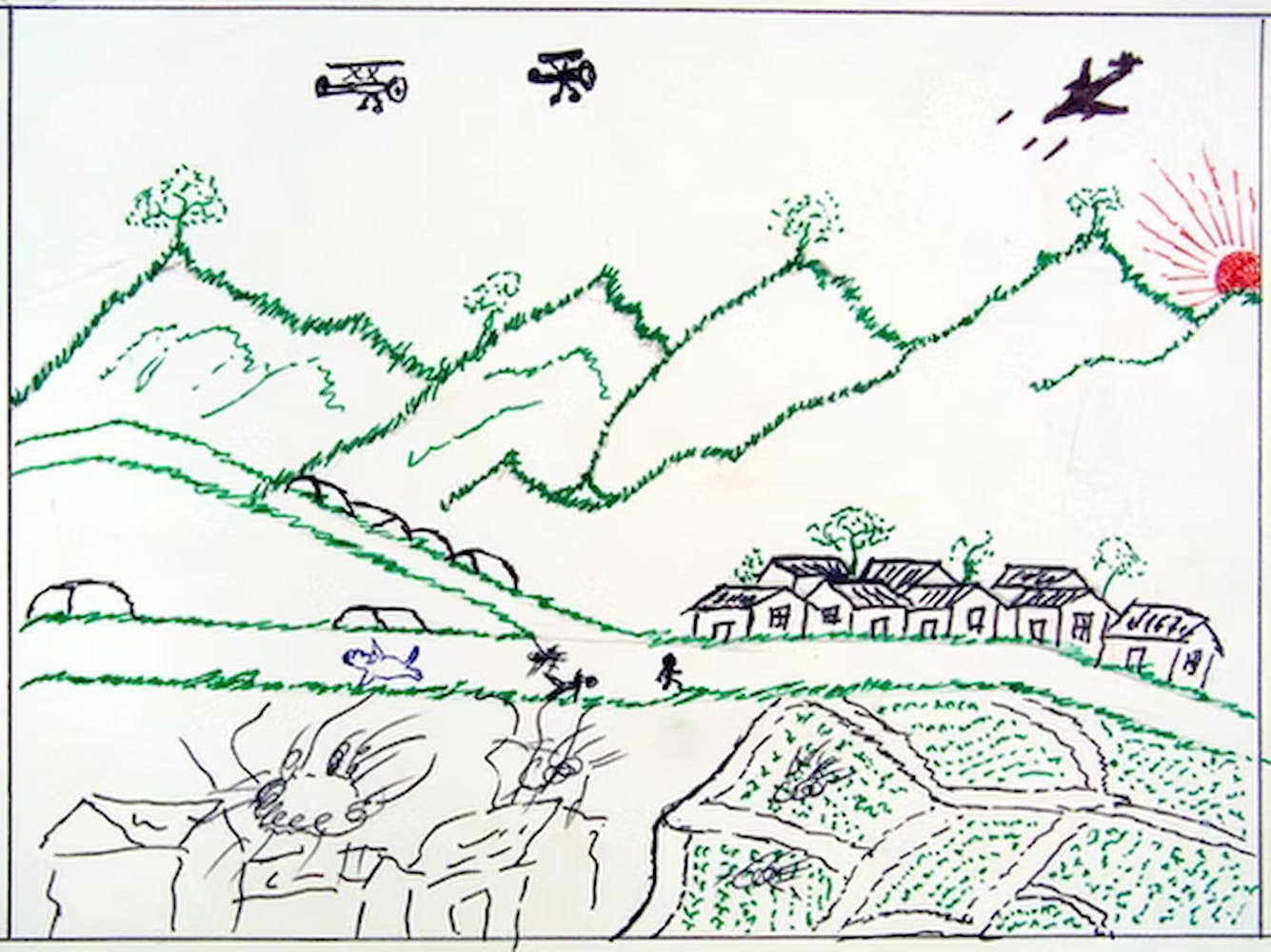
This module examines how the experiences and memories of war are preserved through oral histories and the work of Laotian Americans in addressing the legacy of the Secret War. The US Secret War came to public attention through the efforts of Fred Branfman, an international aid worker who went to Laos in 1967. During his four years in Laos from 1967 to 1971, Branfman interviewed thousands of Laotians who recounted their devastation and loss from American bombing missions in northern Laos. He recorded their experiences in essays, poems, songs, and drawings, and testified before Congress in 1971.
In 1972, Branfman and his Lao colleague Bouangeun Luangpraseuth published Voices from the Plain of Jars: Life Under an Air War that recounted survivors’ stories and drawings from the US bombings. Some stories include villagers recalling their lives before the war as simple, where families lived peacefully and cultivated the land. They farmed livestock, such as cows, chickens, and buffaloes. When the bombings started, their lives changed. Praying the planes would not come, one survivor spent years hiding in a cave. The stories and drawings brought to light the war that the US tried to deny and keep secret to avoid violating international agreements recognizing Laos’ neutrality.
How has the Secret War in Laos been recognized in the United States?
To what extent has the impact of the Secret War continued to be felt today?
What are the legacies of the US Secret War?
The US Policy of Containment and Recruitment of Lao Soldiers
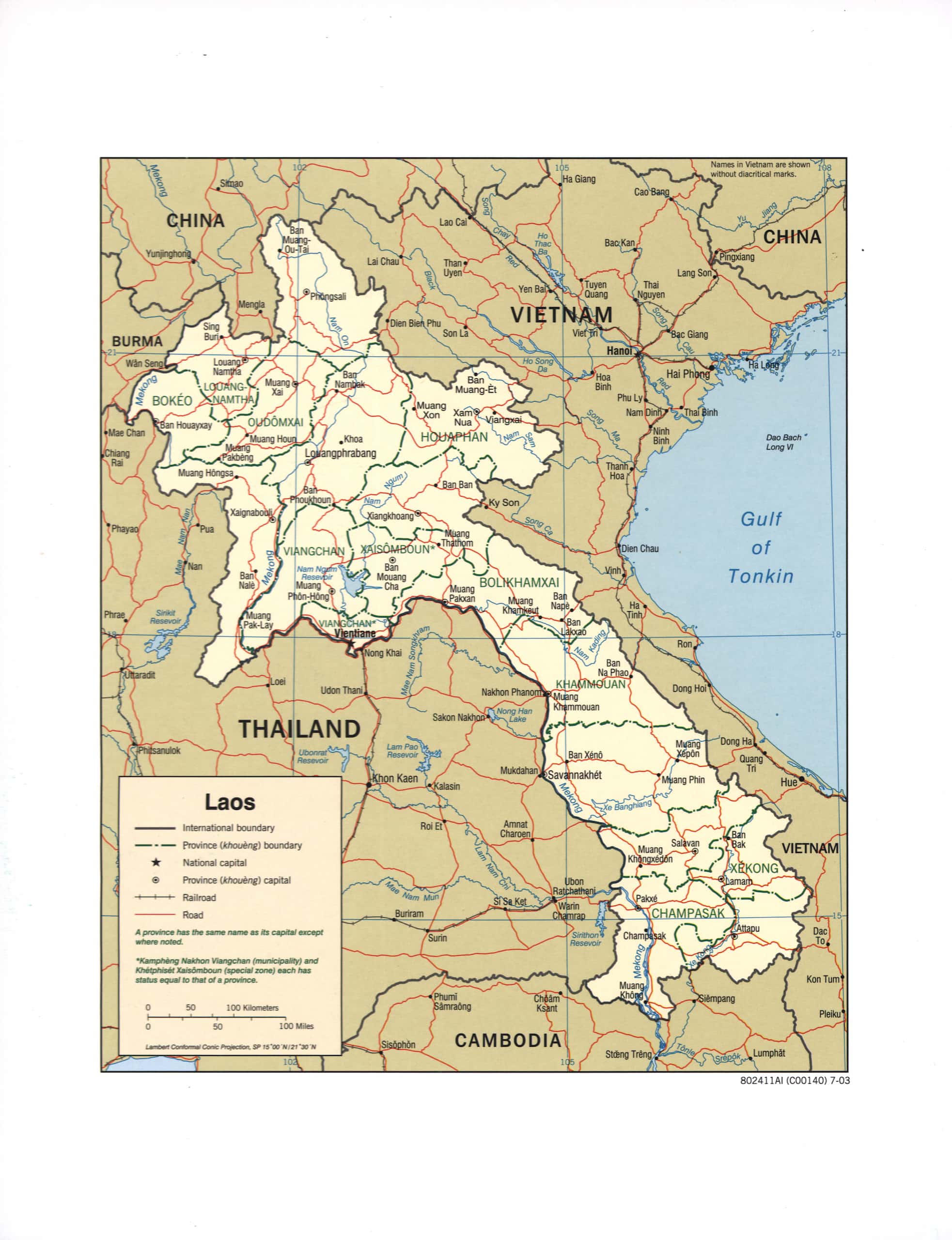
Image 15.02.01 — This map by the CIA shows Laos as a landlocked country and a key buffer zone between Northern and Southern Vietnam.
On July 21, 1954, the Geneva Accords were signed, and Vietnam, Laos, and Cambodia achieved independence from France. The newly formed nations and diplomats from France, the Soviet Union, China, the United Kingdom, and the US were present at the signing in Switzerland. Immediately after signing the Accords, the US grew increasingly concerned with the rising influence of communism in Vietnam, Laos, and Cambodia.
The US pursued the policy of containment in Laos to prevent the spread of communism. Under this policy, President Dwight D. Eisenhower (1953–1961) warned that if Laos “fell” to communism, the rest of Southeast Asia would follow, including India. President Eisenhower committed to US security and the containment strategy in Laos through diplomatic and military assistance to the Royal Lao Government, which controlled the country.
The US supported the Royal Lao Government in its fight against the Pathet Lao, which was backed by the People’s Army of Vietnam (PAVN). The PAVN established the Ho Chi Minh Trail, a key supply route between Laos and Vietnam to move troops and supplies into South Vietnam. The trail’s mountainous and rugged jungles also provided excellent coverage for guerrilla warfare and covert operations.
The CIA recruited and trained guerrilla soldiers to disrupt the operations on the Ho Chi Minh Trail. Hmong were the primary ethnic group recruited, and some Lao, Khmu, and Iu-Mien soldiers as part of the Lao Special Guerrilla Units (SGU). In unveiling the Secret War, anthropologist Susan B. Caolo conducted interviews with veterans who served in the SGU and fought alongside the US. Lao veterans recalled their experiences serving as “road watch” teams and in large-unit actions against the PAVN. Boua Chanthabouly did not understand the Vietnam War, but he joined the SGU in 1972 when he was fourteen years old. He joined to “protect the homeland” because he was a “soldier at heart.” Chanthabouly was deployed to the Ho Chi Minh Trail, two hundred kilometers from his house in Savannakhet, by helicopter. After his unit and another team were airdropped, thirteen soldiers walked for three days by night to conduct a surveillance mission of taking pictures for the CIA. Chanthabouly now resides in Marietta, Georgia.
Touy Thiravong also served in the SGU as an interpreter, liaison officer, and a Forward Air Guide. Thiravong notes that recruiting soldiers was not difficult because there were few jobs, and soldiers were paid at least 6,500 Lao Kip (which is less than one dollar). Soldiers who fought on the front line would be paid double. Many young men, aged fourteen years and older, joined the SGU.
Before taking on his role as part of the SGU, Thiravong was sent to Fort Knox, Kentucky, for a leadership training class and then spent a year at Lackland Air Force Base, Texas, for English language training. He returned to Laos to work in military regions two and three. Military region two is the northeastern part of the country, headquartered at Long Tieng in Xieng Khouang. General Vang Pao commanded this area. Military region three was in central Laos, with its headquarters in Savannakhet. As a Forward Air Guide, he said it was like “watching a movie” to see planes bombing the enemies who were not prepared for the force of American air jets. He spent three years on the front line until 1973.
After the country was taken over by the Pathet Lao, Thiravong ultimately escaped to Thailand and worked as an interpreter in the refugee unit of the American embassy. In 1978, he resettled in Delaware. Chanthabouly’s and Thiravong’s stories provide firsthand accounts of their involvement in the Secret War. Stories of Lao soldiers are often overlooked and missing in the historical records, and their testimonies ensure that their sacrifices are not forgotten and recognized. Their stories also provide a more comprehensive picture of the Secret War, particularly its covert nature. Their stories are part of the US Library of Congress newly established oral history collection, “Lao Special Guerrilla Unit and Royal Lao Army Veteran Interviews.”
In 1973, the US military withdrew from Laos as stipulated by the Paris Peace Accords to end the Vietnam War. Following the Americans’ departure from Laos, the Pathet Lao gained control of Laos and established the Lao People’s Democratic Republic in December 1975.
The US and its allies left behind cluster bombs strewn throughout towns and villages along the Ho Chi Minh trail, including bomb craters and military waste from aircraft, vehicles, landmines, and weapons. The US conducted over 580,000 bombing missions, releasing more than 270 million cluster bombs and defoliants like Agent Orange on Laos. More than fifty years after the last bombing mission, Laos is still clearing cluster bombs. The legacy of the Secret War is long-lasting and efforts to clear the bombs continue.
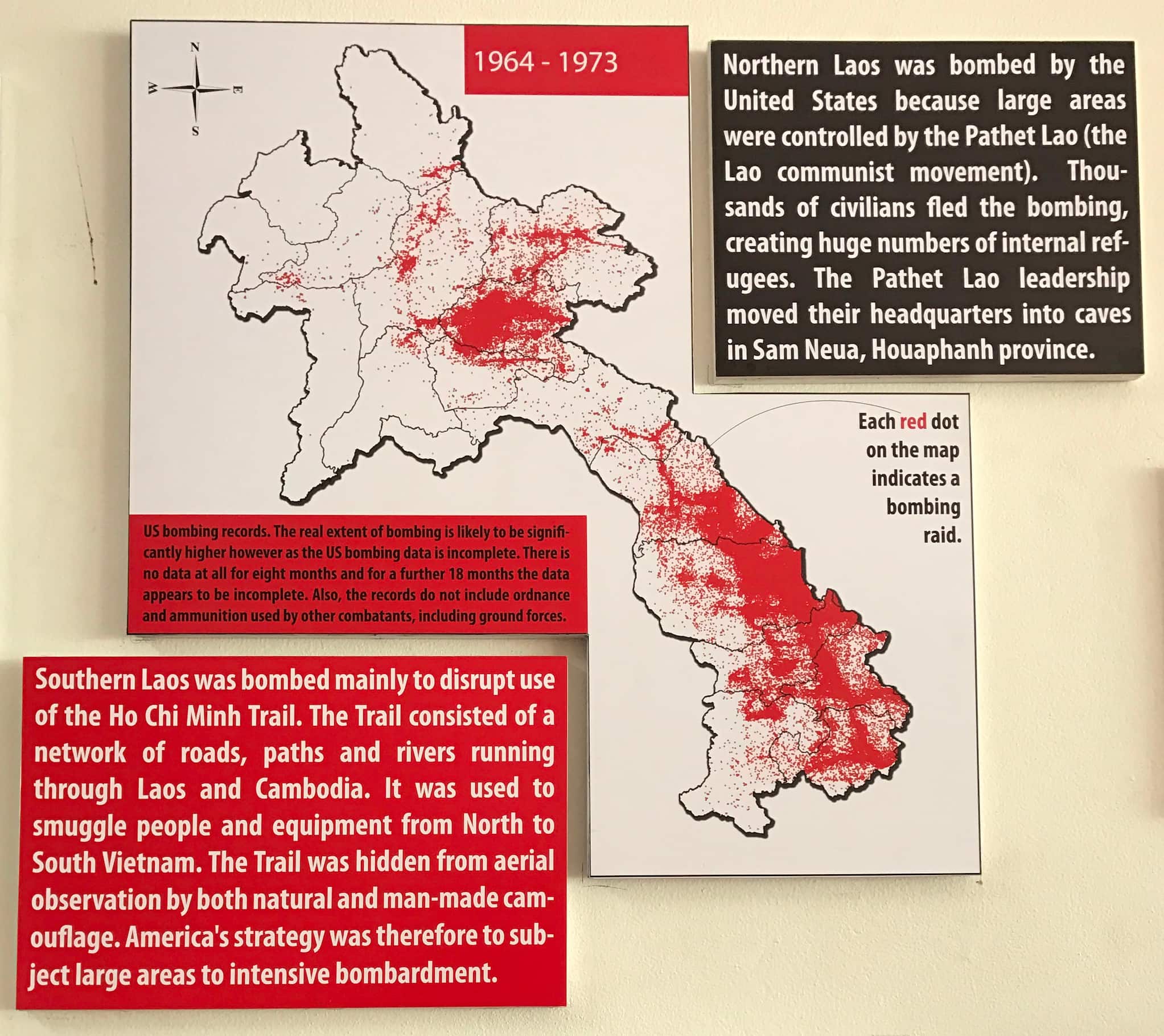
Image 15.02.02 — This map is on display at the Cooperative Orthotic and Prosthetic Enterprise (COPE) Visitor Centre Museum in Vientiane, Laos. Each red dot on the map shows a bombing raid.
A Deadly Legacy: Cluster Bombs
Dubbed the “most bombed country” in the world per capita, Laos continues to deal with an estimated eighty million cluster bomblets and unexploded ordnance (UXO) lying beneath the surface that still cause casualties and impact development. UXO refers to explosive weapons such as bombs, shells, land mines, cluster munitions, and other munitions that did not explode when they were deployed. A large portion of the weapons were cluster bomblets. A cluster bomb consists of a hollow metal shell filled with hundreds of submunitions or “bombies” as they are known locally in Laos. These “bombies” continue to kill or injure people within reach.
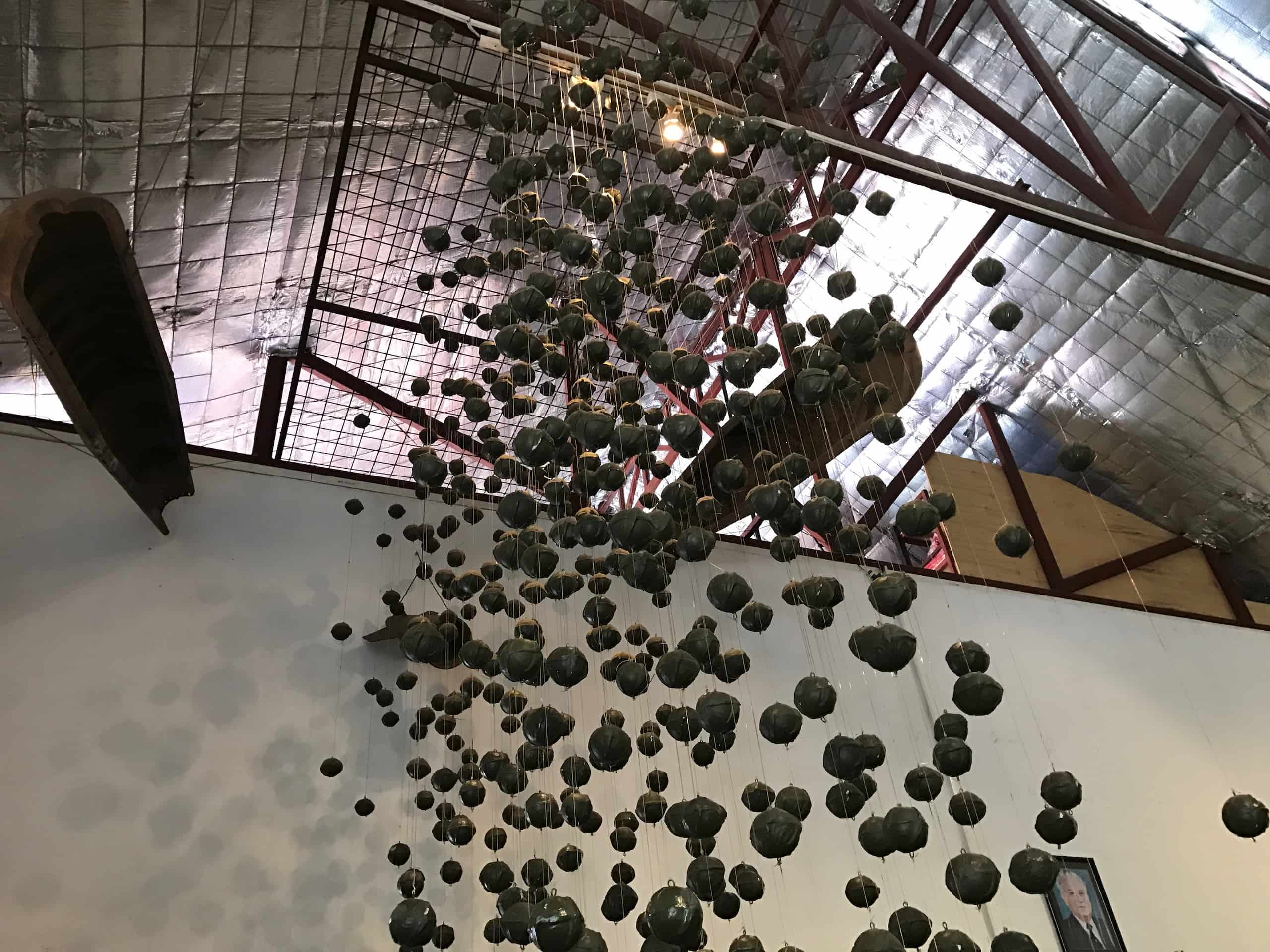
Image 15.02.03a — A display at the COPE Visitor Center Museum. This display shows a cluster bomb opening in mid-air, releasing its deadly cargo or “bombies”, symbolizing the lingering dangers of unexploded ordnance, or UXO.
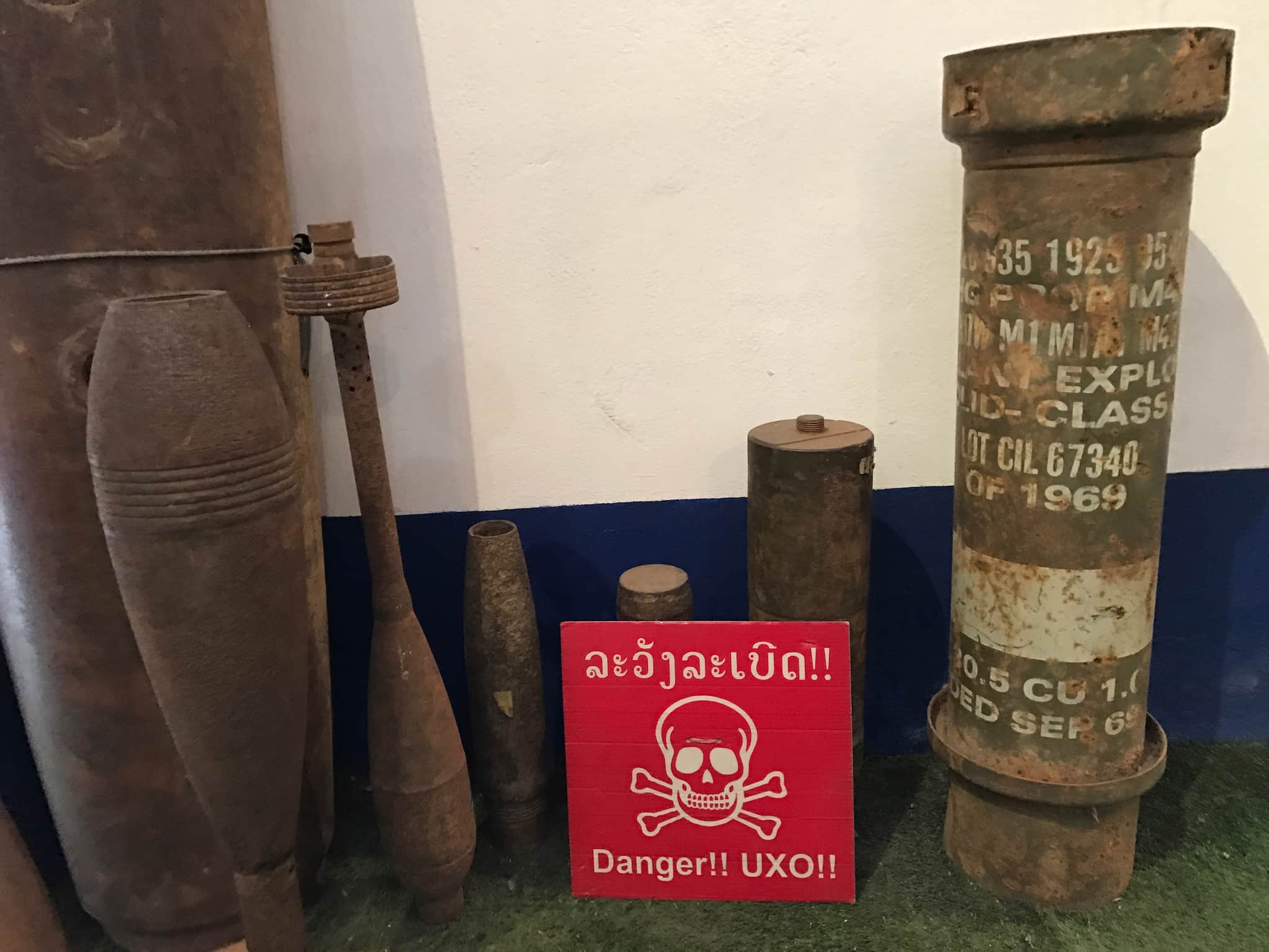
Image 15.02.03b — An exhibit of various bombs used in Laos during the Vietnam War era, highlighting the extensive and lasting impact of UXO on the region at COPE Visitor Center Museum.


Xieng Khouang Province is one of the most contaminated regions in the country. The province became a free-drop zone where pilots were authorized to bomb all targets at will. The bombings razed villages, and survivors who returned to their homes found rubble and cluster bombs littered across their villages. In Ban Naphia, villagers collected scrap metal from cluster bomb casings. Approximately twelve to fifteen families in this village make spoons, bracelets, and keychains from bomb metals to sell. They know the dangers of handling unexploded bombs. Since 1975, twenty million UXO have been cleared, and an estimated twenty-five thousand people, many of them children, have been killed or injured by UXO.
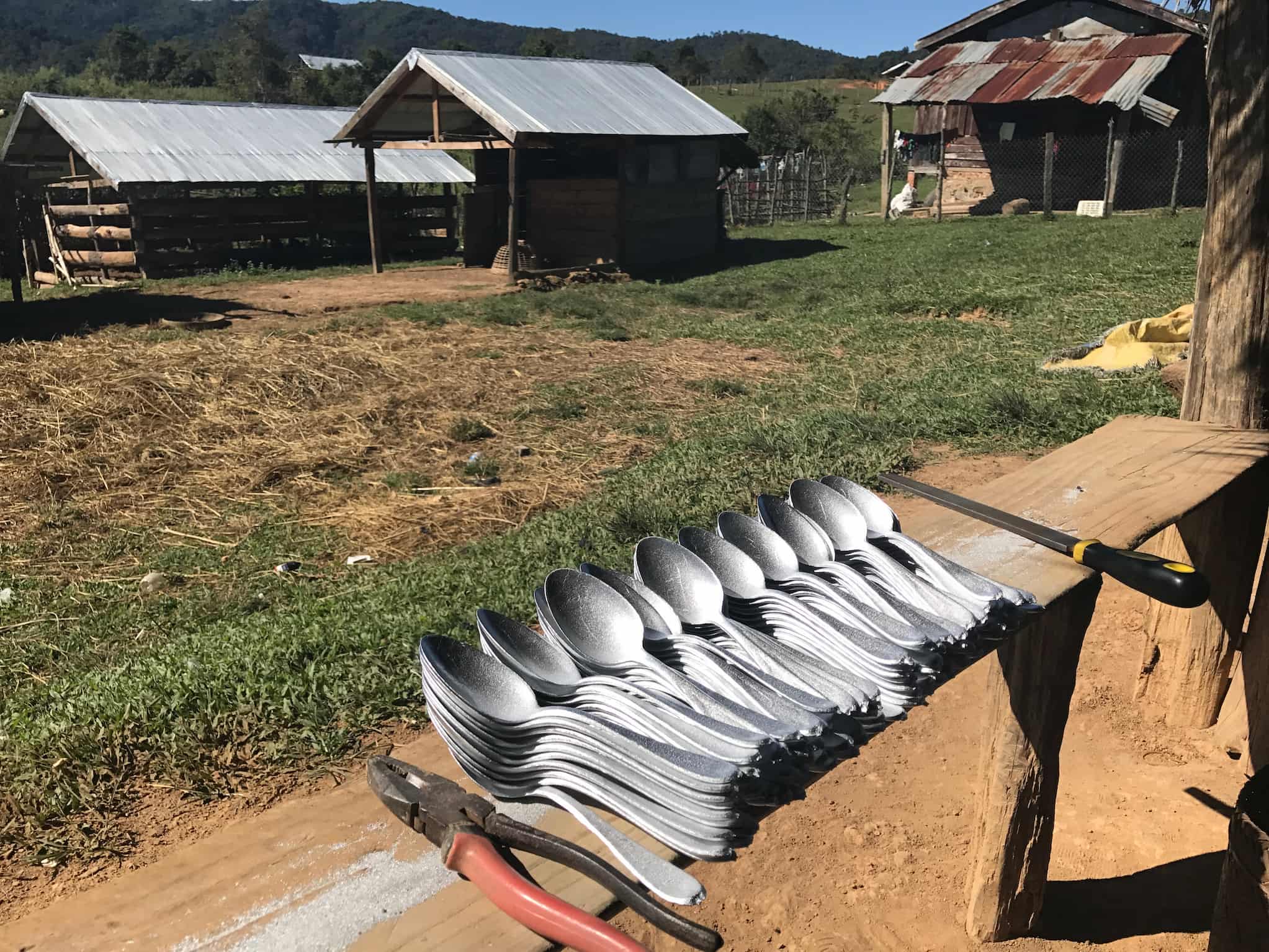
Image 15.02.04 — In Ban Naphia, families melt bomb metals and scraps to craft spoons. They transformed remnants of war into sources of income.
Legacies of War
The stories and drawings of survivors from Voices from the Plain of Jars: Life Under an Air War (1972), and the original illustrations, were tucked away in the office of John Cavanagh, who worked alongside Fred Branfman at the Indochina Resource Center in the 1970s. When the center closed down, Cavanagh saved the drawings in his Washington, DC, office. In spring 2004, Cavanagh turned over the forty-year-old drawings to Channapha Khamvongsa, who would begin Legacies of War.
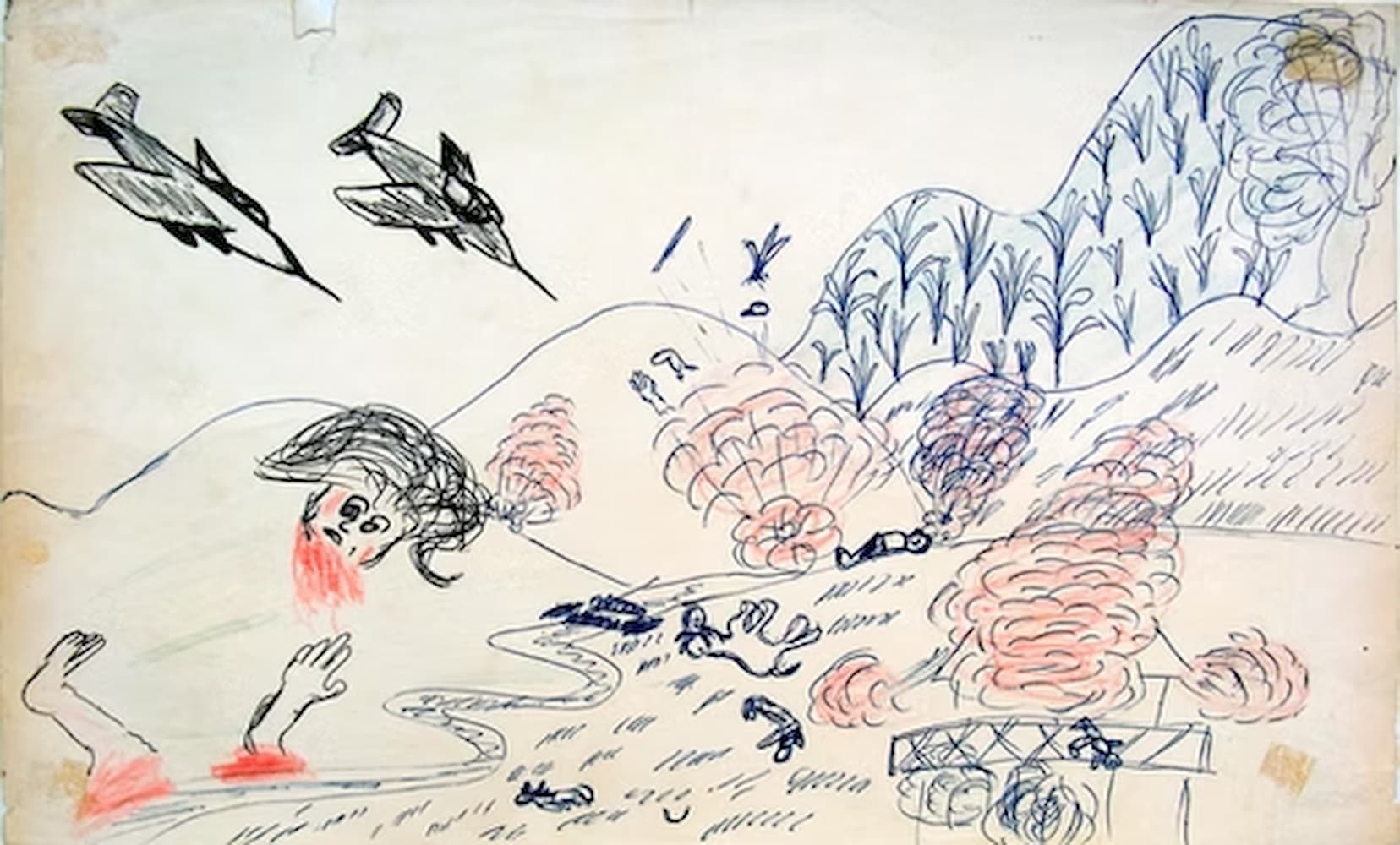
Image 15.02.05a — An original drawing from Voices from the Plain of Jars: Life Under an Air War (2013), edited by Fred Branfman, depicting the US air war campaign perpetuated in secrecy that destroyed a village.
Image 15.02.05b — An original drawing from Voices from the Plain of Jars: Life Under an Air War (2013), edited by Fred Branfman, of an airplane dropping three bombs.


Legacies of War is a nonprofit organization dedicated to raising awareness about UXO, promoting education, and facilitating demining funding for Laos. Khamvongsa’s tireless work to address the UXO problem in Laos has helped to shed light on the US Secret War and create a new path of hope for Laotians and Americans. On April 22, 2010, Khamvongsa testified before Congress on the unexploded bombs in Laos and the responsibility of the US to clean up the bombs by increasing funding for clearance and victim assistance. When Legacies of War began, US funding was just 1.4 million dollars. In 2016, US President Barack Obama (2009–2017), the first sitting president to visit Laos, pledged ninety million dollars over three years to clear UXO. Khamvongsa and Legacies of War’s advocacy work, building strong relationships with members of Congress has led to a steady increase of thirty-six million dollars for Laos.
In 2022, Legacies of War expanded its work to include Cambodia and Vietnam. Legacies of War created the Legacies of War Recognition and Unexploded Ordnance Act, sponsored by Senator Tammy Baldwin (D-WI) and Senator Jerry Moran (R-KS). If passed, the bill would authorize five hundred million dollars in US funding for five years to support activities related to clearance. This bill would also recognize Southeast Asian American communities that supported the US Armed Forces. These communities are Hmong, Cham, Cambodian, Iu-Mien, Khmu, Lao, Montagnard, and Vietnamese.
Moreover, Legacies of War’s community outreach is a dynamic and ongoing collaboration. In response to the lack of public awareness about the Secret War in Laos, Legacies of War created a virtual library to make this history accessible. As part of Lao Stories: Laotian American Oral History Project conducted by Prinston Pan, Executive Director Sera Koulabdara emphasizes that much remains to be learned about the Secret War and hopes students will use the library as a valuable resource. She notes that many interns at Legacies of War learned little about Laos in their Southeast Asian studies courses, where it is often mentioned only as a footnote. For Koulabdara, the virtual library plays an important role in changing that narrative and she hopes to turn the virtual library into a real library.
Conclusion
Fifty years later, the legacy of cluster bombs is a tragic reminder of the long-term consequences of war. By exploring the legacy of the US Secret War, this module centers on the stories of Lao soldiers who fought alongside American forces and highlights the advocacy work of the Lao diaspora to bring awareness of cluster bombs and the Secret War. There is much work to be done to address the impact of cluster bombs such as clearance operations, risk education, and victim assistance programs. There is hope for a safer world through education and advocacy organizations like Legacies of War. The awareness and understanding of the Secret War sheds light on missing stories of Lao soldiers who fought with the US, and the Lao diaspora’s commitment to address the legacy of wars so that such devastation is never repeated.
Glossary terms in this module
cluster bomb Where it’s used
A cluster bomb is an explosive device that releases small, tennis ball-sized bomblets over a wide area, causing extensive damage and leaving many unexploded submunitions behind. In Laos, bomblets are known as “bombies.”
Lao diaspora Where it’s used
A global community of people of Lao descendents who have migrated and settled outside of Laos in the United States, Canada, France, Australia, Thailand, and Argentina.
Laotian American Where it’s used
Americans who trace their ancestry to Laos.
Legacies of War Where it’s used
An educational and advocacy organization based in Washington, DC, that works to address the ongoing impact of the American Wars in Laos, Cambodia, and Vietnam.
military waste Where it’s used
War leaves behind military waste such as weapons, artillery shells, vehicles, and military equipment to lingering hazards and toxic legacies such as concrete and steel from damaged buildings and military installations, chemical contamination onto lands and into waterways, depleted uranium munitions, unexploded bombs, and landmines.
refugee Where it’s used
A person forced to flee their country due to persecution, war, or violence, and is unable to return due to a well-founded fear of persecution. This is a legal term defined by the United Nations 1951 Refugee Convention, and supplemented by its 1967 Protocol.
Secret War Where it’s used
During the Vietnam War, the US Central Intelligence Agency conducted a covert operation in Laos. The US recruited and trained Hmong and other ethnic groups in Laos to combat North Vietnamese forces and the Pathet Lao. From 1964 to 1973, the US dropped more than two million tons of bombs on Laos.