





Module 1: New York Chinatown and the Garment Industry
Did the collective action of New York City Chinatown’s Chinese American garment workers positively change their working conditions and their lives?
How did your clothing get made? Who did the designing? Who did the sewing?
Making clothes has been an important industry in the United States for over a century, and immigrants have been the heart, muscle, and brains of this work. New York City has been an especially important city for both the garment industry and for immigration. As each wave of immigrants came looking to the United States for work, there were always some who arrived with sewing skills. Others came with visions of founding a small business. In the 1970s, thousands of Chinese immigrants settled with their families in New York City and re-energized the historic garment industry by establishing hundreds of factories in Manhattan’s Chinatown. Their story is the focus of this chapter.
Immigration to the US and to New York City has occurred in different waves and sewing work was a part of each. A rush of Irish immigration in the first half of the nineteenth century was followed by a wave of German immigrants in the mid-nineteenth century. Immigration from these and many other countries did not stop, but was eclipsed in the late 1800s by a much larger group of Eastern European Jewish and Italian immigrants.
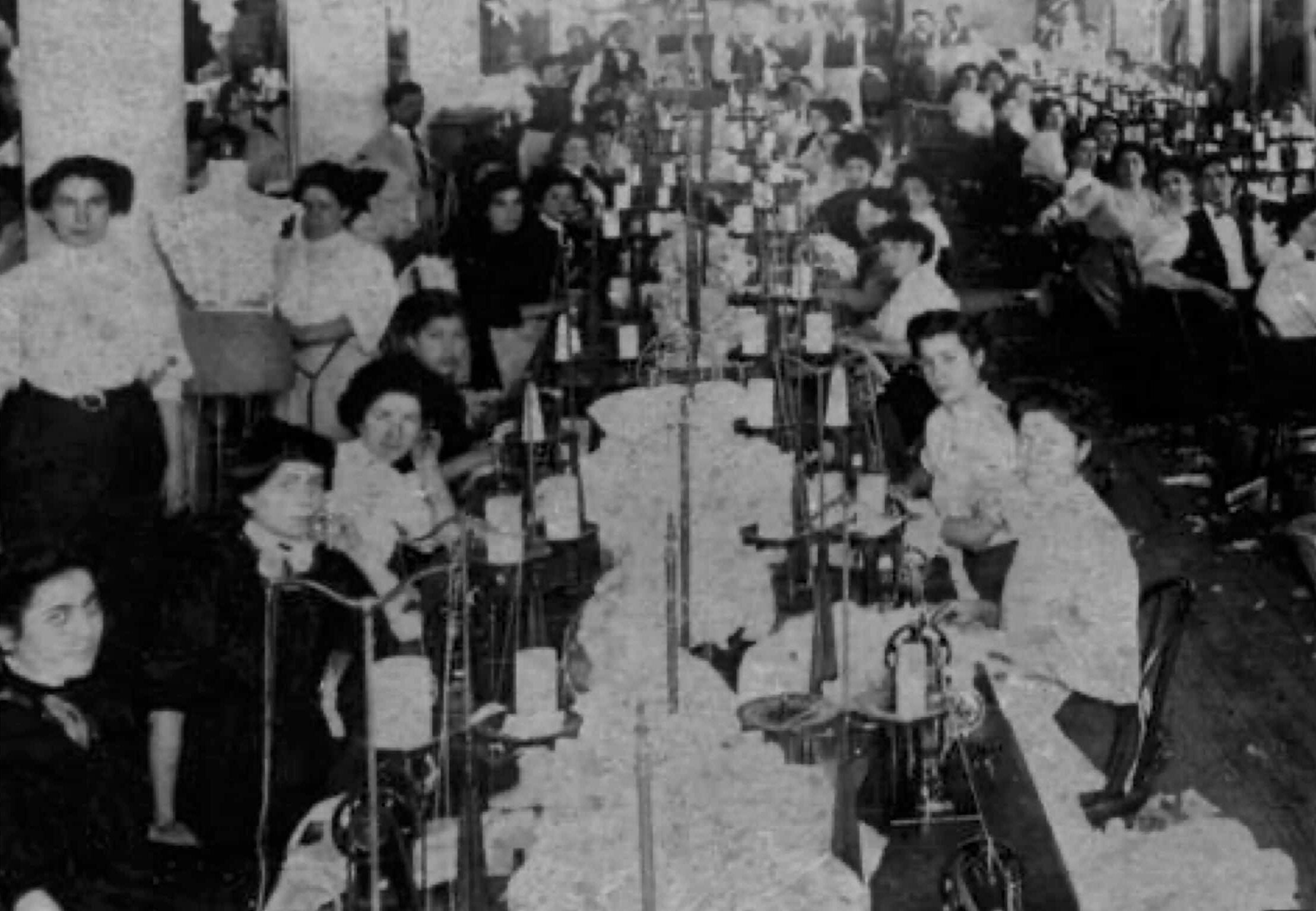
Image 47.01.01 — This 1910 garment factory photo looks a little different from the other photographs in this chapter, which were taken in the 1970s—1980s. What are the differences? What are the similarities?
Created date, created by Name, Title Italicized. Credit line indicating where the image is from. Metadata ↗
African Americans from the South and Puerto Rican and Black migrants from the Caribbean came to the city in the 1920s–1960s. Garment manufacturing in New York City benefitted from major waves of new immigrants in the 1960s and 1970s coming from China, Korea, the Dominican Republic and other Caribbean countries. Each wave of arrivals decided to migrate based on a variety of reasons, including “push” factors, in which people hoped to escape conditions in their home country or region, and “pull” factors, which motivated migrants to seek opportunities abroad. These workers formed the base of a revived garment industry in the 1970s, especially in New York’s Chinatown.
More to explore
Image
Mrs. Ma’s Story
Who are the women who worked in the garment factories? How and why did they immigrate to New York? May Ying Chen conducted oral history interviews in Chinese, translated, and wrote up the stories for writer and poet Esther Cohen who edited the project, We Built New York.
Just as immigration waves have changed over time, so too has the garment industry. The division of work into small tasks and improvements in sewing machine technology allowed for faster and more efficient clothing manufacturing. But these changes, alongside companies’ emphasis on quick profits and mass production, frequently left workers making garments for low pay and in dangerous working conditions. As a result, workers learned to fight for a better workplace and negotiate with their bosses.
One particular victory for garment workers occurred in New York’s Chinatown in 1982, when thousands of immigrant workers—mostly women—took a stance to demand increased respect in the workplace and renewal of their union contract. In this chapter, we will learn about the New York City garment industry, the immigrant worker community in Chinatown, the International Ladies’ Garment Workers’ Union (ILGWU), and the historic strike for workers’ rights.
More to explore
Image
Tenement Museum
The New York Chinatown garment industry of the 1980s is the subject of a permanent exhibit at the Tenement Museum. The exhibit follows the story of the Wong family who lived in the museum’s building at 103 Orchard Street, recreating a room in the family’s apartment and a replica of a typical sewing factory of that time. Mrs. Wong was a long-time factory worker in Chinatown. The Museum conducted extensive interviews with Mrs. Wong and her children, as well as union members, employers, and researchers to build an educational and interactive exhibit about this history.
What is the history and nature of the garment industry in New York City?
How has Chinese immigration after 1965 shaped the New York garment industry?
How did immigrant workers in the factories, especially women, deal with their working conditions?


