




Factory worker Yook Chee Hom, seated in front of sewing machine, demonstrates a new sewing style to her factory co-worker, who stands beside her.
Module 2: The Immigrant Women
Did the collective action of New York City Chinatown’s Chinese American garment workers positively change their working conditions and their lives?
In China, women were told that they “held up half the sky” (女人能頂半邊天), but the conditions of women were still far from equal to men. Ancient China had a long and authoritarian history of patriarchy that sharply defined male and female roles. After resettling in the US, many Chinese immigrants still followed a custom called “the three obediences” ordering women to obey their fathers, husbands, and sons throughout their lives. As part of these social systems, men were given more power and privileges over women. Boys had more educational opportunities and freedom, while girls were trained in household duties and responsibilities.
Early Chinese immigrant women in New York told stories of being ordered by their husbands to stay home all day, take care of household tasks, and stare out the window at the world outside. When the garment factories began to flourish in Chinatown, families encouraged women to work. However, this was in addition to their already heavy household duties, such as cooking, cleaning, caregiving, and childcare, which awaited the women after returning home from work.
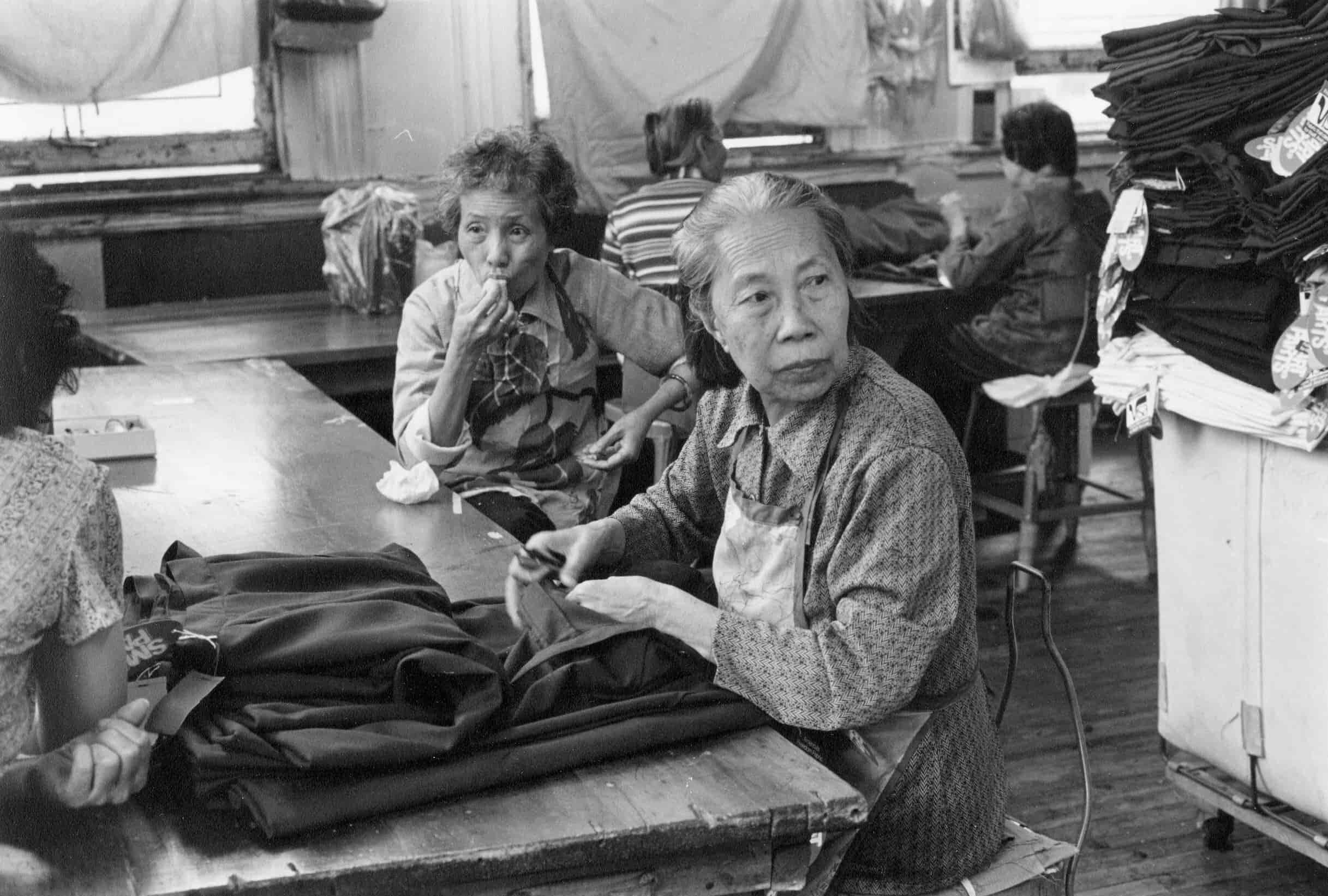
Image 47.02.01 — Many elderly Chinese women workers were assigned to the finishing section of a garment factory. They trimmed loose threads off the finished garments and prepared the clothes for shipping.
In coming to the US, Chinese women found opportunities for equal status and independence. In the garment factories, thousands of immigrant Chinese workers found a new community. Women enjoyed new friendships at work and the freedom of earning their own money. There were garment workers in almost every family in New York’s Chinatown in the 1970s through the 1990s. This was in part due to increased immigration of Chinese women after the Immigration and Nationality Act of 1965 opened immigration to the US. In 1979, more than 55 percent of all immigrant Chinese women worked in the garment industry.
While there were immigrants from urban and professional backgrounds who found the factories unbearable, all the workers appreciated the social contact, the opportunity to make friends, and the information learned at work in the factories.
In this module, we learn about the Chinese immigrant women who worked in the factories, became leaders at work, and contributed to the labor movement and to their community.
What were the backgrounds, hopes, and dreams of the Chinese immigrant garment workers in New York’s Chinatown?
How does solidarity emerge from workers’ own lived experience and cultural contexts and background?
How did Chinese women workers defy implicit and explicit cultural expectations?
Changes to US Immigration
Fallen leaves return to their roots. 落葉歸根
This traditional Chinese saying reflects the feelings and experiences of the early Chinese immigrant sojourners to New York City more than one hundred years ago. They came to the US to work and send money back to their families in poor villages and, when they grew old, hoped to go home and return to their roots in China. Chinese American immigrants built their own communities in Chinatowns as a refuge from the hostility, discrimination, and violence they faced in the US.
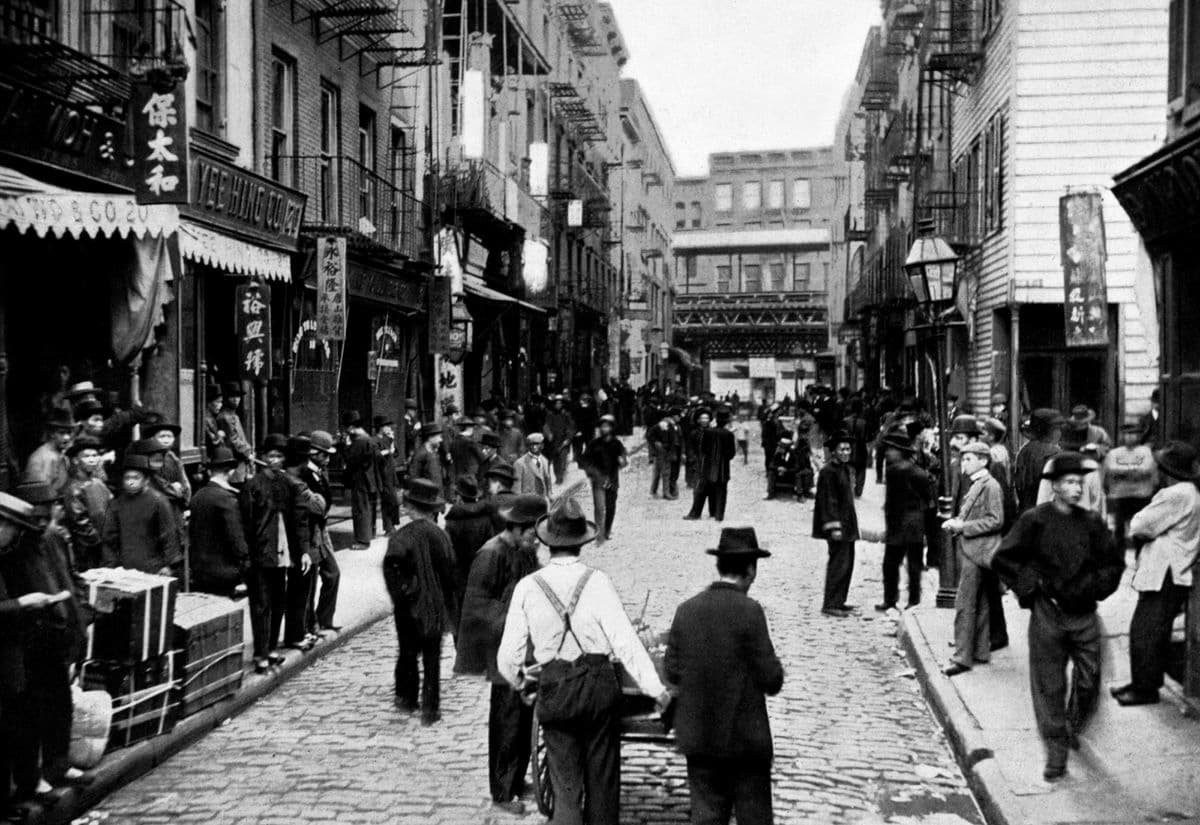
Image 47.02.02 — This photograph taken on Pell Street in Manhattan’s Chinatown, c. 1899, captures the “bachelor society” of the community
Almost all of the early Chinese immigrants in New York City were men who formed a “bachelor society” in Chinatown, while their wives and children remained in China. They were mostly farmworkers from the Pearl River Delta in Guangdong, China who brought their history, experience, work ethic, language, and culture to these Chinatowns. This “bachelor society” changed in the 1950s and 1960s when laws that barred the immigration of workers from China were overturned and new waves of Chinese immigrants entered the US. As a result, large numbers of immigrant women and children were sponsored to come to the US by their husbands, fathers, brothers, and uncles.
Most of these families settled in cities with established Chinese networks, such as New York, where they planned to stay permanently and build better lives together. This new wave of immigrants continued to face harsh discrimination in jobs, housing, and public safety, but they endured these hardships in hopes of a brighter future.
Reflection Questions
What motivates immigrants and refugees of diverse nationalities today to come to the US? Will they ever return to their countries of origin?
Building Solidarity in the Neighborhood
Many Chinese immigrant women found work in the garment industry. Garment work was so common that it even influenced the community’s culture and language. Most of these garment workers spoke the Cantonese Chinese dialect and created colorful idioms and sayings about factory work. Everyone in the Chinatown garment factories knew that “soy sauce chicken” referred to the bundles of easy work that made quick money. In contrast, when a worker complained about “pork bones,” it meant that the styles were difficult to sew and it was harder to make money since they were paid per piece!
More to explore
Alison Wong, the daughter of a longtime factory worker Mrs. Wong, saw how friendships were vital to her mother’s life in the US. Without computers, the Internet or social media for communication, she believed in connecting with people in person. Mrs. Wong had the most face-to-face connection with the other women at the factory. They would visit sick workers and share recommendations for pediatricians, women’s health care doctors, and other factories with good (or bad) work. They also taught each other about unemployment compensation and connected each other to the International Ladies’ Garment Workers’ Union (ILGWU).
Listen to
An interview with Alison Wong
Narrator: Alison Wong, daughter of garment worker.
Alison Wong: And for my mom when she came to United States friendships are very, very important because those days they didn’t have internet, they didn’t have computers and Facebook. So the best way to really connect with people is face to face. And the best face to face connection to my mom was at the factory when she was surrounded with other women and be able to help other women.
She would be there for friends too when they were sick or counseled them where to get medical help, or especially when it comes to doctors. Which pediatricians [are] good, which ones are not? What women’s health care doctors [are] good. So it was a lot of recommendations of finding good schools for the kids, where to get unemployment comp, where good factories are being open or closed. How do you talk to the union?
Audio 47.02.04 — Alison Wong reflects on the importance of her mother’s relationships with her garment factory coworkers.
Many others felt this sense of community. Bonnie Ng Mui Leung and Cindi Sai Leung were garment workers who picked up sewing skills on the job. “The coworkers were very friendly about teaching us, and telling us how to join the union,” 1 they explained. “Everyone helped each other to get and share information at work.” 2
Both the factories and the union provided a place for vital conversations and friendships. Alice Ip was a garment worker and worked for the ILGWU. When she was finally able to divorce her husband who treated her poorly, her coworkers celebrated with her. She became a full-time union organizer and continued to move up in the organization. She imparted some sage advice from her life to future generations: “You cannot do great things by yourself. You need a group of people.” 3
More to explore
Chinese immigrants brought many traditional community organizations and associations from their home country to their communities in America—associations which had roots in old villages, families, and localized language dialects. While there was sometimes disagreement between these groups within Chinatown, the associations joined together under the umbrella of the Chinese Consolidated Benevolent Association (CCBA) when they needed to fight or speak up to the world outside of Chinatown. The CCBA was a service organization that was established in 1883 and has supported and represented the interests of the Chinese community in New York to this day.
Through these various groups, Chinese workers built a culture of ethnic solidarity in New York. Note that the traditional community organizations were not free of gender bias, as many assumed that the men should represent and speak for the women and families in community affairs. Even though they were largely absent or excluded from these groups, however, Chinese women also valued the close sense of ethnic identity and solidarity of the New York community.
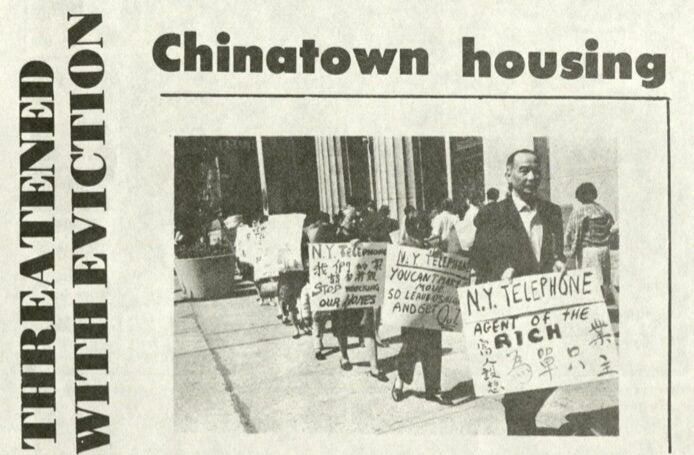
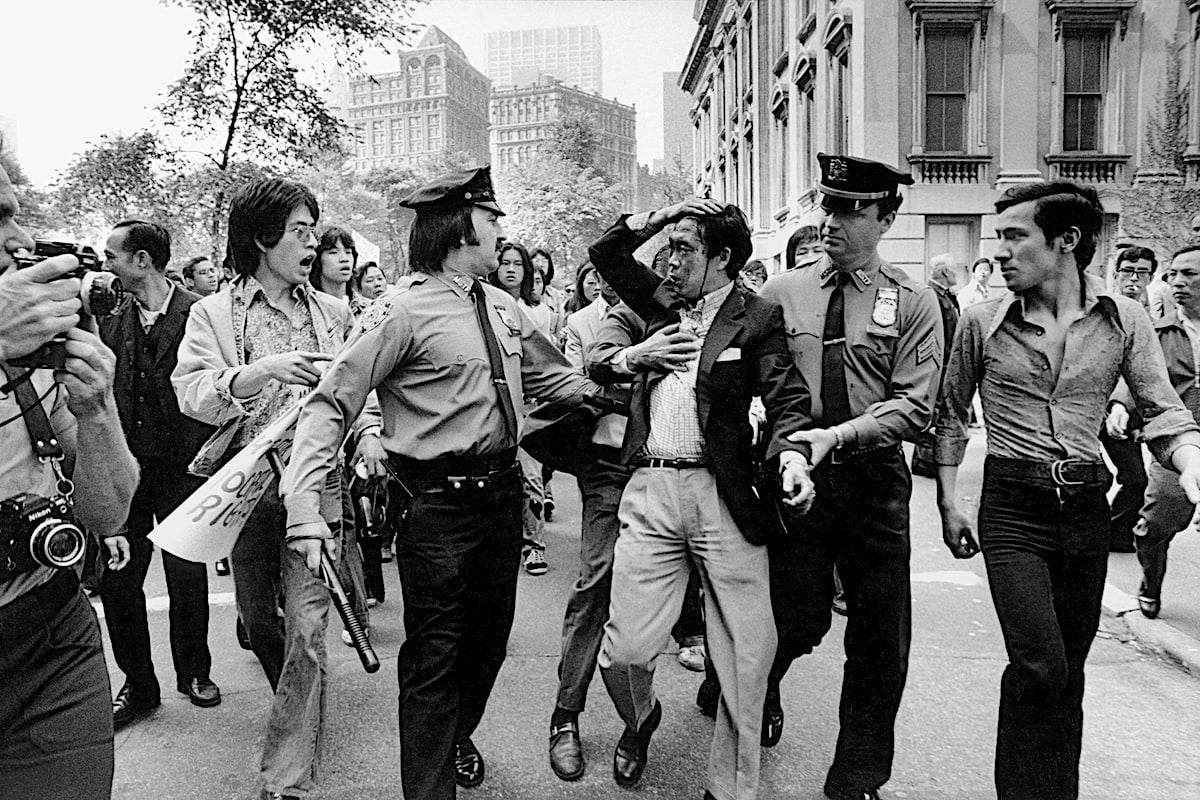
New York’s Chinatown became known across the country for being active, united, and strong. It was an important hub for Chinese people on the East Coast. The population exploded during the 1960s and 1970s. All across the country, community issues such as housing, jobs, public school education, and healthcare became important campaigns for community action. Garment factories, women workers, and union organizing all took place in this period of activism and civil rights within the community and across diverse ethnic groups.
More to explore
Slideshow
Multiethnic, Multiracial Solidarity in New York’s Chinatown
In the 1970s, there were several key collective struggles in New York City which engaged the Chinese community in city rallies, protests, and advocacy. These campaigns drew upon existing multiracial movements and cultural networks. Collective action transformed the Chinese community to respond to—and shape—the realities of living in the US.
Building Solidarity in the Factories
Chinese immigrant women formed lifelong friendships and found solidarity with other workers in garment factories. These garment workers came from different parts of China, but most shared a cultural heritage that both emphasized community and placed women in an unappreciated space in the family and community. Even when these women earned money for their families, their contributions were not celebrated. They often did not dare to speak up, complain, or make demands—in fear of being labeled a troublemaker or a show-off.
Working in the garment factories slowly but surely changed women’s attitudes of subservience and gave them a voice. All accounts of these women workers emphasize their dedication to the common good. They worked for their families, their coworkers, and the community. Relationships in the garment factories evolved to become common strivings for dignity and fairness.
A Ying and A Ling were two such workers. They worked in the same shop and were the two fastest hands there. Because of their skills, their boss set them up to be rivals in the workplace. They immigrated from different parts of China and no one expected them to become close. However, A Ying and A Ling rode the same subways to and from work and as they spent more time together, they discovered they had similar experiences of being in arranged marriages and having oppressive in-laws. Sharing these common problems and experiences created a bond between them and they helped each other through hard times. Eventually they realized how the factory boss manipulated them into competing against each other, which led them to getting involved with the garment workers’ union.
A Ying became active in the ILGWU and helped to organize the historic Chinatown garment workers’ strike in 1982. A Ling joined the rallies, explicitly citing the solidarity she felt with A Ying. “You don’t know how bad the bosses can be,” she said. “If A Ying and I kept competing against each other, the boss could drive us crazy to work for him. If we workers don’t unite, no one can save us.” 5
Chinese women workers played an important role in the economic survival of their families and gradually they became more assertive and strong in spite of the persistence of traditional beliefs about women’s roles. The money they made greatly contributed to the success of many community businesses, from markets and bakeries to jewelry shops and hair salons. Even as traditional attitudes dismissed the women as subservient and invisible, these women workers became aware of their new reality and the power they possessed in the garment factories and community.
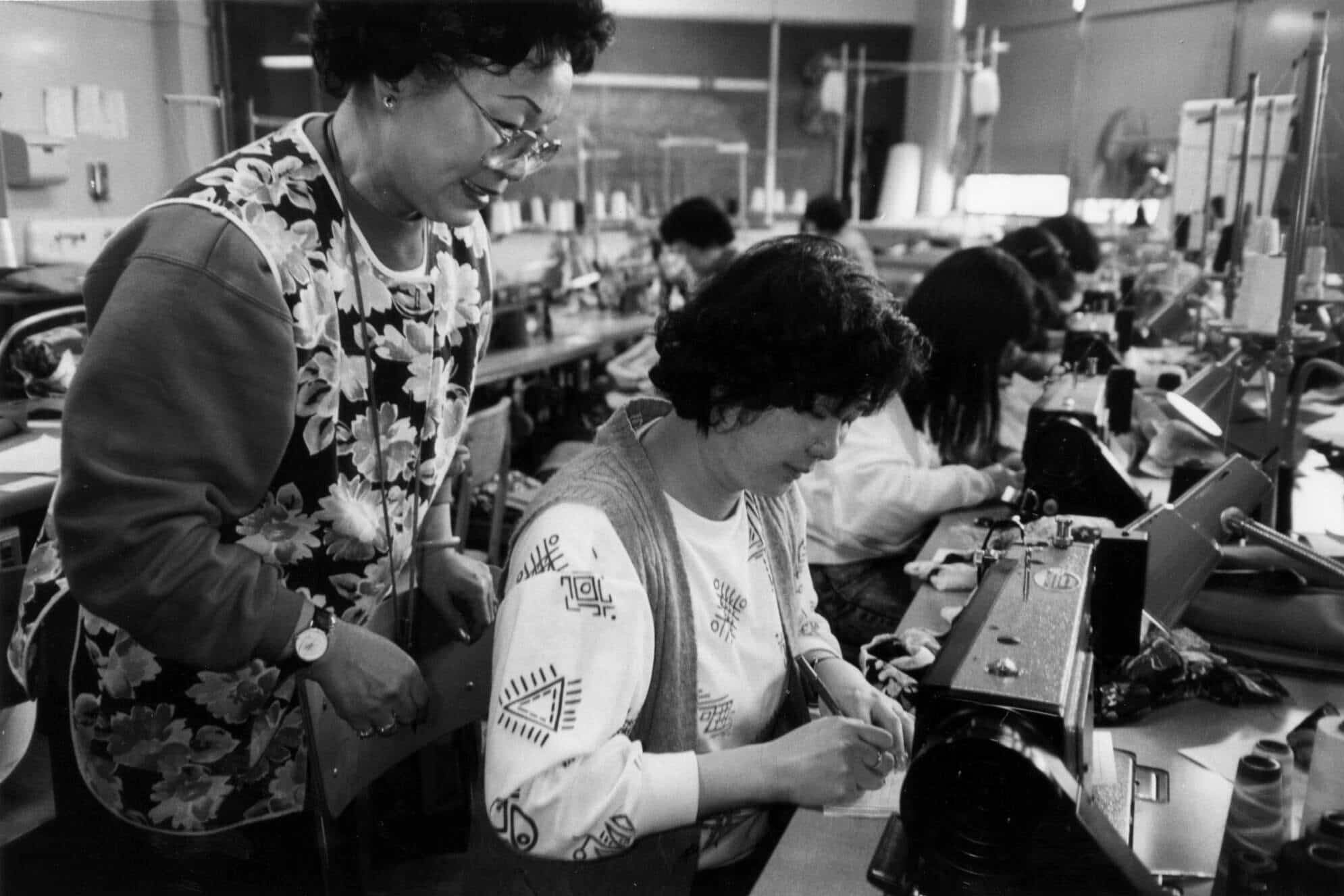
Image 47.02.06 — Yook Chee Hom (left), a highly skilled worker, helps factory coworkers with new styles. This image reflects Chinese immigrant women helping one another instead of competing against one another. Hom was very active in ILGWU Local 23-25.
Reflection Questions
What can be learned from the first-hand stories of immigrants that are not available in mainstream books, media, or social media? Why are these stories valuable?
Ordinary Lives, Extraordinary Women
In New York’s Chinatown, the Chinese immigrant women workers in the garment factories were transformed, evolving to defy multiple stereotypes. No longer stay-at-home dependents of their spouses or fathers, they worked and earned money to support their families and enjoyed benefits such as health insurance, which were important to their families’ survival, security, and success. No longer isolated, invisible, and silent, these women made friends in the factories and received social support and information about negotiating life in a new community and culture.
As union members, they learned to speak out and take action about problems and injustices. Women had their own lives—money and agency—while remaining loyal to their cultural roots and ethnic identity. Through their day-to-day lives, these extraordinary women became more outspoken and opinionated. Many became leaders among their coworkers and families and contributed these qualities and talents to their community and the labor movement.
Glossary terms in this module
bachelor society Where it’s used
Communities of early Chinese immigrants in the US that are often understood to have been composed primarily of unmarried men or bachelors. In reality, many were married with wives and children in China, and came to the US to earn money that they could send back to their families and networks. They formed the foundation of Chinatowns in New York City as well as cities across the American West.
garment workers Where it’s used
Workers who are involved in the production of clothing items.
International Ladies’ Garment Workers’ Union (ILGWU) Where it’s used
A union dedicated to fighting for garment workers’ rights to fair wages, benefits, and safe working conditions.
patriarchy Where it’s used
A social and legal and economic system that gives the father power and authority over property and family members. In a patriarchal society, men hold the power and women are subordinate to the men.
sojourners Where it’s used
People (immigrants or refugees) who are temporarily staying in a new country and plan to eventually move back to their home country.
solidarity Where it’s used
Shared beliefs and experiences that lead to group action and a feeling of mutual responsibility and support; when a group of people understand their fates are tied together.
strike Where it’s used
When workers stop work and withhold labor in protest about workplace problems, often involving picket lines where striking workers march in a line with signs outside the workplace asking others not to go in.
union Where it’s used
An organization formed by workers, typically from the same industry or company, representing the workers’ collective needs in the workplace; locals are units of an umbrella “international” union (internationals include U.S. and Canadian locals).